Showing posts with label Music For Our Souls. Show all posts

Sunday, June 29, 2025

Music for Our Souls - C. Austin Miles - "In the Garden"


A few days ago, my husband Jeff asked me if I ever sing "I come to the garden alone. . ." while I'm out in our garden, toiling away at tilling and tending.

My answer, "Yes, absolutely."

"In the Garden" has been a hymn favorite for generations. A song popularized especially for how it's often been sung during funerals and at Easter services, harkens back to the story of Mary Magdalene coming to the garden tomb to mourn her Savior. And then! She hears His voice, and He reveals Himself to her first. Our risen Lord! Oh, what sweet swells that scene conjures in our breasts!

C. Austin Miles must have visualized it well as he penned the lyrics, for according to his great-granddaughter, the verses were penned in a New Jersey basement, where not even a window allowed the daylight in, much less a garden view.


Image by wirestock on Freepik

But who was C. Austin Miles, and what inspired him to write such a beautiful, timeless hymn?

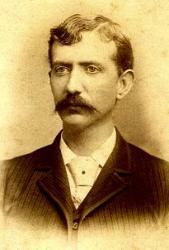
Charles Austin Miles (January 7, 1868-March 10, 1946) studied at the Philadelphia College of Pharmacy and the University of Pennsylvania. However, in 1892, he gave up his career to purse the writing of Gospel songs. His first Gospel song, "List! ’Tis Jesus’ Voice", was published by the Hall-Mack Company, where he later became editor and manager of the music publishing company for 37 years.

He is quoted as saying, "It is as a writer of gospel songs I am proud to be known, for in that way I may be of the most use to my master, whom I serve willingly although not as efficiently as is my desire."

I love that! Writers of fiction drawn from a Christian world view are prone to questioning whether or not their work serves any larger purpose. We sometimes even feel like it's a guilty pleasure (even though there are days we want to pull our hair out over a plotting or character development issue). Yet, we feel God's pleasure when we write the things that are pleasing to Him. This is how Mr. Miles must have felt, to believe so strongly in his calling. He wrote 398 songs in his lifetime, and he wrote the music to at least eight others. In the Garden was the result of personal quiet time spent with God.

A hobby of Miles' was photography, and he created a darkroom for developing film in his New Jersey basement. With the ability to see well enough to read his Bible in the red lighting of the darkroom, he would often spend the time awaiting his developing process to finish by reading his Bible. Sometimes he purposely read with the desire of creating worshipful songs from Scripture.

I confess that I have often read my Bible with an eye to themes that resonate in stories I want to write. Now and then, God places one directly into my heart.

It was on a day in 1912, while reading in his darkroom, that Miles opened his Bible to John, chapter 20, and read again the story of Mary Magdalene coming to the tomb of Jesus. Discovering he was no longer there, her heart sank, for she feared his body had been stolen. Then she heard his voice behind her. When she thought it was the gardener speaking, He said her name. "Mary."

Have you ever heard the Lord speaking your name to your heart? Calling your attention to him?

I think that maybe that's what happened to C. Austin Miles at that moment. So touched by the thought of what had happened, he didn't need a garden outside his window to imagine it.

Miles' recalled how he gripped his Bible, his muscles vibrating with the urgency to write the lyrics to the poem, thinking, This is not an experience limited to a happening almost 2,000 years ago. It is the daily companionship with the Lord that makes up the Christian's life.

Later, Miles said that the lyrics came quickly. That evening he composed them for a musical setting that became the song we love today.

Do you go to the garden alone to hear the voice of Jesus?


The Garden of Gethsemane at Jerusalem (Deposit Photos)

In the Garden

I come to the garden alone
While the dew is still on the roses
And the voice I hear falling on my ear
The Son of God discloses.

Refrain

And He walks with me, and He talks with me,
And He tells me I am His own;
And the joy we share as we tarry there,
None other has ever known.

He speaks, and the sound of His voice,
Is so sweet the birds hush their singing,
And the melody that He gave to me
Within my heart is ringing.

Refrain

I'd stay in the garden with Him
Though the night around me be falling,
But He bids me go; through the voice of woe
His voice to me is calling.


Refrain

Sing along:

Discover more hymn history on Cindy Ervin Huff's recent post telling the story of Just As I Am

Thursday, May 29, 2025

Music For Our Souls - Carl Boberg - "How Great Thou Art"


In springtime, it's hard not to admire the many shades of green blanketing the countryside, smell the blossoms bursting on the fruit trees, listen to the gobble of a turkey on the hills, or welcome the chorus of peepers on a pond, and not to wonder at the glory of God and all He has created for us to enjoy.

Sometimes there are no words. We can only try to imagine what that new earth will appear like, void of sin's deteriorating effects, when God comes to dwell with us, and all things are new. Yet, while we are here, we can also not help to be in awe at the miraculous majesty already surrounding us.

That's how Swedish lay minister Carl Broberg must have felt on his walk home from church, on a beautiful Sunday afternoon in 1885, as he enjoyed the blue sky and warm sunshine, the birdsong lifting his spirit, and peace filling his soul. Then, in the distance a thunderhead appeared. With staggering swiftness, the day changed. The sky darkened as thunder rolled and cracked, lightning flashed wildly, and winds buffeted the trees. Within moments of the previous tranquility, a storm lashed the countryside. 


Carl wasn't frightened but gripped in awe at the mightiness of God's sudden display. Just as quickly, the storm ceased, and blue skies returned. The winds calmed, and the birds sang. Once again, Carl Broberg was mesmerized at God's power.

Like us, when we have those moments of awed, holy reverence, Carl wished to find the words to express what he saw and felt. That evening he penned a poem:

O (Thou) great God! When I the world consider
Which Thou has made by Thine almighty Word;
And how the web of life Thy wisdom guideth,
And all creation feedeth at Thy board:
Then doth my soul burst forth in song of praise:
O (Thou) great God! O (Thou) great God!

Carl wrote nine verses to his poem titled in Swedish O STORE GUD. But that is only the beginning of the journey of this great hymn which has since been a favorite for generations. As the poem made it's way to places around the world, stanzas were added or taken away. Tempo was change. Here and there a word replaced.

In 1891, when Boberg was editor of the periodical Sanningsvittnet (“Witness of the Truth”), he published his poem again, this time to the tune of an old Swedish folk melody. Some say he wrote the poem with this tune in mind, others say he was inspired to use it when he first heard a congregation singing the lyrics to that tune. Either way, the song and tune became inseparable.

There were two English translations made. One by Stuart Hine, a British missionary in Ukraine. After learning the Russian version, he transcribed it to English, and produced the poem in a booklet of Russian Melodies and Hymns of Other Lands.

The other English translation, by E. Gustav Johnson, was published 1925 in The Children’s Friend, a periodical produced by The Swedish Christian Orphanage in Cromwell, Connecticut. His text and the Swedish melody were then published together in The Covenant Hymnal. It is Johnson's version that's considered to be a more faithful English rendition of the original Swedish text than the version we sing today. 

It wasn't until April, 1954, when Baptist minister, Dr. J. Edwin Orr, professor of missions and founding board member of Campus Crusade for Christ, introduced the song to publishers in the United States. Then the hymn moved forward and changed once again. Orr had learned the song in India as it was being sung by tribespeople. He introduced it at the Forest Home Christian Conference Center in southern California where it was arranged as broadsheets by Gospel Light publications. That arrangement didn't survive. However, one of those sheets were carried home by the son and daughter of Christian music writer and publisher Tim Spencer. Spencer had found fame while singing with Sons of the Pioneers, along with Bob Nolan and Roy Rogers. Spencer contacted Stuart Hine and was given copyright to the music under Manna Music, Inc. The hymn changed again, this time to the version we most commonly know, and it was published in 1955.

Two years later, in 1957, it rose to even greater popularity when George Beverly Shay sang it at the Billy Graham Crusades at Madison Square Garden. It went on to be considered by many as the biggest song in Christendom, even being sung by Elvis.

That is the SHORT version of how we came to know and love this hymn. 

Imagine hearing the majesty of this song, sung in this arena:

George Beverly Shay singing "How Great Thou Art"

Carl Broberg, born in 1859, passed into God's glorious presence in 1950. He could not have known on that day he strolled home from church, with thoughts of praise and wonderment toward God, how the poem he then wrote would one day influence millions. It will be interesting to meet him and talk together about his work in Heaven some fine day.

If you are enjoying these histories of famous hymns and their writers, don't miss 
Cindy Ervin Huff's recent post: Joyful, Joyful, We Adore Thee 

__________________________

I enjoyed writing about art, beauty, and the very diversity in God's creation when I wrote Paint Me Althena, the story of an artist who's lost her way. Because we are made in God's image, we love also to create.


Ava Day buried love and walked away, but could her crooked path lead home, or has the time for second chances slipped away?

Learn more at Amazon or NaomiMusch.com

Tuesday, April 29, 2025

Music For Our Souls - Joseph M. Scriven - "What a Friend We Have in Jesus"


THE HYMN

One of the best things I was taught growing up—in school, no less—was that Jesus was my friend. Not only did he know everything I did, thought, said, heard, and felt, but He knew my deepest troubles and sorrows. We learned this hymn in grade school, and it is one of many that have stayed with me through the decades.

Some weeks ago, I found it coming to mind in the wee hours of the morning, and the very next day we sang about the friendship God offers us through Jesus our Savior in our Sunday morning church service. We hadn't sung it in AGES!

I felt God using the hymn to speak to my heart, and of course, His timing was perfect to meet my need.

Later, I learned that there’s an interesting story to share about the life of the Hymn’s writer, Joseph Scriven. First, enjoy and sing along with this lovely acoustic version:


SCRIVEN'S STORY

Joseph Scriven was born at Ballymoney Lodge, Banbridge, County Down, Northern Ireland, on September 10, 1819, the son of Captain John Scriven of the Royal Marines and Jane Medlicott, sister of a Wiltshire Vicar, Rev. Joseph Medlicott whom her son was named after. Having come from a comfortably well-off family, Joseph was educated at Trinity College in Dublin and Addiscombe Military Academy near London.

Joseph Medlicott Scriven

During his years at the academy, Joseph came under the influence of the Plymouth Brethren, a fundamentalist group that rejected teachings of most mainline denominations of the day, believing strongly in the “priesthood of all believers” as spoken of in 1 Peter 2:5-9. They also believed in earnestly living out a life of Christian service.

Scriven graduated in 1842 and planned to marry the following year. Tragically, on the night before he was to be married, his fiancée accidentally drowned.

In 1844, at the age of 25, Scriven felt God was calling him to serve in Canada. He migrated but became ill after only being there a short while before returning to his homeland. Nevertheless, he eventually did make Canada his permanent home, coming back to live there in 1847.

Pray Without Ceasing

The beginning lyrics of his most famous hymn came in a letter he wrote to encourage his mother in 1855, after learning she was gravely ill. He had been living in the home of the Pengellys, in Bewdley Ontario, where he was engaged as a private tutor. There he penned his mother a poem of only two verses which he then titled after the entirety of 1 Thessalonians 5:17, which says, “Pray without ceasing.”

He also became engaged to the Pengelly’s niece, Eliza Roche. Scriven encouraged her to be baptized by immersion. The baptism was performed in April, 1860, in Rice Lake. If you know anything about northern climes, April is a very chilly month, still torn between winter and spring. Eliza developed pneumonia and died. Scriven was so grieved by her death, that he left teaching.

Nevertheless, he lived out the next twenty-five years fulfilling his calling to Christian service by performing hundreds of acts of charity. He was known to give his clothing to the needy as well as giving money and his own labor. He was sometimes seen walking the streets of Port Hope, where he lived during the summer months of the year, carrying a saw and sawhorse. He cut wood for the destitute, deliver milk for his landlady, and care for the sick without payment.

Scriven always shared his faith and what drove him to carry out such Christian principles. He could quote scripture for any occasion, and he even preached on Port Hope’s business thoroughfare.

In 1869 Scriven published a collection of 115 Hymns and other verses which did not include "What a friend".

It was in the Sackville home in Bewdley, where he spent his winters, that he wrote the rest of the words to his famous hymn. His hymn was published abroad and in the Port Hope Evening Guide shortly before his death in 1866, although publication doesn’t appear to have been his aim.

As it turned out, Joseph Scriven died at the Sackville home under, what some have called, mysterious circumstances in 1886. He had fallen very ill with a fever, and brought to the Sackville home to recover. The night had grown sultry. At some point during that long, hot night, Joseph M Scriven drowned. He was sixty-six.

He may have gone down to the nearby lake to cool down, or even to get a drink of cold water from the spring. His friend testified:

"We left him about midnight. I withdrew to an adjoining room to watch and pray. You may imagine my surprise and dismay when upon visiting his room I found it empty. All search failed to find a trace of the missing man, until a little after noon his body was discovered in the nearby river, lifeless and cold in death."

He was buried next to his second fiancĂ© in her family cemetery near Bewdley, overlooking the beautiful lake. He left behind one of the world’s most beloved hymns and a legacy of Christian service toward others.


A tall obelisk was built upon his grave with the words from the song and the following inscription:

This monument was erected to the memory of Joseph M. Scriven, B.A., by lovers of his hymn, which is engraved hereon, and is his best memorial.
Born at Seapatrick, Co. Down, Ireland, 10 Sept. 1819, emigrated to Canada 1844. Entered into rest at Bewdley, Rice Lake, 10 August 1886, and buried here.
Blessed are the pure in heart for they shall see God.

Now that I know about the life and hardships Scriven, I am even more deeply touched when I sing this marvelous hymn.


What a friend we have in Jesus,
All our sins and griefs to bear!
What a privilege to carry
Everything to God in prayer!
Oh, what peace we often forfeit,
Oh, what needless pain we bear,
All because we do not carry
Everything to God in prayer!

Have we trials and temptations?
Is there trouble anywhere?
We should never be discouraged—
Take it to the Lord in prayer.
Can we find a friend so faithful,
Who will all our sorrows share?
Jesus knows our every weakness;
Take it to the Lord in prayer.

Are we weak and heavy-laden,
Cumbered with a load of care?
Precious Savior, still our refuge—
Take it to the Lord in prayer.
Do thy friends despise, forsake thee?
Take it to the Lord in prayer!
In His arms He’ll take and shield thee,
Thou wilt find a solace there.

Blessed Savior, Thou hast promised
Thou wilt all our burdens bear;
May we ever, Lord, be bringing
All to Thee in earnest prayer.
Soon in glory bright, unclouded,
There will be no need for prayer—
Rapture, praise, and endless worship
Will be our sweet portion there.


If you enjoy these histories of famous hymns, don't miss Cindy Huff's April post: "Jesus Loves Even Me" from the Pen of P.P. Bliss

__________________________________________________

The Angel and the Sky Pilot is a Selah Award finalist
in the novella category!

Meet Everett Shepherd, a man with a past, called of God to the lumberjacks in the wilds of northern Minnesota, at the turn of the 20th century.

“A preacher!” The guy nearly shouted. “You hear that, Joe?
We got us a preacher all the way up here.”
A wiry man with scraggly gray whiskers, who must be Joe,
sniffed. “I reckon they got to find a man wherever he goes. Can’t
leave well enough alone.”

Don't miss this rollicking story along with three other stellar novellas of first-time preachers in the Courting the Country Preacher historical collection. Also on Kindle Unlimited and Audible.

4.4 Stars on Goodreads!


Wednesday, January 29, 2025

Music for Our Souls – "Great Is Thy Faithfulness" by Thomas O. Chisolm


Last month I wrote about the famous hymn writer Isaac Watts. Let’s continue looking at the hymns and writers of the past whose lyrics have touched our hearts and encouraged our souls.

Many Christians watching this month’s presidential inauguration of President Trump quickly recognized the hymn Great is They Faithfulness that we heard playing at the beginning of the event in the capitol rotunda. (You can see that here if you missed it.) Such an awe-inspiring hymn it is, as it proclaims God’s faithfulness throughout the world, in every season, and through every circumstance! The lyrics hold great meaning in my own life, and perhaps you find hope, peace, and comfort in them too.

Two men combined their talents with earnest prayer to create this classic we’ve now been singing for ¾ of a century.

THOMAS O. CHISOLM

Thomas O. Chisolm was born in 1866, in a cabin in Franklin, Kentucky. Though a frail child, he became a school teacher at sixteen. At twenty-seven, he gave his life to Jesus Christ during a Gospel revival, and he became an ordained minister in 1903. Other than Chisolm’s inclement health which caused him to resign from the pastorate after only a year as a pastor of the Methodist Episcopal Church South, he lived what you might call an ordinary life.


Several years after leaving the ministry, Chisolm took a job as an insurance agent, moving around some. However, he wrote a great deal of sacred poetry during those years, penning over 1200 sacred poems in his lifetime. Many were printed in various Christian periodicals. His writing eventually led him to became the editor of The Pentecostal Christian Herald for a period of time.

Some of his poetry he sent in letters he exchanged with friend and little-known musician William M. Runyun. Runyun was particularly drawn to the piece titled Great Is Thy Faithfulness, and he determined to set it to music. Runyun said:

“This particular poem held such an appeal that I prayed most earnestly that my tune might carry over its message in a worthy way, and the subsequent history of its use indicates that God answered that prayer.”

The hymn's broad use didn’t occur right away. But it was published, and eventually, it came to the attention of a professor at Moody Bible Institute. In 1945 George Beverly Shea began singing it at Billy Graham’s evangelistic crusades. Great Is Thy Faithfulness soon swept the world.

One reason, I believe, that the hymn has resonated with so many is because of the Scriptural themes winding throughout.

  • Verse One reflects James 1:17 where we are told that there is no changing nor shadow of turning with an ever-faithful God.
  • Verse Two notes that all of God’s creation heralds His glory, as His Word points out time and again.
  • Verse Three speaks of our sin He not only pardons, but then how God grants us a kind of peace that passes our understanding, to endure as no other kind of peace can, 1 John 1:9. He also promises that His presence (the Holy Spirit in us and His Word to us) will cheer and guide us. And finally, how he will give us strength for each day, as it is needed. OH, how I need those things! 
  • Then there’s that beautiful chorus, the root of the song, which hearkens to Lamentations 3:22-23, reminding us that God’s mercy is new every morning. It also reflects Philippians 4:19, pointing out how our Faithful Father will continue to provide for our every need.

Of the poem itself, Thomas Chisolm said:

“…I must not fail to record here the unfailing faithfulness of a covenant-keeping God and that he has given me many wonderful displays of his providing care, for which I am filled with astonishing gratefulness.”

As an author myself, I am incredibly inspired both by the words of this hymn and by the remarks of these two men who wrote and composed it. First, Chisolm yielded his talents to God. He wrote this poem first as a reminder to himself of God’s faithfulness and to show his own gratefulness to his Savior. Another of his works that has come to be treasured is Living For Jesus, composed by C. Harold Lowden.
 
For Runyun’s part, the fact that he so carefully bathed the project in prayer in order to give God the utmost glory and for the piece to possibly to bless others, shows me how I should treat every subject and story that God gives me to write about, and it reminds me how I should live my life in even the smallest, most ordinary ways.

In many regards, Chisolm lived an ordinary life. But God can use the most ordinary human to exclaim His glory and goodness. Now don’t you feel like singing along?


________________________________________


New news for an older title! The Deepest Sigh, book one in my Echoes of the Heart series has finally come to audio and is free on Audible! 


Farmer's daughter Marilla Eckert marries the man of her dreams, but soon faces the bitter realization that his devotion has always belonged to another. When heartache strikes on every front, an offer of comfort is hard to resist. Can they ever find their hearts' true homes?