In springtime, it's hard not to admire the many shades of green blanketing the countryside, smell the blossoms bursting on the fruit trees, listen to the gobble of a turkey on the hills, or welcome the chorus of peepers on a pond, and not to wonder at the glory of God and all He has created for us to enjoy.
Sometimes there are no words. We can only try to imagine what that new earth will appear like, void of sin's deteriorating effects, when God comes to dwell with us, and all things are new. Yet, while we are here, we can also not help to be in awe at the miraculous majesty already surrounding us.
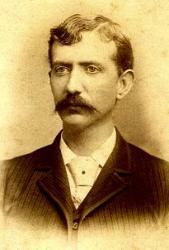
That's how Swedish lay minister Carl Broberg must have felt on his walk home from church, on a beautiful Sunday afternoon in 1885, as he enjoyed the blue sky and warm sunshine, the birdsong lifting his spirit, and peace filling his soul. Then, in the distance a thunderhead appeared. With staggering swiftness, the day changed. The sky darkened as thunder rolled and cracked, lightning flashed wildly, and winds buffeted the trees. Within moments of the previous tranquility, a storm lashed the countryside.
Carl wasn't frightened but gripped in awe at the mightiness of God's sudden display. Just as quickly, the storm ceased, and blue skies returned. The winds calmed, and the birds sang. Once again, Carl Broberg was mesmerized at God's power.
Like us, when we have those moments of awed, holy reverence, Carl wished to find the words to express what he saw and felt. That evening he penned a poem:
O (Thou)
great God! When I the world consider
Which Thou has made by Thine almighty Word;
And how the web of life Thy wisdom guideth,
And all creation feedeth at Thy board:
Then doth my soul burst forth in song of praise:
O (Thou) great God! O (Thou) great God!
Carl wrote nine verses to his poem titled in Swedish O STORE GUD. But that is only the beginning of the journey of this great hymn which has since been a favorite for generations. As the poem made it's way to places around the world, stanzas were added or taken away. Tempo was change. Here and there a word replaced.
In 1891, when Boberg was editor of the periodical Sanningsvittnet (“Witness of the Truth”), he published his poem again, this time to the tune of an old Swedish folk melody. Some say he wrote the poem with this tune in mind, others say he was inspired to use it when he first heard a congregation singing the lyrics to that tune. Either way, the song and tune became inseparable.
There were two English translations made. One by Stuart Hine, a British missionary in Ukraine. After learning the Russian version, he transcribed it to English, and produced the poem in a booklet of Russian Melodies and Hymns of Other Lands.
The other English translation, by E. Gustav Johnson, was published 1925 in The Children’s Friend, a periodical produced by The Swedish Christian Orphanage in Cromwell, Connecticut. His text and the Swedish melody were then published together in The Covenant Hymnal. It is Johnson's version that's considered to be a more faithful English rendition of the original Swedish text than the version we sing today.
It wasn't until April, 1954, when Baptist minister, Dr. J. Edwin Orr, professor of missions and founding board member of Campus Crusade for Christ, introduced the song to publishers in the United States. Then the hymn moved forward and changed once again. Orr had learned the song in India as it was being sung by tribespeople. He introduced it at the Forest Home Christian Conference Center in southern California where it was arranged as broadsheets by Gospel Light publications. That arrangement didn't survive. However, one of those sheets were carried home by the son and daughter of Christian music writer and publisher Tim Spencer. Spencer had found fame while singing with Sons of the Pioneers, along with Bob Nolan and Roy Rogers. Spencer contacted Stuart Hine and was given copyright to the music under Manna Music, Inc. The hymn changed again, this time to the version we most commonly know, and it was published in 1955.
Two years later, in 1957, it rose to even greater popularity when George Beverly Shay sang it at the Billy Graham Crusades at Madison Square Garden. It went on to be considered by many as the biggest song in Christendom, even being sung by Elvis.
That is the SHORT version of how we came to know and love this hymn.
Imagine hearing the majesty of this song, sung in this arena:
George Beverly Shay singing "How Great Thou Art"
Carl Broberg, born in 1859, passed into God's glorious presence in 1950. He could not have known on that day he strolled home from church, with thoughts of praise and wonderment toward God, how the poem he then wrote would one day influence millions. It will be interesting to meet him and talk together about his work in Heaven some fine day.
If you are enjoying these histories of famous hymns and their writers, don't miss
I enjoyed writing about art, beauty, and the very diversity in God's creation when I wrote Paint Me Althena, the story of an artist who's lost her way. Because we are made in God's image, we love also to create.
Ava Day buried love and walked away, but could her crooked path lead home, or has the time for second chances slipped away?
When I recently uploaded my novel The Softest Breath to audiobook, I was reminded of a beautiful hymn in the climax of the story. I can't tell you it's significance to the story without a huge spoiler, but in the process, I was called back again to the beautiful lyrics based upon Jeremiah 31:3; 2 Corinthians 5:14; and Romans 8:35.
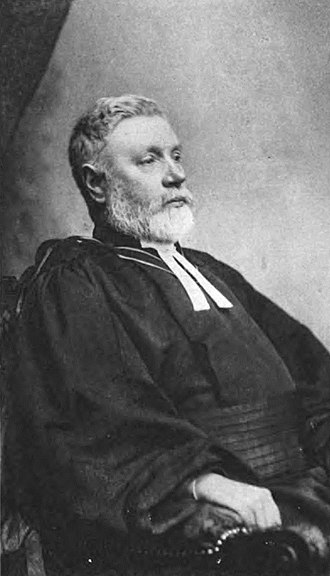
That hymn is titled "O Love That Will Not Let Me Go", and it is the most famous piece written by George Matheson (1842-1906), a Scottish minister who had gone blind at age twenty, but went on to become a brilliant scholar at Edinburgh University. In 1870 was awarded a Doctor of Divinity degree.
He was also a prolific writer and was said to have an astonishing ability to memorize lengthy passages. Some who heard him preach remarked that they had not realized he was blind.
Reverend Matheson published one volume of verse called Sacred Songs. But of all his written works, he said that none came to him like the famous hymn he wrote on June 6th, 1882, the night of his sister's wedding. It was late in the evening, while he was alone in the manse at Innelan, Argyleshire, Scotland, and the rest of his family had stayed the night in Glasgow. He tells that some grave suffering had happened to him, which was known to him alone, but caused mental anguish. It was then the verses flowed. He said:
"I have no natural gift of rhythm. All the other verses I have ever written are manufactured articles; this came like a dayspring from on high."
Rev. George Matheson, Church of Scotland Photo: Wikipedia Commons
Truly, Matheson's hymn speaks well to the brokenhearted who are yearning after hope and clinging to God's promises. The opening word of each stanza point to the faithfulness and provision of our great God: Love--for He holds tightly to us and nothing can snatch us from His hand, Light--for He forever promises guidance to our paths, Joy--that runs deep, and no one can take away, and Cross--reminding us of the One Who suffered for us, that we might have hope eternal, even amid our own sufferings.
Here are the lyrics to that worshipful hymn:
O Love that will not let me go,
I rest my weary soul in thee;
I give thee back the life I owe,
That in thine ocean depths its flow
May richer, fuller be.
O Light that foll’west all my way,
I yield my flick’ring torch to thee;
My heart restores its borrowed ray,
That in thy sunshine’s blaze its day
May brighter, fairer be.
O Joy that seekest me through pain,
I cannot close my heart to thee;
I trace the rainbow through the rain,
And feel the promise is not vain,
That morn shall tearless be.
O Cross that liftest up my head,
I dare not ask to fly from thee;
I lay in dust life’s glory dead,
And from the ground there blossoms red
Life that shall endless be.
The music was written in 1884 by Albert L. Peace, a gifted musician. His tune was titled St. Margaret (Peace).
Gaither Vocal Band - O Love That Will Not Let Me Go (Live)
If you're curious about how Reverend Matheson's hymn found its way into the climax of The Softest Breath, you can find it along with the entire Echoes of the Heart series here.
If you've already read these books, write to me and let me know if you remember what happened. naomimusch (AT) naomimusch.com
Last month I wrote about the famous hymn writer Isaac Watts. Let’s continue looking at the hymns and writers of the past whose lyrics have touched our hearts and encouraged our souls.
Many Christians watching this month’s presidential inauguration of President Trump quickly recognized the hymn Great is They Faithfulness that we heard playing at the beginning of the event in the capitol rotunda. (You can see that here if you missed it.) Such an awe-inspiring hymn it is, as it proclaims God’s faithfulness throughout the world, in every season, and through every circumstance! The lyrics hold great meaning in my own life, and perhaps you find hope, peace, and comfort in them too.
Two men combined their talents with earnest prayer to create this classic we’ve now been singing for ¾ of a century.
THOMAS O. CHISOLM
Thomas O. Chisolm was born in 1866, in a cabin in Franklin, Kentucky. Though a frail child, he became a school teacher at sixteen. At twenty-seven, he gave his life to Jesus Christ during a Gospel revival, and he became an ordained minister in 1903. Other than Chisolm’s inclement health which caused him to resign from the pastorate after only a year as a pastor of the Methodist Episcopal Church South, he lived what you might call an ordinary life.
Several years after leaving the ministry, Chisolm took a job as an insurance agent, moving around some. However, he wrote a great deal of sacred poetry during those years, penning over 1200 sacred poems in his lifetime. Many were printed in various Christian periodicals. His writing eventually led him to became the editor of The Pentecostal Christian Herald for a period of time.
Some of his poetry he sent in letters he exchanged with friend and little-known musician William M. Runyun. Runyun was particularly drawn to the piece titled Great Is Thy Faithfulness, and he determined to set it to music. Runyun said:
“This particular poem held such an appeal that I prayed most earnestly that my tune might carry over its message in a worthy way, and the subsequent history of its use indicates that God answered that prayer.”
The hymn's broad use didn’t occur right away. But it was published, and eventually, it came to the attention of a professor at Moody Bible Institute. In 1945 George Beverly Shea began singing it at Billy Graham’s evangelistic crusades. Great Is Thy Faithfulness soon swept the world.
One reason, I believe, that the hymn has resonated with so many is because of the Scriptural themes winding throughout.
Verse One reflects James 1:17 where we are told that there is no changing nor shadow of turning with an ever-faithful God.
Verse Two notes that all of God’s creation heralds His glory, as His Word points out time and again.
Verse Three speaks of our sin He not only pardons, but then how God grants us a kind of peace that passes our understanding, to endure as no other kind of peace can, 1 John 1:9. He also promises that His presence (the Holy Spirit in us and His Word to us) will cheer and guide us. And finally, how he will give us strength for each day, as it is needed. OH, how I need those things!
Then there’s that beautiful chorus, the root of the song, which hearkens to Lamentations 3:22-23, reminding us that God’s mercy is new every morning. It also reflects Philippians 4:19, pointing out how our Faithful Father will continue to provide for our every need.
Of the poem itself, Thomas Chisolm said:
“…I must not fail to record here the unfailing faithfulness of a covenant-keeping God and that he has given me many wonderful displays of his providing care, for which I am filled with astonishing gratefulness.”
As an author myself, I am incredibly inspired both by the words of this hymn and by the remarks of these two men who wrote and composed it. First, Chisolm yielded his talents to God. He wrote this poem first as a reminder to himself of God’s faithfulness and to show his own gratefulness to his Savior. Another of his works that has come to be treasured is Living For Jesus, composed by C. Harold Lowden.
For Runyun’s part, the fact that he so carefully bathed the project in prayer in order to give God the utmost glory and for the piece to possibly to bless others, shows me how I should treat every subject and story that God gives me to write about, and it reminds me how I should live my life in even the smallest, most ordinary ways.
In many regards, Chisolm lived an ordinary life. But God can use the most ordinary human to exclaim His glory and goodness. Now don’t you feel like singing along?
________________________________________
New news for an older title! The Deepest Sigh, book one in my Echoes of the Heartseries has finally come to audio and is free on Audible!
Farmer's daughter Marilla Eckert marries the man of her dreams, but soon faces the bitter realization that his devotion has always belonged to another. When heartache strikes on every front, an offer of comfort is hard to resist. Can they ever find their hearts' true homes?


.jpg)