Saturday, April 30, 2022

The WWII Comet Escape Line

by Cindy Kay Stewart

Today's post continues the story of the Comet Escape Line established during World War II to escort downed Allied Airmen safely out of Europe and back into the fight. If you missed the first two posts and would like to read them, they can be found here and here.

Dédée De Jongh - Founder of the Comet Line
Courtesy of the Imperial War Museum

In early May of 1942 after Paul De Jongh had fled to France, the two men who had taken charge of the Brussels end of the Comet Line were arrested and imprisoned. Paul's daughter and Dédée De Jongh's sister, Suzanne, worked with Baron Jean Greindl Laan, codenamed "Nemo," to continue operations. Paul stayed in Paris, and Dédée continued her dangerous trips escorting airmen to the south of France, across the Pyrenees into Spain, and into the hands of British consular officials.

A few months earlier, Nemo had become director of a canteen run by the Swedish Red Cross in Brussels. He ran the Comet Line from this location. Madame Scherlinck, a Swedish lady, was the canteen's patron, and through this agency food and clothes were provided for the poor and ailing children of the city. Nemo supplied bags of rice and flour from the Swedish Red Cross to the families sheltering the airmen. 

Peggy van Lier helped with feeding the children at the canteen, and she became Nemo's assistant in the Comet Line. The canteen became a cover for several young people who helped in the secret work. They were adventurous and eager to participate in facilitating the escape of Allied airmen.


Peggy van Lier
Courtesy of the American Air Museum in Britain

In an attempt to penetrate the rescue network, the Germans planted young English-speaking men into the countryside who posed as downed Allied airmen. This led to arrests and imprisonment. To counter the problem, eighteen-year-old Elsie Maréchal, who spoke perfect English, started testing the stories of the supposed airmen before taking them to homes in Brussels. The Belgian guides brought the men to St. Joseph's Church where Elsie asked them about their units, the planes they flew, and where they were stationed. While they waited inside the church, Elsie would report to Nemo at the canteen for further instructions.

St. Joseph's Church in Brussels
Public Domain

One wintry day in November of 1942, two German imposters were brought to St. Joseph's Church. Normal protocols weren't followed, and Elsie didn't know to meet the airmen. The Belgian guide from Namur took them to a house of a friend where he was given the Maréchal's address by people unaware of their underground activities. The two Germans who claimed to be Americans didn't act like Americans. Elsie noticed several red flags but thought she was overreacting. After fixing a meal for the men, Elsie went to the canteen. Nemo sent her back home with instructions not to allow the men to leave the house. In the meantime, the young men asked Elsie's mother if they could go for a walk. They left the house and returned shortly after with guns pointed at Mrs. Maréchal.

One by one the members of the Maréchal family returned home and were arrested along with others who showed up at their house, including Elvire Morelle who arrived from Paris early the next morning. The enemy agents reported on all the guides, shelterers, and helpers they had encountered in the Belgian line "from the Ardennes and Namur to the very center of the organization in Brussels." 

In two days, nearly 100 people were arrested, including innocent relatives thrown into prison as hostages. Many of these never survived to return home. In the previous six months, the Comet Line had rescued sixty airmen, but their operation wasn't over. New leaders reorganized the line and recruited more Belgians to carry on the work.

After Peggy van Lier successfully convinced the Nazis that she was not a participant in the operation, she was released and fled to England with a group of Allied servicemen on the Comet Line. Mr. Maréchal was executed by the Germans. Mrs. Maréchal, her daughter Elsie, and Elvire Morelle were sent to concentration camps in Germany, but they each survived and returned home after the war ended. 

Return on June 1st for the continuing story of the courageous men and women of the Comet Line.


*********

Resource: Little Cyclone by Airey Neave. Biteback Publishing Ltd, 2013, 2016.


*********

Cindy Kay Stewart, a high school social studies teacher, church pianist, and 
inspirational historical romance author, writes stories of hope, steeped in faith and love. Her first manuscript finaled in the Georgia Romance Writers Maggie Award of Excellence, placed second in the North Texas Romance Writers Great Expectations contest, semi-finaled in the American Christian Fiction Writer’s Genesis contest, and won ACFW’s First Impressions contest. Cindy is passionate about revealing God’s handiwork in history. She resides in North Georgia with her college sweetheart and husband of forty years. Their daughter, son-in-law, and four adorable grandchildren live only an hour away. Cindy’s currently writing two fiction series set in WWII Europe.


April 2022 BOOK DAY!

April Showers are a Great Time to Snuggle Up

With One of These Heartwarming Reads


THE WIDOW’S PLIGHT

The Quilting Circle (Book1)

A Sweet Historical Romance Series

By Mary Davis

Will a secret clouding a single mother’s past cost Lily the man she loves?

When Lily Lexington Bremmer arrives in Kamola with her young son, she’s reluctant to join the social center of her new community, the quilting circle, but the friendly ladies pull her in. Widower Edric Hammond and his father are doing their best to raise his two young daughters. Lily resists Edric’s charms at first but finds herself falling in love with this kind, gentle man and his two darling daughters. Can Edric forgive Lily her past to take hold of a promising chance at love?


BRIDE BY BLACKMAIL

By Debbie Lynne Costello

A broken heart, controlling father, and intrusive Scot leave Charlotte reeling. Accused of stealing an heirloom pin, she must choose between an unwanted marriage and the ruin of her family name. With her and her sister’s futures at stake, Charlotte must navigate through injustice to find forgiveness and true happiness. Eager to find the traitor who caused the death of his brother, Duncan comes to America attempting to fit into Charleston society. But when the headstrong Charlotte catches his eye, Duncan acquires a second mission—winning the lass's hand. After several spurnings, he uses unconventional ways of winning her heart.


WALL OF STONE

By Nancy J. Farrier

As the first anniversary of her parents' murder approaches, Chandra Kirby needs to get away from familiar places in order to deal with the loss. She arrives in England to take a bike tour, only to discover that she will be reunited with the only man she has ever loved, Pierce Stillwell—and with his girlfriend, Chandra’s high school nemesis.


TITANIC: LEGACY OF BETRAYAL

By Kathleen E. Kovach, et al.

A secret. A key. Much was buried on the Titanic, but now it's time for resurrection. Follow two intertwining stories a century apart. 1912 - Matriarch Olive Stanford protects a secret after boarding the Titanic that must go to her grave. 2012 - Portland real estate agent Ember Keaton-Jones receives the key that will unlock the mystery of her past... and her distrusting heart. Review: “I told my wife to move this book to the top of her reading list... This titanic story is more interesting than the one told in the Titanic movie... She will absolutely love it.”


MAGDELENA’S CHOICE

By Molly Jebber

Amish Historical Romance: Magdelena loves Amish life and her family, but her father insists she marry a deceitful man. Her father is blinded by Zach's sly behavior. She's in love with Toby, but her father doesn't approve. She’s desperate for a way out, but she doesn’t want to dishonor her father and Zach’s not giving up.


THE CRYPTOGRAPHER’S DILEMMA

By Johnnie Alexander

A Cryptographer Uncovers a Japanese Spy Ring

FBI cryptographer Eloise Marshall is grieving the death of her brother, who died during the attack on Pearl Harbor, when she is assigned to investigate a seemingly innocent letter about dolls. Agent Phillip Clayton is ready to enlist and head oversees when asked to work one more FBI job. A case of coded defense coordinates related to dolls should be easy, but not so when the Japanese Consulate gets involved, hearts get entangled, and Phillip goes missing. Can Eloise risk loving and losing again?


STRANDED WITH PEARLS

By Sherri Stewart

June 16, 1962 should be the best day of Gracie MacGyver’s life. After all, it’s her wedding day. But the closer she gets to the altar to marry Mr. Perfect, the more she realizes she’s making a colossal mistake. So she bolts and heads south or west—she doesn’t really care—wherever Route 66 takes her. But the day goes from bad to worse. Instead of a honeymoon in Bermuda, she’s spending the night in a jail cell in a small town in Illinois. And the sheriff seems to be enjoying her incarceration.


THIMBLES AND THREAD

By Suzanne Norquist, et al

4 Love Stories Are Quilted Into Broken Lives


“Mending Sarah’s Heart” By Suzanne Norquist

Rockledge, Colorado, 1884

Sarah doesn’t need anyone, especially her dead husband’s partner. With four brothers to mentor her boys and income as a seamstress, she seeks a quiet life. If only the Emporium of Fashion would stop stealing her customers and the local hoodlums would leave her sons alone. When she rejects her husband’s share of the mine, his partner Jack seeks to serve her through other means. But will his efforts only push her further away?


“Bygones” by Mary Davis

Texas, 1884

Drawn to the new orphan boy in town, Tilly Rockford soon became the unfortunate victim of a lot of Orion Dunbar’s mischievous deeds in school. Can Tilly figure out how to truly forgive the one who made her childhood unbearable? Now she doesn’t even know she holds his heart. Can this deviant orphan-train boy turned man make up for the misdeeds of his youth and win Tilly’s heart before another man steals her away?


LANEY

By Vickie McDonough

Laney Dawson is desperate to leave Council Grove, KS. Her abusive father is getting out of prison soon, and she refuses to allow him to hurt her again. With few options available for a young woman, she poses as Lane, a teen boy, and hires on with a family traveling the Santa Fe Trail to New Mexico. Laney regrets lying to the kind Buckley family, especially Ethan, the oldest of the five siblings. As her feelings for Ethan grow, she knows she needs to tell him the truth, but will he leave her at the next town when he learns she's a woman?


THE SILVER SUITCASE

By Terrie Todd

It’s 1939. Canada is on the cusp of entering World War II. Seventeen-year-old Cornelia Simpson has been heartbroken since the day her mother died. As a new tragedy provides still more reason to reject her parents’ faith, a mysterious visitor appears in her hour of desperation. Alone and carrying a heavy secret, she makes a desperate choice that will haunt her for years. Decades later, Cornelia’s granddaughter, Benita, is in on the brink of divorce when she discovers Cornelia’s diary. Now the secrets of her grandmother’s past will lead Benita on an unexpected journey of reconciliation and faith.


HUNT FOR A HOMETOWN KILLER

By Mary Dodge Allen

A Finalist in the 2022 Christian Indie Awards, mystery/suspense category.

“Hunt for a Hometown Killer kept us up all night. Suspense, humor, rapier wit, and a heaping helping of warmth and non-stop action enliven this delightful faith-flavored read. It’s packed with unexpected plot twists. We loved it!” 5-Stars - Pages & Paws Book Review Blog


DESTINY’S WHIRLWIND

(Book 2 of the Destiny Series)

By Catherine Ulrich Brakefield

“A deathbed promise, a dashing Rough Rider, the parable of the Sower takes on unimaginable consequences. Destiny’s Whirlwind by Catherine Brakefield is a beautiful inspirational love story that will reel you in and win your heart…The story is beautifully written and filled with triumph and heartbreak. I couldn’t put it down…” L.S. Amazon Reader  “My readers encourage my writing!” Catherine is an award-winning author of the inspirational historical romance Destiny series (Swept into Destiny, Destiny’s Whirlwind, Destiny of Heart, and Waltz with Destiny) and Wilted Dandelions.


MAIL-ORDER REFUGE

By Cindy Regnier

Rand Stafford isn't looking for true love. That trail left him with a shattered heart. What he needs is a wife to care for his orphan nieces. Desperate, he places an advertisement and hopes for the best. Fleeing her former employer, a Kansas cattle ranch sounds like the perfect refuge to Carly Blair. It is her best shot at freedom. But its sanctuary comes with a price—a husband. While marrying a man she doesn't know means sacrificing her dreams, it's better than what she leaves behind. Or is it?


COUNT THE NIGHT BY STARS

By Michelle Shocklee

1961. After a longtime resident at Nashville’s historic Maxwell House Hotel suffers a debilitating stroke, Audrey Whitfield is tasked with cleaning out the reclusive woman’s room. There, she discovers an elaborate scrapbook filled with memorabilia from the Tennessee Centennial Exposition. Love notes on the backs of unmailed postcards inside capture Audrey’s imagination with hints of a forbidden romance . . . and troubling revelations about the disappearance of young women at the exposition. Audrey enlists the help of a handsome hotel guest as she tracks down clues and information about the mysterious “Peaches” and her regrets over one fateful day, nearly sixty-five years earlier.


Friday, April 29, 2022

Is there a rosy side to some WWII POW history?


When we think of prisoners of war during WWII, we naturally think of death camps, starvation, abuse, and a long season of suffering. We don't usually think about prisoners of war held here in the United States 
— of Germans and Japanese soldiers sitting out the war on American soil.

We might think of internment camps, of the tragic affair of American-born families of Japanese heritage who were taken from their homes, families, and businesses and housed behind fences, feared as "threats". Americans of German descent were scorned and ridiculed, and some of them were arrested and confined as well.

Yet, we rarely consider the many thousands of prisoners shipped here from overseas to be incarcerated in camps and the tens of thousands of those men
 who were sent to work in American fields and factories. Yet they were.


When I wrote my novel Season of My Enemy which releases on June 1st, I was inspired by many accounts of the lives of those prisoners and of the Americans who were affected by their presence here. Here are just a few of the true stories/incidents that gave me inspiration for my novel:

  • Clem Batz of Sun Prairie, Wisconsin watched the prisoners work. He said, “I was about 11 years old at the time, so it would have been 1945. There was a crew of German prisoners for the farm, and the fellows picked the corn by hand. It was all picked by hand ‘til the 50s, so they’d pick the corn and throw it in the wagon. At noon, they’d bring lunch for them (from the branch camp) and they’d always bring a guard. That was kind of funny because they never had a guard while working. My dad spoke German fluently, and he’d have them quit a little early to relax and visit a little bit.”

  • Ruth Barrette was a teenager during the summer of '45 she spent picking cherries with German prisoners — boys about her own age — in her family’s orchard. She called that season a turning point in her life. As pails filled with ripe fruit, the boys shared with her the longing they had of returning home to families torn apart by a war they never asked for. Residents of rural farm communities like the one where Miss Barrette lived soon came to learn the German prisoners who were allowed to work were not Nazis at all, but young men and boys drafted into Hitler's reign of terror. Here in Wisconsin, where about a third of the population is of German descent, many of those prisoners might have been distant relatives, a fact that was not lost on Wisconsinites.

  • Unlike what Japanese-Americans endured in the western coastal states, the German prisoners in the upper Midwest were treated with a certain degree of hospitality. David Rumachik, a preteen at the time, remembered his father hiring German men and boys as young as thirteen to pick their family's 60 acres of tomatoes. He said, “My mother talked to them and set out bowls of fruit for them. They were people, just like us, so it was hard for me to look at them and think that they were the enemy."

  • In my coming novel, Fanny O'Brien's mother sets out lunch for the prisoners and sometimes gives them slices of baked bread after working the pea harvest. That bit of inspiration came from situations like that of Marge Lind who recalls her father hiring workers to help with the pea harvest on the Linds' farm. Due to a lack of the usual migrant workers during the war, the soldiers who were housed in a large cattle barn near the Baptist Church were trucked in to work the fields. The POWs cut and loaded pea vines onto a truck sent to the viners. Then the peas would be gleaned off and shipped on to a local cannery. Lind said that at noon the men gathered at the family's dooryard where lunch was served. "They were just teenage boys, nice kids that my mother baked bread for,” she said in later life. “For years my folks got letters from some of the boys after they returned home. There was that kind of a connection.”

  • Another woman whose mother grew up during that time states, "My mother lived at Mike Miller's orchard/picking camp as a girl. Her dad managed it. She has always told us stories of talking with these men behind the fence. They would show her pictures of their own children and get teary-eyed. If grandma baked cookies the girls would sneak them through the fence. When the men were gone working in the orchard, grandpa would take the girls in the mess hall to sweep and clean."

  • Military chaplains or local ministers held services for German prisoners, and it was not uncommon for nearby congregations to allow military guards to truck PWs to services. Be that as it may, the army kept most prisoner locations on the low-down, as not not everyone was keen on having the prisoners in their areas or working alongside American men and women in their communities. Many American soldiers who fought in horrible conditions overseas or were captured themselves, gave a good deal of kickback in their opinions about the supposed "cushy life" of the German prisoners. After the war, many records from the camps were destroyed.

In an effort to protect photograph copyrights, I don't include a lot of pictures in this post, but here's a link to 22 historic photos of German soldiers who worked in Wisconsin's fields and factories during WWII and formed relationships with citizens, including a photograph of Kurt Pechmann whose story I share below.


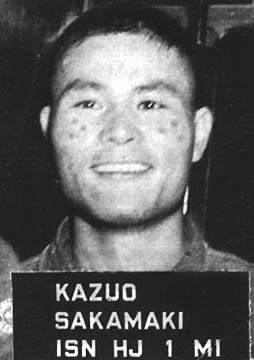
Not to give an incomplete picture, yes, there were Nazis taken as prisoners. Camp McCoy in west-central Wisconsin housed 5000 German prisoners, and some of them were known Nazi sympathizers. The camp also housed 3,500 Japanese and 500 Koreans and a number of Italians also. McCoy even held America's first World war II POW, Kazuo Sakamaki — America’s first World War II POW 
— captured during Japan’s attack on Pearl Harbor. Sakamaki was a Japanese naval officer whose midget submarine ran aground. Out of the ten men operating five such two-man subs, only Sakamaki survived. After unsuccessfully attempting to scuttle his sub, he collapsed unconscious on a beach where he was found by American soldier David Akui and taken into custody.


Sakamaki in U.S. custody


Outside of Camp McCoy, however, approximately 13,000 more German soldiers were placed at some thirty-eight make-shift camps all over the state 
— and this is just speaking of Wisconsin. 511 such camps existed in states all across the Union, camps dedicated to housing prisoners who worked in the agriculture industry. Here, they set to work harvesting all manner of crops including sugar beets — a critical commodity used for making the industrial alcohol needed to manufacture munitions and synthetic rubber.

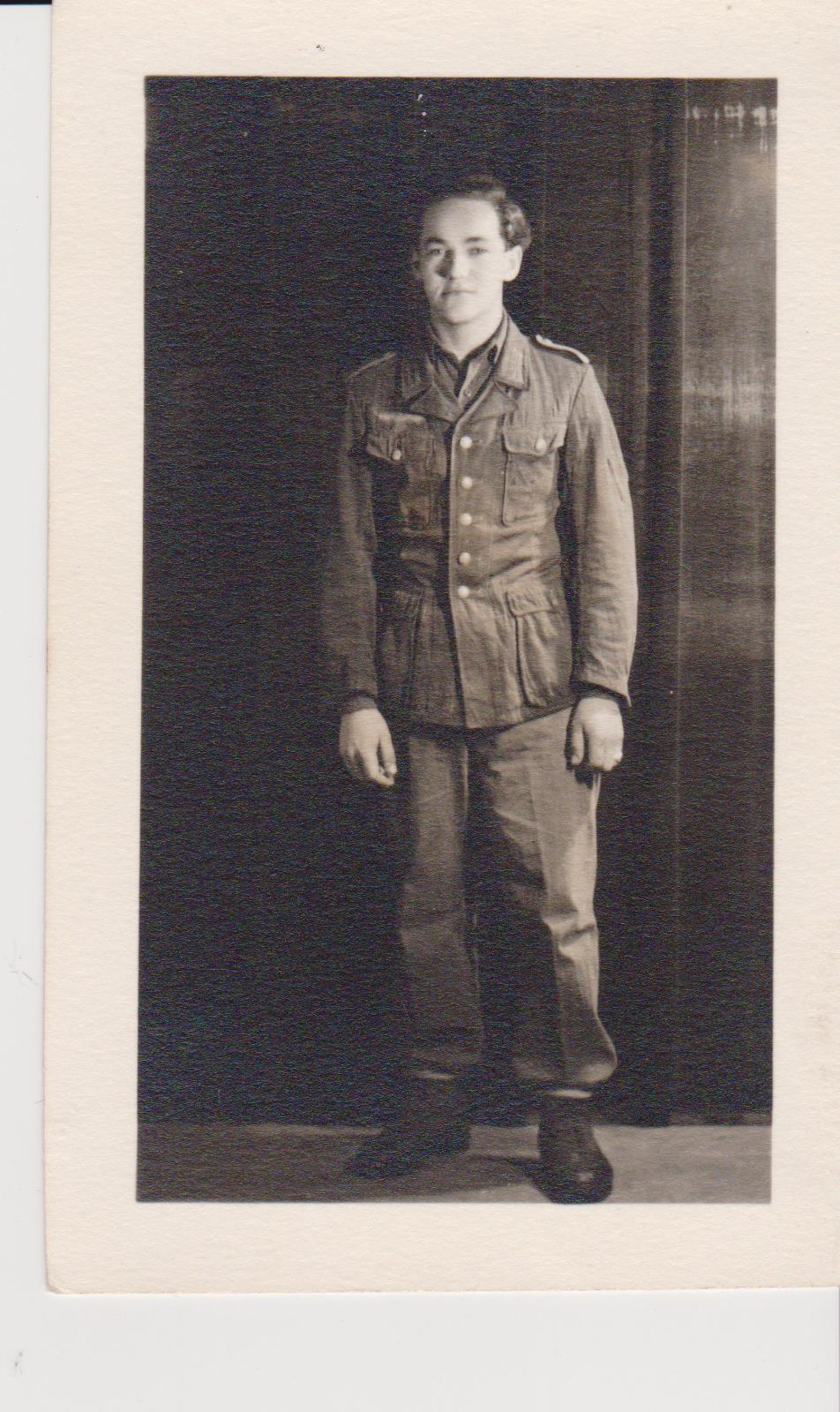
  • Probably one of the most well-known accounts of a German prisoner, one that had a strong influence on my novel Season of My Enemy, is the story of Kurt Pechmann, a German granite cutter who had been drafted into the army and assigned the inglorious task of digging ditches. When his infantry division was moved to Russia, he said that lice helped keep them awake and alive as temperatures fell as low as eighty below zero. After surviving frostbite and being transferred to Italy, he stole olives to survive, but he was eventually captured by British forces. Because he'd always been told and believed that Americans, British, and Russians were bad, he was convinced he must be a Nazi. However, after arriving in the U.S. and enjoying his first meal of smoked bacon and "bread that tasted like cake", he began noticing the differences in life from what he'd always been told.

Sent to work in a Wisconsin canning factory along with his fellow prisoners, he enjoyed coffee and chocolate donuts topped with sprinkles as a snack handed out to those working the midnight shift. Working on a farm, he and his fellows were complimented for their work ethic, given a feast from the farmer, and in another town a truck even brought them a keg of beer once a week.

Kurt Pechmann in Camp Hartford in 1945 


Many prisoners shared a camaraderie with the guards, were allowed to form soccer teams, and even enjoyed films which at first consisted of propaganda but later included popular entertainment. Some even took college courses and acquired degrees.

After the war, all prisoners were repatriated back to Germany, but as many as 5000 Germans who'd previously been prisoners like Pechmann emigrated back to America through proper channels, and their descendants live here today.

After Pechmann was repatriated, he married and came back to America with his new wife Emilie. Here, he established himself as a businessman in stone masonry and memorials. Along with creating tombstones, he also went on to build and repair monuments to American veterans. He was later recognized in a letter from President Ronald Reagan and given an honorary Purple Heart.


WHAT ABOUT SABOTAGE AND TROUBLE-MAKERS?

In my research, I discovered that only compliant prisoners were allowed to work outside of the main or branch camps. Within the branch camps themselves, comrades disciplined trouble-makers. As in my novel, some prisoners might stage work stoppages for some reason, but only a very few made attempts at sabotage or escape. Usually, if there was an escape, it turned out to be one or two men who walked off the compound in search of a beer or some women.

The more sensible prisoners preferred being well-fed, well-treated, and not being shot at. Some guard did uncover weapons such as wire cutters, hand saws, hammers, knives, or sharpened screwdrivers. If an undetected SS officer joined other PWs, he usually tried to stir up trouble and resistance. (Another inspiration for my story.) Trouble-makers were usually quickly spotted and rooted out. 

MY NOVEL IS ROMANTIC, BUT DID AMERICAN WOMEN REALLY FALL FOR PRISONERS?

Well, you tell me. I'll point out that it was illegal for a POW to marry in the U.S.; however, after the war Washington enabled the fiancés of former POWs to set sail for Italy on surplus troop transports with a chaperone such as an aunt or mother. Each war bride carried two trunks of personal luggage along with the documents required for a legal marriage in Italy. By marrying in Italy, the women could then legally bring their new husbands back to America to live. Do you think that answers the question?
So is there a small, rosy side to WWI history? While I don't under-emphasize the horrors and atrocities of that or any war (including in my novel), to see that in at least one small aspect there was a time and place where people remembered that their enemies were human beings with hearts as aching and wanting as their own, well . . . that is a good thing. 

With that, I'll conclude. Here are a few other resources I used while writing my novel, which may interest you also:

fa

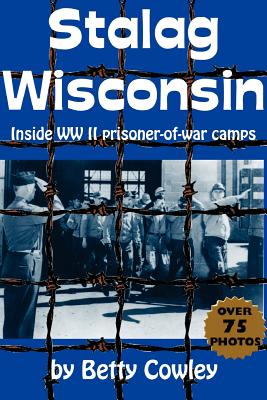
"Stalag Wisconsin: Inside WWII Prisoner-of-War Camps" by author Betty Cowley features more than 350 interviews, and serves as a comprehensive history of Wisconsin camps. This book was a real treasure as I wrote Fannie's story. 

An article that encapsulates much of the German POW experience:
Washington Post: Enemies Among Us: German POWs in America

For my fellow Wisconsinites, here is a list of all the WWII branch camps in Wisconsin and their locations. 


Season of My Enemy

The realities of WWII come to a Wisconsin farm bringing hope and danger.

Only last year Fannie O’Brien’s future shone bright, despite the war pounding Europe. Since her father’s sudden death however, with one older brother captured and the other missing, Fannie has had to handle the work of three men on their 200-acre farm, with only her mother and two younger siblings to help. That is until eight German prisoners arrive as laborers and, as Fannie feared, trouble comes with them.

Crops take precedence, even as accidents and mishaps happen around the farm. Are they leading to something more sinister? Suspicion grows that a saboteur may be among them. Fannie is especially leery of the handsome German captain who seems intent on cracking her defenses. Can she manage the farm and hold her family together through these turbulent times, all while keeping the prisoners—and her heart—in line?

Keep updated on Season of My Enemy and my other books, and get in on some monthly drawings by signing up for my newsletter right here.

Thursday, April 28, 2022

The History of Covered Wagons and their Design – with Giveaway By Donna Schlachter


When we hear the words Covered Wagon, we likely envision a long train of wagons with white canvas covers pulled by four prancing horses, while the parents sat side by side facing forward, and the children skipped alongside or rested in the wagon bed.

However, the reality of traveling west included long, hot days; cold, stormy nights; raging rivers overflowing their banks; miles of desert with no sign of water; discarded belongings along the trail; and five months of walking more than 2,000 miles, hoping to find something better than they left behind.

The majority of wagons were made from ordinary farm wagons, with bent metal or wooden hoops from which to hang the canvas covering. Often this cover was patched together from various sources, or perhaps wasn’t even canvas—flour sacks, saddle blankets, and bedding might be used in a pinch.

These wagons needed to be strong enough to carry the people, their goods, and supplies for the trip, without wearing out the team hauling it. Many overloaded their wagons, and found themselves forced to discard family heirlooms which impeded their progress when the wagon sank to its hubs in mud.

The use of metal was kept to a minimum, since iron and other heavy metals were all that was available. Tires were rimmed so they wouldn’t wear out, and moving joints, such as axles and hounds—which connected axles to axle assemblies and the tongue.


An icon of the Westward Expansion folklore is the Conestoga Wagon. With its raised floor bed, bow-shaped front, and 12,000 pound capacity, however, the Conestoga was too heavy for most of the trails heading west. Instead, this gargantuan vessel—which garnered the name of Prairie Schooner that was soon applied to all covered wagons—was better suited for the undeveloped roads of the colonial East, falling out of favor due to the arrive of the railroad, by the 1870s. However, some headed west later on, mostly used as cargo wagons that traveled the better developed trails between cities, hauling cargo and supplies. Conestoga wagons originated in Germany, and were thought to have been introduced to German settlers to haul cargo to Philadelphia around 1718. While there was a pull-out board called the lazy board where a teamster could rest if needed, usually he walked alongside.

Most often oxen were used as the draft animals hauling the wagons. They were cheaper, more reliable, and almost as fast as horses or mules. Horses had less stamina and more physical problems, particularly where fresh grass and water were in short supply, and mules—well, the saying stubborn as a mule isn’t an exaggeration.

While a covered wagon averaged about 40 square feet, additional storage was established by framing in empty spaces, such as under the driver’s seat for tools, brackets or hooks to hold water barrels, a feed box hung on the tailgate, and a bucket containing tallow or grease hanging from a nail on the rear axle to keep the joints lubricated.

You can watch a video I took of crossing a river in a covered wagon here: https://www.youtube.com/watch?v=o3xfD10YWQo


Question: What would be something you couldn’t possibly leave behind on your journey westward? Please disguise your email address so I can contact you should you win. Name AT carrier DOT extension. For example, donna AT Livebytheword DOT com


I will draw from all responses for a print (US only) or ebook copy of Calli, my latest Prairie Roses Collection release. You can learn more about Calli and the rest of the series at: https://www.amazon.com/dp/B07R8DSMB4

About Donna:
A hybrid author, Donna writes squeaky clean historical and contemporary suspense. She has been published more than 50 times in books; is a member of several writers groups; facilitates a critique group; teaches writing classes; ghostwrites; edits; and judges in writing contests. She loves history and research, traveling extensively for both.

www.DonnaSchlachter.com Stay connected so you learn about new releases, preorders, and presales, as well as check out featured authors, book reviews, and a little corner of peace. Plus: Receive a free ebook simply for signing up for our free newsletter!

www.DonnaSchlachter.com/blog


Resources: photos from WikiPedia

https://en.wikipedia.org/wiki/Covered_wagon

https://en.wikipedia.org/wiki/Conestoga_wagon

https://oregontrailcenter.org/the-wagon


Wednesday, April 27, 2022

IT ALL COMES OUT IN THE WASH


History teaches us when we walk through the looking glass of time, we see faces much like our own.

It is the details of everyday life that differ. The type of house the family lived in – three bedrooms, two bath or one-room mudbrick with a courtyard housing a goat. The kind of music – streaming service or lyre. The kind of food – chips and dip or lentil stew and flatbread.

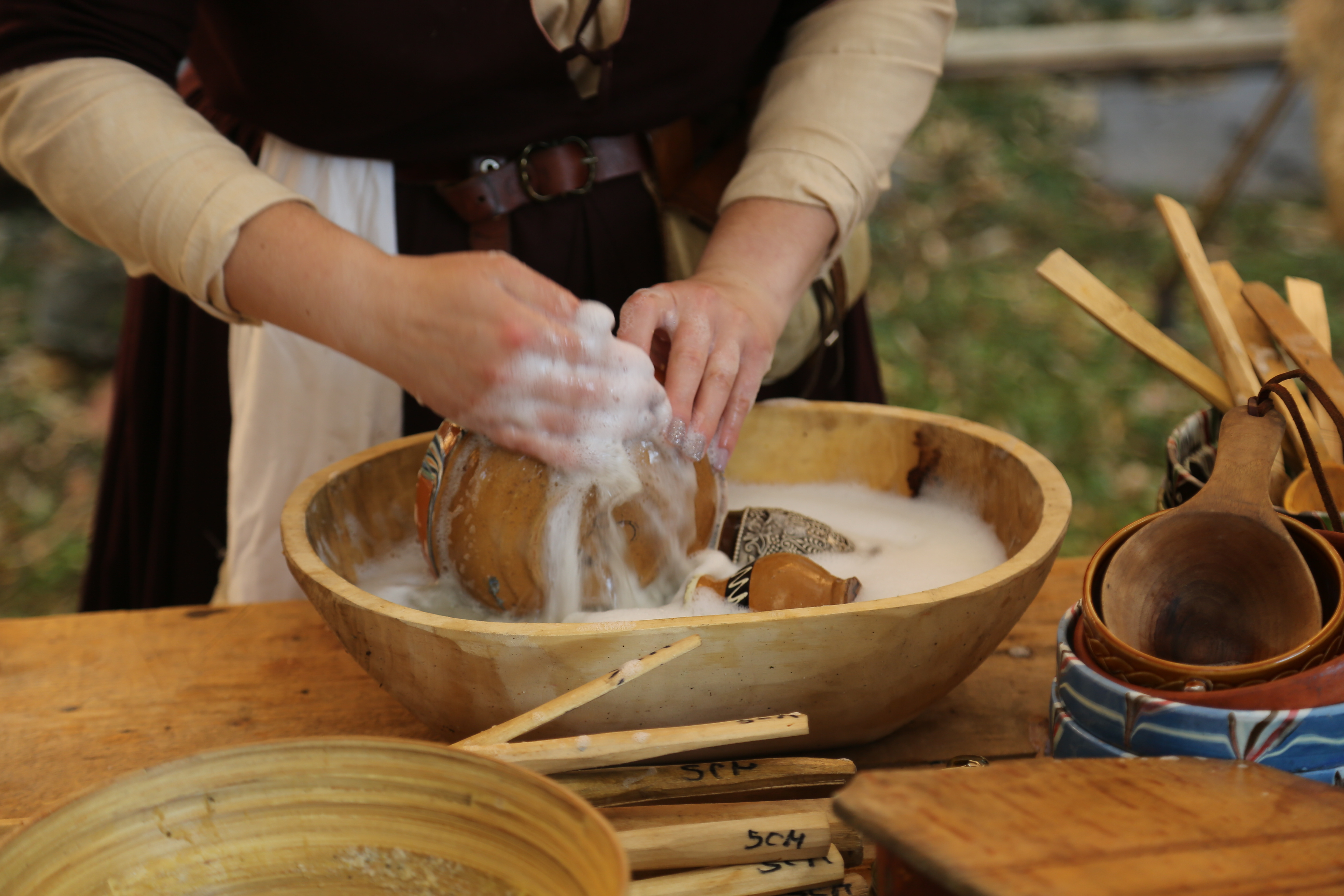
Bathing is an everyday occurrence to moderns, not so much, the ancients. Over time, innovations such as canals, pumps, and piped water to homes have changed how humans are able to wash themselves and their clothes.


One interesting point. In Old Testament times, it was a man’s job to wash the dishes. Or at least to dry them.  

2 Kings 21:13 ~ And I will stretch over Jerusalem the line of Samaria, and the plummet of the house of Ahab: and I will wipe Jerusalem as a man wipeth a dish, wiping it, and turning it upside down.


WASHING AND BATHING


Ahem. Back to washing in ancient times. Because I write biblical novels, I’m interested in many aspects of everyday life in biblical times. People washed themselves and their clothes for hygienic and ritual cleansing, using rivers and springs when they were available, lavers, jugs, and basins when they were not.

For example, Pharaoh’s daughter was bathing by the river when she discovered Moses (Exodus 2:5). King Ahab’s blood was washed from his chariot “near the pool where the prostitutes bathed" (1 Kings 22:38). Elisha told the leper Naaman to wash in the Jordan River seven times to be healed (2 Kings 5:10).

SOAP AND PERFUME


Sometimes soap is mentioned. “No amount of soap or lye can make you clean. I still see the stain of your guilt.”  (Jeremiah 2:22). According to Easton’s Bible Dictionary, the Hebrew word borith, often translated soap, refers to a cleansing agent made from ashes of wood or plants, particularly salsola kali (salt wort), abundant on the shores of the Dead Sea and the Mediterranean.

Hyssop, Hebrew ezov, is also mentioned in regard to cleansing, “Purge me with ezov and I shall be clean; wash me and I shall be whiter than snow" (Psalm 51:7). Identified with Syrian Hyssop, the plant is popular as a spice or tea, with a pleasing fragrance.

Naomi encouraged Ruth to bathe and perfume herself before presenting herself to Boaz at the threshing floor. (Ruth 3:3).


FOOT WASHING


When full-body bathing was not possible, washing the hands, face, and feet could be accomplished with water, jug, and basin. Most people wore only sandals and their feet became dirty on the unpaved roads. It was customary for a person to wash his feet before entering his home. In a wealthy person’s home, a servant met guests at the door to perform this service.

Many are familiar with the story of Jesus acting as the servant and washing the feet of his disciples. This occurred during the Passover, when spring rains would have been falling and the streets of Jerusalem especially muddy. In this instance, Jesus humbly portrayed both physical and spiritual cleansing.


Geologists have uncovered many interesting artifacts related to washing in ancient times.
  • A tenth-century BC tub in the sacred precinct at Tel Dan.
  • Terra-cotta bathtubs from Philistine sites at Ashdod and Ekron.
  • An 8th-century BC figurine of a woman bathing in a shallow tub from Achzib.
  • Pottery basins for foot-washing at Samaria, Megiddo, and Lachish.

For further reading: 
Insights Into Bible Times and Customs, G. Christian Weiss
Daily Life in Biblical Times, Oded Borowski
Dictionary of Daily Life in Biblical & Post-Biblical Antiquity, Yamauchi & Wilson
Plants of the Bible, Michael Zohary


RAIN ~ Whispers in the Wind Book 1

Aban yearns to join the priesthood of Ba'al, unlock the power of the rain god, and hear the deity's voice. But first, he must survive a perilous initiation ceremony. 

When the mysterious prophet Elijah interrupts the rites, overturns the idol, and curses the land with drought, Aban must choose a side in Yahweh's war against the Ba'als - and it may cost him his life.

Book 2, working title WHIRLWIND, coming February 2023.


Dana McNeely dreamed of living in a world teeming with adventure, danger, and romance, but she had a problem—she also needed a lot of peace and quiet. She learned to visit that dream world by stepping into a book.

Inspired by the Bible stories of Elijah, Dana wondered about the widow of Zarephath and her son. Who were they? What was their life, before? How did the boy change after he died, saw the other world—and came back?

Those questions led to Dana writing RAIN, in which she built her dream world of adventure, danger, and romance. Peace and quiet, however, have remained elusive.

No stranger to drought, Dana lives in an Arizona oasis with her hubby the constant gardener, two good dogs, an antisocial cat, and migrating butterflies.

Learn more about Dana and her books at her website: DanaMcNeely.com