Showing posts with label #Obedientuntodeath. Show all posts

Tuesday, July 21, 2026

The Most Powerful and Notorious Address on Earth - Domus Augustana Part 1

by Liisa Eyerly


by1 #1 AI image  #2 https://romeitaly.ca/images/domusaugustana.jpg

Today, the Domus Augustana is one of the most impressive ruins on the Palatine Hill, but only a fraction of the palace remains standing. Perched atop Rome's famous hill, the private residence of the emperors was one of the most powerful addresses in the ancient world. 
In 96 A.D. when my Secrets of Ephesus murder series takes place, Domus Augustana was the Heart of an Empire, and the palace would have looked vastly different than today. The first image reimagines what it could have looked like two thousand years ago.

 The first image reimagines what it could have looked like two thousand years ago.
  • White marble columns lining the peristyles
  • Pools reflecting sunlight
  • Cypress trees, roses, box hedges, and topiary
  • Colorful frescoes covering walls
  • Bronze and marble statues
  • Water flowing through fountains and channels

From the Palatine Hill, emperors ruled with seemingly unlimited power; adopting the title of Principate instead of emperor or king, to enforce the illusion that they were not dictators. During the period from Augustus in 27 BC through the reign of Marcus Aurelius in AD 180—the emperor, supported by alliances within the army, the Senate, and the Praetorian Guard, was essentially untouchable. There was no legal impeachment, voting him out, or forcing him from office. 

If an emperor became egotistical, unstable, cruel, or simply unfit to rule, Rome had only two practical remedies: a military coup or assassination. As a result, the imperial throne was both the most powerful seat in the world and one of the most dangerous. Assassination of Julius Caesar By Vincenzo Camuccini - Own work, user:Rlbberlin, Public Domain, https://commons.wikimedia.org/w/index.php?curid=145037989

The palace Domus Augustana was the perfect setting for murder. Thirty-seven emperors are documented as having been murdered—not including Nero, who died by suicide after the military turned against him. The palace’s vaulted chambers, stairways, and multi-level terraces descended the hillside, while subterranean rooms and passageways used by servants, guards, and maintenance workers still survive today. It offered countless hiding places for an assassin, escape routes for a guilty servant, or opportunities for a Praetorian bodyguard to abandon his post.
 

1. Nero's suicide, 2. Caligula assassinated, 3. Claudius poisoned, 4. Galba assassinated, 5. Domitian assassinated. As fascinating as the palace itself is, its most enduring legacy may be the assassination that occurred within its walls—an event that launches Powers of Death, the third book in the Secrets of Ephesus series.

Galba CC BY-SA 4.0 <https://creativecommons.org/licenses/by-sa/4.0>, via Wikimedia Commons
Domitian I, Sailko, CC BY-SA 3.0 <http://creativecommons.org/licenses/by-sa/3.0/>, via Wikimedia Commons
Claudius Naples National Archaeological Museum, CC BY 2.5 <https://creativecommons.org/licenses/by/2.5>, via Wikimedia Commons
Caligula Sergey Sosnovskiy from Saint-Petersburg, Russia, CC BY-SA 2.0 <https://creativecommons.org/licenses/by-sa/2.0>, via Wikimedia Commons
Nero Glyptothek, Public domain, via Wikimedia Commons


Step into the shadowy streets of 96 AD Ephesus, where danger lurks around every corner, and the line between friend and foe is razor-thin. Fortunes of Death, plunges you into a world where faith is tested, alliances are shattered, and one woman's courage could be the difference between life and death.

Sabina, a fierce young Christian widow, is thrust into a deadly game when a wealthy citizen is murdered. With her friend’s life hanging in the balance, Sabina must unravel a web of lies, deceit, and hidden motives. Every clue she uncovers brings her closer to the truth—and closer to becoming the next victim.

This isn't just a murder mystery. It's a gripping tale of faith, resilience, and the power of one woman standing against the darkness.


or purchase my books at:


Mystery, murder, and mayhem aren’t your typical Christian themes—but why should secular authors have all the fun solving crimes in ancient Rome? My love of history, scripture, and whodunits led me to blend faith with intrigue, bringing the world of the early Christians to life. Writing from my home in the woods of northern Wisconsin, I also draw inspiration from my travels to Turkey, Greece, and Italy, where I’ve walked the same streets my characters once did. Through historical mysteries, I explore a time when faith was a matter of life and death—literally.


Sunday, June 21, 2026

The Island Paradise: Where Royal Women Disappeared

by Liisa Eyerly

There is no shortage of dark deeds in Roman history. For historical novelists, weaving these real people, places, and scandals into fiction is one of the most rewarding ways to bring the ancient world to life.

In the first two books of the Secrets of Ephesus series, Emperor Domitian's relentless persecution of Christians makes faith a dangerous choice. His assassination sets the stage in the upcoming book, Powers of Death, and sends my sleuth, Sabina, on a trail of clues that leads to the eerie island of Pandateria—modern-day Ventotene.

Like the other Pontine Islands, Pandateria belonged to Emperor Augustus (31 BC–AD 14). Early in his reign, he transformed the remote volcanic outcrop into a lavish imperial retreat complete with terraces, gardens, expansive thermal baths, aqueducts, and sea-facing promenades. From a distance, it must have appeared idyllic—a glittering paradise rising from the Mediterranean.  (image by ChatGPT)

Yet beneath the luxury lurked a darker purpose.

Its isolation made Pandateria an ideal place to send inconvenient relatives. Roman society frowned upon openly murdering family members, especially imperial women. Exile offered a more respectable solution. A troublesome wife, daughter, or niece could simply vanish from public life while technically remaining alive.

A gilded prison, however, was still a prison.


Augustus banished his daughter, Julia the Elder, to Pandateria in 2 BC. In AD 29, Emperor Tiberius exiled Agrippina the Elder there, where she eventually died of starvation. Later, Domitian reportedly exiled both his wife, Domitia, and his niece, Flavia Domitilla, who is honored today as a Christian saint. Across the empire, exile was a familiar tool of control; even the Apostle John received the visions recorded in Revelation while banished to the island of Patmos. (Agrippina the Elder via Creative Commons, Wikipedia)

Today, the remains of Augustus's vast seaside complex—known as Villa Giulia—still cling to Ventotene's windswept cliffs. Archaeologists have uncovered courtyards, cisterns, servants' quarters, and subterranean service passages leading down to the sea. 

Much of the palace itself has vanished after centuries of stone robbing, treasure hunting, careless excavations, erosion, and quarrying. Entire wings, upper stories, and decorative elements have disappeared, leaving only fragments of what was once a sprawling imperial estate. 

That loss somehow makes the site even more haunting. 

Standing on Punta Eolo, gazing across the same waters once viewed by Augustus, Julia, Agrippina, and perhaps Flavia Domitilla, it is easy to imagine the uneasy contrast between beauty and captivity. The surviving baths, terraces, and underground corridors hint at extraordinary luxury. Yet they also whisper of isolation, political intrigue, and lives quietly erased from history.  
https://magazine.snav.it/ventotene-punta-eolo/?utm_source=chatgpt.com

Pandateria was paradise for some.  For others, it was the last place they were ever truly free.

Step into the shadowy streets of 96 AD Ephesus, where danger lurks around every corner, and the line between friend and foe is razor-thin. Winner of the Eric Hoffer First Horizon Award, Obedient Unto Death launches a gripping historical mystery series set in the perilous world of first-century Rome. In Fortunes of Death, fearless Christian sleuth Sabina returns—risking everything to expose murder, magic, and corruption beneath the empire’s glittering surface. With rich historical detail and powerful spiritual themes, author Liisa Eyerly delivers intrigue, danger, and hope in equal measure. Reviewer Deborah Anne raves: “Murder mystery—Intrigue—Love—Fellowship through Christ. This series has it all! Eyerly is wonderful! If you’re tired of boring—read this series! I love a good mystery!” Prepare to be hooked!
Visit me at my website, on my Author Facebook page,

or purchase my books at:

Mystery, murder, and mayhem aren’t your typical Christian themes—but why should secular authors have all the fun solving crimes in ancient Rome? My love of history, scripture, and whodunits led me to blend faith with intrigue, bringing the world of the early Christians to life. Writing from my home in the woods of northern Wisconsin, I also draw inspiration from my travels to Turkey, Greece, and Italy, where I’ve walked the same streets my characters once did. Through historical mysteries, I explore a time when faith was a matter of life and death—literally.


Saturday, February 21, 2026

Roman Citizenship, the Gold Standard

By Liisa Eyerly

Historical authors and readers must navigate a murky and treacherous landscape when writing. Murky because we don’t know all the facts and nuances of any period. So much has been lost to the melting ice cubes of time. Treacherous, because peering into the past confronts us with the impossible task of disconnecting from our present-day selves, modern ideas, and our evolved knowledge base.


Suspending moral judgment on the culture, rules, and practices of the Roman Empire, 2,000 years ago, can be especially challenging. Developing characters while distancing them from modern-age perspectives can be difficult. Depicting beliefs where slavery is neither right nor wrong, simply an accepted way of life; or exposing newborns to nature to die, as a common-sense solution for unwanted children; or their choice of mass capital punishment, ignites moral outrage. Is there a limit to how far we can suspend our beliefs, especially when it comes to our values, good and bad, right and wrong?

But to be fair to the times, we must try as much as possible.

Modern democracies work hard to include all citizens in their country's rights and responsibilities, with equality for all, a laudable goal. But Roman society was anything but equal. It was based on a ladder of legal identities, a tiered system of status, and privilege.

Almost every aspect of a person’s life was governed by their legal designation, and Roman Citizenship was at the top, the gold standard of privilege, power, and rights. And unsurprisingly, a major catalyst for power struggles, resentment, and rebellion in the Roman world.

A. Roman Citizens (Cives Romani)  
* Full rights and protections
* Included elites, veterans, colonists—and some provincials
* Women were citizens too, though without voting or office-holding rights

B. Latins (Latini) Originally from Italy, later expanded
* Partial rights- a “citizenship-adjacent” status
* Could trade and own property
* Sometimes eligible for citizenship after holding local office

C. Freedmen (Liberti)
* Former slaves who had been legally freed
* Became Roman citizens, but with limits:
     * Could not hold high office
     * Owed loyalty and service to former masters
* Their children, however, were full citizens

D. Provincials (Peregrini)  
* The majority of the empire
* Free people, but not citizens
* Governed by local laws, not Roman civil law
* Vulnerable to:
     * Torture
     * Summary punishment
     * Exploitative taxation
* Could gain citizenship through:
     * Military service
     * Imperial favor
     * Collective grants to cities


E. Slaves (Servi)

* Considered property, not persons
* Not determined by race or ethnicity
* No legal rights
* Could be punished, sold, abused, or killed (with some limits in later periods)
* Manumission (freeing a slave) was common—and strategic

Ironically, a freed slave could outrank 
a freeborn provincial in legal status. And it was one of Rome’s quiet engines for social change and mobility.  (Collared Roman slaves / Ashmolean Museum, Photo by Jun, Wikimedia Commons)
Why This Mattered for Christians

Christianity flattened social categories spiritually and sought to practice equality within the church, but Rome did not recognize or understand the religious rationale for Christian inclusiveness. Loyalty to Christ cut across Rome’s legal hierarchy; slaves shared the Lord’s supper with their masters, each serving the other on equal footing, and this terrified authorities. In the provinces like Ephesus, where my books take place, this legal gray zone was a powder keg and exactly the kind of fault line Rome cracked down on.

Christians included:    
* Slaves
* Women
* Foreigners
* A few citizens

Each of these legal designations included categories; even within the upper classes, women and children were typically at the bottom. Tune in next month for a look at the limits, challenges, and opportunities women of the Roman Empire 
faced.


Step into the shadowy streets of 96 AD Ephesus, where danger lurks around every corner, and the line between friend and foe is razor-thin. Fortunes of Death, plunges you into a world where faith is tested, alliances are shattered, and one woman's courage could be the difference between life and death.

Sabina, a fierce young Christian widow, is thrust into a deadly game when a wealthy citizen is murdered. With her friend’s life hanging in the balance, Sabina must unravel a web of lies, deceit, and hidden motives. Every clue she uncovers brings her closer to the truth—and closer to becoming the next victim.

This isn't just a murder mystery. It's a gripping tale of faith, resilience, and the power of one woman standing against the darkness.

Visit me at my website, on my Author Facebook page,

or purchase my books at:


Liisa’s books have been called a cross between Agatha Christie and Francine Rivers. Her mystery novel, Obedient Unto Death, won the Eric Hoffer First Horizon Award for a debut novel and first place in the Spiritual Fiction category. The sequel, Fortunes of Death, continues the Secrets of Ephesus series, weaving fascinating Christian twists into the historical mystery genre of the first-century Roman Empire. Liisa’s travels to Turkey, Greece, and Italy have enriched her stories with vivid depictions of New Testament culture, history, and people.


Friday, November 21, 2025

Part 1: “Bread, Olives, and Posca — Everyday Meals of the Common Roman

 By Liisa Eyerly

[[File:Egyptian Olives.jpg|Egyptian_Olives]]

In past blogs, described the dining habits of the Roman poor and the rich, from lavish, multi-course banquets with guests lounging on silken couches to the majority and less fortunate, who were limited to eating cold meals of cheese, salted fish, and bread in apartments without kitchens or stoves, and the grab-and-go streetside “cafes” that served hot stews, porridges, breads, and pastries to a bustling society in Roman cities.

Join me now, as we dive into the rhythm of ancient Roman meals, where most citizens had little time for leisure, and their meals reflected the demands of daily labor.

Breakfast or ientaculum (sunrise to 8am, later for elites)
Poor - quick start, eaten on the go

· Day-old coarse barley or wheat bread similar to today’s rusks, (see recipe below)
· Softened by dipping in water, olive oil, or watered-down wine.
· Various types of pancakes- made with wheat flour, olive oil, honey, and curdled milk.
· Leftover dates, figs, or olives. 
Spikes (ears) of cultivated emmer (wheat) Wikipedia
File:Ouma Rusks bowl.jpg|Ouma_Rusks_bowl

Lunch or Prandium (11 a.m.–1 p.m.) The Romans did not enjoy eating a large meal in the heat of the day. A lite lunch was customary.
Poor – often eaten standing -cold meal to keep up energy

· leftovers from the previous day’s “cena”
· bread with olives, olive paste, or cheese spread
· eggs, vegetables (cabbage, carrots, turnips, squash, onions, lettuce)

Supper or Cena — late afternoon to evening (4–5 p.m., later for the wealthy)
Poor -The family meal at the end of the workday.  

· Bread and cheese
· Simple stews and porridge (puls), lentils, beans, millet, barley, wheat, flavored with fish, vegetables, and spices
· Occasional meat: fish, pigeons, thrush, small rodents, rabbits
· Fruit: dried and in season figs, dates, apples, plums, pears
· Drinks: watered-down wine, Posca, a drink made from watered-down vinegar and herbs. Its acidity killed germs. Mustum freshly pressed grape juice—unfermented wine

Most meals were accompanied by Garum, a fermented fish sauce — made by layering small fish (like anchovies, sardines, or mackerel) with salt and herbs, then allowing it to ferment in the sun for weeks. 

https://commons.wikimedia.org/wiki/File:Cetaria,_watercolour_painting_of_the_fish_processing_tanks,_Ru%C3%ADnas_romanas_do_Cerro_da_Vila._20_October_2016.jpgMost meals were accompanied by Garum, a fermented fish sauce — made by layering small fish (like anchovies, sardines, or mackerel) with salt and herbs, then allowing it to ferment in the sun for weeks.

The poor used cheaper, coarser versions of garum, often called allec, a thick paste or sludge left after straining out the clear liquid (reserved for the elites) — it still had flavor but was gritty and less refined.

While most Romans ended their day with a bowl of lentils and a crust of bread, the wealthy reclined in marble triclinia surrounded by peacocks and poets. In Part 2, we’ll step into their dining rooms…”

Modern-day Recipe for Rusks -- Traced to the ancient Greeks, the biscuit means twice-baked. Tasty sourdough recipe: Paximadia, BreadRusks | Diane Kochilas


Secrets of Ephesus Series: 
Winner of the Eric Hoffer First Horizon Award, Obedient Unto Death launches a gripping historical mystery series set in the perilous world of first-century Rome. In Fortunes of Death, fearless Christian sleuth Sabina returns—risking everything to expose murder, magic, and corruption beneath the empire’s glittering surface. With rich historical detail and powerful spiritual themes, author Liisa Eyerly delivers intrigue, danger, and hope in equal measure. Reviewer Deborah Anne raves: “Murder mystery—Intrigue—Love—Fellowship through Christ. This series has it all! Eyerly is wonderful! If you’re tired of boring—read this series! I love a good mystery!” Prepare to be hooked!

Liisa’s books have been called a cross between Agatha Christie and Francine Rivers. Her mystery novel, Obedient Unto Death, won the Eric Hoffer First Horizon Award for a debut novel and first place in the Spiritual Fiction category. The sequel, Fortunes of Death, continues the Secrets of Ephesus series, weaving fascinating Christian twists into the historical mystery genre of the first-century Roman Empire. Liisa’s travels to Turkey, Greece, and Italy have enriched her stories with vivid depictions of New Testament culture, history, and people.
Liisa’s journey into writing proves it’s never too late to follow your dreams and share your passion with the world

Purchase her books at:

Crossriver Media https://www.crossrivermedia.com/product/fortunes-of-death/

Amazon book page https://amzn.to/3Di2gyQ

Visit Liisa at:

Her website www.LiisaEyerly.com

Author Facebook page at Liisa Eyerly Author page


Monday, April 21, 2025

Mean Gods part 3: Teach Your Children Well

By Liisa Eyerly

Last month I introduced how Greek and Roman life was governed by deities, from major gods like Jupiter and Mars to minor spirits who protected crossroads, doors, grain stores, and even drains. They believed that the gods’ favor could be won—through sacrifices, prayers, temples, and elaborate festivals. Wealth, health, and success weren’t just about luck; it was about securing the good graces of those who controlled the cosmos. The best approach? Flatter them, honor them, and never assume their generosity comes without strings attached. 


So how did an ordinary Roman navigate this never-ending devotion and avoid catastrophe? The process of adulation began at home.

Every home had a small household shrine known as the lararium dedicated to their household Lares. If you were wealthy, you may have more than one.

Even the poor and enslaved had some form of shrine, often only a crudely carved statue sitting in a wall niche.

The Lares: Household Guardians

The Lares were minor deities believed to protect the home and family. Their presence was honored daily at the lararium, which stood in a prominent area of the house. With outstretched arms, the paterfamilias (head of the household) led the family in morning prayers and offerings, ensuring a favorable relationship between his 
household and the gods.

A typical prayer might sound like this:

“Greetings, household Lar!
Greetings, Divine Penates!
I humbly ask that you may bestow your blessing upon me, my children, my home, and my household.
Be thou increased by this which I give to you.
So be it!” 
(Religio Romano: Simple Daily Home Rites and Prayers | ADF: Ár nDraíocht Féin: A Druid Fellowship)

Daily offerings included wheat, honey cakes, fruit, wine, flowers, and incense.
During meals and celebrations, statues of the Lares were placed on the table as divine witnesses. They were invoked at significant family events—births, marriages, adoptions—and their shrines served as the religious center of family life.

Here are a few minor household gods in charge of daily needs and activities.

· Penates – Gods of the pantry and food storage, ensuring the family had enough to eat, and their provisions were safe. Prayers were said before a meal, thanking the gods for the meal.
· Vesta – Goddess of the hearth, home, and family, worshiped to keep the household fire burning.
· Forculus – Protector of doorways.
· Cardea – Goddess of door hinges and thresholds, guarding against evil spirits entering the home.
· Limentinus – God of the threshold itself, ensuring safe passage in and out.
· Janus – God of beginnings, transitions, and doorways; while more significant, he was also invoked in household rituals.
· Cuba – Goddess who helped children sleep peacefully.
· Cunina – Protector of infants in the cradle.
· Educa & Potina – Goddesses of nourishment, helping children eat and drink properly.
· Sterquilinius – God of manure and fertilization, ensuring productive land for farming families.
· Pilumnus & Picumnus – Gods of infants and fertility, helping protect newborns and mothers.

These gods played an intimate role in Roman family life, showing how religion was deeply woven into even the smallest aspects of daily existence. Neglecting the Lares was a serious risk. A household that failed to honor its guardian spirits could expect neither good fortune nor divine protection. In a world where supernatural intervention was a constant threat, ignoring the gods—no matter how minor—was an invitation for disaster.

“Lares, and you gods also, who earlier made our household fruitful and fortunate, may you guard and bless the little that remains today on our farm. Lares, accept what your kindred presents to you today.” (Prayers to Lares, Penates and Manes - NovaRoma)


Mystery, murder, and mayhem aren’t your typical Christian themes—but why should secular authors have all the fun solving crimes in ancient Rome? My love of history, scripture, and whodunits led me to blend faith with intrigue, bringing the world of the early Christians to life. Writing from my home in the woods of northern Wisconsin, I also draw inspiration from my travels to Turkey, Greece, and Italy, where I’ve walked the same streets my characters once did. Through historical mysteries, I explore a time when faith was a matter of life and death—literally.

Fortunes of Death
Step into the shadowy streets of 96 AD Ephesus, where danger lurks around every corner, and the line between friend and foe is razor-thin. Fortunes of Death, plunges you into a world where faith is tested, alliances are shattered, and one woman's courage could be the difference between life and death.

Sabina, a fierce young Christian widow, is thrust into a deadly game when a wealthy citizen is murdered. With her friend’s life hanging in the balance, Sabina must unravel a web of lies, deceit, and hidden motives. Every clue she uncovers brings her closer to the truth—and closer to becoming the next victim.

This isn't just a murder mystery. It's a gripping tale of faith, resilience, and the power of one woman standing against the darkness.


Visit me at my website, on my Author Facebook page,

or purchase my books at:
Fortunes of Death
Obedient Unto Death
My Amazon book page

Friday, March 21, 2025

Mean Gods part 2: Placating the Divine


The primary goal of Roman pagan worship was not love or devotion but appeasement—a constant effort to placate, mollify, and satisfy the often hostile gods and goddesses who ruled the world. The Romans believed their deities actively intervened in human affairs, rewarding devotion and punishing negligence. Mortals who disrespected or angered them could expect swift retribution, from personal misfortunes like illness, death, and financial ruin to large-scale disasters such as plagues, earthquakes, and military defeats (see Mean Gods I).

Keeping the Gods on Your Side

Warding off divine wrath required a continual cycle of rituals, sacrifices, and prayers designed to keep the gods appeased. Roman religion was rooted in demonstrative acts—what a person believed was inconsequential. The gods were not omniscient; they responded to what they saw. A well-performed sacrifice or public display of piety mattered far more than personal faith.

Ignoring the gods was unthinkable. But there were also incentives—Romans believed that acts of virtue, devotion, and bravery could earn divine favor. Many myths tell of mortals rewarded for their faithfulness:

  • The Elderly Couple and the Gods in Disguise – When Jupiter (Zeus) and Mercury (Hermes) visited a village disguised as beggars, only an elderly couple, Baucis and Philemon, welcomed them with kindness. As a reward, the gods spared them from a devastating flood and granted their wish to die together, transforming them into intertwined trees upon their passing.
  • Croesus and the Oracle of Delphi – The Lydian king Croesus was a lavish patron of Apollo’s temple at Delphi, donating immense treasures. In return, the god granted him prophetic insights—though Apollo’s cryptic messages would later lead to Croesus’s downfall.
  • Pygmalion’s Divine Love – The sculptor Pygmalion, dissatisfied with mortal women, created an ivory statue of his ideal bride. So moved by his devotion, Venus (Aphrodite) brought the statue to life, granting him both love and prosperity.

A Life of Constant Worship

Unfortunately, if you were living two thousand years ago, you did not have to worry about just three or four mean gods—you had thousands to venerate and appease. Every aspect of life was governed by deities, from major gods like Jupiter and Mars to minor spirits who protected crossroads, doors, grain stores, and even drains.

Religious duty extended beyond personal acts. Town councils, guilds, government officials, and emperors all played their part in demonstrating piety (pietas) toward the gods through public rituals and grand temple offerings. Failing to honor any one of these temperamental deities could bring misfortune.

Next month, find out how an ordinary Roman managed this never-ending devotion beginning at home.

Friday, February 21, 2025

Mean Gods part 1

 by Liisa Eyerly


  Olympians | Marvel Database | Fandom

Ancient myths and plays about the Greek and Roman gods' antics, passions, and rivalries have captivated audiences for thousands of years. Even today, their influence is everywhere—blockbuster movies, video games, and best-selling books like Percy Jackson and the Olympians continue to bring these deities to life. Marvel even modeled some of their superheroes after the Olympian gods.

But let’s be honest—if you strip away the grandeur and power, the Roman pantheon could just as easily be called Mean Gods.

Have you ever seen the movie Mean Girls? If not, you’ve probably encountered real-life versions of the power-hungry cliques who rule with an iron fist—demanding loyalty, punishing defiance, and making life miserable for those who cross them. Well, the Roman gods weren’t much different.

The Gods Were Not Your Friends
 
450px-Athena_Parthenos_LeQuire.jpg (450×537)


Every ancient Greek and Roman knew better than to anger a deity. These gods weren’t the benevolent, all-loving figures we might expect. They were volatile, vengeful, and wielded the power to ruin lives in an instant. Much like a school’s queen bee, they expected obedience, flattery, and unwavering devotion—or else.

Take a look at what happened to those who dared to step out of line:
  • Niobe’s Fatal Boast – Queen Niobe of Thebes claimed she was superior to the goddess Leto because she had more children. Leto’s response? She had all of Niobe’s children slaughtered.
  • Pentheus’s Tragic End – King Pentheus refused to honor Bacchus (Dionysus) and mocked his cult. Bacchus drove him mad, and in his delusion, Pentheus’s own mother mistook him for a wild animal and tore him apart.
  • Actaeon’s Unlucky Glimpse – While hunting, Actgeon accidentally saw the goddess Diana bathing. Furious, she transformed him into a stag, and his own hunting dogs tore him to pieces.
  • Bacchus vs. the Pirates – A group of Cretan pirates captured Bacchus, unaware of his divine status. Their punishment? He turned them into dolphins.

These stories served as constant reminders: cross the gods, and you pay the price. The Romans truly believed their deities were active participants in human affairs, punishing disrespect and rewarding devotion.


Beyond Divine Wrath

But the gods weren’t always cruel. They could also grant incredible blessings—offering wealth, love, protection, and power to those who earned their favor.

Want to know how the Romans courted their gods’ good graces? Stay tuned for next month’s blog, where we’ll explore how people sought divine rewards in a world ruled by Mean Gods.

Actaeon By I, Japiot, CC BY 2.5, https://commons.wikimedia.org/w/index.php?curid=131777672
Pirates By GiorcesBardo53.jpg: Giorcesderivative work: Habib.mhenni (talk) - GiorcesBardo53.jpg, Public Domain, https://commons.wikimedia.org/w/index.php?curid=10354126
Bacchus I, Sailko, CC BY-SA 3.0 <https://creativecommons.org/licenses/by-sa/3.0>, via Wikimedia Commons

Mystery, murder, and mayhem aren’t your typical Christian themes—but why should secular authors have all the fun solving crimes in ancient Rome? My love of history, scripture, and whodunits led me to blend faith with intrigue, bringing the world of the early Christians to life. Writing from my home in the woods of northern Wisconsin, I also draw inspiration from my travels to Turkey, Greece, and Italy, where I’ve walked the same streets my characters once did. Through historical mysteries, I explore a time when faith was a matter of life and death—literally.


Step into the shadowy streets of 96 AD Ephesus, where danger lurks around every corner, and the line between friend and foe is razor-thin. Fortunes of Death, plunges you into a world where faith is tested, alliances are shattered, and one woman's courage could be the difference between life and death.

Sabina, a fierce young Christian widow, is thrust into a deadly game when a wealthy citizen is murdered. With her friend’s life hanging in the balance, Sabina must unravel a web of lies, deceit, and hidden motives. Every clue she uncovers brings her closer to the truth—and closer to becoming the next victim.

This isn't just a murder mystery. It's a gripping tale of faith, resilience, and the power of one woman standing against the darkness.

Monday, January 27, 2025

Spotlight: Liisa Eyerly


Mystery, murder, and mayhem aren’t typical Christian themes, but my love of history, scripture, and whodunits sparked a writing rebellion: why should secular authors have all the fun solving murders in ancient Rome?

My writing—actually—my research journey began with questions about New Testament Christians battling for their beliefs in a pagan world. My lifelong faith and fascination with history fused with the world Christianity was born into, engaged with, and transformed. Is our culture so different from theirs? What kind of people risked death to defy the Roman Empire? These questions inspired countless murder mystery scenarios, all requiring a bold sleuth to unravel. Enter Sabina: a detective who relies on her faith and knowledge of scripture to unmask killers while navigating the dangers of a banned religion, sorcery, a paranoid emperor, and the ever-present threat of betrayal from family and friends.

The Secrets of Ephesus mystery series takes place in 96 AD and adds a fresh Christian twist to the historical mystery genre of the first-century Roman Empire. Set not in Rome but in Ephesus, Turkey, the series brings to life a city prominent in the New Testament and home to many key figures in the early church. My travels to Turkey, Greece, England, and Italy have enriched my ability to recreate the vivid culture, history, and people of the era, while also inspiring fascinating blog posts.

Growing up, I devoured whodunits, relishing the challenge of piecing together breadcrumb clues to guess the ending. My transition from reader to writer took a forty-year journey, interrupted by teaching, motherhood, running a stained-glass business, graduate school, a second career as a librarian, retirement, and travel. Now, I immerse myself in nonstop research, Bible study, writing workshops and conferences, and exploring the lands of the ancient Roman Empire. 
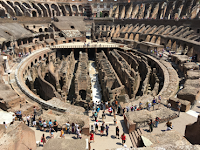
(Roman Colosseum)

I’ve been blessed to live in some of the most beautiful parts of the U.S.—Oregon, Colorado, Montana, Iowa, and Minnesota—and now reside in the Northwoods of Wisconsin with my husband, two dogs, two kayaks, and winters perfect for writing. When not crafting stories, I play pickleball, cater to my dogs, visit children and grandchildren, and read mysteries, fantasy, historical fiction, romantic suspense, and heaps of historical nonfiction.

Obedient Unto Death, book one in the series, was published in 2022 and won the Eric Hoffer First Horizon Award for a debut novel and first place in the Spiritual Fiction category. My second book, Fortunes of Death, released in October 2024, continues Sabina’s adventures.

The Books  

Obedient Unto Death
When a scribe is
 brutally murdered during a secret Christian gathering, an innocent bishop is arrested. Believing sinister forces aim to destroy the fledgling faith, Sabina races to save him from execution. As she delves into the mystery, she uncovers a web of intrigue, betrayal, and danger threatening her life and the survival of her community. Will she uncover the truth before it’s too late?

Fortunes of Death In the bustling streets of ancient Ephesus, fortunes shift in an instant. When a wealthy merchant is found crushed beneath his own monument, the city’s fragile peace shatters. Sabina faces her most perilous case yet, navigating political intrigue, dark sorcery, and forbidden love to uncover the truth amid growing unrest.
Powers of Death (Coming Soon) Sabina’s investigative skills are tested as she seeks justice for a childhood friend found stabbed in a bathhouse at midnight. The case forces her to confront sordid secrets and deadly schemes that strike close to home.

If you’d like to immerse yourself in the world of early Christians and see the great city of Ephesus recreated in its glory, sign up for this virtual tour at https://liisaeyerly.com/newsletter/. Imagine standing in the packed theater where crowds screamed for the Apostle Paul’s death, soaring above a harbor bustling with exotic goods and slaves, and counting the pagan temples the first believers resisted to remain faithful.

Thank you for reading my spotlight! Share your thoughts about writing or reading, and you’ll be entered into a giveaway for one of my books. Winner announced on my blog on HHHistory.com on February 21, 2025. My journey proves it’s never too late to follow your dreams and share your passion with the world.

Visit me at my website, on my Author Facebook page,

You can purchase my books at:
Fortunes of Death
Obedient Unto Death
My Amazon book page


Tuesday, January 21, 2025

Spectacles of Rome: Bathing, Blood, and Chariots (Part 1)


by Liisa Eyerly

You’ve had an exhausting day

· At work
· Watching the kids or grandkids
· Completing a project that has been bugging you for too long

You need a break—maybe a small celebration. So you call a friend to go out for a bath.

If you were an ancient Roman, that is exactly what you would do, except the ancients did not save this experience for special occasions. Group bathing in the large public thermae or a smaller private balnea was part of daily life. If you were wealthy or middle class, visiting the baths might be as routine as taking a daily shower. Thanks to government subsidies, even the poor could afford to bathe a few times a week.

                                Badenweiler, Germany bathhouse model Brücke-Osteuropa, Public domain, via Wikimedia Commons

              Baths of Caracalla: Valina Tsikalá, CC BY-SA 4.0 <https://creativecommons.org/licenses/by-sa/4.0>, via Wikimedia Commons

Roman bathhouses were more than places to clean up. These sprawling complexes were more like modern-day spas. Picture massage tables, exercise and game rooms, eating establishments, hairdressers, and manicurists. The grander baths, often commissioned by the emperors to showcase their generosity and win public favor, featured outdoor swimming pools, gymnasiums, parks for leisurely strolls, theaters, and libraries. The rooms were decorated with mosaic tile floors and beautiful wall murals. Despite these luxurious extras, the main attraction was always the bath itself. It was a social event, a chance to catch up with friends, meet new people, or even conduct business in a relaxing environment.

Grounds of the ruins of the Baths of Caracalla
 Grounds User:Ethan Doyle White, CC BY-SA 4.0 <https://creativecommons.org/licenses/by-sa/4.0>, via Wikimedia Commons

People bathed in the nude, so each bathhouse included a dressing area and at least three essential rooms with pools or tubs of varying temperatures.
  •  Tepidarium - warm and inviting
  •  Caldarium - intensely hot
  •  Frigidarium – cold, like stepping into a refrigerator
Re-created bath scene inside the remains of a public bathhouse in Bath, England

See the inset for a picture of the hypocaust columns supporting the floor above the furnace in the caldarium. (Bath, England)

Slaves kept the bathhouses running, tending furnaces beneath tiled floors to heat the rooms and water. In some complexes, an additional sauna-like hot room was available. Bathers moved between rooms in whatever order they preferred. In Fortunes of Death, my second book, there’s a scene where Sabina, follows a typical Roman bathing routine—starting in the tepidarium, soaking in the caldarium, and finishing with a bracing dip in the frigidarium or an outdoor pool. In book three Powers of Death a deserted bathhouse is the perfect setting for murder.
Roman bath in Bath, England
“The Roman ingenuity in engineering and architecture is truly remarkable. Their ability to create functional, luxurious, and climate-adaptive spaces like the baths speaks volumes about their understanding of materials, design, and human comfort.” (Chatgpt)

https://Commons.Wikimedia.org/Wiki/File:Dialogues of Roman Life.djvu

                                            Strigil  Toyotsu, CC BY-SA 4.0 <https://creativecommons.org/licenses/by-sa/4.0>, via Wikimedia Commons

Hygiene was a central part of the Roman bath experience. Oil would be spread over the body then the day’s sweat and grime were scraped away with a curved metal tool called a strigil. Wealthier patrons had servants perform this task, while others managed it themselves.

                                    Baths of Caracalla Painting by Virgilio Mattoni, Public domain, via Wikimedia Commons

Roman propriety typically kept the genders separate. Women usually bathed during reserved hours in the morning, and men in the afternoon. Although bathing was generally viewed as healthy and beneficial, some considered it indulgent and licentious, associating it with too much wine, luxurious food, and sex, especially in cases where mixed-gender bathing occurred. Many Jews abstained or used bathhouses guardedly to maintain their moral and religious standards. Tertullian, an early Christian, cautioned against overindulgence but accepted their role in hygiene.

Thank you for reading!


In the bustling streets of ancient Ephesus, fortunes can change in an instant. When one of the city’s wealthiest citizens is found crushed beneath his own triumphant memorial, the powerful elite demand justice—but at what cost? Enigmatic investigator Sabina faces her most perilous case yet. As secrets unravel and enemies close in, she must navigate political intrigue, dark sorcery, and forbidden love to uncover the truth. In a city where everyone has something to hide, who can be trusted? And how far will Sabina go to solve a mystery that could cost her everything?


Liisa Eyerly’s Secrets of Ephesus series adds a Christian twist to first-century Roman Empire mysteries. Her debut novel, Obedient Unto Death (2022), won the Eric Hoffer First Horizon Award and first place in Spiritual Fiction. The second book, Fortunes of Death, just launched. A lifelong mystery lover, Liisa was inspired by the Apostle Paul’s depiction of early Christians. After careers in teaching, librarianship, and stained glass, she began writing full-time at fifty. Liisa lives in northern Wisconsin with her husband and enjoys pickleball, Bible study, and visiting Ancient Roman sites.

Visit me at my website, on my Author Facebook page,

or purchase my books at:
Fortunes of Death
Obedient Unto Death
My Amazon book page