Showing posts with label #ancientrome. Show all posts

Monday, September 21, 2026

Rome's Gardens of Eden: Beauty, Temptation, and Betrayal Part 1

by Liisa Eyerly

Rome had no shortage of power-hungry, ego-maniacal emperors, but why should the men get all the notoriety? If power and wealth corrupt, the empresses were not immune.

Enter Valeria Messalina, the third wife of Roman Emperor Claudius, paternal cousin of Emperor Nero, second cousin of Emperor Caligula, great-grandniece of Emperor Augustus, and the mother of Claudia Octavia, the stepsister and first wife of Emperor Nero. There was a large amount of inbreeding in the family. 
Messalina Louvre Museum, CC BY-SA 3.0  <https://creativecommons.org/licenses/by-sa/3.0>, via Wikimedia Commons

The ideal Roman stood in sharp contrast to the luxury and excess embraced by
many emperors and aristocrats, whose vast fortunes came from Rome's conquests and the wealth of its provinces.

Romans called their cultural identity Romanitas—a commitment to shared values such as devotion to country, respect for parents and family, reverence for the gods, hard work, honesty, and self-discipline. Above all, they prized gravitas: the seriousness of character, moral virtue, and sense of duty that defined the ideals of early Republican Rome
. Claudius Sergey Sosnovskiy, CC BY-SA 4.0 <https://creativecommons.org/licenses/by-sa/4.0>, via Wikimedia Commons

Messalina enters history with a reputation as ruthless, predatory, and sexually insatiable, while her husband, the emperor Claudius, is painted as easily led by her and unaware of her many adulteries. Not exactly a Roman role model. But before we completely vilify her, remember that many records written by men of the time were "suspicious of women" and were not completely free of "scandalous gossip."
Messalina Sailko, CC BY 3.0 <https://creativecommons.org/licenses/by/3.0>, via Wikimedia Commons Messalina statue

That said, Messalina is hard to excuse. Her husband's family, especially the females, seemed to be specially targeted by Messalina. Her list of enemies was long—and often fatal.

· She persuaded Claudius to exile his niece Julia Livilla a second time on charges of adultery with the philosopher Seneca. Julia was later executed, though Seneca survived and returned from exile seven years later.

· Messalina accused another niece, Julia Livia, of immorality and incest and had her executed on Claudius's orders.

· Agripina the Younger, Claudius’s last surviving niece, was accused of leading Statilius Taurus in crimes of "magical and superstitious practices.” Taurus committed suicide, and Messalina was only prevented from further persecuting Agrippina because she was distracted by her new lover, Gaius Silius.

According to later accounts, Messalina even plotted to kill the young Nero, sending assassins to his bedchamber. Though the attempt failed, she continued trying to eliminate both Nero and his mother. 

· Poppaea Sabina the Elder, Messalina’s rival for the affection of the actor Mnester, was harassed until she took her own life.

· Marcus Vinicius was allegedly poisoned after rejecting her advances
. Painting Hans Makart, Public domain

· She arranged the execution of Polybius, one of Claudius's influential freedmen secretaries.

· She instigated the deaths of two prominent senators, Appius Silanus and Valerius Asiaticus. Silanus was married to Messalina's mother, Domitia Lepida. Messalina restricted her mother’s loyalty to herself.

· Messalina coveted a property owned by Asiaticus, the magnificent Gardens of Lucullus. He was accused of adultery and engaging in homosexual acts, and Claudius condemned him to death.

Claudius remained devoted to Messalina even after learning that she had gone 
through a marriage ceremony with her latest lover,
Senator Gaius Silius, while still legally married to the emperor. Historians speculate the union was part of a plot to overthrow Claudius and place Silius on the throne. When the conspiracy unraveled, Messalina fled with her mother to her beloved refuge, the Gardens of Lucullus.
Max Roeder, Public domain, via Wikimedia Commons

Despite the evidence against her, Claudius arranged a private meeting. Before it could take place, however, his freedman—claiming to act on the emperor's orders—sent the Praetorian Guard to execute her. At the Gardens of Lucullus, Messalina was offered the honorable choice of suicide. Unable to take her own life, she was killed by a guardsman's sword.
Italiano: Fotogramma del film muto Messalina, dir Enrico Guazzoni, prod Guazzoni Film, Roma, 1923

In next month's blog, we'll step inside the fabled Gardens of Lucullus, a place of breathtaking beauty and deadly intrigue, where Messalina reportedly entertained lovers, plotted against rivals, and spent her final hours before execution.


Step into the shadowy streets of 96 AD Ephesus, where
 danger lurks around every corner, and the line between friend and foe is razor-thin. Fortunes of Death, plunges you into a world where faith is tested, alliances are shattered, and one woman's courage could be the difference between life and death.

Sabina, a fierce young Christian widow, is thrust into a deadly game when a wealthy citizen is murdered. With her friend’s life hanging in the balance, Sabina must unravel a web of lies, deceit, and hidden motives. Every clue she uncovers brings her closer to the truth—and closer to becoming the next victim.

This isn't just a murder mystery. It's a gripping tale of faith, resilience, and the power of one woman standing against the darkness.

Visit me at my website, on my Author Facebook page,

or purchase my books at:


Mystery, murder, and mayhem aren’t your typical Christian themes—but why should secular authors have all the fun solving crimes in ancient Rome? My love of 
history, scripture, and whodunits led me to blend faith with intrigue, bringing the world of the early Christians to life. Writing from my home in the woods of northern Wisconsin, I also draw inspiration from my travels to Turkey, Greece, and Italy, where I’ve walked the same streets my characters once did. Through historical mysteries, I explore a time when faith was a matter of life and death—literally. 


Tuesday, July 21, 2026

The Most Powerful and Notorious Address on Earth - Domus Augustana Part 1

by Liisa Eyerly


by1 #1 AI image  #2 https://romeitaly.ca/images/domusaugustana.jpg

Today, the Domus Augustana is one of the most impressive ruins on the Palatine Hill, but only a fraction of the palace remains standing. Perched atop Rome's famous hill, the private residence of the emperors was one of the most powerful addresses in the ancient world. 
In 96 A.D. when my Secrets of Ephesus murder series takes place, Domus Augustana was the Heart of an Empire, and the palace would have looked vastly different than today. The first image reimagines what it could have looked like two thousand years ago.

 The first image reimagines what it could have looked like two thousand years ago.
  • White marble columns lining the peristyles
  • Pools reflecting sunlight
  • Cypress trees, roses, box hedges, and topiary
  • Colorful frescoes covering walls
  • Bronze and marble statues
  • Water flowing through fountains and channels

From the Palatine Hill, emperors ruled with seemingly unlimited power; adopting the title of Principate instead of emperor or king, to enforce the illusion that they were not dictators. During the period from Augustus in 27 BC through the reign of Marcus Aurelius in AD 180—the emperor, supported by alliances within the army, the Senate, and the Praetorian Guard, was essentially untouchable. There was no legal impeachment, voting him out, or forcing him from office. 

If an emperor became egotistical, unstable, cruel, or simply unfit to rule, Rome had only two practical remedies: a military coup or assassination. As a result, the imperial throne was both the most powerful seat in the world and one of the most dangerous. Assassination of Julius Caesar By Vincenzo Camuccini - Own work, user:Rlbberlin, Public Domain, https://commons.wikimedia.org/w/index.php?curid=145037989

The palace Domus Augustana was the perfect setting for murder. Thirty-seven emperors are documented as having been murdered—not including Nero, who died by suicide after the military turned against him. The palace’s vaulted chambers, stairways, and multi-level terraces descended the hillside, while subterranean rooms and passageways used by servants, guards, and maintenance workers still survive today. It offered countless hiding places for an assassin, escape routes for a guilty servant, or opportunities for a Praetorian bodyguard to abandon his post.
 

1. Nero's suicide, 2. Caligula assassinated, 3. Claudius poisoned, 4. Galba assassinated, 5. Domitian assassinated. As fascinating as the palace itself is, its most enduring legacy may be the assassination that occurred within its walls—an event that launches Powers of Death, the third book in the Secrets of Ephesus series.

Galba CC BY-SA 4.0 <https://creativecommons.org/licenses/by-sa/4.0>, via Wikimedia Commons
Domitian I, Sailko, CC BY-SA 3.0 <http://creativecommons.org/licenses/by-sa/3.0/>, via Wikimedia Commons
Claudius Naples National Archaeological Museum, CC BY 2.5 <https://creativecommons.org/licenses/by/2.5>, via Wikimedia Commons
Caligula Sergey Sosnovskiy from Saint-Petersburg, Russia, CC BY-SA 2.0 <https://creativecommons.org/licenses/by-sa/2.0>, via Wikimedia Commons
Nero Glyptothek, Public domain, via Wikimedia Commons


Step into the shadowy streets of 96 AD Ephesus, where danger lurks around every corner, and the line between friend and foe is razor-thin. Fortunes of Death, plunges you into a world where faith is tested, alliances are shattered, and one woman's courage could be the difference between life and death.

Sabina, a fierce young Christian widow, is thrust into a deadly game when a wealthy citizen is murdered. With her friend’s life hanging in the balance, Sabina must unravel a web of lies, deceit, and hidden motives. Every clue she uncovers brings her closer to the truth—and closer to becoming the next victim.

This isn't just a murder mystery. It's a gripping tale of faith, resilience, and the power of one woman standing against the darkness.


or purchase my books at:


Mystery, murder, and mayhem aren’t your typical Christian themes—but why should secular authors have all the fun solving crimes in ancient Rome? My love of history, scripture, and whodunits led me to blend faith with intrigue, bringing the world of the early Christians to life. Writing from my home in the woods of northern Wisconsin, I also draw inspiration from my travels to Turkey, Greece, and Italy, where I’ve walked the same streets my characters once did. Through historical mysteries, I explore a time when faith was a matter of life and death—literally.


Sunday, June 21, 2026

The Island Paradise: Where Royal Women Disappeared

by Liisa Eyerly

There is no shortage of dark deeds in Roman history. For historical novelists, weaving these real people, places, and scandals into fiction is one of the most rewarding ways to bring the ancient world to life.

In the first two books of the Secrets of Ephesus series, Emperor Domitian's relentless persecution of Christians makes faith a dangerous choice. His assassination sets the stage in the upcoming book, Powers of Death, and sends my sleuth, Sabina, on a trail of clues that leads to the eerie island of Pandateria—modern-day Ventotene.

Like the other Pontine Islands, Pandateria belonged to Emperor Augustus (31 BC–AD 14). Early in his reign, he transformed the remote volcanic outcrop into a lavish imperial retreat complete with terraces, gardens, expansive thermal baths, aqueducts, and sea-facing promenades. From a distance, it must have appeared idyllic—a glittering paradise rising from the Mediterranean.  (image by ChatGPT)

Yet beneath the luxury lurked a darker purpose.

Its isolation made Pandateria an ideal place to send inconvenient relatives. Roman society frowned upon openly murdering family members, especially imperial women. Exile offered a more respectable solution. A troublesome wife, daughter, or niece could simply vanish from public life while technically remaining alive.

A gilded prison, however, was still a prison.


Augustus banished his daughter, Julia the Elder, to Pandateria in 2 BC. In AD 29, Emperor Tiberius exiled Agrippina the Elder there, where she eventually died of starvation. Later, Domitian reportedly exiled both his wife, Domitia, and his niece, Flavia Domitilla, who is honored today as a Christian saint. Across the empire, exile was a familiar tool of control; even the Apostle John received the visions recorded in Revelation while banished to the island of Patmos. (Agrippina the Elder via Creative Commons, Wikipedia)

Today, the remains of Augustus's vast seaside complex—known as Villa Giulia—still cling to Ventotene's windswept cliffs. Archaeologists have uncovered courtyards, cisterns, servants' quarters, and subterranean service passages leading down to the sea. 

Much of the palace itself has vanished after centuries of stone robbing, treasure hunting, careless excavations, erosion, and quarrying. Entire wings, upper stories, and decorative elements have disappeared, leaving only fragments of what was once a sprawling imperial estate. 

That loss somehow makes the site even more haunting. 

Standing on Punta Eolo, gazing across the same waters once viewed by Augustus, Julia, Agrippina, and perhaps Flavia Domitilla, it is easy to imagine the uneasy contrast between beauty and captivity. The surviving baths, terraces, and underground corridors hint at extraordinary luxury. Yet they also whisper of isolation, political intrigue, and lives quietly erased from history.  
https://magazine.snav.it/ventotene-punta-eolo/?utm_source=chatgpt.com

Pandateria was paradise for some.  For others, it was the last place they were ever truly free.

Step into the shadowy streets of 96 AD Ephesus, where danger lurks around every corner, and the line between friend and foe is razor-thin. Winner of the Eric Hoffer First Horizon Award, Obedient Unto Death launches a gripping historical mystery series set in the perilous world of first-century Rome. In Fortunes of Death, fearless Christian sleuth Sabina returns—risking everything to expose murder, magic, and corruption beneath the empire’s glittering surface. With rich historical detail and powerful spiritual themes, author Liisa Eyerly delivers intrigue, danger, and hope in equal measure. Reviewer Deborah Anne raves: “Murder mystery—Intrigue—Love—Fellowship through Christ. This series has it all! Eyerly is wonderful! If you’re tired of boring—read this series! I love a good mystery!” Prepare to be hooked!
Visit me at my website, on my Author Facebook page,

or purchase my books at:

Mystery, murder, and mayhem aren’t your typical Christian themes—but why should secular authors have all the fun solving crimes in ancient Rome? My love of history, scripture, and whodunits led me to blend faith with intrigue, bringing the world of the early Christians to life. Writing from my home in the woods of northern Wisconsin, I also draw inspiration from my travels to Turkey, Greece, and Italy, where I’ve walked the same streets my characters once did. Through historical mysteries, I explore a time when faith was a matter of life and death—literally.


Wednesday, January 21, 2026

A Festive Cena: Evening Dining with Rome’s Elite

by Liisa Eyerly

In ancient Rome, how—and what—you ate was one of the clearest markers of where you stood in society—food drew one of the sharpest lines between power and poverty. Roman Feast by Roberto Bompiani, Public domain, via Wikimedia Commons

For the elite, dining was a spectacle. Every meal, especially the evening banquet, was a stage, every dish a declaration. Imported spices, rare fruits, exotic meats—these weren’t just foods, but symbols, proclaiming wealth, influence, and control. Servants, silver and gold dinnerware, and ceremony transformed eating into a performance of dominance.

For the poor, food meant survival. Their tables held plain bread, humble grains, and whatever olives, vegetables, or scraps could be afforded. No luxury, no variety—just the bare essentials to endure another day of labor.

Two worlds shared the same city, but not the same table.

Supper or Cena (Main Meal) late afternoon to evening.

Poor—when they returned home from work, often after dark.
Elite—known for their socializing and dinner parties that could last several hours, with reclining couches, entertainment, and wine. An elaborate procession of gustatio–prima mensa–secunda mensa. Three (or more) courses - Appetizer - Main course - Dessert. Often followed by an after-dinner drinking party.

No Guests, No Showmanship

Anonymous Unknown author, Public domain, via Wikimedia Commons
Even wealthy Romans didn’t stage a banquet every night. When it was just the family, Cena was:

✨ 1. Smaller in Scale
Fewer courses—often just two (a main course and a simple dessert).

✨ 2. More Comfortable and Intimate
Reclining was still common, but the atmosphere was relaxed.
Family members ate together without the pressure of political theater.
Fewer slaves were needed for serving—maybe just a couple instead of a full staff.

✨ 3. Traditional, Not Showy
Without guests to impress, Roman elites didn’t waste expensive delicacies. Nothing that required exotic ingredients or hours of preparation—just good household cooking.
Instead of flamingo tongues or peacock, they might eat:
· Grilled fish or chicken
· Vegetables like cabbage, leeks, or lentils
· Bread and cheese
· Fruit in season
When not entertaining, even the elites did not eat tons of meat, but when they did, fish, seafood, poultry, smoked pork liver sausage, roasted goat, boiled hare, and baked scrambled eggs were common. Vatican Museums, Public domain, via Wikimedia Commons

✨ 4. Even on a Modest Night, the Meals of the Elite Were Still Better Than the Poor.
· The oil was of better quality – pressed from their own olive groves
· The bread was fresher – baked daily at home
· The produce was more varied – harvested from their personal farms and orchards
· The meat was regular, not rare – supplied from their own farms, often just outside the city or town
· Spices like pepper or coriander were used freely

Some of these foods sound surprisingly modern until you discover recipes from the Roman chef Apicius, for fish liver pudding, stuffed dormice, brain-stuffed squash fritters, and rose patina, a baked dish of scrambled brain and eggs, flavored with roses.


Three of the Strangest Foods Elite Romans Actually Ate

1. Stuffed Dormice  
These little rodents fattened on nuts and acorns. The elite stuffed them with minced pork, pepper, pine nuts, and honey, then roasted them to a golden crisp.
A luxury delicacy—but to modern diners, the idea alone is… memorable.

2. Flamingo Tongues (served at a dinner party in book three, “Powers of Death”)
Yes… flamingos. Elite Romans prized the bird’s bright feathers and considered the tongue the true delicacy. Cookbooks describe boiling them with dates, wine, pepper, and vinegar.

They weren’t eaten for taste so much as for shock value—proof that the host had the means to serve the rarest, most impractical foods.

3. Jellyfish and Sea Urchin Custard
Recipes based on Apicius’s Cookbook IX (1st–4th-century cookbook in modern wording), include recipes for cooked jellyfish dressed with vinegar, oil, and herbs, and for sea urchins mashed into a thick custard. Part seafood, part dessert: this savory-sweet, custard-like dish was meant to impress (or intimidate!) dinner guests.
Alexcooper1
at English Wikipedia (Alex Pronove)  

Apicius’ Sea Urchin Custard.
Ingredients:

Fresh sea urchins (whole)
Eggs
Pepper
Liquamen or garum (Roman fish sauce)
Passum (sweet raisin wine) or another sweet wine
Optional: a little oil 

Directions:
· Pierce the sea urchins and blend their contents with eggs.
· Season with pepper, liquamen, and sweet wine.
· Pour the mixture back into the shells—or small clay dishes
· Gently cook in hot water in its shell (or in a small dish) until set like a custard mixture
· Serve warm with a sprinkle of pepper

Romans didn’t necessarily love it… But they loved showing they could afford it. Remember, food wasn’t always about taste—it was about wealth, novelty, and the status of serving something rare and difficult to prepare. A true marquee item for a lavish Roman feast. Next month, we’ll delve into the rich world of Roman wines.

For more authentic ancient Roman recipes for modern kitchens, including garum and Roman cheese cake, you can visit Laura Hauser’s website 18 Authentic Ancient Roman Recipes for Modern Kitchens - Recipes For Life


SECRETS OF EPHESUS SERIES

The award-winning series unveils gripping historical mysteries set in the perilous world of ancient Rome. In Obedient unto Death, a scribe is murdered during an illicit Christian gathering. Sabina, a fearless believer, navigates a treacherous world of deceit and betrayal to discover the killer.

In Fortunes of Death, our sleuth returns—risking everything to expose murder, magic, and corruption beneath the empire’s glittering surface. Reviewer Deborah Anne raves: “Murder mystery—Intrigue—Love—Fellowship through Christ. This series has it all! Eyerly is wonderful! If you’re tired of boring—read this series! I love a good mystery!” Prepare to be hooked!

Liisa’s books have been called a cross between Agatha Christie and Francine Rivers. Her mystery, Obedient Unto Death, won the Eric Hoffer First Horizon Award for a debut novel and first place in the Spiritual Fiction category. The sequel, Fortunes of Death, continues the Secrets of Ephesus series, weaving fascinating Christian twists into the historical mystery genre of the first-century Roman Empire. Liisa’s travels to Turkey, Greece, and Italy have enriched her stories with vivid depictions of New Testament culture, history, and people.

Over the years, she’s been a teacher, small business owner, librarian, and lifelong learner. She and her husband live in northern Wisconsin, where she channels her love of history, faith, and mystery into writing captivating and inspiring novels.

Purchase her books at:
Crossriver Media https://www.crossrivermedia.com/product/fortunes-of-death/
Amazon book page https://amzn.to/3Di2gyQ

Visit Liisa at:
Her website www.LiisaEyerly.com
Author Facebook page at Liisa Eyerly Author page

Sunday, December 21, 2025

Every day is a Holiday: The Dining of Rome’s Privileged

by Liisa Eyerly

The Roman Empire stretched across continents, and with every conquest came new flavors, ingredients, and culinary habits. Exotic foods from distant provinces—spices from Arabia, fruits from Persia, seafood from North Africa—filtered into Roman kitchens. All classes tasted some of this diversity, but it was the elite who truly indulged. They embraced costly delicacies not just for pleasure, but for display—sometimes eating strange or downright unappetizing dishes simply to flaunt their wealth or their access to rare foreign goods.

(Just ask any Roman about garum, the infamous fermented fish sauce produced in massive coastal factories like the one depicted in the archaeological museum at Nabeul!)

If you’ve watched Roman-themed films or read some of my other posts, you know that for the upper classes a meal wasn’t just nourishment—it was theater. A feast was a social event, a political performance, and a declaration of status. As you climbed the social ladder, the food, spices, and preparation became increasingly elaborate, turning the dining room into a stage where power and prosperity were on full display.

Breakfast or ientaculum (sunrise to 8am, later for elites)

Poor
- The poor needed calories for their workday and probably had very little variety in their day-old bread, cold barley or spelt porridge, and handfuls of olives augmented with occasional dates, raisins, or onions, and washing it down with cheap diluted wine or posca (a vinegar-water drink common for soldiers and the poor.)
Elite – Despite their wealth, even elites kept breakfast modest, saving extravagance for the midday prandium or the evening cena. A tasteful Roman wasn’t expected to gorge themselves at sunrise!

· The warm, tempting scent of fresh bread that Sabina, my sleuth, breathes in during her early morning walks past the public bakeries would drift just as richly through the private kitchens of the wealthy. Long before sunrise, their cooks and slaves were already kneading dough by lamplight, preparing the daily loaves that would be served with honey, costly olive oil, or soft cheeses from goat, cow, or sheep. 
Codrin.B / Wikimedia Commons / CC-BY-SA-3.0,2.5,2.0,1.0 & GFDL

· Porridge: although a staple on all tables, the elite would enrich theirs with honey, nuts, milk, and of course, fruit, which also topped pancakes and filled pastries.

· Fresh fruit: both local and imported would be piled on platters, cooked into jams, and squeezed into juice; fresh figs, grapes, pears, pomegranates, apples, exotic Syrian cherries, Persian peaches, and citrons, a rare citrus symbolizing status and luxury for the ancient Roman ruling elite. Gary Todd from Xinzheng, China, Public domain, via Wikimedia Commons
· Eggs: boiled, fried, and in omelets made from all sorts of poultry were a common breakfast protein. Chicken, duck, goose, and rare but served as a sign of status—pigeon, dove, and peacock eggs.
· Cooked meat: Usually reserved for lunch or the evening meal but cold sausages, meat pies from the previous day, and fish was served.

This fresco is on a wall of a hallway of a Pompeii home that had a bakery in its annex. The fresco depicts a goblet of wine and various fruits, that include a pomegranate and a likely date. The pizza-like bread appears to have moretum, a cheese spread with herbs that was popular in ancient Rome. (see recipe link below)

Lunch or Prandium (Midday Meal) — (11 a.m.–1 p.m.) The Romans did not enjoy eating a large meal in the heat of the day. Lunch was generally light and informal—even for wealthy households. It was often eaten: * Sitting on a small stool * At a simple household table *Standing in the kitchen courtyard

Poor – cold meal to keep up energy – leftovers, bread (olive oil), carrots, turnips, and congealed porridge. Posca or cheap water-down wine.
Elite —
· Cold meats from last night’s dinner
· Grilled fish, shellfish, or poultry 
· Salads of lettuce, cucumbers, tomatoes, herbs, and olive oil
· Light pastries or sweetened nuts
· Egg dishes, omelets and custards
· Imported fruit like cherries, peaches, or figs
· Bread with honey, olive oil, and cheese
· Drinks: Diluted fine wine, Mulsum (wine with honey), Herbal drinks, and flavored waters

· Moretum —a Roman cheese spread made by mixing goat cheese with herbs, nuts, and olive oil using a mortar and pestle. It was eaten on flatbreads, much like modern dips or spreads. Some versions had garlic, resembling early pesto, while others used fruit for sweetness.

recipe https://recipes-for-life.com/ancient-roman-recipes/ 
Self-photographed by User:Bullenwächter, CC BY-SA 4.0 <https://creativecommons.org/licenses/by-sa/4.0>, via Wikimedia Commons

For elites, lunch was a chance to refresh and socialize—never a feast, but decidedly pleasant.

We’ve now worked our way toward next month's blog post - the grand finale: cena, the evening meal—where elite Romans truly put their wealth, refinement, and ambition on display. If you’d like to dive deeper into the fascinating world of Roman dining, I’ve explored these topics in earlier blog posts on my website, liisaeyerly.com.

In my August 2020 post, If You Eat With Your Fingers, You Might Be a Roman, I walk through the elaborate structure of elite dinners, including the ideal number of guests and the strict seating hierarchy that governed every triclinium.

And in February 2021, Grilled Sow’s Belly for Dinner, Anyone?, I highlight some of the most extravagant foods ever served at a Roman feast—among them one of my personal favorites: tender, milk-fed snails.

Together, these posts offer a vivid look at the rituals, extravagance, and surprising delicacies that made a Roman dinner an unforgettable social event.


SECRETS OF EPHESUS SERIES

Obedient Unto Death opens a gripping historical-mystery series set in the perilous world of first-century Rome, where early Christians walk a razor’s edge between faith and survival. In Fortunes of Death, fearless Christian sleuth Sabina returns—risking everything to expose murder, magic, and corruption beneath the empire’s glittering surface. With rich historical detail and powerful spiritual themes, author Liisa Eyerly delivers intrigue, danger, and hope in equal measure. Reviewer Deborah Anne raves: “Murder mystery—Intrigue—Love—Fellowship through Christ. This series has it all! Eyerly is wonderful! If you’re tired of boring—read this series! I love a good mystery!” Prepare to be hooked!

Liisa’s books have been called a cross between Agatha Christie and Francine Rivers. Her mystery novel, Obedient Unto Death, won the Eric Hoffer First Horizon Award for a debut novel and first place in the Spiritual Fiction category. The sequel, Fortunes of Death, continues with fresh intrigue and devilish twists. Liisa’s travels through Turkey, Greece, and Italy bring authenticity and color to every page, enriching her mysteries with vivid depictions of New Testament culture, history, and the people who shaped it.

Over the years, she’s been a teacher, small business owner, librarian, and lifelong learner. She and her husband live in northern Wisconsin where she channels her love of history, faith, and mystery into writing captivating and inspiring novels. Liisa’s journey into writing proves it’s never too late to follow your dreams and share your passion with the world.

Purchase her books at:
Crossriver Media https://www.crossrivermedia.com/product/fortunes-of-death/
Amazon book page https://amzn.to/3Di2gyQ

Visit Liisa at:
Her website www.LiisaEyerly.com
Author Facebook page at Liisa Eyerly Author page

Bibliography:
Wikipedia.com
Grokapedia.com
What did the ancient romans eat for breakfast? - Ancient Rome - February 24, 2023 by Ellen Hunter


Monday, January 27, 2025

Spotlight: Liisa Eyerly


Mystery, murder, and mayhem aren’t typical Christian themes, but my love of history, scripture, and whodunits sparked a writing rebellion: why should secular authors have all the fun solving murders in ancient Rome?

My writing—actually—my research journey began with questions about New Testament Christians battling for their beliefs in a pagan world. My lifelong faith and fascination with history fused with the world Christianity was born into, engaged with, and transformed. Is our culture so different from theirs? What kind of people risked death to defy the Roman Empire? These questions inspired countless murder mystery scenarios, all requiring a bold sleuth to unravel. Enter Sabina: a detective who relies on her faith and knowledge of scripture to unmask killers while navigating the dangers of a banned religion, sorcery, a paranoid emperor, and the ever-present threat of betrayal from family and friends.

The Secrets of Ephesus mystery series takes place in 96 AD and adds a fresh Christian twist to the historical mystery genre of the first-century Roman Empire. Set not in Rome but in Ephesus, Turkey, the series brings to life a city prominent in the New Testament and home to many key figures in the early church. My travels to Turkey, Greece, England, and Italy have enriched my ability to recreate the vivid culture, history, and people of the era, while also inspiring fascinating blog posts.

Growing up, I devoured whodunits, relishing the challenge of piecing together breadcrumb clues to guess the ending. My transition from reader to writer took a forty-year journey, interrupted by teaching, motherhood, running a stained-glass business, graduate school, a second career as a librarian, retirement, and travel. Now, I immerse myself in nonstop research, Bible study, writing workshops and conferences, and exploring the lands of the ancient Roman Empire. 
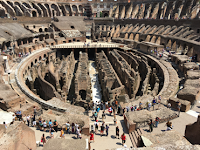
(Roman Colosseum)

I’ve been blessed to live in some of the most beautiful parts of the U.S.—Oregon, Colorado, Montana, Iowa, and Minnesota—and now reside in the Northwoods of Wisconsin with my husband, two dogs, two kayaks, and winters perfect for writing. When not crafting stories, I play pickleball, cater to my dogs, visit children and grandchildren, and read mysteries, fantasy, historical fiction, romantic suspense, and heaps of historical nonfiction.

Obedient Unto Death, book one in the series, was published in 2022 and won the Eric Hoffer First Horizon Award for a debut novel and first place in the Spiritual Fiction category. My second book, Fortunes of Death, released in October 2024, continues Sabina’s adventures.

The Books  

Obedient Unto Death
When a scribe is
 brutally murdered during a secret Christian gathering, an innocent bishop is arrested. Believing sinister forces aim to destroy the fledgling faith, Sabina races to save him from execution. As she delves into the mystery, she uncovers a web of intrigue, betrayal, and danger threatening her life and the survival of her community. Will she uncover the truth before it’s too late?

Fortunes of Death In the bustling streets of ancient Ephesus, fortunes shift in an instant. When a wealthy merchant is found crushed beneath his own monument, the city’s fragile peace shatters. Sabina faces her most perilous case yet, navigating political intrigue, dark sorcery, and forbidden love to uncover the truth amid growing unrest.
Powers of Death (Coming Soon) Sabina’s investigative skills are tested as she seeks justice for a childhood friend found stabbed in a bathhouse at midnight. The case forces her to confront sordid secrets and deadly schemes that strike close to home.

If you’d like to immerse yourself in the world of early Christians and see the great city of Ephesus recreated in its glory, sign up for this virtual tour at https://liisaeyerly.com/newsletter/. Imagine standing in the packed theater where crowds screamed for the Apostle Paul’s death, soaring above a harbor bustling with exotic goods and slaves, and counting the pagan temples the first believers resisted to remain faithful.

Thank you for reading my spotlight! Share your thoughts about writing or reading, and you’ll be entered into a giveaway for one of my books. Winner announced on my blog on HHHistory.com on February 21, 2025. My journey proves it’s never too late to follow your dreams and share your passion with the world.

Visit me at my website, on my Author Facebook page,

You can purchase my books at:
Fortunes of Death
Obedient Unto Death
My Amazon book page


Tuesday, January 21, 2025

Spectacles of Rome: Bathing, Blood, and Chariots (Part 1)


by Liisa Eyerly

You’ve had an exhausting day

· At work
· Watching the kids or grandkids
· Completing a project that has been bugging you for too long

You need a break—maybe a small celebration. So you call a friend to go out for a bath.

If you were an ancient Roman, that is exactly what you would do, except the ancients did not save this experience for special occasions. Group bathing in the large public thermae or a smaller private balnea was part of daily life. If you were wealthy or middle class, visiting the baths might be as routine as taking a daily shower. Thanks to government subsidies, even the poor could afford to bathe a few times a week.

                                Badenweiler, Germany bathhouse model Brücke-Osteuropa, Public domain, via Wikimedia Commons

              Baths of Caracalla: Valina Tsikalá, CC BY-SA 4.0 <https://creativecommons.org/licenses/by-sa/4.0>, via Wikimedia Commons

Roman bathhouses were more than places to clean up. These sprawling complexes were more like modern-day spas. Picture massage tables, exercise and game rooms, eating establishments, hairdressers, and manicurists. The grander baths, often commissioned by the emperors to showcase their generosity and win public favor, featured outdoor swimming pools, gymnasiums, parks for leisurely strolls, theaters, and libraries. The rooms were decorated with mosaic tile floors and beautiful wall murals. Despite these luxurious extras, the main attraction was always the bath itself. It was a social event, a chance to catch up with friends, meet new people, or even conduct business in a relaxing environment.

Grounds of the ruins of the Baths of Caracalla
 Grounds User:Ethan Doyle White, CC BY-SA 4.0 <https://creativecommons.org/licenses/by-sa/4.0>, via Wikimedia Commons

People bathed in the nude, so each bathhouse included a dressing area and at least three essential rooms with pools or tubs of varying temperatures.
  •  Tepidarium - warm and inviting
  •  Caldarium - intensely hot
  •  Frigidarium – cold, like stepping into a refrigerator
Re-created bath scene inside the remains of a public bathhouse in Bath, England

See the inset for a picture of the hypocaust columns supporting the floor above the furnace in the caldarium. (Bath, England)

Slaves kept the bathhouses running, tending furnaces beneath tiled floors to heat the rooms and water. In some complexes, an additional sauna-like hot room was available. Bathers moved between rooms in whatever order they preferred. In Fortunes of Death, my second book, there’s a scene where Sabina, follows a typical Roman bathing routine—starting in the tepidarium, soaking in the caldarium, and finishing with a bracing dip in the frigidarium or an outdoor pool. In book three Powers of Death a deserted bathhouse is the perfect setting for murder.
Roman bath in Bath, England
“The Roman ingenuity in engineering and architecture is truly remarkable. Their ability to create functional, luxurious, and climate-adaptive spaces like the baths speaks volumes about their understanding of materials, design, and human comfort.” (Chatgpt)

https://Commons.Wikimedia.org/Wiki/File:Dialogues of Roman Life.djvu

                                            Strigil  Toyotsu, CC BY-SA 4.0 <https://creativecommons.org/licenses/by-sa/4.0>, via Wikimedia Commons

Hygiene was a central part of the Roman bath experience. Oil would be spread over the body then the day’s sweat and grime were scraped away with a curved metal tool called a strigil. Wealthier patrons had servants perform this task, while others managed it themselves.

                                    Baths of Caracalla Painting by Virgilio Mattoni, Public domain, via Wikimedia Commons

Roman propriety typically kept the genders separate. Women usually bathed during reserved hours in the morning, and men in the afternoon. Although bathing was generally viewed as healthy and beneficial, some considered it indulgent and licentious, associating it with too much wine, luxurious food, and sex, especially in cases where mixed-gender bathing occurred. Many Jews abstained or used bathhouses guardedly to maintain their moral and religious standards. Tertullian, an early Christian, cautioned against overindulgence but accepted their role in hygiene.

Thank you for reading!


In the bustling streets of ancient Ephesus, fortunes can change in an instant. When one of the city’s wealthiest citizens is found crushed beneath his own triumphant memorial, the powerful elite demand justice—but at what cost? Enigmatic investigator Sabina faces her most perilous case yet. As secrets unravel and enemies close in, she must navigate political intrigue, dark sorcery, and forbidden love to uncover the truth. In a city where everyone has something to hide, who can be trusted? And how far will Sabina go to solve a mystery that could cost her everything?


Liisa Eyerly’s Secrets of Ephesus series adds a Christian twist to first-century Roman Empire mysteries. Her debut novel, Obedient Unto Death (2022), won the Eric Hoffer First Horizon Award and first place in Spiritual Fiction. The second book, Fortunes of Death, just launched. A lifelong mystery lover, Liisa was inspired by the Apostle Paul’s depiction of early Christians. After careers in teaching, librarianship, and stained glass, she began writing full-time at fifty. Liisa lives in northern Wisconsin with her husband and enjoys pickleball, Bible study, and visiting Ancient Roman sites.

Visit me at my website, on my Author Facebook page,

or purchase my books at:
Fortunes of Death
Obedient Unto Death
My Amazon book page