Showing posts with label #ancient. Show all posts

Wednesday, October 21, 2026

Rome's Gardens of Eden: Beauty, Temptation, and Betrayal Part 2

by Liisa Eyerly

Roman gardens were designed as earthly paradises—places of beauty, tranquility, and escape. Yet some of the empire's most notorious betrayals, executions, affairs, and political conspiracies unfolded among their fountains, flowers, and shaded walkways.Artist Carl Hasenpflug (1802-1858)

Asiaticus, the wealthy owner of the Gardens of Lucullus, unluckily fell under the covetous eye of the empress Messalina, wife of the Emperor Claudius. Messalina had fallen in love with and was determined to own the immense seventeen acres of exotic plants, sumptuous buildings with large open balconies, porticos for walking, fountains, and baths. And to initiate the real estate
transaction, she convinced Claudius to condemn Asiaticus to death on charges of failing to maintain discipline amongst his soldiers and adultery. (see September blog)

The gardens were laid out by Lucius Licinius Lucullus about 60 BC. He lavishly poured the wealth and treasure acquired during his celebrated military campaign into his rural villa and its garden, filling them with marble pergolas, fountains, mosaics, paintings, and Greek sculpture, both originals and copies of “old masters”. 
Diego Delso, CC BY-SA 4.0 <https://creativecommons.org/licenses/by-sa/4.0>, via Wikimedia Commons:

It is recognized as one of the most famous gardens, known for projecting a sense of perfect harmony. One of the main characteristics was a monumental staircase linking the multiple levels to a gigantic half-circular nymphaeum, a sanctuary or temple dedicated to water nymphs. Its pools can be used for bathing or ablutions.  de:Benutzer:elinore, CC BY-SA 3.0 <http://creativecommons.org/licenses/by-sa/3.0/>, via Wikimedia Commons
The garden’s tranquility was sundered when Messalina, while still married to Emperor Claudius, married her lover, Senator Gaius Silius. She fled to her beloved sanctuary gardens with her mother. There she awaited Claudius's judgment and ultimately met her death at the hands of the Praetorian Guard. Georges Rochegrosse, Public domain, via Wikimedia Commons; https://www.maquettes-historiques.net/P43.html


Newly Released!!
Powers of Death, Book III of Secrets of Ephesus, plunges readers into murder, imperial intrigue, and unwavering faith.

In the shadowed hours after Emperor Domitian’s assassination, Sabina awakens to devastating news: her childhood friend has been found murdered in the moonlit waters of an elite bathhouse.
While Rome hunts conspirators, one dead woman matters little. But Sabina refuses to let her friend’s death go unanswered.

Her search leads from Ephesus’s fetid prison to the incense-filled Temple of Isis, where eunuch priests guard sinister secrets and midnight rites conceal dangerous truths. Soon every clue tightens Rome’s net around the clandestine church Sabina loves—and places her family, freedom, and life at risk.
To expose the killer, Sabina must confront the “powers of death” before those powers silence her forever.

Visit me at my website, on my Author Facebook page,
or purchase my books at:


Mystery, murder, and mayhem aren’t your typical Christian themes—but why should secular authors have all the fun solving crimes in ancient Rome? My love of history, scripture, and whodunits led me to blend faith with intrigue, bringing the world of the early Christians to life. Writing from my home in the woods of northern Wisconsin, I also draw inspiration from my travels to Turkey, Greece, and Italy, where I’ve walked the same streets my characters once did. Through historical mysteries, I explore a time when faith was a matter of life and death—literally

Saturday, February 21, 2026

Roman Citizenship, the Gold Standard

By Liisa Eyerly

Historical authors and readers must navigate a murky and treacherous landscape when writing. Murky because we don’t know all the facts and nuances of any period. So much has been lost to the melting ice cubes of time. Treacherous, because peering into the past confronts us with the impossible task of disconnecting from our present-day selves, modern ideas, and our evolved knowledge base.


Suspending moral judgment on the culture, rules, and practices of the Roman Empire, 2,000 years ago, can be especially challenging. Developing characters while distancing them from modern-age perspectives can be difficult. Depicting beliefs where slavery is neither right nor wrong, simply an accepted way of life; or exposing newborns to nature to die, as a common-sense solution for unwanted children; or their choice of mass capital punishment, ignites moral outrage. Is there a limit to how far we can suspend our beliefs, especially when it comes to our values, good and bad, right and wrong?

But to be fair to the times, we must try as much as possible.

Modern democracies work hard to include all citizens in their country's rights and responsibilities, with equality for all, a laudable goal. But Roman society was anything but equal. It was based on a ladder of legal identities, a tiered system of status, and privilege.

Almost every aspect of a person’s life was governed by their legal designation, and Roman Citizenship was at the top, the gold standard of privilege, power, and rights. And unsurprisingly, a major catalyst for power struggles, resentment, and rebellion in the Roman world.

A. Roman Citizens (Cives Romani)  
* Full rights and protections
* Included elites, veterans, colonists—and some provincials
* Women were citizens too, though without voting or office-holding rights

B. Latins (Latini) Originally from Italy, later expanded
* Partial rights- a “citizenship-adjacent” status
* Could trade and own property
* Sometimes eligible for citizenship after holding local office

C. Freedmen (Liberti)
* Former slaves who had been legally freed
* Became Roman citizens, but with limits:
     * Could not hold high office
     * Owed loyalty and service to former masters
* Their children, however, were full citizens

D. Provincials (Peregrini)  
* The majority of the empire
* Free people, but not citizens
* Governed by local laws, not Roman civil law
* Vulnerable to:
     * Torture
     * Summary punishment
     * Exploitative taxation
* Could gain citizenship through:
     * Military service
     * Imperial favor
     * Collective grants to cities


E. Slaves (Servi)

* Considered property, not persons
* Not determined by race or ethnicity
* No legal rights
* Could be punished, sold, abused, or killed (with some limits in later periods)
* Manumission (freeing a slave) was common—and strategic

Ironically, a freed slave could outrank 
a freeborn provincial in legal status. And it was one of Rome’s quiet engines for social change and mobility.  (Collared Roman slaves / Ashmolean Museum, Photo by Jun, Wikimedia Commons)
Why This Mattered for Christians

Christianity flattened social categories spiritually and sought to practice equality within the church, but Rome did not recognize or understand the religious rationale for Christian inclusiveness. Loyalty to Christ cut across Rome’s legal hierarchy; slaves shared the Lord’s supper with their masters, each serving the other on equal footing, and this terrified authorities. In the provinces like Ephesus, where my books take place, this legal gray zone was a powder keg and exactly the kind of fault line Rome cracked down on.

Christians included:    
* Slaves
* Women
* Foreigners
* A few citizens

Each of these legal designations included categories; even within the upper classes, women and children were typically at the bottom. Tune in next month for a look at the limits, challenges, and opportunities women of the Roman Empire 
faced.


Step into the shadowy streets of 96 AD Ephesus, where danger lurks around every corner, and the line between friend and foe is razor-thin. Fortunes of Death, plunges you into a world where faith is tested, alliances are shattered, and one woman's courage could be the difference between life and death.

Sabina, a fierce young Christian widow, is thrust into a deadly game when a wealthy citizen is murdered. With her friend’s life hanging in the balance, Sabina must unravel a web of lies, deceit, and hidden motives. Every clue she uncovers brings her closer to the truth—and closer to becoming the next victim.

This isn't just a murder mystery. It's a gripping tale of faith, resilience, and the power of one woman standing against the darkness.

Visit me at my website, on my Author Facebook page,

or purchase my books at:


Liisa’s books have been called a cross between Agatha Christie and Francine Rivers. Her mystery novel, Obedient Unto Death, won the Eric Hoffer First Horizon Award for a debut novel and first place in the Spiritual Fiction category. The sequel, Fortunes of Death, continues the Secrets of Ephesus series, weaving fascinating Christian twists into the historical mystery genre of the first-century Roman Empire. Liisa’s travels to Turkey, Greece, and Italy have enriched her stories with vivid depictions of New Testament culture, history, and people.


Wednesday, January 21, 2026

A Festive Cena: Evening Dining with Rome’s Elite

by Liisa Eyerly

In ancient Rome, how—and what—you ate was one of the clearest markers of where you stood in society—food drew one of the sharpest lines between power and poverty. Roman Feast by Roberto Bompiani, Public domain, via Wikimedia Commons

For the elite, dining was a spectacle. Every meal, especially the evening banquet, was a stage, every dish a declaration. Imported spices, rare fruits, exotic meats—these weren’t just foods, but symbols, proclaiming wealth, influence, and control. Servants, silver and gold dinnerware, and ceremony transformed eating into a performance of dominance.

For the poor, food meant survival. Their tables held plain bread, humble grains, and whatever olives, vegetables, or scraps could be afforded. No luxury, no variety—just the bare essentials to endure another day of labor.

Two worlds shared the same city, but not the same table.

Supper or Cena (Main Meal) late afternoon to evening.

Poor—when they returned home from work, often after dark.
Elite—known for their socializing and dinner parties that could last several hours, with reclining couches, entertainment, and wine. An elaborate procession of gustatio–prima mensa–secunda mensa. Three (or more) courses - Appetizer - Main course - Dessert. Often followed by an after-dinner drinking party.

No Guests, No Showmanship

Anonymous Unknown author, Public domain, via Wikimedia Commons
Even wealthy Romans didn’t stage a banquet every night. When it was just the family, Cena was:

✨ 1. Smaller in Scale
Fewer courses—often just two (a main course and a simple dessert).

✨ 2. More Comfortable and Intimate
Reclining was still common, but the atmosphere was relaxed.
Family members ate together without the pressure of political theater.
Fewer slaves were needed for serving—maybe just a couple instead of a full staff.

✨ 3. Traditional, Not Showy
Without guests to impress, Roman elites didn’t waste expensive delicacies. Nothing that required exotic ingredients or hours of preparation—just good household cooking.
Instead of flamingo tongues or peacock, they might eat:
· Grilled fish or chicken
· Vegetables like cabbage, leeks, or lentils
· Bread and cheese
· Fruit in season
When not entertaining, even the elites did not eat tons of meat, but when they did, fish, seafood, poultry, smoked pork liver sausage, roasted goat, boiled hare, and baked scrambled eggs were common. Vatican Museums, Public domain, via Wikimedia Commons

✨ 4. Even on a Modest Night, the Meals of the Elite Were Still Better Than the Poor.
· The oil was of better quality – pressed from their own olive groves
· The bread was fresher – baked daily at home
· The produce was more varied – harvested from their personal farms and orchards
· The meat was regular, not rare – supplied from their own farms, often just outside the city or town
· Spices like pepper or coriander were used freely

Some of these foods sound surprisingly modern until you discover recipes from the Roman chef Apicius, for fish liver pudding, stuffed dormice, brain-stuffed squash fritters, and rose patina, a baked dish of scrambled brain and eggs, flavored with roses.


Three of the Strangest Foods Elite Romans Actually Ate

1. Stuffed Dormice  
These little rodents fattened on nuts and acorns. The elite stuffed them with minced pork, pepper, pine nuts, and honey, then roasted them to a golden crisp.
A luxury delicacy—but to modern diners, the idea alone is… memorable.

2. Flamingo Tongues (served at a dinner party in book three, “Powers of Death”)
Yes… flamingos. Elite Romans prized the bird’s bright feathers and considered the tongue the true delicacy. Cookbooks describe boiling them with dates, wine, pepper, and vinegar.

They weren’t eaten for taste so much as for shock value—proof that the host had the means to serve the rarest, most impractical foods.

3. Jellyfish and Sea Urchin Custard
Recipes based on Apicius’s Cookbook IX (1st–4th-century cookbook in modern wording), include recipes for cooked jellyfish dressed with vinegar, oil, and herbs, and for sea urchins mashed into a thick custard. Part seafood, part dessert: this savory-sweet, custard-like dish was meant to impress (or intimidate!) dinner guests.
Alexcooper1
at English Wikipedia (Alex Pronove)  

Apicius’ Sea Urchin Custard.
Ingredients:

Fresh sea urchins (whole)
Eggs
Pepper
Liquamen or garum (Roman fish sauce)
Passum (sweet raisin wine) or another sweet wine
Optional: a little oil 

Directions:
· Pierce the sea urchins and blend their contents with eggs.
· Season with pepper, liquamen, and sweet wine.
· Pour the mixture back into the shells—or small clay dishes
· Gently cook in hot water in its shell (or in a small dish) until set like a custard mixture
· Serve warm with a sprinkle of pepper

Romans didn’t necessarily love it… But they loved showing they could afford it. Remember, food wasn’t always about taste—it was about wealth, novelty, and the status of serving something rare and difficult to prepare. A true marquee item for a lavish Roman feast. Next month, we’ll delve into the rich world of Roman wines.

For more authentic ancient Roman recipes for modern kitchens, including garum and Roman cheese cake, you can visit Laura Hauser’s website 18 Authentic Ancient Roman Recipes for Modern Kitchens - Recipes For Life


SECRETS OF EPHESUS SERIES

The award-winning series unveils gripping historical mysteries set in the perilous world of ancient Rome. In Obedient unto Death, a scribe is murdered during an illicit Christian gathering. Sabina, a fearless believer, navigates a treacherous world of deceit and betrayal to discover the killer.

In Fortunes of Death, our sleuth returns—risking everything to expose murder, magic, and corruption beneath the empire’s glittering surface. Reviewer Deborah Anne raves: “Murder mystery—Intrigue—Love—Fellowship through Christ. This series has it all! Eyerly is wonderful! If you’re tired of boring—read this series! I love a good mystery!” Prepare to be hooked!

Liisa’s books have been called a cross between Agatha Christie and Francine Rivers. Her mystery, Obedient Unto Death, won the Eric Hoffer First Horizon Award for a debut novel and first place in the Spiritual Fiction category. The sequel, Fortunes of Death, continues the Secrets of Ephesus series, weaving fascinating Christian twists into the historical mystery genre of the first-century Roman Empire. Liisa’s travels to Turkey, Greece, and Italy have enriched her stories with vivid depictions of New Testament culture, history, and people.

Over the years, she’s been a teacher, small business owner, librarian, and lifelong learner. She and her husband live in northern Wisconsin, where she channels her love of history, faith, and mystery into writing captivating and inspiring novels.

Purchase her books at:
Crossriver Media https://www.crossrivermedia.com/product/fortunes-of-death/
Amazon book page https://amzn.to/3Di2gyQ

Visit Liisa at:
Her website www.LiisaEyerly.com
Author Facebook page at Liisa Eyerly Author page

Friday, November 21, 2025

Part 1: “Bread, Olives, and Posca — Everyday Meals of the Common Roman

 By Liisa Eyerly

[[File:Egyptian Olives.jpg|Egyptian_Olives]]

In past blogs, described the dining habits of the Roman poor and the rich, from lavish, multi-course banquets with guests lounging on silken couches to the majority and less fortunate, who were limited to eating cold meals of cheese, salted fish, and bread in apartments without kitchens or stoves, and the grab-and-go streetside “cafes” that served hot stews, porridges, breads, and pastries to a bustling society in Roman cities.

Join me now, as we dive into the rhythm of ancient Roman meals, where most citizens had little time for leisure, and their meals reflected the demands of daily labor.

Breakfast or ientaculum (sunrise to 8am, later for elites)
Poor - quick start, eaten on the go

· Day-old coarse barley or wheat bread similar to today’s rusks, (see recipe below)
· Softened by dipping in water, olive oil, or watered-down wine.
· Various types of pancakes- made with wheat flour, olive oil, honey, and curdled milk.
· Leftover dates, figs, or olives. 
Spikes (ears) of cultivated emmer (wheat) Wikipedia
File:Ouma Rusks bowl.jpg|Ouma_Rusks_bowl

Lunch or Prandium (11 a.m.–1 p.m.) The Romans did not enjoy eating a large meal in the heat of the day. A lite lunch was customary.
Poor – often eaten standing -cold meal to keep up energy

· leftovers from the previous day’s “cena”
· bread with olives, olive paste, or cheese spread
· eggs, vegetables (cabbage, carrots, turnips, squash, onions, lettuce)

Supper or Cena — late afternoon to evening (4–5 p.m., later for the wealthy)
Poor -The family meal at the end of the workday.  

· Bread and cheese
· Simple stews and porridge (puls), lentils, beans, millet, barley, wheat, flavored with fish, vegetables, and spices
· Occasional meat: fish, pigeons, thrush, small rodents, rabbits
· Fruit: dried and in season figs, dates, apples, plums, pears
· Drinks: watered-down wine, Posca, a drink made from watered-down vinegar and herbs. Its acidity killed germs. Mustum freshly pressed grape juice—unfermented wine

Most meals were accompanied by Garum, a fermented fish sauce — made by layering small fish (like anchovies, sardines, or mackerel) with salt and herbs, then allowing it to ferment in the sun for weeks. 

https://commons.wikimedia.org/wiki/File:Cetaria,_watercolour_painting_of_the_fish_processing_tanks,_Ru%C3%ADnas_romanas_do_Cerro_da_Vila._20_October_2016.jpgMost meals were accompanied by Garum, a fermented fish sauce — made by layering small fish (like anchovies, sardines, or mackerel) with salt and herbs, then allowing it to ferment in the sun for weeks.

The poor used cheaper, coarser versions of garum, often called allec, a thick paste or sludge left after straining out the clear liquid (reserved for the elites) — it still had flavor but was gritty and less refined.

While most Romans ended their day with a bowl of lentils and a crust of bread, the wealthy reclined in marble triclinia surrounded by peacocks and poets. In Part 2, we’ll step into their dining rooms…”

Modern-day Recipe for Rusks -- Traced to the ancient Greeks, the biscuit means twice-baked. Tasty sourdough recipe: Paximadia, BreadRusks | Diane Kochilas


Secrets of Ephesus Series: 
Winner of the Eric Hoffer First Horizon Award, Obedient Unto Death launches a gripping historical mystery series set in the perilous world of first-century Rome. In Fortunes of Death, fearless Christian sleuth Sabina returns—risking everything to expose murder, magic, and corruption beneath the empire’s glittering surface. With rich historical detail and powerful spiritual themes, author Liisa Eyerly delivers intrigue, danger, and hope in equal measure. Reviewer Deborah Anne raves: “Murder mystery—Intrigue—Love—Fellowship through Christ. This series has it all! Eyerly is wonderful! If you’re tired of boring—read this series! I love a good mystery!” Prepare to be hooked!

Liisa’s books have been called a cross between Agatha Christie and Francine Rivers. Her mystery novel, Obedient Unto Death, won the Eric Hoffer First Horizon Award for a debut novel and first place in the Spiritual Fiction category. The sequel, Fortunes of Death, continues the Secrets of Ephesus series, weaving fascinating Christian twists into the historical mystery genre of the first-century Roman Empire. Liisa’s travels to Turkey, Greece, and Italy have enriched her stories with vivid depictions of New Testament culture, history, and people.
Liisa’s journey into writing proves it’s never too late to follow your dreams and share your passion with the world

Purchase her books at:

Crossriver Media https://www.crossrivermedia.com/product/fortunes-of-death/

Amazon book page https://amzn.to/3Di2gyQ

Visit Liisa at:

Her website www.LiisaEyerly.com

Author Facebook page at Liisa Eyerly Author page


Monday, January 27, 2025

Spotlight: Liisa Eyerly


Mystery, murder, and mayhem aren’t typical Christian themes, but my love of history, scripture, and whodunits sparked a writing rebellion: why should secular authors have all the fun solving murders in ancient Rome?

My writing—actually—my research journey began with questions about New Testament Christians battling for their beliefs in a pagan world. My lifelong faith and fascination with history fused with the world Christianity was born into, engaged with, and transformed. Is our culture so different from theirs? What kind of people risked death to defy the Roman Empire? These questions inspired countless murder mystery scenarios, all requiring a bold sleuth to unravel. Enter Sabina: a detective who relies on her faith and knowledge of scripture to unmask killers while navigating the dangers of a banned religion, sorcery, a paranoid emperor, and the ever-present threat of betrayal from family and friends.

The Secrets of Ephesus mystery series takes place in 96 AD and adds a fresh Christian twist to the historical mystery genre of the first-century Roman Empire. Set not in Rome but in Ephesus, Turkey, the series brings to life a city prominent in the New Testament and home to many key figures in the early church. My travels to Turkey, Greece, England, and Italy have enriched my ability to recreate the vivid culture, history, and people of the era, while also inspiring fascinating blog posts.

Growing up, I devoured whodunits, relishing the challenge of piecing together breadcrumb clues to guess the ending. My transition from reader to writer took a forty-year journey, interrupted by teaching, motherhood, running a stained-glass business, graduate school, a second career as a librarian, retirement, and travel. Now, I immerse myself in nonstop research, Bible study, writing workshops and conferences, and exploring the lands of the ancient Roman Empire. 
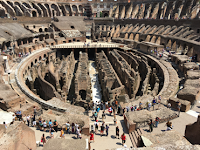
(Roman Colosseum)

I’ve been blessed to live in some of the most beautiful parts of the U.S.—Oregon, Colorado, Montana, Iowa, and Minnesota—and now reside in the Northwoods of Wisconsin with my husband, two dogs, two kayaks, and winters perfect for writing. When not crafting stories, I play pickleball, cater to my dogs, visit children and grandchildren, and read mysteries, fantasy, historical fiction, romantic suspense, and heaps of historical nonfiction.

Obedient Unto Death, book one in the series, was published in 2022 and won the Eric Hoffer First Horizon Award for a debut novel and first place in the Spiritual Fiction category. My second book, Fortunes of Death, released in October 2024, continues Sabina’s adventures.

The Books  

Obedient Unto Death
When a scribe is
 brutally murdered during a secret Christian gathering, an innocent bishop is arrested. Believing sinister forces aim to destroy the fledgling faith, Sabina races to save him from execution. As she delves into the mystery, she uncovers a web of intrigue, betrayal, and danger threatening her life and the survival of her community. Will she uncover the truth before it’s too late?

Fortunes of Death In the bustling streets of ancient Ephesus, fortunes shift in an instant. When a wealthy merchant is found crushed beneath his own monument, the city’s fragile peace shatters. Sabina faces her most perilous case yet, navigating political intrigue, dark sorcery, and forbidden love to uncover the truth amid growing unrest.
Powers of Death (Coming Soon) Sabina’s investigative skills are tested as she seeks justice for a childhood friend found stabbed in a bathhouse at midnight. The case forces her to confront sordid secrets and deadly schemes that strike close to home.

If you’d like to immerse yourself in the world of early Christians and see the great city of Ephesus recreated in its glory, sign up for this virtual tour at https://liisaeyerly.com/newsletter/. Imagine standing in the packed theater where crowds screamed for the Apostle Paul’s death, soaring above a harbor bustling with exotic goods and slaves, and counting the pagan temples the first believers resisted to remain faithful.

Thank you for reading my spotlight! Share your thoughts about writing or reading, and you’ll be entered into a giveaway for one of my books. Winner announced on my blog on HHHistory.com on February 21, 2025. My journey proves it’s never too late to follow your dreams and share your passion with the world.

Visit me at my website, on my Author Facebook page,

You can purchase my books at:
Fortunes of Death
Obedient Unto Death
My Amazon book page


Tuesday, January 21, 2025

Spectacles of Rome: Bathing, Blood, and Chariots (Part 1)


by Liisa Eyerly

You’ve had an exhausting day

· At work
· Watching the kids or grandkids
· Completing a project that has been bugging you for too long

You need a break—maybe a small celebration. So you call a friend to go out for a bath.

If you were an ancient Roman, that is exactly what you would do, except the ancients did not save this experience for special occasions. Group bathing in the large public thermae or a smaller private balnea was part of daily life. If you were wealthy or middle class, visiting the baths might be as routine as taking a daily shower. Thanks to government subsidies, even the poor could afford to bathe a few times a week.

                                Badenweiler, Germany bathhouse model Brücke-Osteuropa, Public domain, via Wikimedia Commons

              Baths of Caracalla: Valina Tsikalá, CC BY-SA 4.0 <https://creativecommons.org/licenses/by-sa/4.0>, via Wikimedia Commons

Roman bathhouses were more than places to clean up. These sprawling complexes were more like modern-day spas. Picture massage tables, exercise and game rooms, eating establishments, hairdressers, and manicurists. The grander baths, often commissioned by the emperors to showcase their generosity and win public favor, featured outdoor swimming pools, gymnasiums, parks for leisurely strolls, theaters, and libraries. The rooms were decorated with mosaic tile floors and beautiful wall murals. Despite these luxurious extras, the main attraction was always the bath itself. It was a social event, a chance to catch up with friends, meet new people, or even conduct business in a relaxing environment.

Grounds of the ruins of the Baths of Caracalla
 Grounds User:Ethan Doyle White, CC BY-SA 4.0 <https://creativecommons.org/licenses/by-sa/4.0>, via Wikimedia Commons

People bathed in the nude, so each bathhouse included a dressing area and at least three essential rooms with pools or tubs of varying temperatures.
  •  Tepidarium - warm and inviting
  •  Caldarium - intensely hot
  •  Frigidarium – cold, like stepping into a refrigerator
Re-created bath scene inside the remains of a public bathhouse in Bath, England

See the inset for a picture of the hypocaust columns supporting the floor above the furnace in the caldarium. (Bath, England)

Slaves kept the bathhouses running, tending furnaces beneath tiled floors to heat the rooms and water. In some complexes, an additional sauna-like hot room was available. Bathers moved between rooms in whatever order they preferred. In Fortunes of Death, my second book, there’s a scene where Sabina, follows a typical Roman bathing routine—starting in the tepidarium, soaking in the caldarium, and finishing with a bracing dip in the frigidarium or an outdoor pool. In book three Powers of Death a deserted bathhouse is the perfect setting for murder.
Roman bath in Bath, England
“The Roman ingenuity in engineering and architecture is truly remarkable. Their ability to create functional, luxurious, and climate-adaptive spaces like the baths speaks volumes about their understanding of materials, design, and human comfort.” (Chatgpt)

https://Commons.Wikimedia.org/Wiki/File:Dialogues of Roman Life.djvu

                                            Strigil  Toyotsu, CC BY-SA 4.0 <https://creativecommons.org/licenses/by-sa/4.0>, via Wikimedia Commons

Hygiene was a central part of the Roman bath experience. Oil would be spread over the body then the day’s sweat and grime were scraped away with a curved metal tool called a strigil. Wealthier patrons had servants perform this task, while others managed it themselves.

                                    Baths of Caracalla Painting by Virgilio Mattoni, Public domain, via Wikimedia Commons

Roman propriety typically kept the genders separate. Women usually bathed during reserved hours in the morning, and men in the afternoon. Although bathing was generally viewed as healthy and beneficial, some considered it indulgent and licentious, associating it with too much wine, luxurious food, and sex, especially in cases where mixed-gender bathing occurred. Many Jews abstained or used bathhouses guardedly to maintain their moral and religious standards. Tertullian, an early Christian, cautioned against overindulgence but accepted their role in hygiene.

Thank you for reading!


In the bustling streets of ancient Ephesus, fortunes can change in an instant. When one of the city’s wealthiest citizens is found crushed beneath his own triumphant memorial, the powerful elite demand justice—but at what cost? Enigmatic investigator Sabina faces her most perilous case yet. As secrets unravel and enemies close in, she must navigate political intrigue, dark sorcery, and forbidden love to uncover the truth. In a city where everyone has something to hide, who can be trusted? And how far will Sabina go to solve a mystery that could cost her everything?


Liisa Eyerly’s Secrets of Ephesus series adds a Christian twist to first-century Roman Empire mysteries. Her debut novel, Obedient Unto Death (2022), won the Eric Hoffer First Horizon Award and first place in Spiritual Fiction. The second book, Fortunes of Death, just launched. A lifelong mystery lover, Liisa was inspired by the Apostle Paul’s depiction of early Christians. After careers in teaching, librarianship, and stained glass, she began writing full-time at fifty. Liisa lives in northern Wisconsin with her husband and enjoys pickleball, Bible study, and visiting Ancient Roman sites.

Visit me at my website, on my Author Facebook page,

or purchase my books at:
Fortunes of Death
Obedient Unto Death
My Amazon book page