Showing posts with label 1930s. Show all posts

Tuesday, July 28, 2026

Famous Horses in History…Trigger – by Donna Schlachter with Giveaway


Roy and Trigger courtesy MorganHorse.com


Trigger the horse was one half of a famous team that included Roy Rogers. So let’s spend a little time looking at the famous man whose untiring devotion to the horse, and whose acute business sense saw the benefit in marketing this animal to his audience (many of whom were children), made Trigger’s fame possible.

Roy was born in 1911 in Cincinnati, Ohio, the third of four children. Leonard Franklin Slye lived with his family on a hand-built houseboat, which they moved to dry land during the Great Flood of 1913 and continued living in it.

In 1922, when Leonard/Roy was 11 years old, he was given a horse and learned to ride. The family was musical, so Leonard/Roy learned to sing, yodel, and play several instruments. During the Depression, the family moved to California, and although Leonard/Roy worked as a fruit picker and other itinerant jobs, he longed to pursue singing. He eventually co-founded the Sons of the Pioneers, making their first records in 1934 when he was 23. The actor Gene Autry gave them their first break with singing parts in his movies. Sometimes, who you know matters.

Just a few years later, Leonard/Roy got a lengthy contract with Republic Pictures, who wanted to cash in on the popularity and recent passing of Will Rogers, so Leonard/Roy changed his name to Roy Rogers. His first movie, Under Western Stars, released in 1938, required the use of a horse. Several were brought to him, and he chose the third mount, Golden Cloud, not even looking at the rest.
Roy and Trigger (MorganHorse.com)


From the beginning, Roy observed that Golden Cloud was no ordinary horse. Smiley Burnett, a co-worker, said, “he is quick off the trigger”, and Roy thought that a good name.

Trigger’s ancestry has always been up for debate, but Roy did some research, and he learned that the sire was at least part Morgan, part Thoroughbred, and his dam was also part Morgan. Despite that, Trigger’s bloodlines included the work ethic of the Morgan and the intelligence and agility of the Thoroughbred.
Trigger doing tricks with Roy (MorganHorse.com)
 
Hollywood Horse Trainer Glenn Randall trained Trigger on more than 150 tricks, including his famous two-legged rear, sitting in a chair, covering himself with a blanket and taking a nap, and because of a hectic travel schedule, was even housebroken.

Although Roy carefully guarded the secret that there was more than one Trigger, the horses were not identical. Trigger had one white stocking, while Trigger Jr. and Little Trigger had four. Their sizes were slightly different, and had Roy stood them side by side, even the little children would have realized their beloved Trigger had look-alikes. Interestingly, because Trigger was never bred, neither of his stand-ins were direct descendants. When asked why he didn’t allow Trigger to breed, Roy said he didn’t want to risk losing the docile spirit of the horse, as that made him trainable and also able to stand quietly while inexperienced riders sat on him.

Here are some interesting facts about Trigger and Roy:

-- Trigger, as Golden Cloud, had first been used in a movie featuring Olivia de Havilland as Maid Marion in The Adventures of Robin Hood

-- Trigger and Roy appeared in 88 movies from 1938 through the mid-1950s

-- Trigger had his own fan club, with members worldwide.

-- Trigger and Roy have their prints in front of Grauman’s Chinese Theatre 
Handprints and hoof prints at Grauman's Chinese Theater (MorganHorse.com)

-- Little Trigger was the horse that folks called “the smartest horse in the movies”, but Trigger got the fame

-- The Denver Broncos NFL team received permission to use the mold that created the form for Trigger after he died, and Bucky the Bronco was used to create the blue stallion with the blazing orange eyes that is synonymous with the Bronco team. The mold was destroyed after that.

-- In 1999, actor Val Kilmer led a horse named Triggerson on stage at the 71st Academy Awards as a tribute to Roy Rogers and his cowboy peers. Triggerson was reportedly grandsired by Trigger Jr.


Trigger died of natural causes one day shy of his 30th birthday at Roy’s ranch in Apple Valley, California. Unwilling to let his long-time friend and companion go, Roy arranged for a professional taxidermist to preserve the hide on a foam likeness of Trigger. The likeness was put on display in the original Roy Rogers-Dale Evans Museum in Apple Valley in 1967, then moved to the new museum location in Victorville, California, in 1976, and then resided in Branson, Missouri, since 2003.
Classic two-legged stance (Courtesy of wikipedia)
 
When the museum closed in 2010, its contents were sold at public auction. Trigger’s likeness was initially purchased by a television station, which planned to include it in a western museum, but those plans never materialized. But that hasn’t stopped Trigger. Instead, he’s spent the years since greeting visitors at the station’s corporate headquarters, along with Buttermilk, Dale Evans’ horse, and Bullet, Roy’s companion dog. The trio are occasionally lent to venues like John Wayne: An American Experience, and The Texas Cowboy Hall of Fame, where they continue to delight audiences of all ages. 
 
As Roy would say, "Happy trails to you!"


Leave a comment about any fond memories you have of Trigger and Roy Rogers, and I will randomly draw from all comments for a free ebook of Hollenberg Hearts to be sent to one lucky recipient.


About Hollenberg Hearts: A mail order bride. A crippled stationmaster. No way out for either of them—except with each other. Can they surrender their hearts and find true love?


About Donna:

A hybrid author, Donna writes squeaky clean historical and contemporary suspense. She has been published more than 60 times in books; is a member of several writers' groups; facilitates a critique group; teaches writing classes; and judges in writing contests. She loves history and research, traveling extensively for both, and is an avid oil painter. She is taking all the information she’s learned along the way about the writing and publishing process, and is coaching committed writers eager to tell their story. Learn more at https://www.donnaschlachter.com/the-purpose-full-writer-coaching-programs Check out her coaching group on FB: https://www.facebook.com/groups/604220861766651

Website: www.DonnaSchlachter.com

Newsletter: https://www.thepurposefullwriter.com/newslettersignup Stay connected so you learn about new releases, preorders, and presales, as well as check out featured authors, book reviews, and a little corner of peace. Plus: Receive 2 free ebooks simply for signing up for our free newsletter!

Facebook: www.Facebook.com/DonnaschlachterAuthor

Amazon Author Page: https://www.amazon.com/stores/Donna-Schlachter/author/B01180A2EE

Bookbub: https://www.bookbub.com/authors/donna-schlachter

Goodreads: https://www.goodreads.com/author/show/14116621.Donna_Schlachter


Resources:

Rearing image of trigger: (picture credit): https://ohiomemory.org/digital/collection/p267401coll32/id/15871/)

https://saddleupcolorado.net/blog/-roy-rogers-horse-trigger-breed-facts-where-he-is-no/?srsltid=AfmBOorpRamQCZ0b9o7ULLbs7GjmUBPAbA46x6t732KOmF74aA9J4MS9

https://en.wikipedia.org/wiki/Trigger_(horse)

https://www.morganhorse.com/upload/photos/page_1144_4-tmh_oct2020_historical_morgans_in_western_films_iv_roy_rogers_trigger.pdf

Friday, September 27, 2024

The Radio Drama that Spooked a Nation--Part 1

By Kit Hawthorne

Have you ever heard of the science fiction radio play that was so realistic, it made Americans believe an actual alien invasion was taking place? This gripping 1938 audio drama, and its aftermath, have become part of American folklore. According to the popular version of the story, the broadcast was convincing enough to cause mass panic and suicides across the nation.

The truth is both less sensational and far more interesting.

Two major factors contributed to the broadcast’s unique impact. One is the genius of Orson Welles. The other was the listening habits and emotional state of Americans in the late 1930s.

Orson Welles, photographed by Carl Van Vechten


Orson Welles—actor, director, writer, producer, musician, magician—is considered one of the greatest and most influential filmmakers of all time. His career began early. At twenty-one, he was already directing high-profile stage productions in New York City. In 1937, he and John Houseman founded the Mercury Theatre. Its first Broadway season was wildly successful, with productions of Julius Caesar, The Cradle Will Rock, Shoemaker’s Holiday, and Heartbreak House. Welles made the cover of Time Magazine in April of 1938. Two months later, CBS offered him a radio show, The Mercury Theater on the Air. The show would feature classic dramatizations with Welles as master of ceremonies, star, narrator, writer, director, and producer. Welles already had a movie in progress, two plays in rehearsal, and another seven in preparation. At the time of the War of the Worlds broadcast, he was twenty-three years of age.

Houseman’s description of the radio show’s production schedule fills me, a novelist of regular hours who works in solitude, with horror. The weekly broadcasts were never more than a week out in preparation, and sometimes a lot less.

The show aired on Sunday evenings at 8 p.m. In the preceding week, Houseman and Welles would choose the shows and lay them out. Most of the actual writing was done by Howard Koch, who typically took five fifteen-hour days to produce the first draft of an hour’s radio script. The associate producer, Paul Stewart, would then hold preliminary rehearsals, with rudimentary sound effects. On Thursday, a wax record of the show was cut, and later that night Welles would listen to the record and give his revisions. Over the next thirty-six hours, the script would be rewritten. Another rehearsal took place on Saturday afternoon, with sound.

The next day, Welles took over. According to Houseman, by early Sunday afternoon,

…two simultaneous dramas were regularly unfolded in the stale, tense air of Studio Number One: the minor drama of the current show and the major drama of Orson’s gargantuan struggle to get it on. Sweating, howling, disheveled, and single-handed he wrestled with Chaos and Time—always conveying an effect of being alone, traduced by his collaborators, surrounded by treachery, ignorance, sloth, indifference, incompetence and—more often than not—downright sabotage! Every Sunday it was touch and go. As the hands of the clock moved relentlessly toward air time the crisis grew more extreme, the peril more desperate. Often violence broke out. Scripts flew through the air, doors were slammed, batons smashed. Scheduled for six—but usually nearer seven—there was a dress rehearsal, a thing of wild improvisations and irrevocable disaster. (John Houseman, “The Men from Mars,” Harper’s Magazine, December 1948.)


Illustration by By Henrique Alvim CorrĂȘa


This particular production was based on the 1898 novel by H.G. Wells (no relation to Orson Welles, and still alive at the time of the broadcast, which he vehemently repudiated). Howard Koch, the writer, spent three days trying to wrest a script out of the novel before calling Houseman in despair, claiming that the story could not “be made interesting or in any way credible to modern American ears.” This was Tuesday afternoon, five days before the show was scheduled to air. Unable to reach Welles, who was then in his thirty-sixth hour of dress rehearsals for a play to be performed at the Mercury Theater, Houseman told Koch to buck up. By the wee small hours of Wednesday morning, Koch had overcome his panic and gotten the script under control, finally finishing at sunset. Thursday, as usual, associate producer Paul Stewart rehearsed the show and made a record.

Listening to the record, the team was underwhelmed. They all agreed the show was dull. The only way they saw to liven it up was to play up the newscast angle with its chaotic, real-time, on-the-scene quality. They did their best to spice up the story and held another rehearsal Saturday afternoon. Even with the alterations to the script, the show felt flat. One of the CBS sound men confided that the show “just didn’t come off.”

Come back next month to find out just how wrong that sound man turned out to be!


Kit Hawthorne makes her home in south central Texas on her husband’s ancestral farm, which has been in the family for seven generations. When not writing, she can be found reading, drawing, sewing, quilting, reupholstering furniture, playing Irish pennywhistle, refinishing old wood, cooking huge amounts of food for the pressure canner, or wrangling various dogs, cats, horses, and people. Visit her at https://kithawthorne.com/.

Thursday, May 12, 2022

The Backward Walk Around the World - Part II, Europe

By Kathy Kovach


If you haven't yet, please read Part I, America first.

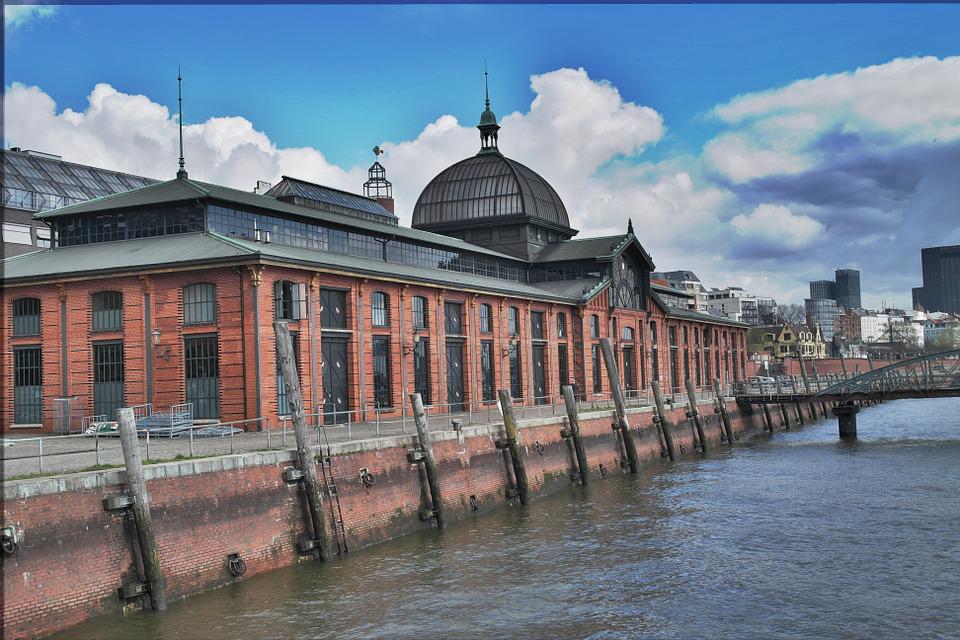
Port Hamburg

When we last left Plennie Wingo, the man who walked backward around the world, he had just finished his cross-country trek from Fort Worth, Texas to the east coast. A shoe company had found work for him aboard a ship, and he set sail across the Atlantic for the second leg of his trip.

EUROPE

Disembarking from the merchant ship the Seattle Spirit, Plennie Wingo began the mileage count once again, setting off through Hamburg. After a month in the city, on February 1, 1932, Wingo reverse-stepped his way to Berlin, 180 miles east. Finally reaching Berlin on February 15, 1932, a crew from Paramount Pictures filmed him walking around the city for a newsreel.

It would have behooved Wingo to learn the language, or at least have a translation book with him. In Dresden, he discovered a beautiful hotel. Inside, however, he was led to a room of lockers and instructed to strip. Highly uncomfortable, but feeling he had no choice, he obeyed. He was then led into a room full of other men in the same state of undress. There, they were hit with water from spigots on the walls, and then mopped down with soapy water by the man who had unceremoniously railroaded him into this situation. The group received towels and nightgowns, were led into a room with long tables and benches, and were served hard bread and soup. A chaplain led a prayer, and there was singing. Afterward, they were all led into a large room with rows of cots. 

What kind of a hotel is this? Plennie wondered. Even though the warm room was comfortable, a chemical smell kept him awake. After a sparse breakfast, he gathered his belongings and left in search of something more substantial. 

At a restaurant, he was digging into his hearty meal when an English-speaking German asked him about his sign, that by now had been translated. Ecstatic he’d found someone he could talk with, he asked about last night's hotel. Apparently, it was nicknamed “the delousing joint,” a mission for unfortunates. The man recommended a nicer hotel that his friend owned for his stay in Dresden, where Wingo ended up spending two free nights courtesy of the welcoming proprietor.

Continuing on, Plennie Wingo trekked backward toward eastern Europe. After a couple of wrong turns that led him straight into a lumber camp, he was escorted to the Czech border for the next leg of his journey that would be his most challenging yet.

Onward—or rather backward, he marched, struggling through snowstorms. Into Prague where a wealthy man gave him a new suit, Vienna where a newspaper carried his story, and on to Budapest.


Near Sebes, Romania, he accidentally knocked his cane from a bridge into the river below. Panicking, he scrambled down and plunged into the murky water. On the sixth dive down into the depths, he arose triumphant, cane in hand. He couldn’t have imagined continuing his trip without his sturdy companion.

Once in Sebes, and tucked safely into a hotel, he noticed the date. April 15, 1932. He’d been on his journey an entire year.

In May, 1932, after being arrested in Sofia, and then detained at the Turkish border, he arrived in Istanbul where he spent several days in The Capital City Murder Jail. The charge was being a public nuisance. They didn’t understand the western mindset of flagpole sitting, pushing a peanut up Pikes Peak, or walking around the world backward.


The Associated Press caught wind of Wingo’s plight and published the story with syndication in newspapers all across America.
“Plennie Wingo is stranded in Turkey and can’t get out backwards or forwards. The Balkan police regulations don’t say anything about crabwire passage across the frontiers, so first the Bulgarian police and then the Turkish police arrest him. Now he’s in jail without a visa and broke.”
Once freed from jail, Wingo agreed to move forward, literally, and spent time in Istanbul deciding whether he could continue or not.

A meeting with the American consul, Charles Allen, proved disastrous to Wingo’s ambitions. Allen convinced the reverse walker that to move on would be deadly. Besides the civil unrest in and around Persia, there were roadless regions, tall, impossible mountains, jungles with bad men and mean snakes. Allen refused to grant a VISA. Plennie Wingo had gone as far as he could around the world.

Depressed, but resigned, Wingo hatched a Plan B. He boarded the ship Exeter to Marseilles, France, and worked for his passage until he arrived in New York on June 15, 1932.


BACK IN AMERICA

Safe on American soil, Plennie Wingo’s desire was to finish his transcontinental journey with a cross-country trek from the west coast to Fort Worth, Texas. Thus, he began this last reverse leg in Santa Monica, California on August 13, 1932. 


After several more misadventures, he finally backpedaled his way into the Western Union in Fort Worth, Texas. In the end, Plennie Wingo had worn out twelve pairs of shoes and seen a good chunk of the world in one year, six months, nine days, four hours, and twelve minutes, and had traveled 8000 miles for which he was recognized by the Guinness Book of World Records. The syndicated strip Ripley’s Believe It or Not! also added his stunt to their list of weird achievements.

POST WALK


Plennie wrote a book about his adventures. After a stuttering start, it was finally published in 1966, but performed weakly.

The Tonight Show with Johnny Carson, July 1976  

Though he met his backward walking goal, for the most part, it didn’t earn him the fame and fortune he’d hoped. He remarried and re-divorced his wife and eventually married his soulmate, a woman named Juanita Billingsley, thirty-three years his junior. He appeared on Johnny Carson, and performed a 400-mile publicity backward walk for the Ripley museum in San Francisco, California. Wingo died on October 2, 1993, at the ripe old age of ninety-eight. He never wavered from the thirty-six-year-old skinny, buck-toothed man who was catapulted into the world of oddities simply to prove a point to a group of teenagers who thought everything that could be done had been done.

Thank you, sir, for proving them wrong.


Quotes from The Man Who Walked Backward by Ben Montgomery, Hatchett Book Group, 2018.


Plennie Wingo began his backward journey on April 15, 1931, the 19th anniversary of the sinking of the Titanic. He set out with that same tenacious spirit, but came back a victor.


A secret. A key. Much was buried on the Titanic, but now it's time for resurrection.


Follow two intertwining stories a century apart. 1912 - Matriarch Olive Stanford protects a secret after boarding the Titanic that must go to her grave. 2012 - Portland real estate agent Ember Keaton-Jones receives the key that will unlock the mystery of her past... and her distrusting heart.
To buy: Amazon


Kathleen E. Kovach is a Christian romance author published traditionally through Barbour Publishing, Inc. as well as indie. Kathleen and her husband, Jim, raised two sons while living the nomadic lifestyle for over twenty years in the Air Force. Now planted in northeast Colorado, she's a grandmother, though much too young for that. Kathleen is a longstanding member of American Christian Fiction Writers. An award-winning author, she presents spiritual truths with a giggle, proving herself as one of God's peculiar people.


Tuesday, April 12, 2022

The Backward Walk Around the World – Part I, America


By Kathy Kovach


Do you love to walk? Around the neighborhood. A nature hike. Perhaps you even have aspirations of taking on the Appalachian Trail, which is comprised of 2,200 miles between Georgia and Maine. But have you ever thought of walking around the world?

Backward?

Thirty-six-year-old Plennie Lawrence Wingo did. Born in 1895, the cafĂ© owner found himself a victim of the Great Depression, his business succumbing to failure. He turned to entertainment, thinking he could bring in extra cash by learning how to walk backward at a fast pace. The world tour idea came about when his 15-year-old daughter hosted a party, and one of the boys mentioned some of the feats performed by adventurers, such as Lindbergh’s flight across the Atlantic, the spectacle of flagpole sitting, or the person who pushed a peanut up Pike’s Peak with his nose. All that could be done had already been done, he opined. “Ah,” Wingo may have said. “But what about someone walking backward around the world? No one has tried that.”

Backward walking wasn’t a new thing, however. Several people had taken on the challenge, some at great distances. But none had attempted a transcontinental reverse stroll.

July 11, 1817 – Darby Stevens set off from Wormwood Scrubbs, England intent on walking backward for 500 miles in 20 days. He did it on a wager for 50 guineas. It’s unclear if he actually made it.

Others followed suit, even into the next century. One such fellow was arrested in New Jersey for walking backward into people’s homes to beg. He was Spaniard Paul Guavarra, who claimed to be descended from Christopher Columbus. True to form, he walked backward into his jail cell.

Patrick Harmon of Seattle sold his cigar shop after being fined $100 for gambling. Ironically, he decided to walk on a bet of $20,000 on August 5, 1915, from San Francisco to New York with his friend and guide, William Baltazor, who he paid $4 a day. They made the journey successfully, and “paraded up the steps of City Hall. . .walking backward. . .” a New York newspaper touted. Some controversy ensued over whether the duo followed the rules, even though Harmon suffered frostbite on the tips of his ear and nose during January in Iowa. They also claimed to have battled a rabid coyote in Nevada, although the area they claimed it happened in was inconsistent. They were no doubt on the railway line rather than the Lincoln Highway, apparently taking trains throughout Nevada. Turns out Patrick Harmon of Seattle was really Patrick O’Rourk from St. Mary’s, Ohio, and had been living under an alias. No wonder there were trust issues. Whether he won the wager was never reported.

Jackson Corwin, later known as the Human Crawfish, was mistaken for a detective as he made his reverse way from Philadelphia to San Francisco in 1923. One woman gave him her husband’s picture and asked him to keep an eye out for him.

No one in their right mind would take on a world walking tour. Without a dime in their pocket. During the Great Depression. Backward.

No one but Plennie Wingo.

Wingo practiced until he felt it time to go public, which he did at the Southwestern Exposition and Fat Stock Show in Fort Worth, Texas on March 7, 1931. First, he walked around town advertising the stock show. This earned him the right to present himself during the show. Wearing a cowboy costume and a sign on his back that now billed himself as “the first reverse walker of the world,” he strutted, toe over heel.


And thus, on April 15, 1931, he said goodbye to his wife and daughter. It comes as no surprise that Mrs. Idella Wingo was not on board with this stunt. Even so, he donned eyeglasses with mirrors incorporated in the sides, and began his expedition, one foot behind the other.

The .25 postcard that helped finance the walk around the world.

When he reached Dallas, he stopped at a photography studio to take his picture and have postcards made that he could sell along the way. He continued to wear his sign on his back. A policeman stopped him, stating an ordinance prohibiting the carrying of signs of any type. Wingo found a phone and called the mayor. After explaining his plight, the mayor granted permission. Other towns presented the same struggle, some over the signage and some over concern about the backward walking, but Wingo simply talked to those higher up and was granted passage.

Wingo didn’t have to walk backward all of the time. When he entered a town, he’d find the Western Union and have his book stamped for proof of day and time. Then, he was free to walk normally around town. This elicited some booing from the crowds gathered until he assured them all was on the up and up. If he was forced to move forward at any time, he would note where it happened and return to the place of interruption to continue on. He refused to cheat, just as he was determined to earn his own way. The postcard sales assisted with food and lodging, and the occasional sign advertising for businesses helped.

Although adept at reverse walking, Plennie wasn’t impervious to injury. On July 30, after 1700 miles, he stepped in a hole near Canton, Ohio, and fractured his ankle. He spent three weeks recovery time in the hospital free of charge. He’d become somewhat of a celebrity by this time, with his story featured in a newsreel that was seen in theaters. Go here A Texan man during his round the world walking tour in Chicago, Illinois. HD Stock Footage - YouTube to see it.

Once fully recovered, Wingo recommenced on August 24, 1931. Another policeman approached him as he was leaving a city in Pennsylvania. He issued him a citation for “mopery in the second degree,” but the ticket read, “Good luck on your trip around the world.”

Plennie, Idella, and Vivian during the normal years.

Although Idella Wingo had been writing letters to Plennie, they dried up after fifty days. When she finally wrote again, it was to ask him to give up and come home. His daughter also wrote telling him her mother was ill. They’d been trying to make a go of it, but without money coming from him, it was hard. Wingo was devastated but refused to quit.

His walk stalled in mid-October when he reached New York City. Despite handing out business cards describing his desire, he still had no sponsor to help him get to Europe. The urge to give up became strong. He stayed in a boarding house and took on jobs. Two-and-a-half months later, in December, he decided to continue on and left for Connecticut, Massachusetts, and Rhode Island. Another letter caught up with him, this time with divorce papers, which he signed.


At long last, on January 12, 1932, a shoe company found work for Wingo as part of the crew aboard the Seattle Spirit, a merchant ship traveling to Germany. He walked the gangplank backward. However, seasickness overcame him the first five days. When they docked in Hamburg, the steward, who had been cruel to him for the entire journey, refused to let him leave. Wingo snuck off the boat about three weeks later when the steward was gone. Months later, a letter reached Wingo from a shipmate revealing what happened after he disembarked. It seemed the steward came on board about nine o'clock that night, happy to discover that Wingo was gone. He took a bath and headed to bed. In about twenty minutes, he was heard screaming, hollering, and cursing. His skin was red and itching, he felt he was on fire. After a search of his bed, it was discovered lye had been the culprit. Wingo had been in charge of the laundry, and he'd gotten his final revenge.


Plennie Wingo's call to adventure doesn't stop here. Join me next month for Part II, Europe. Does he make it all the way around the world? What challenges will he face in pre-World War II Germany? What about the Eastern European block? Trust me when I say, you don't want to miss it.

The backward walk heard around the world began on the nineteenth anniversary of the sinking of the Titanic, April 15, 1912. No mention of this important time in history is given in the account from the book pictured above, The Man Who Walked Backward, by Ben Montgomery. It could be that the Great Depression was pressing hard on the nation, making all other watersheds pale in comparison. Even so, Montgomery paints the backdrop with historical moments so as to capture every nuance of what Plennie Wingo walked through.

Backward.


A secret. A key. Much was buried on the Titanic, but now it's time for resurrection.


Follow two intertwining stories a century apart. 1912 - Matriarch Olive Stanford protects a secret after boarding the Titanic that must go to her grave. 2012 - Portland real estate agent Ember Keaton-Jones receives the key that will unlock the mystery of her past... and her distrusting heart.
To buy: Amazon


Kathleen E. Kovach is a Christian romance author published traditionally through Barbour Publishing, Inc. as well as indie. Kathleen and her husband, Jim, raised two sons while living the nomadic lifestyle for over twenty years in the Air Force. Now planted in northeast Colorado, she's a grandmother, though much too young for that. Kathleen is a longstanding member of American Christian Fiction Writers. An award-winning author, she presents spiritual truths with a giggle, proving herself as one of God's peculiar people.


Monday, September 7, 2020

The Federal Writers' Project Slave Narratives of 1936

By Michelle Shocklee

Growing up, I heard many stories about the Great Depression. My parents were young children during those difficult times, so they developed an appreciation for hard work and were grateful for everything they had. Mom's family lived in Oklahoma and had to contend with the Dust Bowl too. Although we're experiencing difficult times in our world today, as an historical fiction author, I like to look back in history and find hope in how the generations before us made it through their dark days.   

Travel back to 1936 with me. 


Newspaper from 1929


The Great Depression has been raging since the stock market crashed in October 1929. Millions of people are out of work. President Roosevelt and the folks in Washington DC are working to create jobs through the New Deal initiatives and put Americans back to work in all sorts of occupations--construction workers, teachers, farmers, and yes, even writers.


One of the New Deal programs was called the Works Progress Administration. Under the WPA umbrella, a program called the Federal Writers' Project was created. By the beginning of World War II, over 10,000 people had found employment with the FWP. One of their best known projects was the American Guide Series, consisting of guides to the (then) 48 states, as well as the Alaska Territory, Puerto Rico, and Washington, D.C. 

But it is the FWP Slave Narratives that captivated this author. 

While I was researching slavery in Texas for my historical plantation series, I discovered the Slave Narratives, the telling of life in bondage by former slaves. It had been 70 years since the Civil War ended. The former slaves were in their 80s, 90s, and 100s. If their stories were going to be preserved, it had to happen soon. Equipped with a list of questions, the FWP interviewer asked each former slave a question and then let them answer in their own words. The interviewer would record every word spoken, even the more difficult to understand dialect and slang words. Some told of being a slave on a plantation or farm. Others lived and worked in town. They spoke about family, freedom, and life after the war. The word-for-word interviews are utterly fascinating, yet they are so much more than mere historical documents. 


Reading these narratives has taught me an important truth: everyone has a story to tell, and everyone should be able to share their story, no matter how difficult it may be to hear. More than 2,300 former slaves from 17 states participated, bravely telling what it was like to be owned by another human being. Some of the tales are brutal to read, while others tell of good times despite living in bondage. None of them wallow in the hardships they endured; they simply tell the story of their life. Many of the participants allowed the FWP employee to take their photograph, so there are over 500 priceless black-and-white photographs archived in Washington DC's Library of Congress along with the narratives.


Library of Congress

While perusing the Library of Congress site, I came across a picture of a former slave woman taken by an FWP employee. This woman, sadly unnamed in the records, was a sharecropper in Mississippi. There isn't much information on her, but she commanded my attention when I saw her. Looking closely, you see that her simple skirt and the cuffs on her blouse are soiled, yet she is wearing earrings and a wedding band. Her short hair is braided and she has a contemplative look on her face. But it is her hand in her lap that stole my breath. 

Do you see it?

Her hand is disfigured. When I saw that, I immediately asked, "What happened to her hand?"

Library of Congress

The answer will forever remain a mystery, but simply reading through the narratives, one can imagine all kinds of terrible reasons why her hand was deformed. I explore this in my new novel Under the Tulip Tree. Frankie, a former slave woman who is interviewed by an FWP writer, tells her story to readers in much the same way the former enslaved people told theirs back in 1936. I imagine her looking very much like the precious woman in the photo.

Although the affects of the Great Depression were devastating to a large portion of our country, some good actually came out of those hard times. Had the economy been strong, its doubtful the Federal Writers' Project would have ever been created. And even though some narratives had already been collected by Fisk University and others, the FWP collection is by far the largest body of work of its kind. They are a priceless treasure that will (hopefully) be available for generations to come thanks to the Federal Writers' Project.

Had you heard of the FWP and the Slave Narratives? If you're interested in reading more about them, visit the Library of Congress


Michelle Shocklee is the author of several historical novels. Her work has been included in numerous Chicken Soup for the Soul books, magazines, and blogs. Married to her college sweetheart and the mother of two grown sons, she makes her home in Tennessee, not far from the historical sites she writes about. Visit her online at michelleshocklee.com.


UNDER THE TULIP TREE
Releases September 8, 2020

Sixteen-year-old Lorena Leland’s dreams of a rich and fulfilling life as a writer are dashed when the stock market crashes in 1929. Seven years into the Great Depression, Rena’s banker father has retreated into the bottle, her sister is married to a lazy charlatan and gambler, and Rena is an unemployed newspaper reporter. Eager for any writing job, Rena accepts a position interviewing former slaves for the Federal Writers’ Project. There, she meets Frankie Washington, a 101-year-old woman whose honest yet tragic past captivates Rena.

As Frankie recounts her life as a slave, Rena is horrified to learn of all the older woman has endured—especially because Rena’s ancestors owned slaves. While Frankie’s story challenges Rena’s preconceptions about slavery, it also connects the two women whose lives are otherwise separated by age, race, and circumstances. But will this bond of respect, admiration, and friendship be broken by a revelation neither woman sees coming?

https://www.tyndale.com/p/under-the-tulip-tree/9781496446077

Friday, March 27, 2020

A Hero for all Time – Hercule Poirot (with Giveaway) By Donna Schlachter


Hercule Poirot (David Suchet)
If somebody asked you to name your favorite television hero, who would that be? Depending on your age, you might choose Roy Rogers, John Wayne, Tarzan, Batman, Superman, or Wonder Woman. Perhaps one of the Ninja Teenage Mutant Turtles would come to mind, or an Incredible.

For me, my all-time hero would be none other than Hercule Poirot. A persnickety retired Belgian detective who appeared in 35 books by the late Dame Agatha Christie, M. Poirot solved his cases using his brain and not his brawn.

Perhaps one of the most interesting facts about M. Poirot, who loomed large on the screen as well as the page, is that he was but 5 foot, 4 inches tall. Perhaps his balding, egg-shaped head gave him the appearance of more stature. Or maybe it was his huge ego. He never accepted that a mystery would go unsolved, a criminal never brought to justice, on his watch.

His sense of justice was such that he wouldn’t give up. Not even to his dying breath, where, once again, he set the world right, ensuring the murderer paid for his crimes, even if nobody else knew.


As with all heroes, his sidekick, Hastings, was a true and loyal friend. In fact, were it not for Captain Hastings, we may never have been introduced to Poirot. For indeed, as with Doctor Watson and Sherlock Holmes, it was Hastings’ writing of Poirot’s cases that put the little man first page in the news and in the hearts of London of the 1920’s through 1975.

Over the years, several actors played the part of Poirot in television and movies. Austin Trevor was the first to bring the detective to theaters in 1931, with David Suchet playing him both on public television and in movies. In fact, Suchet was such a talented actor, he portrayed the great sleuth in 70 stories, double the number of books Dame Christie wrote. 


Humility was never one of Poirot’s characteristics, and he often claimed to be the greatest detective in the world. Prior to arriving on the shores of England as a refugee after World War 1. In some places, he is referred to as having retired from police work, but in others, only that he fled Belgium and landed in England, alone and knowing nobody.

In Dame Agatha’s autobiography, she described the creation of Poirot as happening during a time when, in 1914, she worked at a Red Cross Hospital in Torquay. Beginning as a nurse, she later moved to the dispensary, where began her interest in poisons. Her sister Madge had challenged her to write her own detective stories, and so Agatha thought about that while surrounded with drugs and compounds that could kill. She said, “Since I was surrounded by poison, perhaps it was natural that death by poisoning should be the method I selected.”

Dame Agatha’s writing process began with the crime, then extended to the procedure, leaving room for a twist that readers could detect and perhaps solve. In August 1914, a colony of Belgian refugees lived near her, and she thought, “Why not make my detective a Belgian? There were all types of refugees. How about a refugee police officer? A retired police officer.”


She wanted her detective to be as unlike her as possible, which meant he was a tidy little man, since Christie was the opposite. His moustache came next, along with his immaculate and almost compulsive grooming habits and dress code. In fact, Hastings commented, “I believe a speck of dust would have caused him more pain that a bullet wound.” Since she considered herself to be less than intelligent, he would be brilliant. A big man needed a big name, so Hercules was the first. Then came Poirot. However, not liking the sound of that, she dropped the S and Hercule Poirot was born in The Mysterious Affair at Styles.

For the initial book, Dame Agatha had the beginning and the end, and worked hard at filling in the middle. However, realizing she had an over-complicated set of plot lines going, she wisely rewrote the entire middle.

She sent the book to a publisher, who promptly returned it. But she wouldn’t let
that stop her, so she sent it to another company, and Poirot was finally introduced to the world in 1921, four years after it was written. 


Her final book about the great detective, Curtain, was written in the 1940s, but didn't appear in print until 1975.


Leave a comment, and I will randomly draw for a print copy (US only) of another favorite author of mine, Patricia Moyes, in her novel from the 1960s Down Among the Dead Men.


About Donna:

Donna writes historical suspense under her own name, and contemporary suspense under her alter ego of Leeann Betts, and has been published more than 30 times in novellas and full-length novels. She is a member of ACFW, Writers on the Rock, SinC, Pikes Peak Writers, and CAN; facilitates a critique group; teaches writing classes; ghostwrites; edits; and judges in writing contests.

www.HiStoryThruTheAges.wordpress.com

www.HiStoryThruTheAges.com Receive a free ebook simply for signing up for our free newsletter!

Facebook: www.Facebook.com/DonnaschlachterAuthor

Twitter: www.Twitter.com/DonnaSchlachter

Books: Amazon: http://amzn.to/2ci5Xqq and Smashwords: http://bit.ly/2gZATjm

What Can Be Online University: online courses on the craft of writing: https://what-can-be-online-institute.teachable.com/

Etsy online shop of original artwork, book folding art, and gift items : https://www.etsy.com/shop/Dare2DreamUS?ref=search_shop_redirect


Resources:

https://poirotchronology.blogspot.com/p/hercule-poirot-timeline.html

https://www.agathachristie.com/characters/hercule-poirot


Wednesday, January 15, 2020

Civilian Conservation Corps: Roosevelt's New Deal


Several months ago, My Cowboy and I were riding around on the backroads of Mississippi one Sunday afternoon. We meandered down one road and crossed the “canal”, then later we crossed it again on a different road.

Something niggled at my brain and I asked if he thought the canal was built by the Civilian Conservation Corps (CCC). A research trip (online) was in order! While I have yet to discover if the canal was built by the CCC, I did find tons of amazing things that were constructed in my neck of the woods.

But first, a bit about the CCC.

The CCC was a voluntary public work relief program to create jobs, education and skills for young unmarried men in the 1930s during the Great Depression. It was the brainchild of Franklin D. Roosevelt’s New Deal that provided manual labor where needed in rural lands owned by federal, state, and local governments.

In operation for nine years, the CCC saw 3 million young men pass through its ranks. The outbreak of World War II brought a halt to the program as young men were drafted into the armed forces.

Here are just a few of the projects completed in and around where I live…

Union High School, Union, MS: The National Youth Administration constructed the 1938 1-story vocational building at the Union High School. Superintendent of construction was Simon Brown. The building remains in use by the school system.

Leake County Courthouse, Carthage, MS
Photo: Susan C. Allen © Creative Commons BY-NC-ND 10/03/2015 
Leake County Courthouse, Carthage, MS. The three-story, brick and cast stone Art Deco courthouse was constructed 1935-36 as Public Works Administration (PWA) Project Miss. 1042. It was remodeled in 1976.

Neshoba County Library, Philadelphia, MS
Photo: Susan Allen © Creative Commons BY-NC-ND 2013 

Neshoba County Library, Philadelphia, MS. The rustic log cabin was the first library built in Philadelphia, Mississippi, although the library had been established several years earlier in space in two other buildings. It was a community effort spearheaded by the Twentieth Century Club. The WPA also provided the first paid librarians.

The building, relocated to a park when a new and modern library was constructed, was almost totally destroyed by a tornado in 2011. Only the flooring, chimney, and fireplace remained. It was reconstructed in 2013 in a joint effort of the Mississippi Department of Archives and History and City of Philadelphia.

Shockaloe Trail, Bienville National Forest
, Source © 2016 Trail And Ultra Running
Bienville National Forest Improvements, Forest MS. The CCC workers built roads, cleared trails and took on the task of reforestation, but they also reeducated locals with the idea that “public land was to be appreciated and was not simply a place to log, trespass and burn.”

This is just a sample of the many projects the CCC completed in the nine years it was in existence, not to mention the lives it changed in the young men who got to be a part of it. It was a fascinating period of history and I can’t help but think that many young men and women would benefit from being involved in a similar program in this day and age.

Do you know of a CCC project where you live? If not, check out this resource on the Living New Deal CCC Projects in your stomping grounds. You might be surprised!