
Showing posts with label 19th Century medicine. Show all posts

Wednesday, March 2, 2022

3 Bizarre Jobs for Women in History

Blogger: Amber Schamel Christian Author
Blogger: Amber Schamel


In honor of Women’s History Month, I thought we could explore three of the most bizarre jobs assigned to women in history. While many odd jobs still exist today, these are most likely positions you’ve never heard of and no longer exist in today’s world. Which is a good thing, believe me.
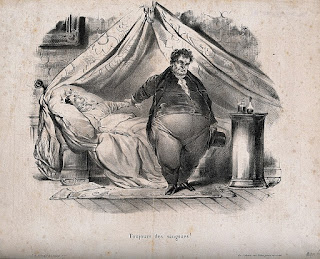
A physician prescribing bloodletting leeches
to a young woman.
Public Domain

Leech Collectors


Most of us have probably heard of the fascination that 19th century medicine had with bloodletting and leeches, but did you ever think about the people who had to collect the critters? This was a difficult job, and not one that paid well. Thence, it was those who could not easily find work and were the poorest who would be employed in this occupation, which means it was one of the few occupations women could obtain.
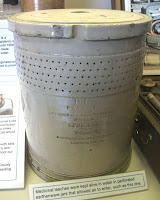
Leech Container
Public Domain

 
There is only one species of leech in Britain that can suck human blood. The method for collecting these leeches was to go into leech infested water and get them to attach to a victim, get full of blood, and then pull them off and put them in a leech collecting container. Sometimes the leech collectors used old horses or some animal as the bait...but most times they used their own legs. The leeches would suck on them for twenty minutes or more, and the wound would continue to bleed for ten hours after they took the leech off. Obviously, there are many ill effects to being repeatedly subjected to leeches. The loss of blood being the worst.

Thankfully, this is an occupation that no longer exists, due to the decline in demand for leeches. The leeches are glad too, since they were nearly extinct by the time the bloodletting craze ended.

Match Girls
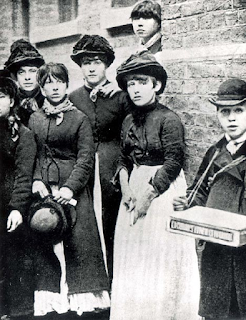
Match Girls on strike.
Many of them with Phossy jaw.
Public Domain


Have you ever heard the story of the Little Match Girl? In that tragic story, the little girl was merely selling matches. But these match girls were the ones who dipped the tips into the white phosphorus chemical to make them light. This was a tremendously dangerous job, some of the dangers not known until it was too late.
 
The process of making the matches consisted of dipping frames of matchsticks into various chemicals, including sulphur, white phosphorus and antimony sulphide. Each frame held approximately four thousand matches. An experienced worker could create ten million matches in a day.
 
The conditions for these workers, most often young girls, were so horrible, that it caused the Match Girls’ Strike of 1888 in London. The strike was an attempt to bring public attention to phosphorus poisoning. But the owners of the matchmaking companies were politically active and strong, so it was difficult to stand against them. In the end, the match girls gained a victory, with the owners conceding to the terms of abolishing penalties that were deducted from wages, allowing the workers to eat lunch in another room so that the food would not be contaminated with the white phosphorus, and allowing complaints to bypass foremen and be taken straight to management. 
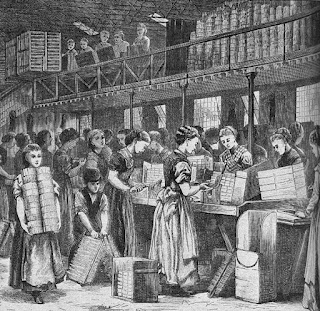
 
Match factory workers
Public domain


If you'd like more information on the strike, there is a detailed article on Wikipedia, which is very interesting and worth the read.

The thing that makes this one of the most bizarre jobs, is the effects that the phosphorus poisoning caused. One of the effects was what is known as “Phossy Jaw” which, in severe cases, causes a person’s jaw to glow in the dark. It starts out with flu-like symptoms and toothaches, but it leads to tooth loss, recurrent abscesses, and death of bone cells. After three to six months, the death of the bone cells in the jaw led to the dead bone separating from the live bone. If the affected bones were not removed, the victim of the disease would die of organ failure. 
 
The Salvation Army opened a matchmaking factory in 1891 which used red phosphorus, which is less toxic. Today, machines have replaced this dangerous job, and can produce approximately two million matches per hour. 

Heoibikuni
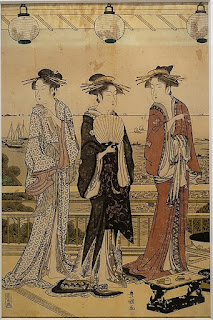
Heoibikuni was an occupation for Japanese women during the Edo period. The position was basically a servant to young Japanese noble women. It was their job to escort them on excursions as well, serving as a bit of a chaperone. She was basically a hairdresser, wardrobe coordinator and personal assistant.
 
However, the bizarre part of this job is that a deliberate part of this occupation was that if, or when, the noblewoman passed gas in public, the Heoibikuni were expected to vocally speak up and claim it as their own. This way the noblewoman's reputation of grace and honor was not tainted. You see, in Japanese culture, farting is regarded as a social blunder. It's such a big deal, that even today there are guide books that ask tourists not to burp or fart in public to avoid causing offense while in Japan. 

But, if you don't mind some public humiliation, this occupation may not be so bad. 

Of these, which one do you think was the worst? What is the worst job you've ever had to perform?
 
*****

Two-time winner of the Christian Indie Award for historical fiction, Amber Schamel writes riveting stories that bring HIStory to life. She has a passion for travel, history, books and her Savior. This combination results in what her readers call "historical fiction at its finest".  

She lives in Colorado Springs near her favorite mountain, in a small “castle” with her prince charming. Between enjoying life as a new mom, and spinning stories out of soap bubbles, Amber loves to connect with readers and hang out on Goodreads with other bookish peoples.

Amber is a proud member of the American Christian Fiction Writers Association. Visit her online at www.AmberSchamel.com/ and download a FREE story by subscribing to her Newsletter!

Thursday, May 30, 2019

Having a Baby in the 19th Century

by Kiersti Giron

"The New Arrival," By David Henry Friston, fl. 1850s to late 1880s Artnet.com, Public Domain
The coming of a baby has been a source of wonder and joy since time began. Last month, my husband and I were blessed by the birth of our first baby, a little son, and it's given me a new connection and empathy with mothers throughout time. For this post, we'll take a journey back to what having a baby was like during the 19th century, followed soon by a post on baby care during the same period. I hope you enjoy the ride!


Home vs. Hospital

18th/19th century midwifery log,
possibly owned by Timothy Watkins. Wikimedia Commons

In the earlier decades of the 19th century, midwives tended laboring women almost exclusively, and the vast majority of babies were born at home. While women widely feared the pain and danger of childbirth--and indeed, death in childbirth was common--midwives brought the knowledge and wisdom of generations of women to ease the birthing process as much as possible. Only poor women had their babies in hospitals until the early 1900s, and these "lying in" hospitals were notorious for maternal death, with infections running rampant due to doctors not washing their hands between patients and other unsanitary practices.

Doctors and Forceps

Obstetrical Case, including forceps, mid-19th century. By Welcome Images, https://wellcomeimages.org/indexplus/obf_images/a4/c5/5a56ebb92aa1e3d1da13bacc13f7.jpgGallery


With the growing popularity of forceps in the 19th century, doctors began to regularly enter the birthing room for the first time, since they were the ones trained in the use of forceps. This technological invention changed other aspects of childbirth also, such as position. Whereas previously women tended to give birth in a more upright position--which we now know is optimal in easing and expediting the baby's birth--now they started lying on their backs in bed to facilitate the use of forceps.

Anesthesia

Young Queen Victoria, By Franz Xaver Winterhalter - Osborne House, Isle of Wight,
Public Domain, https://commons.wikimedia.org/w/index.php?curid=1299559
Queen Victoria was famously the first woman to demand chloroform anesthesia during childbirth. While anesthesia during birth didn't become widespread until the 20th century, it began during the 19th, though it was often dangerous and generally frowned upon. But in an era when the pain of childbirth was emphasized as God's curse upon Eve--never mind that the word for "pain" in Genesis 3 is the same one translated "toil" for Adam--Victoria's success proved a significant precedent, though the growth of anesthesia paved the way for the horrors of twilight sleep in the early 20th century and other less-than-positive interventions.

"Lying In" - Postpartum Care

The Young Mother by Charles West Cope, 1845. Valerie McGlinchey,
CC BY-SA 2.0 uk, https://commons.wikimedia.org/w/index.php?curid=9977581

As I've been in postpartum recovery mode myself, the 19th century rules for mothers recovery from childbirth were particularly interesting to me. Women were encouraged to stay in bed for some time--no huge surprise there--and not even to get up into a chair until at least the tenth day, according to one 1800s manual. Another, Elizabeth Robinson's Scovil's 1896 Preparation for Motherhood, insists that new mothers not even talk! According to her:


"After all that the newly made mother has undergone, she needs perfect quiet for several hours before she is permitted to see anyone. A five-minute interview with her husband is all that should be granted. However well she feels, quiet should be insisted upon. Excitement is dangerous and no visitors must be permitted to enter the room, nor should conversation be allowed, even if she wishes to talk. Neglect of this precaution may cause serious disaster, even when all seems to be going on well."

Of course, not all women would have had the luxury of resting the four or five weeks recommended by the experts; still, these old-fashioned guidelines can remind us that in most traditional cultures, new mothers are surrounded by a community giving tender loving care for the first month or so to give her and her baby the best possible start.


Now that her baby was born, the 19th century mother, like any other, moved into the next stage of life: motherhood and infant care. But that will be a topic for my next post!


So, how much did you know about 19th century childbirth? What details are most interesting to you? What things are you glad have changed? Please comment and share!


Kiersti Giron holds a life-long passion for history and historical fiction. She loves to write stories that show the intersection of past and present, explore relationships that bridge cultural divides, and probe the healing Jesus can bring out of brokenness. Kiersti has been published in several magazines and won the 2013 and 2018 ACFW Genesis Awards - Historical for two of her novel manuscripts. An English teacher and member of American Christian Fiction Writers, Kiersti loves learning and growing with other writers penning God's story into theirs, as well as blogging at www.kierstigiron.com. She lives in California with her husband, their two kitties, and their new baby boy.

Monday, May 20, 2019

Something to Digest: The Strange Partnership of William Beaumont and Alexis and St. Martin

William Beaumont’s medical training consisted of an apprenticeship of observation more than book learning. The son of a Connecticut farmer and Revolutionary War veteran, Beaumont left home at the age of 22 to embark on his training and career. After receiving a medical license in Vermont, he eventually signed up to be a surgeon’s mate in the United States Army. He served during the War of 1812 before he went into private practice for a few years before returning to the military and being assigned to Fort Mackinac on Mackinac Island in 1821.

William Beaumont, by Tom Jones - NYPL Digital Gallery, Public Domain, https://commons.wikimedia.org/w/index.php?curid=8436050
In 1822, French-Canadian voyageur, Alexis St. Martin, was visiting the post of the American Fur Trading Company on the island. He was accidentally shot at close range by a shot gun. The pellets penetrated his abdomen doing damage to his stomach and his ribs. Beaumont was summoned to treat him, though St. Martin wasn’t expected to survive. Still, the surgeon committed to the young man’s care, taking time to followthrough and check on him. 

St. Martin did survive, but the wound didn’t close. Instead, the open outer skin of the wound adhered to the layer underneath creating a permanent opening to the stomach called a gastric fistula. When he ate, food fell right through the hole in his side unless he kept a compress over it. He could no longer work for the fur trading company and the local authorities wanted to send him back to the Quebec area. Dr. Beaumont feared he wasn’t strong enough for the trip and offered to take his patient in. He hired St. Martin to be his servant.

By Frances Anne Hopkins - http://www.litterature-quebecoise.org/colonie2.htm [dead link], Public Domain, https://commons.wikimedia.org/w/index.php?curid=2139872
In 1825 St. Martin agreed to allow Beaumont access to perform experiments on his open stomach. Pieces of food on a silk string were dipped into the gastric juices while the doctor observed how he digested the food. St. Martin went with Dr. Beaumont to where he was stationed at Niagara Falls and Washington, D.C. St. Martin eventually married and had several children. When he received word that one had passed away, in 1831, St. Martine wanted to return to Canada to be with his family. He returned with his family to Beaumont where he was stationed in Wisconsin. 

A young Alexis St. Martin By Jesse Shire Myer - A book, Life and Letters of Dr. William Beaumont ..., Public Domain, https://commons.wikimedia.org/w/index.php?curid=2983496

Beaumont wanted to bring St. Martin with him to St. Louis, but he was determined to return to Canada with his family. The research finally ended in 1833, when they parted ways.

Beaumont’s research culminated in a 280-page book covering the physiology of digestion, even the effect that mental disturbances have on gastric juices! It was truly groundbreaking research at the time. 

Fort Mackinac
By Drdpw - Own work, CC BY-SA 3.0, https://commons.wikimedia.org/w/index.php?curid=26978253
Though the doctor sent letters to St. Martin to try and convince him to return for more research, the former fur trader wouldn’t consent unless he could bring his whole family with him and receive an agreeable amount of compensation. Beaumont lived the rest of his life out in St. Louis in private practice as a doctor of some renown. He died at the age of 68 in 1853 from a closed head injury after slipping on icy steps. 

Elderly Alexis St. Martin with open wound.
By Jesse Shire Myer - A book, Life and Letters of Dr. William Beaumont ..., Public Domain, https://commons.wikimedia.org/w/index.php?curid=2982466

While St. Martin was occasionally taken to medical facilities for show, St. Martin lived, mostly in poverty, until 1880 when he died. His family made sure that his body had begun decomposing and buried him in a secret grave to keep curious researchers from performing illegal autopsies on his corpse.

Dr. William Beaumont and Alexis St. Martin made an interesting pair, dependent on one another for a time. While they may not have developed a close friendship due to class and personality differences, their strange partnership opened a window on human digestion to the medical community as never done before.

Kathleen Rouser is the multi-published author of the 2017 Bookvana Award winner, Rumors and Promises, her first novel about the people of fictional Stone Creek, Michigan, and its sequel, Secrets and Wishes. She is a longtime member in good standing of American Christian Fiction Writers. Kathleen wanted to be a writer before she could even read. She longs to create characters who resonate with readers and realize the need for a transforming Savior in their everyday lives. She lives in Michigan with her hero and husband of thirty-some years, and the sassy tail-less cat who found a home in their empty nest. Connect with Kathleen on her website at kathleenrouser.com, on Facebook at https://www.facebook.com/kathleenerouser/, and on Twitter @KathleenRouser.

The Last Memory in The Great Lakes Lighthouse Brides Collection

Lighthouses have long been the symbol of salvation, warning sailors 
away from dangerous rocks and shallow waters.


Along the Great Lakes, America’s inland seas, lighthouses played a vital role in the growth of the nation. They shepherded settlers traveling by water to places that had no roads. These beacons of light required constant tending even in remote and often dangerous places. Brave men and women battled the elements and loneliness to keep the lights shining. Their sacrifice kept goods and immigrants moving. Seven romances set between 1883 and 1911 bring hope to these lonely keepers and love to weary hearts.

The Last Memory
 by Kathleen Rouser
1899—Mackinac Point Lighthouse
Natalie Brooks loses her past to amnesia, and Cal Waterson, the lighthouse keeper who rescues her, didn’t bargain on risking his heart—when her past might change everything.


Tuesday, February 12, 2019

A Visit to an 1805 Doctor's Office

Typical brick house construction in Salem.
My January post introduced you to the Moravian town of Salem, North Carolina, along with some of its unique history. One of the buildings on the living history tour I was most excited to visit on my research trip for my novel, The Witness Tree (coming this September), was the doctor’s house and apothecary. Because my parents restored and run an 1840s apothecary here in Georgia, my mom, who traveled with me, shared my eagerness.

We spent a long time at the Vierling House, flipping through medical recipes and examining fascinating displays that took me right to the period of my novel, c. 1805.

Dr. Samuel Benjamin Vierling was born in Germany in 1765 and became Salem’s most renowned physician. A skilled surgeon, he performed cancer, cataract, and brain surgery. He also inoculated residents against smallpox at the turn of the nineteenth century, introducing puss from a cow under the skin of healthy people.

Dr. Vierling and his growing family moved into their fine brick residence in 1802. He ran his apothecary out of the lower front room. We know that his ailing in-laws joined them in residence there in 1805, when a peek into his books shows us the town of 1,388 people conducted ninety-four infant baptisms and twenty-nine funerals. In addition to the smallpox scare, the town sustained an influenza epidemic. Dr. Vierling asked “again” for a hospital, and noted that severe weather and the poor harvest of the year before resulted in a shortage of food.

Common uses of herbs and medicines included antimony and anise for coughs; arsenic for cancer and yellow fever; powdered cloves for toothaches; foxglove for mania; mercury for rabies and venereal disease; and coffee for consumption and kidney stones. I’ll take the coffee treatment, please!


Represented by Hartline Literary Agency, Denise Weimer holds a journalism degree with a minor in history from Asbury University. She’s the managing editor of Smitten Historical Romance of Lighthouse Publishing of the Carolinas and the author of The Georgia Gold Series, The Restoration Trilogy, and a number of novellas, including Across Three Autumns of Barbour’s Colonial Backcountry Brides Collection. A wife and mother of two daughters, she always pauses for coffee, chocolate, and old houses! Connect with Denise here: 
Monthly Newsletter Sign-up  
Website  
Facebook  
Twitter