Showing posts with label Women's history. Show all posts

Thursday, April 9, 2026

The Midwives and Miracles of the Marsh

 By Tiffany Amber Stockton


There was no hospital on the island and no doctor within easy reach. Just a woman who knew what to do.

She Knew What Grew in the Marsh


When I started digging into the history of isolated coastal communities for this series, I learned a bit about midwives. When someone got sick, or a baby was on the way, they called on a woman. Usually older. Trusted by everyone within a day's travel. And she was the closest thing to a doctor most of those communities ever had.

Midwives along the Eastern Shore weren't trained in any formal school. They learned from the woman who came before them, who learned from the woman before her. They knew which plants to gather from the marsh and the kitchen garden. Mullein for coughs, plantain leaf for wounds, bayberry bark when a fever climbed too high.

A lot of that knowledge had roots in the traditions of the region's original peoples—the Powhatan and Accomack—passed along through generations of living side by side.

And they weren't just called for births. They mixed tonics, dressed wounds, sat with the dying, and managed the everyday medical crises that had no other solution when the nearest doctor was miles away across open water.

More Than Herbs and Remedies


Here's the part I find most interesting. Faith was woven directly into how these women worked.

Prayer wasn't something separate from the remedies. It was part of the care. A midwife might pray over a laboring woman, gather neighbors from the local church to stand in prayer when a fever refused to break, or whisper Scripture over a child in the night. There was no hard line between what she knew how to do and what she trusted God to do. She worked right up to the edge of her knowledge, and then she handed it over.

That resonates with me. Psalm 139 says God knit each of us together in our mother's womb. The women who spent their lives welcoming new life into those salt-air rooms knew that better than most. They had too much experience of what lay beyond human hands to believe they were ever truly in charge of an outcome. They were instruments. And they showed up anyway.

The Ones Who Went Unrecorded


The hard part of researching this topic is learning most of these women were never written down.

As professional medicine became more formal through the 1800s, midwives and folk healers got pushed out of the official record. Their knowledge was dismissed, their contributions went undocumented, and what they knew often died with them or survived only in family memory that eventually faded too. Finding their specific names and stories takes real digging, and sometimes you come up empty.

What I did find is they were trusted by their neighbors in the most vulnerable moments a person experiences. They carried knowledge no book recorded. And they were faithful, showing up in the middle of the night when someone needed them.

Wednesday, March 2, 2022

3 Bizarre Jobs for Women in History

Blogger: Amber Schamel Christian Author
Blogger: Amber Schamel


In honor of Women’s History Month, I thought we could explore three of the most bizarre jobs assigned to women in history. While many odd jobs still exist today, these are most likely positions you’ve never heard of and no longer exist in today’s world. Which is a good thing, believe me.
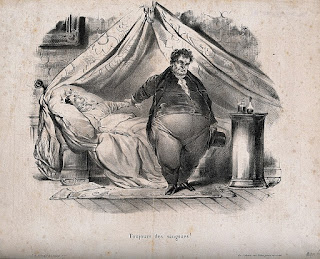
A physician prescribing bloodletting leeches
to a young woman.
Public Domain

Leech Collectors


Most of us have probably heard of the fascination that 19th century medicine had with bloodletting and leeches, but did you ever think about the people who had to collect the critters? This was a difficult job, and not one that paid well. Thence, it was those who could not easily find work and were the poorest who would be employed in this occupation, which means it was one of the few occupations women could obtain.
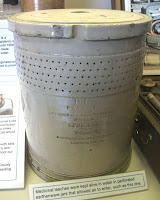
Leech Container
Public Domain

 
There is only one species of leech in Britain that can suck human blood. The method for collecting these leeches was to go into leech infested water and get them to attach to a victim, get full of blood, and then pull them off and put them in a leech collecting container. Sometimes the leech collectors used old horses or some animal as the bait...but most times they used their own legs. The leeches would suck on them for twenty minutes or more, and the wound would continue to bleed for ten hours after they took the leech off. Obviously, there are many ill effects to being repeatedly subjected to leeches. The loss of blood being the worst.

Thankfully, this is an occupation that no longer exists, due to the decline in demand for leeches. The leeches are glad too, since they were nearly extinct by the time the bloodletting craze ended.

Match Girls
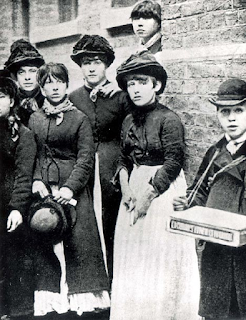
Match Girls on strike.
Many of them with Phossy jaw.
Public Domain


Have you ever heard the story of the Little Match Girl? In that tragic story, the little girl was merely selling matches. But these match girls were the ones who dipped the tips into the white phosphorus chemical to make them light. This was a tremendously dangerous job, some of the dangers not known until it was too late.
 
The process of making the matches consisted of dipping frames of matchsticks into various chemicals, including sulphur, white phosphorus and antimony sulphide. Each frame held approximately four thousand matches. An experienced worker could create ten million matches in a day.
 
The conditions for these workers, most often young girls, were so horrible, that it caused the Match Girls’ Strike of 1888 in London. The strike was an attempt to bring public attention to phosphorus poisoning. But the owners of the matchmaking companies were politically active and strong, so it was difficult to stand against them. In the end, the match girls gained a victory, with the owners conceding to the terms of abolishing penalties that were deducted from wages, allowing the workers to eat lunch in another room so that the food would not be contaminated with the white phosphorus, and allowing complaints to bypass foremen and be taken straight to management. 
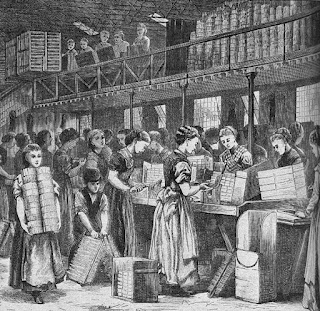
 
Match factory workers
Public domain


If you'd like more information on the strike, there is a detailed article on Wikipedia, which is very interesting and worth the read.

The thing that makes this one of the most bizarre jobs, is the effects that the phosphorus poisoning caused. One of the effects was what is known as “Phossy Jaw” which, in severe cases, causes a person’s jaw to glow in the dark. It starts out with flu-like symptoms and toothaches, but it leads to tooth loss, recurrent abscesses, and death of bone cells. After three to six months, the death of the bone cells in the jaw led to the dead bone separating from the live bone. If the affected bones were not removed, the victim of the disease would die of organ failure. 
 
The Salvation Army opened a matchmaking factory in 1891 which used red phosphorus, which is less toxic. Today, machines have replaced this dangerous job, and can produce approximately two million matches per hour. 

Heoibikuni

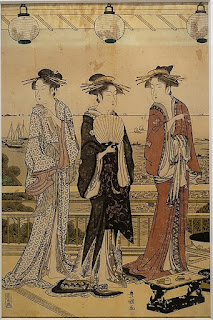
Heoibikuni was an occupation for Japanese women during the Edo period. The position was basically a servant to young Japanese noble women. It was their job to escort them on excursions as well, serving as a bit of a chaperone. She was basically a hairdresser, wardrobe coordinator and personal assistant.
 
However, the bizarre part of this job is that a deliberate part of this occupation was that if, or when, the noblewoman passed gas in public, the Heoibikuni were expected to vocally speak up and claim it as their own. This way the noblewoman's reputation of grace and honor was not tainted. You see, in Japanese culture, farting is regarded as a social blunder. It's such a big deal, that even today there are guide books that ask tourists not to burp or fart in public to avoid causing offense while in Japan. 

But, if you don't mind some public humiliation, this occupation may not be so bad. 

Of these, which one do you think was the worst? What is the worst job you've ever had to perform?
 
*****
Two-time winner of the Christian Indie Award for historical fiction, Amber Schamel writes riveting stories that bring HIStory to life. She has a passion for travel, history, books and her Savior. This combination results in what her readers call "historical fiction at its finest".  

She lives in Colorado Springs near her favorite mountain, in a small “castle” with her prince charming. Between enjoying life as a new mom, and spinning stories out of soap bubbles, Amber loves to connect with readers and hang out on Goodreads with other bookish peoples.

Amber is a proud member of the American Christian Fiction Writers Association. Visit her online at www.AmberSchamel.com/ and download a FREE story by subscribing to her Newsletter!

Wednesday, April 1, 2020

Marriage of Charles Dickens and Catherine Hogarth

Blogger: Amber Schamel
Young Catherine Hogarth
Public Domain
April 2 happens to be the wedding anniversary of Charles Dickens and his wife Catherine Hogarth. So enjoy these tidbits about the famous author, his wife, and their marriage. 

Catherine Hogarth was born in Edinburgh, Scotland in 1815 to George and Georgina Hogarth. They moved to England in 1834 when her father took a job as a music critic for the Morning Chronicle. Catherine was nineteen years old at the time, and in the blushing beauty of her youth. The eldest daughter of 10 children, Catherine was both intelligent and responsible.

Charles Dickens was also working for the Morning Chronicle at the time, and he was immediately captivated by the intelligence and beauty of this young woman. Dickens invited her as a guest to his twenty third birthday party. He evidently came to adore her very much, and the sentiment seems to be reciprocated since Catherine wrote to her cousin that "Mr. Dickens improves very much upon acquaintance." 

"When the couple met, Charles put Catherine on a pedestal. His childhood was scarred by poverty and the shadow of the debtors’ prison; in contrast, Catherine came from a comfortable, happy middle-class family. I believe Dickens wanted to emulate that: he wanted a wife and mother who would give his children stability and a carefree home. Catherine became his ideal woman." Lucinda Hawksley of BBC 

The attachment progressed, and Dickens proposed in 1835. Catherine and Charles were married April 2, 1836 in London.

Young Charles Dickens
They began their married life in a small flat in London. Both seemed incredibly happy. Dickens even remarked that if he were ever to become rich and famous, he would never be as happy as he was in that little flat with Catherine. As for Mrs. Dickens, she was incredibly proud of her husband and his successes, and she even traveled with him to America in 1842. During their journey, Dickens penned a letter to a friend stating that Catherine never felt gloomy or lost courage throughout their long journey by ship, and "adapted to any circumstances without complaint".

"In addition to being a mother, Catherine was an author, a very talented actress, an excellent cook and, in her husband’s words, a superb traveling companion. But as the wife of such a famous figure, all of that has been eclipsed" ~ Lucinda Hawksley of BBC 

Charles and Catherine had 10 children during their union and enjoyed many happy years together.

For more detailed information on Catherine's life, I suggest this article from BBC written by one of the great granddaughters of the couple. 
http://www.bbc.com/culture/story/20160519-the-forgotten-wife-of-charles-dickens


*****


Because of the COVID-19 Stay at home order, I've discounted ALL of my ebooks to only $0.99 on Amazon. Ebooks can be read on any phone, tablet or computer by downloading the free Amazon kindle app. 

Books are a great way to pass the time while infusing your soul with uplifting and inspirational messages. My way of saying, stay safe and healthy. God bless you all!
https://www.amazon.com/-/e/B00CIXK91M
 Two-time winner of the Christian Indie Award for historical fiction, Amber Schamel writes riveting stories that bring HIStory to life. She lives in Colorado Springs near her favorite mountain, Pikes Peak.