

by Ramona K. Cecil
Have you ever taken
medicine in the form of a gelatin capsule, or do you or anyone in your family
use insulin to treat diabetes? If so, you can thank Col. Eli Lilly and the
company he founded in my home state of Indiana
 |
| Colonel Eli Lilly |
Born in 1838 in Baltimore , Maryland , to Gustavus
and Esther Lilly, Eli moved with his family to Indiana Lafayette , Indiana , then went on to graduate from Indiana Asbury
University (later DePauw University
 |
| Lilly's war recruitment poster |
By 1861 he had married,
opened a drug store in Greencastle ,
Indiana Battery , Indiana Light Artillery, which
distinguished itself during several important battles in the war. Taken
prisoner in 1864, he served the rest of the war in a Confederate
prisoner-of-war camp. At war’s end, he was awarded the rank of Colonel for his
heroism before mustering out.
 |
| Lilly's first laboratory building |
 |
| Assortment of Lilly throat lozenges from 1906 |
One of the first medicines
he produced was quinine to treat malaria, the disease that took his first wife
and second son. His business boomed, and as it grew, other family members
including a brother, cousin, and grandsons Eli and Josiah joined the business.
By the 1880s Lilly had expanded to a complex of manufacturing buildings on the
south side of Indianapolis
 |
| Lilly's plant on McCarty Street, Indianapolis, 1886 |
 |
| Colonel Eli Lilly on the right, his son Josiah on the left, and his grandson Eli in the center. |
About this time Colonel Lilly handed control of the business to his son and grandsons and focused his energy on philanthropy. He sponsored the forerunner of the
 |
| Indiana Soldiers' and Sailors' Monument, Indianapolis, Indiana |
At the turn of the 20th
Century, the Eli Lilly Company continued to expand and innovate under Josiah
Lilly and his son and Colonel Lilly’s namesake, Eli Lilly. In the 1920s Josiah
worked with Toronto U.S.
 |
| Advertisement for Lilly insulin |
Since then, Eli Lilly has remained on the forefront of groundbreaking drug innovations with mass production of penicillin and Merthiolate, an antiseptic and germicide that became standard issue during WII. In the 1950 Lilly introduced new antibiotics and was heavily involved in production and distribution of Jonas Salk’s polio vaccine.
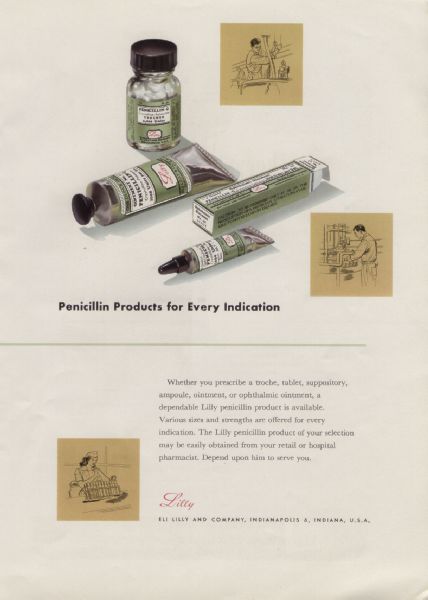 |
| Lilly penicillin |
 |
| Lilly Merthiolate |
In recent decades Lilly has continued to provide a vast array of innovative new drugs to treat a myriad of ills, keeping the company on the cutting edge of pharmaceutical research.
So when you open up that
new prescription, check to see if the word Lilly is printed on the pill or
medicine bottle. If it is, you might want to say, before downing your dose, “Here’s to you, Colonel Lilly!”

Ramona K.
Cecil is a poet and award-winning author of historical fiction for the
Christian market. A proud Hoosier, she often sets her stories in
her home state of Indiana
Check out her
website at www.ramonakcecil.com


 |
| Coming in 2016 |
