Showing posts with label French Huguenots. Show all posts

Tuesday, March 17, 2015

The Moravian Church and ... Moravian Sugar Cake!

By Golden Keyes Parsons

When my French Huguenot ancestors came to this country in 1737 after fleeing religious persecution in France, the freedom to practice their religion was of the highest priority. Louisa Clavell landed in Philadelphia, a widow with two sons, after her husband was washed overboard on the ocean voyage from Amsterdam, Holland. He had all of their money in his possession when he was lost at sea. 

After acquiring a planter and a button maker to take her sons as apprentices, Madame Clavell followed her fellow passengers into the Schuylkill Valley of Pennsylvania and eventually remarried. Her sons joined her after serving their appointed times and acquired land in that beautiful valley.


First Church Building in 1762
Some 17 years later, in 1754, after initially coming to this country, a number of settlers in the area where they settled, Bushkill County, sent a petition to Synod of the Brethren, or Moravians, asking that organization to send a minister to them who could preach the "Gospel of Jesus Christ to them pure and unadulterated like the Apostles of old." Several men, including my direct ancestors, Franz Clewell and George Clewell signed the petition. The Moravians did so, and the gospel was well received in the area, culminating in the building of a church building in 1762.
Moravian Church today in Scheoneck
 
It is not surprising that the Clavells were attracted to the Moravian Church as their basic tenets were similar to the French Huguenot beliefs for which their fellow believers had lost their lives in France - justification by grace alone through faith.

On a research trip to Pennsylvania for the last book in my series about my ancestors, we were able to go to a reunion of the Clavell family, The traditions of the family are cherished and carefully preserved. That I have a copy of the genealogy of the family is a miracle in itself as I was not even aware of this rich heritage until I started researching for the series. 

I could go on and on about the history of the Clavells and the Moravian Church in this area of Pennsylvania. Our trip was absolutely glorious and I read every tidbit I could find and took hundreds of pictures. My husband was very patient! But one thing I brought back and have enjoyed so much was a recipe for Moravian Sugar Cake. At the reunion the buffet was full of several different varieties of the signature dish. I could have eaten my weight in it. It is a cross between yeast bread and cake. Here is the recipe I've enjoyed. And I hope you will too. 


MORAVIAN SUGAR CAKE

1 large or 2 small potatoes, boiled, peeled and mashed. Or you can use instant potatoes or leftover mashed potatoes.
1/2 cup solid shortening
1/2 cup sugar
2 large eggs, beaten
2 packages dry yeast
3/4 cup warm water, reserved from cooking potatoes (or just warm water if using instant potatoes)
4 scant cups sifted all-purpose flour
1/2 tsp salt
1 stick melted REAL butter
About 1/2 cup light brown sugar (I usually end up using much more.)
Ground cinnamon - to taste

1. Grease one 11x7x2 pan, plus one 8" square pan, or three 8" square pans
2. Place 1/2 cup hot mashed potatoes in a large bowl. Add shortening and sugar and combine. Add beaten eggs and combine. Set aside.
3. In a separate medium bowl. dissolve yeast in lukewarm potato water. Add sifted flour and salt and combine. Mix yeast mixture into potato mixture. It will resemble bread dough. Place batter in large bowl, cover with a damp cloth and let rise in a warm place until doubled in bulk, 20-30 minutes.
4. Pat dough out in prepared pans to 1/2" thick. Cover with damp cloth and let rise again in a warm place for one hour.
5. Preheat oven to 375 degrees F
6. Make indentations in dough with a wooden spoon handle or your finger about every inch and a half or so. (I use my fingers :) and fill the holes with the melted butter. Crumble a generous amount of brown sugar over the top and sprinkle with cinnamon. Bake for 20 minutes or until a toothpick inserted comes out clean. Great as a dessert or with coffee in the morning. Enjoy!

Do you have a family recipe that dates back to your ancestors? Share for a chance to win a copy of my book, Where Hearts Are Free, which loosely follows the story of the Clavells as they settled in Pennsylvania. 

Note: If you want to be entered in the drawing for the book, you MUST INCLUDE YOUR EMAIL ADDRESS!


Golden Keyes Parsons writes historical fiction, and is also a popular retreat/conference speaker. Her highly acclaimed Darkness to Light Series (Thomas Nelson) chronicled the journey of her French Huguenot ancestors in 17th century France. Her fourth novel, His Steadfast Love, is a Civil War novel set in Texas. Her latest release is a compilation of four novellas (WhiteFire Publishing) – a biblical fiction series entitled Hidden Faces, Portraits of Nameless Women in the Gospels. Golden lives in Waco, TX, with her husband, Blaine, where they enjoy their children, grandchildren and are avid sports fans of their alma mater, Baylor University. You can contact her at www.goldenkeyesparsons.com.

Sunday, December 15, 2013

Historic Women in Journalism by Laurie Alice Eakes


Historic Women in Journalism by Laurie Alice Eakes


Elizabeth Timothée, wife of a French Huguenot, is acknowledged to be the first female editor and journalist in North America. In the 1730s, her husband entered into a contract with Benjamin Franklin to begin the South Carolina Gazette. Louis Timothée anglicized his name to Timothy and set about creating the soon-to-be successful Gazette in Charleston, South Carolina. Unfortunately for him, he died with a year to run on his contract and the business passed to his son.
Elizabeth Timothee as depicted from KnowItAll
 His son, Peter, was only thirteen at the time. His mother Elizabeth took over the business, providing the explanation to readers that, in Europe, women often helped with the family business, especially If the son was young. For eight years, until her son turned twenty-one, Elizabeth wrote for and edited the publication. She reported on the colonial assembly, as well as producing books and pamphlets.

Other women followed, though most have been lost in obscurity, but not all the writers of articles in such famous publications as La Belle Assemblée and The Lady’s Monthly Museum, were men. Women wrote on fashion and manners and reported on events of the day.

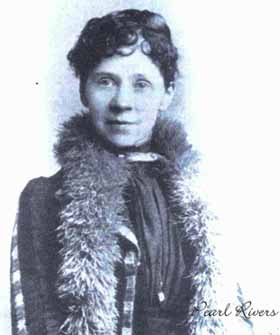
Eliza Nicholson was another woman who inherited editing a newspaper from her husband. 


Eliza Nicholson aka Pearl Rivers
For Nicholson, she received full control of the New Orleans Daily Picayune and created several innovations such as pages dedicated to women and children, literature, and a gossip column. For the latter, she hired Dorothy Dix, who became a legendary journalist in her own right growing into a female syndicated columnist for decades read by millions around the world.

And in this brief discussion of women journalists, we must not forget Sarah Josepha Hale, editor of Godey's Lady's Book from 1837-1877. Most issues included articles and writings by men and women; however, three special publications contained works by women only.

With these examples of some women who made their mark on the world of the written media, when I went hunting for a career for my career-minded heroine, who was also one of the first women to receive a four-year college degree from a liberal arts college along side men, journalist was a natural choice. After all, I needed a reason for her to return to her home town on that fateful train featured in

 The Professor’s Heart.


Laurie Alice Eakes is the author of over a dozen books. She writes full-time from her home in Texas, where she lives  with her husband and sundry dogs and cats. You can find her on Facebook and Twitter under @LaurieAEakes.

Sunday, November 17, 2013

A TREASURED FIND

Rejection after rejection filled my mail box as I sought a contract for my non-fiction proposals. I must admit, I actually felt a bit superior to fiction writers. They were just writing stories. I was writing biblical truth - ahem, ahem. Then after attending a fiction class at the Glorieta Christian Writers Conference and realizing powerful truth can be conveyed perhaps in a more palatable manner through stories--as Jesus did--I began to rethink my opinions. 

It was about that time I stumbled across a published genealogy of my ancestors who were French Huguenots (followers of John Calvin) who fled the Catholic persecution in 17th century France. The book is a leather-bound original edition published in 1907. An elderly aunt had given me the book years before, but I'd only briefly glanced through it. As I read through it, I found it not only contained the official genealogy of our family on my mother's side, but there were stories and personal accounts of their journey. What a treasure! I wanted to tell the story of how my ancestors lived through this volatile period of history, and I decided to do it in the historical fiction genre. It was my favorite genre to read growing up, so it was a natural move.

I poured over the pages and gleaned what I could to build a story around their journey. Most of the material was about how they settled in Pennsylvania, which ends up as the third book in the series, but I wanted to write some of the Huguenot history in France, the atrocities they endured and the strong faith which emerged as a result of the persecution. My editor at Thomas Nelson suggested we go back 50 years earlier to incorporate the colorful character of Louis XIV, which is what I did in the first book in the series, "In The Shadow of the Sun King." 

I ran across the story of a romance the powerful king experienced as a young man with a Huguenot girl and wove it around the heroine, my ancestor, Louisa Clavell. However, I gave her the name, Madeleine, in the book. Louis and Louisa would have been way too confusing.

In the early part of his reign, Louis employed many Huguenots, French Protestants, in his Catholic governmental council, because they had a reputation of being honest and trustworthy. He fell in love with the daughter of one of his Huguenot advisors and wanted to marry her, but was prevented from doing so by the Catholic influence of his family. Legend has it she was the love of his life, and he never got over her.

And so it goes ... historical fiction. Isn't it fun?!

I'm offering a copy of "In The Shadow Of The Sun King" to one who leaves a comment chosen at random. Tell me what you know about your ancestors. Perhaps there is a novel waiting to be written!

Golden Keyes Parsons writes historical fiction, and is also a popular retreat/conference speaker. Her highly acclaimed Darkness to Light Series (Thomas Nelson Publishing) chronicled the journey of her French Huguenot ancestors in 17th century France. Her fourth novel, His Steadfast Love, is a Civil War novel set in Texas. Her latest releases are ebooks (WhiteFire Publishing) – a biblical fiction series entitled Hidden Faces, Portraits of Nameless Women in the Gospels. 

Golden lives in Waco, TX, with her husband, Blaine, where they enjoy their children, grandchildren and great-grandchildren and are avid sports fan of their alma mater, Baylor University. You can contact her at www.goldenkeyesparsons.com and golden@goldenkeyesparsons.com