Showing posts with label Gone with the Wind. Show all posts

Saturday, July 25, 2026

The Women of the U.S. Postage Stamps—Part 6


By Jennifer Uhlarik


Hello, readers! It’s time for the next installment of women who have been featured on our American postage stamps. In previous posts, we’ve explored nearly 90 years of U.S. Postage history, with many interesting women who have graced the postage stamps. 


Today, we jump in with the postal history of 1985. The first lady we’ll see on the postage stamp is a literal First Lady—Mrs. Abigail Adams, the wife of the second U.S. President, John Adams. Interestingly, due to a sickly childhood, young Abigail never attained a formal education. However, that didn’t stop her from learning. Her mother and other family members taught her to read, write, and cipher, and she availed herself of her extended family’s extensive libraries. She read much on many topics. When she was fifteen, a young country lawyer named John Adams came to her house with a friend—the man engaged to be married to Abigail’s sister. Eventually, John and Abigail married, and John whisked her away to an adventure she probably never imagined in her childhood. She birthed six children in twelve years, watched from afar as her husband served in the Continental Congress. During this time, she ran the family farm and wrote many letters to her husband, helping him hammer out ideas on the founding of this fledgling nation. In the 1780s, she accompanied her husband to Paris on a diplomatic mission, served as the very first Second Lady of the United States when John became Vice President under George Washington. Once Washington stepped out of the presidency after two terms, John was elected President, making Abigail the second-ever First Lady. They served only one term in the Presidency, though twenty-four years later, her second-born, John Quincy Adams, was elected as the country’s sixth President, making her one of only two women in American politics to be both the wife and the mother of an American president. (The other is Barbara Bush).


Also featured in 1985 was Mary McLeod Bethune. Born in 1875, Mary was the fifteenth child of seventeen. Her parents had both been former slaves and continued to work as sharecroppers for their former owner, eventually earning enough to purchase five acres of land from him. There, they built a cabin and raised their extensive family. She desired to be a missionary in Africa, but after the mission board turned her down, she became a teacher instead. Eventually moving to Florida, Mary started the Educational and Industrial Training School for Negro Girls in 1904. Initially, the school had six students—five girls and Mary’s son, Albert. A year later, the school had thirty students, and a year after that, the number had swelled to two-hundred-fifty. She sought rich benefactors for her school, grew the institution, and eventually merged it with the Cookman Institute in 1923, making it the first Black college in Florida. Mary Bethune served as president of the college until 1942. In addition to this prestigious work, she also went on to work for many other causes including women’s suffrage and civil rights, among others. 


Our next lady is one I’d not heard of before—Belva Ann Bennett Lockwood. She was born in 1830 New York to a farmer and his wife. By age fourteen, Belva began teaching at the local elementary school, and four years later, she married her first husband, Uriah McNall. Unfortunately, their marriage was short-lived. After five years, Uriah died of illness, leaving Belva a widow with a three-year-old daughter in tow. Fearing her present education level would not serve her well, she fought to enroll in college and, after a semester, was granted a seat at Genesee College. It was there, she gained an interest in the law and began taking private lessons with a local lawyer who advertised for students wanting to learn law. After graduation, she became the headmistress of a school, but still found she was paid roughly half of her male counterparts. Upon meeting and getting to know Susan B. Anthony, Belva’s theory on education changed, particularly in regard to young women. In the schools she oversaw, she began expanding curriculums to include business classes, math, science, and more, so that her female students could do more than manage a household. She married for the second time in 1868, this time to Reverend Ezekiel Lockwood. Lockwood was substantially older than Belva, and supported her unusual goals of wanting to become a lawyer and run for political office. After much difficulty, she fulfilled all coursework and testing to gain her law degree but had to fight for her diploma. It required a letter to then-President Ulysses S. Grant to get the diploma issued, which then allowed her to join the District of Columbia bar. She was the first women to run for President of the United States, but as a member of the Equal Rights Party, she had no real chance of being elected to the highest office. Despite that, she had a forty-three-year career in law, became the first woman to argue a case before the U.S. Supreme Court, fought to be sure the Cherokee Nation was given the $5,000,000 promised them by the government for land they ceded to the nation, and many other interesting cases.


Next up is Margaret Mitchell, who you might recognize as the famed author of Gone with the Wind. Margaret was born in 1900 in Atlanta, Georgia, and lived her entire life in that state. Her childhood consisted of hearing grisly stories of the American Civil War from her extended family, who fought for the Confederacy during the conflict, as well as seeing the old brick and stone fireplaces of many of the plantation homes burned in Sherman’s March to the Sea. She took up storytelling and writing at an early age, and by the time she went to college, her mother had many of her stories collected in boxes in the family home. As an adult, she worked for a time as a journalist for the Atlanta Journal but left the job when she injured her ankle. It was during this time that she began writing Gone with the Wind. It took her three years to complete, and it was quickly picked up by a publisher. Other works she wrote and submitted at the same time were rejected, although in 1996, a romantic novella she wrote in her teen years entitled Lost Laysen was discovered among the belongings of a former boyfriend and was published posthumously, to great acclaim. 


Our final lady of the postage stamp for today is Isabella Bomefree. In case that name doesn’t ring a bell, she is better known as Sojourner Truth. Truth was born into slavery around 1797 in New York. In the 1820s, New York made a move toward abolishing slavery, and her owner promised to free her when the statewide abolition took place a year later. However, when he then reneged by stating an injury had made her less productive, she fled with her infant daughter to freedom (leaving several other children behind). A kindly couple took her and her daughter in and, when word came that her son had been illegally sold to another owner, helped Truth fight in court for her son. After months of legal battles, she won the case—a first for any black woman. In her newfound freedom, she became a Christian and believed the Lord called her to preach the truth that was in her. Thus, she began making the circuit to various camp meetings. She became a well-known speaker and singer, lending her voice to various causes from abolition of slavery to equal rights, women’s suffrage, and more. She lived to be eighty-six years old and spent the bulk of her life speaking out on these causes.


It's Your Turn: Which of these amazing women do you find the most inspirational or interesting, and why?


Jennifer Uhlarik
 discovered western novels at twelve when she swiped the only “horse” book from her brother’s bookshelf. Across the next decade, she devoured westerns and fell in love with the genre. While attaining a B.A. in writing from the University of Tampa, she began penning her own story of the Old West. She has finaled in and won numerous writing competitions and appeared on various best-seller lists. Besides writing, she’s been a business owner, a schoolteacher, a marketing director, a historical researcher, a publisher, and a full-time homemaker. She lives near Tampa, Florida, with her husband and fur children.


Available Now: Love and Order: A Three-Part Old West Romantic Mystery 


Wanted: 

Family, Love, and Justice


One Old West Mystery Solved Throughout Three Short Romantic Stories


Separated as children when they were adopted out to different families from an orphan train, the Braddock siblings have each grown up and taken on various jobs within law enforcement and criminal justice.


Youngest child, Callie, has pushed past her insecurities to pursue a career as a Pinkerton agent. Middle child, Andi, has spent years studying law under her adoptive father’s tutelage. And the eldest and only son, Rion, is a rough-and-tumble bounty hunter. 


When the hunt for a serial killer with a long history of murders reunites the brother and sisters in Cambria Springs, Colorado, they find themselves not only in a fight for justice, but also a fight to keep their newly reunited family intact. How will they navigate these challenges when further complicated by unexpected romances?


Monday, May 12, 2025

The Women of Hollywood – Famous Firsts

By Kathy Kovach

In honor of Mother’s Day, this month we’re celebrating the women of Hollywood, and who better to start off with than Frances Marion (born Marion Benson Owens, 1888-1973).

From 1915 to 1934, Frances Marion was the highest paid screenwriter—among both men and women—of the silent era. For a time, she earned $50K a year (over $1.5 million today). For three years, she wrote exclusively for Mary Pickford.

She continued to write into the 1940s, with some scripts uncredited, according to IMDb.

Her additional venture in Hollywood included those of actress, director, and producer, although she was most successful in writing. Outside of Hollywood, she worked as a journalist becoming a war correspondent during WWI.


A two-time Academy Award winner, and one-time nominee, she put her stamp on Hollywood as the most influential woman of the silent film era.

Gladys Louise Smith, better known as “America’s Sweetheart” Mary Pickford, rode the tide with her best friend Frances Marion and officially became Hollywood’s first millionaire at the age of 24. Starting out in her homeland of Canada, she performed child roles on stage. She soon moved to New York for parts on Broadway. However, across the nation, Hollywood was beginning an exciting new way for thespians to exercise their chops. She abandoned the live stage at age 17 and joined thousands of pioneers determined to launch the film industry.

Pickford eventually earned the moniker, “Queen of the Movies”, as she not only acted in over 240 productions, but she also wrote, produced, and directed. However, her highest accomplishment would be her success as a businesswoman. In 1916, she created Mary Pickford Studios with the help of Famous Players Production Company, the very same that had offered Frances Marion the five-figure contract. Three years later, she organized the United Artists Corporation along with D.W. Griffith, Charlie Chaplain, and her soon-to-be husband, Douglas Fairbanks. In 1927, she became one of the founders of the Academy of Motion Picture Arts and Sciences. This paid off as she won the Oscar in 1930 for her role in Coquette.

Other notable actresses carved their own names in the Hollywood tree.

The daughter of a Civil War veteran, Hattie McDaniel (1885-1952) paved the way for African-American actors. Born in Wichita, Kansas, and raised in Denver, Colorado, Hattie could do it all. She sang, danced, and performed comedy wherever she could. In 1911, she organized her own all-women’s minstrel troupe. Then, beginning in the 1920s, she toured in vaudeville for several years, establishing herself as a blues artist, often singing her own original songs.

By 1930, her brother Sam and sister Etta had moved to Los Angeles, finding minor work in movies. They convinced her to follow. In 1934, McDaniel finally had her break upon landing a major on-screen role singing a duet with Will Rogers in John Ford’s Judge Priest. From there, she played in The Little Colonel opposite Shirley Temple. Capturing the attention of major Hollywood players, she found steady work in major productions such as the part of Queenie in the 1936 adaptation of Show Boat, of which she had previously toured in the stage version.

The pinnacle of her career occurred when she accepted the role of Mammy, playing opposite Vivian Leigh as Scarlett O’Hara in Gone with the Wind (1939). The movie’s premiere took place in Atlanta, Georgia, as this was where the film was set. Unfortunately, the South still had a prejudicial attitude and all of the black actors were barred from attending. Producer David O. Selznick wanted to take Hattie to the premier as his guest, but MGM warned him not to. This enraged her co-star Clark Gable who threatened to boycott the premiere if this injustice were not rectified. Hattie, having dealt with the racist mindset all her life, convinced him to go. Nevertheless, her lifetime of hard work paid off. She received an Academy Award for Best Supporting Actress, making her the first Black American to do so.

Hattie McDaniel went on to honor her country, despite the challenges, and toured with the USO, entertaining the troops and selling war bonds.

One cannot talk about major female stars without discussing the curly-haired moppet, Shirley Temple (1928-2014) who brightened the Great Depression with her sparkling eyes and dimples. She’s later quoted as saying, “People in the Depression wanted something to cheer them up, and they fell in love with a dog—Rin Tin Tin—and a little girl” (via The Music Hall). Her movies saved 20th Century Fox Studios from bankruptcy.

Discovered at the age of three in a dance studio, Temple began her career imitating sultry actresses such as Mae West and Marlena Dietrich in a series of short reels, disturbingly entitled, “Baby Burlesks”. These satirized films were spoofs of the popular movies of the day.

By the age of 6, she’d made her mark on Hollywood to such an extent that she was presented the first Juvenile Award, created just for her, at the 1935 Academy Awards Ceremony. Temple performed in nearly sixty productions before her retirement at age 22. She would win twenty-three awards in various organizations, including the Kennedy Center Honors Lifetime Achievement Award in 1998.

Her acting career may have come to a halt, but “America’s Little Sweetheart” wasn’t done. In her adult years, Shirley Temple Black ventured into the world of politics, running for the U.S. House of Representatives but lost, and became a delegate in world affairs.

Speaking of outstanding women, one such actress not only contributed to society, but she changed the world as we know it. Guess who was tech savvy enough to help invent Wi-Fi? Here's an article I wrote a few years ago. Hedy Lamarr-More Than A Pretty Face 

These actresses were no doubt among many women who broke through the glass ceiling and set their stars high above the Hollywood sign.


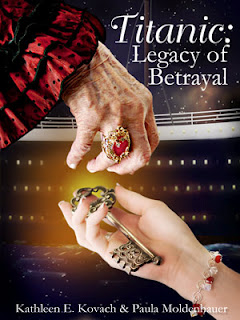
A TIME-SLIP NOVEL

A secret. A key. Much was buried on the Titanic, but now it's time for resurrection.


Follow two intertwining stories a century apart. 1912 - Matriarch Olive Stanford protects a secret after boarding the Titanic that must go to her grave. 2012 - Portland real estate agent Ember Keaton-Jones receives the key that will unlock the mystery of her past... and her distrusting heart.
To buy: Amazon


Kathleen E. Kovach is a Christian romance author published traditionally through Barbour Publishing, Inc. as well as indie. Kathleen and her husband, Jim, raised two sons while living the nomadic lifestyle for over twenty years in the Air Force. Now planted in northeast Colorado, she's a grandmother and a great-grandmother—though much too young for either. Kathleen has been a longstanding member of American Christian Fiction Writers. An award-winning author, she presents spiritual truths with a giggle, proving herself as one of God's peculiar people.


Tuesday, July 25, 2023

Interesting Facts About Gone with the Wind, Part 2


Last month, I wrote about a few interesting facts I’d found on the 1939 classic movie, Gone With the Wind. I have a few more to share this month—and these are even more interesting than last month’s batch, if I do say so myself. So let’s dive in.


Leslie Howard

British actor Leslie Howard, who played Ashley Wilkes in the movie, despised his part. He had spent his lifetime playing various roles of weak men. But in Gone with the Wind, he was supposed to be the young, dashing Ashley, who at the beginning of the film, was just twenty-one years old. He got the part when he was in his 40s, so they used makeup and lighting to evoke the look of a younger man. Leslie Howard is on record having written to his daughter about the part:


“I hate the **** part. I’m not nearly beautiful or young enough for Ashley, and it makes me sick being fixed up to look attractive.”


Mr. Howard may have hated the role—and even the movie, which he dubbed a “terrible lot of nonsense…”—but I dare say many loved him in the role and the movie.


I find it interesting that Mr. Howard’s initial plan for his life was to be a bank clerk, though the stage and screen drew him into acting, producing, and directing. He seemed to lead an idyllic life—a seemingly happy marriage and sizeable estates in Surrey, England, and in Beverly Hills, California. However, he was also a ladies’ man who had various, lengthy affairs. Only a few years after making Gone with the Wind, World War II began, and he shifted his career to making movies that supported the war effort in Britain. His efforts so enraged the Germans that it is thought they shot down the civilian plane on which he flew from Lisbon to London on June 1, 1943. He was one of seventeen fatalities.


Hattie McDaniel

Hattie McDaniel on a
postage stamp, circa 2006

Another of the iconic actors from the film was Hattie McDaniel, who played Mammy. Ms. McDaniel worked as a maid during the time she was trying to gain traction in acting. She was known for her singing capabilities, as a comedian, and also as a gifted dramatic actress. Working alongside many of the Hollywood greats, Hattie McDaniel was friends with the likes of Joan Crawford, Bette Davis, Henry Fonda, Shirley Temple, Olivia de Havilland, and Clark Gable. When she auditioned for the part of Mammy, she was up against many, including those known and unknown in Hollywood circles. It is reported that First Lady Eleanor Roosevelt even wrote the producer to ask that the First Lady’s real-life maid be given the part of Mammy. So Hattie McDaniel wasn’t sure she would get the part, considering all the competition for it.


In the end, she did win the role, and received $700 a week for her efforts as Mammy. But many across the country took issue with the types of roles Hattie McDaniel starred in. She was most often cast in the maid/servant role, and at times, took parts where her character wanted “to return to the Old South.” Many criticized her for her role as Mammy (among others), including the NAACP, who took her to task for being paid such a low amount (in comparison to the other leads) for the role. Her response was, “Why should I complain about being paid $700 a week for playing a maid? If I didn’t, I’d be paid $7 a week for being one.”


In addition to this grief, Hattie McDaniel wasn’t allowed to attend the premier of Gone with the Wind in Atlanta, Georgia, due to the segregation laws there at the time. Leading man, Clark Gable threatened to skip the premier himself if Hattie wasn’t allowed to attend, but Hattie encouraged him to go—and he ultimately relented. Hattie did get to attend the Hollywood debut a couple of weeks later. She would have been excluded from the Oscars, where she was nominated for the Best Female Actress in a Supporting Role category, but the locale made an exception to allow Ms. McDaniel and her escort to attend—at a segregated table. She was one of only two black actresses to earn an Oscar in the twentieth century, Whoopi Goldberg being the other for her role in the movie Ghost.


Clark Gable

Would it surprise you to know that Clark Gable nearly walked off the set over a dispute about one particular scene? Late in the movie, Rhett dodges a blow Scarlett throws at him, causing her to tumble down the grand staircase. She later miscarries their child, and Rhett Butler cries when Melanie tells him the sad news. But Gable thought the tears would make him appear weak, and he felt strongly enough about the scene that he nearly walked out. However, director Viktor Flemming convinced him to stay by promising to shoot two versions, one where Rhett cries, and one where he turns his back in deep sorrow. Upon seeing the two versions of the scene, Clark Gable was easily convinced that the tears were the way to go, and he allowed the movie to proceed that way.


Movie Extras

One of the most sobering scenes toward the end of Gone with the Wind is the one where the dead and wounded Confederate soldiers are shown lying in the dirt after the Battle of Atlanta. Scarlett picks her way through the bodies, some of the men reaching to her for help as she searches for the doctor, who she needs to come deliver Melanie’s baby. Director Selznick demanded to have no less than 2500 actors to play the wounded and dying soldiers. There was one major problem with his demand. There were only 1500 actors on the rolls of the Screen Actors Guild. So where did he come up with the extra 1000 bodies? He purchased that many dummies to dress up in Confederate garb and place on the ground, mixed in with the live actors.


It's Your Turn: What is your favorite classic movie, and why?


Award-winning, best-selling novelist Jennifer Uhlarik has loved the western genre since she read her first Louis L’Amour novel. She penned her first western while earning a writing degree from University of Tampa. Jennifer lives near Tampa with her husband, son, and furbabies. www.jenniferuhlarik.com


AVAILABLE NOW


Love’s Fortress by Jennifer Uhlarik


A Friendship From the Past Brings Closure to Dani’s Fractured Family


When Dani Sango’s art forger father passes away, Dani inherits his home. There, she finds a book of Native American drawings, which leads her to seek museum curator Brad Osgood’s help to decipher the ledger art. Why would her father have this book? Is it another forgery?


Brad Osgood longs to provide his four-year-old niece, Brynn, the safe home she desperately deserves. The last thing he needs is more drama, especially from a forger’s daughter. But when the two meet “accidentally” at St. Augustine’s 350-year-old Spanish fort, he can’t refuse the intriguing woman.


Broken Bow is among seventy-three Plains Indians transported to Florida in 1875 for incarceration at ancient Fort Marion. Sally Jo Harris and Luke Worthing dream of serving on a foreign mission field, but when the Indians reach St. Augustine, God changes their plans. However, when Sally Jo’s friendship with Broken Bow leads to false accusations, it could cost them their lives.


Can Dani discover how Broken Bow and Sally Jo’s story ends and how it impacted her father’s life?


Sunday, June 25, 2023

Interesting Facts About Gone with the Wind, Part 1


by Jennifer Uhlarik


I was sick for most of last week. Not so sick that I couldn’t function—but sick enough we ended up cancelling every group, meeting, and obligation we had on the calendar, and I did a rare thing for me. I sat on the couch and watched a long movie.


The movie of choice was the 1939 classic, Gone with the Wind, starring Clark Gable and Vivien Leigh. I’d seen it only one other time in my life, and that was at my sixteenth birthday party. A perpetual tomboy growing up, I was more into gangster movies like The Untouchables, but my dear mother suggested Gone with the Wind—and I agreed. I don’t recall being all that impressed with it back then, but in recent years, I’ve heard of people wanting to ban the movie because of its portrayal of slavery and the Old South, and in the last few weeks, I’ve seen several social media posts with interesting facts about the movie and its actors. So I thought I’d share some of the details I’ve learned—and which made me decide to watch it again.


First, many of you may be aware that Gone with the Wind is often known for one particular line, spoken at the end of the movie. The iconic scene where Rhett Butler utters the unforgettable words, “Frankly, my dear, I don’t give a damn,” made movie history for including the “vulgarism” (as it was called by producer David O. Selznick in his attempts to convince the film censors of its necessity). Unsure whether those censors would approve the word’s use, director Victor Fleming shot the scene two separate ways—with the iconic line we all know, and with the alternate, “Frankly, my dear, I just don’t care.” Whether or not we like the line, I think we can all agree the alternate option lacks the punch to push Rhett’s resignation over the finish line. I have read that Selznick was fined $5,000 for the word’s inclusion in the finished product, although other sources I read debate the validity of that statement. And another interesting fact about this scene…the anniversary of the day it was filmed comes in two days—June 27—and will mark eighty four years it has been moving audiences to feel for both Rhett and Scarlett.


Another interesting fact I learned was that leading lady Vivien Leigh wasn’t cast in the part of Scarlett O’Hara until after filming had already begun. As legend has it, Leigh had come from her home in England to California and stopped by Selznick International Studios to meet her agent, Myron Selznick, who happened to be the brother of producer David O. Selznick. It is said she finagled an introduction to her agent’s brother as they were filming the “burning of Atlanta” scene—one of the earliest ones done in the making of the movie. David Selznick supposedly was impressed enough with Vivien Leigh in that momentary meeting that he asked her to immediately read for the part of Scarlett.


In total, there were thirty-two actresses who did screen tests for Scarlett O’Hara. The four finalists were Joan Bennett, Jean Arthur, Paulette Goddard, and Vivien Leigh. (If you would like to see the video of those screen tests, look here.) You might think that with Vivien Leigh winning the part, it was smooth sailing from there on for her as Scarlett. Not so. Apparently, many were quite upset that an Englishwoman would be cast for the role of the very Southern Scarlett. In fact, the Ocala, Florida chapter of the Daughters of the Confederacy waged a war of letters against her for the part. Rumor has it, those letters—among many others—poured into Selznick’s office, with movie-goers threatening to skip the show if the part wasn’t recast with a true Southern woman playing O’Hara. However, Selznick gave excellent rebuttal to his choice of Vivien Leigh, written to then-entertainment columnist Ed Sullivan, and the letter campaign all but stopped when the Daughters of the Confederacy were told that Katherine Hepburn (a northerner) might get the part instead. They dropped their case, deciding it was better Scarlett be played by an Englishwoman than a Yankee. (I am unsure how true that final point is—but it is an entertaining thought, at least).


The last little-known fact I’ll share in today’s post is that Gone with the Wind had a total of three directors. The first was George Cukor, who held the position for only eighteen days of filming before he was fired. Next came Victor Fleming, who directed the lion’s share of the movie, a total of ninety-three days. However, his ninety-three days were broken up into two separate parts, separated by several weeks (a total of twenty-four days) when Sam Wood took the helm, since Fleming had threatened to drive his car off a cliff. Whether the threat was his true intention after the grueling process of shooting this movie or whether it was a ploy for a few weeks off, Fleming got some time away and eventually returned to finish the movie.


However, of the three directors, Vivien Leigh liked Fleming the least, and often disagreed with his take on the scenes. So in silent protest, she would carry a copy of Margaret Mitchell’s original work to the set and read it, making her opinion known that Mitchell’s work was better. 


It’s Your Turn: Are you a fan of Gone with the Wind? Which of the facts I presented today was the most surprising to you?


Tune in next month for more facts about the movie and the actors that played in it.


Award-winning, best-selling novelist Jennifer Uhlarik has loved the western genre since she read her first Louis L’Amour novel. She penned her first western while earning a writing degree from University of Tampa. Jennifer lives near Tampa with her husband, son, and furbabies. www.jenniferuhlarik.com


AVAILABLE NOW


Love’s Fortress by Jennifer Uhlarik


A Friendship From the Past Brings Closure to Dani’s Fractured Family


When Dani Sango’s art forger father passes away, Dani inherits his home. There, she finds a book of Native American drawings, which leads her to seek museum curator Brad Osgood’s help to decipher the ledger art. Why would her father have this book? Is it another forgery?


Brad Osgood longs to provide his four-year-old niece, Brynn, the safe home she desperately deserves. The last thing he needs is more drama, especially from a forger’s daughter. But when the two meet “accidentally” at St. Augustine’s 350-year-old Spanish fort, he can’t refuse the intriguing woman.


Broken Bow is among seventy-three Plains Indians transported to Florida in 1875 for incarceration at ancient Fort Marion. Sally Jo Harris and Luke Worthing dream of serving on a foreign mission field, but when the Indians reach St. Augustine, God changes their plans. However, when Sally Jo’s friendship with Broken Bow leads to false accusations, it could cost them their lives.


Can Dani discover how Broken Bow and Sally Jo’s story ends and how it impacted her father’s life?

Friday, August 14, 2015

BOOK GIVEAWAY AND WORLD WAR 11 WEDDINGS


ANNE GREENE here:

Amid pain and suffering, the 1940s teemed with romance. During World War II many women arranged wartime weddings within a few days of receiving a proposal to accommodate a boyfriend coming home on 24 or 48 hours short leave. Then the new husband deployed to combat on some far off post.  Frequently there was no time to order a special wedding dress, and often women could not afford the clothing coupons needed for a wartime wedding dress.

Nevertheless, happy weddings took place. Family members donated small amounts of staples like sugar, flour and eggs so the war bride could bake a wedding cake.


Women borrowed hats, raided gardens for flowers and loaned wedding dresses. Bridesmaids reused dresses worn to other weddings. This gave a mix and match look to bridal group photographs of the 1940s. Most every item of clothing could be used again in a different venue. Friends and family rallied around loaning a hat, a bit of lace, or a dress.


A bride often wore her hair high on top of her head in a waved roll. Abundant hair was helpful, but lack of it did not stop women from adopting the style. Ever resourceful, they used old stockings rolled up to create foundations to be covered in their hair. This style became popular among women of the forties since the look offered glamour lacking in other areas of wartime life. The style is film star glam.
Army, Navy and Air Corps usually wore their uniforms when they wed. So the grooms looked handsome.

In 1944, an American B-29 pilot returned with his crew from a bombing raid over Yowata, Japan. The plane’s engine caught fire. The pilot used his parachute to jump from the burning aircraft. Later the chute helped him survive by providing shelter until rescue teams found him. After returning home from war to Pennsylvania, he proposed to his girlfriend. She used the life-saving parachute as material for her wedding dress. She modeled her dress on one which appeared in the movie Gone With The Wind. She used the original parachute strings to create the train effect in the back. I can think of no other wedding dress that would be as meaningful as one that saved the life of the groom.
In my World War II historical romance, ANGEL WITH STEEL WINGS, you will find two romantic war time weddings. If you love weddings, you’ll adore these two.

Do you have a story about a World War II wedding from your grandmother or mother? Would you accept a proposal to marry within 48hours or even a week?

Leave a comment for a chance to win an autographed copy of ANGEL WITH STEEL WINGS.


A story of a woman in a man’s domain set against the dynamics of World War II is a can’t-miss scenario. Angels With Steel Wings paints a vivid picture of courageous pilots facing death in the air while struggling with love on the ground, and wraps it up in a unique twist that will challenge all you knew about the “Greatest Generation.” Steeped in history and framed by faith, this is a tale that takes readers into a world now all but forgotten, and lands in a place that touches the heart in a special way. To know how far we have come, we must understand where we started, and Angels With Steel Wings takes us back on a thrilling trip in time that informs as it entertains. I think this is one flight you won’t want to miss.

***Ace Collins, bestselling author of numerous books, including the WW II series, “In the President’s Service.”


BIO: ANNE GREENE delights in writing about alpha heroes who aren’t afraid to fall on their knees in prayer, and about gutsy heroines. She writes both historical and suspense novels. Her Women of Courage Series spotlights heroic women of World War II. The first book, ANGEL WITH STEEL WINGS is available on Amazon. Her private investigating series, Handcuffed In Texas with the first book, HOLLY GARDEN, PI, RED IS FOR ROOKIE, now available on Amazon. She and her hero husband, Army Special Forces Colonel Larry Greene, have visited twenty-five countries. A visit to Scotland resulted in her award-winning Scottish historical romances, MASQUERADE MARRIAGE and MARRIAGE BY ARRANGEMENT. A TEXAS CHRISTMAS MYSTERY also won awards. Anne makes her home in McKinney, Texas. Anne’s highest hope is that her stories transport the reader to an awesome new world and touch hearts to seek a deeper spiritual relationship with the Lord Jesus. To learn more of Anne, visit her at http://www.AnneGreeneAuthor.com.  


Friday, January 17, 2014

WHICH WAR WAS THAT?


A friend of mine gave my Civil War novel to an acquaintance to read. The book is about a Southern young woman who falls in love with a Union officer before the war starts. Her heart and devotion are torn between him and her loyalties to the South, especially when her brother marches off to fight for the Confederacy. The comment from her very Southern acquaintance was, "Ah liked the book, but Ah just don't think a Southun girl would fall in lo-uv with a Union officuh."

Really! This remark from a Southern lady, even in 2013, displays what a gulf there was between the Northern and Southern perceptions of the war--even to what the two sides called the War. Burke Davis, in his book, The Civil War, Strange & Fascinating Facts, lists some of the names that mostly the South adopted, grasping in their defeat to express their ardor and, indeed defiance. Here are a few of them:

The War for Constitutional Liberty
The War for Southern Independence 
The Second American Revolution
The War for States' Rights
Mr. Lincoln's War
The Southern Rebellion 
The War for Southern Rights
The War of the Southern Planters
The War of the Rebellion
The Second War for Independence
The War to Suppress Yankee Arrogance
The Brothers' War
The War of Secession
The Great Rebellion
The War for Nationality 
The War for Southern Nationality
The War Against Slavery
The Civil War Between the States
The War Against Northern Aggression
The Yankee Invasion
The War for Separation
The War for Abolition
The War for the Union
The Confederate War
The War for Southern Freedom
The War of the North and South
And lastly, The Late Unpleasantness. 

Whew! Some of those names for the Civil War I had heard. Most I had not. By whatever name one wishes to call that terrible conflict, it was devastating to our country--particularly to the South. We are all grateful, I am sure, that the Union prevailed. If they had not, we would probably be a divided country today. But for the purposes of this post, I think it is interesting how differently the two sides viewed the war, even to what they called it. And some of those disparities remain even to this present day.

Golden Keyes Parsons writes historical fiction, and is also a popular retreat/conference speaker. Her highly acclaimed Darkness to Light Series (Thomas Nelson Publishing) chronicled the journey of her French Huguenot ancestors in 17th century France. Her fourth novel, His Steadfast Love, is a Civil War novel set in Texas. Her latest releases are ebooks (WhiteFire Publishing) – a biblical fiction series entitled Hidden Faces, Portraits of Nameless Women in the Gospels. Golden lives in Waco, TX, with her husband, Blaine, where they enjoy their children, grandchildren and great-grandchildren and are avid sports fan of their alma mater, Baylor University. You can contact her at                                                      www.goldenkeyesparsons.com.


Wednesday, March 13, 2013

What's in a Name?


      Patricia PacJac Carroll here to have a little fun with names. I might start with PacJac - it's my initials and my husband's. When I started to get on the internet, I found others with my name, but I am the only Patricia PacJac Carroll.

As a writer, the meaning of words is important to me. A few weeks ago, I was diagnosed with breast cancer. You can follow my healing journey on my blog.  : ) Smiling for when you see the name of my blog.

I went to a hospital and pondered on just why anyone would want to go to a memorial hospital. Makes it sound like your treatment comes with a headstone. I would much rather they call them – Getting Well Center or Hallelujah, I Feel Better Place. Or Fighting Cancer Center. Guess that might be too many words for a sign. Yes, names and words mean something to me. 

Names. Think how important they are and what they mean. In the Bible days,  names had a meaning. Isaac meant laughter. Joshua means God is salvation. Caleb means dog. Hmm. Well, there must have been a good reason for that one. 

Since Easter is close, think about these names. Barabbas means son of the father. And Jesus is the Son of the Father. Interesting. The people were asked to chose the son of a father or the Son of the Father.  Wonder how many caught the irony.


The names of God show His attributes. God Almighty, Prince of Peace, The Great I AM, Lion of Judah, Lamb of God, Mighty Counselor, Our Provider, Our Healer. Messiah. Risen Lord. Jesus, Name above all Names.

Names are important. 

We have the Victorian and Elizabethan eras named after queens of England. What if George Washington had been named Elmer Fink. Would we want to go to Fink D. C.? 

Would John Wayne be as well known if he’d used his real name Marion? Many actors have their names changed to appeal to the audience. For the same reason, authors can spend a lot of time searching for just the right names for their heroes and heroines. Characters with a name that starts with a J, R, or D sound strong. 

Would Gone with the Wind  be the same if instead of Scarlet and Rhett they were Ophelia and Emil?

In the movie, Open Range,  Robert Duvall's character is known as Boss, but before the big fight, he reveals his given name as Bluebonnet.

During the 1890s, Texas had a governor named Jim Hogg. In one of the most cruel examples of poor naming, his daughter was named, Ima. Yes, Ima Hogg. She became known as the 'First Lady of Texas' and lived an interesting life giving to others.

The entire time I was writing Liberty Belle, my heroine was named Ashley. But I knew I would have to change her name because in 1859 Ashley was a man’s name – so she became Liberty. 

To end our fun with names, Celebrate Your Name Week was last week. Explore the link for some fun facts and interesting name trivia.

Leave a comment and let me know what some of your favorite names are.  You might just see them in a book. : )

Don’t forger to leave a comment to be in our daily giveaways!
Grand Prize – Kindle, drawn on April 1st
2nd Place Prize - $25 Amazon gift card
For each day you comment on CFHS, you’ll receive one entry in the Kindle and one in the $25 Amazon gift card giveaway. Comment on every post in the month of March and earn 31 entries!

***Also if you comment on this post, I am giving away a copy of Liberty Belle.
Thanks for stopping by and have a blessed day.