Showing posts with label Moonshine. Show all posts

Monday, July 13, 2026

Before Land Between the Lakes: Communities That Disappeared

In my continuing series about Kentucky towns that moved—or disappeared—I couldn't overlook the communities that once stood in what is now Land Between the Lakes.

Long before campers pitched tents beneath towering oaks or anglers launched boats into Kentucky and Barkley Lakes, nearly 2,800 people called this peninsula home. Known then as Between the Rivers, the region was a close-knit collection of farms, churches, schools, country stores, and small villages where neighbors often gave directions by creek crossings instead of street names.

Land Between the Lakes National Recreation Area today,
 showing the location of Golden Pond.
Map by Ontheworldmap.com
After the completion of Kentucky Dam and Barkley Dam, the Tennessee Valley Authority (TVA) proposed creating a national recreation area. A canal connecting the Tennessee and Cumberland Rivers transformed the land into a peninsula encompassing approximately 170,000 acres in western Kentucky and Tennessee.

To make that vision a reality, every resident was required to relocate.

Entire communities vanished from the landscape, including Golden Pond, Kentucky, and Model and Tharpe, Tennessee, along with numerous smaller settlements scattered across the peninsula.

Most of these were tiny villages rather than incorporated towns. Golden Pond—the largest—had fewer than 300 residents when Land Between the Lakes was established. There were no factories, railroads, public water systems, or sewer lines. Electricity came from two rural electric cooperatives, and telephone service was limited to lines running along U.S. 68 and portions of the highway now known as the Woodlands Trace National Scenic Byway.

Visitors can walk on the concrete map at the Golden
Pond overlook and imagine the homes and businesses
that once existed there.
Today, Golden Pond lives on as the location of the Land Between the Lakes Visitor Center. From an overlook above the original town site, visitors can study a street map recreated by the U.S. Forest Service, which has managed Land Between the Lakes since 1998, and imagine the homes and businesses that once stood there.

Yet Golden Pond was once much more than a dot on the map.

A painting of Golden Pond, Kentucky, from mid-20th century.
 Artist unknown.
During the early twentieth century, it was a thriving rural community with a hotel, bank, church, café, two general stores, and a filling station. Although a devastating fire destroyed much of the business district in 1933, residents rebuilt most of what had been lost.

Golden Pond also became famous during Prohibition.

While, as one resident observed, "the big percentage of people here never had anything to do with whisky making," the region nevertheless earned a reputation for producing exceptional corn liquor. Its rugged hills, dense forests, and remote location made it an ideal place for illegal distilleries.

One colorful story tells of a local "king bee" in Golden Pond, who acted as a wholesaler for area moonshiners. Distillers reportedly delivered their whiskey to him for distribution and payment. According to local tradition, the liquor was poured into a well on a nearby hill and flowed through pipes leading directly into the king bee's house—a tale that illustrates the folklore surrounding the area's moonshining past.

Federal authorities fought a long battle against the illicit trade. From the early 1930s through th
e 1950s, the Federal Alcohol and Tobacco Tax Unit maintained five or six investigators in the region. The last operating still was seized in 1967, although TVA officials reportedly discovered evidence of a recently abandoned still as late as 1969.

Golden Pond was only one of many communities that disappeared.

In Tennessee, settlements included Tip Top, Blue Spring, Caleb's Valley, Fort Henry, Futrell, and Iron Valley. Kentucky communities included Fenton, Turkey Creek, and Pleasant Hill in Trigg County, along with Twin Lakes, Woodson Chapel, and Carmack in Lyon County.

Today, little remains of these once-vibrant communities except scattered cemeteries, old foundations hidden beneath the trees, family photographs, and cherished memories. Their stories are preserved through exhibits at the Golden Pond Visitor Center, reunions, and social media groups maintained by former residents and their descendants.

Millions of people now visit Land Between the Lakes each year to enjoy its forests, lakes, and wildlife. Few realize they are walking roads once traveled by schoolchildren, farmers, merchants, and churchgoers—following the footsteps of generations who called Between the Rivers home.

Sources:

Ed Huddleston, “The Land Between the Rivers,” reprinted from Nashville Banner, Nashville, Tenn., September, 1957.

Marie Wells Coutu, The Development of the Land Between the Lakes 1961-1972: A Case Study in Public Relations, Master’s Thesis, Murray (Ky.) State University, August 1973.

Harry Bolser, “Lakes Land: Iron to Alcohol,” Courier-Journal and Times, Louisville, Ky., August 31, 1969.

Senior Class, Lyon County High School, One Century of Lyon County History, Eddyville, Ky., 1964.


Multi-award-winning author Marie Wells Coutu finds beauty in surprising places, like undiscovered treasures, old houses, and gnarly trees. All three books in her Mended Vessels series, contemporary stories based on the lives of biblical women, have won awards in multiple contests. She is currently working on historical romances set in her native western Kentucky in the 1930s and ‘40s. Moonshine River, the first book in her Between the Rivers Legacy series, will release this fall. Learn more at www.MarieWellsCoutu.com.

When the lights of Broadway dim, Delia leaves the city behind. But will her family welcome her home again?

The historical short story, “All That Glistens,” was inspired by an old photo of a woman from the Between the Rivers area of western Kentucky. The story was included in the 2023 Saturday Evening Post Great American Fiction collection and is now available free when you sign up for Marie's newsletter here. In her newsletter, she shares about her writing, historical tidbits, recommended books, and sometimes recipes.

Tuesday, June 7, 2022

The History of Tennessee Moonshine

By Michelle Shocklee

Moonshine. Corn liquor. Corn whiskey. Mountain dew. Rotgut. White lightning. "The Recipe" for fans of The Walton's TV show. 😉 No matter what it's called, it's all the same stuff. 

Photo from Google

Why am I blogging about moonshine, you might wonder? Because I'm an author of historical fiction set in Tennessee, and yep...you guessed it! Moonshine makes an appearance in my new book (set to release Summer 2023!). And since I had to do a little digging into the making and distributing of moonshine back in the day for one of my secondary characters ---the hero/heroine are NOT moonshiners! Ha!--I thought I'd share some of my research with you. 

The term "moonshine" has actually been around since the 15th century and was in use to refer to alcohol in England in the 18th century. (That fun fact surprised me! Did it surprise you?) Moonshine's American roots can be traced all the way back to the pioneers who settled in the Appalachian mountains of western Pennsylvania in the 1700s. Some current-day 'shiners are proud of their family trees that include the names of the original Scotsmen who are believed to be the first to distill corn liquor in the United States. 

Moonshiner (no photo credit found)
In 1791, the federal government imposed a tax on liquor made in the country, known as the “whiskey tax.” For the next three years, distillers held off the tax collectors by less-than-legal means. This brought a U.S. marshal to Pennsylvania to collect the taxes owed. More than 500 men attacked the area’s tax inspector general’s home. Their commander was then killed, which inspired a protest of nearly 6,000 people. The tax was repealed in 1801, and the events from the decade prior was known as the Whiskey Rebellion.

One interesting thing I learned was that "bootleggers" and "moonshiners" are not always the same people. Moonshiners are the folks who make the stuff, usually in a well-hidden still, tucked far back in the mountains and hollers. Bootleggers are the guys (and some gals) who smuggled the illegal liquor out of the hills and into communities. 

Bootleggers, no photo credit found


Moonshiners were among the early settlers of Tennessee. The dense forests and vast smoky mountains were a perfect location to continue making the liquor. Four distilleries that began in those early years of the state's history are still in business! 
  • Ole Smoky Moonshine where they use a 100-year-old secret recipe! 
  • Bootleggers Distillery, carrying on the Miller family tradition since the 1600s!
  • Doc Collier Moonshine, named after Doc Collier who sold his rotgut in the backroom of his mercantile!
  • Old Forge Distillery whose founders settled on the Little Pigeon river so they'd have plenty of water for their moonshine!
How are these moonshiners able to run legitimate businesses today? 

In 2009, the Tennessee government loosened liquor production laws, allowing moonshiners to move their stills from the backwoods to legitimate tasting rooms. Now, the legal high-proof spirit is big business with the number of distilleries in the state growing to more than 30.

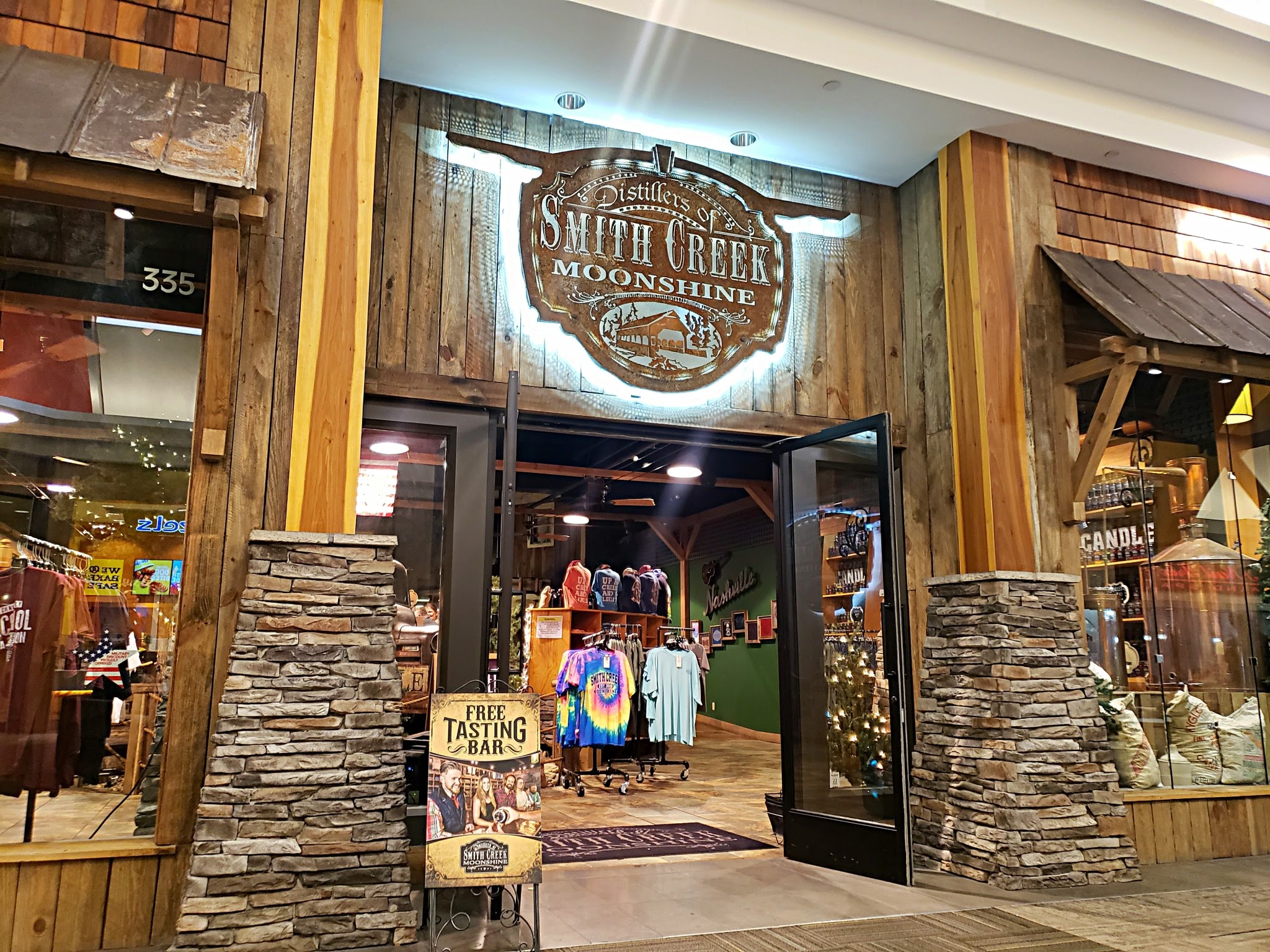
Smith Creek Moonshine store;
photo https://www.smithcreekmoonshine.com/
 

I must say, I was a little shocked to see a store selling moonshine at the mall when we first moved to Tennessee in 2017! There are dozens and dozens of flavors--almost as many as Sonic has for their slushes! We've been given jars of homemade moonshine for Christmas, birthdays, and just because! Ha! I'm not fond of the stuff, but that's just me.  

So there's your lesson on moonshine! 😂

Your turn...and don't feel obligated to answer since this is a public blog! Have you ever tried moonshine? What'd ya think?


Michelle Shocklee
is the author of several historical novels, including Under the Tulip Tree, a Christy Awards and Selah Awards finalist. Her work has been included in numerous Chicken Soup for the Soul books, magazines, and blogs. Married to her college sweetheart and the mother of two grown sons, she makes her home in Tennessee, not far from the historical sites she writes about. Visit her online at www.MichelleShocklee.com


COUNT THE NIGHTS BY STARS

1961. After a longtime resident at Nashville’s historic Maxwell House Hotel suffers a debilitating stroke, Audrey Whitfield is tasked with cleaning out the reclusive woman’s room. There, she discovers an elaborate scrapbook filled with memorabilia from the Tennessee Centennial Exposition. Love notes on the backs of unmailed postcards inside capture Audrey’s imagination with hints of a forbidden romance . . . and troubling revelations about the disappearance of young women at the exposition. Audrey enlists the help of a handsome hotel guest as she tracks down clues and information about the mysterious “Peaches” and her regrets over one fateful day, nearly sixty-five years earlier.