Showing posts with label Southwestern Indian Detours Couriers. Show all posts

Monday, December 26, 2016

Black-eyed Peas

by Linda Farmer Harris

All of the Thanksgiving and Christmas festivities are behind us, and it's time to plan the event that welcomes in 2017.

What's your favorite traditional New Year's Eve meal? Jerry and I always serve a bowl of black-eyed peas with corn bread.
Black-eyed Peas and Cornbread
Our family in Arkansas serves Hoppin' John, a basic, simple stew with ham hock, onion, salt and pepper served over rice or collard greens. Of course, you can gussy it up with garlic, celery, red and green bell peppers. Or use Kielbasa or other meat.

I've heard several theories about the name—some that it originated locally and some had a more exotic origin.  I like the theory that it's an Englishized version of pois a pigeon, French for pigeon peas. Still doesn't fit Hoppin' John, does it! But it's served with the blessing of good fortune for the coming year, so it's all good.

We haven't gone so far as to eat one pea for every day in the new year, as is the tradition of some, but we do serve it on occasion throughout the year. That may count toward getting 365 peas eaten before 2018.

Considering black-eyed peas luck goes back to the legend that the town of Vicksburg, Mississippi ran out of food while under attack during the Civil War. The town folks discovered a stash of black-eyed peas and forever after considered them lucky.

It seems each culture has its lucky foods. A few examples:
> Spain—one grape for each stroke of the clock for each month of the new year
> Danish—stewed kale
> Germans—sauerkraut (cabbage) and roast pork and sausages
> U.S. southern states—collard greens-more greens eaten the larger the fortune
> Brazil—lentil soup
> Japan—sweet black beans called kuro-mame
> Cuba, Hungary, Austria—pork or miniature pigs made of marzipan
> Sweden—pig's feet
> Holland, Hungary, Greece, Norway—cakes and other baked delights

Yes, there are some foods considered unlucky.
> Lobster—they move backward & that signifies setbacks and regression
> Chicken—they scratch backward signifying regret or dwelling in the past

What's your favorite New Year's Eve food?

Blessings,

Turning Tidbits of History into Unforgettable Stories

Lin and her husband, Jerry, live on a ranch in Chimney Rock, Colorado. She writes historical fiction for adults and children. Her latest series is Voices in the Desert and Book 1 is Treasure Among the Ruins.

Santa Fe, New Mexico, May 1926—Cordelia Moulton searches for self-identity and finds that love is as sure as the spring grass under the winter snowflakes.

Treasure Among the Ruins, Book 1, Voices in the Desert Series is available in e-book for the holiday season at Amazon.com.

Read more about the Southwestern Indian Detours in her HH&H posts:

1926 Bucket List — http://www.hhhistory.com/search?q=1926+bucket+list

Southwestern Indian Detours (Part I) — http://christianfictionhistoricalsociety.blogspot.com/2013/06/southwestern-indian-detours-by-linda.html

Southwestern Indian Detours (Part II) — http://christianfictionhistoricalsociety.blogspot.com/2013/07/southwestern-indian-detours-part-ii.html


Her novella, The Lye Water Bride, is included in the California Gold Rush Romance Collection (Barbour Publishing, August 2016)

Tuesday, November 26, 2013

Thanksgiving All Month Long


By Linda Farmer Harris

Today, November 27, is the 331st day of the year in the Gregorian calendar. There are 34 days remaining until the end of 2013. 

By now, tomorrow’s Thanksgiving meals and festivities are planned and, hopefully, under control. Tomorrow is also the first day of Chanukah/Hanukkah. What are you thankful for that you will be sharing with loved ones tomorrow?

On November first, a friend asked me to list something each day that I'm thankful for. However, there was one caveat, I couldn’t simply be thankful for my husband, our daughter, family, or this group of talented writers. It had to be specific and beyond how I’ve been thankful for them in the past.

For example: On the first day, I was thankful that I’m finally getting a handle on cooking for two after years of cooking for a larger family. Leftovers are fine, but not four days in a row. Naturally, I’m thankful for Jerry, my husband of 47 years who puts up with my love of trying historical recipes. He says more and more of them are "keepers."

On the 19th, I was thankful that 44 years ago, God had already set into motion the answer to our prayers for a husband for our new-born daughter. He brought John, born in October '69, and Amanda, born in November '69, together 40 years later – a first marriage for both – in a way that can only be called a God-incidence. Truly an example that God’s timing isn’t ours.

Early in our CFHS adventure, I wrote that I’m an ardent fan of the Harvey Girls and the empire that Fred Harvey built, including the Southwest Indian Detour Couriers. On the 20th, I was thankful for my mother preserving my grandmother’s box of “receipts” and passing these recipes on to me and my sister. Many of them are refined from my great grandmother’s recipes. Many of them still used weekly.

For fun, I consulted my print copy of The Harvey House Cookbook by George H. Foster & Peter C. Weiglin (1992, Taylor Trade Publishing) to see what would have been served at a Harvey House on Thanksgiving Day.


Sara Bonisteel, Epicurious, 6/18/2013, writes “Fried and his team have posted hundreds of recipes that haven't been followed in more than 80 years as a sort of living Americana cookbook, in the hopes that chefs and the culinarily curious will test the recipes.” http://www.epicurious.com/articlesguides/blogs/editor/2013/06/fred-harvey-railroad-restaurant-recipes-harvey-girls-cookbook-project.html
 
If you are interested in online recipes from The Harvey Girls Cookbook Project coordinated and compiled by Stephen Fried go to http://fredharveycookbook.tumblr.com/ or to the archives http://fredharveycookbook.tumblr.com/archive. This project posts original Fred Harvey recipes daily, and test-drives them weekly in their Test Kitchen.


I found a menu from the El Tovar-Grand Canyon Thanksgiving Dinner, November 27, 1930. The menu was the traditional turkey with stuffing and gravy; cranberry sauce; mashed potatoes; sweet potatoes; winter squash; yams; corn; green bean casserole. Dessert was traditional also with pumpkin pie; pecan pie; sweet potato pie washed down with apple cider.

Dinner isn’t the only meal of the day so I decided that we’ll start tomorrow’s festivities with the Harvey Girl Special Little Thin Orange Pancakes served with maple syrup and bacon crisps.

Recipe: 
1 cup pancake mix
1 cup orange juice
1/4 diced orange sections and juice (1/2 an orange)
1 teaspoon grated orange peel (also from 1/2 an orange)
Combine all ingredients.  Bake small pancakes on hot griddle, using one tablespoon butter for each pancake. Serve with maple syrup, honey, or jelly. Serves 12; 3 (2 1/4 inch diameter) pancakes per serving. (A favorite at St. Louis Union Station)

Courtesy of http://vincentennialcookblog.wordpress.com/


I love reading old recipes. Deciphering some of them can be challenging as well as interesting. How often do you serve Alligator Pears? Do you have a caster on your table?


Before supermarkets sold different varieties of sugar, cooks used a "caster" or "castor" to separate very fine grains of sugar, creating what we call "superfine" sugar. Since smaller grains dissolve more quickly, superfine sugar is used for delicate foods such as meringues. 


Probably no one uses casters anymore because superfine sugar can be bought or even "confectioner's" sugar, which is even finer. However, to create a little superfine sugar out of normal table sugar by grinding it in a food processor, a caster could be used to help filer the sugar being ground.


Interest in the Harvey Girls isn’t waning. In the 1880's, over 100,000 young women worked as waitresses along the transcontinental railroad opening the doors of both the West and the workplace to women. 

A new documentary, 'The Harvey Girls: Opportunity Bound' will air on PBS channel KCPT, tomorrow night, November 28 at 7pm. Katrina Parks <katrinaparks@mac.com>, Director/Producer, has put up information about the documentary on Facebook at https://www.facebook.com/HarveyGirlsDocumentary, where an up-to-date list of events and all the press is available. DVDs of the documentary are for sale. The film made its debut this summer at the National Archives in Kansas City, in conjunction with their exhibit on Fred Harvey, The Man, The Brand, and the American West. The exhibit will be up through January 4, 2014.

The film explores the life of Fred Harvey and his company which left its mark by not only providing work opportunities for women, but by being among the first companies to promote cultural diversity in the workplace by hiring Hispanic and Native American women to be waitresses along with their Anglo peers. The Harvey Girls, whose workforce continued to flourish until the 1960s, were true pioneers and set a new standard of excellence for women in the workplace, paving the way for generations of independent young women to come.

For a sneak peek of the documentary go to http://www.harveygirlsdocumentary.com.

Don’t forget Cynthia Hickey’s book featuring the Harvey Girls Cooking Up Love (Heartsong Presents, July 2013) for a bit of sweet indulgence after the day is done. Reward yourself. Cynthia is the CFHS Blogger on the 3rd of each month.


Oh, by the way, an Alligator Pear is an Avocado.

My give-away this month is a $20 Amazon gift certificate. Leave a comment for a chance to win.

Have a happy and blessed Thanksgiving Day,


This year, Lin and Jerry celebrate their third Thanksgiving in Chimney Rock, Colorado. When she isn't researching the many fascinating things in and around their ranch, she is working on her new series Voices in the Desert. The first book, Treasures Among the Ruins, is set in 1926 and introduces Cornelia Miller and her adventures as a Southwestern Indian Detour Courier. The other four books span the years 1928-1932.

Friday, July 26, 2013

Southwestern Indian Detours, Part II


by Linda Farmer Harris

In my June 27th CFHS post, I talked about Fred Harvey’s establishment of the Southwestern Indian Detours in 1926. He commissioned the Harveycars known as Road Pullmans to transport train passengers on the thrill of a lifetime. He provided the service, the means, and then the reward — Harvey Detour Couriers and Drivers.

The Couriers made the southwest come alive for adventurous train travelers and independent motorists. They were considered the official hostesses of the Southwest. They sold the Southwest to America. The Detour Drivers kept the Harveycars on the road and on time. The Couriers came to be called Indian maids, the Drivers were Cowboys, and Detourists were referred to as Dudes.

Harveycars were painted "Tesuque" brown with an official Thunderbird insignia on the door. The color of the Packards was named in honor of one of the Tesuque pueblos they visited.

Dennis Ziemienski, Harvey Car, oil on linen, 24"X40"
Courtesy of Mark Sublette Medicine Man Gallery

Automobile travel was blossoming and the Santa Fe Railroad offered brochures that gave explicit directions for independent drivers to experience the route of the guided tours.

Before reliable direction signs, mileage markers, and road maps, many motorists traveled with the Official Automobile Blue Book, published by a Chicago firm. Nowadays, we think of the “Blue Book” as the Kelly Blue Book on new and used car prices and value.

The original Automobile Blue Book was a road guide for motoring travellers in the United States and Canada. Charles Howard Gillette, a Hartford businessman and automobile enthusiast, initiated the series in 1901. By the 1910s, it became "the standard publication" of its type.

Courtesy of Osher Map Library, Smith Center for Cartographic Education
University of Southern Maine

If you traveled by car into the interior of Mexico in the 1980s, you’re familiar with the Sanborn Travelogs. Before GPS, Google maps, and WiFi, these Travelogs charted mile by mile the route you chose. The descriptions were accurate right down to the “turn left at the second fire tree” for a restaurant, hotel, gas station, or selected private villas that offered hospitality to American travelers.


It was 1912 before the Western States (Mississippi River to Pacific Coast) were included in the Blue Book Tour Handbooks. It was 1920 before specific states in the West and Southwest were included. Volume 7 helped navigate Colorado, Nebraska, Kansas, Texas, New Mexico, Oklahoma, Arkansas & Louisiana, as well as the Extension Roots into Iowa, Missouri, Tennessee, Mississippi, Wyoming, Idaho, Utah and Arizona.

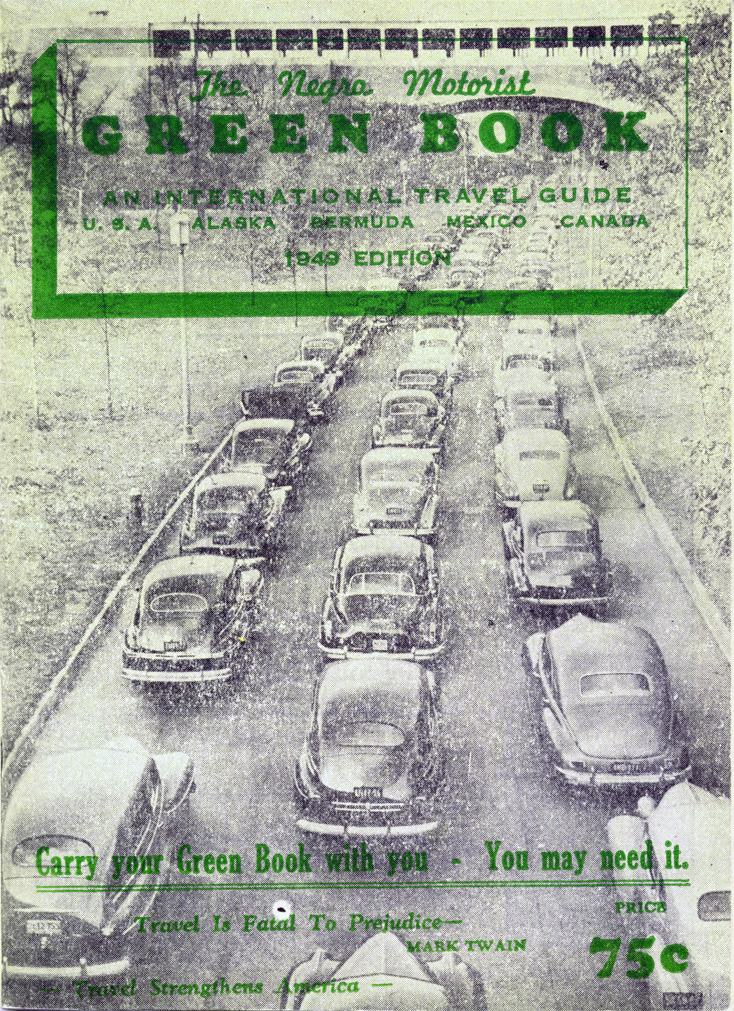
In 1936, Victor H. Green, a Harlem-based postal worker, published The Negro Motorist Green Book. This directory included hotels, gas stations, restaurants, and selected private homes that offered hospitality to black travelers. In 1964, the Civil Rights Act was passed and this publication was no longer needed. Read more about the Green Book at http://www.atlantamagazine.com/history/Story.aspx?id=1319752.

Courtesy of Henry Ford Collection, University of Michigan, Dearborn

Travelers availing themselves to the Southwest Indian Detour services were entitled to many perks not afforded to independent tourists. Detourists weren’t pestered for baksheesh (alms, tips) or required to tip, pay baggage checking fees, or admission fees. The Detour trips could be combined with horseback riding, walking tours, and wagon trips to more remote areas.

The Couriers were a walking information desk. Their knowledge of local artisans and crafts, excavated Indian ruins, historic churches was standard fare.

Their familiarity with places like the turquoise mines where Tiffany bought all of their raw stones for many years, the house where Governor Lew Wallace wrote part of ‘Ben Hur’, and the ancient pictographs scratched on rocks kept the travelers enthralled.

Each Courier had to know every interesting site in her territory, facts and traditions of every ancient or prehistoric pueblo, every Mexican village, every natural wonder and its historical significance. Can you imagine knowing every trail and its associated archaeological facts?

Couriers were dressed in a brilliant velveteen Navajo-style blouse, skirts with a walking pleats, Navajo belt of figured silver conchos, turquoise and squash-blossom necklaces, cotton hoses, high boots, and the Thunderbird emblem on a soft outing hat. It’s rumored that the Courier outfits influenced the first airline stewardess uniforms.

Indian Detour Courier Uniform from the Grand Canyon
Courtesy of fashionsfromthepast.com

Now before you think the Couriers were just beautiful fountains of knowledge, they also had to man the pry poles used to free the Harveycars from sand and mud, handle a tire jack, and lug a spare tire. They climbed up and down the ladders at the ancient cliff dwellings multiple times daily. Several women who lived an in-town distance from the La Fonda Hotel, their Santa Fe training headquarters, used roller skates to get to roll call on time.

Drivers were outfitted in English riding boots and breeches, a colorful cowboy shirt, a silk neckerchief, and a Tom Mix-size ten-gallon hat. These dashing, courageous men had to be experts in art of double clutching, all auto repairs, have a sense of humor, and handle testy tourists. When the rains came, it wasn't uncommon for them to rebuild the banks of a flooded arroyos after the water receded in order for the cars to make it across and back.

They are credited with coining the word Dudes for the Detourists, who never seemed to mind as dude ranches were synonymous with the wealthy vacation life. The drivers were all native of the region, although their backgrounds were varied.
Couriers and Drivers hosted and chauffeured royalty from every nation, including Prince and Princess Ferdinand from Germany, Prince and Princess Fuisel of India, and others from Baroda, Alba, and Greece. Sir Harry Lauder composed a song up in Pecos canyon.

Their legacy lives on in the friendships and family connections they made during their service and long after they retired, and into the next generation. 


Lin grew up, graduated from Lovington High School, and married Jerry, 47 years ago in Lovington, New Mexico. The first book in her new Voices in the Desert series, Treasures Among the Ruins, is set in 1926 and introduces Cornelia Miller and her adventures as a Southwestern Indian Detour Courier. The other four books span the years of the Indian Detour Couriers from 1926-1932.


Thursday, June 27, 2013

Southwestern Indian Detours ~ by Linda Farmer Harris

Even now the old Santa Fe Trail conjures up romance and Western adventure. The Atchison, Topeka and Santa Fe Railway laid tracks along that trail from Independence, Missouri to Santa Fe, New Mexico.

Map courtesy of Maps and Art.com

My CFHS March 27th post centered around Fred Harvey and the Harvey Girls. He advertised for "young women 18-30 years of age, of good character, attractive and intelligent" as waitresses in his restaurants. He opened the first Harvey House in 1876 in Topeka, Kansas. By 1917, there were 100 Harvey Houses across the United States.

It wasn't long before Mr. Harvey and his staff saw another need and they set out to solve it. Travel in the Southwest was dismal, if not downright dangerous. There were few amenities to attract the wealthy travelers, who now wanted to get off the train and walk amongst the flora and fauna. Crossing the country in a private car was still a rugged undertaking with few surfaced highways.

The Indian Detours were formed to allow travelers to leave the train and take one to three day wilderness territory tours into the Indian Reservations of New Mexico and Arizona. In 1899, the "horseless carriage" was commissioned to be build for addition to the Harvey transportation stable of wagons and buckboards. With luxury ever the hallmark of Fred Harvey, the fleet of Harvey Cars were Cadillacs, Franklins, White Buses, and the Packards, which didn't last more than 30,000 miles on the rough roads. The large vehicles were to be used for sightseers from the Santa Fe station at Flagstaff to the Grand Canyon of the Colorado River. In keeping with the railroad theme, the Harvey Cars were called road pullmans.
Fred Harvey Tour Car, Driver, and Courier at the Little Colorado River Gorge 
Grand Canyon Arizona
Source: My Historic Postcard Collection

Once the El Tovar opened at the Grand Canyon in 1905, the Harvey staff began organizing more extensive entertainment for guests. Tour areas and information on the culture of the Hopi and Navajo peoples were developed. Seven different routes, covering 13 to 66 miles, left from the El Tovar.  For a flat fee of $4, a guest could travel through pine forests, view amazing rock formations, natural springs, wells, waterfalls, and visit area ranches. For $30, a 66 mile round trip included Aztec ruins, dams, lakes, and wildlife.

The Fred Harvey El Tovar Hotel South Rim circa 1910
Grand Canyon Arizona
Source: My Historic Postcard Collection

By 1923, the Grand Canyon - the big gully - was dedicated as a National Park. Brochures advertised four of the most unique tours "in all the word": the Grand Canyon, the Petrified Forest, the Painted Desert, and the Indian Pueblos.

Traveling through these places was one thing, but learning about them was a whole new endeavor. The Indian Detours were organized in the spring of 1926 to conduct travel through oldest America, in the New Mexico Rockies between Las Vegas and Albuquerque.

The Albuquerque Morning Journal, August 20, 1925, carried the announcement. In part it advertised, "The three-day personally conducted educational tour will comprise visits to old Santa Fe, the inhabited Indian pueblos of Tesuque, Santa Clara, San Juan, Santa Domingo, and other points in the picturesque valley of the upper Rio Grande, as well as to the huge communal ruins of Puye, a cliff pueblo 20 centuries old."

This all-expense motor trip would cover nearly 300 miles, and include meals and hotel accommodations to well known, but "little seen places in the Indo-Spanish southwest." According the R. H. Clarkson, Assistant to Ford Harvey, Fred Harvey's son, "There is more of historic, prehistoric, human and scenic interest in New Mexico than in any other similar area in the world, not excepting India, Egypt, Europe, or Asia."


The "personally conducted" feature of the excursions would prove to be the secret of the Indian Detours success. A school for drivers and couriers was conducted by the Santa Fe and Harvey system to give the 'detourists' the ultimate experience.

Erna Fergusson, who had used women guides in her Koshare Tours, was hired to train the first twenty Harvey Detour Couriers.  When interviewed she said, "Couriers are expected to be young women of education and some social grace, able to meet easily and well all kinds of people. They are expected to be intelligent enough to learn many facts about this country and to impart them in a way to interest intelligent travelers. They are selected also with an eye to their knowledge of the southwest, their knowledge of Spanish, and any special knowledge or ability that will assist them in presenting this country properly."

The top training candidates were college graduates, at least 25 years old, and primarily natives of the area. They had to be willing to take a crash course in history, politics, sociology, anthropology, geology and arts. Unlike the Harvey Girls, there was no rule that they remain unmarried in order to continue working. Some of the first applicants were daughters of prominent New Mexicans - senators, secretary of state, judges, ambassadors. In the first group, professional backgrounds varied. Two had been guides for the Fergusson's Koshare Tours; some had been newspaper women; one was a writer; one, a member of an interior decorating establishment. There were teachers, one had taught at the U.S. Indian School at the Tesuque Pueblo, and another from the New Mexico School for the Deaf. Being fluent in other languages was also a plus.

A veritable army of instructors was assembled from all over the nation. The Couriers were expected to know enough Spanish to carry on a basic conversation at the pueblos. The Indians spoke not only their own tribal dialect, but, in many cases, also spoke Spanish. Classes were often conducted on-site at the pueblos, artist colonies and homes, art museums, and in the desert. The Indian Detours with the addition of the Couriers became so popular that new recruits were trained every six months.

Typical test questions might include: "How do Indian women bake bread in outdoor ovens?", "What language do they speak?", "When did the cliff dwellers inhabit Puye?", "How much is an acre of land in New Mexico, and how many crops of alfalfa can be raised in one season?"

They had to have statistics about the area on the tip of their tongues. Knowledge such as mountain heights, population of various pueblos, names of Taos painters and artisans, and explain the features of the desert.

Southwestern Indian Detour Couriers - part of the first group of trainees

They wore uniforms that were attractive, consistent with the theme of the tour, comfortable, and durable.
Detour Courier Outfit, History Room, Bright Angel Lodge, South Rim of Grand Canyon


Winifred Shuler in the patio of Fine Arts Museum, 1930 Indian Detour brochure
courtesy of Journal of the Southwest, University of Arizona,
College of Social & Behavioral Sciences

Couriers were as hearty and talented as their hand-picked counterpart, the HarveyCoach drivers.  They could fix a flat and pump gas, and a myriad of other automobile related chores. One of the Couriers, Anita Rose, was called by the Cleveland Plain Dealer, a "pioneer hostess among cliff dwellers" and an example of the new college woman. Next month we'll talk a bit more about the Couriers and their Drivers.

Have you ever visited the wonders and felt the enchantment of New Mexico?

Leave a comment for a chance to win a book gift certificate. Please include your email address and specify that you would like to be in the drawing. Winner will be posted in the comments on this blog post no later than June 22nd and in the sidebar.


Lin grew up and graduated from Lovington High School, Lovington, New Mexico. The first book in her new Voices in the Desert series, Lost Memories, is set in 1926 and introduces Mariana Forbes and her adventures as a Southwestern Indian Detour Courier. The other four books span the years of the Indian Detour Couriers from 1926-1932.