Showing posts with label US Navy. Show all posts

Monday, June 18, 2018

US Navy, and Marine Corps: Anchors Away, IN OKLAHOMA?


Wikipedia, Public Domain


By Alanna Radle Rodriguez and Judge Rodriguez

Heya, there!

Thank you for joining us this month as we explore the history and influence of the U.S. Navy and Marine Corps in the great state of Oklahoma. If you have been following this series, so far, we have covered the history and influence of both the US Army, and Air Force. This is our second to last post in the series about the history of the Armed Forces and the influence they had in the state of Oklahoma.


First allow us to say: we wish to pay our respects to the brave men and women of our military, and let them know our thoughts and prayers are with them, particularly those currently on deployment outside our country and away from their families.


What, you may ask, is possible for the influence of the Naval and Marine forces on such a land-locked state? That’s a very good question. In fact, other than a naval battle being fought during the War Between The States (WBTS), there were neither naval, nor marine engagements on our soil.

In fact, the truth of the matter is those different branches have less effect on our state, than the state has had on THEM. As far back as the WBTS, we have had naval vessels named after the State, municipalities, and people from here. The first vessel that was named after something in Oklahoma was the Gunboat Class Cimarron I SwGbt which was commissioned in 1862. The next was the Monitor Class Neosho I commissioned in 1863.

 
Wikipedia, Public Domain
 

Since the WBTS, there have been 23 other vessels named after the State, towns, and people from Oklahoma. This includes the USS Oklahoma BB37, which was commissioned 1916. It sunk during Pearl Harbor, recovered, and the superstructure sank in the Pacific while it was being moved back to San Francisco in 1947.

 
USS Oklahoma wearing experimental camouflage, circa 1917
Wikipedia, Public Domain


There have been two vessels named the USS Oklahoma City. The CL91, went through multiple reclassifications and was abandoned for about twenty years before it was sunk as target practice by a South Korean torpedo in 1999. The SSN 723, being one of the first nuclear powered submarines, was launched in 1985 and commissioned in 1988. SSN 723 is still in service today, its home base in Guam.

 
USS Oklahoma City SSN 723 Assignment Patch
Wikipedia, Public Domain


While there are very few resources that need to be protected in this land-locked state, there are naval bases and reservist centers here. The Strategic Communications Wing 1 is located on Tinker AFB in Oklahoma City. They employ more than 1300 active-duty sailors, and 100+ contractors to maintain, train, secure, and operate the resources of the USN here in Oklahoma City.
Unfortunately, other than recruiting information, of which Oklahoma is ranked #3 per capita with approximately 7% of the populace enlisting in the different branches, there is little to no information on the Marine Corps, and their involvement in this state.


But you better believe it they have an impact of families and Oklahoma pride. Those who are in the Navy and Marine Corps, along with any of the other Armed Forces, are the pride of the families, the heart of Oklahoma.


Join us next month as we wrap up this series, with the US Coast Guard. Thank you, and have a safe and blessed 4th of July.
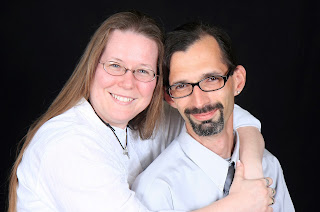


Born and raised in Edmond, Oklahoma, Alanna Radle Rodriguez is the great-great granddaughter of one of the first pioneers to settle in Indian Territory. Alanna loves the history of the state and relishes in volunteering at the 1889 Territorial Schoolhouse in Edmond. Her first published story, part of a collaborative novella titled Legacy Letters, came out September 2016. Alanna lives with her husband and parents in the Edmond area. She is currently working on a historical fiction series that takes place in pre-statehood Waterloo, Oklahoma.
Facebook.com/authorAlannaRadleRodriguez
Pinterest.com/alannaradlerodr/

Wednesday, March 15, 2017

USS America, United States Navy


Battle of Trafalgar (Ships Similar to the USS 1782)

by Pam Hillman

You just never know what you’re going to find out over Sunday dinner. One of the guests at my mother-in-law’s dinner table this past Sunday is a maritime electrician at Ingalls Shipyard in Pascagoula, MS.

After an absolutely wonderful dinner consisting of pork chops, potato salad, field peas, corn, fried okra, cornbread, and an unnamed, but yummy dessert everyone raved about (we never did find out what it was called...), the conversation turned to Bro. Johnson’s day job.

I found out that he’d been wiring ships off and on for 37 years, and that he’d worked on commercial ships as well as naval ships of all shapes and sizes. So that led to my next question. Had he worked on the USS America?

To which he replied, "Which one?"

Turns out there have been four ships commissioned USS America, one that Ingalls just completed in 2012. Wow! I never knew. This begged for more research, so I started digging…

Hercules, a man-of-war similar to
USS America 1782
USS America (1782)
1782-1786

When laid down in 1777, this 74-gun man-of-war was the largest warship built in America. Built for the Continental Navy, it was given to France upon launch. A shortage of skilled workers and well seasoned timber delayed construction for many months. In 1779, Captain John Barry was named as her prospective commanding officer and was ordered to complete the ship as soon as possible. In spite of his efforts, little progress had been made on the ship when Barry was ordered to take command of the 36-gun frigate Alliance.

The unfinished ship languished in the shipyard until June 1781 when Congress named Captain John Paul Jones as commanding officer. Jones was ordered to make America seaworthy. Jones arrived in Portsmouth in August 1781 and dedicated himself to completing the man-of-war. But all of his hard work seemed to come to naught in September 1782 when Congress made the decision to present the ship to King Louis XVI of France to replace Magnifique, which had run aground and subsequently destroyed attempting to enter Boston Harbor. The gift was a token of appreciation for France’s support and service to the American patriots.

Disappointment over losing the commission to command America did not deter Jones, and he stayed the course and saw America launched into the waters of the Piscataqua on November 5, 1782. Rigged and fitted out, the ship departed Portsmouth in June 1783 commanded by M. le Chevalier de Macarty Martinge, the former commander of the Magnifique.

America’s service under the French flag was brief. Three years after launch, an examination of her hull found damage from dry rot (likely from wartime construction from green timber) determined to be beyond repair. She was scrapped in 1786.
USS America (ID-3006)

USS America (ID-3006)
1905-1957

The USS America (ID-3006) enjoyed a long and industrious life. She was launched in 1905 as SS Amerika in Belfast, Germany and served as a German passenger liner for the Hamburg America Line until 1912. She was docked in Boston when WWI broke out, and rather than risk seizure by the British Royal Navy, she remained in port for the next three years.

When the United States entered the war, Amerika was seized, commissioned USS Amerika (quickly Anglicized to America) and used by the U. S. Navy for troop transport. She transported 40,000 troops to France and over 51,000 troops back home from Europe. She sank in 1918 in port in New York, with the loss of six lives, but was raised and reconditioned. In 1926, a tragic oil leak resulted in a fire that gutted almost all of the passenger cabins. But, despite $2,000,000 in damage, America was rebuilt and back in service the following year. The valiant USS America (ID-3006) ended her service to the United States in 1931, but her career didn’t end there.

She came out of retirement in 1940 and was renamed USAT Edmund B. Alexander and again served the US as a troopship during WWII. She then used her substantial strength to carry military dependents until 1949, when she was retired once again. Eventually, she was sold for scrap in January 1957—52 years after her initial launch. God bless her!
USS America (CV-66)

USS America (CV-66)
1965-2005

Since CFHS is a blog devoted solely to topics of a historical nature, I’m not going to give many details about the USS America (CV-66), other than to say that this ship was one of four Kitty Hawk-class super aircraft carriers built for the US Navy. She served in the Atlantic, the Mediterranean, and the Pacific Oceans, the Vietnam War, and operations Desert Shield and Desert Storm. She gave her life in 2005 in service for weapons testing and lies upright and intact at the bottom of the Atlantic Ocean approximately 250 miles southeast of Cape Hatteras.

In addition, it’s important to note that when I read of the USS America’s (CV-66) many tours of duty, her service, and her valiant sacrifice in the end, I got a little teary-eyed. You see, I had the pleasure of touring this particular American beauty in the early 1970s when my brother was a Navy seaman on the ship. The flight deck was the length of three football fields. My brother said that they played football on deck and never lost a ball!

USS America (LHA-6)
USS America (LHA-6)
2013-

The USS America (LHA-6) is an America-class amphibious assault ship awarded for construction in June 2007. She launched June 2012 from Ingalls Shipyard in Pascagoula, MS with an expected commissioning date in 2013 with Naval Base San Diego as her home port.

Note: This post first appeared on the Christian Fiction Historical Society blog April 16, 2013. I hope you enjoy revisiting the fascinating history of naming ships in the US Navy.

To read more about all four ships christened USS America, click here (Wikipedia).


The Promise of Breeze Hill, available for pre-order from your favorite retailer.


CBA Bestselling author PAM HILLMAN was born and raised on a dairy farm in Mississippi and spent her teenage years perched on the seat of a tractor raking hay. In those days, her daddy couldn't afford two cab tractors with air conditioning and a radio, so Pam drove an Allis Chalmers 110. Even when her daddy asked her if she wanted to bale hay, she told him she didn't mind raking. Raking hay doesn't take much thought so Pam spent her time working on her tan and making up stories in her head. Now, that's the kind of life every girl should dream of. www.pamhillman.com

Saturday, January 21, 2017

Hero or Enemy?


Raphael Semmes beside the CSS Sumter

By Marilyn Turk

When I attended Louisiana State University, I often drove down Semmes Road, one of the main streets that ran through campus. But I wasn’t aware of who Semmes was until I researched blockade running for my book, Rebel Light. Much to my surprise, the man for whom the street was named, Raphael Harcourt Semmes,  was a colorful character and famous Confederate blockade runner, or to be exact, commerce raider, during the Civil War. But why would LSU name a road after him?
Raphael Semmes

Semmes was born in 1809 in Maryland.  By the age of 14, both his parents had died and he and his younger brother were taken in by their uncles. One of them owned a small merchant fleet which traveled to ports around the world. With that uncle’s influence and another uncle’s position as a senator, Raphael received a midshipman’s appointment to the US Navy.

Over the next four years, Semmes served on ships that sailed the Caribbean, the coast of South America, and the Mediterranean. During times of leave, he studied law. By the time he became a ship’s officer three years later, he had passed the bar. He opened a law practice in Cincinnati, Ohio, where he married Anne Elizabeth Spencer with whom he would have six children.

CSS Sumter

Semmes served in the Mexican War during 1846-48.  After the war, he moved his family to Mobile, Alabama, where once again, he practiced law while on shore. In 1851, he wrote a memoir, Service Afloat and Ashore in the Mexican War. In 1853, he was promoted to commander and the next year transferred to Washington, D.C., assigned as a lighthouse inspector for the Lighthouse Board.

As the political environment heated up in the country, Semmes took the side of states’ rights, and when Alabama seceded from the Union in 1861, Semmes resigned from the US Navy. Afterwards, he was contacted by Confederate president Jefferson Davis and soon became a commander of the Confederate Navy in charge of the Confederate Lighthouse Bureau. But Semmes had other ideas. He convinced the Confederate Secretary of the Navy to allow him to outfit a boat as a commerce raider to stymie the Union economy and counteract the effect of the Union blockade on Southern ports.


Semmes and his officers of the CSS Sumter
Semmes proved capable of his goal as he wreaked havoc on US merchant ships while commanding the CSS Sumter. For six months, Semmes pillaged through the Caribbean and across the Atlantic to Spain. His knowledge of the ocean, coastlines, weather and shipping lanes, combined with superb navigational skills, allowed him to find his targets and escape Union warships. When he retired the battered Sumter in Gibraltar, he assumed command of a newly built ship which became the CSS Alabama, from Confederate sympathizers in England.

The next two years, Semmes earned worldwide recognition for his destruction or capture of 65 Union ships, making him the most successful commerce raider in maritime history. Union newspapers called him a “pirate” and a “privateer,” both names Semmes rejected because he served as an officer in the Confederate Navy and was not acting for his own profit. When the Alabama was finally sunk in a battle with the USS Kearsarge in June 1864, Semmes’ raiding days were over, but he escaped capture and returned home to Mobile and his family.
Semmes home in Mobile, Alabama

He was promoted to rear admiral and also served briefly as brigadier general in the Confederate army, the only North American to have held such ranks in both the army and the navy simultaneously.

After the war, he was arrested for treason and held in jail for four months before being released.

So what does this have to do with LSU? Well, after the war, Raphael Semmes became a professor of literature and philosophy at the university.

Following his stint at LSU, he returned to law practice in Mobile. There he wrote his book, Memoirs of Service Afloat During the War Between the States, in 1869.

 
Statue of Raphael Semmes

Award-winning author Marilyn Turk lives in and writes about the coast – past and present. A multi-published author, she writes a lighthouse blog at http://marilynturk.com. Her latest release, Rebel Light, Book 1 in the Coastal Lights Legacy series, is now available along with A Gilded Curse, and Lighthouse Devotions on amazon.com.

Would you like to develop your writing skills? Marilyn is hosting a writers retreat March 22-25 at Blue Lake in southern Alabama. Whether you're just getting started or have been writing a while, this retreat will help you with your writing, inspire and motivate you. And right now, there's a "bring a friend" discount! Check it out at www.bluelakecwr.com.


Thursday, September 19, 2013

THE BATTLE OF LAKE ERIE


By Laurie Kingery

I'm going off my post-Civil War Texas one last time to commemorate the two hundred-year anniversary of the Battle of Lake Erie. You'll be reading this on September 19, but I'm writing it on the 10th, which just so happens to be the two hundred-year anniversary of Oliver Hazard Perry's victory over the British on Lake Erie. Most of you who've been to Lake Erie have seen the 352-ft. monument, but I'd like to tell you more about the battle and the commander who won it.


Perry was born Aug. 23, 1785 in Rhode Island. Interestingly, he was a direct descendant of the famous medieval Scottish freedom fighter, William Wallace, and an older brother of the commodore who compelled the opening of Japan to the west, Matthew Calbraith Perry.

At the beginning of the War of 1812, the American Navy was very small, which enabled the British to get a foothold over the Great Lakes and the New York waterways. Having served in the "Quasi War" with France, where he first saw combat under the command of his naval officer father, and the Barbary War, Perry was given the command of Lake Erie.
                                                                                

On Sept. 10, 1813, his fleet of nine ships met six British ships on Lake Erie. Perry's flagship flew the battle flag which was inscribed "Dont (no apostrophe) give up the ship," which were the dying words of his friend Captain James Lawrence, for whom the ship had been named. The battle started badly for the Americans. The Lawrence was so heavily damaged and had so many casualties-- 80% of the crew killed or wounded—that Perry and four crewman left the ship in a rowboat and rowed through heavy fire to another of his ships, the Niagara. But the British had suffered heavy casualties too, including many of their senior officers. Perry took full advantage of that and soon forced the British to surrender—the first time an entire British squadron had ever surrendered. The victory opened up the way to Canada for the American forces and protected the entire Ohio valley.


Following his victory, Perry sent that famous message to General William Henry Harrison: "We have met the enemy, and they are ours. Two ships, two brigs, one schooner and one sloop." Perry earned for himself the title "the Hero of Lake Erie" and a Congressional gold medal. In all, Perry was involved in nine naval battles before and after Lake Erie, and died of yellow fever in 1819 in Venezuela, where he had gone to speak with Simon Bolivar about Caribbean piracy. He was just 34. His body was later reinterred in Newport, Rhode Island.


The monument is now called the International Peace Memorial, and the United States flag flies no higher than the Canadian or British flags to commemorate the peace between our two countries.

There was a reenactment of the Battle of Lake Erie on Labor Day this year, but it was not visible from shore, unfortunately. Private boaters and the ferry service "Jet Express" were allowed to get within 500 yards of it.

                          Blessings, Laurie Kingery

Monday, April 15, 2013

4th USS America to be Christened in 2013

Pam Hillman
You just never know what you’re going to find out over Sunday dinner. One of the guests at my mother-in-law’s dinner table this past Sunday is a maritime electrician at Ingalls Shipyard in Pascagoula, MS.

After an absolutely wonderful dinner consisting of pork chops, potato salad, field peas, corn, fried okra, cornbread, and an unnamed, but yummy dessert everyone raved about (we never did find out what it was called...), the conversation turned to Bro. Johnson’s day job.

I found out that he’d been wiring ships off and on for 37 years, and that he’d worked on commercial ships as well as naval ships of all shapes and sizes. So that led to my next question. Had he worked on the USS America?

Uh, which one?

Turns out there have been four ships commissioned USS America, one that Ingalls just completed in 2012. Wow! I never knew. This begged for more research, so I started digging…

Hercules, a man-of-war similar to
USS America 1782
USS America (1782)
1782-1786

When laid down in 1777, this 74-gun man-of-war was the largest warship built in America. Built for the Continental Navy, it was given to France upon launch. A shortage of skilled workers and well seasoned timber delayed construction for many months. In 1779, Captain John Barry was named as her prospective commanding officer and was ordered to complete the ship as soon as possible. In spite of his efforts, little progress had been made on the ship when Barry was ordered to take command of the 36-gun frigate Alliance.

The unfinished ship languished in the shipyard until June 1781 when Congress named Captain John Paul Jones as commanding officer. Jones was ordered to make America seaworthy. Jones arrived in Portsmouth in August 1781 and dedicated himself to completing the man-of-war. But all of his hard work seemed to come to naught in September 1782 when Congress made the decision to present the ship to King Louis XVI of France to replace Magnifique, which had run aground and subsequently destroyed attempting to enter Boston Harbor. The gift was a token of appreciation for France’s support and service to the American patriots.

Disappointment over losing the commission to command America did not deter Jones, and he stayed the course and saw America launched into the waters of the Piscataqua on November 5, 1782. Rigged and fitted out, the ship departed Portsmouth in June 1783 commanded by M. le Chevalier de Macarty Martinge, the former commander of the Magnifique.

America’s service under the French flag was brief. Three years after launch, an examination of her hull found damage from dry rot (likely from wartime construction from green timber) determined to be beyond repair. She was scrapped in 1786.
USS America (ID-3006)

USS America (ID-3006)
1905-1957

The USS America (ID-3006) enjoyed a long and industrious life. She was launched in 1905 as SS Amerika in Belfast, Germany and served as a German passenger liner for the Hamburg America Line until 1912. She was docked in Boston when WWI broke out, and rather than risk seizure by the British Royal Navy, she remained in port for the next three years.

When the United States entered the war, Amerika was seized, commissioned USS Amerika (quickly Anglicized to America) and used by the U. S. Navy for troop transport. She transported 40,000 troops to France and over 51,000 troops back home from Europe. She sank in 1918 in port in New York, with the loss of six lives, but was raised and reconditioned. In 1926, a tragic oil leak resulted in a fire that gutted almost all of the passenger cabins. But, despite $2,000,000 in damage, America was rebuilt and back in service the following year. The valiant USS America (ID-3006) ended her service to the United States in 1931, but her career didn’t end there.

She came out of retirement in 1940 and was renamed USAT Edmund B. Alexander and again served the US as a troopship during WWII. She then used her substantial strength to carry military dependents until 1949, when she was retired once again. Eventually, she was sold for scrap in January 1957—52 years after her initial launch. God bless her!
USS America (CV-66)

USS America (CV-66)
1965-2005

Since CFHS is a blog devoted solely to topics of a historical nature, I’m not going to give many details about the USS America (CV-66), other than to say that this ship was one of four Kitty Hawk-class super aircraft carriers built for the US Navy. She served in the Atlantic, the Mediterranean, and the Pacific Oceans, the Vietnam War, and operations Desert Shield and Desert Storm. She gave her life in 2005 in service for weapons testing and lies upright and intact at the bottom of the Atlantic Ocean approximately 250 miles southeast of Cape Hatteras.

In addition, it’s important to note that when I read of the USS America’s (CV-66) many tours of duty, her service, and her valiant sacrifice in the end, I got a little teary-eyed. You see, I had the pleasure of touring this particular American beauty in the early 1970s when my brother was a Navy seaman on the ship. The flight deck was the length of three football fields. My brother said that they played football on deck and never lost a ball!

USS America (LHA-6)
USS America (LHA-6)
2013-

The USS America (LHA-6) is an America-class amphibious assault ship awarded for construction in June 2007. She launched June 2012 from Ingalls Shipyard in Pascagoula, MS with an expected commissioning date in 2013 with Naval Base San Diego as her home port.

To read more about all four ships christened USS America, click here (Wikipedia).


In light of her father’s death, Mariah Malone sends a letter that will forever alter the lives of her family. When Slade Donovan, strong willed and eager for vengeance, shows up on her front porch, Mariah is not ready to hear his truths: her father’s farm, the only home she’s ever known, was bought with stolen gold. With Slade ready to collect his father’s rightful claim and force Mariah and her family out on the streets, Mariah must turn to God for guidance. Though Mr. Fredrick Cooper, a local landowner, promises to answer her financial woes if she agrees to be his bride, Mariah finds herself drawn instead to the angry young man demanding her home.
Claiming Mariah for Kindle or Nook.


Pam Hillman was born and raised on a dairy farm in Mississippi and spent her teenage years perched on the seat of a tractor raking hay. In those days, her daddy couldn’t afford two cab tractors with air conditioning and a radio, so Pam drove the Allis Chalmers 110. Even when her daddy asked her if she wanted to bale hay, she told him she didn’t mind raking. Raking hay doesn’t take much thought so Pam spent her time working on her tan and making up stories in her head. Now, that’s the kind of life every girl should dream of! Claiming Mariah is her second novel. www.pamhillman.com