Showing posts with label Volkswagen Beetle. Show all posts

Friday, January 7, 2022

Part 2: The Volkswagen Beetle's Jewish Engineer

By Michelle Shocklee

Last month I wrote about the well-known history of the Volkswagen Beetle, my little dream car. Today I want to share the story of one of the engineers who was instrumental in the development of Hitler's "People's Car" yet received no credit. 

To recap: In 1930s Germany, Hitler was in power. Proud of Germany's new highways system, he wanted every German to have access to an economical car. Ferdinand Porsche and Hitler had become chummy so it wasn't a surprise when Porsche was given the task to design what would eventually become the Volkswagen Beetle, or VW Bug. As I said in my post last month, the VW Bug went on to become the fourth highest-selling vehicle of all time. 

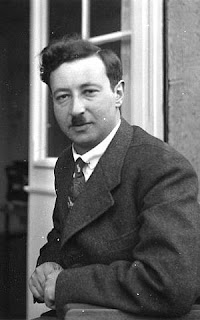
Josef Ganz in 1933
(Photo: Paul Schilperoord)
Yet that isn't the whole story. Let me tell you about a Jewish engineer named Josef Ganz.

Josef Ganz was born in 1898 to a Jewish family living in Budapest. In 1916, his family moved to Germany and became German citizens. Josef even joined the military and fought for Germany in World War I. From an early age, Josef was fascinated with technology. After the war ended, he studied mechanical engineering, and it was during those years of study that he dreamed of designing a small car that would sell for the price of a motorcycle. Ganz made many sketches of small, light-weight cars, but he had no money to build a prototype. Instead, he wrote about them in articles that were published in automobile magazines. 

Because of his prolific and fascinating writings, shortly after his graduation in 1927, he was hired as the new editor-in-chief of Klein Motor Sport. Ganz continued to be critical of heavy, unsafe and old-fashioned cars and promote innovative design and his concept of a car for Germany's general population. Interestingly, one notable contributor to the magazine was Béla Barényi, a young engineering student who designed cars with a similar concept. In 1953, Mr. Barényi proved in court that his original designs and ideas had been used by Porsche to develop the VW Bug and he is now sited as one of the early engineers of the famous car. 

Mr. Ganz, however, was not so fortunate.

Josef Ganz in the Maikäfer prototype, 1931 (Wikipedia)


Things went well for Josef at first. In 1930, he collaborated with motorcycle manufacturers Zündapp, Ardie and DKW on a prototype of his idea. That prototype was followed by a second, the Maikäfer, in 1931. News about their success spread and Ganz was hired as a consultant engineer at Daimler-Benz and BMW where he was involved in the development of the first models with independent wheel suspension.


In the summer of 1932, director Wilhelm Gutbrod of the Standard Fahrzeugfabrik in Ludwigsburg approached Ganz to discuss the possibility of developing a small ‘Volkswagen’ or People's Car, based on his 1931 Maikäfer prototype and his various patents. An agreement was soon reached and a first prototype was constructed and tested in the fall of 1932. Although Hitler expressed an interest in the car after seeing it at a car show, his anti-Semitic views were gaining ground. Hiring a Jewish engineer to design the people's car was out of the question. Ferdinand Porsche was soon charged with developing what we know as the Volkswagen Beetle. However, much of what would go into the Volkswagen was either patented by Ganz or heavily advocated for in his magazine.

Josef Ganz with his Standard Superior  (Photo: Paul Schilperoord)

What happened to Ganz, you ask?

In 1933 he was arrested by the Gestapo on false charges of blackmail. He fled Germany and settled in Switzerland. There he worked on the Swiss auto project similar to what Porsche was working on in Germany, but Hitler's war on the world once again put Ganz in danger. Even the Swiss government turned on him and claimed his work as their own. After the war, Ganz battled the government in court for five years with little to show for the effort. He moved to France and worked on a new car, but it couldn't compete with Volkswagen. He finally settled in Australia where he worked for General Motors. In 1965 Germany attempted to honor him and sought Australian Government permission to bestow on him the Officer's Cross of the Order of Merit of the Federal Republic of Germany. However, under regulations existing at that time in relation to foreign awards to Australian citizens, the request was sadly denied.

Josef Ganz died in 1967 in relative obscurity after suffering multiple heart attacks. Only recently has he been rightfully acknowledged for his early designs used to build one of the most iconic cars in history.


Michelle Shocklee is the author of several historical novels and is a Christy Awards and Selah Awards finalist. Her work has been included in numerous Chicken Soup for the Soul books, magazines, and blogs. Married to her college sweetheart and the mother of two grown sons, she makes her home in Tennessee, not far from the historical sites she writes about. Visit her online at www.MichelleShocklee.com


UNDER THE TULIP TREE
*2021 Christy Awards Finalist*

Sixteen-year-old Lorena Leland’s dreams of a rich and fulfilling life as a writer are dashed when the stock market crashes in 1929. Seven years into the Great Depression, Rena accepts a position interviewing former slaves for the Federal Writers’ Project. There, she meets Frankie Washington, a 101-year-old woman whose honest yet tragic past captivates Rena. Frankie’s story challenges Rena’s preconceptions about slavery, but it also connects the two women whose lives are otherwise separated by age, race, and circumstances. Will this bond of respect, admiration, and friendship be broken by a revelation neither woman sees coming?

For purchase options, visit www.MichelleShocklee.com


Tuesday, December 7, 2021

The Volkswagen Beetle

By Michelle Shocklee

I'm not a car enthusiast. I've told my husband and sons, who are car enthusiasts, that as long as I have something reliable to get me from Point A to Point B, I'm happy. (I also think the prices car dealers charge these days for a new car are beyond outrageous, but that's a soapbox for another day.)

Volkswagen; photo from Google

But if I were given the opportunity to choose any car in the world, I would choose a red vintage Volkswagen Beetle, also known as a VW Bug.

Why, you ask?

When I was a little girl, our family had a tan VW Bug. (Daddy would have never bought a red car!) Mom drove us five kids around town in it, going to school, cub scouts, church, and half-day Kindergarten for me. Sadly, a drunk driver rear-ended our little Bug one afternoon while Mom and I waited to turn onto our street. Mom suffered a broken back and a broken neck, but I only had a concussion since I'd been laying down in the backseat pouting about something instead of standing in the front seat, which was my usual position. Mercifully, Mom recovered after many long months, but our VW Bug was totaled.

Because I have such happy memories of our Bug, imagine how horrified I was when I learned that the person I had to thank for my cute little dream car was none other than the evil Adolph Hitler. 

Back in 1930s Germany, Adolph Hitler gained more power every day it seemed. Proud of Germany's new infrastructure, which included many highways, Hitler wanted German citizens to have an economical vehicle so they could enjoy the country he was creating. In 1934, he ordered car designer Ferdinand Porsche to begin work on the Volkswagen, which is German for "people's car." The Spanish War of 1936-1938 shifted production resources to military needs, so it wasn't until the war ended that Porsche and his team could get back to their work developing the iconic design of the Bug (Kafer in German). 

Early model of the VW Bug; photo from Wikipedia
A note of interest about the design: it was originally conceived by Béla Barényi, a Hungarian engineer, in the 1920s. He was able to prove in court in 1953 that Porsche's patents were Barényi's ideas, and therefore Barényi has since been credited with first conceiving the original design for this car.

One of the recognizable hallmarks of the Bug is its unique shape. Yet its rounded body wasn't designed for looks but for strength. A curved piece of metal has more strength than a flat piece. Another notable difference from other vehicles is the placement of the air-cooled engine in the back of the car. Although less powerful than other cars in its class, the VW Bug's engine was simple, economical, and easy to repair. Air-cooled engines don't have water pumps, thermostats, hoses, or a radiator, and the dry weight of an air-cooled engine is much lighter than a comparable water-cooled engine.

By 1946, VW Bugs were being mass-produced in Germany. However, Hitler's war on the world had soured many people against anything coming out of Germany. The company basically had to reinvent itself if it was going to stay in business. Volkswagen searched and found an advertising agency that would create ads focused on building brand advocates. Conceived by the New York agency Doyle, Dane, and Bernbach, the advertising campaign began in 1959 and was one of the best in the world during the sixties. Unlike glamorous, over-the-top American car ads, VW Beetle ads were usually in black and white and were witty and funny. It helped the Beetle to become the fourth highest-selling automobile of all time. 

When the 15,007,034th car rolled off the line at Wolfsburg in 1972, the Volkswagen Beetle surpassed the Ford Model T as the longest-running and most-manufactured car in history. During the original Beetle's 65-year production run, more than 21 million were built world-wide. Not bad for a cute little Bug, eh?


I'm currently working on a new historical time-slip novel set in the 1940s and 1970s. Can you guess what kind of car my heroine drives? 😎

Your turn! If you could choose any car to drive, what would it be?


Michelle Shocklee is the author of several historical novels and is a Christy Awards and Selah Awards finalist. Her work has been included in numerous Chicken Soup for the Soul books, magazines, and blogs. Married to her college sweetheart and the mother of two grown sons, she makes her home in Tennessee, not far from the historical sites she writes about. Visit her online at www.MichelleShocklee.com


UNDER THE TULIP TREE
*2021 Christy Awards Finalist*

Sixteen-year-old Lorena Leland’s dreams of a rich and fulfilling life as a writer are dashed when the stock market crashes in 1929. Seven years into the Great Depression, Rena accepts a position interviewing former slaves for the Federal Writers’ Project. There, she meets Frankie Washington, a 101-year-old woman whose honest yet tragic past captivates Rena. Frankie’s story challenges Rena’s preconceptions about slavery, but it also connects the two women whose lives are otherwise separated by age, race, and circumstances. Will this bond of respect, admiration, and friendship be broken by a revelation neither woman sees coming?


For purchase options, visit www.MichelleShocklee.com