
 |
| Photo by RODNAE Productions from Pexels |
With February being the Love Month, I thought I’d look at the history of love potions, which are simply aphrodisiacs by another name. Originally named after Aphrodite, the Greek goddess of love, there were attempts by ancient civilizations to control something they didn’t understand. In fact, even today, while scientists can explain what happens when two people are attracted in an amorous fashion, they still struggle to explain why.
The first recorded potions were memorialized as far back in time as 4000 BC, when the witch doctor or shaman or other member of a tribe or clan prepared various concoctions to increase libido. This is understandable, since cultures depended on multiplying their numbers through their offspring. No sexual desire, no babies. That was a fact of life and survival.
Ancient Greeks, known for their refined and genteel ways, believed that ground up orchids that were then added to wine solved any sexual dysfunction in both men and women. This became so popular and widespread that for a time, the orchid plant became extinct. It didn’t help the availability of the plant when the ancient Romans also adopted the use of the orchid, this time brewing it into a delicately aromatic tea. Perhaps one solution to this scarcity was the introduction of insects, such as Spanish Fly or Blister Beetle, into love potions.
Ancient Greeks, known for their refined and genteel ways, believed that ground up orchids that were then added to wine solved any sexual dysfunction in both men and women. This became so popular and widespread that for a time, the orchid plant became extinct. It didn’t help the availability of the plant when the ancient Romans also adopted the use of the orchid, this time brewing it into a delicately aromatic tea. Perhaps one solution to this scarcity was the introduction of insects, such as Spanish Fly or Blister Beetle, into love potions.

Ancient Egyptians associated seafood with sexual potency, and so banned all seafood from consumption by their celibate priests. Imagine a life without lobster or flounder.
Natives of the Orient thought garlic contained special properties that encouraged romantic relationships and promoted its use widely throughout their part of the world.
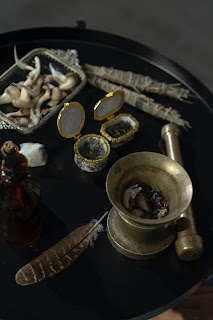
During the Middle Ages, the focus of those trying to increase amorous advances changed, often incorporating more personal and increasingly bizarre ingredients, such as human sweat, reproductive organs from male animals, and even by-products of the birthing process. Often, these ingredients were mixed with wine to make them more palatable. As if anything could.
Love potions can be found in literature from the Middle Ages and beyond. However, perhaps in keeping with the tragedy of the story and the facts that most didn’t work, these often-magical experiments rarely worked. The Celtic story Tristan and Isolde includes a successful ingestion of the potion, leading to the infatuation of the couple. Which might be thought as a success, except she was already engaged to another.
Midsummer Night’s Dream includes the tale of Titania, who unknowingly consumes a potion in her sleep. Her estranged husband perpetrated this evil deed, hoping she’d fall back in love with him. Unfortunately, he wasn’t there when she opened her eyes, and instead she falls for another.
Photo by Tima Miroshnichenko from Pexels
In the 1600s, magical poems became popular—perhaps because nobody wanted to drink the potions. An instruction book was released entitled The Book of Secrets of Albertus Magnus, which told the reader to crush earthworms with periwinkle and feed it to the afflicted spouse. Other recipes included the fat of a snake, the head of a sparrow, the blood of a bat, or the heart of a pigeon.
The need—or shall I say desire—for such potions spread to the New World and the Old. In Mexico, the story went that if a wife sprinkled crushed basil on her chest, her husband wouldn’t cheat on her. American Indians used hallucinogens such as peyote and psilocybin, derived from cactus and mushrooms respectively, to heighten romantic pleasure. And in India, wives intent on prolonging intimacy powdered their bodies with crushed henna leaves.
While certain foods such as oysters, onions, and honey are legendary in the aphrodisiac category, perhaps the genuine excitement came from the fact these foods were scarce and expensive. This meant if your date fed you with these, they must really think you’re special. Which ultimately could arouse amorous feelings for them. If you’re impressed by that sort of thing.
Plants, herbs, and flowers have been used over the years because they are easy to collect in native habitats. Apart from the once-near-extinct orchid, no other reports of over-harvesting were noted in researching this article.

Photo by Markus Spiske from Pexels
In reality, any amorous feelings generated by these potions were likely circumstantial. In a culture limited by tribal or social norms, romance in general may have been just as awkward then as it can be now. Let’s face it—expressing your feelings to the object of your desire is like stepping out onto a diving board without knowing if the pool is full. You could be getting in over your head, or preparing to take a fall.
But with an entire month dedicated to love, surely there is hope for all to achieve their happily-ever-after.
Leave a comment, and I will draw randomly for a print copy (US only) or ebook – winner’s choice – of The Mystery of Christmas Inn, Colorado. Please remember to include your email address, disguising it like: donna AT livebytheword DOT com
About The Mystery of Christmas Inn, Colorado
Matthew returns to Christmas Inn to celebrate his anniversary, intending to join his beloved Sarah, who passed on to glory the previous January. He learns that the old inn will close its doors soon. Can he save the hotel—and his memories?
Edith Cochrane, a widow, comes to Christmas Inn to escape her greedy family. Ever since her husband’s passing, she’s found herself at loose ends. A body in a wall and a kidnap attempt rejuvenate her. But will it be enough?
Buy Link: https://www.amazon.com/Mystery-Christmas-Inn-Colorado-ebook/dp/B0779HTH9C
About Donna:

A hybrid author, Donna writes squeaky clean historical and contemporary suspense. She has been published more than 50 times in books; is a member of several writers' groups; facilitates a critique group; teaches writing classes; ghostwrites; edits; and judges in writing contests. She loves history and research, traveling extensively for both.
www.DonnaSchlachter.com Stay connected so you learn about new releases, preorders, and presales, as well as check out featured authors, book reviews, and a little corner of peace. Plus: Receive a free ebook simply for signing up for our free newsletter!
www.DonnaSchlachter.com/blog
Check out previous blog posts at www.HiStoryThruTheAges.wordpress.com and www.AllBettsAreOff.wordpress.com
Facebook: www.Facebook.com/DonnaschlachterAuthor
Twitter: www.Twitter.com/DonnaSchlachter
Books: Amazon: http://amzn.to/2ci5Xqq
Bookbub: https://www.bookbub.com/authors/donna-schlachter
Goodreads: https://www.goodreads.com/search?utf8=%E2%9C%93&query=donna+schlachter
Etsy online shop of original artwork: https://www.etsy.com/shop/Dare2DreamUS
Resources:
https://www.historyextra.com/period/ancient-history/love-potions-aphrodisiacs-facts-spanish-fly/
https://www.elitedaily.com/p/are-love-potions-real-heres-what-history-science-have-to-say-19298441
https://www.elitedaily.com/p/are-love-potions-real-heres-what-history-science-have-to-say-19298441
www.DonnaSchlachter.com/blog
Check out previous blog posts at www.HiStoryThruTheAges.wordpress.com and www.AllBettsAreOff.wordpress.com
Facebook: www.Facebook.com/DonnaschlachterAuthor
Twitter: www.Twitter.com/DonnaSchlachter
Books: Amazon: http://amzn.to/2ci5Xqq
Bookbub: https://www.bookbub.com/authors/donna-schlachter
Goodreads: https://www.goodreads.com/search?utf8=%E2%9C%93&query=donna+schlachter
Etsy online shop of original artwork: https://www.etsy.com/shop/Dare2DreamUS
Resources:
https://www.historyextra.com/period/ancient-history/love-potions-aphrodisiacs-facts-spanish-fly/
https://www.elitedaily.com/p/are-love-potions-real-heres-what-history-science-have-to-say-19298441
https://www.elitedaily.com/p/are-love-potions-real-heres-what-history-science-have-to-say-19298441


