Showing posts with label art. Show all posts

Sunday, December 19, 2021

Women Artists of the Gilded Age


By Susan G Mathis

Until the late 1800’s, unmarried women were banned from leaving their home without a chaperone, nor did they have a formal education. Instead, they were expected to learn domestic duties and marry as soon as they came of age.

Still, a few privileged women studied art, but they were allowed to only paint portraits and domestic scenes. Men critics dismissed their work as amateur, silly, unimportant, but these women were quietly blazing a trail for those to come.
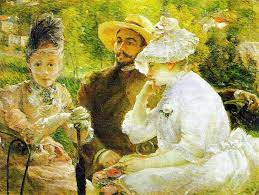
Three women rose in stature during the Gilded Age—Mary Cassatt, Berthe Morisot, Marie Bracquemond—who became known as “Les Trois Grandes Dames.” Though seen as unimportant during their time, in the years to come they gained notoriety and attention in the world of Impressionism.

American Mary Cassatt was a founder of the Impressionist movement. As a suffragette, she fought for women’s rights and created art that showed women as people not objects. She lived in Paris and exhibited her work at the famous Salon. Degas even invited her to join him and other male artist at an exhibition. While she pained mainly women, the mother/child relationship filled most of her work. Her work with women’s equality yielded a growing pool of female artists.

Berthe Morisot painted the modern woman, exhibiting her work with other Impressionists at the Salon de Paris. Her paintings, drawings, and watercolors emphasized women and children with daring artistic experiments. Unfortunately, she died at age fifty-four.

Marie Bracquemond struggled financially to pursue her craft. She was mostly self-taught and even did work-for-hire projects that included going to a prison to paint the Spanish writer Miguel de Cervantes. Later, Monet and Degas mentored her, but by 1890, her husband forbid her to do her art.

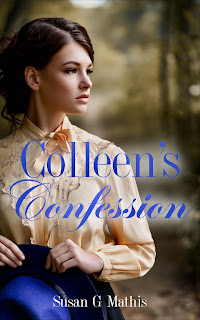
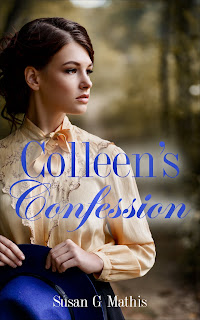
These three dames boldly led the way to many more women artists. In my story, Colleen’s Confession, an orphan lass is changed by the influences of these women.

How has women’s art touched your life? I’d love to know. Leave your answer or comments on the post below and join me on January 19th for my next post.


About Colleen's Confession:


Summer 1914

Colleen Sullivan has secrets as she joins the staff on Comfort Island. She loves to draw and dreams of growing in the craft. But tragedy strikes and her orphan dreams of finally belonging and becoming a wife and an artist gone, what will her future hold?

Jack Weiss enjoys being the island’s groundskeeper and is smitten by the lovely Irish lass. Colleen dismisses him at every turn, but when he introduces her to the famous impressionist, Alson Skinner Clark, Colleen finds hope. Will she finally embrace his love for her? With the Thousand Islands' summer ending, he hopes she will.


About Susan:


Susan G Mathis is an international award-winning, multi-published author of stories set in the beautiful Thousand Islands, her childhood stomping ground in upstate NY. Susan has been published more than twenty times in full-length novels, novellas, and non-fiction books.

Her first two books of The Thousand Islands Gilded Age series, Devyn’s Dilemma, and Katelyn’s Choice have each won multiple awards, and book three, Peyton’s Promise, comes out May 2022. Rachel’s Reunion is coming soon. The Fabric of Hope: An Irish Family Legacy, Christmas Charity, and Sara’s Surprise, and Reagan’s Reward, are also award winners. Susan is also a published author of two premarital books, two children’s picture books, stories in a dozen compilations, and hundreds of published articles. Susan makes her home in Colorado Springs and enjoys traveling around the world. Visit www.SusanGMathis.com/fiction for more.


Friday, November 19, 2021

Impressionist Alson Skinner Clark


By Susan G Mathis

American Impressionist artist, Alson Skinner Clark, is most remembered for his beautiful landscapes that often still sell for tens of thousands of dollars. Born in Chicago in 1876, he started selling his paintings at age eleven!

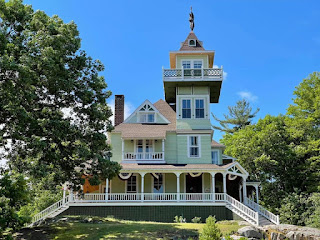
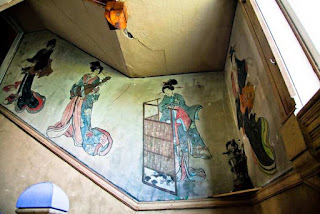
He was educated in art in America and France, married Atta Medora McMullin, and lived in Pasadena, California. But he summered in the Thousand Islands on his family’s Comfort Island. There he created amazing murals throughout the cottage that still exist today.

His first art studio was in Watertown, NY, where he met his wife and had a successful debut art exhibit. Then he took his work to Chicago, and after receiving rave reviews, he and his wife spent several years in Europe honing his skills and working with famous artists. His wife, Medora, was his regular model and his muse.

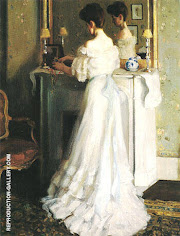
Clark recorded his paintings in notebooks and on note cards, often adding his inspiration and photographs of them. One of his most famous paintings is called, The Necklaces, was admittedly influenced by the famous artist James Abbott McNeill Whistler.

Clark painted in Paris, Normandy, Spain, Italy, the Netherlands, Canada, and other places. But he always returned to The Thousand Islands and his Comfort Island. In 1910, his Spanish paintings brought him national esteem at a Chicago exhibition.

He and his wife soon returned to France and spent time in the artist colony, Giverny, where he met Claude Monet and other artists. There he solidified his special style of Impressionism that gained him international notoriety and fame. But soon they found Giverny an unhealthy place to reside and returned to the states.

In 1913, Clark traveled to the Panama Canal and painted a dozen pieces in the construction zone and around the area, bringing the historic canal to life and public understanding. During World War I, he served as an aerial photographer, and later he taught art at Occidental College and in Pasadena. He died in 1949 while painting.

Yet his paintings still live on and his murals in the Comfort Island cottage do too. My story, Colleen’s Confession, details those murals, tell more of his work, and tells the story of a lovely orphan lass who was touched by this famous artist.

How has art touched your life? I’d love to know! Leave your answer or comments on the post below and join me on December 19th for my next post.


About Colleen's Confession:


Summer 1914

Colleen Sullivan has secrets as she joins the staff on Comfort Island. She loves to draw and dreams of growing in the craft. But tragedy strikes and her orphan dreams of finally belonging and becoming a wife and an artist gone, what will her future hold?

Jack Weiss enjoys being the island’s groundskeeper and is smitten by the lovely Irish lass. Colleen dismisses him at every turn, but when he introduces her to the famous impressionist, Alson Skinner Clark, Colleen finds hope. Will she finally embrace his love for her? With the Thousand Islands' summer ending, he hopes she will.


About Susan:


Susan G Mathis is an international award-winning, multi-published author of stories set in the beautiful Thousand Islands, her childhood stomping ground in upstate NY. Susan has been published more than twenty times in full-length novels, novellas, and non-fiction books.

Her first two books of The Thousand Islands Gilded Age series, Devyn’s Dilemma, and Katelyn’s Choice have each won multiple awards, and book three, Peyton’s Promise, comes out May 2022. Rachel’s Reunion is coming soon. The Fabric of Hope: An Irish Family Legacy, Christmas Charity, and Sara’s Surprise, and Reagan’s Reward, are also award winners. Susan is also a published author of two premarital books, two children’s picture books, stories in a dozen compilations, and hundreds of published articles. Susan makes her home in Colorado Springs and enjoys traveling around the world. Visit www.SusanGMathis.com/fiction for more.


Monday, July 5, 2021

Butter Prince of 1924

 by Anita Mae Draper

Butter sculpture at the British Empire Exhibition of Prince of Wales at his EP Ranch, Wembley, England. 1924. Glenbow Archives

The postcard above features a butter sculpture display of Prince Edward, Prince of Wales, at his EP Ranch near Pekisko, Alberta which he bought in 1919. The sculpture was created and in public view in a refrigerated case at Canada Pavilion during the 1924 British Empire Exhibition in Wembley, England. According to wikipedia, Edward's mother, Queen Mary, laughed when she saw it and said it was, "quite a remarkable likeness."

The butter sculpture intrigued me. I had seen these types of sculptures in the dairy section of the Regina Exhibition where farm scenes were featured in great detail. Yet, butter sculptures have been a perennial favorite at state fairs, exhibitions, and expositions for over 100 years, and historically have been used on banquet tables and at religious events for hundreds of years. 

Dreaming of Iolanthe. Stereoview 1876 version of Caroline S. Brooks butter sculpture. 1876. Wikimedia

In 1873, farm woman Caroline Shawk Brooks from Helena, Arkansas, created the bust of a woman in a bowl of butter and displayed it under the name, Dreaming Iolanthe. (above) Over the next few years, she continued to redo her creation as a marketing tool, until finally, in 1876, was invited to sculp it in front of a live crowd at the Centennial Exhibition. 

The success of her display led to more sculptors taking up the art and helping butter compete during the 1890s to 1930s against a synthetic substitute, Oleomargarine, which we call margarine. Butter sculptures became prominent features at state fairs where dairy producers often showed a cow and calf scene to bring attention to the source of the wholesome butter. The postcard below was published in 1911 and featured a cow, calf and boy scene, yet it was the same, reworked butter sculpture which had been displayed annually at the Ohio State Fair since 1903.

Souvenir Minn. State Fair 1911, Milton Dairy Co.'s Butter Exhibit front. Wikimedia

For the Universal Exposition of 1904, or commonly called the Louisiana Purchase Exposition of St Louis, John K. Daniel sculpted a historical scene from butter which featured Father Hennepin and the guides who led him to the discovery of St. Anthony Falls, the only natural major waterfall on the Upper Mississippi River.

 John K. Daniels's butter sculpture of Father Hennepin and guides discovering St. Anthony Falls, Louisiana Purchase Exposition, St. Louis, 1904. Wikimedia

Another historical butter scene was crafted featuring the meeting between explorer Jacques Cartier and Donnacona. Sponsored by the Canadian Dairy Association, it was displayed at the 1908 Franco-British Exhibition in London.

Postcard of butter sculpture tableau of the meeting of Jacques Cartier and Donnacona, Franco-British Exhibition, London, 1908. Sponsored by the Canadian Dairy Association. Wikimedia

To complete this journey into the art of butter sculpture, I'm including a present day image of a nativity scene which is on display at the Butter Museum in Maslovice. Such dainty work involved in this art.

Butter nativity scene in butter museum in Máslovice. Dec 2006. Wikimedia commons Manka

Now that we see all the possibilities of butter sculpture, who would like to guess how many pounds of butter went into the butter sculpture of Britain's Prince of Wales and his EP Ranch which is featured at the top of this post? Here's another view of the complete tableau to give you a better idea of the size and contents...

Butter sculpture of HRH the Prince of Wales and his ranch (EP Ranch)

You can read previous posts on Prince Edward's EP Ranch at these links:

May 5th - Alberta's Edward Prince Ranch

June 5th - EP Ranch Royal Visit 1923


~~~~~~~~~~~~~~~~~~~~~~~~~~~~

Anita Mae Draper lives on the Canadian prairies where she uses her experience and love of history to enhance her stories of yesteryear's romance with realism and faith. Readers can enrich their story experience with visual references by checking Anita's Pinterest boards. All links available on her website at www.anitamaedraper.com


Wednesday, February 10, 2021

Make Money at Home in the 1880s

By Suzanne Norquist

I found the following work-from-home ad in several Colorado newspapers from the 1880s. I’m sure publications from all around the country carried similar ads.

It reminded me of the scams we avoid today. “No risk.” “Many are making fortunes.” I don’t believe it for a minute. “Ladies make as much as men, and boys and girls make great pay.” Sounds sketchy to me. The ad doesn’t say anything about how one will get rich. It piqued my curiosity, so I investigated.

Similar adds boasted catchy titles like,

“BEST business you can engage in”

“WIN more money than anything else”

“HELP for working people”

“AN AWEFUL DOOM of any nature is usually avoided by those who have foresight”

“$200,000 In presents given away”

“GOLD A great chance to make money.”

Some ads mentioned “agency.” Others mentioned books. One difference between these ads and today’s is that the company making the offer can’t hide behind the anonymous internet. Most were based in Portland, Maine. Inquiries could be sent to H. Hallett & Co. or George Stinson & Co.

These were not fly-by-night operations. Both were printers of books and color lithographs.

In the November 5, 1881 edition of the Mountain Mail in Salida, Colorado, an article sings the praises of the art available through these new publishing companies, George Stinson & Co. in particular. Art that used to only be available to the rich could now grace the homes of ordinary people. The size of the company was described by the $120,000 they spent on postage.

The Hallett Book Company was recruiting salespeople—I mean agents—for books like The Lives of All the Presidents of the U.S.

With the Industrial Revolution and new printing technology, manufacturers needed a way to distribute their products. These weren’t basic commodities like dry goods and fabric. Mass-manufactured lithographs were relatively unique and many different pictures were available.

George Stinson & Co. offered to send a copy of Home and Fireside, one of the largest and best-illustrated publications, for free to those interested in making money. I assume this was a catalog of available art.

Although the companies and goods were legitimate, the claims of wealth ring false. ? I write about small mining communities and can’t imagine one of my characters trying to make a living selling artwork and high-end books to their friends.

Perhaps nothing has changed. A few people can earn a living through direct sales. Most can’t. But manufacturers, then and now, are always looking for ways to pedal their wares.


***

”Mending Sarah’s Heart” in the Thimbles and Threads Collection

Four historical romances celebrating the arts of sewing and quilting.

Mending Sarah’s Heart by Suzanne Norquist

Rockledge, Colorado, 1884

Sarah seeks a quiet life as a seamstress. She doesn’t need anyone, especially her dead husband’s partner. If only the Emporium of Fashion would stop stealing her customers, and the local hoodlums would leave her sons alone. When she rejects her husband’s share of the mine, his partner Jack seeks to serve her through other means. But will his efforts only push her further away?

For a Free Preview, click here: http://a.co/1ZtSRkK


Suzanne Norquist is the author of two novellas, “A Song for Rose” in A Bouquet of Brides Collection and “Mending Sarah’s Heart” in the Thimbles and Threads Collection. Everything fascinates her. She has worked as a chemist, professor, financial analyst, and even earned a doctorate in economics. Research feeds her curiosity, and she shares the adventure with her readers. She lives in New Mexico with her mining engineer husband and has two grown children. When not writing, she explores the mountains, hikes, and attends kickboxing class.

She authors a blog entitled, Ponderings of a BBQ Ph.D.

Friday, July 17, 2020

The History of Origami

By Nancy J. Farrier

Bird in Flight - Single sheet of paper origami


Origami is the Japanese art of paper folding. Oru means “to fold’ and Kami means “paper.” The art began after the Chinese developed paper and later shared that paper with the Japanese, sometime in the sixth century. 


Insects made with origami
In its early history, origami was a ceremonial art because of the rarity of paper. Most likely it was used for religious purposes. When paper making became popular in Japan, making the commodity more available, the art of origami became more recreational than ceremonial. An early popular form was noshi, a folded chevron or wedge, given as a gift of good fortune. In 1680, a poem by Ihara Saikaku mentioned paired origami butterflies attached to a bottle of saki and given as a wedding gift.

Sembazuru Orikata 1797
Wikimedia Commons

As the industry expanded during the Edo period (1603-1868) the art became more popular and developed more intricate cuts and folds, making the origami design much more complex and very pleasing to the eye. The first written instructions for recreational origami were for the paper crane, published in 1797, Akisato Rito,  Sembazuru Orikata, teaching how to fold a thousand cranes. There were forty-nine ways to fold the paper crane included in the instructions.


Most origami was passed down by demonstration or orally, one generation showing another. The sequences of patterns would be learned by the younger generation to be handed down to the next. The challenge became to make something from a single sheet of paper without any cuts or glue. 

Bats by Robert J. Lang
One uncut sheet of elephant hide paper

In the twelfth century, paper folding found its way to Spain and to Germany. The Spanish called it pajarita, and by the 1800’s children in school were learning paper folding in both Europe and Japan. The European folds were based on a 45-degree fold, more geometric than the Japanese 22.5-degree fold. 


Germany was first to recognize the art form as an aid in learning geometry. The art was incorporated into the school systems. Later the Japanese also adopted origami in their schools, but they used the German style of folding. This is why modern origami in Japan is a mix of Japanese and European folding styles.

Cactus - Robert J. Lang
One uncut square of duo paper

Akira Yoshizawa published Atarashi Origami Geijutsu(New Origami Art) in 1954.This book contained tens of thousands of original designs and popularized origami for today’s audience. The Yoshizawa-Randlett system of notation for folds is now the standard, using dashed and dotted lines to teach the craft.


Today, origami is often called chiyogami, and uses a single sheet of paper to make a piece of art. Only folds are used, not cuts or glue. There are other techniques recognized that incorporate the use of multiple sheets of paper to make larger works, or there is wet folding that allows curved shapes. There are also action origami designs that include a jumping frog.

Origami with multiple papers

Have you ever tried making origami? My daughters loved doing paper folding and made ornaments for a Christmas tree and decorations for a wedding. The paper today is very colorful and has pretty patterns, but I do like the plain paper that shows off the design. Which type do you prefer? Do you have a favorite pattern? 


Once again, July is here and this is my birthday. Leave a comment on this blog post with your email address before midnight PST and I will enter you in a giveaway for one of my ebooks – The Richest Knight – or a different one if you already have that book. 


She wants the security of riches.
He’s turned his back on the demands of wealth.


Nancy J Farrier is an award-winning author who lives in Southern Arizona in the Sonoran Desert. She loves the Southwest with its interesting historical past. When Nancy isn’t writing, she loves to read, do needlecraft, play with her cats, and spend time with her family. You can read more about Nancy and her books on her website: nancyjfarrier.com.

Sunday, March 1, 2020

Theater Prohibition

Blogger: Amber Schamel
Most of us are very familiar with the chapter of United States history known as Prohibition. However, there was a prohibition of something other than alcohol back in the early days of our nation.

Believe it or not, Theater, as well as other forms of expensive entertainment, was banned in certain parts of the colonies during the late 1700's. Pennsylvania, Rhode Island and Massachusetts had formal laws banning the practice for more than ten years. Why? This goes back to a religious debate in post-revolution America.


“...why ain’t cards and dice the devil’s device, and the play-house the shop where the devil hangs out the vanities of the world upon the tenter-hooks of temptation?” 
~Excerpt from The Contrast play (1787) by Royall Tyler

Painting of the first theater in America - Williamsburg, VA
(Public Domain)


Theater was popular in England, especially in London; however in the Colonies the influence of the Awakening caused many to question the morality of the art.
The first to introduce theater to the Colonies was a duo of brothers from England, William and Lewis Hallam. In 1752, they brought a repertoire of European plays to Williamsburg. However they encountered strong religious opposition, and ended up closing the venture. 
"to indulge a taste for playgoing means nothing more or less than the loss of that most valuable treasure: the immortal soul." ~Timothy Dwight IV in his Essay on Stage

Whether for or against Theater, both sides appealed to the morality of the art. Some that argued in favor of the theater insisted that the United States was a moral nation, and like moral nations that had gone before, it deserved the right to express itself through art...independent from England and its plays. Those opposed argued that the decline of morality in the nation would only be accelerated by immoral plays.

Playbill from 1778


"The debate over theatre focused on the imagined power of theatre as an institution, rather than on the ability of certain plays to corrupt or uplift. Additionally, the debate did not divide between any social classes or political groups, showing that although economic and political events influenced the nature of the discussions, it was an ideological contest that transcended class, race, gender, and political boundaries. It was about the role government should take in shaping society’s amusements, and about what should be considered advantageous and detrimental to society."
~Meredith Bartron, Gettysburg College

The Continental Congress initially sided against the theater, and influenced several of the states to ban such entertainments: Massachusetts in 1750, Pennsylvania in 1759, and Rhode Island in 1761.

These laws were not repealed until 1789-1793, and history is unclear on the basis for the repeals. Judging by the petitions, pamphlets and newspaper articles arguing for or against theater during the Revolutionary era, the main arguments were morally based. However some historians think that the repeal of the laws was an economical decision.

Whether or not the government should censor public entertainment is still an issue today, but thankfully, it has not resulted in a complete ban of such arts as plays, movies or literature. 

*****

Amber Schamel is the author of Dawn of Liberty, and the two-time winner of the Christian Indie Award for historical fiction. She writes riveting stories that bring HIStory to life. Her passions for travel, history, books and her Savior results in what her readers call "historical fiction at its finest".  She lives in Colorado Springs, Colorado as a very happy newlywed. Amber is a proud member of the American Christian Fiction Writers Association. Visit her online at www.AmberSchamel.com/ and download a FREE story by subscribing to her Newsletter!