Showing posts with label Spain. Show all posts

Saturday, March 28, 2026

Famous Horses in History…Copenhagen with Giveaway by Donna Schlachter


By John Steell. From Wikipedia.


Copenhagen was the Duke of Wellington’s war horse, which he rode at the Battle of Waterloo for 17 hours straight. Bred by General Grosvenor, his sire, Meteor, placed second in the 1786 Epsom Derby, then went on to win his next 21 races. He retired to stud at the ripe old age of eight, and Copenhagen was born 17 years later in 1808. His dam, Lady Catherine, had mixed parentage, and in Copenhagen’s honor, is the only “half-bred” mare listed in the General Stud Book.

Depending on the source, the details of Copenhagen’s birth differ. General Grosvenor allegedly took Lady Catherine, in foal with Copenhagen, to Denmark as his mount during the siege of that city. Copenhagen was either foaled after the second battle and named in honor of the British victory, or, if you listen to other sources, Lady Catherine was returned to England before his birth where he was foaled at Eton Hall in 1808. The General Stud Book does not record that he was born overseas.

Regardless of his murky beginnings, there is no doubt that a magnificent horse was born.
By Matthew Cotes Wyatt. From Wikipedia.


He was tall, standing at about 15 hands high (60 inches at the top of his shoulders), Paintings and reports of the day say he was muscular with a compact frame. Never raced as a two-year-old, he raced until he was four years old for General Grosvenor, retiring in May 1812. Modestly successful, he won two races during his short career.

In his three-year-old season, 1811, he came in third. A few days later, he won a match race and was then beaten by the filly in another match race. A match race pits two horses against each other, with winner taking the entire pot. This type of race is often used to settle which horse is best. Over the next few months of racing, he won several match races, lost some, took third in a Gold Cup Race, third in a County Purse race, and second or third in other miscellaneous appearances.

In 1812, as a four-year-old, Copenhagen started three times, finishing third in two and fourth in one. Not seeing much opportunity to take the big cups, General Grosvenor retired him in May.

General Grosvenor sold him as a saddle horse to Charles Stewart, and Copenhagen was sent to Lisbon in 1813 with a stable of other horses. When Stewart left Spain, Colonel Charles Wood purchased him for the Duke of Wellington for 200 or 250 guineas (about $1,000 USD in 1820, which would be worth around $25,000 USD today). 
 
By Thomas Lawrence. From Wikipedia
 
 
When the Duke of Wellington purchased him in 1813 as a five-year-old, his papers described him as “a dark chestnut with two white heels…hollow-backed, powerful…with bad shoulders.” He loved his corn, but preferred eating while lying down. The Duke said, “There may have been many faster horses, no doubt many handsomer, but for bottom (stamina) and endurance, I never saw his fellow (equal).” His Arabian blood was often cited as the reason for these enduring qualities.
The Duke of Wellington and Copenhagen. From The War Horse Memorial
 
The Duke of Wellington rode Copenhagen into several battles and on a number of treacherous journeys, including his ride to Wavre. But perhaps he is most famous for riding him for 17 hours continuously during the Battle of Waterloo. Both emerged from the fray uninjured. Legend says that when the Duke dismounted, he patted his horse on the flank. Copenhagen kicked at the Duke’s head, which the Duke avoided. Copenhagen loved the chaos of battle, but when not on duty, he was cantankerous, giving many grooms and exercise boys nightmares. 

The Duke of Wellington, from The War Horse Memorial
 
 
While his war days were now over, the Duke continued to ride Copenhagen in parades and other events. Hair from his mane and tail was collected and braided into bracelets. When the Duke of Wellington became Prime Minister in 1828, he rode Copenhagen up Downing Street to Number 10 to take up his new residency.
Copenhagen in retirement, by Samuel Spode
 
 
Following his formal retirement, Copenhagen enjoyed when visitors noticed him, and particularly when they offered his apples and sweets such as sponge cakes, Bath buns (a bready bun with raisins and frosting), and chocolate creams. All of these sweets must have mellowed him, because friends and children rode him regularly. He died on February 12, 1836, at the age of 28. He was buried the next day with full military honors, and the Duke flew into a rage when he noticed one of the hoofs was missing, apparently taken as a souvenir. As with most details surrounding this horse, several stories emerged, including that a farmer bought the hoof and returned it to the Duke. Another version said that a servant confessed many years later to taking the hoof, not expecting that the Duke cared one way or the other. However, the Duke exhumed the body a few months after burial to remove the remaining three hooves to keep as souvenirs and to prevent grave-diggers from profiting from his loss; however, “his three remaining hoofs had rotted away.”

Copenhagen's headstone. From Wikipedia.


Copenhagen was buried without a headstone to keep grave-diggers and souvenir hunters at bay. A request from the United Services Museum to display his skeleton alongside that of Napolean’s horse Marengo was denied. Seven years after Copenhagen’s death, the Duke’s housekeeper planted a Turkey Oak that today shades the grave in recognition of her 20th year of service to the Duke.

After the Duke’s death, his son created an epitaph and placed a grave marker beside the tree.


Giveaway: Leave a comment to enter a drawing for an ebook copy of Hollenberg Hearts.

About Hollenberg Hearts: A mail order bride. A crippled stationmaster. No way out for either of them—except with each other. Can they surrender their hearts and find true love? Check it out: https://www.amazon.com/Hollenberg-Hearts-Pony-Express-Book-ebook/dp/B098VZ38XY and the rest of the Series: https://www.amazon.com/dp/B098WRMTM3


About Donna:
A hybrid author, Donna writes squeaky clean historical and contemporary suspense. She has been published more than 60 times in books; is a member of several writers' groups; facilitates a critique group; teaches writing classes; and judges in writing contests. She loves history and research, traveling extensively for both, and is an avid oil painter. She is taking all the information she’s learned along the way about the writing and publishing process, and is coaching committed writers eager to tell their story.


Newsletter: https://www.thepurposefullwriter.com/newslettersignup Stay connected so you learn about new releases, preorders, and presales, as well as check out featured authors, book reviews, and a little corner of peace. Plus: Receive 2 free ebooks simply for signing up for our free newsletter!

Facebook: www.Facebook.com/DonnaschlachterAuthor

Amazon Author Page: https://www.amazon.com/stores/Donna-Schlachter/author/B01180A2EE

Bookbub: https://www.bookbub.com/authors/donna-schlachter

Goodreads: https://www.goodreads.com/author/show/14116621.Donna_Schlachter

The Purpose-Full Writer: https://www.facebook.com/groups/604220861766651

Need a writing coach? Or want to write your family or personal story? www.ThePurposeFullWriter.com


Resources:

https://en.wikipedia.org/wiki/Copenhagen_(horse)

https://www.artbycrane.com/horse_history_articles_tales/copenhagen_duke_of_wellington.html

https://www.thewarhorsememorial.org/100-hero-horses/100-hero-horses/hero-horse13

https://collection.nam.ac.uk/detail.php?acc=2000-05-38-1

Friday, July 18, 2025

Angela Ruiz Robles, Inventor - By Nancy J. Farrier


Angela Drawing by Eulogia Merle
Wikimedian Commons

Some say the birth of the ebook came in 1971 when Michael Hart created an electronic document of the Declaration of Independence. But, was this the beginning of the ebook? Some say yes. Others believe Angela Ruiz Robles invention was the beginning of this monumental breakthrough—bringing multiple books into one small package.


Angela Was born in Villamanin, Spain in 1895. Her father was a pharmacist, her mother a housewife. Angela began her career as a teacher, graduating from a teacher training college in León. From there she went on to teach several subjects including shorthand, typing, and business. 


She accepted a teaching position in 1918 in Santa Eugenia de Mandía and stayed there for the next ten years. It was there she discovered the true heart of her calling. She saw the students as individuals, each unique in their own right, and met each students needs. Her students loved her and said, “Doña Angelita...never treated any student differently and always honoured each individual learner’s needs.”


Angela surrounded by her students.


At the age of 40, after the death of her husband, Angela founded the Elmaca Academy, named after her three daughters, Elena, Maria Elvira, and Carmen. Elmaca Academy provided specific classes for students training in fields such as telegraph operators or business management studies. The academy had the highest passing rate in the country.


During her career, Angela raised her three daughters, taught students, ran the academy, and still had time for writing and inventing. From 1938 to 1946, she wrote and edited some 16 books. Three of them were published, Compendium of Castilian Orthography, Castilian Orthography (abbreviated), and Modern Abbreviated Martinian Shorthand. 


She was always thinking of ways to improve her students learning capacity and make learning easier and more appealing. One of the things Angela noticed was the books her students had to carry from class to class. She experimented with ideas, wanting to make, “...teaching easier, to get maximum knowledge with minimum effort.”


Mechanical Encyclopedia       


Her dream, what she called the “Mechanical Encyclopaedia” addressed the needs of her students. Her idea was a device that would store vast amounts of information, available at the fingertips. The information would include graphics, sound, and textual forms. She planned to add lighting and magnification to the device.


Angela traveled to Madrid certain she would be able to find promoters who would help bring her dream to fruition. Instead, she received pats on the back, but no serious takers. Many believe this is due to her being a woman and not taken seriously. Despite this, in 1962 she was able to scrape the funds together to have a prototype made. 


Mechanical Encyclopedia inside
After retiring from teaching, Angela spent all her time promoting her Mechanical Encyclopedia. She traveled to exhibitions where she was often the only woman inventor. She gave interviews and talked to potential investors. In 1970, she rejected a proposal to license her invention in the US. She wanted her invention to be developed in Spain and to benefit her people.


Angela’s invention was ahead of her time. She didn’t have access to computers or other media. Instead, she used audio and image reels along with electrical circuits when user’s accessed hypertext links. If her invention had been funded would it have become the first ebook? I don’t know. But, I do know she had an amazing invention that should have been produced.


I found Angela’s story so heart-warming. She loved her students and spent her life trying to make learning easier for them. Have you ever heard of Angela’s Mechanical Encyclopedia? It is on display in the National Museum of Science and Technology in A Coruna, Spain. I’d love to hear your thoughts.


Nancy J Farrier is an award-winning, best-selling author who lives in Southern Arizona in the Sonoran Desert. She loves the Southwest with its interesting historical past. When Nancy isn’t writing, she loves to read, do needlecraft, play with her cats and dog, and spend time with her family. You can read more about Nancy and her books on her website: nancyjfarrier.com.


Thursday, February 9, 2023

Carousels and Their Little Wars + Giveaway

 By Tiffany Amber Stockton


In January, we took a stroll down the language lane of history with some common catch phrases used today and how they got started. You can read last month's post if you missed it.

Today, we're exploring the world of the always delightful ride called the Carousel. Anita Mae Draper did two posts for this blog several years ago on merry-go-rounds and derby race rides, and the post today fills in more historical gaps.

CAROUSEL ORIGINS

The concept of circular motion in the movement of goods, water, or in producing force dates back to B.C. times. Carousels using horses got a bit later start.

What would you say if I told you the carousel has actually been around since the 12th century? Your jaw probably just dropped, or your mouth has formed a small "o." Surprising, right? I thought the same thing when I discovered this fact. The 1100's are considered Medieval times. I don't recall seeing a carousel in any of those stories of King Arthur or Robin Hood or any castle settings. How in the world could such a quaint little carnival ride be this old?

That's easy. The carousel first made its appearance in Turkey and the Arabic region over in the Middle East. It started as a game--albeit a serious one--where horseman tossed clay balls doused in an enormous amount of perfume at each other. Whoever didn't catch the ball had to live with that strong smell until the next time they took a bath. For most of us today, that would be immediately. However, this is medieval times, when bathing wasn't exactly common. :) I would venture to guess that perfume was a rather precious commodity, and this "Little War" as it was called might have been designed intentionally.

Crusaders from Italy and Spain stumbled upon this game and decided to carry the tradition back to their home countries in Europe. The Italians dubbed it "Carosella," which directly translates the original name. Spain referred to it as "Guerrasilla," but when it spread to France, it received the name by which we call it today: Carrousel (only minus one 'r').

In France, the game took on a rather extravagant indulgence. French nobility quickly adapted this clay ball game to their existing war games on horses--including a ring-lancing game--where both riders were dressed to the nines while on horseback. I don't know about you, but riding a horse is challenging enough, let alone dressed in full formal attire. Have you seen the aristocratic fashions of those centuries? I'll take my jeans, plaid shirt and boots over all those fabrics and layers. :)

Anyway, play continued like this for the next 500 years until the 1600s, when they experimented with mechanical or wooden models of horses mounted on spokes originating from a centralized post. They used these models to practice as a way to reduce injury and still enjoy the game. The circular movement was achieved through the use of mules, real horses, and sometimes human labor. Some models were even elaborately designed or custom crafted. That's frivolous aristocracy for you! Luxurious diversions solely for the purpose of entertainment and often at the expense of someone else.

Eventually, the craftsmanship and intricate detailing attracted visitors simply coming to view the artisan's work. In 1729, a British poet added the name "merry-go-round" to the entertaining display, as viewers took pure pleasure and delight in coming to see them. Their popularity spread throughout Europe, and before long, people were wanting to ride the horses themselves.

With the invention of the steam engine around 1870, the availability of more elaborate decorations increased the attraction. Factory manufacturing made them easier to assemble, and their placement as a feature in carnivals or festivals led to widespread popularity all around the world.

NOW IT'S YOUR TURN:

* What is your favorite carousel and where is it located? It could be one you've ridden in another state that left a lasting impression.

* Do you know the name of the British poet who coined the "merry-go-round" name? Who is it?

* If you had to be hit with a perfumed clay ball, what would your preferred scent be?


** Please do not reply via email with any comments. View the blog online and scroll down to the comments section.

Leave answers to these questions or any comments you might have on this post in the comment box below. For those of you who have stuck around this far, I'm sending a FREE autographed book to one person every month from the comments left on each of my blog posts. You never know when your comment will be a winner! Subscribe to comments so you'll know if you've won and need to get me your mailing information.

Come back on the 9th of March for my next foray into historical tidbits to share.

For those interested in my "fictional" life as an author and industry news about other authors, subscribe to my quarterly newsletter. Receive a FREE omitted chapter from my book, A Grand Design, just for subscribing!


BIO
Tiffany Amber Stockton has been crafting and embellishing stories since childhood, when she was accused of having a very active imagination and cited with talking entirely too much. Today, she has honed those skills to become an award-winning, best-selling author and speaker who is also a professional copywriter/copyeditor. She loves to share life-changing products and ideas with others to help improve their lives in a variety of ways.

She lives with her husband and fellow author, Stuart Vaughn Stockton, along with their two children and four cats in southeastern Kentucky. In the 20 years she's been a professional writer, she has sold twenty-six (26) books so far and is represented by Tamela Murray of the Steve Laube Agency. You can find her on Facebook and GoodReads.

Friday, February 25, 2022

The Castillo de San Marcos, Part 3


By Jennifer Uhlarik


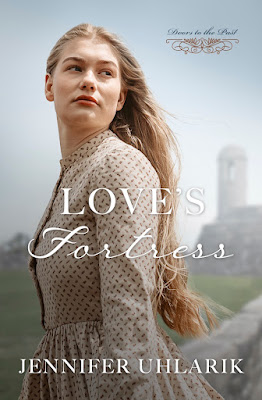
Hello, readers! We are just days away from my fourteenth published story being released. Love’s Fortress is coming March 1, 2022, and leading up to that, I’ve been telling you some of the interesting history of the Castillo de San Marcos, St. Augustine’s old Spanish fort which is the historical landmark where about half the story takes place. If you want to see past postings on the fort, you can find them at the following links:

The Castillo de San Marcos--Part 1

The Castillo de San Marcos--Part 2


So last month, we left off with the fort being returned by the British to Spain during the Treaty of Paris that ended the American Revolution. Britain traded control of Florida to Spain in exchange for the Bahamas. So in 1783, the treaty was signed and by mid-1874, Spanish troops re-entered La Florida


However, the second Spanish period was not all that Spain might have hoped it to be. When the Spanish regained control, those Spanish residents who had once lived here during the first Spanish period were largely gone—long ago returned to Spain or elsewhere. In their place lived many British subjects who saw no need to vacate the new Spanish holding. It would become a costly prospect to bring more Spanish subjects to Florida to set up residence and make a noticeable presence, in addition to the cost of soldiers to keep them safe from various threats.


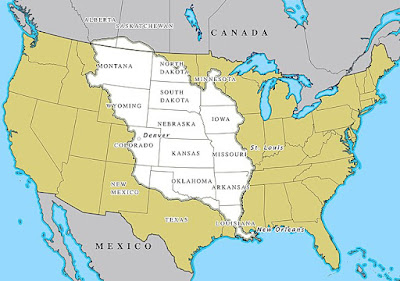
Map of the Louisiana Purchase (in white) overlaid on the
Present Day United States. Note that the Panhandle of 
Florida was not included.


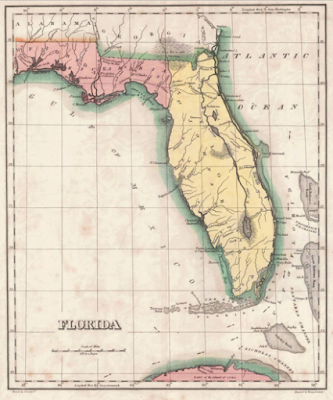
What were those threats? For one, the border of Spanish Florida and the United States was at the southern border of Georgia. With Spanish Florida surrounded by water on three sides, and American land immediately to its north, Florida was cut off from quick help across the land.  Add to that the American neighbors feeling crowded in the southern portions of the fledgling nation, and so wanting to cross the border and set up residence in Florida as well. When the Louisiana Purchase came about in 1803, Napoleonic France sold 828,000 square miles to the United States, and Americans flooded west. Uncaring of the details, some Americans claimed that the panhandle of Florida was part of the Louisiana Purchase. In honesty, it wasn’t, but Americans flooded into that portion of Spain’s holdings during the 1810-1813 time frame. During that same time, the War of 1812 broke out, leading General James Wilkinson to take Mobile, lending strength to the Americans’ position in annexing western Florida. Spain didn’t put up a fight for the area.


Florida once the Americans annexed 
Western Florida between 1810-1813


In addition to the Americans to their north, there were the Seminole Indians living throughout Florida. The Seminoles would often cross the border into American territory and raid American citizens. It was expected that Spain would stop them, since these Native populations lived in Spanish Florida, but with minimal amounts of troops, they struggled to subdue them.


Similarly, slaves from the American plantations crossed the border between American and Spanish territory and sought refuge in Florida, throwing themselves on the mercy of Spain to keep them safe from slave hunters and plantation owners who sought to recapture them. The lack of soldiers again left this growing population vulnerable in Spanish Florida.


The simple answer would’ve been to send more troops to Castillo de San Marcos and other Florida military outposts, but aside from the prohibitive cost, there were other worldwide issues at play. Political tensions were heating up around the world. From 1807 to 1814, Spain waged a seven-year war against Napoleon in Europe, which took manpower and attention away from Florida’s Spanish settlements. Starting in 1810 in Central and South America, people were fighting for independence from Spain as well, further dividing military forces.


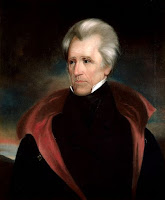
Andrew Jackson
So by 1818 or so, all of these factors converged. Spain’s troop count were very low in Florida due to all the other international issues, and the Seminoles, runaway slaves, and outlaws banded together to wreak havoc in the southern portions of the United States. So the American general, Andrew Jackson, pursued the Seminoles (et al.) into Spanish Florida in what became known as the First Seminole War. Jackson’s incursion angered both Great Britain and Spain, so Spain’s leadership sought help from the British in negotiating the international incident. When Britain declined to do more than express their outrage, Spain once again realized it was on its own to negotiate the turbid waters of Spanish-American relations in Florida. It was time to get out.


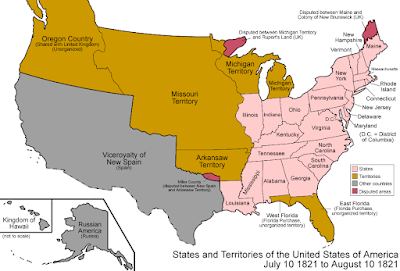
Spain finally approached the United States with the offer of a treaty. Spain would give up Florida if the United States would, in turn, better define the borders of New Spain—an area that comprised much of Mexico, what we know today as the American Southwest, and California. The United States, long desiring to have Florida for its own, quickly agreed, and U.S. Secretary of State John Quincy Adams and Spanish Minister Luis de Onis hammered out the Adams-Onis Treaty of 1819. Florida—and the languishing Castillo de San Marcos—were now the property of the United States of America.


Map showing Adams-Onis Treaty lands. Florida became 
a United States possession while the gray area was
firmly established as "New Spain".


Tune in next month for the interesting history of the fort since becoming an American possession.


Award-winning, best-selling novelist Jennifer Uhlarik has loved the western genre since she read her first Louis L’Amour novel. She penned her first western while earning a writing degree from University of Tampa. Jennifer lives near Tampa with her husband, son, and furbabies. www.jenniferuhlarik.com


COMING MARCH 1, 2022


Love’s Fortress by Jennifer Uhlarik


A Friendship From the Past Brings Closure to Dani’s Fractured Family


When Dani Sango’s art forger father passes away, Dani inherits his home. There, she finds a book of Native American drawings, which leads her to seek museum curator Brad Osgood’s help to decipher the ledger art. Why would her father have this book? Is it another forgery?


Brad Osgood longs to provide his four-year-old niece, Brynn, the safe home she desperately deserves. The last thing he needs is more drama, especially from a forger’s daughter. But when the two meet “accidentally” at St. Augustine’s 350-year-old Spanish fort, he can’t refuse the intriguing woman.


Broken Bow is among seventy-three Plains Indians transported to Florida in 1875 for incarceration at ancient Fort Marion. Sally Jo Harris and Luke Worthing dream of serving on a foreign mission field, but when the Indians reach St. Augustine, God changes their plans. However, when Sally Jo’s friendship with Broken Bow leads to false accusations, it could cost them their lives.


Can Dani discover how Broken Bow and Sally Jo’s story ends and how it impacted her father’s life?

Tuesday, January 25, 2022

The Castillo de San Marcos, Part 2—And a Giveaway


By Jennifer Uhlarik


On October 25, 2021, I began telling you about the history of the Castillo de San Marcos, or the large masonry fort in St. Augustine, Florida. During its existence, the Castillo has existed under six different flags, the first being the Spanish flag. I told you of the building of this impressive structure by the Spanish in my earlier post if you would like to read or refresh your memory.


We’ll pick up where we left off—the end of the French and Indian War in 1763. In the Treaty of Paris that ended this conflict, several Caribbean Islands went to the French, Spain got Havana and Manilla, and England had Canada and the newly acquired Florida. With that outcome, all North American land east of the Mississippi River belonged to the Brits. When this happened, the Spanish settlers in Florida made a mass exodus to Cuba. But the tropical paradise wouldn’t stay empty for long. 


The British government noticed that conflicts were brewing between the British colonists in America and the Native populations. To curb this problem, the government created the English Crown Proclamation of 1763. In it, all settlers were forbidden from moving any farther west than the Appalachian Mountains. So with their western expansion cut off, they drove southward instead—to Florida. England’s government, in return, offered 20,000 acres to any group that chose to settle in Florida, and for individual pioneers willing to settle in the new land, they gave 100 acres, plus 50 more per family member. In the first ten years of British rule, St. Augustine’s population rebounded and doubled from what it had been during the Spanish period.


British colonists flooded the new area, taking over the one-story Spanish-style homes their predecessors had left and, in many cases, building second or third stories onto them. They also built new homes and business buildings in St. Augustine and surrounding areas. With water on three sides of the state, Florida made for an excellent shipping locale, and its rich, fertile soil made for excellent farmland and grazing land for cattle. The British colonists prospered here.


However, not all was so rosy in the British colonies. Other colonists in more northern locales were beginning to rebel against the Crown, so Florida—and Fort St. Mark, as the Castillo de San Marcos was now called—became the staging area for British soldiers brought in to put down the rebellion in the Southern colonies. The fort was used as a supply base, and more interestingly, as a prisoner of war camp. During this time of British control, three signers of the Declaration of Independence were captured and held at Fort St. Mark: Thomas Heyward Jr., Arthur Middleton, and Edward Rutledge. Also held at the fort was the lieutenant governor of South Carolina, Christopher Gadsden—held for 42 weeks in solitary confinement.

Arthur Middleton | The Society of the Descendants of the ...
Arthur Middleton

EDWARD RUTLEDGE Declaration of Independence 1829 engraving ...
Edward Rutledge


Thomas Heyward, Jr. - Christian Heritage Fellowship, Inc.
Thomas Heyward, Jr.


As the Revolutionary War actually broke out, Florida didn’t see any great action. It all took place in the more northern colonies we are familiar with. But Spain took plenty of shots at Britain while their attention was focused on the war with their unruly colonies. The Spanish came in to take Baton Rouge, Mobile, Natchez, and even Pensacola. When it became obvious to Britain that they were not going to be able to hold onto their American colonies, they granted America its freedom in the Treaty of Paris in September 1783. And with little use for the British outpost of Florida, they also made a separate treaty with Spain, giving control of Florida and Fort St. Mark, back to its original owner. So the British control of St. Augustine and Fort St. Marks lasted only twenty years, and resulted in Spain’s return. What did that second Spanish period look like? We’ll explore it in next month’s post, so stay tuned!


It’s Your Turn: Were you aware that St. Augustine and the Castillo de San Marcos wasn’t always under one country’s rule? What, if anything, did you find most interesting about the British period of the Castillo’s history? Leave your thoughts with your email address to be entered in a giveaway for a print copy of Love’s Fortress.


Award-winning, best-selling novelist Jennifer Uhlarik has loved the western genre since she read her first Louis L’Amour novel. She penned her first western while earning a writing degree from University of Tampa. Jennifer lives near Tampa with her husband, son, and furbabies. www.jenniferuhlarik.com


COMING MARCH 1, 2022


Love’s Fortress by Jennifer Uhlarik


A Friendship From the Past Brings Closure to Dani’s Fractured Family


When Dani Sango’s art forger father passes away, Dani inherits his home. There, she finds a book of Native American drawings, which leads her to seek museum curator Brad Osgood’s help to decipher the ledger art. Why would her father have this book? Is it another forgery?


Brad Osgood longs to provide his four-year-old niece, Brynn, the safe home she desperately deserves. The last thing he needs is more drama, especially from a forger’s daughter. But when the two meet “accidentally” at St. Augustine’s 350-year-old Spanish fort, he can’t refuse the intriguing woman.


Broken Bow is among seventy-three Plains Indians transported to Florida in 1875 for incarceration at ancient Fort Marion. Sally Jo Harris and Luke Worthing dream of serving on a foreign mission field, but when the Indians reach St. Augustine, God changes their plans. However, when Sally Jo’s friendship with Broken Bow leads to false accusations, it could cost them their lives.


Can Dani discover how Broken Bow and Sally Jo’s story ends and how it impacted her father’s life?

Friday, July 17, 2020

The History of Origami

By Nancy J. Farrier

Bird in Flight - Single sheet of paper origami


Origami is the Japanese art of paper folding. Oru means “to fold’ and Kami means “paper.” The art began after the Chinese developed paper and later shared that paper with the Japanese, sometime in the sixth century. 


Insects made with origami
In its early history, origami was a ceremonial art because of the rarity of paper. Most likely it was used for religious purposes. When paper making became popular in Japan, making the commodity more available, the art of origami became more recreational than ceremonial. An early popular form was noshi, a folded chevron or wedge, given as a gift of good fortune. In 1680, a poem by Ihara Saikaku mentioned paired origami butterflies attached to a bottle of saki and given as a wedding gift.

Sembazuru Orikata 1797
Wikimedia Commons

As the industry expanded during the Edo period (1603-1868) the art became more popular and developed more intricate cuts and folds, making the origami design much more complex and very pleasing to the eye. The first written instructions for recreational origami were for the paper crane, published in 1797, Akisato Rito,  Sembazuru Orikata, teaching how to fold a thousand cranes. There were forty-nine ways to fold the paper crane included in the instructions.


Most origami was passed down by demonstration or orally, one generation showing another. The sequences of patterns would be learned by the younger generation to be handed down to the next. The challenge became to make something from a single sheet of paper without any cuts or glue. 

Bats by Robert J. Lang
One uncut sheet of elephant hide paper

In the twelfth century, paper folding found its way to Spain and to Germany. The Spanish called it pajarita, and by the 1800’s children in school were learning paper folding in both Europe and Japan. The European folds were based on a 45-degree fold, more geometric than the Japanese 22.5-degree fold. 


Germany was first to recognize the art form as an aid in learning geometry. The art was incorporated into the school systems. Later the Japanese also adopted origami in their schools, but they used the German style of folding. This is why modern origami in Japan is a mix of Japanese and European folding styles.

Cactus - Robert J. Lang
One uncut square of duo paper

Akira Yoshizawa published Atarashi Origami Geijutsu(New Origami Art) in 1954.This book contained tens of thousands of original designs and popularized origami for today’s audience. The Yoshizawa-Randlett system of notation for folds is now the standard, using dashed and dotted lines to teach the craft.


Today, origami is often called chiyogami, and uses a single sheet of paper to make a piece of art. Only folds are used, not cuts or glue. There are other techniques recognized that incorporate the use of multiple sheets of paper to make larger works, or there is wet folding that allows curved shapes. There are also action origami designs that include a jumping frog.

Origami with multiple papers

Have you ever tried making origami? My daughters loved doing paper folding and made ornaments for a Christmas tree and decorations for a wedding. The paper today is very colorful and has pretty patterns, but I do like the plain paper that shows off the design. Which type do you prefer? Do you have a favorite pattern? 


Once again, July is here and this is my birthday. Leave a comment on this blog post with your email address before midnight PST and I will enter you in a giveaway for one of my ebooks – The Richest Knight – or a different one if you already have that book. 


She wants the security of riches.
He’s turned his back on the demands of wealth.


Nancy J Farrier is an award-winning author who lives in Southern Arizona in the Sonoran Desert. She loves the Southwest with its interesting historical past. When Nancy isn’t writing, she loves to read, do needlecraft, play with her cats, and spend time with her family. You can read more about Nancy and her books on her website: nancyjfarrier.com.

Friday, July 14, 2017

Farm Animals in Colonial Times

Today I’m going to follow up my series on colonial farms with a look at what kinds of livestock you’d have found on early American farms. Back then few people cared about breeds, and few formal breeds had been established. To farm families a cow was a cow, a pig was a pig, and a chicken was a chicken. They needed animals for food and labor, so naturally they favored animals that were the most productive and best adapted to their area whatever the breed.

Poultry

Poultry was as important to cooking in the 18th century as today. Chickens, ducks, and geese were not only a source of meat and eggs, however, but also helped to keep the bug population under control in colonial gardens. The following are several early breeds you would have found down on the farm.

Dominique Chicken
Dominique Chickens. One of the first breeds of chickens developed in the United States. Black and white, they are small to medium in size and very hardy as their heavy plumage protects them in freezing temperatures. They were developed during 1700s in Massachusetts from English breeds introduced by European who settled in New England.

Dorking Chickens. This silver or dark poultry breed has five toes. They are large and broad-breasted, well suited to the outdoors due to their ability to forage for their food.

Hamburg Chicken
Hamburg Chickens. These small chickens are known for their slender legs, neat combs, symmetrical form, and for producing large quantities of eggs. Thought to have originated in Holland before the 14th century, they come in a variety of colors. Colonial Williamsburg breeds the silver spangled variety.

Spanish Black Turkey. These completely black fowl descended from Mexican turkeys domesticated by the Aztecs, which were brought back to Spain by Spanish explorers in the 1500s. They spread to England and from there were brought back to North America by settlers in the 18th century. Crossed with North American wild turkeys, they produced breeds such as the Bronze.

Bronze Turkey
Bronze Turkeys. This is the turkey that comes to mind when we think about the Pilgrims and the first Thanksgiving. Remember all those pictures you colored in elementary school during the fall? That’s the one. This breed was developed in the 18th century, though they weren’t called by that name until the 1830s. Descendents of the Spanish Black Turkeys were brought from England to the colonies, where they were crossed with wild North American turkeys to produce a bird that was larger and stronger than the European turkey.

Horses

The horses that transported riders; pulled carriages, carts, and plows; and treaded wheat from the stalks in colonial times were mostly noted in records simply as plow or carriage horses. However, George Washington inventoried Arabian and Andalusian horses in his herd, along with Chincoteague ponies.

Andalusian horse
Andalusian. The Andalusian horse is descended from the Iberian horses of Spain and Portugal, and derives its name from Andalusia, where it originated. The breed was considered the “first place for its perfection, because it is the most beautiful, noble, graceful and courageous.” The breed peaked in popularity in Great Britain during the 17th century, but with the introduction of the thoroughbred, its popularity faded after the mid-18th century.

Arabian. Arabian horses originated on the Arabian Peninsula and have a distinctive head shape and high tail carriage that we probably are all familiar with. These beautiful horses are one of the oldest breeds; archaeological remains of horses in the Middle East that resemble the modern breed date back 4,500 years.

Chincoteague Pony
Chincoteague Pony. Also known as the Assateague horse, this is a breed of feral ponies that developed on Assateague Island off the coast of Virginia and Maryland. They can be any color, including pinto. Legend holds that their ancestors were survivors of wrecked Spanish galleons off the Virginia coast, but it is more likely that they descend from stock released on the island by 17th-century colonists.

Belgian. This large draft horse, also known as Belgian Heavy Horse, Brabançon, or Brabant, originated in the Brabant region of modern Belgium. It was a favorite for pulling heavy loads.

Marsh Tacky Horse
Marsh Tacky Horse. These sturdy horses are native to South Carolina and may have been left behind by Spanish explorers and settlers in the 1500s. During the American Revolution they were ridden by many of the troops of the famous—or infamous—“Swamp Fox” Francis Marion because they were well adapted to the rough and swampy terrain of the region. Because of their gentle nature and size they became a preferred mount for women and children, but their strength and fearlessness also made them popular for hunting and herding cattle. They are a direct descendent of the horses of the Golden Age of Spain, a type that is mostly extinct in Spain today and is critically rare today.

Cows

Cows provided meat, milk, leather, and labor for colonial farm families. The following 2 breeds were widespread throughout the colonies.

Milking Red Devons
American Milking Red Devons. Descended from the British Red Devon breed native to Devonshire, England, these large, red cows with long horns were brought to New England by the Pilgrims in 1623. They were valued for their ability to provide labor, meat, and high butterfat milk ideal for making butter and cheese as well as for their ability to forage and thrive even on poor pasture. They are gentle, active, intelligent, and relatively strong for their size, which made them popular as oxen.

Kerry Cows. Now a historic rare breed of dairy cattle, Kerries are native to Ireland and are probably the breed records of the early Plymouth Colony described simply as “black cows.” They are believed to be one of the oldest breeds in Europe. Their coat is almost entirely black, with a little white on the udder, and their horns are pale colored with dark tips.

Other Animals

Goat at Plymouth Plantation
Spanish Goats. Beginning in the 1500s, Spanish explorers brought goats from Spain to the Caribbean Islands, and from there they spread across North America and Mexico. They are hardy and thrive on rough forage and in challenging environments. As a source of milk, meat and hides, they became an integral part of subsistence farming, especially since eating goat meat allowed cattle to be used as draft animals for crop production and transportation. Spanish goats were the only goats known across the southern United States and in most other parts of the Americas for more than 300 years. Spanish goats are usually horned and are found in a variety of different colors. Later immigrants from the British Isles brought with them the Old English Goat, Irish Primitive Goat, Old Irish Goat, Old Scottish Goat, and Old Welsh Goat.

Ossabaw Island Hog
Ossabaw Island Hogs. Hogs were valued by the colonists because they could be allowed to run wild and forage in the woods until the fall when they were caught, fattened, and slaughtered. Early explorers brought livestock to the Americas beginning in the 1500s, including pigs that escaped or were deliberately set free to forage. The Ossabaw Island Hog, a feral breed that has lived for centuries on Ossabaw Island off the coast of Georgia, is the closest genetic representative of these swine. They’re usually black, although some are black with white spots or light with black spots. Adult pigs are hairy, with heavy bristles around the head and neck.

Leicester Longwool Sheep
Leicester Longwool Sheep. The Leicester (pronounced leister) breed, known for its docility and the length and sheen of its wool, was introduced to North America from Britain before the Revolutionary War and remained popular into the 1800s. These sheep mature quickly and produce a soft, heavy fleece that falls in long ringlets. The wool is very desirable for spinning, weaving, and making felt and hair for dolls. They were used as a pioneer breed in America, Australia, New Zealand, and other British colonies, but today are quite rare in Britain and North America. The Colonial Williamsburg Foundation reestablished this breed in the United States by importing sheep from Tasmania, but it remains globally rare.

Having grown up on a farm, I’ve gone to a number of county fairs, and I always find myself drawn to the fancy chickens. For some reason I love the different breeds and colors. Believe me, if I owned any acreage, I’d have a flock!

Do you like to go to county fairs and check out the livestock? Do you find yourself drawn to a particular type of animal? Have you ever had an unusual pet? Please share a bit about your animal preferences and experiences with us!
~~~
J. M. Hochstetler is an author, editor, and publisher. The daughter of Mennonite farmers, she is a lifelong student of history. Northkill, Book 1 of the Northkill Amish Series, won Foreword Magazine’s 2014 Indy Book of the Year Bronze Award for historical fiction. Book 2, The Return, released in April. Her American Patriot Series is the only comprehensive historical fiction series on the American Revolution. One Holy Night, a contemporary retelling of the Christmas story, was the Christian Small Publishers 2009 Book of the Year.
~~~
Bronze turkey image: CC BY-SA 3.0, https://commons.wikimedia.org/w/index.php?curid=284803
Ossabaw Island Hog image: CC BY 2.0, https://commons.wikimedia.org/w/index.php?curid=5894230