Showing posts with label dolls. Show all posts

Friday, December 13, 2024

Fireworks and Fruit: Memories of Old Kentucky Christmases

As a native Kentuckian, I’m fascinated by stories of life in my state before I was born. The books I’m writing now are set in the western part of the state not far from where I grew up, in a region then known as “Between the Rivers,” which now makes up a federal area called Land Between the Lakes.

While researching early 20th Century life in this area, I found interesting memories of former residents about the Christmases of their childhood, from 1900 to World War II.

Nearly everyone recalled getting a fresh orange, either in their stocking if the family followed that tradition, or among their other presents. One woman named Rebecca, whose family did not have a mantel, recalled placing a “special chair” for Santa to leave her presents.

The holiday season was the only time oranges and other tropical fruits were available. One year, her father obtained a full stalk of bananas, which the family hung in a corner of the living room as part of the Christmas decorations.

Firecrackers were another typical present for the children, something that would be frowned on by most parents today. Rebecca said she and her siblings would rise around 4 a.m. on Christmas morning, take a shovel of hot coals from the wood stove, and go outside to light and shoot off the firecrackers.

While snow was not common in
in western Kentucky, and rarely
was there a white Christmas, children
and adults took advantage of it when
it did arrive. In this photo from winter
1951, young Tom Nickell perched atop
a huge snowman, supported from
behind by his hidden father. 
A man named Ted remembered his grandfather’s tradition of “blowing the anvil” on Christmas Day. His grandpa, a blacksmith, would take an anvil with a hole in it, fill the hole with gunpowder, run a fuse a good distance away, then ignite the fuse. When the fuse ignited the gunpowder, the resulting explosion would blow the anvil “as high as a man’s head.”

Ted’s cousin Sallie described a similar Christmas Eve tradition, where Grandpa would take the family to his blacksmith shop, put gunpowder into the forge fire and pump the bellows to set off a mini-explosion, showering the entire shop with sparks.

The adults also made torches by wrapping worn-out stockings around long sticks and soaking them in coal oil. An array of these torches would be set in the ground in the front yard and then lit.

For the most part, this region did not have electricity until the 1940s, but the people sure knew how to light up their Christmas celebrations!

Parents had to be creative when it came to gifts, too. One year, Rebecca received a toy wagon made by her daddy and uncle from white oak, crafted exactly like a real wagon. Mothers often knitted the Christmas stockings and made other presents, such as dolls or doll clothing, as well as new clothing for the children.

The Shirley Temple doll topped the
1935 Christmas wish list for many
Kentucky girls.
The first doll Gertrude received was one called a “Limber Jim,” made of material stuffed with sawdust. When money was available, she said, there might be a pistol for the boys and a small china doll for the girls, maybe a little red wagon or “a small, square box with a jump-up Santa in it”—what we know as a jack-in-the box.

Typically, Christmas Day activities included a trip to grandparents’ house for dinner. Food included, Rebecca said, “real” country ham and gravy, chicken and dressing, beans, potato salad, sweet potatoes, hoop cheese, and fruit salad. Dessert consisted of cakes of various flavors, including orange, banana, chocolate, and fresh coconut. Her favorite was an orange cake with fresh orange slices in the icing.

After dinner, a hunting party would form for squirrels or rabbits, with the men using dogs and guns, boys using rocks and sticks. Rebecca remembered one Christmas when the boys brought back more game than the men.

Then, as now, celebrating Christmas meant gathering with family, sharing a meal, presents for the children, and special traditions. The traditions may change but the reason for celebrating the birth of Jesus remains the same over the years.

What are some of your family’s Christmas traditions, and how far back did they begin?

Source:

Between the Rivers magazine, formerly published in Grand Rivers, Kentucky, Winter 1999-2000, Summer 2000, and Holiday 2000 editions. Information taken from articles written by Doyle Marshall, Gertrude Savells Wilson, and Rebecca Byrd.


Multi-award-winning author Marie Wells Coutu finds beauty in surprising places, like undiscovered treasures, old houses, and gnarly trees. All three books in her Mended Vessels series, contemporary stories based on the lives of biblical women, have won awards in multiple contests. She is currently working on historical romances set in her native western Kentucky in the 1930s and ‘40s. An unpublished novel, Shifting Currents, which takes place during construction of Kentucky Dam, placed third in Inspirational Romance in the nationally recognized Maggie Awards, and second in Historical Christian Romance in the Touched By Love Awards.

When the bright lights of Broadway dim, the glow of home in western Kentucky beckons. This historical short story, “All That Glistens,” was included in the 2023 Saturday Evening Post Great American Fiction collection and is now available free when you sign up for Marie's newsletter here. In her newsletter, she shares about her writing, historical tidbits, recommended books, and sometimes vintage recipes.


Tuesday, October 11, 2022

Iconic Dolls

 Raggedy Ann and Andy: Beloved Ragdolls

by Martha Rogers  

The original concept of Raggedy Ann as drawn by Gruelle, her creator.


How well I remember these dolls from my childhood. I always wanted one, but never had the privilege of having one. I did have several story books and a coloring book featuring the two dolls and many of their friends from the books.

The exact origin of the idea for the doll is not known but legends and myths abound about a rag doll found in the attic and brought down to be fixed up. Legend has it that he designed and named his creation for his daughter Marcella who died at age thirteen from an infection following a vaccination. 

What we do know: Raggedy Ann was first created by Johnny Gruelle, and American writer born in 1880. He wrote and illustrated a series featuring the rag doll with red yarn hair and a triangle nose. In September of 1915, he received the patent for the doll which he had created and then introduced to the public in a book Raggedy Ann Stories. That was around the time of his daughter's death. He marketed the books with the doll, and the concept met with great success.

Then, in 1920 Gruelle introduced the character of her brother, Raggedy Andy. Gruelle adopted the names from two poems by his friend, James Whitcomb Riley, The Raggedy Man and Little Orphant Annie. Gruelle later introduced Beloved Belinda, a black mammy doll, in the book and as a doll. One interesting note, Riley was a friend and neighbor of Gruelle when they both lived in Indianapolis.

As can be seen above in  drawing from a coloring book, the drawings progressed to the dolls who are more recognizable as the Raggedy and Raggedy Andy most of us remember. Gruelle continued to write and illustrate at least one book a year until his death in 1938. He also wrote lyrics for songs that were published both as sheet music and song books for children. Included was "Raggedy Ann's Sunny Songs" in 1930. Former U.S. Treasury Secretary William H. Woodin set the words to music. 

By the end of the 1940's, Raggedy Ann books and those related to her exceeded 7 million copies. Bobbs-Merrill Company in Indianapolis became the authorized


publisher of the books and licensor for Raggedy Ann related literary works in 1962. These are pictures of some of the earlier books.


The Knickerbocker Toy Company took over manufacturing the dolls in the early 1960s. Bobbs -Merrill then became a part of Macmillan Inc. and later Simon & Schuster, and Hasbro acquired the rights to the trademark for the Raggedy Ann stuffed doll, but Simon $ Schuster retained the rights to all other trademarks. While in the process of of being sold to Penguin Random House, the original patent and copyrights expired and are in the public domain.

Because of the expiration, pattern companies came out with patterns for the dolls, Many variations of the dolls were manufactured. In addition to dolls and books, such items as comic books, animated items, television and theatrical productions, coloring books, and recordings of the songs were manufactured.

Below are examples of some of the items we all would recognize as Ann and Andy in paper dolls, a more modern version of Raggedy Ann, a pattern for the doll as well as costumes for plays, masquerades and Halloween.


The dolls and all memorabilia associated with them have become sought-after items for collectors. On March 27, 2002, the Raggedy Ann doll was inducted into the National Toy Hall of Fame in Rochester, New York. Five years later, Raggedy Andy joined her on November 8, 2007.

These dolls are recognizable even today. When our first granddaughter was born, I bought Raggedy Ann and Raggedy Andy soft doll Christmas ornaments around 41/2 inches tall and still use them over 35 years later. 

What toys from your childhood were your favorites?

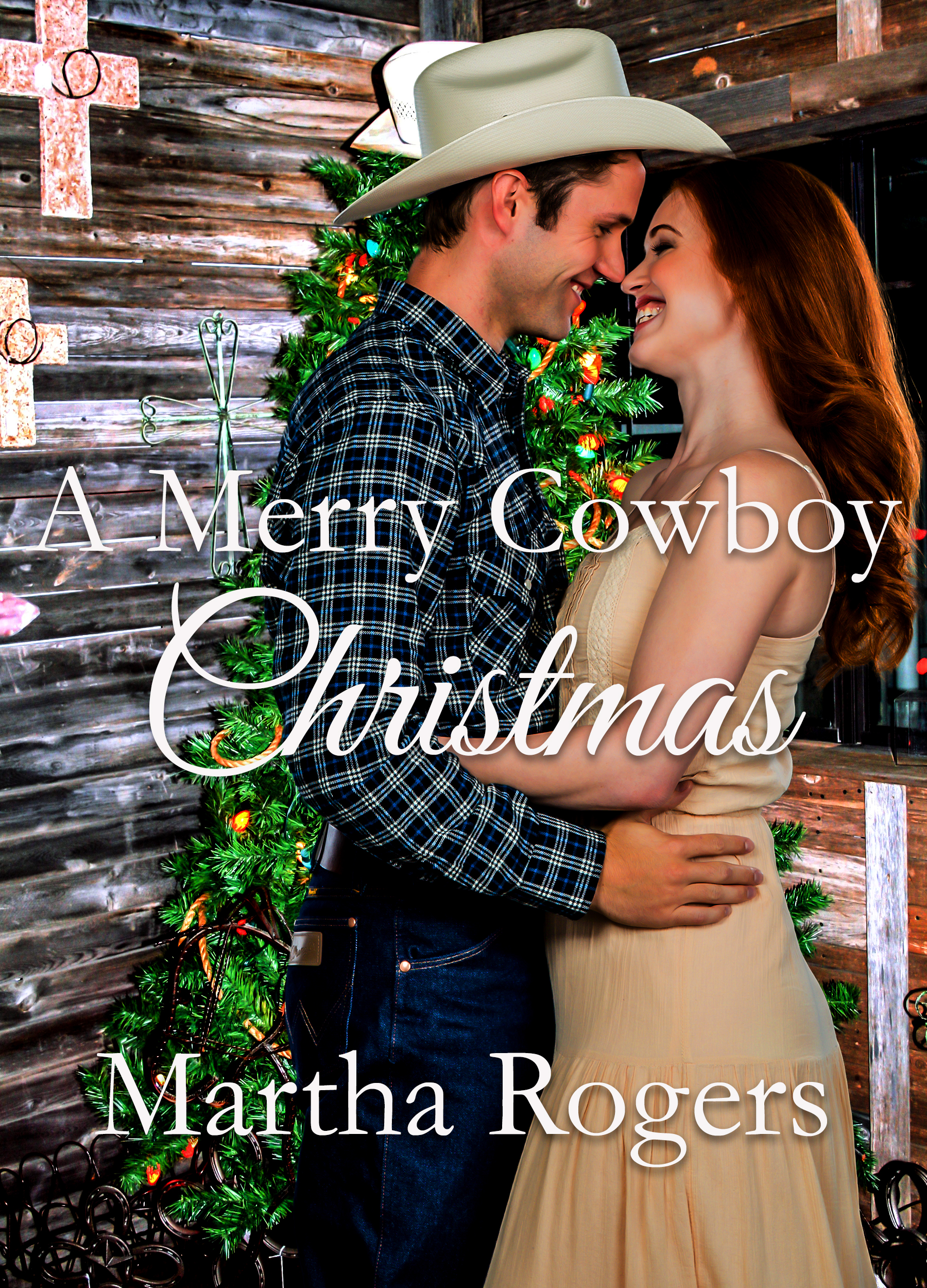
My release for Christmas:


Kayla Martin’s fiancĂ© was killed in Afghanistan seven years ago before their wedding, and her heart shut down. Then she meets Tylor Damon and is attracted to him, but is being careful to guard her heart against another loss. When they are paired in a wedding party, sparks ignite between them. Tyler realizes something is keeping her at a distance, but he’s determined to bring a smile to her face.  When he’s almost killed in a rodeo competition, Kayla old fears threaten to drown her. Only a Christmas miracle will bring them together.   


Martha Rogers is a multi-published author and writes a weekly devotional for ACFW. Martha and her husband Rex live in Houston, Texas where they are active members of First Baptist Church. They are the parents of three sons and grandparents to eleven grandchildren and great-grandparents to six. Martha is a retired teacher with twenty-eight years teaching Home Economics and English at the secondary level and eight years teaching Freshman English at the college level. She is a member of ACFW, ACFW WOTS chapter in Houston, and serves as President of the writers’ group, Inspirational Writers Alive.