Two summers ago, my husband and I adopted two male shelter
kittens—one black, one black and white, respectively named Dark One and
Purrsnickity. They have added so much joy, laughter, cuddles, and stress relief
to our busy lives. While I have loved kitties ever since they were part of our
menagerie in rural New Mexico during my teen years, having these little guys
romping through our newlywed apartment—and my husband’s special connection with
kitties—has endeared the feline species to me even more.
 |
| "Playful Kittens" By Karl Reichert, 1890, showing the resurgence of cat appreciation in the 19th century. Dorotheum: Info about artwork, Public Domain, |
While I know a number of friends who are “not cat people,”
cats remain the most popular pet in America today, with about a third of
households containing one, or often two, pet felines. So how did human
relations with cats begin, and how did this lovely, cuddly, yet independent and
often mysterious animal come to be domesticated in the first place? The story
is an interesting one, spanning the globe and thousands of years.
The First Pet Cats: Near East, China, and Africa
 |
| Depiction of North African lynx or wildcat, 1846. By Jardine, William www.flickr.com/photos/biodivlibrary/6505584225, Public Domain |
Scientists agree that domesticated cats sprang from the same
region as did human civilization: the Middle East and North Africa. While
Europe also holds native cat species, such as the Scottish wildcat and European
wildcat, our pets are most directly descended from the Near Eastern or North
African wildcat. Interestingly, cats have changed genetically over the
centuries far less than dogs, who because of the specific jobs they were chosen
and bred to perform have been carefully and intentionally developed into diverse
breeds by humans over the years. Except for variations in coat color and length
and other relatively minor differences, cat breeding has not changed the
domestic feline species significantly from its ancestors.
 |
| Ancient Egyptian statue of "holy cat," c. 664-332 BC By Daderot - Own work, Public Domain, Wikimedia Commons |
Domesticated cats are believed to date back as far as 9,000 or
10,000 years ago, based on evidence found as far as Cyprus, Egypt, and China.
It seems that once human communities started farming and storing grain, cats
were attracted by the rodents who swarmed to eat the grain. People were delighted
with the pest control, cats were delighted with the easy food supply. And soon,
the two species decided to not only co-exist, but become friends. For example,
cat bones uncovered in China show evidence of human feeding of cats, and an
ancient burial site in Cyprus shows a cat and owner buried together, indicating
a close bond.
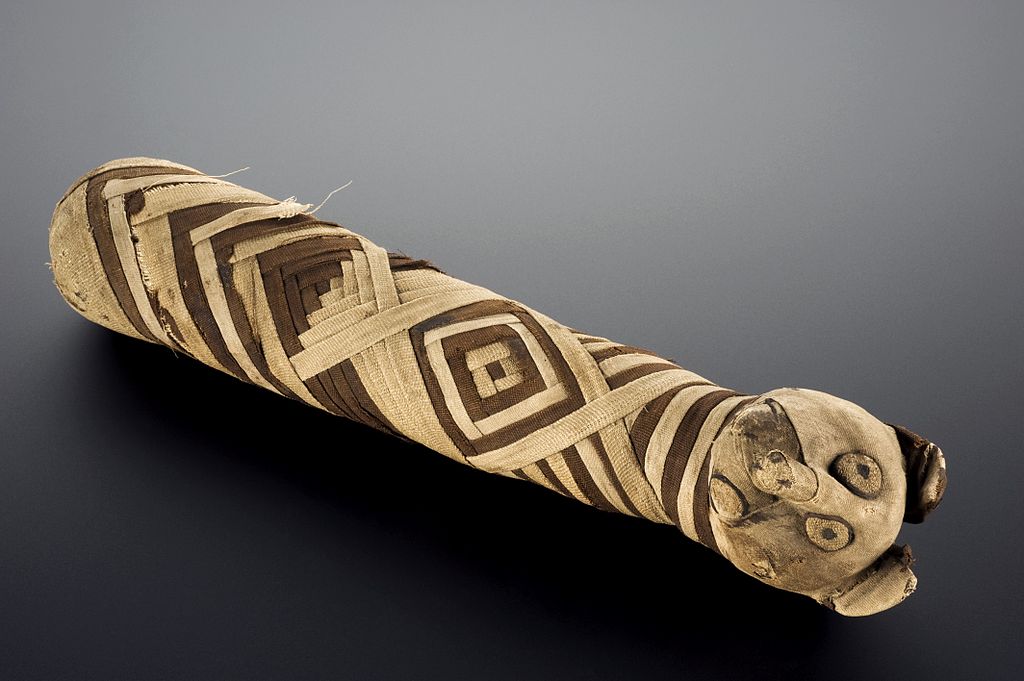
Ancient Egypt’s reverence for cats is well known, with cats
sometimes even elevated to the level of gods. At one point it was a capital
offense to kill a cat, and mummified cats have provided interesting DNA study
for scientists, who find that Egyptian cats have changed very little over the
centuries.
The Middle Ages – A Sad Season
Unfortunately, the positive associations with cats in the
ancient Middle East devolved in the European Middle Ages, as cats somehow came
to be associated with evil and witchcraft. They even were blamed for the Black
Plague, and many cats were killed—ironically helping to spread the plague even
farther, since now cats could not control the rats bearing the deadly fleas. It
wasn’t until the 1700s that domesticated cats began to make a healthy resurgence
again.
1700s-1800s: A Comeback
 |
| Painting by Jean-Baptiste Perronneau of little girl with cat, 1745. - Web Gallery of Art: Public Domain, |
Pet cats began to enjoy favor again in Europe and America
during the 18th and 19th centuries, as can be seen
through art and literature of the period. What reader of Little Women can forget gentle Beth and her beloved kittens?
However loved, domestic cats still lived mostly outdoors, once again popular
for their excellent pest control—the ubiquitous barn cat on American farms.
This was largely because kitty litter wasn’t invented until 1940, making a true
house cat impractical till then…for obvious reasons.
Pet Cats Today
The 21st century is a good time to be a cat. The
market is flooded with diverse kitty toy, litter, furniture, and food options,
including healthy and organic. Laws against cruelty to animals aim to protect
them, and cats are even said to “rule the internet” (well, who can resist those
adorable kitten videos?). And 47 million American households include at least
one pet kitty.
 |
| "Two Kittens" By Sophie Sperlich, early 20th century. https://www.dorotheum.com/en/auctions/current-auctions/kataloge/list-lots-detail/auktion/12646-19th-century-paintings-and-watercolours/lotID/128/lot/2261806-sophie-sperlich.html, Public Domain |
However, there are still plenty of cats without good homes, as
my husband and I saw vividly when we were looking for our kittens to adopt.
Thinking of the rows of cages full of lonely, abandoned kittens—and
sweet-natured older cats too—still makes me sad, though I’m so glad we were
able to give two at least a good home. So if you are looking for a pet, don’t
forget to check out the shelters. Maybe you’ll find new furry friends for your
home—and see in them, as they frolic and play, not-so-subtle hints of the
wildcats they were not so many generations ago.
What about you? Are you a "cat person"? What facts stand out to you about the history of these enigmatic felines? Please comment and share!

Kiersti Giron holds a life-long
passion for history and historical fiction. She loves to write stories that
show the intersection of past and present, explore relationships that bridge
cultural divides, and probe the healing Jesus can bring out of brokenness.
Kiersti has been published in several magazine and won the 2013 and 2018
Genesis Awards – Historical for her novels Beneath
a Turquoise Sky and Fire in My Heart.
An English teacher and member of American Christian Fiction Writers, Kiersti
loves learning and growing with other writers penning God's story into theirs,
as well as blogging at www.kierstigiron.com. She lives in California with her wonderful
husband, Anthony, and their two kitties.