Showing posts with label servants. Show all posts

Sunday, July 21, 2024

The Unseen Maid

By Sherri Stewart

Television series, such as Downton Abbey and Upstairs, Downstairs created a huge interest in the lives of English gentry and those who served them. The majority of the residents of stately homes were not the wealthy owners, but servants, and for them, life was hard and certainly far from heavenly. Their daily tasks included keeping the house and grounds immaculate, caring for horses and vehicles, cooking and serving meals, raising children, sewing, washing, and providing creature comforts including coal for the fireplaces, water in the bedrooms, and food and drink whenever it was required.
Such a rigorous schedule meant that housemaids had to get up as early as 5:30 a.m. in order to clean the living areas and light fires before the family appeared. In the kitchens, other maids would be lighting stoves and boiling gallons of water, which had to be carried upstairs by senior maids and valets to fill the china washbasins or hip baths in every bedroom.

The estate was required to be run without any apparent effort at all. So if a guest passed a maid sweeping the stairs, the maid either had to turn her face to the wall or hide behind doorways, because her presence was an admission that the house didn't run itself. Maids had to use the back stairs and side entrances so that they wouldn’t meet the people they served. Attics were used for maids’ rooms, which were cold in winter and hot in summer. Male staff often slept near their work.

Maids typically ate dinner at around 2 p.m. in the servants’ hall. Everyone waited behind their chairs until the butler and housekeeper arrived and signaled they could sit. This pause in the day’s toil provided some free time, but servants were rarely allowed to leave the house. A bell could ring at any time, calling them to provide a service or to perform routine tasks. In effect, there was no end to their working day, and one day off a month was the most they could hope for. Brass bells on heavy coils mounted in the servants’ hall allowed maids to hear the summons to any room in the house. There was no such thing in the servants’ hall as being “off duty.” 
Even by 19th and 20thcentury standards, wages were low; however, maids had fewer expenses than other workers because accommodations and food were provided. In less affluent houses, this could mean slim pickings, but in the great aristocratic mansions, maids were well fed. They might have even sampled treats such as ice cream left over from parties the night before. 
 

Visitors to kitchens and servants' quarters can only be amazed at how hard the maids had to work to keep the great stately homes running. Not least of their difficulties was lack of time off. World War I opened up more jobs, especially for women, and as the 20th century progressed, fewer women tolerated the restrictions of a maid’s life. However, for many women, the fear of the unknown world beyond the estate’s gate kept them ever leaving.

https://britishheritage.com/history/servants-lives-below-stairs


Selah Award finalist Sherri Stewart loves a clean novel, sprinkled with romance and a strong message that challenges her faith. She spends her working hours with books—either editing others’ manuscripts or writing her own. Her passions are traveling to the settings of her books and sampling the food. She traveled to Paris for this book, and she works daily on her French and German although she doesn’t need to since everyone speaks English. A widow, Sherri lives in Orlando with her lazy dog, Lily. She shares recipes, tidbits of the book’s locations, and other authors' books in her newsletter.

Subscribe at http://eepurl.com/gZ-mv9

Secrets Dark and Deep

TV anchor, Maddie Caldecott, has a secret so deeply buried within that she doesn’t remember it. But the man called Absalom knows her secret, and his threats to exact his revenge are becoming more and more intrusive. As an investigative reporter, Maddie can dig out the truth of any story, but she can’t unearth the secret she’s blocked until it’s too late.

Police Detective, Brody Messner, is at his wits end. How can he protect Maddie if she resists his every suggestion? His need to protect her has become personal. From Orlando to Zürich, he follows her, trying to stay one step ahead of her assailant—all of his notes to her, and the song. https://bit.ly/49gE1wp

Thursday, November 2, 2017

The Regency Governess


A woman in Regency England (approximately 1810-1820) who found herself in the position of governess was typically not to be envied.


File:Jean-Baptiste Simeon Chardin The Governess.jpg
"The Governess" by Jean-Baptiste Simeon Chardin,
 1739. Public Domain PD-1923
She was a woman between worlds, in a way: a lady of virtue, character, learning and "good" breeding, who was also a servant. She was a woman who must make her own way in the world.

In the early nineteenth century in Great Britain, bank failures, famines and economic struggles caused many a middle-class, or gently bred, family to lose their fortunes. Young men could take any number of respectable jobs considered suitable to their class, but their sisters faced a quandary. Jobs were fewer for females in general, and many of them, like working in a shop, were considered beneath a gently bred, "groomed" female. 

Teaching was the only realistic possibility these young women faced. Some took jobs in girls' schools, while others became governesses, living in the homes of their students. 

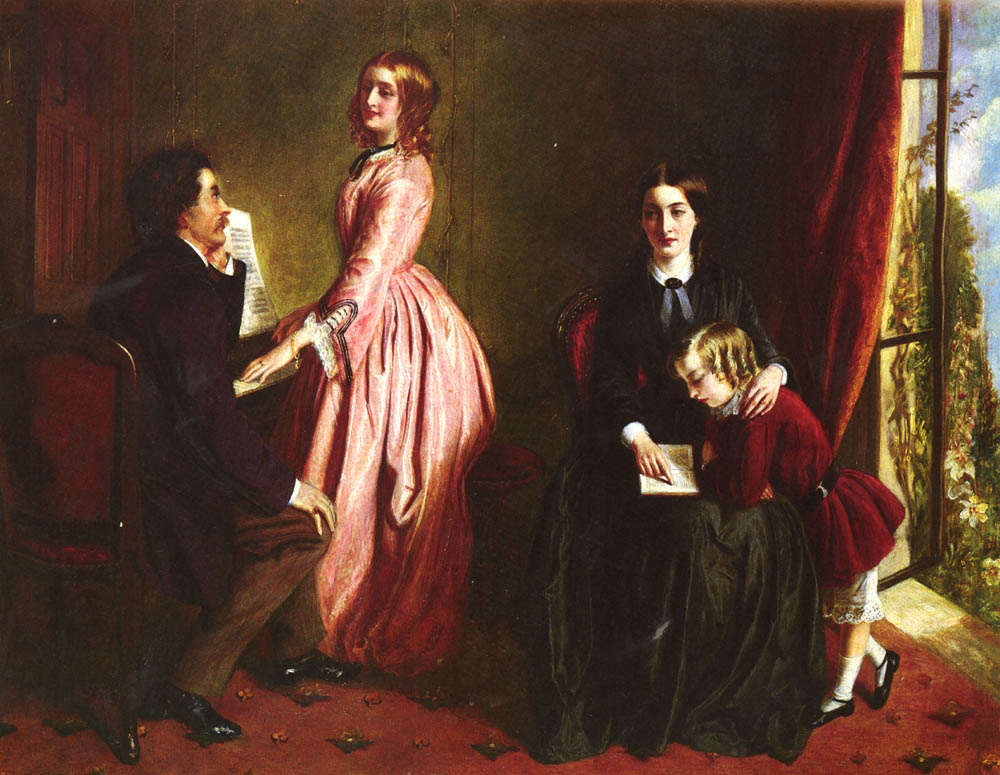
Her position was unique in a wealthy household. In Georgian-era society, a governess' standing was considered "good enough" to educate a nobleman's children, but she was not of high-enough standing to be treated as a friend or member of the family. 
"The Governess" by Rebecca Solomon, 1851. Public Domain PD-1923. The governess, seated on the right, is present but almost invisible to the parents. 

Neither did she fit in with the servants of the house, who likely came from humbler origins than she did. Therefore, governesses often dined alone, used the schoolroom as her sitting room, and had little in the way of adult company in the household.

Jane Austen described Jane Fairfax's decision to become a governess in Emma this way:


“With the fortitude of a devoted novitiate, she had resolved at one-and-twenty to complete the sacrifice and retire from all the pleasures of life, of rational intercourse, equal society, peace, and hope, to penance and mortification forever.” 

Clearly, the lot of a governess was not viewed as a pleasant one. It could be a lonely life--but it kept her stomach full and a roof over her head.
File:The Governess by Richard Redgrave.jpg
"The Governess" by Richard Redgrave, 1844. Public Domain PD-1923
Pay was not usually enough that a governess could save for retirement. In 1841, Charlotte Bronte earned twenty pounds a year. While some supposedly earned two hundred pounds a year, many governesses worked for room and board alone. 

Some families grew attached to their governesses and maintained caring relationships (like Emma did with her governess, Miss Taylor, in Austen's Emma). Some mothers, however, resented the closeness their children developed with their governess, and a resentful or jealous parent could dismiss a governess on the spot. Others, like one of the families Charlotte Bronte served, treated governesses as slaves, forcing them to do sundry tasks in addition to teaching.
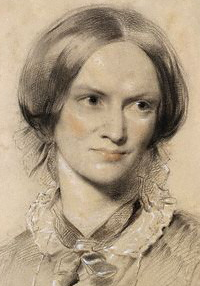
CBRichmond.png
Charlotte Bronte by George Richmond, chalk on paper, 1850. Public Domain. Bronte was a governess for a time, as was her fictional creation, Jane Eyre, perhaps one of the most famous literary governesses in history.
And what did the governess teach? Young charges would learn to read, write, and do math. As the children grew, they would probably learn French, history, and globes (geography). Boys of the household might go away to boarding school at age eight, but the governess would continue to teach their sisters music, art, needlework, and deportment, preparing her to attract suitors when they came of age.

Suitors were not easy for the governess to come by, however, but most governess positions were short-lived, allowing them to return home and re-establish themselves with their families or marry. 

Those who never married or received enough pay to save for retirement found themselves destitute when they reached middle age. In 1841, The Governesses' Benevolent Institution was set up to help such ladies receive pensions.

Despite the bleak life many a governess endured, others were well-loved by the families who employed them, allowing them to live comfortably in their later years.

***

BIO:

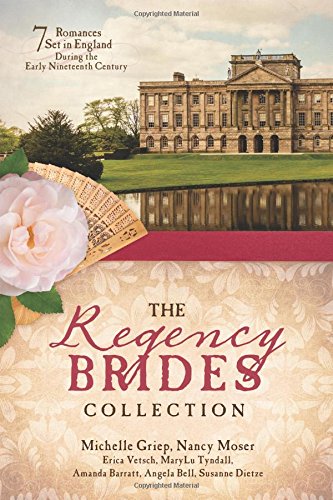
Susanne Dietze began writing love stories in high school, casting her friends in the starring roles. Today, she's the award-winning author of over a dozen historical romances who's seen her work on the ECPA and Publisher's Weekly Bestseller Lists for Inspirational Fiction. Her newest novella, Three Little Matchmakers in the Regency Brides Collection, tells the story of a governess and her three mischievous charges.

To learn more, visit Susanne's website, www.susannedietze.com


Wednesday, August 14, 2013

SERVANTS IN A SCOTTISH CASTLE

Anne Greene here. On July 14th I blogged about nobles living inside a Scottish Castle. If you missed my blog and are interested, go to the archives.


The nobles living in the castle had a luxurious and responsible lifestyle. Life for the servants was drastically different. As nobility had a hierarchy level, so did the servants.

The Steward held complete charge of the entire household. He gave orders to the cooks, the musicians and storytellers, as well as to the servants of the lord and the ladies in waiting. Under the Steward, these upper level servants were then in charge of other servants, like bakers, gardeners, tailors, washerwomen, carpenters and undercooks. If the lord were away, then the Steward took charge of the castle. He also recorded the rent that people living on castle land paid. The Steward was often a member of the noble family. Can you imagine how much the Laird of the Castle trusted him?


The Marshal organized the groomsman who looked after the horses, the blacksmiths and the farriers who shoed the horses. The Marshal also ordered the carters who made and drove the carts, the boatmen and the stable boys. The Marshal organized sending messages to other people, maybe even to the King. If the lord wanted to go hunting, the Marshal organized the hunt.


The Constable, also known as the Keeper, controlled castle security, weapons and the gunners, the archers and the men-at-arms who defended the castle. He organized the porters who guarded every door and the bodyguards, who guarded important members of the family. Most castles had a prison and the Constable oversaw the jailers.


The Chaplain was a priest who conducted services in the castle chapel and advised the lord about religious matters. The Chaplain oversaw choirboys and other people involved in church services. Churchmen were among the few people who could read and write at this time, so the Chaplain wrote any letters that the lord needed. The church had great power in those days.r

k Helpers

The Steward, the Keeper, the Chaplain and the Marshal had their own rooms in the castle. All the other servants found space where they could, many sleeping on the floor of the hall or in the kitchen for warmth. There might be a separate dining area for the servants; otherwise they ate where they worked. 


Most of the servants in the castle were men. The lady of the castle had her personal servants, high-born women who were known as her ladies-in-waiting. Women also worked as washerwomen, alewives who brewed beer, and nurses who looked after any of the lord’s young children.


Children also worked in a castle. In the kitchen the cook always needed water carrying from the well. A small boy, known as the turnbrochie, sat by the fire to turn the metal spits of roasting meat. Children carried messages from one noble to another.


The Laird of the Castle spent much time travelling, meeting with other members of the nobility, attending parliament, and meeting with the king or queen. When he travelled, many of his servants went with him. Only a few remained in the castle with the lady to attend to any local business.


Read about the children in Castle Drummond in my book Marriage By Arrangement to be available December 6, 2013. Would you have liked to have grown up living in or near a Scottish castle? Would you have liked for your children to be subject to the whims of a noble? 


Leave your answer and your email for a chance to win an autographed copy of one of my Scottish Trilogy Books.


Visit Anne’s new blog Plotters And Pantsers Write To Publish Workshop at www.annegreenewritingteacher.wordpress.com.

ANNE GREENE delights in writing about wounded heroes and gutsy heroines. Her second novel, a Scottish historical, Masquerade Marriage, won the New England Reader Choice award, the Laurel Wreath Award, and the Heart of Excellence Award. The sequel Marriage By Arrangement releases in December, 2013.  A Texas Christmas Mystery also won several awards. She makes her home in McKinney, Texas. Tim LaHaye led her to the Lord when she was twenty-one and Chuck Swindoll is her Pastor. View Anne’s travel pictures and art work at http://www.AnneGreeneAuthor.com. Anne’s highest hope is that her stories transport the reader to an awesome new world and touch hearts to seek a deeper spiritual relationship with the Lord Jesus. Buy Anne’s books at http://www.PelicanBookGroup.com. Or at http://www.Amazon.com.

Visit here with Anne the 14th day of every month.