Showing posts with label English Regency. Show all posts

Saturday, August 22, 2026

The Famous White Soup from Pride and Prejudice

By Camille Elliot/Camy Tang

Why did Mr. Bingley insist on white soup? Explore its Regency history, literary significance, and my recreation of the famous dish.

There was a line in Pride and Prejudice that always baffled me. Mr. Bingley is talking about the ball he plans to host at Netherfield:

“If you mean Darcy," cried her brother, "he may go to bed, if he chooses, before it begins—but as for the ball, it is quite a settled thing; and as soon as Nicholls has made white soup enough, I shall send round my cards.”

Nicholls is the housekeeper/cook at Netherfield. Bingley is saying the invitations will go out once she has prepared a large enough quantity of this particular soup.

What White Soup Actually Was

White soup was exactly what its name suggests—a rich, creamy, pale-colored soup that was considered an elegant dish for special occasions. Most recipes included:

  • A rich meat stock made from veal, chicken, or both (sometimes with bacon for extra flavor)
  • Blanched almonds, pounded into a paste
  • Cream, with egg yolks sometimes added for extra richness
  • Rice or breadcrumbs to thicken the soup
  • Seasonings such as herbs, mace, or even anchovies, depending on the recipe

Historians generally believe white soup evolved from the French court dish Potage à la Reine (“Queen’s Soup”), which itself descended from medieval aristocratic cookery. Recipes for white soup appear in several cookbooks from Jane Austen’s time, including Martha Lloyd’s household book (Martha later lived with the Austens and eventually married Jane’s brother Francis) as well as the Knight family cookbook.

It was not quick to throw together. The stock was typically simmered for hours, then left overnight so the fat could be skimmed off. After that it was enriched with finely pounded almonds, strained, and then finished carefully with cream so it stayed silky rather than curdling. Preparing enough for an entire ballroom full of guests would have required advance planning and a busy kitchen staff.

Why White Soup Mattered

At many Regency private balls, supper was served late in the evening, often around midnight after several hours of dancing. White soup was one of the fashionable dishes commonly served at these suppers, alongside negus—a warm wine punch that was equally popular.

Food historian Joyce White wrote that serving white soup “confers a certain amount of status.” It’s easy to see why. The soup required generous amounts of meat, cream, and almonds, along with many hours of preparation. It wasn’t the sort of meal most families would make on an ordinary weekday.

So Bingley is doing more than mentioning the menu. He’s showing that he intends to host the sort of elegant entertainment everyone would expect at Netherfield. It’s one of those ordinary details Jane Austen slips into her novels that tells us something about her characters and everyday Regency life.

I then found these two fascinating articles on white soup from the Jane Austen Centre and the Austenonly blog. I decided to try making it!

The Original Recipe

I followed the original Regency recipe from the book by John Farley, published in 1811, The London Art of Cookery and Domestic Housekeepers' Complete Assistant : uniting the principles of elegance, taste, and economy : and adapted to the use of servants, and families of every description. You can download the scan of the original book from the link.

Here’s the original recipe:

White Soup.

PUT a knuckle of veal into six quarts of water, with a large fowl, a pound of lean bacon, half a pound of rice, two anchovies, a few pepper-corns, a bundle of sweet herbs, two or three onions, and three or four heads of celery cut in slices. Stew all together, till the soup is as strong as you would have it, and then strain it through a hair sieve into a clean earthen pot: let it stand all night, skim off the fat, and pour it into a stewpan. Put in half a pound of Jordan almonds beat fine, simmer a little, and run it through a tamis: add a pint of cream and the yolk of an egg, and send it up hot.

Also, it mentions a few pages earlier:

“In the preparation of white soup, remember never to put in your cream till you take your soup off the fire, and the last thing you do, must be the dishing of your soups. ”

Camy’s Regency White Soup Adventure

I didn’t have a pot large enough to hold an entire chicken and 6 quarts of water, so I halved the recipe:

  • 1 package of beef shank, 1 pound (When looking up what a “knuckle of veal” was, I found this online: “Look for veal shank. The main thing for your stock is to get bones with a good deal of marrow. Knuckles, by the way, typically need to be cracked, whereas the shanks are often sold in 2"to 3" pieces, so the marrow is already exposed.”)
  • 2.5 pounds chicken thighs, in lieu of half a chicken
  • 1/2 pound bacon, chopped
  • 1/4 pound rice
  • 2 anchovy fillets (I assumed the recipe meant 2 entire anchovies, so I minced 2 fillets)
  • 5-6 peppercorns
  • A handful of minced fresh basil. I wanted to also add fresh thyme but didn’t have any, so I added a teaspoon of dried thyme.
  • 1 large onion, diced
  • 2 bunches (or less) of celery, chopped (When I was chopping, it seemed like a lot of celery, but then I started the soup and realized it’s a lot of soup, so 2 entire bunches of celery ended up not being all that much. Still, reduce to only 1 bunch if you’re not a fan of that much celery.)
  • 3 quarts of water
  • 1/4 pound raw almonds
  • 1 egg yolk
  • 1 cup cream

I put everything but the almonds, egg, and cream in my stock pot on high heat, raised it to a boil, then put the heat to medium and simmered it. My stock pot was extremely full—in fact, I kept back one of the celery bunches and let the soup simmer for about an hour to reduce the water volume, then added the rest of the celery. (In hindsight, I probably could have just left out that second bunch of celery.)

I wasn’t entirely sure how long is “as strong as you would have it,” so I looked it up in my Williams-Sonoma cookbook, which said that a typical meat stock takes about 3.5-4 hours of simmering, partially covered. So I simmered for 4 hours, partially covered.

The soup got thick pretty quick, probably from the rice, so that it was more like a stew than a soup. Also, like when you make rice on the stovetop, the bottom can burn. (Sigh. I should have expected that.) So I had to be sure to watch it and stir consistently.

I strained the solids only through a metal colander, and then I forgot to put the soup in the fridge to let the fats solidify on the top so I could skim it off. Sigh again.

I was a bit surprised at how little soup there was, but then I’d looked at how much solids I had, and it made more sense.

I put 1/4 pound of raw almonds in my blender with 1/3 cup water and pulsed until it was all ground up, then added that to the soup. In hindsight, I should have used blanched almonds so the soup would be more “white.” I then brought it to a boil and simmered it, covered, for 15 minutes.

I strained the almonds using a wire strainer, which was a rather tedious process. Belatedly, I put it in the fridge to solidify the fats so I could skim them off.

I whisked the egg yolk, then tempered it by adding hot soup a little at a time, whisking in between until the yolk was hot enough, then whisked all of it into the soup. Then I stirred in the cream.

At the End of the Adventure

It tasted fabulous! It’s extremely creamy and rich even though there’s only 1 cup of cream for the entire pot of soup, I think because of the rice and almonds that thickened it. The meat flavor and the almond flavor both come through. It’s extremely elegant as a cream soup—it deserves fine china and silver cutlery.

I had saved the meat, veggies, and rice because I couldn’t bear to throw them away. I stripped the meat off the bones and shredded it. Then I added it all back to the soup to make it more stew-y and significantly less elegant. Mr. Darcy would be appalled, but Captain Caffeine was pleased by the result.

Bonus Epilogue

This would have been an expensive soup in Jane Austen’s day, because of the amount of meat in it. And there isn’t even meat in the soup itself! It was a bit pricey even for today. It was also rather tedious to make.

If you try this recipe, consider making homemade pressure-cooker stock to save several hours. Additionally, you can try using whole milk instead of cream so it’ll be a bit less rich. You might also consider using almond milk instead of the ground almonds—I’m pretty sure it would taste the same with much less work.

Despite the work involved, I can see why Mr. Bingley insisted on serving white soup at Netherfield. Rich, elegant, and surprisingly delicate, it feels exactly like the sort of dish that belongs at a grand Regency ball.

Would you have tried it?

(This article first appeared on my personal blog and has been updated for Heroes, Heroines & History.)

About the Author

Camy Tang writes Christian historical and contemporary romance filled with intrigue, adventure, and faith. Under the pen name Camille Elliot, she writes the Christian Regency romantic suspense series Lady Wynwood’s Spies, set in 1811 London where secrets, espionage, and slow-burn romance unfold against the glittering backdrop of high society.

If you enjoy Regency romance with adventure and a dash of humor, you can receive her novella Lissa and the Spy free when you join her newsletter.

Lissa and the Spy

A Regency Romantic Suspense Novella

In her quest for a marriage of convenience, plain and unpopular Lissa finds herself entangled with the enigmatic Lord Jeremy Stoude, who has a secret mission for the Crown. As danger stalks them, they must navigate a labyrinth of society’s expectations and their own insecurities to find love.

Click here to get Lissa and the Spy

Wednesday, July 22, 2026

Stepping Away from the Ballroom: The Ladies’ Retiring Room in Regency Times

If you’ve ever read a Regency romance or historical novel set in the early 1800s, you’ve probably come across a scene where a heroine feels faint, overheated, or simply overwhelmed and needs to step out of the ballroom. In my Christian Regency romantic suspense, Lissa and the Spy, my heroine encounters a moment of distress and retreats to a retiring room to escape the gossip at the event.

But what was that private space actually like? The ladies’ retiring room was a very real—and very practical—part of every grand ball or assembly.

The Retiring Room

At a Regency ball, the main rooms were often packed with people, blazing with candlelight, and filled with the sounds of music, laughter, and conversation. Women in elaborate gowns, tight stays (the corsets of the day), and layers of petticoats could quickly become overheated or short of breath. The ladies’ retiring room was always available to offer a much-needed place to rest, refresh, and recover without drawing too much attention.

A retiring room is described in Domestic Duties; or, Instructions to young married ladies, on the management of their households and the regulation of their conduct in the various relations and duties of married life, by Mrs. William Parkes, published in 1825:

A retiring room should be in readiness for ladies who may wish to disburthen themselves of shawls and cloaks and here a female should be in attendance to receive them, and to perform any little office of neatness which a lady’s dress may accidentally require. Tea and coffee may also be presented in this room, if any be deemed necessary; but of late the custom of introducing these refreshments at balls has been nearly abolished.

These rooms were usually located near the ballroom and set aside specifically for female guests. They were staffed by attendants—often older women or servants trained for the role—who helped ladies with everything from re-pinning a loose curl to repairing a torn hem or flounce. Some rooms even had sofas or chaise longues where a woman could lie down for a few minutes. There were also chamber pots that were cleaned after each guest used them.

The attendants kept the room stocked with practical items like pins, needles, thread, spare gloves, and combs. More importantly, they were ready with remedies when a lady felt faint or distressed. They helped many a young woman compose herself and return to the dancing looking as fresh as when she arrived.

In Lady Palmerston and Her Times, a collection of letters by Lady Cowper who would later become Lady Palmerston, in 1820, the Countess Cowper wrote in a letter some gossip about the Queen:

Did I tell you that when she went to the House she staid the greater part of the time in her retiring room, laughing with Gell & others or playing at Backgammon & Chess? About the latter here is her bon mot. She said to somebody who came in, “I am sorry you are come just now for I was just going to give Check to the King."

So apparently, the retiring room was not merely for women to rest but could also be a side room with games and entertainments. However, I’m not sure how happy the other women in the room were with the Queen, if they’d retired to get some peace and quiet.

Two women “retiring” at a ball. From Ackerman’s Repository, 1810

Why Fainting Was So Common

Fainting wasn’t just a dramatic plot device in novels—it happened for very real reasons. The tight lacing of stays compressed the ribcage, making deep breaths difficult. Add the heat from hundreds of candles, the excitement of the evening, emotional moments, or simply standing for hours in heavy fabrics, and it’s easy to see why a lady might suddenly need a quiet corner.

In an era when propriety was everything, the retiring room gave women a graceful way to step aside without causing a scene. It was accepted and expected that a lady might need a short rest.

Smelling Salts and Lavender Water

Two items you’ll often find mentioned in historical accounts are smelling salts and lavender water.

Smelling salts (usually a form of ammonium carbonate) came in small bottles or elegant silver containers called vinaigrettes. When waved under the nose, the sharp scent helped revive someone who had fainted by stimulating breathing. Attendants kept them on hand for exactly these moments.

Lavender water, on the other hand, was used more for calming and refreshing. A few drops on a handkerchief or lightly sprinkled could help soothe nerves or cool a flushed face. Both were simple but effective tools in an age before modern medicine.

A Quiet Escape from the Crowds

The next time you read a Regency story and a heroine slips away from the ballroom, picture the retiring room as more than just a convenient plot stop. It was a small but important part of the evening’s rhythm—a place of quiet care, quick repairs, and sometimes a much-needed breath of calm amid the glittering whirl of the ball.

About the Author

Camy Tang writes Christian historical and contemporary romance filled with intrigue, adventure, and faith. Under the pen name Camille Elliot, she writes the Christian Regency romantic suspense series Lady Wynwood’s Spies, set in 1811 London where secrets, espionage, and slow-burn romance unfold against the glittering backdrop of high society.

If you enjoy Regency romance with adventure and a dash of humor, you can receive her novella Lissa and the Spy free when you join her newsletter.

Lissa and the Spy

A Regency Romantic Suspense Novella

In her quest for a marriage of convenience, plain and unpopular Lissa finds herself entangled with the enigmatic Lord Jeremy Stoude, who has a secret mission for the Crown. As danger stalks them, they must navigate a labyrinth of society’s expectations and their own insecurities to find love.

Click here to get Lissa and the Spy

Monday, June 22, 2026

When is a Young Lady "Out"? Debut Ages and Regency Expectations

By Camille Elliot/Camy Tang

AI-generated image of a young Regency woman in a flowing gown dancing closely with a gentleman in evening attire in a candlelit ballroom, evoking the nervous excitement of a debutante's first Season.
A Regency couple dancing at a ball—AI-generated image evoking the very moment a young woman’s debut came alive with possibility, anticipation, and careful observation.

Most of us have never been a debutante, but historical romance readers can imagine the flutter of a first Season—the nervous anticipation, the whispered judgments, the delicate balance of being noticed without being too noticed. For modern sensibilities, the Regency debut can feel both enchanting and impossibly rigid.

At its heart lies a simple but loaded question: at what age was a young woman considered ready to enter society?

In Jane Austen’s world, the answer was far more fluid than a single birthday. A girl was “out” when her family declared her available for courtship, and this could happen anywhere from fifteen to twenty or even later, depending on family circumstances, maturity, and social strategy.

Take Lydia Bennet in Pride and Prejudice. At just fifteen, she is already “out,” attending balls and flirting shamelessly. Austen uses her to show the dangers of launching a girl too early—Lydia’s impulsiveness and lack of guidance lead to near-ruin. By contrast, her older sister Jane, at twenty-two, is the model of graceful eligibility. The difference isn’t just age but readiness.

Fanny Price in Mansfield Park offers another view. At eighteen, Fanny has not yet been formally brought out into society—her quiet nature and position as a poor relation made an early debut feel inappropriate. But when her brother William visits and expresses a wish to see her dance, Sir Thomas thoughtfully arranges a ball at Mansfield. This event serves as Fanny’s gentle introduction into the neighborhood, showing that “coming out” was never merely about turning a certain age—it was a carefully timed social signal shaped by family judgment.

This same careful timing appears in Lissa and the Spy. The Gardinier family holds to a tradition of waiting until their daughters turn nineteen.

Mrs. Gardinier pulled Lissa with a grip like a vise on her elbow. “Come. Let us speak to Lady Wynwood. Perhaps she may find you an acceptable partner.”

“Isn’t she occupied with finding Phoebe an acceptable partner?” The Gardiniers’ family friend, Miss Phoebe Sauber, was debuting this year, sponsored by her aunt, Lady Wynwood.

Lissa’s younger sister had wanted her comeout at the same time, but the Gardiniers had a tradition of allowing their daughters to debut only once they turned nineteen. Lissa herself had turned twenty during last Season, which made her feel ancient next to the dewy seventeen- and eighteen-year-olds around her.

Lissa’s self-consciousness isn’t just about age—it reflects the pressure of perfection in a world that valued youth, poise, and strategic silence. Her mother’s constant corrections remind us that the debut wasn’t only about finding a husband—it was about proving the family’s refinement and protecting their reputation.

La Belle Assemblee February 1807 Evening Gown Regency dress fashion plate
Lissa might have worn an evening dress like this one from the fashion magazine, La Belle Assemblee, published in 1807.

For families like the Gardiniers, waiting until nineteen balanced protection with opportunity. Launching too early risked gossip and missteps (as with Lydia). Waiting too long risked being labeled a spinster (as Lissa fears at twenty). The “right” age was always a moving target shaped by family strategy, finances, and social standing.

Yet beneath the etiquette and anxiety lay something deeper. Whether at fifteen or twenty, every young woman stepping into society carried the same quiet hope that she would be seen, valued, and perhaps even loved for who she truly was.

In Lissa’s case, that longing leads her down unexpected paths—toward secrets, danger, and a love that sees beyond the performance. Because sometimes the most important debut isn’t the one society notices, but the one where a young woman finally finds her own voice.

About the Author

Camy Tang writes Christian historical and contemporary romance filled with intrigue, adventure, and faith. Under the pen name Camille Elliot, she writes the Christian Regency romantic suspense series Lady Wynwood’s Spies, set in 1811 London where secrets, espionage, and slow-burn romance unfold against the glittering backdrop of high society.

If you enjoy Regency romance with adventure and a dash of humor, you can receive her novella Lissa and the Spy free when you join her newsletter.

Lissa and the Spy

A Regency Romantic Suspense Novella

In her quest for a marriage of convenience, plain and unpopular Lissa finds herself entangled with the enigmatic Lord Jeremy Stoude, who has a secret mission for the Crown. As danger stalks them, they must navigate a labyrinth of society’s expectations and their own insecurities to find love.

Click here to get Lissa and the Spy

Friday, May 22, 2026

The Unwritten Rules of Regency Ballroom Conversation

By Camille Elliot/Camy Tang

Yes, it's AI-generated — but we did our homework. Costumes are period accurate for the Regency era, and her gown is based on the fashion plate below.

What Were You Actually Allowed to Talk About at a Regency Ball?

Picture this: you're in a candlelit ballroom, wearing stays that make breathing a creative exercise, and a young man you've never met is leading you onto the dance floor. You have approximately four minutes to make a good impression. And most of the interesting things in your head are completely off-limits.

Welcome to the Regency London Season.

The Approved List

The rules around ballroom conversation were unwritten but universally understood: keep it light, keep it impersonal, and for heaven's sake, keep it safe.

Approved topics included the weather, the quality of the supper, the latest fashions from Paris, and music. Think of them as the small talk of 1811, designed to fill silence without revealing anything that might embarrass you or your family.

Jane Austen, who attended plenty of these events herself, had a lot of fun skewering this convention. In Northanger Abbey, the charming Henry Tilney meets Catherine Morland at a ball and immediately parodies the expected script, archly predicting exactly what they're supposed to say to each other—remarks about the rooms, the number of couples, and whether Catherine has been in Bath long. He's teasing, but he's also entirely accurate. That was the script.

But in Pride and Prejudice, while dancing with Mr. Darcy, Elizabeth Bennet does something rather radical—she asks questions, pushes back, even teases. Darcy is so unused to it that he doesn't quite know what to do with her. Their conversation crackles precisely because she refuses to be ornamental.

The Forbidden List

The forbidden list of conversational topics was just as clear, if never officially posted anywhere. Politics, religion, money, and anything that hinted at scandal were absolutely out. Even the war with Napoleon—which was very much ongoing and affecting nearly every family in England—was considered too grim, too masculine, and too real for polite mixed company. A young woman who voiced a strong opinion on the House of Lords risked being quietly labeled as odd, or worse, unfeminine.

Austen illustrates this perfectly with the Steele sisters in Sense and Sensibility. Anne can't stop chattering about "beaux”, speculating about which men might be interested in her, and going on and on about a doctor she's (supposedly) caught the eye of. It is a topic considered embarrassingly forward for a young woman of any refinement.

The Steeles share personal information too freely—for them there is no such thing as TMI. In a world where what you didn't say mattered as much as what you did, the Steeles said far too much.

Fashion plate of a Regency ball gown from Ackerman’s Repository, February 1809.

What Lissa Does Instead

Lissa Gardinier, the heroine of my novella Lissa and the Spy, is navigating exactly this needle-threading. Her mother has essentially given her a restricted vocabulary for the Season, and Lissa is ready to poke her eye out with a fork. It’s not that she doesn't understand the rules, but she understands them too well and finds them stifling:

She was not so obedient to her mother that she would subject herself to the torture of conversation topics such as the weather and the food at the ball, which she’d already discussed at length with her other dancing partners. So she asked a more unusual question. “Mr. Collingworth, shall you miss activities at your country estate while you are in town?”

His slack-jawed face abruptly became animated. “Yes indeed, Miss Gardinier. I breed hunting dogs, you see, and I’ve had particular luck this year with several pups …”

It's a small act of rebellion—asking about his life instead of praising the folds of his cravat—and it works beautifully.

Until it doesn't:

Last year during that first dance with Mr. Collingworth, upon seeing him excitedly discuss his dog breeding, she had been encouraged to also speak without restraint.

So she had voiced her exact thoughts rather than hiding behind a vapid facade. “Why in the world would you name a dog Lickspittle Furrybottom?”

At Mr. Collingworth’s startled look, Lissa realized that she’d said that out loud now, in this dance with him.

“… Not that it’s not a lovely name,” she added lamely.

Mr. Collingworth didn’t believe her, and his conversation faltered. She regretted that, for she hadn’t intended to be rude to him.

“Er … did I speak of Lickspittle Furrybottom?” he asked.

Lissa did a mental shriek at her mistake. “We spoke briefly about her last year. You were worried about her compatibility with Snout Droolalot.” To alleviate his embarrassment at not remembering her, she said, "I was relieved to hear that Lickspittle Furrybottom and Snout Droolalot had such a healthy litter. What are your plans for their puppies?” Talking about puppies was acceptable dance conversation, wasn’t it?

It pleased Mr. Collingworth to continue discussing puppies for the remainder of the dance.

Lissa’s desire to just say something real is the same one Austen's best heroines wrestle with. Alas, the ballroom rewarded performance and punished honesty.

And yet the characters we remember, the ones who feel truly alive on the page, are the ones who couldn't quite manage to perform perfectly.

Some things, it seems, never change.

About the Author

Camy Tang writes Christian historical and contemporary romance filled with intrigue, adventure, and faith. Under the pen name Camille Elliot, she writes the Christian Regency romantic suspense series Lady Wynwood’s Spies, set in 1811 London where secrets, espionage, and slow-burn romance unfold against the glittering backdrop of high society.

If you enjoy Regency romance with adventure and a dash of humor, you can receive her novella Lissa and the Spy free when you join her newsletter.

Lissa and the Spy

A Regency Romantic Suspense Novella

In her quest for a marriage of convenience, plain and unpopular Lissa finds herself entangled with the enigmatic Lord Jeremy Stoude, who has a secret mission for the Crown. As danger stalks them, they must navigate a labyrinth of society’s expectations and their own insecurities to find love.

Click here to get Lissa and the Spy

Wednesday, April 22, 2026

The Rules of Introduction in Regency Society—and Why They Mattered

By Camille Elliot/Camy Tang

In Regency England, a lady could not simply speak to a gentleman—every conversation required a formal introduction. Here’s how it worked, and why it mattered.

Romantic Regency ballroom waltz scene with couple dancing in period costume, white empire waist gown and gentleman in green brocade waistcoat, candlelit historical setting
A Regency ball (illustrative image)

How Did Regency Ladies Meet Gentlemen?

Imagine you are at a ball in Regency-era London.

The chandeliers are blazing, the musicians are playing something lively, and your slippers are already pinching because you insisted on looking elegant instead of sensible.

Across the room, you notice a gentleman—respectable, pleasant, possibly even interesting. Naturally, you might think to walk over and introduce yourself.

… Except you can’t.

Not because you are shy (although you might be). Not because he is surrounded by others (although he might be). But because in Regency society, unless you have been properly introduced, you are not supposed to speak to him at all.

The Small Matter of Being Allowed to Speak

In Regency society, conversation between unmarried ladies and gentlemen was not freely entered into. It required an introduction by a mutual acquaintance, a hostess, or a Master of Ceremonies.

A gentleman was always presented to the lady (never the reverse), and she (or her chaperone) could decline. Accepting implied willingness to dance or converse. Without the introduction, a gentleman should not address a lady, and a lady most certainly should not encourage him.

It sounds terribly restrictive to us, but introductions served as a social safeguard. Reputation was everything, and introductions acted as a filter—ensuring that one was not speaking to someone entirely unsuitable.

(Or at least, not obviously unsuitable.)

Enter the Gatekeeper

A mutual acquaintance, hostess, or Master of Ceremonies often functioned as a social conductor—guiding interactions and deciding who could safely meet.

Regency era ballroom introduction between gentleman and young lady, chaperone present, candlelit setting with period costumes and formal etiquette
Introducing a gentleman to a young lady (illustrative image)

At public assemblies, the Master of Ceremonies often stepped in, as in Jane Austen’s Northanger Abbey, where he introduces Catherine Morland to Henry Tilney so they can dance.

In a private ballroom, the hostess filled that role. Which leads us to this moment from Lissa and the Spy:

Mr. Collingworth came up to her, accompanied by Lady Cliffton, the hostess of the ball. As always, Lady Cliffton’s jewelry—while in good taste—was as flamboyant as the matron. “Miss Gardinier, allow me to introduce Mr. Collingworth.”

Lissa curtseyed, keeping a polite smile on her face, while Mr. Collingworth bowed. In truth, they had been introduced last year, in her first Season, but from the vacant look upon Mr. Collingworth’s face, he had likely forgotten about it.

“Would you do me the honor of a dance, Miss Gardinier?” Mr. Collingworth asked, and Lissa assented.

Re-introductions were actually common and necessary. If a gentleman had forgotten, or the acquaintance wasn’t acknowledged, etiquette dictated they be treated as strangers again.

The Quiet Power of Chaperones

Unmarried ladies, especially those under thirty, were also expected to be accompanied by a chaperone—usually her mother, or a married sister, or an older female relative.

Chaperones did more than sit in chairs and observe—they controlled access. They ensured that conversations remained appropriate, discouraged unwanted attention, and maintained a lady’s sterling reputation ensuring she was never left alone with a gentleman.

What Happens If You Ignore the Rules?

A lady could technically speak without an introduction, but she might be thought “fast” or “forward,” and her marriage prospects would dry up.

Two Regency women in promenade dress leaning together in conversation, suggesting gossip and the importance of reputation in early 1800s society
Two gossiping ladies (Ackermann's Repository of Arts, October 1810)

For men, the consequences were not quite so dire, but even in Pride and Prejudice, Mr. Collins’s self-introduction to Mr. Darcy is instantly recognized as a social blunder.

It wasn’t just about being unpopular—a failed Season was hundreds of pounds down the drain for her parents or guardian (about $100,000 – $140,000). So most young women—particularly those without title, money, or social standing—were careful.

When You Are Not Easily Noticed

This system favored the well-connected, confident, and wealthy. Many debutantes from lesser-connected families languished on the sidelines, lacking someone to engineer introductions.

My heroine, Lissa, is thoughtful, observant, and not inclined to push herself forward. She very properly relies on others to notice and to introduce her.

And if they don’t? Then she remains at the edge of the room, unremembered even by a gentleman she has already met.

She can’t let her discouragement show. She must smile and curtsey as though nothing is amiss, accept the dance, and pretend she has not been forgotten.

Regency lady in an elegant ball gown standing poised yet solitary, reflecting how less-connected debutantes could be overlooked during the social season
A young lady at her debut ball (Ackermann's Repository of Arts, May 1809)

A Small Opening in a Very Ordered World

Yet, for all its restrictions, the system created moments of real possibility.

A single introduction could change everything. A hostess might bring a quiet young lady forward, or a gentleman might ask for a dance (and remember her the next time).

In a world where one could not simply walk up and speak, every sanctioned interaction carried weight. That scarcity, perhaps, is part of the charm. When something as simple as a conversation is not easily obtained, it becomes all the more significant.

And for a heroine like Lissa, even a slightly awkward re-introduction might spark something unexpected.

About the Author

Camy Tang writes Christian historical and contemporary romance filled with intrigue, adventure, and faith. Under the pen name Camille Elliot, she writes the Christian Regency romantic suspense series Lady Wynwood’s Spies, set in 1811 London where secrets, espionage, and slow-burn romance unfold against the glittering backdrop of high society.

If you enjoy Regency romance with adventure and a dash of humor, you can receive her novella Lissa and the Spy free when you join her newsletter.

Lissa and the Spy

A Regency Romantic Suspense Novella

In her quest for a marriage of convenience, plain and unpopular Lissa finds herself entangled with the enigmatic Lord Jeremy Stoude, who has a secret mission for the Crown. As danger stalks them, they must navigate a labyrinth of society’s expectations and their own insecurities to find love.

Click here to get Lissa and the Spy

Sunday, March 22, 2026

What Happened If a Regency Debutante Didn’t Marry in Her First Season?

By Camille Elliot/Camy Tang

A Regency couple at a London ball during the Season (illustrative image)

For many young women in Regency England, coming to London for the Season was supposed to be the most exciting time of their lives.

But it could also be one of the most stressful.

During the Regency period (1811-1820), fashionable society gathered in London while Parliament was in session, usually from late winter through early summer. This stretch of months became known as “the Season,” when aristocratic families filled the city and attended a whirl of social events—balls, dinners, concerts, the opera, and private parties.

For unmarried young women of the upper classes, the Season had a very specific purpose—they were expected to find a husband.

Grand ballrooms hosted many of the social events that defined the London Season (Poetical Sketches of Scarborough in 1813, by J. Green and T. Row Landson)

A Young Lady’s Debut

A girl was usually presented to society around the ages of seventeen to nineteen. Her formal debut often included being presented to Queen Charlotte in her formal drawing room at St. James’s Palace and then attending her first Season of social events under the careful supervision of her mother or another chaperone.

Fashion plates like this one helped young women follow the latest styles for balls and evening events during the Regency period (Ackermann’s Repository of Arts, January 1809)

Balls were particularly important. Gentlemen could request dances, which allowed brief conversations and opportunities for introductions. Over the course of the Season, a young woman might meet dozens of potential suitors.

A successful Season could result in an engagement before the family returned to the countryside for the summer. But not every Season went smoothly.

The Awkward Second Season

If a young woman returned to London for a second Season still unmarried, it could feel like a quiet failure.

Society rarely said such things outright, but expectations were clear. A young lady who had not attracted serious attention during her first Season might worry that something was wrong with her—perhaps she was too shy, too plain, too outspoken, or simply overlooked in a crowded ballroom.

Meanwhile, each year brought a new crop of younger debutantes entering society. A woman returning for her second Season was now competing with bright-eyed girls attending their very first balls.

Almack’s Assembly Rooms was one of the most exclusive venues of the London Season (Illustrated London News, 1843)

Even if she was only twenty, she might begin to feel positively ancient compared to the seventeen-year-olds making their debut.

Mothers could also feel the pressure. A successful match improved a family’s connections and security, while an unmarried daughter meant another expensive Season in London.

When Expectations Didn’t Match Reality

Of course, real life was often more complicated than society’s expectations.

Many women married during their second or even third Seasons. Others chose to remain single and devoted themselves to family responsibilities, charitable work, or managing estates.

And sometimes the quiet young lady who seemed to fade into the background at a crowded ball was observing far more than anyone realized.

Inspiration for My Story

This pressure surrounding a second Season inspired the opening of my Regency romantic suspense novella Lissa and the Spy.

When the story begins, Lissa Gardinier has already endured one disappointing Season in London. She returns for another year determined to behave perfectly and avoid attracting criticism.

Unfortunately, that proves easier said than done.

Between awkward conversations, matchmaking relatives, and suspicious activity among certain members of society, Lissa soon discovers that navigating a London ballroom may be far more complicated—and far more dangerous—than she expected.

About the Author

Camy Tang writes Christian historical and contemporary romance filled with intrigue, adventure, and faith. Under the pen name Camille Elliot, she writes the Christian Regency romantic suspense series Lady Wynwood’s Spies, set in 1811 London where secrets, espionage, and slow-burn romance unfold against the glittering backdrop of high society.

If you enjoy Regency romance with adventure and a dash of humor, you can receive her novella Lissa and the Spy free when you join her newsletter.

Lissa and the Spy

A Regency Romantic Suspense Novella

In Regency-era London, Miss Lissa Gardinier enters her second Season seeking a marriage in order to escape her mother's constant criticism. So she represses her cheeky remarks behind a quiet, innocent facade.

The enigmatic Lord Jeremy Stoude is dismayed when a chance encounter with Miss Gardinier entangles her in his world of secrets and subterfuge. He cannot afford to be distracted by Lissa’s charming smile and unflappable demeanor.

As danger stalks them and true feelings come to light, can Lissa and Jeremy navigate the labyrinth of society’s expectations and their own insecurities to find love?

Click here to get Lissa and the Spy

Tuesday, January 2, 2018

Death of King George III...and a Giveaway


Queen Elizabeth II is the longest reigning monarch in British history, followed by Queen Victoria. The third longest reign was that of King George III, who reigned from sixty years, from 1760-1820, through the Seven Years War against France, the American War of Independence, the Napoleonic Wars against France, and through poor health and mental illness.
Full-length portrait in oils of a clean-shaven young George in eighteenth century dress: gold jacket and breeches, ermine cloak, powdered wig, white stockings, and buckled shoes.
King George III, 1765, by Allan Ramsay. Public Domain
In 1810, King George grew too ill to rule. Years before, he struggled with mental illness (some scholars believe he suffered from poryphoria), but now he was almost blind from cataracts and suffered from rheumatism. He also grieved the death of his youngest daughter, Princess Amelia. His oldest son, also named George, became the Regent in 1811, a role he held for the rest of King George's life, serving in his father's stead.

By the end of the year, King George was considered insane. He could not comprehend political events or the death of his wife in 1818. In early January of 1820, he could no longer walk and died at Windsor Castle on the 29th, six days after the death of his son, the Duke of Kent (father of the future Queen Victoria). 


Monochrome profile of elderly George with a long white beard
Engraving of King George III by Henry Meyer, 1816. Public Domain

The nation plunged into mourning, wearing black as a sign of respect while plans were made.

The King's Lying in State took place on February 15 at the Royal apartments at Windsor Castle, and the funeral followed the next evening at St. George's Chapel. Mourners accompanied the casket to the chapel for the service, walking in line according to precedence. (The Prince Regent did not attend, as he was gravely ill.) The casket was covered by a pall of purple velvet, carried under a purple velvet canopy by ten Yeomen of the Guard. Grenadiers of the Foot Guards walked alongside, and every fourth man held a torch.
Image result for the death of george iii
Funeral Procession of George III, 1820
A death bell was rung, and muffled drums sounded as they walked. At the chapel, the Dean of Windsor and other clergymen, as well as a choir, joined the group. The casket was placed on a platform. The choir sang "I Know that My Redeemer Liveth," and then the rest of the service was officiated by the Dean of Windsor and the Archbishop of Canterbury.

After the service, pallbearers lowered the casket into the Royal Vault under the chapel, where King George III lies today.

The Regent became King George IV, but when he died in 1830 without any surviving children, his brother William IV ruled. He, too, lacked surviving legitimate children, and the throne passed to the only legitimate child of their late brother, the Duke of Kent, a daughter named Alexandrina Victoria...known today as Queen Victoria.

***
A Mother For His Family (Love Inspired Historical) by [Dietze, Susanne]

The death of King George III is one of the historical events mentioned in my new Regency, A Mother for His Family (Love Inspired Historical). I'm giving away a copy to one person who leaves a comment (and a way to contact you!) to this post by 11:59 pm January 6, 2018, EST.

Paperback available to US only, please.


Thursday, November 2, 2017

The Regency Governess


A woman in Regency England (approximately 1810-1820) who found herself in the position of governess was typically not to be envied.


File:Jean-Baptiste Simeon Chardin The Governess.jpg
"The Governess" by Jean-Baptiste Simeon Chardin,
 1739. Public Domain PD-1923
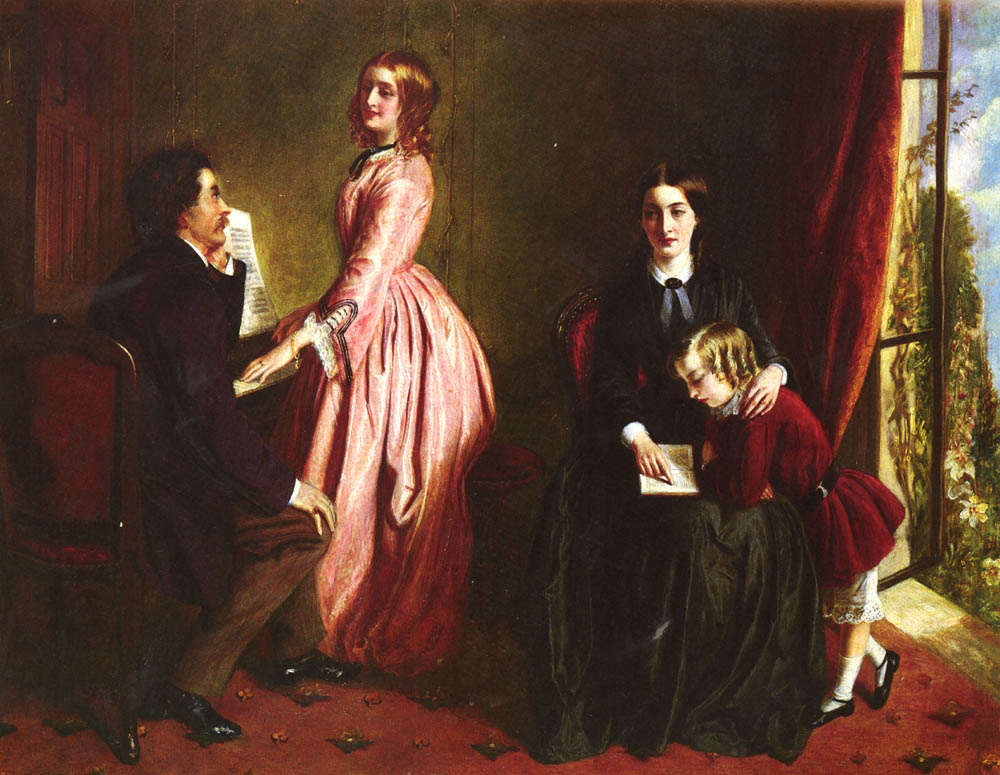
She was a woman between worlds, in a way: a lady of virtue, character, learning and "good" breeding, who was also a servant. She was a woman who must make her own way in the world.

In the early nineteenth century in Great Britain, bank failures, famines and economic struggles caused many a middle-class, or gently bred, family to lose their fortunes. Young men could take any number of respectable jobs considered suitable to their class, but their sisters faced a quandary. Jobs were fewer for females in general, and many of them, like working in a shop, were considered beneath a gently bred, "groomed" female. 

Teaching was the only realistic possibility these young women faced. Some took jobs in girls' schools, while others became governesses, living in the homes of their students. 

Her position was unique in a wealthy household. In Georgian-era society, a governess' standing was considered "good enough" to educate a nobleman's children, but she was not of high-enough standing to be treated as a friend or member of the family. 
"The Governess" by Rebecca Solomon, 1851. Public Domain PD-1923. The governess, seated on the right, is present but almost invisible to the parents. 

Neither did she fit in with the servants of the house, who likely came from humbler origins than she did. Therefore, governesses often dined alone, used the schoolroom as her sitting room, and had little in the way of adult company in the household.

Jane Austen described Jane Fairfax's decision to become a governess in Emma this way:


“With the fortitude of a devoted novitiate, she had resolved at one-and-twenty to complete the sacrifice and retire from all the pleasures of life, of rational intercourse, equal society, peace, and hope, to penance and mortification forever.” 

Clearly, the lot of a governess was not viewed as a pleasant one. It could be a lonely life--but it kept her stomach full and a roof over her head.
File:The Governess by Richard Redgrave.jpg
"The Governess" by Richard Redgrave, 1844. Public Domain PD-1923
Pay was not usually enough that a governess could save for retirement. In 1841, Charlotte Bronte earned twenty pounds a year. While some supposedly earned two hundred pounds a year, many governesses worked for room and board alone. 

Some families grew attached to their governesses and maintained caring relationships (like Emma did with her governess, Miss Taylor, in Austen's Emma). Some mothers, however, resented the closeness their children developed with their governess, and a resentful or jealous parent could dismiss a governess on the spot. Others, like one of the families Charlotte Bronte served, treated governesses as slaves, forcing them to do sundry tasks in addition to teaching.
CBRichmond.png
Charlotte Bronte by George Richmond, chalk on paper, 1850. Public Domain. Bronte was a governess for a time, as was her fictional creation, Jane Eyre, perhaps one of the most famous literary governesses in history.
And what did the governess teach? Young charges would learn to read, write, and do math. As the children grew, they would probably learn French, history, and globes (geography). Boys of the household might go away to boarding school at age eight, but the governess would continue to teach their sisters music, art, needlework, and deportment, preparing her to attract suitors when they came of age.

Suitors were not easy for the governess to come by, however, but most governess positions were short-lived, allowing them to return home and re-establish themselves with their families or marry. 

Those who never married or received enough pay to save for retirement found themselves destitute when they reached middle age. In 1841, The Governesses' Benevolent Institution was set up to help such ladies receive pensions.

Despite the bleak life many a governess endured, others were well-loved by the families who employed them, allowing them to live comfortably in their later years.

***

BIO:

Susanne Dietze began writing love stories in high school, casting her friends in the starring roles. Today, she's the award-winning author of over a dozen historical romances who's seen her work on the ECPA and Publisher's Weekly Bestseller Lists for Inspirational Fiction. Her newest novella, Three Little Matchmakers in the Regency Brides Collection, tells the story of a governess and her three mischievous charges.

To learn more, visit Susanne's website, www.susannedietze.com


Thursday, February 2, 2017

Regency Smuggler Lovey Warne: The Lady in Red ~ And a Giveaway


Regency-era smuggling conjures images of darkness, moonless nights hiding the illicit acts of Free-Traders loading and unloading casks of brandy washed up on English shores by the tide, or hauling contraband like laces, silks, and tea through secret, underground tunnels.

While smuggling was best achieved at night, perhaps, it wasn't always carried on as a nocturnal activity. At least, not for the Warne family of Burley, Hampshire, England.*

Around the turn of the nineteenth century, Peter Warne and his unnamed wife had three children, Peter, John, and Lovey (Loveday). All three were baptized Christmas Day, 1796, at Ringwood Parish Church, when Lovey was probably six or seven years old, because in the 1851 census, her age was listed as 62. 

The Warnes were innkeepers, but also made ends meet by smuggling. Many folks at the time did, and people of all classes engaged in the buying or selling of smuggled goods. Since the 1671 Customs Act placed duties on goods from alcohol to lace, fruit to tea, British subjects found many items too expensive to enjoy unless they were obtained illegally. Not only were the prices less on smuggled goods, but smuggling paid well: a man could earn 10 shillings for helping land smuggled goods onto the shore--a few hours' work that paid more than a farm hand's average weekly wage of 8 shillings. 

The story goes that in the Regency-era years, Warne sons Peter and John would haul wagons of contraband along the chalk Smuggler's Road in broad daylight. Their sister Lovey helped them in a unique way. If a Revenue Agent happened to be making rounds on the days when they went about their illegal business (in 1803, the fellow's name was Abraham Pike), Lovey would don a red cloak and climb Vereley Hill to stand as a human signal, warning them to take another path.
View towards Vereley Hill from Smugglers' Road, Vales Moor, New Forest
© Copyright Jim Champion and licensed for reuse under this Creative Commons Licence.

Lovey didn't just participate by standing on a hill. She also smuggled goods directly off ships in Christchurch Harbor by wrapping silks around her body, under her cloak.

According to one story, she was almost caught once, when an unsuspecting revenue agent liked the looks of her and tried to embrace her. She let him know in no uncertain terms she was not interested and made her getaway.

The legend of Lovey has lived these past two centuries, and now there's even an ale named after her. But what happened to the real Lovey Warne?

Lovey never married, but lived with Peter, a maltster, until his death in 1870. She died in 1873, leaving six pounds in her will.

She was buried in the Church of St. John the Baptist in Burley, one of the first parishioners to be buried there. Apparently, she wished for her beloved pony to be buried with her, but officials did not grant her request and her pony was buried near a ring of fir trees outside the church yard.


The story of Lovey Warne is related in books by O'Donald Mays, Burley historian Felicite Hardcastle in her 1950 publication, Records of Burley, and "Heritage in Dorset and the New Forest" by Roger Gutteridge.

***
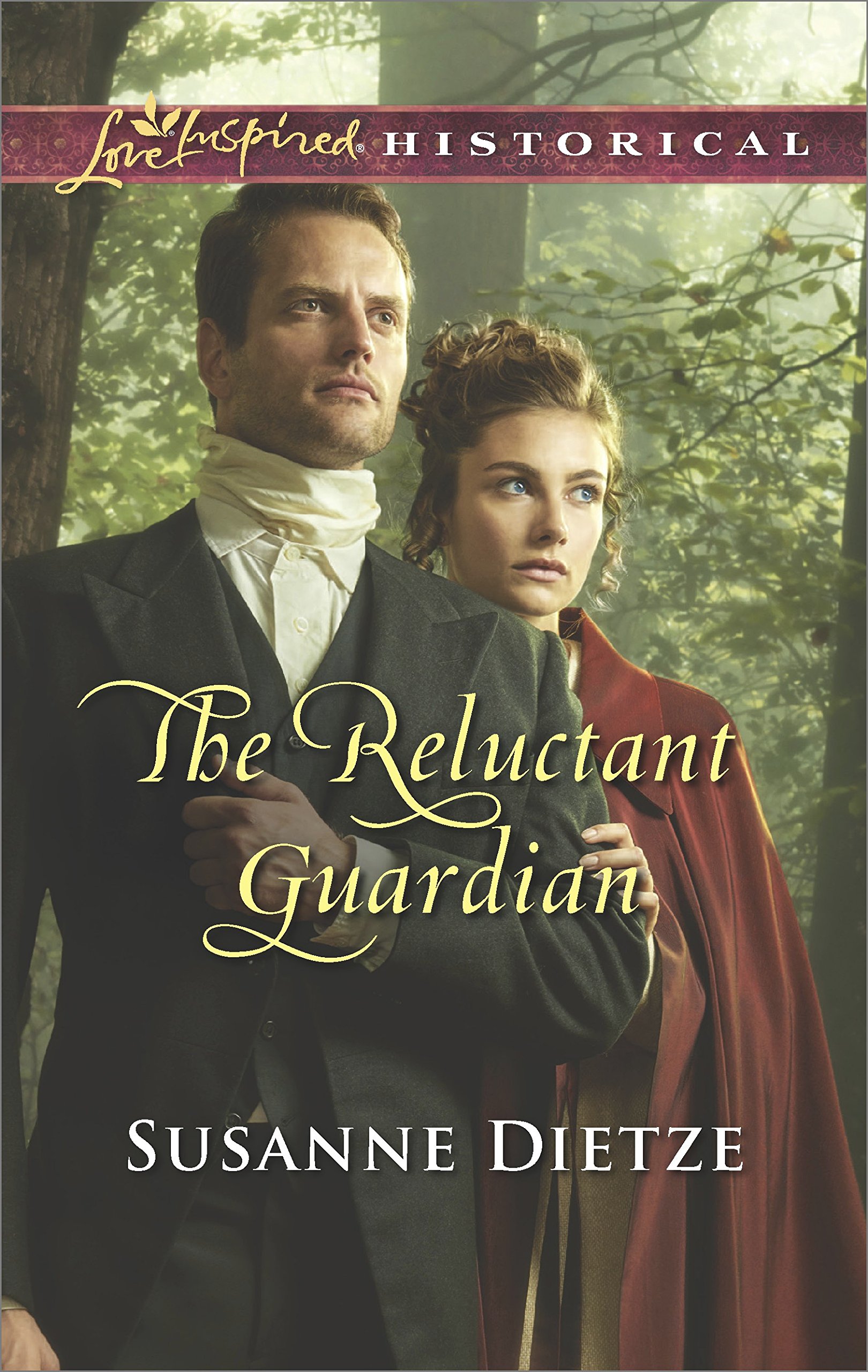
Lovey Warne's red cloak inspired a very unfortunate fashion choice for the heroine of my new release, The Reluctant Guardian (LIH). I'll be giving away a copy to one person who comments and leaves a way to contact him/her in the comment before 11:59 pm PST February 7, 2017. Visit my website for an additional giveaway!

Under the Spy's Protection 

When Gemma Lyfeld inadvertently interrupts a dangerous smuggling operation in her English village, she's rescued by a mysterious Scottish spy. Now with criminals after her and her hopes for an expected marriage proposal recently dashed, she will make her society debut in London. But not without the man tasked with protecting her… 

Covert government agent Tavin Knox must keep Gemma safe from the criminals who think she can identify them—a mission he never wanted. But as he escorts her and her rascally nephews around London, the lovely English lass proves braver than he ever imagined. Suddenly, the spy who works alone has one Season to become the family man he never dreamed he'd be.


Susanne Dietze began writing love stories in high school, casting her friends in the starring roles. Today, she's the award-winning author of a dozen new and upcoming historical romances. A pastor's wife and mom of two, she loves fancy-schmancy tea parties, the beach, and curling up on the couch with a costume drama and a plate of nachos. You can visit her on her website, www.susannedietze.com, and sign up for her newsletter for an occasional cheery hello: http://eepurl.com/bieza5

Friday, December 2, 2016

Add Regency Fun to Your Holiday: Regency Games


In Georgian and Regency England, the Christmas holidays were spent a little differently than we spend them now (the Twelve Days of Christmas actually started Christmas Day and ended January 5, the day before Epiphany), but one thing hasn't changed: friends and family gathered together to celebrate. There were parties, balls, and masques to enjoy, but there were also plenty of games to be played at home, too.

Here are a few of the games they enjoyed. Some might be familiar to us, while others sound downright dangerous!

Bullet Pudding: This is not a pudding (dessert) at all, but a very messy game in which a large bowl is filled with flour,. The flour is mounded so it looks like a pudding. A bullet is laid on the top of the mound. Players take turns "slicing" the "pudding" with a knife. The person who is in the act of cutting a slice when the bullet falls into the flour must then dip his or her face into the flour and poke about for the bullet--no hands. The bullet is then retrieved with his or her teeth.

Snapdragon: “Christmas gambol: raisins and almonds being put into a bowl of brandy, and the candles extinguished, the spirit is set on fire, and the company scramble for the raisins.” (Francis Grose Dictionary of the Vulgar Tongue, 1811). Participants eat the raisins and almonds, and apparently try not to get burned in the process. Snapdragon was popular since the sixteenth-century.

Hot Cockles: One person lays his or her head in another person's lap, hiding one's eyes, and must guess who is striking him from behind. 

Apple Bobbing: Just like we do today in the autumn.

Oranges and Lemons: Similar to "London Bridge," participants file in pairs between two players who hold hands in the air, creating an "arch." Participants sing a song, and in the last part, these lines are sung:

Here comes a candle to light you to bed.
Here comes a chopper to chop off your head.
(Chip chop, chip chop, the last man's dead.)
Oranges and Lemons by Agnes Rose Bouvier (1842–92). Public Domain
The "arch" is lowered, capturing a pair, and now the pair must join the players who made the original arch, lengthening the arch and increasing the risk for other players to be captured.

Puss in the Corner: Something like tag with five participants, one person ("puss") stands in the center of the room. The other participants stand, one in each corner. They must swap places without being caught by "puss". When one is caught, they become "puss."

Hunt the Slipper: A slipper is hidden in a room and everyone searches for it. The winner got to hide it for the next round.

Spillikins: Similar to Jack Straws or Pick Up Sticks, sticks of wood or ivory are spilled onto a table and must be removed, one by one, without disturbing the others.

Bridge of Sighs or Beast of Burden: A risque-looking game where a gentleman gets down on all fours and a lady sits on his back (he is either a bridge or a beast, depending on the game). Other gentlemen present may kiss the lady!

Rhyming Games: Participants are given three rhyming words and must create a poem with them. 

Charades: Participants pantomimed words, activities, or perhaps book titles, much like we do today.

Parlor Theatricals: Using scripts (written by the participants or purchased), participants acted out plays. Home theatricals could be serious business and participants wore costumes and rehearsed the productions.

***

Your Turn:

What games does your family play at Christmastime?

***


BIO: Susanne Dietze began writing love stories in high school, casting her friends in the starring roles. Today, she's the award-winning author of almost a dozen historical romances who's seen her work on the ECPA and Publisher's Weekly Bestseller Lists for Inspirational Fiction. Married to a pastor and the mom of two, Susanne lives in California and enjoys fancy-schmancy tea parties, genealogy, and curling up on the couch with a costume drama and a plate of nachos. 

Her latest release is The Rails to Love Collection.