Showing posts with label Biblical Research. Show all posts

Tuesday, December 2, 2025

Caesarea Maritima — Of Harbors and Hippodromes

 Guest post by Linda Dindzans


As a reader, I have never met a period of history that didn’t fascinate me. As an author, the stories that find me seem always to rise from the perilous, vibrant world of the Bible.

In 2019, my husband and I traveled to Israel, where we visited Caesarea Maritima along the Mediterranean shore. This ancient city—famed for its deep-water harbor and sweeping hippodrome—remains the largest Roman ruin in Israel today.

Herod’s Grand Vision: A Harbor in the Sea

Herod the Great took a modest Phoenician anchorage known as Strato’s Tower and transformed it into one of the marvels of the ancient world. Using volcanic ash called pozzolana, which hardens underwater into Roman cement, his engineers constructed a massive artificial harbor between 22 and 10 BCE. He named this harbor Sebastos—the Greek equivalent of “Augustus”—and it quickly became a major Roman port.

At the time, Sebastos was the largest man-made harbor ever built in open sea. Surrounding it, Herod constructed a magnificent city complete with a palace, theater, aqueducts, and a gleaming temple to Augustus.

The Hippodrome: Sport, Spectacle, and Survival


Caesarea’s hippodrome—stretching along the shoreline—held a prominent place in the city’s history. Here, crowds gathered for chariot races, athletic games, gladiatorial contests, and public executions.

As in Rome’s Circus Maximus, chariot racing in Caesarea was a war on wheels. Highly trained slave-drivers—aurigas—raced two-horse chariots (bigae) or four-horse chariots (quadrigae). They were assisted by an outrider on horseback and a man on foot who helped the charioteer manage treacherous tight turns and maneuver so rival teams would falter or crash. The dangers were many, often fatal. The rewards, if a driver survived long enough, included wealth, adoration, and—rarely—freedom.

As a biblical fiction author, I could not resist this setting of the hippodrome at Caesarea. Book Two of A Certain Future Series, A Certain Mercy, Scrivenings Press features several scenes in Caesarea including a life and death chariot race.


Rome Takes Control

By A.D. 6, Rome had annexed the region, placing it under the rule of governors or prefects. During the ministry of Jesus, the prefect was Pontius Pilate (26–36 CE), who resided in Caesarea—the Roman administrative and military headquarters. This relatively new capital bustled with Greeks, Jews, Romans, and travelers from across the Mediterranean.

In contrast, Jerusalem was ancient, holy, and volatile. Pilate traveled there only when politically necessary—during feast days or times of unrest.

The Pilate Stone: A Name Set in Stone


Before 1961, there was no physical evidence outside ancient texts that Pontius Pilate ever existed. That changed when archaeologists unearthed the now-famous “Pilate Stone.” Carved into this reused building block was a fragment of a dedication to Emperor Tiberius by Pontius Pilate, Prefect of Judea.


Found embedded in a staircase near the Herodian theater, the inscription remains the only contemporary physical artifact bearing Pilate’s name. Until its discovery, he was known solely from literary sources: the New Testament, apocryphal writings, Josephus, Philo, and Tacitus.

Caesarea in the Book of Acts

Linda's book features this beautiful setting.
Click on the cover to check it out.

The city appears repeatedly in the early Christian writings:

Cornelius and the Gospel to the Gentiles (Acts 10): Here Peter preached to the Roman centurion Cornelius and witnessed the Holy Spirit fall on Gentiles for the first time.

The Death of Agrippa I (Acts 12:19–23): Herod the Great’s grandson died in Caesarea after accepting worship during games held—likely—in the hippodrome.

Paul’s Travels: Paul sailed to and from Caesarea many times (Acts 9, 18, 27).

Paul’s Imprisonment: Paul spent two years under house arrest in Caesarea, facing Felix, Festus, and Agrippa II before appealing to Caesar (Acts 23–27). Luke, traveling with Paul, would have had freedom to gather eyewitness accounts that shaped his Gospel and the early chapters of Acts.

The First Jewish Revolt: The revolt ignited in Caesarea in 66 A.D. After Jerusalem fell in 70 A.D., Titus forced 2,500 Jewish prisoners to fight to the death in Caesarea’s stadium as part of his victory celebrations. The spoils of this war likely funded construction of the Colosseum in Rome.

A Launching Point for the Gospel

Caesarea’s strategic position as a major port city—and the place where Peter first preached to Gentiles—made it one of the most effective launching points for spreading the gospel to the wider Roman world.

About Linda


Linda Dindzans, M.D. is a writer with the heart of a healer who offers readers stories of redemption and restoration. Though her compelling characters inhabit the treacherous times of the Bible, Linda believes the struggles of her characters still speak to hearts today. Her debut novel A Certain Man was released in August 2024. Her  next novel A Certain Mercy (December 2025) features several scenes  set in Caesarea.


References:

  1. Israel's Most Impressive Roman Ruin- Street Gems
    https://www.youtube.com/watch?v=7PUBzVup4nc&t=53s
  2. https://www.independent.co.uk/news/people/historical-notes-pontius-pilate-a-name-set-in-stone-1084786.html
  3. https://cbnisrael.org/2020/12/01/caesarea/ Biblical Israel: Caesarea by Marc Turnage 
  4. https://cbnisrael.org/2025/07/01/caesarea-where-the-gospel-penetrated-the-gentile-world5.
  5. https://commons.wikimedia.org/wiki/File:Israel_9-08_134_(2909864855).jpg photo of Pilate stone
  6. https://jewishencyclopedia.com/articles/3887-caesarea#0
  7. https://en.wikipedia.org/wiki/Caesarea_Maritima: Bibliography see below
  8. https://en.wikipedia.org/wiki/Caesarea_Maritima#cite_note-Menachery87-25
  • 24.Votruba, G. 2007. "Imported Building Materials of Sebastos Harbour, Israel." International Journal of Nautical Archaeology 36:325-335.
  • 23.George Menachery, 1987 in Kodungallur, City of St. Thomas, Azhikode, 1987, Chapter II note 19 quotes the National Geographic article: Robert L. Hohlfelder, "Caesarea Maritima, Herod the Great's City on the Sea". The National Geographic, 171/2, February 1987, pp. 260-79.
  • 21. Hohlfelder, R. 2007. "Constructing the Harbour of Caesarea Palaestina, Israel: New Evidence from ROMACONS Field Campaign of October 2005". International Journal of Nautical Archaeology 36:409-415.


Monday, September 2, 2024

Uncovering Ancient Capernaum

Blogger: Amber Lemus


Tucked away on the northwestern shore of the Sea of Galilee lies the ancient town of Capernaum, a site steeped in history and Biblical significance. This humble fishing village was once a hub of activity, hosting some of the most pivotal moments in Jesus' ministry. Today, archaeology has breathed new life into Capernaum's ruins, offering a fascinating glimpse into the past.

Capernaum was first discovered in the 19th century by American explorer Edward Robinson in 1838. Later, French archaeologist Charles William Wilson identified the site as the town of Capernaum around 1866.
Edward Robinson
Public Domain


Initial excavations were conducted between 1894-1926 by the Franciscans, led by Father Girolamo Golzio and Father Gaetano Orfali. They uncovered the remains of a 1st-century synagogue and a 5th-century church.

In the 1960's, major excavations began with Israeli archaeologist Vassilios Tzaferis leading a comprehensive excavation project on the eastern portion of the site, and a team led by Virgilio Corbo and Stanislao Loffreda resumed the excavations of the Franciscans on the western side.

The most prominent discovery unearthed was the remnants of a 1st-century synagogue, its stone foundations and columns still standing. This magnificent structure is believed to be the very synagogue where Jesus taught and healed (Mark 1:21-28, Luke 4:31-36).

Synagogue in Capernaum
Photo By Eddie Gerald - CC BY-SA 3.0


Also on the western side, they discovered the remains of ancient homes, including the "House of Peter," traditionally identified as the dwelling of Jesus' disciple Simon Peter (Matthew 8:14-15). The excavations revealed a complex of rooms, with a central courtyard and a remarkable preservation of 1st-century domestic life.


One of the most striking discoveries is the ancient road that winds its way through Capernaum. This very road would have been trodden by Jesus and his disciples as they traveled through the region. The road's worn stones testify to the countless feet that once walked upon them.


The archaeology of Capernaum has also shed light on the town's economy and daily life. Fishing was a primary industry, with numerous boat anchors and fishing weights found among the ruins. The town's strategic location on the Sea of Galilee made it an important center for trade and commerce.


Olive Press in Capernaum
By David Shankbone - Own work, CC BY-SA 3.0

Today, ongoing excavations have focused on the eastern part of the site, revealing more of the ancient village and its harbor.


As we explore the ruins of Capernaum, we are reminded of the enduring power of faith and the significance of this ancient town in Jesus' ministry. The stones and artifacts unearthed here serve as a tangible connection to the past, inviting us to walk in the footsteps of Jesus and his disciples.


In Capernaum's ancient streets, we find a captivating blend of history, archaeology, and spirituality – a testament to the enduring legacy of Jesus' teachings and the town that played host to some of his most remarkable moments.


You can visit the streets of ancient Capernaum in my Biblical series, Days of Messiah.


*****

Two-time winner of the Christian Indie Award for historical fiction, Amber Lemus inspires hearts through enthralling tales She has a passion for travel, history, books and her Savior. This combination results in what her readers call "historical fiction at its finest".

She lives near the Ozarks in her "casita" with her prince charming. Between enjoying life as a boy mom, and spinning stories out of soap bubbles, Amber loves to connect with readers and hang out on Goodreads with other bookish peoples.

Amber is a proud member of the American Christian Fiction Writers Association. Visit her online at http://www.amberlemus.com/ and download a FREE story by subscribing to her Newsletter!


Wednesday, May 1, 2024

Unexpected Legacy Series: John Mark, The Runaway

By Matthew J. Elliott

As I have often claimed, researching biblical concepts is one of my favorite hobbies. It comes from my college days at OkWU. Many of the classes I took while earning my degree in Biblical Studies were directed studies. This means that I worked one-on-one with my professors on research projects that focused on Bible events and the characters we read about in Scripture. Some of the most memorable encounters and revelations in my faith came from those stories and that is a legacy left to me by my professors. At first, I only took the directed study courses so I could get out of sitting in the classroom and avoid taking exams. All of my final projects required me to investigate topics that were confusing to see others. Why am I sharing about me when the title of this post is about John Mark's unexpected legacy? 

Antique Scroll similar to what John Mark wrote on

It all ties into why I do what I do as a writer today. It was the legacy I received that opened my eyes to people like Brother Lawrence, Madame Guyon, Barnabas, and even Gene Edwards whom I intend on writing about next month. More importantly, though, I share this seemingly random information about my past, because John Mark's past is very similar to mine. He was a well-educated young man, even before being mentored by men like Barnabas, Paul, and Peter. The knowledge we both received, in the beginning, was about the research, the topical information, and the historical details. It was not until we both experienced real aspects of our lives that we began to learn about our true Legacies.

While my legacy is still unpredictable in many ways, the legacy left behind by John Mark is a phenomenal example of internal growth and acceptance. It was only through the experiences he had in places like Cyprus, Rome, Ephesus, Jerusalem, and Alexandria that he began to see his true calling.  As an educated young man, John Mark knew who Jesus was. He knew that there was something significant about his three-year ministry, and to an extent, what would happen in the end. His mother, Mary, hosted many of the believers in the upper room of her home in Jerusalem. (Acts 12:12) Many even believe it was in her home that Jesus appeared to his followers and told them to wait for the spirits coming. While there are no claims in Scripture that John Mark ever met Jesus, he did have many encounters with those who did.

Wikimedia Image of John Mark

As a much older young man, John Mark found himself assisting Saul and Barnabas on the first missionary journey, probably believing that he was unstoppable, only to learn through some misguided experiences in Cyprus that he was not ready to accept the calling he imagined. Abandoning Saul and Barnabas in Pisidia (Acts 13:13), for reasons we have little documentation on, was one of the worst, and yet, best decisions he would ever make. While some believe it was out of fear of the unknown, or even that he received word his mother was ill, we will never know. The reality here is that making that one choice changed his life, forever branding him as the runaway. There is so much more to his story than being branded in this way and his legacy, in this writer's opinion, is worth discovering.

After making his way back to Jerusalem, John Mark spent a great deal of time learning about his faith under the watchful eye of Peter and others who remained in Jerusalem during the persecution that was taking place. At some point during this time some believe that Peter began sharing the stories we find in Mark's Gospel. As an educated man, it fell to John to write those stories down. Other parts of his story claim that John Mark may have been commissioned to leave Jerusalem and travel to Alexandria, where he among others, planted a church. In the wake of the controversy about Circumcision, a meeting of the believers was called in Jerusalem, and John Mark and others were called back to Jerusalem from their prospective missionary journeys. (Acts 15)

AI Generation of The Jerusalem Council 50AD

In taking part in this Jerusalem Council, John Mark was reunited with Barnabas and even Paul. At this point, we lose sight of what happens with John Mark and don't hear about him in Scripture until Paul is in Rome. Somehow between the Jerusalem Council, believed to have happened in 50AD, and arriving in Rome, which happened around 60AD (Col. 4:10), John Mark has found himself and is considered a valuable asset in Paul's ministry. Something had to change because when Barnabas recommended bringing John Mark on the second missionary journey, Paul was so much against it that he broke his partnership with the man he'd spent years ministering alongside. (Acts 15:36-42) What could that change in John Mark have been though? Was it just that he matured with Age? I am not sure it was!

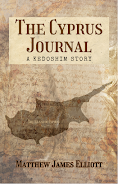
In my upcoming book, The Cyprus Journal, John Mark has some experiences that could explain how this change took place, but that is not where I'm heading with this post. I honestly believe that when Barnabas took him to Cyprus, he gave John Mark the time he needed to learn the true meaning of leaving a Legacy behind for future generations. I also believe that hearing the gospel story through the hearts of those who knew Jesus personally opened his eyes to the possibilities. Sometimes we need to open our eyes and look at the world around us. Sometimes the lessons we learn teach us the value of acceptance and that is where John Mark truly finds his calling. The legacy he left behind proves that no matter how far we stray off the path, we can find our way back. No matter how many times the fears of life take hold of us, we can overcome them and embrace who we are meant to be.


~ Biography ~

Matthew James Elliott (M.J. Elliott) is a passionate writer who loves to encourage and inspire others. He has served in various ministry roles for over 15 years, which has given him a unique perspective on people and Biblical History. Matthew holds a degree in Biblical Studies from Oklahoma Wesleyan University, with a focus on Pastoral Care, Christian Education, and Worship.

Matthew is happily married to Traci, and they have three children named Leyla, Caleb, and Hannah, who bring them immense joy and inspiration. As a writer, Matthew's goal is to share love, equip others, and edify them for the greater good. He loves connecting any amount of scripture to his stories and uses his knowledge of Biblical History to do so often.

You can find Matthew's works on AmazonGoodreadsFacebook, and His Website. He has written DevotionalsAn Episodic SeriesNovellas, and even Commentaries for The Gospel Daily.


~ Highlighted Release ~

The Cyprus Journal is Coming Soon! May 5th, 2024!

One Young Man. His Significant Story. A Witness of the Early Church.

Many knew him as the young cousin to Barnabas the Encourager, the son of Mary who offered her home to honor the Savior and those who followed Him, or even the man who abandoned Paul on his First Missionary Journey, but there is more to his story. His story is one of new beginnings, a promise fulfilled, and a man who overcame fear of the unknown.

----

Sources:

Scripture is from the Holy Bible, New Living Translation, copyright ©1996, 2004, 2015 by Tyndale House Foundation. Used by permission of Tyndale House Publishers, Carol Stream, Illinois 60188. All rights reserved.


Monday, April 1, 2024

Unexpected Legacy Series: Joseph, The Levite

By Matthew J. Elliott

AI Generation of Paul, Barnabas, and John Mark

One of my favorite things to do is research. It inspires me in more ways than one, especially when it is biblical research. There are so many questions that are left untouched in scripture that we often find ourselves questioning things on our own, I know I do. One of the things I’ve questioned lately is the story of one of the main characters in my upcoming book, The Cyprus Journal, which will be released in May. 

You see, when I write a story I want to know everything I possibly can know about the person I am writing about so I can find a way to relate to them and understand what kind of personality they could have had. It helps me write the stories I develop when I have this information. In this particular series, I’ve shared with you two of my favorite historical figures, Brother Lawrence and Madame Guyon. For this post, and the next one, we are going to go even further back in time, back to the ancient biblical times. I must admit upfront that this post, and the next months, focus on what I have learned writing The Cyprus Journal. The Legacy these two biblical characters built is about more than just their history, it is about how their actions changed the essence of the Early Church altogether.  

Barnabas curing the sick by Paolo Veronese

Joseph, The Levite, was one of the people who found their way to Jerusalem in the aftermath of the Crucifixion. Little is known about him before this point in history, but we do know that he was well off and sold everything so he could give all of the profits to the Early Church in support of their ministry. Contrary to what I’d love to believe, there is little evidence that this is Joseph of Arimathea, the man who gave up his tomb for the burial of Jesus. There is, however, sufficient evidence that he was the man who was eventually given the name Barnabas The Son of Encouragement. That evidence is provided in Acts chapter 4:32-37. It is here that scripture gives Joseph, The Levite, his new name, and it is also here that brings me back to my questions about Barnabas. His story has always been one of encouragement to me. He likely found his way to Jerusalem during one of the Passover cedars when Jesus was ministering there. Some have even said he was around when Jesus had his conversations with Nicodemus. This may further allude to the notion that Barnabas could have been Joseph of Arimathea, but that is not where this post will lead. 

Joseph, now called Barnabas, has something significant to add to the Legacy of the Early Church, and the choices he made ensured that two of the most prominent historical figures in the bible would continue the legacy the early church built, Paul and John Mark. Now, if I may, there is so much more to John Mark's story than one may realize, but I plan to write about him next month. This post's purpose is to highlight Barnabas's importance to the success of the Early Church.  Later in the book of Acts, we learn that Barnabas had a proven track record, so to speak, of being ‘a good man, full of the Holy Spirit and full of faith.’ Because of this, the church in Jerusalem sent him to a more centralized area called Antioch. (Acts 11:19-30). Here, Barnabas found favor in the eyes of a community from Cyprus and Cyrene who fled from Jerusalem after The Martyrdom of Stephen and began spreading the Gospel. It was at this point that Barnabas found his way to Tarsus, where the newly accepted believer was holding out until the Disciples figured out how he could practice his newfound redemption.  A redemption made possible by, you guessed it, Barnabas, in the first place. If Barnabas ignored the signs, Saul would have never become Paul.

Wikimedia Illustration- Anonimo Lombardo

It was through Barnabas that Saul found himself accepted by the original disciples. It was through Barnabas that Saul, now calling himself Paul, was able to speak to the masses of people during the first missionary journey, which solidified Paul's place as a fellow believer. That is not all though, I mentioned John Mark too, he was there on that first missionary journey as well.  John Marks' time was a great deal less because he left the group right after the trip through Cyprus was completed. A few years after that whole ordeal was done, John Mark is brought back into the picture, but not in a positive light. John Mark was the brunt of a huge argument between Paul and Barnabas that led to them both going their separate ways. Paul headed one way with a scribe named Silas and Barnabas headed back to Cyprus with his nephew, the young man who abandoned them both. It was on this second missionary journey to Cyprus that John Mark's life began drastically changing, for the better. This apprenticeship would eventually give John Mark the courage to reconcile with Paul and embrace his church role as a gospel writer and a valiant defender of the faith.  

The Legacy here does not come from the unexpected past that Barnabas had to endure, it comes from the unexpected impact he had on the New Testament church as a whole. His ability to encourage and strengthen others still exists today. There is so much to say about Barnabas and the ministry he took part in, but even in the midst of weakness (Gal 2:11-16) he found his way. The struggle was always there, but he overcame it and helped others do it. His legacy is a legacy of encouragement and growth. Is it filled with unanswered questions? I believe it is, but the reality of it is more meaningful to me. How about you?


~ Biography ~

Matthew James Elliott (M.J. Elliott) is a passionate writer who loves to encourage and inspire others. He has served in various ministry roles for over 15 years, which has given him a unique perspective on people and Biblical History. Matthew holds a degree in Biblical Studies from Oklahoma Wesleyan University, with a focus on Pastoral Care, Christian Education, and Worship.

Matthew is happily married to Traci, and they have three children named Leyla, Caleb, and Hannah, who bring them immense joy and inspiration. As a writer, Matthew's goal is to share love, equip others, and edify them for the greater good. He loves connecting any amount of scripture to his stories and uses his knowledge of Biblical History to do so often.

You can find Matthew's works on AmazonGoodreadsFacebook, and His Website. He has written DevotionalsAn Episodic SeriesNovellas, and even Commentaries for The Gospel Daily.


~ Highlighted Release ~


The Cyprus Journal is Coming Soon!

One Young Man. His Significant Story. A Witness of the Early Church.

Many knew him as the young cousin to Barnabas the Encourager, the son of Mary who offered her home to honor the Savior and those who followed Him, or even the man who abandoned Paul on his First Missionary Journey, but there is more to his story. His story is one of new beginnings, a promise fulfilled, and a man who overcame fear of the unknown.


----

Sources:

Scripture is from the Holy Bible, New Living Translation, copyright ©1996, 2004, 2015 by Tyndale House Foundation. Used by permission of Tyndale House Publishers, Carol Stream, Illinois 60188. All rights reserved.

Wednesday, July 27, 2022

Researching in the Ruins + Giveaway

Dana McNeely


While the internet is a wonderful research tool, books are often more dependable. This was driven home to me recently because my computer has been in the repair shop for more than a week, and I'm typing this on a loaner laptop. I was grateful to an "old ruin" of a book, paper and ink rather than the "cloud," for providing me research material for this blog post.

One of my favorite old reference books is PALESTINE AND THE BIBLE by Samuel Schor, born in Jerusalem around 1860. My falling-apart copy is faded and worn, the nineteenth edition published in 1931, so the book itself is a piece of history. Having the appearance of a homemade book, it is a true soft cover, made of tan paper only slightly thicker than its pages, folded back to reinforce the edges. Perhaps it resembles the first pamphlets from which it originated.


In its introduction, Schor wrote "God's Word is an Eastern Book. It was written in the East, by Easterns, and for Easterns." He went on to say his little book was intended to help Western readers understand Eastern expressions as they studied the Bible. He often included Bible verses to illustrate his descriptions of life and customs in Jerusalem. In 1891, he started what he called the "Palestine Exhibitions." His book developed over the time he lectured and wrote pamphlets for the Exhibitions.

I consider PALESTINE AND THE BIBLE an early precursor to "Everyday Life in Bible Times" books. The book is out of print and I believe copies are rare, so in this post I'd like to share with you a few tidbits of Schor's unique insights.

EASTERN PLOUGHS AND YOKES

  • Primitive ploughs were made of wood, had a handle, and were light enough to be carried by a man. And Jesus said unto him, No man, having put his hand to the plough, and looking back, is fit for the kingdom of God. (Luke 9:62)
  • The plough is fastened to the neck of oxen with a yoke and the oxen pass under it.  But the nations that bring their neck under the yoke of the king of Babylon, and serve him, those will I let remain still in their own land, saith the Lord. (Jeremiah 27:11a)
  • The weight of the yoke makes the poor animals stoop, hence the force of the allusion that when God brought Israel out of Egypt and broke their yoke of bondage, He said "I made you go upright." I AM the Lord your God, which brought you forth out of the land of Egypt, that ye should not be their bondmen; and I have broken the bands of your yoke, and made you go upright. (Leviticus 26:13)
  • Partly for protection and partly because of the size of their fields, farmers would often plow together, each with his own team of oxen, creating long, straight plow lines across the field. Thus Elisha was engaged when he was called by Elijah. So he departed thence, and found Elisha the son of Shaphat, who was plowing with twelve yoke of oxen before him, and he with the twelfth: and Elijah passed by him, and cast his mantle upon him. (1 Kings 19:19)
Schor's descriptions of Old Jerusalem painted a backdrop for much of my book RAIN, particularly a scene where Aban, a young former acolyte of Ba'al, observes the prophet Elijah call his successor, Elisha. Part of that scene from RAIN follows:

Antique plow with iron tip as used by prosperous farmers during Israel's Iron Age