Showing posts with label George Washington. Show all posts

Thursday, October 29, 2026

Ice Cream? Yes, Please!


I love ice cream, but I never put much thought into its origin story until now. It turns out people all over the world have had a taste for frozen treats since ancient times. I’m talking as early as 400 BC. The Chinese indulged in a dish made of milk poured over cooked rice and flavored with spices, then frozen. The Persians created a treat made of rose water, lime juice and delicate noodles. In India, kulfi came about as a slow-frozen milk dessert with flavoring.

                                                               
              Claudius Ceasar                                Kind Charles I                                 Alexander the Great

 Alexander the Great enjoyed snow and ice flavored with honey and nectar. During the Roman Empire, Claudius Ceasar would send runners into the mountains for snow which was then flavored with fruit and juice. A thousand years later, Marco Polo came back to Italy from the Far East with a recipe that closely resembled what we call sherbet. Historians believe it became “ice cream” in the 16th century. By the 17th century it was called “cream ice” in England and appeared regularly on King Charles I's table. In 1660, a Sicilian, Procopio came up with a recipe using milk, cream, butter and eggs. He sold it at Café Procope, the first café in Paris.

                                      George Washington           Thomas Jefferson                          Dolly Maddison                             
Ice cream was a dessert for the elite. Ice and snow were needed to make it. Someone had to harvest the ice and storage was needed to keep the ice frozen. The wealthy had access to those things. Ice Cream made its way to America through different people. Thomas Jefferson fell in love with it while he was in Europe and brought home a recipe. In New York City, confectioner Philip Lenzi began making ice cream to sell. He put an ad in the New York Gazette on May 12, 1777 announcing it was available “almost” every day. George Washington enjoyed it so much he spent $200 on it during the summer of 1790. That would be thousands of dollars in today’s market. Dolly Madison served a spectacular strawberry ice cream creation for her husband’s second inaugural dinner in 1813.


By 1800, insulated ice houses were invented. In Cambridge, Massachusetts, the Tudor Ice Company harvested ice from Walden Pond, Fresh Pond and other lakes in New England from early 1800s to the 1890s. Later, Cambridge was a natural location for ice cream manufacturing.


We can all be thankful for Nancy M. Johnson, who patented the first ice cream maker in 1843. People could now make ice cream at home. By the late 1800s, soda fountains and ice cream parlors began popping up. They were wonderful gathering places. By 1890, customers just had to keep in mind that they couldn’t have a soda on Sundays. The religious community felt carbonated water was a sinful indulgence, so shop owners invented ice cream Sundays, later renamed “sundaes.” By the mid-1900s, soda shops began to disappear.


We can’t talk about ice cream without mentioning the ice cream cone. It sprang into popularity at the 1904 St. Louis World Fair and never looked back.


If you couldn’t go out to get ice cream, it could come to you. First, by horse-drawn cart, then by motorized vehicle.


I think ice cream has a place in most of our lives, whether it’s a celebration, a consolation, or just because. There’s a flavor for everyone, although vanilla is America’s favorite. In the second book of my "Heart’s Desire" series, "Heart’s Journey," the family has an ice cream maker they use when Julia makes her famous cherry pie.

Since we're in the Autumn season, I thought you might be interested in a recipe for homemade Pumpkin ice cream.


In, 1880, after narrowly escaping an arranged marriage, Julia marries Jacob, the man of her dreams, and they move to Iowa to buy a farm. Upper-class Julia has never been in a kitchen, let alone on a farm. How will she manage? Joys and sorrows find them along the way including a personal loss for Julia which triggers a disagreement leading to estrangement. Can their faith in God bring forgiveness and reconciliation?
Heart's Journey is on sale through October 31st for $1.99.


Linda, a retired librarian, lives in west central Ohio with her husband and grandson. An avid reader and writer since childhood, she began her publishing career writing columns and a middle-grade serial for the South Charleston Spectator. Her desire is to entertain, but more importantly, to encourage readers with God’s faithfulness.

You’re invited to visit her website. Browse the pages to learn more about her and her books. Stay in touch when you sign up for her newsletter. You’ll receive a free novella as a thank you.

Pictures found on Public Domain. Articles researched on Museum of Ice Cream, International Dairy Food Association, History Cambridge

Friday, June 12, 2026

Coming to America - Live Theater

By Kathy Kovach

Storytelling is as old as time. It’s how God wired us. I’m sure Moses sat near the fire, regaling the Israelites with stories about his ancestors. “I will open my mouth in a parable; I will utter dark sayings of old,” (Psalms 78:2, ASV.)

Centuries later, Jesus took principles and made them into relatable stories that he orally taught to those gathered. “Jesus spoke all these things in parables to the multitudes; and without a parable, he didn’t speak to them,” (Matthew 13:35, WEB.)

The ancient Greeks and Egyptians honed storytelling to an art. They were so successful that their blueprint stood the test of time. Entire nations were influenced, none more so than Great Britain.

From there, it was only a matter of time before it would hop the pond.

In 1510, European theater made it to Puerto Rico, giving the island the honor of becoming the first to hold refined performances in the Americas.

In the 16th century, theater moved north, and plays were performed in the Spanish-held territories that eventually became the United States. In what is now known as Louisiana, several performances took place on October 12, 1721. The town of Los Adaes celebrated the arrival of the Spanish governor, the Marquis de San Miguel de Aguayo. This cultural event brought the people together to solidify Spanish control after a time of uncertainty.

Hamlet and his mother

By the early 18th century, two theaters had been built in Williamsburg, Virginia and Charleston, South Carolina. However, it wasn’t until the British actor and theater manager Lewis Hallam brought his theatrical company to Williamsburg in 1752 that the first complete company of actors was organized. The Hallam Company performed the top European plays at the time—Hamlet, Othello, and Richard III  to name a few. Their first, Merchant of Venice, was performed on September 15, 1752. Unfortunately, they encountered opposition from religious organizations and moved the operation to Jamaica around 1755.

English actor David Douglass met Hallam in Jamaica. After Hallam’s death, Douglass married his widow, actress and theater director Sarah Hallam. The two traveled with the company, now known as the American Company, to Philadelphia where they opened the Southwark Theatre in 1766. This was considered the first permanent theater in America. On a roll, they also built the John Street Theater in 1767, modeling it after Southwark. There, the first American-written play, The Prince of Parthia by poet Thomas Godfrey, was performed in that same year.

Quakers

American Colonial era theater suffered the same opposition as England had during its turbulent times. Those in Puritan and Quaker regions felt it was frivolous and often sacrilegious. Others opposed any British influence, as most of the plays had come from there. Massachusetts in 1750, Pennsylvania in 1759, and Rhode Island in 1761 all banned theater performances. Most of the states followed during the American Revolutionary War (1775-1783) thanks to the Continental Congress.

It was difficult to come back from such prejudices. In 1794, Yale College president, Timothy Dwight IV, wrote the following in Essay on Theatre:

". . . to indulge a taste for playgoing means nothing more or less than the loss of that most valuable treasure: the immortal soul."

Yikes!

Encampment at Valley Forge

Despite the congressional ban, George Washington himself recognized the importance of entertainment as a distraction. He asked for his favorite play, Cato, set during the Roman Civil War, to be performed for the troops after the harsh winter at Valley Forge.

The storytelling seed has been planted deep within all of us. Its branches weave through time, barrel over social status, and travel across continents.

Welcome to America, Live Theater!


A TIME-SLIP NOVEL

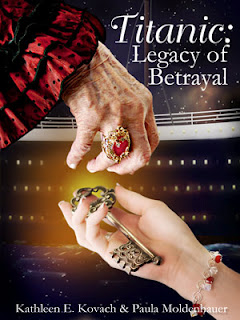
A secret. A key. Much was buried on the Titanic, but now it's time for resurrection.


Follow two intertwining stories a century apart. 1912 - Matriarch Olive Stanford protects a secret after boarding the Titanic that must go to her grave. 2012 - Portland real estate agent Ember Keaton-Jones receives the key that will unlock the mystery of her past... and her distrusting heart.
To buy: Amazon


Kathleen E. Kovach is a Christian romance author published traditionally through Barbour Publishing, Inc. as well as indie. Kathleen and her husband, Jim, raised two sons while living the nomadic lifestyle for over twenty years in the Air Force. Now planted in northeast Colorado, she's a grandmother and a great-grandmother—though much too young for either. Kathleen has been a longstanding member of American Christian Fiction Writers. An award-winning author, she presents spiritual truths with a giggle, proving herself as one of God's peculiar people.


Tuesday, December 17, 2024

When Christmas wasn't legal in America


Did you know America’s earliest settlers didn’t celebrate Christmas? The pilgrims (as history refers to them) may have ushered in the first Thanksgiving, but they were not fans of Christmas. The pilgrims were Separatists. They were much more conservative than the Puritans who want to purify the Anglican Church. Instead, the Separatists desired to start a new church that followed the Lord in a stricter fashion. They shunned anything related to paganism.

Separatist and Puritan ban the celebration
December 25, 1620 found the pilgrims frantically building shelters against the harsh winter. They had only arrived days earlier, resting only on the Sabbath. The following decades showed no inclinations to recognize the day. Both the Separatist and the Puritans who founded Massachusetts Bay Colony in 1629 banned Christmas celebrations.
Their reasons were both theological and moral. They believed Jesus was born in September rather than December.  Historically, December  25 was  on or near the Roman festival Saturnalia, the celebration of their Sun God, Mithra. Pope Julius I in 350 ADE supposedly chose that day to celebrate Christ’s birth to substitute a pagan ritual with a holy day. Naturally, neither the Separatists nor the Puritans desired to associate the birth of their Savior with the celebration of a pagan god.
Most Christmas celebrations in Europe went beyond a church service. Another thing that bothered our early settlers. There was much drunkenness, partying and debauchery, things they believed drew attention away from holiness, one of the pillars of their faith. Cotton Mathers, a leader of the Puritan church in the Massachusetts Bay Colony, identified those vices as playing games, cards, dancing, gluttony, and other things. That list doesn’t sound dissimilar to how we celebrate today to family game times, entertainment and overeating, except we might add football watching to the mix.

Cotton Mathers Getty Image


Vote out as a National Holiday, banned and fines
Christmas as a celebration was removed as a national holiday in England in 1645 due to a large Puritan influence in Parliament. Although it was unofficially celebrated after the workday was over. And religious services were still observed.
New England colonists banned any form of celebration in the 1600 and 1700s. Fines of five shillings, a hefty amount for most citizens, was levied against anyone who took the day off from work or was discovered feasting. The Puritans continued to ban it well into the 19th century.
Changes came slowly
As our country grew and new colonies formed, immigrants from other countries brought their Christmas traditions with them, both religious and secular. Benjamin Franklin wrote in his Poor Richard’s Almanac in 1739 regarding Christmas: “O blessed Season! Lov’d by Saints and Sinners/ For long devotions and even longer Dinners.”
During the Revolutionary War, Christmas was associated with England’s tyranny by many colonial New Englanders and was treated as any other day. George Washington and his men claimed a decisive victory on December 25, 1776, over the Hessian soldiers who were sleeping off a very drunken Christmas celebration.


 Even after America won their freedom, the Senate assembled on Christmas Day 1797, as did the House in 1802. Again, most of the thirteen colonies still carried on business as usual.


St Nicholas Poem and Alabama
By the mid-1800s celebrating Christmas gained popularity. Clement Clarke Moore’s Poem “Twas the Night Before Christmas”, published in New York in 1823 to much success shows the shift in acceptance of non-religious celebrations. Alabama was the first state to make Christmas a legal holiday in 1836, other states soon followed.
Massachusetts was the hold out. Businesses and schools stayed open through the 1850s, although the attitude was changing. Finally, President U. S. Grant declared Christmas a national holiday in 1870.
Christmas continued to change.
Along with making Christmas a national holiday came the adoption of many Christmas traditions from other cultures as our country spread from coast to coast. There are still groups today who don’t celebrate Christmas, not all for religious reasons. And unlike those in the past who were judged for celebrating, these groups are given the freedom to ignore the holiday if they desire.
Were you aware of the history behind Christmas as a holiday in America? What’s your favorite part of Christmas?


Cindy Ervin Huff, is a multi-published award-winning author. A 2018 Selah Finalist. She has a passion to encourage other writers on their journey. When she isn’t writing, she feeds her addiction to reading and enjoys her retirement with her husband of 50 plus years, Charles. Visit her at www.cindyervinhuff.com.
 

Cherishing Her Heart
Dianna Pilson takes on a new identity as Susan Sullivan after escaping from the asylum her  unsavory ex-husband put her in. She heads west with Fredrick Sullivan, her late father’s valet, pretending to be his daughter. They arrive in the small-town of Cooperville, Kansas where Fredrick has kin.  Becoming a simple woman of a lower class is challenging. She has no domestic skills, but her new Papa and his family are right there to help and keep her safe. Changing herself is much harder than she imagined, but far better than a lifetime in an asylum.
 

Monty Summerfield, a wealthy businessman, moved to Cooperville  to start over after his unscrupulous partner blew up the mine they owned with him in it. Assuming Monty was dead he  stole his identity and even his mail-order bride. After Ernie’s death, Monty has worked hard to regain his good name. Content as a bachelor he focuses on building his business interests and helping the community. Then Susan Sullivan steps off the stagecoach. He’s captivated by her, but can he risk his heart and scale the walls she’s built around hers.
As danger lurks from Susan’s past, and Monty steps up to help, can she trust him? Will their only solution lead to a happily-ever-after or bring on more trouble?

Available February 2025 Grab this link to preorder.


Thursday, April 25, 2024

“Yes, sir, General President!”—Part 1—and a Giveaway!

By Jennifer Uhlarik

Have you ever thought about the men in American history who distinguished themselves as military generals before they went on to become United States Presidents? I’m sure most of us can name a few, but I was surprised to learn that there were, in fact, ten who served this nation in both capacities. How many can you name? This month, we’ll take a look at the first half of that list, and we’ll finish it during my post in May.


George Washington

This one was easy, right? Everyone remembers the United States’ first president. Born in Pope’s Creek, Virginia Colony, on February 22, 1732, Washington first rose to prominence as the surveyor of Culpepper County in 1749. He went on to lead the Virginia Regiment in the French and Indian War in the 1750s, served in the Continental Congress in the 1770s, and from there was appointed as the Commander-in-Chief of the Continental Army from 1775-1783. During that time, he fearlessly led the fledgling American army through fierce battles with few supplies. He and his troops faced illness, starvation, and injury, but ultimately came out victorious.


Once the fighting was done, Washington returned to civilian life, only to see the need to replace the Articles of Confederation (America’s first Constitution) with a better version of the document. While he wished for this to be done, it wasn’t his desire to be part of the process, though many urged him to. He finally succumbed to the pressure and not only attended, but presided, over the convention in 1787. And once America’s new Constitution was ratified, Washington was elected the country’s first President. He served two terms from 1789 until 1797, then retired from public office. He lived for only a few years more and died on December 14, 1799, at the age of 67.


Andrew Jackson

This is a controversial one. Andrew Jackson was America’s seventh president, serving in that office from 1829 to 1837. But before he took the country’s most prestigious office, he made a name for himself as a frontier lawyer, planter, and a military man. He played some roles in the American Revolution as a young teen, but his military service began in earnest in 1801, when he was named a colonel over the Tennessee militia—and within a year, commander of the same force. He later went on to fight in the Creek War, starting in 1813, and he was the commanding general who defeated the British in the Battle of New Orleans. He continued his military service during the First Seminole Indian War of the 1820s and was eventually elected to the Presidency in 1828. But he is often remembered for his harsh treatment of the Native Americans, both in the Creek and Seminole Wars, and during his presidency when he signed the “Indian Removal Act of 1830.” 


                                 William Henry Harrison

From an early age, it seemed William Henry Harrison was on track to enjoy life in the medical field—although both his distaste for that line of study and his father’s death derailed the plan. Instead, he opted for a life in the military, beginning in 1791. Starting out as an ensign in the First American Regiment of the Army, he was promoted to lieutenant within a year, and found himself on the frontier during the Northwest Indian War. He was made aide-de-camp (i.e. a personal assistant) to Major General “Mad Anthony” Wayne, and learned how to lead. After a stint as the territorial governor of Indiana, he returned to military life and was elevated to the rank of General during the War of 1812. He is best known for his victory during the Battle of the Thames in October 1813. He returned to civilian life for a time, but in 1836, ran for President. He lost that year but ran again in 1840 and won. Of all the American presidents, Harrison had the shortest presidency, lasting only thirty-one days. He fell ill after he took a walk to town, in which he got caught in a rainstorm without coat or hat and didn’t change to dry clothing after returning to the White House. He quickly came down with cold-like symptoms which deteriorated to a pneumonia-like illness. He died nine days after he fell ill and exactly one month after assuming the role of President.


Zachary Taylor

Another career military man, Zachary Taylor served in multiple wars. He was first commissioned by President Thomas Jefferson in 1808 at the rank of First Lieutenant. He served in the War of 1812, receiving the first brevet (temporary) promotion in the American military—to the rank of Major. Later, he served in the Black Hawk War, the Second Seminole Indian War, and the Mexican-American War (where he earned the rank of major general). Because of his humane treatment of Mexican prisoners of war and giving last rights to both the American and Mexican dead, he became quite popular, and his defeat of Santa Anna at the Battle of Buena Vista in July of 1847 cemented that popularity. Returning home to the United States in late 1847, his popularity carried him straight to a presidential victory in the 1848 election. However, his presidency lasted only sixteen months. Only July 4, 1850, he fell ill with stomach issues and died five days later.  


Andrew Johnson

Hailing from a poor family, Johnson originally learned the skills of a tailor, but eventually worked his way into politics. He was a town mayor, served brief terms in both sides of the Tennessee State legislature, then moved on to the National House of Representatives where he served ten years (five consecutive terms). He went on to become governor of Tennessee and returned to Congress as a Senator after that. During his time in the Senate, the Southern states began seceding from the Union. Johnson, a man firmly loyal to the Union, was the only Southern Senator who did not resign his position—and Abraham Lincoln rewarded him for his faithfulness. He was appointed by the sitting president as Military Governor of Tennessee—at the rank of General—in 1862. By 1864, Johnson was the natural choice to become Lincoln’s running mate, both for his loyalty and to show national unity during his second term. The pair won the 1864 election, but as we all know, Lincoln was assassinated in April 1865, so Johnson became president in his place. He served until 1869, but his presidency was not without controversy. During all the upheaval after the Civil War, the arguing factions took some of their aggression out on Johnson, and he was impeached by the House of Representatives—though the Senate acquitted him, allowing him to remain in office.


It's Your Turn: Were you aware there were ten U.S. Presidents who had risen to the rank of General before attaining the nation’s highest office? Of the five listed above, which do you find most impressive, and why? Leave your response in order to be entered in the drawing for this adorable sign.


Award-winning, best-selling novelist Jennifer Uhlarik has loved the western genre since she read her first Louis L’Amour novel. She penned her first western while earning a writing degree from University of Tampa. Jennifer lives near Tampa with her husband, son, and furbabies. www.jenniferuhlarik.com


AVAILABLE NOW


Love’s Fortress by Jennifer Uhlarik


A Friendship From the Past Brings Closure to Dani’s Fractured Family


When Dani Sango’s art forger father passes away, Dani inherits his home. There, she finds a book of Native American drawings, which leads her to seek museum curator Brad Osgood’s help to decipher the ledger art. Why would her father have this book? Is it another forgery?


Brad Osgood longs to provide his four-year-old niece, Brynn, the safe home she desperately deserves. The last thing he needs is more drama, especially from a forger’s daughter. But when the two meet “accidentally” at St. Augustine’s 350-year-old Spanish fort, he can’t refuse the intriguing woman.


Broken Bow is among seventy-three Plains Indians transported to Florida in 1875 for incarceration at ancient Fort Marion. Sally Jo Harris and Luke Worthing dream of serving on a foreign mission field, but when the Indians reach St. Augustine, God changes their plans. However, when Sally Jo’s friendship with Broken Bow leads to false accusations, it could cost them their lives.


Can Dani discover how Broken Bow and Sally Jo’s story ends and how it impacted her father’s life?


Tuesday, October 24, 2023

The Making—and Controversy—of Mt. Rushmore


By Jennifer Uhlarik


Most everyone is aware of Mt. Rushmore, the South Dakota monument memorializing four American presidents—George Washington, Thomas Jefferson, Abraham Lincoln, and Theodore Roosevelt—on the face of a granite mountainside. But do you know the history—and controversy—of this monument?


Doane Robinson


It was in August of 1924 when a historian from South Dakota, Doane Robinson, came up with the concept of a large stone monument to bring attention of tourists to his state. His initial concept was to memorialize western heroes such as Red Cloud, Lewis & Clark, and Buffalo Bill Cody. To accomplish this monumental goal, he contacted Gutzon Borglum, who had been working on carving the face of Robert E. Lee at Stone Mountain, Georgia, at the time. Borglum came to South Dakota twice to discuss the project, first in 1924, when he initially agreed to the project, and again in 1925, when he searched out which mountain he would carve. Upon finding Mt. Rushmore, he convinced Robinson that the faces of western heroes were too limiting—if he hoped to draw national attention, he needed to memorialize national figures. American Presidents.


The son of Danish immigrants, Borglum had little formal training in his early life, but eventually was placed in a private school in Kansas where he received some initial exposure to art. As an adult, he went to Paris where he studied at the Julien Academy and other prestigious schools. He lived for several years in various European countries and gained small amounts of success. But it was after he returned to the United States that his career truly began to take off. His artwork appeared on the Gettysburg Battlefield, in New York City’s Metropolitan Museum of Art, and in the Cathedral of St. John the Devine in New York among other places. But it was his large bust of President Abraham Lincoln, carved from a block of marble and put on display in a New York shop window, that ultimately led to his work on Stone Mountain, and later Mt. Rushmore.


Gutzon Borglum


Construction on the famed Mt. Rushmore began on October 4, 1927. The first face to be carved was George Washington’s, and Borglum roughed in a simple egg shape to begin with, eventually adding his detailed features later. Washington’s face was completed in 1934, seven years after it was begun. During that time, work was also begun on Thomas Jefferson’s face, situated to the right of Washington, but two years into the process, his visage was badly cracked, so the rock face had to be blown off with dynamite and started again to the left of Washington. His sculpture was completed in 1936. One year later in 1937, Lincoln’s portion was completed, and the final face—Teddy Roosevelt’s—was finished in 1939. Borglum had intended to add a carving of the early history of the United States to the monument, but he died on March 6, 1941, leaving his son Lincoln to assume the remainder of the project. But as World War 2 was ramping up, the United States decided the money allotted for Mt. Rushmore’s completion was better spent elsewhere, so the project was deemed complete on October 31, 1941.


During all the years of carving, nearly four hundred men and women worked on the Mt. Rushmore project in capacities from the blacksmiths who created the tools used in the process, to winch operators who lowered workers down the rock face, to the skilled men who blasted the rock face with dynamite. Nearly ninety percent of the project was completed by blasting with explosives, which got the rough features of each president within three to five inches of the finished carving. The rest was done with small jackhammers in “honeycomb fashion”—where small holes were drilled into the rock, often close enough together that the pieces of rock would just fall away, and the faces could be buffed smooth. All told, over 800 million pounds of rock were removed to create the faces of the memorial, and according to the National Park Service website and the Smithsonian, there were no known fatalities of any work crew members during the monument’s fourteen-year creation.


The final work crew to work on Mt. Rushmore in 1941, with the monument in the background.


THE CONTROVERSY


Of course, in any venture, you can’t please all the people all the time, and Mt. Rushmore is no different. From the start, environmentalists opposed the idea of blasting away the natural beauty of a mountain to memorialize men. Ultimately, Robinson and Borglum won out, and the project went forward, despite this criticism.


Worse, the Native Americans took great issue with the project. The United States government had given The Black Hills to the Lakota Sioux as part of the 1868 Treaty of Fort Laramie, but in the 1870s, gold was found in this area, and settlers flooded the area in search of wealth. War ensued, and by the later 1870s, the government took back what had been willingly given only a decade before. So to not only lose their ancestral land, but then to have four white men’s faces blasted into the rock face was a great afront. In the 1930s, during the carving of the monument, Lakota Chief Henry Standing Bear contacted Borglum by letter, requesting that the face of Crazy Horse be added among the American Presidents, but Borglum never responded. Chief Standing Bear later contacted another artist to create a separate monument, which I’ll discuss next month.


To counter the largely white perspective of Mt. Rushmore, the first Native American superintendent, Gerard Baker, who served between 2004 and 2010, encouraged park rangers to include the Lakota point of view in their tours, presentations, and in answering visitor’s questions. 


It’s Your Turn: Have you ever visited Mt. Rushmore? If yes, tell us what you enjoyed (or didn’t enjoy) about the memorial. If no, would you like to—why or why not? 


Award-winning, best-selling novelist Jennifer Uhlarik has loved the western genre since she read her first Louis L’Amour novel. She penned her first western while earning a writing degree from University of Tampa. Jennifer lives near Tampa with her husband, son, and furbabies. www.jenniferuhlarik.com


Love’s Fortress by Jennifer Uhlarik


A Friendship From the Past Brings Closure to Dani’s Fractured Family


When Dani Sango’s art forger father passes away, Dani inherits his home. There, she finds a book of Native American drawings, which leads her to seek museum curator Brad Osgood’s help to decipher the ledger art. Why would her father have this book? Is it another forgery?


Brad Osgood longs to provide his four-year-old niece, Brynn, the safe home she desperately deserves. The last thing he needs is more drama, especially from a forger’s daughter. But when the two meet “accidentally” at St. Augustine’s 350-year-old Spanish fort, he can’t refuse the intriguing woman.


Broken Bow is among seventy-three Plains Indians transported to Florida in 1875 for incarceration at ancient Fort Marion. Sally Jo Harris and Luke Worthing dream of serving on a foreign mission field, but when the Indians reach St. Augustine, God changes their plans. However, when Sally Jo’s friendship with Broken Bow leads to false accusations, it could cost them their lives.


Can Dani discover how Broken Bow and Sally Jo’s story ends and how it impacted her father’s life?

Tuesday, October 25, 2022

Inaccuracies in the Arts--Artistic License or Blatant Missteps?


 By Jennifer Uhlarik


I recently stumbled across an interesting mini-article about the famous Emanuel Leutze painting titled Washington Crossing the Delaware. In it, the author of said article mentioned five major “mistakes” in the artwork. But are they all truly inaccuracies, or are they examples of creative license? Before I get expound on the five points from his article, let me wax poetic for a moment.
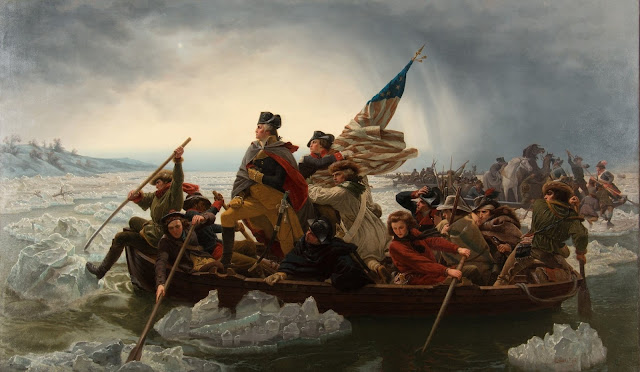

Washington Crossing the Delaware by Emanuel Leutze


My husband and I enjoy critiquing the authenticity of the events or details in the television shows and movies we watch. It’s a favorite pastime for my retired cop husband to point out all the ways they get the particulars of law enforcement scenes wrong—anything from characters mishandling firearms to the quickness with which the show’s heroes come up with the exact right case-breaking details in about ten computer keystrokes and 2.5 seconds. We’ve expanded our critiques beyond just law enforcement details to all manner of things. If movies tout themselves as “based on historical events,” we often look up the details and compare the true events to the movie version and try to understand why the show’s creators chose to make certain changes. Were they artistic license, or were they gross displays of not understanding the reality of the subject matter?


Perhaps this is why, when I write historical novels, I try hard to get the facts as right as possible—I know arm chair historians will be out there critiquing my work. And I take great pains to point out in my author’s note where I fudged the history in order to make details fit the story I was telling. It’s become an interesting exercise for me as a fiction writer to look at why other authors or movie makers choose to change details. If I can understand the “why” of a change, I’m more likely to look kindly on those changes and not roast the creator for not knowing their history.


George Washington


So what is the history of Emanuel Leutze’s Washington Crossing the Delaware? It is based upon the historical Christmas night crossing by General George Washington and his troops. Asked to sign a one-year commitment to fight, the Continental Army’s spirits were flagging. They’d suffered defeat after defeat, and their one-year commitment was up in a matter of days. If something didn’t change, many would return home and the war would end in a dismal defeat for the fledgling nation. But on this night, a series of Christmas miracles occurred. The Hessian troops in Trenton, New Jersey, were aware of a possible attack, but with it being Christmas and with the arrival of an unexpected nor’easter, the sentries and guards were lulled into a false sense of security. The abhorrent storm that moved in provided General Washington and his troops the cover of fog and sleet, albeit at the cost of much physical discomfort. Yet they pressed on, crossing the Delaware River in stealth and marching unopposed into the center of town. The battle of Trenton is said to have taken a mere forty-five minutes from start to finish, with some twenty Hessians killed, over one hundred wounded, and more than one thousand captured—while the American forces suffered only three deaths, and those were from the freezing conditions, rather than wounds inflicted in battle.


The artist, Mr. Emanuel Leutze, was born in Germany in 1816, about thirty years after Washington’s crossing, and came to America before he turned ten. His first exposure to art came as he began to draw to pass the long hours of sitting beside his ill father’s sickbed. At age fourteen, he trained under a prominent Philadelphia portrait artist and eventually earned enough money to return to Dusseldorf, Germany, where he studied for a year in a prominent art school. He painted the iconic image of Washington’s miraculous river crossing in 1851, some seventy-five years after the historical battle occurred. Washington Crossing the Delaware is one of many historical paintings he did in his lifetime, though it is likely the most well-known.

Photo of Emanuel Leutze, circa 1860s


So, by now, you’re probably wondering what “inaccuracies” were in Mr. Leutze’s famous painting. Well, the article I read stated these five things:


1.     That the people depicted in the painting were not American soldiers, but rather German students.


2.     That the river was not the Delaware River, but was, in fact, the Rhine River.


3.     That no soldier would point his gun’s muzzle toward the sky in the middle of a sleet storm.


4.     The boats depicted in the painting were far too small. In fact, General Washington used boats that were between forty and sixty feet long.


5.     And finally, that the Stars and Stripes flag was not even created until almost a year after the Christmas crossing and Battle of Trenton.


I ask again, are these truly mistakes, or are they artistic license? In my humble opinion, most can be dismissed as artistic license. Here’s why I say that.


On the first point—that German students were drawn instead of American soldiers: Mr. Leutze was born forty-odd years after the historic Battle of Trenton, and he created his beautiful, patriotic painting seventy-five years after the events in question in a country far removed from the historic locale. It would’ve been impossible for him to capture the true participants in his painting, so he used those he had—German students. I call this artistic license.


Second point—it was the Rhine River, not the Delaware. Again, due to the timing of his creation and his location when he painted it, he used what he had access to. While not all rivers are the same, he evoked the feeling of the Delaware, even if what he drew was some completely different river in a far-away country. Again, I chalk this up to his creativity, not a true mistake.


Third point—soldiers wouldn’t point their gun muzzles skyward in the middle of a storm. Oh, how I agree with this point, but is it a “mistake” for him to have depicted soldiers that way? Um, I’m not so sure it’s truly a mistake. The artist was attempting to evoke a mood, a feeling, to give his viewers a sense of place and time. That includes showing that these are soldiers, fighting men. If he’d depicted those men as having set their weapons down in the bottom of the boat (which, from my research, were often very full of water), then would those viewing the artistic creation have realized they were soldiers? The soldiers depicted are a ragtag bunch in all manner of clothing—not in pristine, matching uniforms, so without the guns visible, those viewing the artwork may have missed the fact these were soldiers. Again, I count this as artistic license.


Fourth point—the boats were too small to be the real ones used. Okay, he could’ve depicted this more accurately. But why didn’t he? I have a feeling he chose the smaller vessels for his painting not out of some misunderstanding of history, but because to depict a larger boat would’ve made the men in those boats smaller, meaning that he couldn’t include the details of their physical struggle to the degree he did. The point of this painting is to evoke the struggle these men went through, the hardship of a river crossing in the midst of a horrible storm. He wanted those viewing the painting to feel their struggle, not to see a long boat with distant men rowing. Again, I chalk this up to artistic license.


Lastly, the flag depicted wasn’t created until a year after the Battle of Trenton. If any of these five points could be true “mistakes”, this is probably the one that falls in that category. But to this modern woman’s view, I wonder how easily Mr. Leutze could’ve found an image of the correct flag and painted it, rather than the one he did. It wasn’t like he had access to the internet, where in 2.5 seconds, one can make ten keystrokes and pull up the exact historical image.


It's Your Turn: How much of a stickler are you for accuracy in the art, fiction, and television/movies you take in? Does it make you crazy when creators get the details wrong, or are you willing to give some leeway in the name of art?


Award-winning, best-selling novelist Jennifer Uhlarik has loved the western genre since she read her first Louis L’Amour novel. She penned her first western while earning a writing degree from University of Tampa. Jennifer lives near Tampa with her husband, son, and furbabies. www.jenniferuhlarik.com


Love’s Fortress by Jennifer Uhlarik


A Friendship From the Past Brings Closure to Dani’s Fractured Family


When Dani Sango’s art forger father passes away, Dani inherits his home. There, she finds a book of Native American drawings, which leads her to seek museum curator Brad Osgood’s help to decipher the ledger art. Why would her father have this book? Is it another forgery?


Brad Osgood longs to provide his four-year-old niece, Brynn, the safe home she desperately deserves. The last thing he needs is more drama, especially from a forger’s daughter. But when the two meet “accidentally” at St. Augustine’s 350-year-old Spanish fort, he can’t refuse the intriguing woman.


Broken Bow is among seventy-three Plains Indians transported to Florida in 1875 for incarceration at ancient Fort Marion. Sally Jo Harris and Luke Worthing dream of serving on a foreign mission field, but when the Indians reach St. Augustine, God changes their plans. However, when Sally Jo’s friendship with Broken Bow leads to false accusations, it could cost them their lives.


Can Dani discover how Broken Bow and Sally Jo’s story ends and how it impacted her father’s life?