Showing posts with label Heroes Heroines History. Show all posts

Monday, June 29, 2026

FLAG DAY, JUNE 14, 1777

 
I think of myself as a patriot. I believe the United States is the greatest country in the world. We have a lot of problems, but if we can get back to the way the Founding Fathers meant for it to be, we’ll be in better shape. We fly our flag year-round and when June gets here, I bring out the Americana decorations. I remember saying the Pledge of Allegiance at school and celebrating Lincoln’s and Washington’s birthdays. With Flag Day being earlier this month, I decided to find out the history. How it began and how long it took for the United States to honor it.


In 1777, the Continental Congress decided our country needed a flag. They made a resolution on June 14, 1777 that stated, “The flag of the United Stated shall be of thirteen stripes of alternate red and white, with a union of thirteen stars of white on a field of blue, representing the new constellation.” The new flag was carried into the Battle of Brandywine on September 11, 1777.

 It’s generally believed that Betsy Ross made that first flag, although it can’t be proved with documentation, according to the US Flag Store. They said there were around fifty flag makers and upholsterers in Philadelphia at that time. The Philadelphia Incorporated tells a different story. Apparently, Betsy had receipts for a large sum of money paid to her in May 1777 to make flags. It’s possible the first American flag was one she made. She continued in her career for fifty years.

On June 14, 1861, it was reported that Hartford, Conneticut held a Flag Day celebration. Almost three decades later, a New York City Professor George Bloch, principal of a free kindergarten for the poor, had his school hold patriotic ceremonies to celebrate the Flag Day resolution. The State Department of Education noticed and had all public schools observe the day from then on.


Late 1800s

The state legislature soon passed a law saying public schools should hold observances of Lincoln’s birthday, Washington’s birthday, Memorial Day and Flag Day. In 1897, New York’s governor passed a resolution mandating all public buildings to display the flag.

After earlier attempts failed, on May 7,1937, Pennsylvania became the first state to declare June 14 a legal holiday. Now it’s celebrated nationwide, but it's only legal in Pennsylvania. Looking back a little bit, we can see that President Wilson, in 1916, and President Coolidge in 1927, issued a proclamation to make June 14 officially Flag Day. Finally, on August 3, 1949, Congress approved the observance of National Flag Day. President Truman signed it into law. 

I thought it was interesting to see how quickly states were added.


1861, 34 States 

1889, 42 States


1897, 45 States


1959, 50 States


Linda lives in west central Ohio with her husband and grandson. She earned a degree in psychology from Anderson University, where she learned that the voices in her head were actually characters from stories waiting to be told.

Linda has been writing since childhood, but her publishing career started with writing columns and a middle-grade serial for the South Charleston Spectator. A retired librarian, she now enjoys being a full-time author in her home office. She writes not only to entertain but to encourage readers with God’s faithfulness.

You are invited to visit her website, Linda Hoover Books, to learn more about her and her books. You can stay in touch when you subscribe to her newsletter, and as a thank you, you’ll receive a novella, Joel & Ella.


Saturday, April 2, 2022

Tolkien - More than an Inkling for Language


“If you could speak to a person, alive or dead, who would you choose?” Today, I would name J.R.R Tolkien, author of The Hobbit and The Lord of the Rings trilogy.

Consider his life from 1892 – 1973. John Ronald Reuel Tolkien observed countless inventions in his 81 years. From modes of transportation to modes of communication, he witnessed leaps and bounds in modernization and convenience. I would be interested to hear his impressions and perspectives on how these innovations impacted his life, especially with his documented disdain for the “machine.” Another motivation is that I would like to understand how he designed such well-developed stories, worlds, and characters. We can immerse ourselves amongst his Ents (beings that resemble talking trees), Hobbits, High Elves, and in Rivendell, or Middle-earth. They are vivid as if we are living in and with them as we read. The depth and layers in his concepts are formidable. However, the main reason I would like to engage him in conversation is language. What I am referring to is his penchant for the creation of language itself.

When I was settling on a topic for the March post Sequoyah - Creator of the Cherokee Syllabary one of the first things I recalled was the 2019 movie, “Tolkien.” If you watched the film, you might remember the scenes where J.R.R. Tolkien was in the process of establishing his own language. I later discovered that he labored on the Elvish language for forty years before publishing The Fellowship of the Ring in 1954. He knew thirty-five tongues, ancient and modern. Can you imagine? Supreme Polyglot! This individual constructed fifteen languages and dialects in the Elvish language family alone. Not only did he craft the written and spoken languages, but he also deemed it necessary to have a new system of sign language for the dwarves. Since they worked in the mines, they needed an effective means of communicating in the din down below. Tolkien gave his languages history, tied them to mythology, and allowed them to evolve over the years. This process follows natural progressions of language. I read that people can consider his languages incomplete as they lack idiomatic expressions. With the complexity of his Art, I imagine this could have been a deliberate decision on his part. We may never know.

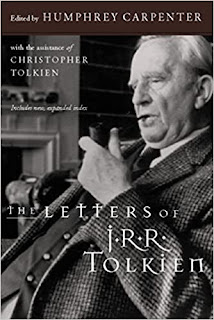
Since there is no opportunity to speak with Tolkien, I found a book that gives insights into his thoughts and processes via his letters. Perhaps you would like to add “The Letters of J.R.R. Tolkien” to your TBR pile?

If you would like to read a bit more about Tolkien, try the article on Biography.com, J.R.R. Tolkien. Or if you would rather, watch a documentary: JRR TOLKIEN '1892-1973' - A Study of The Maker of Middle-earth.


Rebecca May Davie is the YouVersion Content Creator for NBS2GO/ Neighbor Bible Studies 2GO - a Cru Ministry. She has uploaded over 66 plans on the Bible.com app. Rebecca is living in the mountains with her husband, the youngest of their two sons, and a rescued dog named Ranger. If it were up to her, she would be traveling right now. Not quite a polyglot, Rebecca speaks English and French as her L2. College courses last year gave a rudimentary grasp of Italian. She hopes to learn Spanish next. Meanwhile, Rebecca is working on her first fiction novel. This story unfolds from the 1830s in Northern Georgia.

Connect with Rebecca:

Wednesday, March 2, 2022

Sequoyah - Creator of the Cherokee Syllabary

Language. One simple word that is anything but.
 
I am infatuated with languages. I remember pretending to speak my own version and mimicking accents with friends when I was a young child. All these years later, I am still hoping to earn the Polyglot moniker. Why is language so alluring? What captivates my interest? Is it the accents, dialects, idioms, structures, history, etymology, or entwined cultures? Each of those aspects and so many more feed my fascination. Merriam-Webster.com defines language as “the words, their pronunciation, and the methods of combining them used and understood by a community.” So, to the above list, I will add… the people.
 
Without the gift of language, especially in written form, we would have limits. The ability to write and record language opens doors to connect, read, learn from afar, work, collaborate, send a note – email – text, and even formulate TikTok videos.
 
If you would like to see variations of language, try Google translate. Type in a short sentence and find the result in a few of their 109+ offerings. Most even have a speaker option so you can hear the answer. Experiment with an unfamiliar tongue to see and hear the diversity. Many languages have beautiful fonts and bonny tones. Two weeks ago, I was working with Burmese for our ministry. Are you familiar with their characters? They are lovely. The following sentence means I love to read.
ဖတ်ရတာ သဘောကျတယ်။

Have you ever considered how languages develop over time? This is a lengthy process tied to history, the influences of other cultures, and other factors. Language is not commonly the project of a single person. Yet there is a monolingual individual without a formal education, who had no knowledge of writing or reading, who assembled a complementary syllabary to his spoken language. How could he generate a system that would be of immediate use and go on to influence the formation of other languages? Sequoyah, a Cherokee, also known as Sogwali, accomplished this feat.


Sequoyah observed the Caucasian settlers where he lived. They had the ability to communicate across distances. He discussed this among his people who were not in favor of recording their thoughts. In their opinion, this was witchcraft. Despite this challenge, he continued to contemplate the scenario when he served in the US Army during the War of 1812. Fighting in the battle at Horseshoe Bend, he watched soldiers employing this method to connect with fellow soldiers and family.

When he returned to civilian life, he toiled as a blacksmith. Out of necessity, he needed a system to record orders and payments. As he was artistic, he would sketch the customers’ likenesses and would use a rudimentary system to retain amounts and objects. This became labor-intensive over time. It is speculated that due to this need and what he observed in exchanges between soldiers, he began the arduous task of creating a solution. 


Sequoyah invested 12 years to compose a system of 86 characters that placed on paper what was an oral language up until that point. Due to his usage of syllabary (characters representing sounds), rather than individual letters, the compilation was easy to master. His daughter was the first to use the written characters. She participated in demonstrations for the Cherokee to prove the efficacy and remove doubts or superstitions. Sequoyah and his daughter went to separate locations. They each wrote messages to the other, then exchanged the missives. They employed this process to prove that the syllables did indeed represent sounds for communication.

The Cherokee Nation adopted Sequoyah’s syllabary in 1825, which spread quickly. This invention allowed them to write a constitution and print the Cherokee Phoenix, a newspaper. These were crucial elements during a harrowed time. It is recorded by the Cherokee Nation of Sequoyah, “He accomplished a feat, which no other person in history has done single-handedly…he brought our people literacy and a gift of communicating through long distances and ages. This one person brought to his people this great gift without hired educators, no books and no cost.” -Georgia Historical Society.

If we consider Sequoyah’s contribution to the Cherokee alone, he provided a means for his nation to communicate across distances. He enabled them to design and record a constitution. The first bilingual and tribal newspaper in the US, the Cherokee Phoenix was born. All these accomplishments were key as they began the fight to remain on their land. In addition, due to the success of his syllabary, other people groups developed their own systems. Sequoyah influenced over 20 scripts for more than 65 languages.

If you would like to learn more about Sequoyah and his life, this video gives a short history.

Do you speak languages other than your native tongue? How would your days be impacted if you only had means of oral communication?

Rebecca May Davie is the YouVersion Content Creator for NBS2GO/ Neighbor Bible Studies 2GO - a Cru Ministry. She has uploaded over 66 plans on the Bible.com app. Rebecca is living in the mountains with her husband, the youngest of their two sons, and a rescued dog named Ranger. If it were up to her, she would be traveling right now. Not quite a polyglot, Rebecca speaks English and French as her L2. College courses last year gave her a rudimentary grasp of Italian. She hopes to learn Spanish next. Meanwhile, Rebecca is working on her first fiction novel. This story unfolds from the 1830s in Northern Georgia.

Connect with Rebecca:  Website