Showing posts with label Ohio River. Show all posts

Wednesday, February 9, 2022

Kentucky - First State West of the Appalachians

   By Tiffany Amber Stockton


Last month, I began a new series on Kentucky history and the pioneers who established the state. If you missed that post, you can read it here. This month, we're delving a bit more into Daniel Boone and his forays into the Kentucky frontier.

DANIEL BOONE - KENTUCKY PIONEER
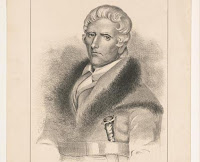

Kentucky was granted statehood in 1792, becoming the first U.S. state west of the Appalachian Mountains. I spent 25 years of my life in Delaware, the First State of U.S., so it's ironic I now live in another "first state." While the original thirteen colonies were engaging in small battles with England over governorship, taxes, political representation, and various freedoms, many residents of those colonies decided to strike out on their own and start exploring the frontier to the west.
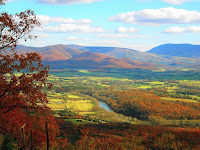

Frontiersman Daniel Boone was one of Kentucky’s most prominent explorers, and many immigrants followed the trail he blazed through the Cumberland Gap, known as the Wilderness Road. His story doesn't begin there, though. He was born in 1734 in a small township northwest of Philadelphia, and at age 15 left Pennsylvania with his family. They headed to the Shenandoah Valley of Virginia, but Daniel left not long after and settled along the Yadkin River near the western edge of North Carolina.
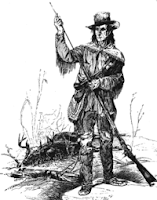

Instead of farming, Boone became a marker or long hunter and made his living selling deerskins from long hunting expeditions out in the wilderness. He was gone for months or years at a time with that trade. In 1755, while serving as a wagoner for General Braddock back in Pennsylvania, he met a trader who regaled him with stories of the abundant wildlife and financial opportunities west of the Appalachian Mountains. But that exploration was put on hold when Daniel married and started a family. He continued to hunt throughout the Carolinas and even down to what became Florida.

In early 1769, that trader (John Findley) found Daniel again and relit the spark in Boone's wanderlust nature. He spent the next four years exploring that wilderness area, and in 1773 began escorting settlers with the intention of permanently settling Kentucky. In 1775, a judge enlisted Boone's help to negotiate with Cherokee tribes and purchase their claims, then he cut a path through southwestern Virginia and northeastern Tennessee that would become the Cumberland Gap Road.
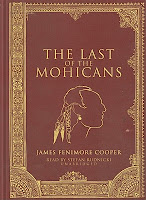
Despite ownership of the land, the settlement of Kentucky was fraught with a great deal of conflict, as England secured the support of the natives to attack settlers during and even after the Revolutionary War. Many were captured and forced to live among the Cherokee or Shawnee. Boone was one of them, although he only lived among the Shawnee for a few months before escaping. His daughter had been captured the year before, but immediately rescued by Boone and his men. That story was eventually immortalized by James Fennimore Cooper in The Last of the Mohicans.

For the next seven or eight years, raids continued and casualties increased. So many battles, and so many deaths among the British, the American settlers, and the natives, all over who would ultimately own the land. By 1787, the British were completely run out and in 1792, statehood was granted. Nearly thirty years of exploration, settlement, and defense had ultimately produced a new state for the U.S., and Daniel Boone became immortalized in American history.


NOW IT'S YOUR TURN:

* Have you ever left your family to move or settle in a completely different region?

* What famous settlers or pioneers are known where you live?

Leave answers to these questions or any comments you might have on this post in the box below. Come back on the 9th of March to learn some fun facts pertaining to Kentucky.


For those interested in my "fictional" life as an author and industry news about other authors, subscribe to my newsletter. Receive a FREE omitted chapter from my book, A Grand Design, just for subscribing!


BIO
Tiffany Amber Stockton has been crafting and embellishing stories since childhood, when she was accused of having a very active imagination and cited with talking entirely too much. Today, she has honed those skills to become an award-winning, best-selling author and speaker who is also an advocate for literacy as an educational consultant with Usborne Books. She loves to share life-changing products and ideas with others to help improve their lives in a variety of ways.

She lives with her husband and fellow author, Stuart Vaughn Stockton, along with their two children and two cats in Kentucky. She has sold twenty-four (24) books so far and is represented by Tamela Murray of the Steve Laube Agency. You can find her on Facebook and GoodReads.

Tuesday, August 25, 2015

Samuel Mason: An Early Western Desperado


Samuel Mason
Those of you who know your American Revolution history may know of Samuel Mason and his service during the conflict. Whether you do or not, perhaps you haven’t heard of what he did after the war that birthed our nation. I’ll share some of both aspects of his life with you today.

Samuel Mason was born on November 8, 1739 to a prominent Virginia family. He spent some portion
of his teen years on the wrong side of the law, stealing horses from a neighbor. However, after being wounded and caught, he stopped the horse thievery. He married Rosanna Dorsey in 1767, with whom he had eight children. In 1773, Mason moved his family to Ohio County, Virginia (present-day West Virginia), where he later served in the Ohio County Militia Virginia State Forces during the war. He achieved the rank of captain was put in command of Fort Henry in the Ohio frontier.

Fort Henry
In late August of 1777, Indians attacked Fort Henry, firing a few shots at men who were outside the fort to round up some horses. When Mason heard the shots, he and fourteen men rode out to their rescue, only to be ambushed. All the men were killed except Mason, who was badly wounded. He was able to survive the attack by hiding behind a log, and was later rescued.

After recovering from his wounds, Mason continued on at Fort Henry for another two years, then moved to Washington County, Pennsylvania, and a 500-acre farm he’d bought. There, he became a Justice of the Peace and an associate judge, all while working his property and attaining several horses, cows, sheep, and four slaves. However, he fell deep in debt, though he somehow managed to continue paying taxes on the property and animals. People accused him of being a thief, causing Mason to abandon his property and flee to Kentucky in 1784. A year later, his property was sold in a sheriff’s sale, which repaid only a portion of the money he owed. In 1789, a Pennsylvania court sent someone to hunt Mason down and collect the outstanding debt, though they failed in their mission.

Cave-In Rock
It was in the 1790’s when Mason turned back to lawlessness. Settled at Red Banks along the Ohio River (present-day Henderson, Kentucky), Mason and his four sons took to river piracy. Later, the gang moved southward to Diamond Island, and eventually made their hideout the notorious Cave-In Rock on the Illinois side of the river. There, they were known to invite river travelers into the cave and offer them hospitality, all while some of the gang would scope out what goods the travelers had on their boats. Once the voyagers would move on, Mason and his gang would attack them and take whatever they wanted. For a while, the Harpe brothers—Micajah and Wiley, who are thought to be the first American serial killers—made their home at Cave-In Rock. Mason and his gang didn’t take to the Harpe brothers’ especially brutal ways, despite the fact the Mason gang could be plenty harsh to their victims as well. Mason asked the brothers to move on.

In 1799, a vigilante group called “The Exterminators” drove the Mason gang out of Cave-In Rock,
causing the band to move south again, this time into Spanish Louisiana and the Natchez Trace of Mississippi, where they continued their pattern of robbing and killing the travelers along the wilderness thoroughfare. By now, they’d become notorious desperados—some of the early precursors to western outlaws like Jesse James and others.

In 1802, bounties were put out for the gang members. They were captured at least once, though they escaped. Some accounts say that Mason killed the boat commander in his getaway, adding another life to his brutal outlaw career. When the Americans upped the bounty on Mason and his gang in 1803, an old “friend” found the reward too tempting to resist. Wylie Harpe found Mason, murdered and beheaded him, and took the trophy to the Mississippi territorial offices to prove he’d captured the desperado. Harpe was quickly identified as an outlaw in his own right, in part for his time spent with the Mason gang, and he was subsequently arrested and hanged.

Thus ends the story of Samuel Mason.


It’s your turn: Do you find the stories of heroes-turned-villains like Sam Mason to be interesting, repulsive, or both?

Jennifer Uhlarik discovered the western genre as a pre-teen, when she swiped the only “horse” book she found on her older brother’s bookshelf. A new love was born. Across the next ten years, she devoured Louis L’Amour westerns and fell in love with the genre. In college at the University of Tampa, she began penning her own story of the Old West. Armed with a B.A. in writing, she has won five writing competitions and finaled in two other competitions. In addition to writing, she has held jobs as a private business owner, a schoolteacher, a marketing director, and her favorite—a full-time homemaker. Jennifer is active in American Christian Fiction Writers and lifetime member of the Florida Writers Association. She lives near Tampa, Florida, with her husband, teenaged son, and four fur children.


Now for Sale:

Nine romantic adventures take readers along for a ride on the Oregon Trail where daily challenges force travelers to evaluate the things that are most precious to them—including love. Enjoy the trip through a fascinating part of history through the eyes of remarkably strong characters who stop at famous landmarks along the way. Watch as their faith is strengthened and as love is born despite unique circumstances. Discover where the journey ends for each of nine couples.