Showing posts with label Pinkerton. Show all posts

Saturday, December 28, 2024

Dashing Through The Snow – By Donna Schlachter – with giveaway


Sleigh Ride Wikipedia


Welcome back to my final post of this calendar year. I thought it would be fun to look at some of the history behind how we dash through the snow, since so much of the music of Christmas seems to be about wintertime activities. 

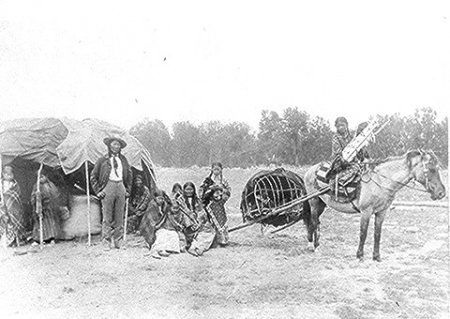
Travois design Wikipedia

Horse-drawn travois Wikipedia

One of the earliest forms of transportation is the travois (properly pronounced trav-wa). The Canadian French name applies to an A-frame construction to carry goods and or people, and is dragged along the ground on its narrowest point. Native women built and maintained the travois, including training the dogs used to pull them. Aspen and cottonwood were the main wood types used, both because they were easily available and sturdy. 

Dogs pulling travois Wikipedia


Lewis and Clark both adopted the travois to carry their supplies on their westward exploration. The main difference was they used horses to pull, allowing larger travois with heavier loads. Ruts can still be seen as their paths were heavily used.

So why not use wheels? First, travois were developed before the invention of the wheel in many cultures, and secondly, the terrain was often not favorable to wheel transport. Plus, dogs could be used in areas where wheels would have caught in brush or broken on rocks. This was roughing it before there were established roadways. Travois adapted well to use on dry or snowy terrain, and needed little adaptation for the seasons.

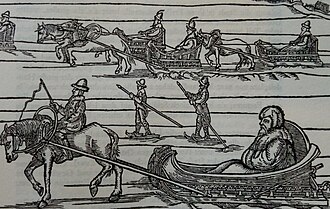
Traveling by sleigh Wikipedia


Sleds, or sleighs, on the other hand, were obviously a snow or ice mode of transport. Some designs included runners that could be removed and replaced with axles and wheels, but most were a winter-season transport only. The word sled comes from a Middle English word sledde which means sliding or slider.

Depending on the size and style, they were also known as a skid or a sledge. Any type of sled can be used to transport passengers or cargo across relatively level ground. Some styles are made to go downhill for recreation. Toboggans fall into this category.

Sledges were often roughly hewn lumber that was pulled by one or two horses into the woods, and hewn trees were loaded onto it. This could be for firewood or building materials.

The origins of sledges is thought to be in Egypt and were used to construct public buildings, as these vehicles worked well on hard-packed sand. Sometimes, they rolled the sledge over a rustic conveyor-belt consisting of de-limbed trees.

Sleds and sledges were also found in the Oseberg “Viking” ship excavation. Unlike wheeled vehicles, they were exempt from tolls. 


Russian Troika Wikipedia


As expected, sleds were important in the perpetual winter of Russia and Siberia, but their use was limited to royalty and bishops. A local design called the troika uses three horses, and is attributed as being the world’s only harness combination with different gaits of the horses. The center horse trots, while the outside horses canter. Originally developed in the 17th century, troikas were used for speedy mail delivery before coming into common usage for passenger and cargo.
Dog sled Wikipedia


British explorations to the Arctic and Antarctic used human-pulled sledges, while other nations preferred dog sleds.
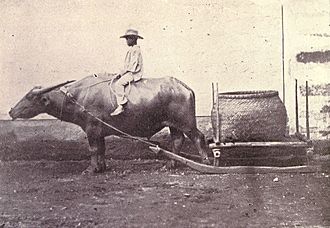
Kangga in Philippines Wikipedia


Many sleds can be used in mud, marshes, and even hard ground, particularly if the runners are greased. Even the Philippines, which has no snow, has its own design, a kangga, which is used in rough terrain and steep hills.

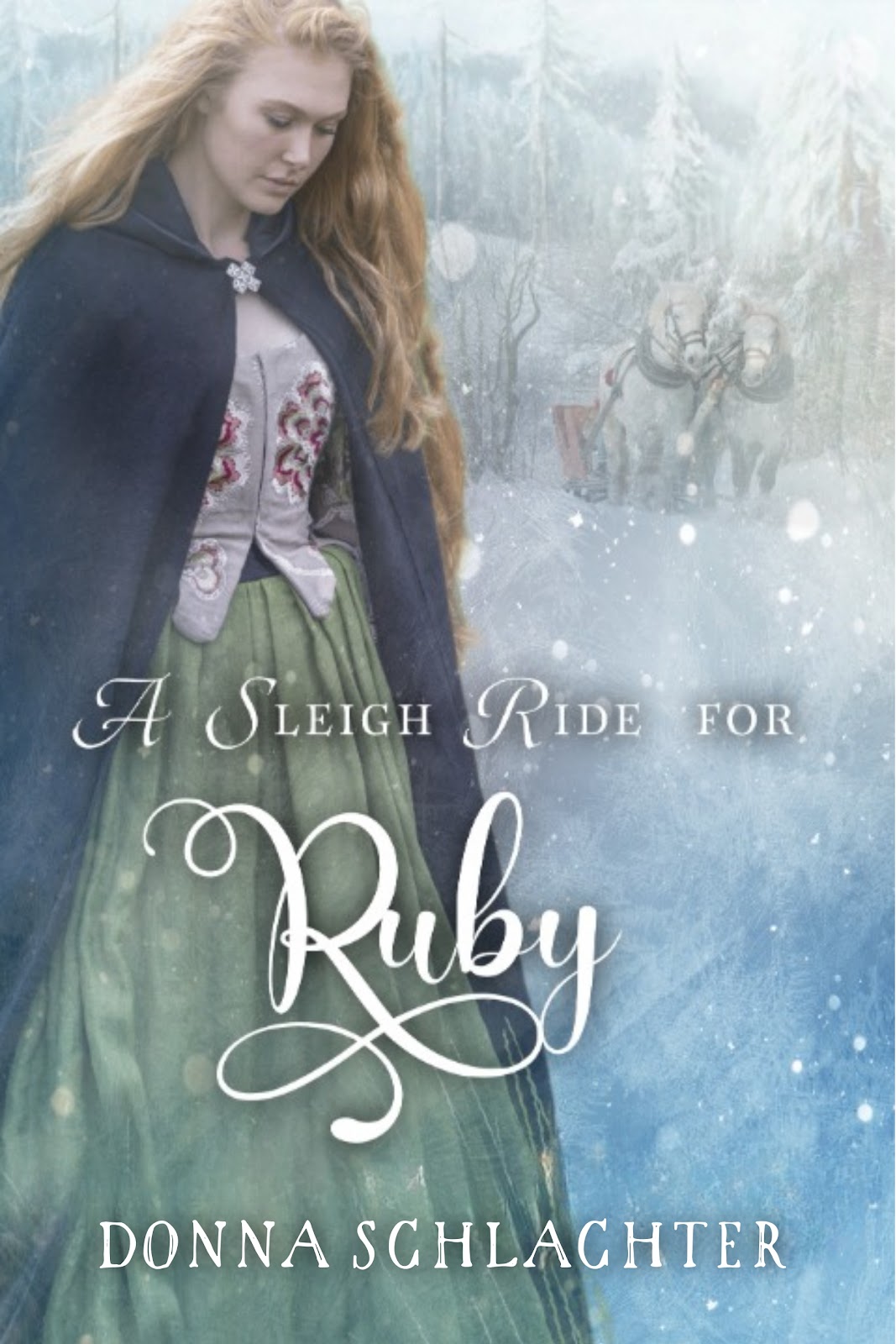
In my recent release, Sleigh Ride for Ruby, a young woman inherits her father’s sleigh business. She soon realizes that somebody in town is determined to put her out of business. But who can she trust? The Pinkerton agent who shows up on the scene? But is he really who he says he is? Check out the book here: https://www.amazon.com/Sleigh-Ride-Ruby-ebook/dp/B0D2LVRSPZ


Leave a comment to enter a random drawing
for a free ebook copy of Sleigh Ride for Ruby.


About the book:

After Ruby Wakefield inherits her father's touring business, she soon learns that not everybody thinks it right or proper that a woman should run a business normally operated by a man. However, she has no choice—she cannot give up on her father’s dream. But somebody in town is unhappy, and Ruby's business falls prey to mishaps such as broken traces, injured horses, and avalanches.

Clarke Everly, a Pinkerton operative, falls into Ruby's life when he hires her sleigh to take his fiancee for a ride in the winter wonderland of Snowflake, Colorado. But when Ruby won't convey them across a frozen lake, his fiancée kicks up a fuss and leaves him cold.

Can Ruby and Clarke figure out who is trying to ruin her business? And will working together show them the warmth of love and the kindness of their Heavenly Father?

About Donna:

A hybrid author, Donna writes squeaky clean historical and contemporary suspense. She has been published more than 60 times in books; is a member of several writers' groups; facilitates a critique group; teaches writing classes; and judges in writing contests. She loves history and research, traveling extensively for both, and is an avid oil painter. 


She is taking all the information she’s learned along the way about the writing and publishing process, and is coaching committed writers. Learn more at https://www.donnaschlachter.com/the-purpose-full-writer-coaching-programs Check out her coaching group on FB: https://www.facebook.com/groups/604220861766651

www.DonnaSchlachter.com Stay connected so you learn about new releases, preorders, and presales, as well as check out featured authors, book reviews, and a little corner of peace. Plus: Receive 2 free ebooks simply for signing up for our free newsletter!

www.DonnaSchlachter.com/blog

Facebook: www.Facebook.com/DonnaschlachterAuthor

Books: Amazon: http://amzn.to/2ci5Xqq

Bookbub: https://www.bookbub.com/authors/donna-schlachter

Goodreads: https://www.goodreads.com/search?q=donna+schlachter

The Purpose-Full Writer: https://www.facebook.com/groups/604220861766651

Need a writing coach? https://www.donnaschlachter.com/the-purpose-full-writer-coaching-programs


Resources:

https://en.wikipedia.org/wiki/Troika_(driving)

https://en.wikipedia.org/wiki/Horse-drawn_vehicle

https://en.wikipedia.org/wiki/Sled

https://en.wikipedia.org/wiki/Travois


Friday, October 25, 2024

Kate Warne: Pinkerton


By Jennifer Uhlarik


Last month, I shared with you about Allan Pinkerton and the Pinkerton National Detective Agency, which he founded. In that article, I promised to share about Kate Warne, the first female detective. So let’s explore this remarkable woman’s life.


Kate was born in Erin, New York in 1830, although her exact date of birth is not known. Her early life is a bit of mystery. Her obituary supposedly stated that her parents were honest and industrious people, but also poor. Through other records, it is known that she hoped to become an actress, though that dream never materialized in her performing on stage. By the age of twenty-three, Kate had already been married—and widowed. Soon after that, she moved with her parents and brother to Chicago where she went to work cleaning houses. However, the work didn’t challenge her. She desired a job where she could use her mind. It was in 1856 that this bold woman saw an advertisement in a Chicago newspaper for the Pinkerton National Detective Agency. Allan Pinkerton was looking for help, and Kate decided to apply.


She marched herself into the office, advertisement in hand, and told Pinkerton she was there to apply. At first, the famed detective thought she meant for a secretarial position, though she quickly corrected him by showing him the newspaper ad. She wanted to be a detective.


While Pinkerton considered himself to be open-minded, he is on record as having stated, “It is not the custom to employ female detectives!” Kate Warne argued that women have a great eye for detail, were great observers, could get into places men couldn’t, would easily win the trust of the wives or girlfriends of their suspects, and could also cause men to become braggarts with only a little encouragement. In addition, her childhood desire to become an actress was an asset, in that she assured Allan Pinkerton she could play any role asked of her. Her passionate arguments convinced him, and she became his first female detective. 


At the time of her hiring, there were nine detectives in the agency’s employ—among them Pinkerton himself, as well as a former police officer, a former watch maker, a former bookseller, a fine English gentleman, an athletic sort, and even an extremely handsome gent they employed specifically to flirt and woo the women from whom they were trying to gain information. Within two days of her hiring, Kate was given her first case, and she and these men teamed up to work their magic for the next eleven years together. (Tune in next month when I’ll share the specifics of one of their intricate cases). 


As the country headed into 1861 and the Civil War, Kate Warne was one of the detectives who investigated threats by various secessionists to do damage to the railroads. She was particularly good at infiltrating these southerner’s social gatherings, playing the role of a wealthy Southern woman. She was able to secure specific information that, not only were they attempting to harm the railroads, but they were planning to assassinate newly elected president Abraham Lincoln during his “whistle stop tour” of the nation on his way to the inauguration. The weakest point in the journey was Baltimore, Maryland, where the President-Elect would have to disembark one train, travel approximately a mile via carriage, and board another train to complete the journey. But with knowledge of the plot ahead of time, Kate Warne was able to dress President-Elect Lincoln as her invalid brother, usher him to a different train, and slip past the secessionists undetected. During the entire operation, Warne stayed awake, earning the agency their iconic tagline: “We Never Sleep.”


Throughout the Civil War, Kate Warne worked closely with Allan Pinkerton and other agency operatives to ferret out information of Southern troop movements and tactical plans. Again, Kate used her acting ability to play the role of the rich Southern socialite and infiltrate social gatherings. She proved most helpful in spying and gathering intel to help the Union.


During this time, Allan Pinkerton also made her the head of his Female Detective Division, giving her the title of Female Superintendent of Detectives. While Kate was the first female detective, she was not the last. But Pinkerton so trusted her, he made her the trainer for every female detective who came along after her—right up until her death in 1868.


Kate continued to work with the Pinkertons until she contracted and succumbed to “congestion of the lungs” (or pneumonia). She was buried in Graceland Cemetery in Chicago. Years later, upon his passing, Allan Pinkerton was buried next to her, with his wife’s grave on the other side.


Very little of Kate Warne’s life is documented, outside of her work with the Pinkerton National Detective Agency, and even that information suffered a great loss when agency records burned in the Great Chicago Fire of 1871. Despite these facts, Warne’s legacy lived on in the Pinkerton Detective Agency, where she was said to be a source of inspiration, and where female detectives continued to be hired after her passing.


It's Your Turn: Were you familiar with this trailblazing woman? What do you find most inspirational about her?


Jennifer Uhlarik discovered the western genre as a pre-teen when she swiped the only “horse” book she found on her older brother’s bookshelf. A new love was born. Across the next ten years, she devoured Louis L’Amour westerns and fell in love with the genre. In college at the University of Tampa, she began penning her own story of the Old West. Armed with a B.A. in writing, she has finaled and won in numerous writing competitions, and been on the ECPA best-seller list several times. In addition to writing, she has held jobs as a private business owner, a schoolteacher, a marketing director, and her favorite—a full-time homemaker. Jennifer is active in American Christian Fiction Writers, Women Writing the West, and is a lifetime member of the Florida Writers Association. She lives near Tampa, Florida, with her husband and fur children.


Coming April 1, 2025


Love and Order by Jennifer Uhlarik


Separated as children when they were adopted out to different families from an orphan train, the Braddock siblings of Callie, Andie, and Rion have each grown up and taken on various jobs within law enforcement and criminal justice. When the hunt for a serial killer with a long history of murders reunites the brother and sisters in Cambria Springs, Colorado, they find themselves not only in a fight for justice, but also a fight to keep their newly reunited family intact. How will they navigate these challenges when further complicated by unexpected romances?


Sunday, December 27, 2020

Donna Schlachter -- Author Spotlight -- And Newest Release


Along the Oregon Trail

It’s 1879, and the Oregon Trail is still ferrying emigrants west to California, Oregon, and Washington. Hundreds of covered wagon trains with thousands of people every year, all searching for something better than they left behind.

Kate Benton has run just about as far as she can. After escaping the sordid life of a saloon prostitute the year before, she hid out in a wagon belonging to the younger brother of the Lame Johnny stagecoach robbing gang. All she wants is a fresh start.


Tom McBride, said younger brother, is running from his past, too. Forced to work for Lame Johnny to save his brother’s life, he’s on the run from the gang, the law – and God.

In the first book, Kate, their tale of adventure and love is filled with secrets, threats, and narrow escapes as they head for Oregon City. 

Oregon City, Oregon 1870s
 

Now, Kate and Tom have safely put their past behind them. Or have they? Kate realizes her dream of working for the Pinkerton Detective Agency, and her first assignment is to find a local missing woman. When she begins investigating, however, she is threatened and their house is set ablaze. But that won’t stop her.

Until her son is kidnapped.

Old revolver like the type Kate might have carried


Tom and Kate must work together to solve this case and find their child. In the process, they discover a God who loves them even more than they love each other and their little family.

The idea for this book came from a book I read about Kate Warne, the first Pink Lady detective.  As a young widow in the 1850s, Kate marched into the Pinkterton office and said she wanted a job. Alan Pinkerton thought she meant a clerical job, but no. Kate wanted to be a detective. And she turned out to be one of his best “men”, paving the way for many more female detectives in the coming years.

Kate Warne was a feisty woman with definite ideas of how she wanted her life to go, and so is Kate. While Kate Warne never remarried, I wanted my Kate to balance family and a professional career, a relatively new concept in the 1870s.

Watch for more books featuring Kate and Tom in the future, but for now, check out A Pink Lady Thanksgiving and my other books at https://www.amazon.com/s?k=donna+schlachter&ref=nb_sb_noss


Excerpt:

Sitting on the front porch of her rented house, Kate McBride propped aching feet on the footstool her darling husband crafted especially for her. At almost seven months into her pregnancy, she tired quickly, finding she needed to stop and rest more often throughout the day.

She sighed and rubbed at the small of her back. Her first baby. An exciting time, to be sure. But also one with its challenges. Thankfully, living in town meant she needn’t spend as much time tending a garden, pumping water, and hauling firewood compared to residing on a farm or ranch outside town.

Not that Tom would let her do those chores anyway.

No, siree. He hovered more than a mother hen over her chicks.

To watch him, a body would think she was the first woman in history to have a baby.

A baby.

She leaned her head back and closed her eyes, rocking in the chair he’d also made. She had no right to complain. He was the perfect husband. Loving, caring, tender, patient. Taught her everything she knew about cooking. Which wasn’t much. A year into married life, she managed not to burn their food more than once a week. A marked improvement over her days on the trail.

She smiled and opened her eyes. Their old wagon rested in front of their house on a side street in Oregon City, Oregon. Across the way, one of the Daley children chased down a chicken, almost catching it before the old biddy escaped by fluttering over the fence.

She rubbed her swollen belly, massaging a tiny heel or fist until the baby eased back into a more comfortable position—at least for her. Their son or daughter was an active one, kicking and jumping now for months. She sang to him. She hoped it was a boy for Tom’s sake although he said he had no intention of stopping with one so its gender mattered little to him. Her mama would be tickled pink to welcome this little one.

As usual, when thinking of the woman, her eyes watered. Mama would love to see this little one. Maybe a girl they could name Elsie Something—what was Tom’s mother’s name? She’d have to ask him.

Her feet and back weren’t ready to get back to laundry—maybe she should reconsider Tom’s offer of taking the dirty clothes to the Chinese laundry down on the main street. She’d choose to indulge them for a few more minutes. She picked up the copy of The Saturday Evening Post and skimmed through the pages.

Near the back, her eyes roved the small typeset. Personal ads, missing persons. . . wait, what was that? A correspondence course. Become a private detective. Set your own hours. Be your own boss. Hmm. Interesting concept.

Her mind cast back to the year before when she’d teasingly—but perhaps more in seriousness than she first thought—told Tom of her idea of becoming a Pink Lady. Pinkerton’s Detective Agency, renowned for hiring women agents, needed her nose for solving mysteries and averting crime.

She read through to the end of the advertisement. Two dollars for the correspondence course. She could manage that from her pin money, saved from selling eggs and frugal spending habits. Work at her own speed. She could complete it before the baby’s birth. Then, once back on her feet, Pinkerton’s would be sure to hire her immediately.

She tore out the notice and entered the house for a pen, envelope, and the money. As she completed the information required, her stomach fluttered at the thought of learning something new. Of taking a role in improving their situation. Of solving mysteries. Averting crime.

Yes, indeed. She’d be the Kate Warne of the West.

Wouldn’t Tom be surprised when she told him?


About Donna:

Donna lives in Denver with husband Patrick. As a hybrid author, she writes historical suspense under her own name, and contemporary suspense under her alter ego of Leeann Betts, and they have been published more than 30 times in novellas, full-length novels, devotional books, and books on the writing craft. She is a member of American Christian Fiction Writers, Writers on the Rock, Sisters In Crime, Pikes Peak Writers, and Christian Authors Network; facilitates a critique group; and teaches writing classes online and in person. Donna also ghostwrites, edits, and judges in writing contests. She loves history and research, and travels extensively for both. Donna is represented by Terrie Wolf of AKA Literary Management.


 Where to find me online:

www.HiStoryThruTheAges.com Stay connected so you learn about new releases, preorders, and presales, as well as check out featured authors, book reviews, and a little corner of peace. Plus: Receive a free ebook simply for signing up for our free newsletter!

www.HiStoryThruTheAges.wordpress.com

Bonanza Books-in-a-Flash: order autographed print copies of books that are shipped directly from the author. Perfect for times when other online order services are slow.

Facebook: www.Facebook.com/DonnaschlachterAuthor

Twitter: www.Twitter.com/DonnaSchlachter

Books: Amazon: http://amzn.to/2ci5Xqq and Smashwords: http://bit.ly/2gZATjm

What Can Be Online University: online courses on the craft of writing: https://what-can-be-online-institute.teachable.com/

Etsy online shop of original artwork, book folding art, and gift items : https://www.etsy.com/shop/Dare2DreamUS?ref=search_shop_redirect


Thursday, June 25, 2020

James B. Hume and the Wells Fargo Detectives


If you read much Christian historical fiction, you may have come across stories with characters who work for the Pinkerton Detective Agency. The Pinkertons are a hugely popular element in fiction set in 1800s America—and why wouldn’t they be? The agency formed by Scotsman Allan Pinkerton employed men, women, and minorities as detectives while protecting people, (among them U.S. presidents and other dignitaries) and solving crimes. This agency is an interesting and exciting part of our country’s history, for sure.

That said, the Pinkertons were not the only detectives out there. Far less well-known in fictional stories today is the Wells Fargo detective. If you’ve read much about travel in the Old West—or banking—you’ll know that name. In fact, I’ve written about Wells Fargo in the past. Private citizens, small businesses, and major industries all trusted Wells Fargo with their valuables. For example, between 1858 and 1861, Wells Fargo shipped 15 tons of gold from the Sonora, Califonia office alone. But where there are valuables, there are evil people bent on stealing them, and there were times that those evil men were successful. So how did Wells Fargo protect against thefts—or recover stolen property they’d been entrusted with?

They employed their own detectives, of course. These were men hired as private detectives, not
James B. Hume, Wells Fargo Special Agent
official law enforcement or peace officers. However, the very first and most famous of the Wells Fargo detectives, one Mr. James B. Hume, was afforded many of the perks for law enforcement of that time. Hume was a peace officer with more than a decade of experience in the field when he was hired by Wells Fargo in 1871, and it’s safe to assume many of the others who followed him were, as well.

So what could a Wells Fargo detective do while in pursuit of a robber? First, they could move far more freely than a local police officer or sheriff, who was confined to a specific town or county. Hume and others moved easily across borders into neighboring communities, even crossing into other territories or states while in pursuit of their quarry. With that ability to move around, they were more like today’s FBI than a localized law enforcement officer.

In addition to this extra mobility, the Wells Fargo agents were graciously afforded arrest powers, as long as they kept those arrests limited to only those men and women related to robberies of Wells Fargo shipments. However, just because they could arrest those they pursued didn’t mean they always did. In fact, Wells Fargo detectives worked very closely with the local police and sheriffs, inviting them along when they would go to investigate crime scenes or interrogate witnesses. They were often deputized by the local agency, and when possible, they let the local authorities handle the official arrests, just to keep things on the up-and-up.

When a customer entrusted their valuables to Wells Fargo for shipment, a waybill was written, detailing the contents. Those waybills were sent along with the shipment. If, in the course of transit, that shipment was robbed—and the bandit left the waybills behind (which they often did, since they didn’t realize they were there or understand what they were), the reporting detectives could then copy the waybills to know exactly what they were seeking to recover. The detective nearest the scene of the crime would report to W. F., & Co. about the theft, then enlist local law enforcement’s help, interview any witnesses, and begin pursuit.

James Hume's mugbook
But Hume and his compatriots in the agency were not out only to get convictions at all costs. They were just as dogged in proving falsely accused men innocent when they felt the wrong man had been apprehended. To aid in that goal, they used cutting-edge techniques. For instance, Jim Hume kept a “mugbook”—a leather-bound journal that included hand-drawn or photographic pictures of suspected robbers, where he detailed copious notes on aliases and other information for each of the people included. And, Hume was said to have removed the bullet from a dead horse, which he compared with a bullet from a different case, employing crude ballistics techniques to compare the markings and link the two back to the same perpetrator.

In his thirty-one year term as a Wells Fargo Special Agent, Hume investigated hundreds of cases, and in the process, used some of the techniques we use in police forensics work today—then in their infancy. Unlike a local sheriff who had to give equal attention to all the daily business brought before him, Hume or other Wells Fargo detectives could devote all of their focus to one case at a time, pursuing it until it was solved. In one such case, his most well-known, Hume pursued Black Bart for eight years before his capture. Bart was a gentlemanly robber who absconded with the strongbox contents of at least twenty-five Wells Fargo stagecoaches between 1875 and 1883, totaling about $18,000 (or $1-2 million in today’s dollars). This thief remained one step ahead of Hume until, in his last stage robbery, he was shot in the hand and, in his subsequent flight from the scene, dropped a bloody handkerchief that contained a launderer’s identification mark. Enlisting the help of a fellow detective, Hume and his friend went door-to-door to nearly one hundred laundries in San Francisco until they found the one who claimed that mark. The particular series of letters and numbers, F.X.O.7, was linked to the account of one C. E. Boles. Armed with that information, Hume and his fellow detective rounded up Boles, interrogated him, elicited a confession, and were able to garner a conviction. Black Bart served four years of his six-year sentence in San Quentin, and was released early for good behavior.

James B. Hume never retired from Wells Fargo. He continued to work cases, often going out on the trail in pursuit of robbers until an illness in 1897 caused him to slow down some. After that point, he continued to oversee cases closer to home in California until his death in 1904.

It’s your turn: Were you aware that Wells, Fargo, & Co. employed their own detectives? If so, did you realize they had the types of authority detailed above?

If you’ve never read a story with a Wells Fargo detective, I invite you to read my July 1 release, Courting Calamity, which includes my story, Lady and the Tramps, and features Wells Fargo Special Agent as the hero.


Heroes Needed for Four Damsels in Distress

Despite determination to be strong and independent, four women of bygone days are in need of a hero. On the journey to California, the deed to Mattie’s hopes and dreams is stolen. Elizabeth has been saddled with too many responsibilities at the family mercantile. Unexpectedly married, Sofia is ill-prepared for a husband and the society she is thrust into. When her sister is accosted, Aileen will do almost anything to support her. Accepting help isn’t easy when these women don’t want to show weakness, but it is more appealing when it comes with a handsome face.


Jennifer Uhlarik discovered the western genre as a pre-teen when she swiped the only “horse” book she found on her older brother’s bookshelf. A new love was born. Across the next ten years, she devoured Louis L’Amour westerns and fell in love with the genre. In college at the University of Tampa, she began penning her own story of the Old West. Armed with a B.A. in writing, she has finaled and won in numerous writing competitions, and been on the ECPA best-seller list several times. In addition to writing, she has held jobs as a private business owner, a schoolteacher, a marketing director, and her favorite—a full-time homemaker. Jennifer is active in American Christian Fiction Writers, Women Writing the West, and is a lifetime member of the Florida Writers Association. She lives near Tampa, Florida, with her husband, college-aged son, and four fur children.

Thursday, January 25, 2018

How Often Did Banks REALLY Get Robbed in the Old West?—and a Giveaway


I’m so excited! In just a few short days, it’s RELEASE DAY! My latest novella, The Brigand and The Bride, releases in The Mail-Order Brides Collection on February 1. Of any novella I’ve written so far, I think this one is my favorite. The heroine is a woman trying to escape her outlaw brother’s control. The hero is a man convicted of bank robbery.

Now if you watch very many western movies, there’s often a bank robbery. It’s a common staple in older western films. I can think of plenty of scenes I’ve watched where they use dynamite to blow the bank safe, or several masked robbers step in and empty the bank’s coffers at gunpoint, then gallop away on horseback.

But how often did banks really get robbed in the Old West? Truth be told, not near as often as the old western flicks would lead you to believe. That’s not to say that banks were never robbed—they were! But it certainly didn’t happen “regularly,” as one might believe from the cinema’s portrayal.

So what are the details of some of the real bank robberies of the Old West, you might ask? I’m so glad you did!

Jesse and Frank
James
(Photo in Public Domain)
Historians believe the first bank robbery to occur in the United States was perpetrated by none other than Frank and Jesse James. On February 13, 1866, they marched into the Clay County Savings Association in Liberty, Missouri, and escaped with $60,000 (that’s $883,533.86 in today’s dollars!). Why did they rob the bank? Well, aside from greed, the bank owner had served as a Union militiaman during the Civil War, and Frank and Jesse James were bitter ex-Confederates. With the Civil War being over for only a year, they were still fighting for their cause. During their escape, a single bystander was injured by gunfire, but the robbers were not caught.

The Youngers
(l-r: Bob, Jim, and Cole,
pictured with sister Henrietta)
(Photo in Public Domain)
With that success under their belts, the James brothers soon teamed up with the Younger family—Cole, Jim, John, and Bob—and several other outlaws to form the James-Younger Gang. They headed to the American Southwest where they committed a series of robberies—on both banks and stagecoaches—from the 1860s into the early 1880s. The James-Younger gang met its end when Jesse was killed by Robert Ford on April 3, 1882, and his brother Frank surrendered in October of the same year. Several of the Youngers also ended up in prison around the same time span.

Butch Cassidy
(Photo in Public Domain)
One of the most notorious bank robbers was Robert Leroy Parker, born on April 13, 1866. He was the oldest of thirteen children, and left his home in Beaver, Utah, as a teenager to find the riches he didn’t have with his family. Initially, he worked as a cowhand at various ranches with brief stints as a butcher interspersed between. It was during this time he befriended Mike Cassidy, a horse thief and cattle rustler. Their friendship would change the direction of Robert Leroy Parker’s life. Wanting to be like his friend, ol’ Robert changed his name—to Butch Cassidy.

Cassidy’s first major bank robbery happened in Telluride, Colorado, in 1889. There, he and three other cowboys robbed the bank of $20,000 ($508,176 in today’s dollars). With his ill-gotten gain, Cassidy bought a ranch in Wyoming. He continued to steal horses and cattle, and the law did catch up to him. In 1891, he spent two years in prison.

The Wild Bunch
(front row l-r: Sundance Kid, The Tall Texan, and Butch Cassidy.
back row l-r: Will Carver and Kid Curry)
(Photo in Public Domain)
The time away didn’t lessen Cassidy’s resolve. Once he was freed, he continued
his lawless ways, teaming up with several others in the gang known as “The Wild Bunch.” They robbed a bank in Montpelier, Idaho, for $7,000, then hit a series of other banks and trains. Butch Cassidy was said to have never killed a man during any of his escapades, though the safes he robbed didn’t fare so well. He and his gang were known to blow the safes up if those guarding them wouldn’t comply and open them.

Since the Union Pacific continued to get hit by this infamous gang, they finally employed the Pinkerton Detective Agency to stop them. The Pinkertons drove Butch Cassidy and the Wild Bunch into South America, where Butch and fellow gang member, The Sundance Kid, are said to have continued robbing banks until their deaths in a shootout in Bolivia.

The thing I find crazy about both gangs is that they were elevated to almost hero status. People followed the newspaper articles about their exploits, seemed excited to see them in action, and some even bragged that they’d been robbed by one gang or the other.

So I started out saying that the robbing of banks wasn’t anywhere near as prevalent in the Old West as the cinema once portrayed it. Just how often were banks robbed in the days of old? One statistic I saw said that in a 40-year time span, from 1859-1899, there were a whopping ten bank robberies in the U.S. and its territories. Perhaps that’s because banks weren’t on every street corner like they are today. Or maybe it is because the people of that era often carried guns, and a robber would’ve risked his own injury or death to rob banks and trains. However, we have historic proof that gangs like the James-Youngers and The Wild Bunch made a lifestyle of robbery, which fuels the myth that they were much more common than they really were.

I do have to say, it was rather fun to use a bank robbery in my story, The Brigand and The Bride, even if the real history says such events weren’t all that common.

It’s Your Turn: Did you know that bank robberies weren’t as common in the Old West as western films and books make them out to be? Do you like stories that contain this staple of western lore, even though it may not be as true to life? Leave your answer to both questions, plus your email address, and I’ll enter you in a drawing for an autographed copy of The Mail-Order Brides Collection.

Jennifer Uhlarik discovered the western genre as a pre-teen when she swiped the only “horse” book she found on her older brother’s bookshelf. A new love was born. Across the next ten years, she devoured Louis L’Amour westerns and fell in love with the genre. In college at the University of Tampa, she began penning her own story of the Old West. Armed with a B.A. in writing, she has won and finaled in numerous writing competitions. In addition to writing, she has held jobs as a private business owner, a schoolteacher, a marketing director, and her favorite—a full-time homemaker. Jennifer is active in American Christian Fiction Writers and lifetime member of the Florida Writers Association. She lives near Tampa, Florida, with her husband, college-aged son, and four fur children.


The Mail-Order Brides Collection


What kind of woman would answer an advertisement and marry a stranger?

Escape into the history of the American West along with nine couples whose relationships begin with advertisements for mail-order brides. Placing their dreams for new beginnings in the hands of a stranger, will each bride be disappointed, or will some find true love?

Perfect for the Preacher by Megan Besing
The Outlaw’s Inconvenient Bride by Noelle Marchand
Train Ride to Heartbreak by Donna Schlachter
Mail Order Mix-Up by Sherri Shackelford
To Heal Thy Heart by Michelle Shocklee
Miss-Delivered Mail by Ann Shorey
A Fairy-Tale Bride by Liz Tolsma
The Brigand and the Bride by Jennifer Uhlarik
The Mail Order Mistake by Kathleen Y’Barbo


Wednesday, September 14, 2016

THE FIRST PRIVATE INVESTIGATORS


Hi Anne Greene here. This month I’m exploring information about the first Private Investigation Company, the Pinkertons.

The Pinkerton National Detective Agency began long before there was a Federal Bureau of Investigation. Founded in the early 1850s by Scottish immigrant Allan Pinkerton, the Pinkertons were America’s first private police force. They gained prominence by hunting down Old West outlaws and train robbers. But they also worked as presidential security, intelligence operatives, and as management muscle during labor strikes. They ushered in the modern era of law enforcement.

Alan Pinkerton became a detective by accident.

In 1842, Allan Pinkerton immigrated to the Chicago area and opened a cooperage, or barrel-making business. His detective career began just five years later, when he stumbled upon a band of counterfeiters while scrounging for lumber on an island in the Fox River. The Scotsman conducted informal surveillance on the gang, and was hailed as a local hero after he helped police make arrests. “The affair was in everybody’s mouth,” he later wrote, “and I suddenly found myself called upon from every quarter to undertake matters requiring detective skill.” Pinkerton soon won a gig as a small town sheriff. He went on to work as Chicago’s first police detective and as an agent for the U.S. Post Office. Around 1850, he opened the private investigation firm that became the Pinkerton National Detective Agency.

The Pinkertons inspired the term private eye.

The Pinkerton agency first made its name in the late-1850s for hunting outlaws and providing private security for railroads. As the company’s profile grew, its logo—a large, unblinking eye accompanied by the slogan “We Never Sleep” started the nickname private eye for detectives.

Shortly before Abraham Lincoln’s first inauguration in March 1861, Allan Pinkerton traveled to Baltimore. The detective was investigating rumors that Southern sympathizers might sabotage the rail lines to Washington, D.C. While gathering undercover intelligence, he learned that a secret group planned to assassinate Lincoln, as he switched trains in Baltimore on his way to the capital.

Pinkerton informed the president-elect of the alleged plot. With the help of several other agents, Pinkerton arranged for Lincoln to secretly board an overnight train and pass through Baltimore several hours ahead of his published schedule. Pinkerton operatives cut telegraph lines so the conspirators couldn’t communicate with one another. The president-elect arrived safely in Washington the next morning, but his decision to skirt through Baltimore saw him labeled a coward in the press. None of the would-be assassins was arrested, leading some historians to wonder if the threat had been exaggerated by Pinkerton.

Allan Pinkerton was a Union man and during the Civil War organized a secret intelligence service for General George B. McClellan’s Army of the Potomac. Pinkerton set up spy rings behind enemy lines and infiltrated southern sympathizer groups in the North. His agents interview escaped slaves to glean information about the Confederacy. Pinkerton’s group produced reams of intelligence, but not all of it proved accurate. During the1862 Peninsula Campaign Pinkerton reported that the Confederate forces around Richmond were more than twice their actual size. McClellan believed the faulty intel, and despite outnumbering the rebels by a large margin, he delayed his advance and made repeated calls for reinforcements.

During the era of frontier expansion, express companies and railroads employed the Pinkertons as Wild West bounty hunters. The agency infiltrated the Reno gang—perpetrators of the nation’s first train robbery—and chased Butch Cassidy and his Wild Bunch. The Pinkertons usually got their man, but in the 1870s, they spent months hunting for bank robbers Jesse and Frank James. One of Pinkerton’s agents was murdered trying to infiltrate the James gang, and two more died in a shootout.

The hunt came to a bloody end in 1875, when the Pinkertons launched a raid on the James brothers’ mother’s house in Clay County, Missouri. Frank and Jesse were gone,  tipped off, but the Pinkertons got into an argument with their mother, Zerelda Samuel. During the standoff, one of the detectives’ posse tossed an incendiary device through Samuel’s window. The bomb blew part of Zerelda’s arm off and killed the James brothers’ 8-year-old half-brother. The botched raid turned public opinion against the Pinkertons. After seeing his detectives denounced as murderers in the papers, Allan Pinkerton ended his war against the James gang.


But the Pinkertons revolutionized law enforcement with their Rogues’ Gallery, a collection of mug shots and case histories that the agency used to research and keep track of wanted men. Along with noting suspects’ distinguishing marks and scars, agents collected newspaper clippings and generated rap sheets of each wanted man’s previous arrests, known associates and areas of expertise. Not until the 20th century was a more sophisticated criminal library assembled with the birth of the FBI.

After Allan Pinkerton died in 1884, his two sons, Robert and William took control of his agency. The company continued to grow under their watch, and by the 1890s, it boasted 2,000 detectives and 30,000 reserves—more men than the standing army of the United States.

The agency still exists today.

Have you ever wanted to become a lady detective? Do you know any detectives? Who is your favorite detective writer?

LEAVE A COMMENT FOR A CHANCE TO WIN A COPY OF THE CALIFORNIA GOLD RUSH ROMANCES. Anne’s story is The Marriage Broker and The Mortician.

Not everything that glitters is gold in California gold rush country. The Marriage Broker has a passion for helping others find the love of their life, but she has no desire to prospect that mine herself. Can a wealthy Mortician surrender his livelihood to win the spunky Marriage Broker who has no desire to lose her freedom?                 

Eve, a spunky Irish orphan takes on the responsibility for six 18-year-old orphan girls sent to live on their own. She procures husbands for them from the gold mine country of California. Visionary thinker and Mortuary owner Rafe Riley needs a wife for his showy home in Eureka, California, and to console his grieving clients. When Eureka’s mayor campaigns to win Eve for his wife, Rafe ramps up his own efforts to win Eve. Will he give up the mortuary business and gold prospecting to win her hand?


ANNE GREENE delights in writing about alpha heroes who aren’t afraid to fall on their knees in prayer, and about gutsy heroines. Her three novellas, A Groom For Christmas, A Christmas Belle, and The Marriage Broker and The Mortician, recently released. Her Women of Courage Series spotlights heroic women of World War II, with the first book Angel With Steel Wings available. Enjoy her private investigating series, Handcuffed In Texas by reading the first book, Holly Garden, PI, Red is for Rookie. Try her award-winning Scottish historical romances, Masquerade Marriage and Marriage By Arrangement. Visit Anne at AnneGreeneAuthor.com. Anne makes her home in McKinney with her own hero husband, Army Colonel Larry Greene. They have four grown children and eight grand-children. Buy her books at The California Gold Rush Romance Collection: 9 Stories of Finding Treasures Worth More than Gold