Showing posts with label Lewis and Clark. Show all posts

Wednesday, March 25, 2026

The Women of the Postage Stamps--Part 2

By Jennifer Uhlarik


Hello, readers! Hope you are having a wonderful March. Last month, I started a series of blog posts on the women who had been featured on American postage stamps, and we looked at the first eight ladies on the list. Here I am again, continuing the series, especially since this is the month when we celebrate Women’s History. Let’s see who else was honored with their likeness on American stamps.


Jane Addams was the ninth woman to be featured on a stamp. Does anyone know what she was famous for? Born in 1860, Ms. Addams was a very accomplished woman who had many feathers in her cap. Among them were being recognized as the founder of social work; an activist for women’s suffrage; co-founder of Chicago’s Hull House, which offered shelter, aid, and social services to poor immigrant families; co-founder of the ACLU; and the first female winner of the Nobel Peace Prize (which she shared with Nicolas Murray Butler). Her stamp debuted in 1940.


It would be another eight years before a woman was featured on a U.S. postage stamp, but in 1948, there were four women given that honor. The first of them was Clara Barton. Clara was born on Christmas Day 1821, and eleven years later, the shy girl began nursing her brother after he suffered a serious head injury (from which he recovered fully). This set her on a path toward nursing, with a few stops in between. During the Civil War, her efforts in caring not only for soldiers’ wounds, but also helping to write letters home, boost morale, and provide bandages and clothing, she became known as the “Florence Nightingale of America” and the ”Angel of the Battlefield.” After the war, she assisted families in finding their missing loved ones who, often, were buried in unmarked graves after the four-year conflict. And in 1881, she succeeded in a years-long campaign to bring the Red Cross, which she’d originally learned about during a trip to Switzerland, to America’s shores. Clara Barton was not only featured on a stamp in 1948, but also a second time in 1995.


1948 Stamp

1994 Stamp


The second woman to be commemorated on a postage stamp in 1948 was Juliette Gordon Low. Throughout her lifetime, the Savannah, Georgia, native learned many skills, including painting, shorthand, horseback riding, hunting, woodworking, metalworking, and often also helped in charity work. After a failed marriage, Juliette Gordon Low met the founder of the Boy Scouts in 1911 in England, and was so impressed with the program, she brought its companion organization, the Girl Guides, to Savannah. It was later renamed the Girl Scouts of America, and continues to be a thriving organization today.


Next came Moina Michael, who was a teacher by trade. However, she found herself in Europe during the outbreak of World War 1 in 1914. When the United States entered the war three years later, she took a leave of absence from her teaching position to assist at the New York-based training facility of the YWCA. Inspired by the lines of John McCrae’s famous poem, “In Flanders Field,” Moina Michael vowed to always wear a red poppy in remembrance of those lost during the war. This later became the inspiration to make and sell silk poppies to raise money for the disabled veterans. Due to her efforts, the poppy was an adopted by the American Legion Auxiliary as its symbol of remembrance.


The last woman’s stamp in 1948 featured three prominent women—not just one. The stamp was known as the “100 Years of Progress of Women” stamp, and featured Elizabeth Stanton, Carrie Chapman Catt, and Lucretia Mott, for their work in the Women’s Rights movement and women’s suffrage. 


It was another four years before a woman appeared on a postage stamp again. In 1952, the honoree was Betsy Ross, the woman who is credited with sewing our fledgling nation’s first flag. 


In 1954, Sacagawea was featured for the first time, along with Lewis and Clark, in their famed expedition to explore the Louisiana Territory. (She was also honored in 1994, this time by herself). Of Shoshoni heritage, Sacagawea was only a teenaged girl when her French trapper husband, Toussaint Charbonneau, was asked by the explorers to act as guide and interpreter for their journey. Sacagawea accompanied the party across thousands of miles, becoming pregnant with and delivering her first child along the way.


1954 Sacagawea Stamp, featuring the
Louis and Clark expedition

1994 Sacagawea Stamp


Nearly a decade went by without another woman-centric postage stamp. In 1963, Amelia Earhart was chosen for the honor. As I’m sure most of you know, Ms. Earhart was an accomplished pilot with many “firsts” to her name. She was the first woman passenger to ride across the Atlantic in a plane, the later became the first female pilot to fly across the Atlantic in a non-stop flight. She founded an organization for other female pilots, and went missing and was eventually proclaimed dead in her attempt to become the first female pilot to circumnavigate the globe.


Amelia Earhart Stamp in 1963


First Lady Eleanor Roosevelt was also given her own postage stamp in 1963—and twice more, in 1984 and 1998. Since her husband, Franklin Delano Roosevelt, served four terms as President of the United States, she is the longest termed First Lady in our nation’s history. She redefined the role of FLOTUS, becoming the first to hold regular press conferences, write regular newspaper and magazine articles, host regular radio broadcasts, and speak at national conventions. After her husband’s death, she went on to work for the betterment of Human Rights with the UN Commission of Human Rights and served as the first Chair of the Presidential Commission on the Status of Women during the John F. Kennedy presidency, among other things. She continues to be one of the most respected people of the 20th Century according to various polls across many years. No wonder she’s been the guest of honor on our postage stamps three different times.


1963 Eleanor Roosevelt stamp

1984 Eleanor Roosevelt Stamp

1998 Eleanor Roosevelt Stamp


I hope you’re enjoying the snapshot of these women. There are certainly quite a number, so we’ll continue our look at these honorees next month. Until then…


It’s Your Turn: Which of the women who were honored with their own stamp do you find the most impressive, and why?


Jennifer Uhlarik
 discovered western novels at twelve when she swiped the only “horse” book from her brother’s bookshelf. Across the next decade, she devoured westerns and fell in love with the genre. While attaining a B.A. in writing from the University of Tampa, she began penning her own story of the Old West. She has finaled in and won numerous writing competitions and appeared on various best-seller lists. Besides writing, she’s been a business owner, a schoolteacher, a marketing director, a historical researcher, a publisher, and a full-time homemaker. She lives near Tampa, Florida, with her husband and fur children.


Available Now: Love and Order: A Three-Part Old West Romantic Mystery


Wanted: 

Family, Love, and Justice


One Old West Mystery Solved Throughout Three Short Romantic Stories


Separated as children when they were adopted out to different families from an orphan train, the Braddock siblings have each grown up and taken on various jobs within law enforcement and criminal justice.


Youngest child, Callie, has pushed past her insecurities to pursue a career as a Pinkerton agent. Middle child, Andi, has spent years studying law under her adoptive father’s tutelage. And the eldest and only son, Rion, is a rough-and-tumble bounty hunter. 


When the hunt for a serial killer with a long history of murders reunites the brother and sisters in Cambria Springs, Colorado, they find themselves not only in a fight for justice, but also a fight to keep their newly reunited family intact. How will they navigate these challenges when further complicated by unexpected romances?


Saturday, December 28, 2024

Dashing Through The Snow – By Donna Schlachter – with giveaway


Sleigh Ride Wikipedia


Welcome back to my final post of this calendar year. I thought it would be fun to look at some of the history behind how we dash through the snow, since so much of the music of Christmas seems to be about wintertime activities. 

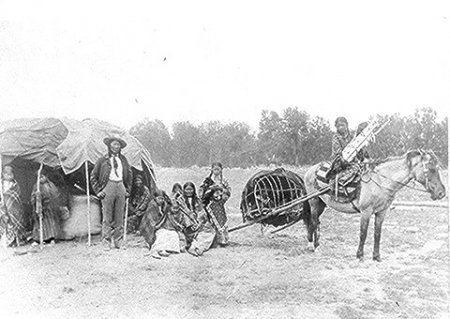
Travois design Wikipedia

Horse-drawn travois Wikipedia

One of the earliest forms of transportation is the travois (properly pronounced trav-wa). The Canadian French name applies to an A-frame construction to carry goods and or people, and is dragged along the ground on its narrowest point. Native women built and maintained the travois, including training the dogs used to pull them. Aspen and cottonwood were the main wood types used, both because they were easily available and sturdy. 

Dogs pulling travois Wikipedia


Lewis and Clark both adopted the travois to carry their supplies on their westward exploration. The main difference was they used horses to pull, allowing larger travois with heavier loads. Ruts can still be seen as their paths were heavily used.

So why not use wheels? First, travois were developed before the invention of the wheel in many cultures, and secondly, the terrain was often not favorable to wheel transport. Plus, dogs could be used in areas where wheels would have caught in brush or broken on rocks. This was roughing it before there were established roadways. Travois adapted well to use on dry or snowy terrain, and needed little adaptation for the seasons.

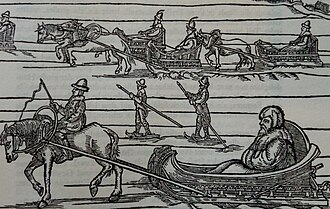
Traveling by sleigh Wikipedia


Sleds, or sleighs, on the other hand, were obviously a snow or ice mode of transport. Some designs included runners that could be removed and replaced with axles and wheels, but most were a winter-season transport only. The word sled comes from a Middle English word sledde which means sliding or slider.

Depending on the size and style, they were also known as a skid or a sledge. Any type of sled can be used to transport passengers or cargo across relatively level ground. Some styles are made to go downhill for recreation. Toboggans fall into this category.

Sledges were often roughly hewn lumber that was pulled by one or two horses into the woods, and hewn trees were loaded onto it. This could be for firewood or building materials.

The origins of sledges is thought to be in Egypt and were used to construct public buildings, as these vehicles worked well on hard-packed sand. Sometimes, they rolled the sledge over a rustic conveyor-belt consisting of de-limbed trees.

Sleds and sledges were also found in the Oseberg “Viking” ship excavation. Unlike wheeled vehicles, they were exempt from tolls. 


Russian Troika Wikipedia


As expected, sleds were important in the perpetual winter of Russia and Siberia, but their use was limited to royalty and bishops. A local design called the troika uses three horses, and is attributed as being the world’s only harness combination with different gaits of the horses. The center horse trots, while the outside horses canter. Originally developed in the 17th century, troikas were used for speedy mail delivery before coming into common usage for passenger and cargo.
Dog sled Wikipedia


British explorations to the Arctic and Antarctic used human-pulled sledges, while other nations preferred dog sleds.
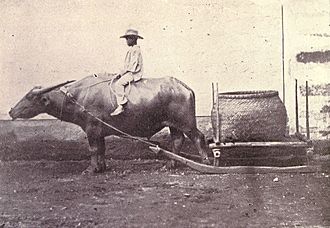
Kangga in Philippines Wikipedia


Many sleds can be used in mud, marshes, and even hard ground, particularly if the runners are greased. Even the Philippines, which has no snow, has its own design, a kangga, which is used in rough terrain and steep hills.

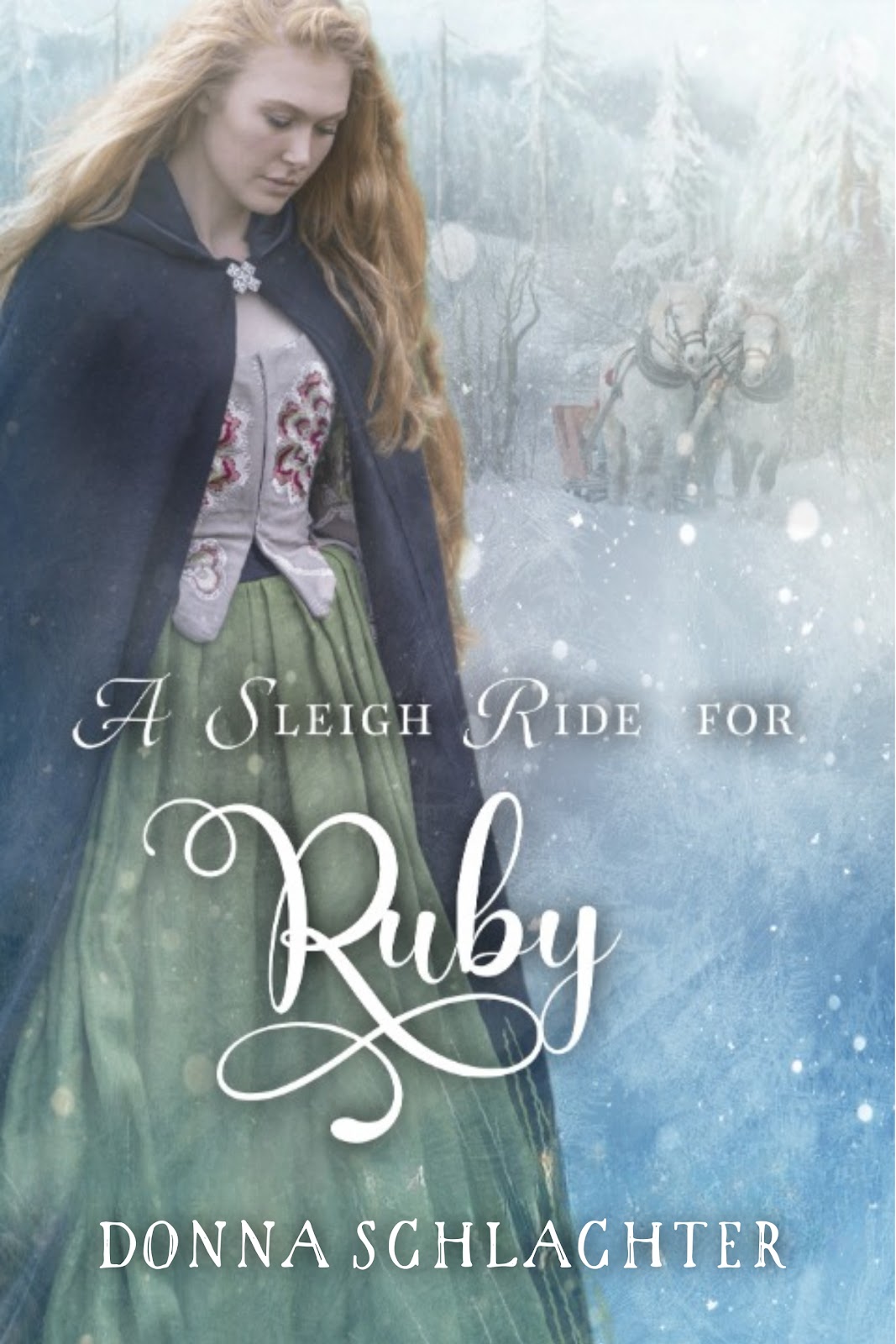
In my recent release, Sleigh Ride for Ruby, a young woman inherits her father’s sleigh business. She soon realizes that somebody in town is determined to put her out of business. But who can she trust? The Pinkerton agent who shows up on the scene? But is he really who he says he is? Check out the book here: https://www.amazon.com/Sleigh-Ride-Ruby-ebook/dp/B0D2LVRSPZ


Leave a comment to enter a random drawing
for a free ebook copy of Sleigh Ride for Ruby.


About the book:

After Ruby Wakefield inherits her father's touring business, she soon learns that not everybody thinks it right or proper that a woman should run a business normally operated by a man. However, she has no choice—she cannot give up on her father’s dream. But somebody in town is unhappy, and Ruby's business falls prey to mishaps such as broken traces, injured horses, and avalanches.

Clarke Everly, a Pinkerton operative, falls into Ruby's life when he hires her sleigh to take his fiancee for a ride in the winter wonderland of Snowflake, Colorado. But when Ruby won't convey them across a frozen lake, his fiancée kicks up a fuss and leaves him cold.

Can Ruby and Clarke figure out who is trying to ruin her business? And will working together show them the warmth of love and the kindness of their Heavenly Father?

About Donna:

A hybrid author, Donna writes squeaky clean historical and contemporary suspense. She has been published more than 60 times in books; is a member of several writers' groups; facilitates a critique group; teaches writing classes; and judges in writing contests. She loves history and research, traveling extensively for both, and is an avid oil painter. 


She is taking all the information she’s learned along the way about the writing and publishing process, and is coaching committed writers. Learn more at https://www.donnaschlachter.com/the-purpose-full-writer-coaching-programs Check out her coaching group on FB: https://www.facebook.com/groups/604220861766651

www.DonnaSchlachter.com Stay connected so you learn about new releases, preorders, and presales, as well as check out featured authors, book reviews, and a little corner of peace. Plus: Receive 2 free ebooks simply for signing up for our free newsletter!

www.DonnaSchlachter.com/blog

Facebook: www.Facebook.com/DonnaschlachterAuthor

Books: Amazon: http://amzn.to/2ci5Xqq

Bookbub: https://www.bookbub.com/authors/donna-schlachter

Goodreads: https://www.goodreads.com/search?q=donna+schlachter

The Purpose-Full Writer: https://www.facebook.com/groups/604220861766651

Need a writing coach? https://www.donnaschlachter.com/the-purpose-full-writer-coaching-programs


Resources:

https://en.wikipedia.org/wiki/Troika_(driving)

https://en.wikipedia.org/wiki/Horse-drawn_vehicle

https://en.wikipedia.org/wiki/Sled

https://en.wikipedia.org/wiki/Travois


Saturday, August 29, 2020

The Shooting of Meriwether Lewis


Fort Clatsop, OR, site of Lewis & Clark Expedition


Elaine Marie Cooper


The famous expedition of Lewis and Clark from 1804 to 1806 was remarkable for many reasons. Not only did they and their group of 33 members of the Corps of Discovery carry out a successful trek to the Pacific Ocean from St. Louis, they managed to avoid any bloodshed along the way. That is, until an accidental shooting of Meriwether Lewis took place within a month of returning to St. Louis.


The incident occurred August 11, 1806 when Lewis went on a hunting trip with Pierre Cruzatte. Why Cruzatte was chosen to accompany Lewis seems impractical at best and possibly deadly at its worst, since the man was blind in one eye and near-sighted in the other. 


Lewis was intent upon finding elk to bring back as food for the main party with whom they would rendezvous at the junctions of the Missouri & Yellowstone Rivers. Lewis and 9 other men in the Corps of Discovery had temporarily split off so they could explore as much territory as possible. But explorers have ravenous appetites and Lewis hoped to find some elk that lived in the Crow Hills of North Dakota.


He spotted one among the willows along a river and put to shore from their canoe. Taking aim at the beast, Lewis suddenly felt burning pain in his left thigh. A bullet had shot clear through from the back to the front of his thigh, barely missing his hip bone. The lead ball left a 3-inch gash. Assuming Cruzatte mistook him to be an elk (he was wearing leather) and had accidentally fired at him, Lewis cried, “D…n you, you have shot me.”


When Cruzatte did not respond, Lewis then feared Indians were attacking them and had likely kidnapped Cruzatte. The wounded hunter hobbled his way back to the canoe and managed to reach the rest of the party. Lewis told them they were under attack, but the others went to search and found no evidence of any attacking party. And Cruzatte was with them, unharmed. He denied shooting Lewis and said he’d not heard Lewis shouting for him. 


Lewis’ wound was tended by himself and Sgt. Gass, who helped the patient remove his breeches and fill the large holes, both front and back, with lint. “The wounds bled considerably but I was happy to find that it had touched neither bone nor artery.” He was fortunate indeed as either could have caused life threatening complications. 


He spent the next 10 days or so in pain and with a fever, lying face down in the canoe that would transport them to the Clark group. By September 8, the group was reunited into one party and Lewis had recovered sufficiently to accompany William Clark to the site upon which thy had started in 1804. 


The joyous celebration for the successful journey became the focus upon their return. But Lewis recalled the shooting incident in his journal: “I do not believe that the fellow did it intentionally but after finding he had shot me was anxious to conceal his knowledge of having done so.” 


When removing his clothing after the shooting, Lewis found the bullet in his breeches and it was of the same type used in the military weapon carried by Cruzatte. But the man denied being responsible for the injury the rest of his life. 


Elaine Marie Cooper has two historical fiction books that released in 2019: War’s Respite(Prequel novella) and Love’s Kindling. They are the first two books in the Dawn of America Series set in Revolutionary War Connecticut. This series will re-release with a new publisher beginning in 2021. Love's Kindling is a finalist in the 2020 Selah Awards.

Cooper is the award-winning author of Fields of the Fatherless and Bethany’s Calendar. Her 2016 release (Saratoga Letters) was finalist in Historical Romance in both the Selah Awards and Next Generation Indie Book Awards. She has been published in Chicken Soup for the Soul and HomeLife magazine. She also penned the three-book historical series, Deer Run Saga

Her upcoming release, Scarred Vessels, is about the black soldiers in the American Revolution. Look for it in October 2020. You can visit her website/ blog at www.elainemariecooper.com


Sunday, June 7, 2020

Sparking Fire on the American Frontier


by 
Misty M. Beller

As a writer of historical fiction, I've always been a little fascinated by how people had to light flame before the invention of the friction match we use today. 

(By the way, the first "matches" were actually invented all the way back in 577 AD using sulphur, and various versions of sulphur and phosphorus to make fire were experimented with for centuries. None were practical, inexpensive, and safe for the general public until the friction match was invented by English chemist John Walker in 1826. But that, my friends, is a blog post for another day.)

There were two main methods of producing fire before matches came into widespread use. Most of the "civilized world" used flint and steel to build their fires, however when Lewis and Clark explored the vast lands of the Louisianna Territory, they found that the natives mostly used various versions of a bow drill to spark flame for campfires. 


Versions of the flint and steel method for starting fire. From the United States National Museum (Smithsonian Institution), Washington D.C.

Regarding the flint and steel method, below is an excerpt Herbert Manchester's book, The Diamond Match Company; a Century of Service, of Progress, and of Growth, 1835-1935, which gives an unfortunately realistic description of how a morning fire was started: 
"known to the Romans and . . . developed in the Dark Ages along with hand-wrought steel for weapons and armor. The steel, which was curved so as to form a handle, was held in the left hand and struck with the sharp edge of the flint. Good tinder was very important and was made by charring lint, or other easily combustible material, and keeping it dry in a tinder box or pouch. The fire maker blew upon the lighted tinder to spread the fire and added shavings, or perhaps so-called matches, which then meant only splints dipped in sulphur. If everything went right, a fire was kindled in a few minutes, but the flint might have lost its sharp edge, the steel might be blunted and the tinder might be damp from rainy weather or merely from fog; moreover, as the fire was usually built in the dark before sunrise, which was the getting-up time in those days, the knuckles might be hit instead of the steel, and the fumes in-haled in ineffectual puffing."
If the fire was being built on the trail, add to the above image the challenges of wind and rain, and the difficulty of securing decent tinder like dried moss or shredded birch bark.


Versions of the bow-drill method for starting fire. From the United States National Museum (Smithsonian Institution), Washington D.C.

As for the bow-drill or other methods of using wood upon wood for the friction to create a spark, there were as many variations as there were people using this method to start fire. Typically a spindle about a foot long would be held upright with one end in a hole in a block of wood that sat on the ground. The base board should be made from spruce, cedar, balsam, tamarack, or similar, non-resinous wood. The string of a bow was wrapped once around the spindle, so that it was tight enough not to slip during operation.
Diagram of a bow drill designed for fire starting


With these two methods as the primary ways to build a fire, no wonder people rarely allowed fires to go out, even in the hot summer months. A fire had to be used for cooking, so banking coals, so they could be re-kindled into flame, became a carefully honed skill.

But for settlers, frontiersmen, or Native Americans on the trail, a new fire would probably need to be built at each stopping point. Especially in the cold winter months, where the campfire would serve for both heat and cooking. If a fire wasn't needed for warmth and they had sufficient cooked food, the groups would certainly not go through the effort. But hunting along the journey was usually the primary source of food, and that meat had to be cooked.

Cooking, of course, required a fire. 


***

Misty M. Beller is a USA Today bestselling author of romantic mountain stories, set on the 1800s frontier and woven with the truth of God’s love.

Her latest release, Hope in the Mountain River, is an epic journey along the path taken by the Lewis and Clark expedition—an epic journey through breathless landscapes and adventure so intense, lives will never be the same.

For a limited time, you can get one of Misty's bestselling novels free here: https://www.subscribepage.com/s8n2o1

Thursday, May 7, 2020

Camas Roots: How Early Nez Perce Women Built a Business Empire


by 
Misty M. Beller

As I've been researching for my current Call of the Rockies series, I've had the pleasure of diving deep into the culture of the Nez Perce tribe. I found it interesting that one of the primary food sources of The People (as they called themselves) was camas roots.

But what really drew my notice was how the women would cultivate entire fields of camas root, store what they needed for their family through the winter, then use the extras for bartering. Some savvy women would become quite wealthy from their business dealings!


Nez Perce woman named I-ah-to-tonah (or Little Woman Mountain) and her son, ca. 1909. She might have acquired many of these possessions through the trade of camas route.


Why camas root? 
The bulbs of the camas plant are full of calories and nutrients, and each fall, Nez Perce families would travel to their particular camas meadow (a section of land whose camas rights had probably been passed down from generation to generation within their family). Many of these meadows were located near present-day Weippe, Moscow or Grangeville, where the onion-shaped bulbs grew thickly.


Edible Camas Plant. Photo courtesy of Walter Siegmund (public domain)

Women used pointed wooden tools to harvest the bulbs, and could often gather over 50 pounds a day, satisfying their full winter's supply within just a few days.

The Nez Perce are known for their detailed knowledge of the plant life around their region, which was helpful because there was another type of camas that sometimes grew in the same area as edible cams. This other type was called death camas, and the results that came from accidentally eating that bulb are self-explanatory! The two are easy to tell apart by flower color—edible camas is blue, the other creamy white. But since harvest occured after flowering was over, this color cue would not be present. The Nez Perce women had to know their camas roots!

Camas bulbs were cooked to improve taste and food value. A carbohydrate in camas called inulin is difficult to digest, but after cooking for up to two days in a carefully tended pit oven, the inulin converts to fructose, which is more easily digested and tastes sweet, almost like a sweet potato. When Lewis and Clark's expedition spent time in the Nez Perce camps after almost starving to death passing through the Bitterroot Range of the Rocky Mountains, they were initially excited to have camas roots to eat. Until the stomach upset started! 

Camas bulb


Baked camas can be eaten right away. For long-term storage, though, the cooked bulbs were sun-dried, pounded into a flour, shaped into a flat loaf, and baked again.

To remain productive, camas meadows need to be open and sunny, free of encroaching tree growth. Fire was used as a tool to accomplish this. Camas bulbs themselves were tended, too. During harvest the bulbs were sorted by size: large ones were collected but smaller bulbs or bulblets were put back into the newly worked-up soil for next year.


A Business Empire

Native American peoples who ate camas include the Nez Perce (Nimíipuu), Cree, Coast Salish, Kalapuya, and Blackfoot, and Yakama, among many others. Not all of these people groups harvested camas themselves. Instead, many relied on trade in order to procure it. Trade networks were established all the way from the Rockies to the Pacific Ocean, and a shrewd businesswoman who tended her camas meadows well could provide everything her family needed and more!


***

Misty M. Beller is a USA Today bestselling author of romantic mountain stories, set on the 1800s frontier and woven with the truth of God’s love.

Her latest release, Hope in the Mountain River, is an epic journey along the path taken by the Lewis and Clark expedition—an epic journey through breathless landscapes and adventure so intense, lives will never be the same.

For a limited time, you can get one of Misty's bestselling novels free here: https://www.subscribepage.com/s8n2o1

Sunday, March 8, 2020

Little Known Details of the Lewis and Clark Expedition

by Misty M. Beller

I'm excited to join the blogging team on the Heroes, Heroines, and History blog! My books are frontier westerns set in the Rocky Mountains during the 1800s, so I'll be sharing with you lots of fun historical details I learn through my research. I can't wait! 

My newest series follows much of the trail Lewis and Clark's expedition took across what would become Montana and into Idaho. I have to confess that I couldn't remember many details from when I learned about the expedition in school. As I began to research, I've been amazed at how fascinating their journey was. 

The expedition was known as the Corps of Discovery and consisted of 38 capable enlisted men, in addition to the leaders, Captains Merriweather Lewis and William Clark. I love what Captain Clark wrote in his journal on March 31, 1805: With such men, I feel every confidence necessary to insure success.

As I've read and re-read the journals of the captains and sergeants from those two adventurous years, I've been surprised by so many details. Here are a few of my favorite facts!

Only one person died throughout the entire journey
Sgt. Charles Floyd died of appendicitis on the westward trip in what is now Floyd’s Bluff, Iowa. Throughout the entire journey from St. Louis to the Oregon coast and back, over land no white man had ever trod, while meeting hundreds of Native American tribes, none of the party died through violent means. 
Sergeant Charles Floyd, photo by Benjamin Trott - images.metmuseum.org

Sometimes talks with the Native Americans had to go through five different interpretations
Lewis and Clark hired two interpreters to travel with them, but speaking with the natives still wasn't easy. In one council with a Salish tribe (Nez Perce), the conversation had to flow from English to French to Hidatsa to Shoshone to Salish. Then back. 

Salish Village. Courtesy Northwestern University Library, Edward S. Curtis's 'The North American Indian': the Photographic Images.


Finding a water route to the Pacific Ocean was only one of the goals of the expedition
They were also tasked by President Jefferson with establishing peaceful relations between Native American tribes and their "Great White Father" back in the States, as well as classifying the flora and fauna of the new lands now owned by the United States through the Louisiana Purchase. 
Map showing lands that were part of the Louisiana Purchase in white. By William Morris. Wikimedia, Public Domain.

Those are just a few interesting tidbits I've learned, and I'll be sharing more in future posts. 

In the meantime, are you a history buff about the Lewis and Clark expedition? If so, share some facts we may not know! Or are you like I was, with only a vague memory of what the Corps of Discovery actually did? 

***

Misty M. Beller is a USA Today bestselling author of romantic mountain stories, set on the 1800s frontier and woven with the truth of God’s love.

Her latest release, Freedom in the Mountain Wind, is an epic journey along the path taken by the Lewis and Clark expedition—an epic journey through breathless landscapes and adventure so intense, lives will never be the same.

For a limited time, you can get one of Misty's bestselling novels free here: https://www.subscribepage.com/s8n2o1

Sunday, September 18, 2016

Lewis and Clark Flora and Fauna Discoveries

Meriwether Lewis and William Clark


The story of William Clark and Meriwether Lewis is a familiar one. We know of their travels across the vast wilderness that would become the United States of America. They mapped waterways, met the indigenous people, suffered many hardships and brought back incredible reports of the vastness of the land.


Wild Turnip


One of the lesser known details of the Lewis and Clark expedition has to do with their discoveries of new flora and fauna. They kept detailed reports of everything new they encountered. This included various plants shown to them by the
people they met in their travels. Some were good for eating; some were good for medicine. Lewis and Clark were able to add nearly 200 species to the world’s list of known plants.

Bitterroot Blossom


Lewis picked a blossom of a bitterroot plant in the Rocky Mountains. He preserved the bloom and carried it thousands of miles, ending in St. Louis with the dried blossum still intact.


Drawing of Grape Leaf


Clark recorded a description of an Oregon grape leaf, along with a detailed drawing. The image had exact measurements down to the fraction of an inch.


Penstemon


Some of the Indians they encountered taught them to boil the flowers of the penstemon as a medication. They used this concoction to treat sores and burns.


Clarkia pulchella


The Clarkia pulchella, was named after William Clark, but was actually discovered by Meriwether Lewis. The plant has beautiful blue flowers.


Badger
They recorded not only plants previously unknown, but many animals and birds as well. On the orders of President Jefferson, they kept careful accounts of unusual creatures they encountered. They took great care to preserve animal hides and bird skins. Some of them were still intact almost two centuries later. The badger was the first animal to be stuffed and shipped back east. 


Lewis Woodpecker


The Lewis woodpecker was first seen as they approached the Rockies. Clark's crow was another bird they found in the same area.


Beaver and Muskrat

The Lewis and Clark expedition expedited the settlement of the Western United States of America. Their discovery of numerous beaver and muskrat encouraged the boom in the fur trade and more exploration.


One report said they were so enthused by their command to display their finds to Jefferson that they floated a prairie dog from its burrow by pouring barrels of water down the hole. When they finally washed the animal out, they shipped it back to the President, alive and yelping, and in good health.


Grizzly Bear


They noted 122 species never before recorded. Some of them were stuffed and shipped back East. At times, they were in danger because of their enthusiasm to obey Jefferson’s directive. On one occasion, Lewis had to jump into a river to escape the ire of a thousand pound grizzly bear.


Description of California Condor


In his journal, William Clark drew and picture and described a "large buzzard" of huge proportions. He said the bird had a wingspan of nine feet two inches. This wasn't a buzzard, but was the California Condor, the largest bird to inhabit the North American continent.


Lewis and Clark discovered so much on their travels. It is hard to imagine traveling as they did and recording their findings in such detail. Spending months and years on a hard, often tortuous, trek, is not my way of traveling, but I do enjoy visiting new places in our wonderful country. What about you? What is a favorite place you visit, or would like to visit? I would love to hear your comments.


Nancy J Farrier is an award winning author who lives in Southern California in the Mojave Desert. She loves the Southwest with its interesting historical past. Nancy and her husband have five children and two grandsons. When Nancy isn’t writing, she loves to read, do needlecraft, play with her cats, and spend time with her family. Nancy is represented by Karen Ball of The Steve Laube Literary Agency. You can read more about Nancy and her books on her website: nancyjfarrier.com.