Showing posts with label Pony Penning Day. Show all posts

Wednesday, July 9, 2025

100 Years of Saltwater Cowboys and Penning Ponies

  By Tiffany Amber Stockton

This is it! It's finally July. And that means a special trip with my daughter to the 100th anniversary of the first official Pony Penning Day on Chincoteague Island. I haven't been back to the island where my grandfather was born for nearly ten years, and I just discovered a potential B&B owned by distant family members. If you missed last month's post about some of my family legacy on Chincoteague, you can view it here.

The History of Pony Penning Day on Chincoteague & Assateague Islands

Wild ponies have inhabited Assateague Island for hundreds of years. A lot of evidence says they are the descendants of the survivors of a Spanish galleon which wrecked off the coast of Assateague. This story, which has been passed from generation to generation on Chincoteague Island, is stronger than fiction. :) I heard it myself from my grandfather, and it's common lore among island residents.


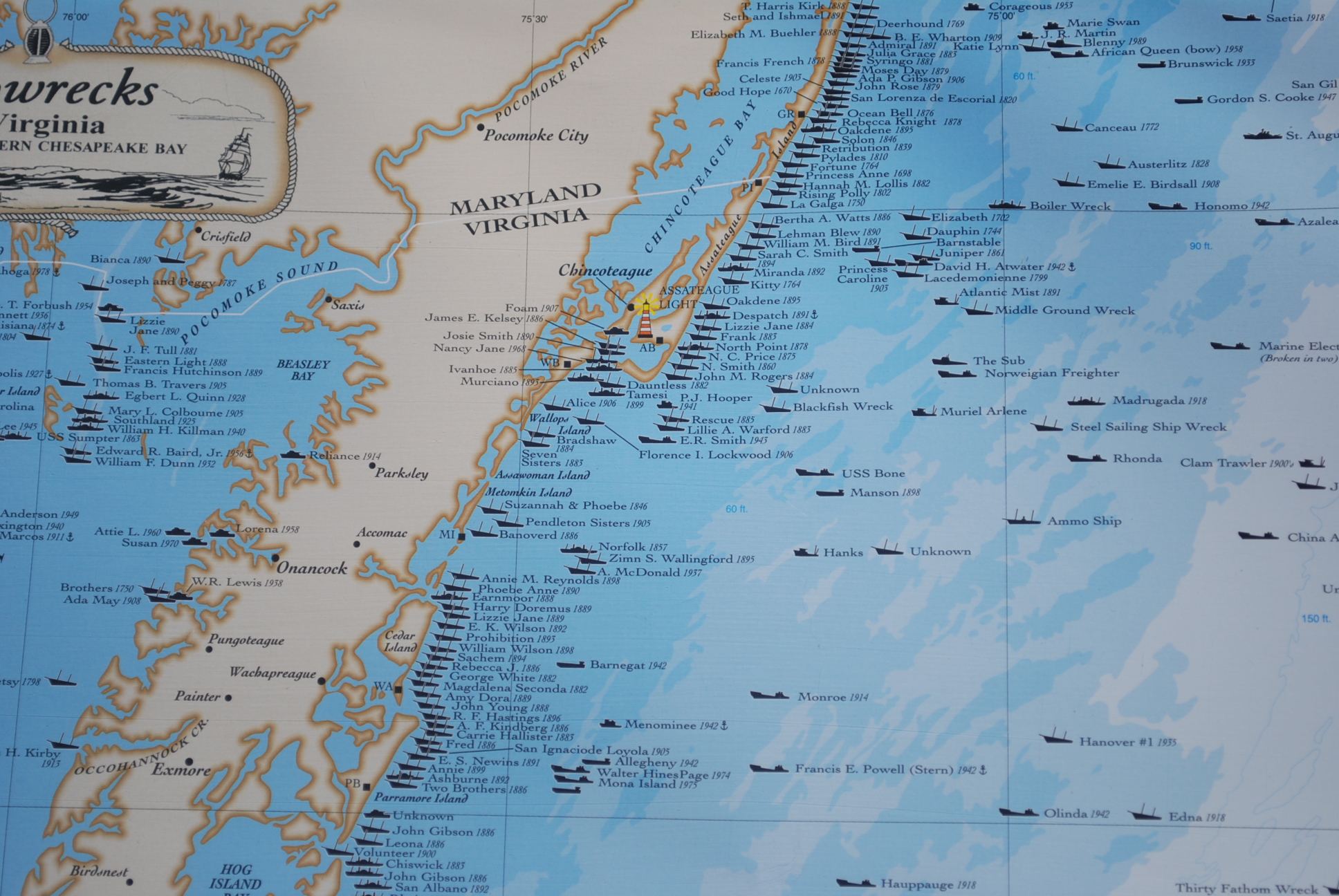
If you ever view a shipwreck map of the mid Atlantic coastline, you'll see a remarkable number of shipwrecks. Before modern navigation, ships used lighthouses and the stars to navigate at night. It worked well until a bad storm came up or heavy fog set in, which impaired visibility. This caused ships to get off course and hit sandbars along the coast, which resulted in a lot of wrecks all up and down the eastern coastlines.

These wrecks would usually occur during a storm, and the large waves would beat the wooden ship apart. The large number of shipwrecks, together with it being common for ships to be transporting ponies to the Colonies or South America, makes it very likely that ponies originally got to Assateague from a shipwreck.

A book written in 2007 by Mr. John Amrhein, The Hidden Galleon, suggests the local story about the Spanish galleon is true. In the book, he describes the wreck of the La Galga in 1750, its location, the circumstances surrounding the voyage, the great storm of 1749 which decimated all the livestock on Assateague Island prior to the La Galga wreck, and the appearance of "Beach" Ponies shortly after the demise of the La Galga, along with other evidence. This might not be 100% provable, but the circumstantial evidence he presents is very powerful. You can easily see why this story has been favored for passing down the line. For more information, go to www.thehiddengalleon.com.

History of Pony Penning


Penning began as a way for livestock owners to claim, brand, break and harness their loose herds. By the 1700's it had become an annual event, complete with drinking, eating, and plenty of revelry by the entire community. The earliest known description of Pony Penning was published in 1835. The practice was then already an "ancient" custom held in June on Assateague Island. Penning on Chincoteague Island is not mentioned in print until the mid-1800's, and it's believed to have been begun by two islanders who owned large herds that grazed on Chincoteague.

The penning continued on both islands for years. By 1885, they were held on Assateague one day and Chincoteague the next. Assateague also had a Sheep Penning, which is believed to be a custom even older than the others. Word of the events began to spread, and hotels and boarding houses were booked for the festivities. In 1909, the last Wednesday and Thursday of July were set as the official dates for the yearly events. As Pony Penning increased in popularity, Assateague's Sheep Penning wound down and was discontinued by 1914.
Modern Day Pony Penning

After a string of disastrous fires in the Town of Chincoteague, the villagers realized their fire fighting equipment was seriously inadequate. In 1925, the town authorized the Chincoteague Volunteer Fire Company to hold a carnival during Pony Penning to raise funds. That year, over 15 colts were sold to benefit the fire company, and the carnival was a huge success. Bolstered by the interest in the pony swim, visitors began arriving from across the country for the annual penning.


The crowd in 1937 was estimated at 25,000. The increased revenue from the carnivals and auctions enabled the fire company to modernize its equipment and facilities, and in 1947 it began to build its own herd by purchasing ponies from local owners. They moved the herd to Assateague where the government allowed publicly owned herds to graze on the newly established Chincoteague National Wildlife Refuge.

That same year, 1947, Marguerite Henry published Misty of Chincoteague, the story that made Pony Penning internationally famous. A movie followed, as did several sequel books. The tale of the wild pony Phantom, her foal Misty, and the children who buy and raise her was awarded the Newbery Medal of Honor and has become a classic, still loved and enjoyed by each new generation.


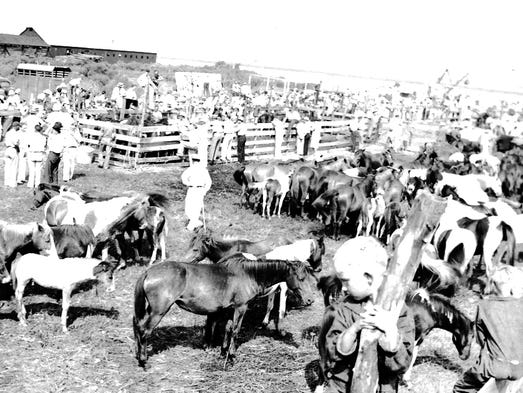
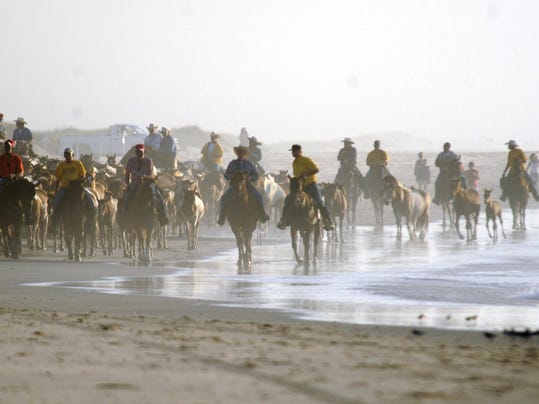
Pony Penning is still held in July during the Chincoteague Volunteer Firemen's Carnival. "Saltwater Cowboys" herd the horses across the narrowest part of Assateague Channel at slack tide (between low and high tides), after which they are again examined by veterinarians. After a resting period, they are herded through town to a corral at the Carnival Grounds where they stay until the next day's auction.

The Pony Auction not only provides a source of revenue for the fire company, but it also serves to trim the herd's numbers. To retain the permit to graze on the refuge, the herd must not exceed 150 horses, so they hold this annual event to keep the herd within limits.

Each year thousands of people flock to Chincoteague Island to watch the Pony Penning and enjoy the Firemen's Carnival. For many of them, the trek to the shores of Assateague Channel on the last Wednesday and Thursday of July has become an annual event, an opportunity to participate in a tradition older than the country itself.

This year, they're projecting nearly 50,000 people in attendance. What have I gotten myself into?

NOW IT'S YOUR TURN:

* Have you ever attended Pony Penning Day on Chincoteague, or is it on your bucket list? What would you most look forward to seeing?

* What do you think makes traditions like Pony Penning so enduring and beloved, even 100 years later?

* The story of the shipwrecked Spanish ponies has been passed down for generations. Do you believe it’s fact, folklore, or a powerful mix of both? Why?

Leave answers to these questions or any comments on the post below.

** This note is for our email readers. Please do not reply via email with any comments. View the blog online and scroll down to the comments section.

Come back on the 9th of each month for my next foray into historical tidbits to share.

BIO

Tiffany Amber Stockton has embellished stories since childhood, thanks to a very active imagination and notations of talking entirely too much. Honing those skills led her to careers as an award-winning and best-selling author and speaker, while also working as a professional copywriter/copyeditor. She loves to share life-changing products and ideas with others to help them just get rooted and live a life of purpose.

Currently, she lives with her husband and fellow author, Stuart Vaughn Stockton, along with their two children, two dogs, and three cats in southeastern Kentucky. In her 20+ years as a professional writer, she has sold twenty-six (26) books so far and has agent representation with Tamela Murray of the Steve Laube Agency. You can find her on Facebook and GoodReads.

Monday, June 9, 2025

Gault & Galt: A Family Legacy

 By Tiffany Amber Stockton

Only 1 more month until the festivities surrounding the 100th annual Pony Penning Day celebrations, but I'll cover that in July. :) Actually, the famous fair is having a special allowance this year and will be open every weekend during both June and July. I recently shared some family history with my daughter, and that set me to thinking about family legacy.

If you missed last month's post about the Beebe family legacy on Chincoteague, you can view it here.

When History Gets Personal

When I was a little girl, my mom read me the beloved classic Misty of Chincoteague. I was completely captivated—wild ponies, island adventures, brave kids. But the best part? My mom didn’t stop at the story. She followed it up with tales of her own childhood and how her dad actually knew Grandpa Beebe, Paul, and Maureen. Then she pulled out a photo—a real picture—of her standing next to Misty. The Misty.

To little me, it was like finding out my mom and grandfather were local celebrities. In my eyes, they kind of were.

Daniel W. Gault, Sr. & Carrie (Jester) Gault
But let’s rewind a bit. Way back to 1919, when my grandfather—Pop-pop, as I called him—was born on Chincoteague Island. His parents, Daniel W. Gault, Sr. and Carrie Jester Gault, each brought a child from previous marriages, and together they had seven more. Pop-pop was the first of those seven. A big, bustling family.

In 1925, when Pop-pop was just six years old, the very first official Pony Penning Day took place. I love imagining him as a little boy, heart racing as he ran toward the beach, waiting for the moment when the saltwater cowboys would herd the wild ponies across the channel from Assateague to Chincoteague for the big auction. That tradition still lives on today, but for him—it was just part of growing up.

The Great Depression hit everyone hard, and my family was no exception. My mom used to tell me how Pop-pop’s father, my great-grandfather, would get creative just to keep the family going. He’d cut up old car tires to use the rubber for resoling shoes. Can you imagine? That kind of grit always stuck with me. By age 13, Pop-pop was already cutting hair in his dad’s barbershop to help make ends meet.

Daniel W. Gault, Jr. & Esther Mae (Seiple) Gault
He graduated from high school in 1937, and not long after, the family sold the island barbershop and moved to Washington, D.C. That’s where he met my grandmother, Esther Mae Seiple. They got married after he returned from serving in the Army for five years stationed in the Panama Canal during WWII. After the war, he joined his father once again, this time at the “Father & Son Barber Shop” on Pennsylvania Avenue, just steps from Capitol Hill.

And let me tell you, their client list was impressive. Senators, congressmen, and D.C.’s elite sat in their chairs. It ran in the family, apparently. Another branch of our family, the Galts (spelled without the “u”), owned Galt & Bro., Inc. Jewelers. That shop served U.S. presidents and opened in 1802, right near the White House. The stories that came out of that business—like fixing Abraham Lincoln’s watch during the first shots at Fort Sumpter, or Edith Galt marrying President Woodrow Wilson—could fill an entire book. Maybe that can be my next project.

Galt & Bro, Inc. Jewelers, est. 1802 Senator barbershop


But back to Pop-pop.

Around 1952, not long after Congress opened a barbershop in the Capitol basement, my great-grandfather retired and moved back to Chincoteague. That left Pop-pop running the D.C. shop on his own. He kept it going until 1966 when Safeway bought out the block for a new loading dock. That’s when he, my grandmother, and my mom (who was born in 1950) packed up and moved to Suitland, Maryland.

He rented a chair in a barbershop in Fairfax Village, and that’s where my older brother had his very first haircut. Pop-pop stayed there, cutting hair and telling stories, until 1979 when he returned to his roots on Chincoteague Island. He took over a barbershop there and moved into a little apartment across the street.

That apartment became special to me. I can still picture myself sitting on his knee, spinning wild tales about my brother and me being in some sort of danger, and Pop-pop swooping in to save the day. What can I say? I’ve always been a storyteller...even at age four. :)

Sadly, our time together didn’t last as long as I wish it had. Pop-pop passed away from a heart attack in 1983. I was only seven. But the stories, the history, and the legacy we shared have stayed with me ever since.

And now, through this blog and the books I’m currently writing, his story lives on.

NOW IT'S YOUR TURN:

* Do you have a family story that connects you to a famous place, person, or moment in history? Share how your family’s past has shaped your perspective or inspired you.

* What childhood memory or family tradition still sticks with you today, and why? Whether it’s a holiday ritual, a special person, or a place you visited, we’d love to hear about it.

* Have you ever felt a personal connection to a book or story that tied into your real life? Maybe like me with Misty of Chincoteague, a fictional tale suddenly felt real. What is it?

Leave answers to these questions or any comments on the post below.

** This note is for our email readers. Please do not reply via email with any comments. View the blog online and scroll down to the comments section.

Come back on the 9th of each month for my next foray into historical tidbits to share.

BIO

Tiffany Amber Stockton has embellished stories since childhood, thanks to a very active imagination and notations of talking entirely too much. Honing those skills led her to careers as an award-winning and best-selling author and speaker, while also working as a professional copywriter/copyeditor. She loves to share life-changing products and ideas with others to help them get rooted and live a life of purpose.

Currently, she lives with her husband and fellow author, Stuart Vaughn Stockton, along with their two children, three dogs, and three cats in southeastern Kentucky. In her 20+ years as a professional writer, she has sold twenty-six (26) books so far and has agent representation with Tamela Murray of the Steve Laube Agency. You can find her on Facebook and GoodReads.

Friday, May 9, 2025

The Beebe Legacy of Chincoteague Island

  By Tiffany Amber Stockton

Less than 3 months to the 100th annual Pony Penning Day celebrations, but I'll cover that in July. :) As I make plans to return to my favorite island and relive some fun childhood (and adulthood) memories, I'm reminded of a family with as much history tied to the island as my own.

If you missed last month's post about a legacy of horses and a direct-descendant of the famous Misty of Chincoteague, you can view it here.

A Legacy Family on Chincoteague

Thanks to the heart and hard work of the Beebe family, hundreds of thousands have met Misty—the little horse who put Chincoteague on the map.

But to understand their deep connection to the island, you have to start with Clarence Beebe, the grandfather immortalized in Marguerite Henry’s classic stories.

Clarence was born on Chincoteague Island in 1884. Four years later, his future bride, Ida Virginia Whealton, was born just down the way. They married in 1906, raised ten children (six survived past infancy), and lived their entire lives on the island they loved. They’re both buried there today.

Clarence was a horseman through and through. Folks called him the “Chincoteague Pony Man,” and for good reason. He and Ida once owned 100 acres of the island and ran a busy ranch, known for its gentle ponies brought over from nearby Assateague. Every year, he’d buy wild ponies during the famous Pony Penning and train them to be calm, friendly, and ready for new homes. He would definitely be called a "horse whisperer" today.

Now, in the books and movie, Paul and Maureen Beebe are shown living with their grandparents, but like a lot of novelized real-life stories, that part’s fiction. They actually lived with their parents but spent many sun-soaked days at the ranch with Grandpa Clarence.

When author Marguerite Henry visited the island and met the kids, she asked what they wanted most. “A pony of our own,” they said. Clarence had ponies, but they were all for selling, not keeping.

Then came Misty.

Clarence and Ida had already purchased her parents—The Pied Piper and Phantom. From them came the famous filly. Marguerite Henry, inspired by the family and the island's charm, struck a deal with Clarence. She bought Misty for $150 and took her to Illinois, where the young pony became a star before returning to the island at 11 years old.

By then, Clarence had passed, and Ida asked their son Ralph to take over Misty’s care. He and his wife Jeanette carried the torch, tending the ranch and raising Misty’s foals. Their son, Billy King Beebe, later opened the ranch as a museum in 1999.

In 2023, the Beebe Ranch almost became a mere piece of property to a real estate investor, but the existing owners and last remaining family members who own the ranch appealed to the Museum of Chincoteague to purchase it instead. Since the museum itself lacked sufficient funds, they made a plea to the public and hoped for the best. The ensuing support from fans all over the world kept the legacy alive!

Today, visitors still come each summer to see Misty’s stall...and Stormy’s too. Family photos, old saddles, and newspaper clippings line the walls, each of them pieces of a story that began with one island man and a dream.

And what a story it is!

NOW IT'S YOUR TURN:

* What family traditions or stories have shaped your own legacy?

* Have you ever read a fictionalized account of something that really happened? What was the book and what did the author change for the sake of the story?

* Have you ever read Misty of Chincoteague or visited the island to see the wild horses?

Leave answers to these questions or any comments on the post below.

** This note is for our email readers. Please do not reply via email with any comments. View the blog online and scroll down to the comments section.

Come back on the 9th of each month for my next foray into historical tidbits to share.

BIO

Tiffany Amber Stockton has embellished stories since childhood, thanks to a very active imagination and notations of talking entirely too much. Honing those skills led her to careers as an award-winning and best-selling author and speaker, while also working as a professional copywriter/copyeditor. She loves to share life-changing products and ideas with others to help them get rooted and live a life of purpose.

Currently, she lives with her husband and fellow author, Stuart Vaughn Stockton, along with their two children, three dogs, and three cats in southeastern Kentucky. In her 20+ years as a professional writer, she has sold twenty-six (26) books so far and has agent representation with Tamela Murray of the Steve Laube Agency. You can find her on Facebook and GoodReads.

Sunday, March 9, 2025

Ash Wednesday Storm of 1962 on Chincoteague

 By Tiffany Amber Stockton


With each passing week, I find myself returning to the culture, resilience and strength I find in a tiny little island with a big history, and one where my own family history is so richly intertwined. As I'm still buried in this current book where I hope to showcase that charm, let's take a little walk together through the sands of time.

The Resilient Community of Chincoteague Island


Throughout history, certain places stand as testaments to human resilience, where the past and present merge to tell stories of perseverance. Chincoteague Island is one such place—a small coastal town that has weathered many storms through the strength of its people. Known for its wild ponies, maritime traditions, and tight-knit community, Chincoteague offers a glimpse into a past where survival depended on cooperation, ingenuity, and an unwavering commitment to one another.

From its early days as a fishing and oystering community to its modern role as a beloved tourist destination, the island has faced its share of challenges. Fierce hurricanes, devastating fires, and economic shifts have tested the mettle of its people.

One of the most defining moments in Chincoteague's history was the Ash Wednesday Storm of 1962 (the same storm where Misty gave birth to her foal, Stormy, and another author penned a book about him). This brutal nor'easter ravaged the island, flooding homes and businesses, and leaving residents with an overwhelming task of rebuilding.

It was called the "Storm of the Century" for this area, but neighbors helped neighbors, families opened their doors to the displaced, and the town came together to restore what had been lost. In doing so, they preserved more than just buildings—they safeguarded a way of life rooted in community.

Chincoteague's history is also about the enduring strength of its people. The annual Pony Swim, a tradition dating back to 1925, is a perfect example of how the island's residents have turned their way of life into a legacy. Orchestrated by the Chincoteague Volunteer Fire Company, the event supports the town's emergency services while keeping a unique historical tradition alive. What began as a practical solution for managing the island's wild pony population has become a symbol of the town's unity and determination.

This unyielding spirit, passed down through generations, remains the foundation of life on the island. Here, history is found in the hands of fishermen mending their nets, in the voices of storytellers sharing tales of storms and survival, and in the quiet strength of a town that refuses to be defined by its hardships.

Visitors may come for the island's beauty and folklore, but they leave with something more—a deep appreciation for a place shaped not just by time, but by the indomitable spirit of its people.

NOW IT'S YOUR TURN:

* What is a storm (literal or figurative) you've weathered? Did you do it alone or with support?

* Do you live in a small town? What do you love the most, and what's one of the biggest challenges you face?

* If you don't live in a small town, would you ever? Why or why not?

Leave answers to these questions or any comments on the post below.

** This note is for our email readers. Please do not reply via email with any comments. View the blog online and scroll down to the comments section.

Come back on the 9th of each month for my next foray into historical tidbits to share.

BIO

Tiffany Amber Stockton has embellished stories since childhood, thanks to a very active imagination and notations of talking entirely too much. Honing those skills led her to careers as an award-winning and best-selling author and speaker, while also working as a professional copywriter/copyeditor. She loves to share life-changing products and ideas with others to help improve their lives in a variety of ways, but especially from the inside out.

Currently, she lives with her husband and fellow author, Stuart Vaughn Stockton, along with their two children, three dogs, and three cats in southeastern Kentucky. In her 20+ years as a professional writer, she has sold twenty-six (26) books so far and has agent representation with Tamela Murray of the Steve Laube Agency. You can find her on Facebook and GoodReads.

Thursday, September 9, 2021

Pony Penning Day History

 By Tiffany Amber Stockton


Last month, I shared the story of my great-grandfather's cousin marrying President Woodrow Wilson while he was president.

front face of $10 gold coin
rear face of $10 gold coin
I mentioned I would try to find this coin as a present for my 45th birthday. Unfortunately, all I found in my price range were replicas. The actual $10 gold pieces are much more valuable.

Maybe some day I can add that to my heirloom items from my grandparents and great-grandparents. Not this year though.

If you missed last month's post, you can view it here: https://www.hhhistory.com/2021/08/presidential-bride-marrying-president.html.

This month, I'm returning to the little island made famous by Assateague ponies and an annual pony penning event which is almost reaching its 100th year celebration.

History of the Chincoteague Ponies

Wild ponies have inhabited Assateague Island for hundreds of years. A lot of evidence says they are the descendants of the survivors of a Spanish galleon which wrecked off the coast of Assateague. This story, which has been passed from generation to generation on Chincoteague Island, is stronger than fiction. :) I heard it myself from my grandfather, and it's common lore among island residents.

If you’ve ever seen a shipwreck map of the mid Atlantic coastline, then you know there were a remarkable number of shipwrecks. Before modern navigation, ships used lighthouses and the stars to navigate at night. This worked well until a bad storm came up or heavy fog set in, which impaired visibility. This caused ships to get off course and hit sandbars along the coast, which resulted in a lot of wrecks all up and down the eastern coastlines.

These wrecks would usually occur during a storm, and the large waves would beat the wooden ship apart. The large number of shipwrecks, together with the fact that it was very common for ships to be transporting ponies to the Colonies or South America, makes it very likely that ponies originally got to Assateague from a shipwreck.


old chincoteague pony postcard
A recent book written by Mr. John Amrhein, "The Hidden Galleon", suggests the local story about the Spanish galleon is true. In the book, he describes the wreck of the La Galga in 1750, its location, the circumstances surrounding the voyage, the great storm of 1749 which decimated all the livestock on Assateague Island prior to the La Galga wreck, and the appearance of "Beach" Ponies shortly after the demise of the La Galga, along with other evidence. This might not be 100% provable, but the circumstantial evidence he presents is very powerful. You can easily see why this story has been favored for passing down the line. For more information, go to www.thehiddengalleon.com.

History of Pony Penning

Penning began as a way for livestock owners to claim, brand, break and harness their loose herds. By the 1700's it had become an annual event, complete with drinking, eating, and plenty of revelry by the entire community. The earliest known description of Pony Penning was published in 1835. The practice was then already an "ancient" custom held in June on Assateague Island. Penning on Chincoteague Island is not mentioned in print until the mid-1800's, and it's believed to have been begun by two islanders who owned large herds that grazed on Chincoteague.

The penning continued on both islands for years. By 1885, they were held on Assateague one day and Chincoteague the next. Assateague also had a Sheep Penning, which is believed to be a custom even older than the others. Word of the events began to spread, and hotels and boarding houses were booked for the festivities. In 1909, the last Wednesday and Thursday of July were set as the official dates for the yearly events. As Pony Penning increased in popularity, Assateague's Sheep Penning wound down and was discontinued by 1914.

Modern Day Pony Penning

After a string of disastrous fires in the Town of Chincoteague, the villagers realized their fire fighting equipment was seriously inadequate. In 1925, the town authorized the Chincoteague Volunteer Fire Company to hold a carnival during Pony Penning to raise funds. That year, over 15 colts were sold to benefit the fire company, and the carnival was a huge success. Bolstered by the interest in the pony swim, visitors began arriving from across the country for the annual penning. The crowd in 1937 was estimated at 25,000. The increased revenue from the carnivals and auctions enabled the fire company to modernize its equipment and facilities, and in 1947 it began to build its own herd by purchasing ponies from local owners. They moved the herd to Assateague where the government allowed publicly owned, not private, herds to graze on the newly established Chincoteague National Wildlife Refuge.

That same year, 1947, Marguerite Henry published Misty of Chincoteague, the story that made Pony Penning internationally famous. A movie followed, as did several sequel books. The tale of the wild pony Phantom, her foal Misty, and the children who buy and raise her has become a classic, still loved and enjoyed by each new generation.

Pony Penning is still held in July during the Chincoteague Volunteer Firemen's Carnival. "Salt Water Cowboys" herd the horses across the narrowest part of Assateague Channel at low tide, after which they are examined by veterinarians. After a resting period, they are herded through town to a corral at the Carnival Grounds where they stay until the next day's auction. The Pony Auction not only provides a source of revenue for the fire company, but it also serves to trim the herd's numbers. To retain the permit to graze on the refuge, the herd must not exceed 150 horses.

Each year thousands of people flock to Chincoteague Island to watch the Pony Penning and enjoy the Firemen's Carnival. For many of them, the trek to the shores of Assateague Channel on the last Wednesday and Thursday of July has become an annual event, an opportunity to participate in a tradition older than the country itself.

NOW IT'S YOUR TURN:

* Have you ever attended Pony Penning on Chincoteague? When? Have you ever attended an event that's similar in nature featuring wild animals? What is it?

* Did you know anything about Chincoteague or Assateague Islands before my series of blog posts this year, or is this series your first introduction?

* Select one unique fact from the post above that stood out to you and share why it appealed to you.

Leave answers to these questions or any comments on the post below. Next month, I'll share about Chincoteague Island during the Great Depression and some of things the islanders did to survive. Come back on the 9th of October to find out more.


BIO

Tiffany Amber Stockton has been crafting and embellishing stories since childhood, when she was accused of having a very active imagination and cited with talking entirely too much. Today, she has honed those skills to become an award-winning, best-selling author and speaker who is also an advocate for literacy as an educational consultant with Usborne Books. She loves to share life-changing products and ideas with others to help better their lives.

She lives with her husband and fellow author, Stuart Vaughn Stockton, along with their two children, two dogs, and two cats in Colorado. She has sold twenty-four (24) books so far and is represented by Tamela Murray of the Steve Laube Agency. You can find her on Facebook and GoodReads.

Tuesday, March 9, 2021

Wild Pony Annual Swim

 By Tiffany Amber Stockton


Did you enjoy learning a bit about the significance of a tiny little island and its impact on the Chesapeake region as well as the shellfish industry in general? What about my connection to "American Royalty"?

If you missed last month's post, you can view it here: https://www.hhhistory.com/2021/02/chincoteague-enchanted-island.html.


small boats accompany the ponies
Another famous and fascinating aspect of Chincoteague Island is connected to the "sister" island of Assateague just across the channel to the east.

PONY PENNING DAY

crowd gathered to watch, circa 1938
Pony Penning is an annual event held on the island of Chincoteague on the last consecutive Wednesday and Thursday in July. It consists of a Wild Pony Swim on Wednesday and a Pony Auction on Thursday. For the swim, "Saltwater Cowboys" (Fire Department volunteers) round up ponies from Assateague Island and drive them across the Assateague Channel to Veteran’s Memorial Park on Chincoteague Island.

Crossing in a rainstorm
The ponies swim across the channel during what's known as slack tide. I had no idea what this was when I was researching details. Tides were either high or low when I heard them, but "slack" is when the water has minimal tidal movement. This makes sense, as the ponies are wild, and driving them across the channel needs to be a smooth experience.

Walking through town to the fairgrounds
Once on Chincoteague, the "cowboys" drive the ponies through the heart of town and herd them into pens on the carnival grounds. Here, interested buyers can browse and observe the ponies in preparation for the auction on Thursday. The process is to thin the wild herd on Assateague to keep them healthy and thriving and sustainable at 150 ponies.

Wild Assateague pony
I remember visiting Chincoteague a few years ago in 2004 and driving across the bridge to Assateague, hoping for a glimpse of these wild ponies I hadn't seen since I was a little girl. I ended up parking near the
Assateague Lighthouse
lighthouse and walking around, always keeping an eye for an elusive wild pony. Growing up hearing the stories of these ponies fostered my love of horses which I still have today. Learning I actually had family ties to this island fascinated me even more. Though it took over an hour, I finally managed to see an Assateague Pony.

Postcard of Assateague Lighthouse
Two years later, a friend came to visit, and together, we ventured onto the island during the week of Pony Penning. I had told her a lot of what I'm sharing in these posts each month, and she wanted to witness some of it for herself. If you ever get a chance to experience it firsthand, I highly recommend you take the time to go. The entire week of festivities is only a fun complement to the actual rounding up of the wild ponies, which is quite a sight to behold!

Pony Penning, circa 1938
This traditional event in its current form has taken place since 1925 to raise money for the volunteer fire department, but its roots date back to the 17th century, when the island was primarily used to house livestock owned by residents on the mainland. Wild ponies roamed free, but residents would go over to Assateague and build corrals for the local herds. Selected horses were branded, gelded, and sold, a practice which lasted until the early 20th century. Once the fire department assumed control, it became a regular, annual event, combined with a fair and many other festivities.

Postcard, 1940's
The event was made popular to thousands of readers and soon-to-be tourists by the book Misty of Chincoteague, written by Marguerite Henry and published in 1947. To the left is a postcard from around 1940, capturing the event. It now usually draws from 40,000 to 50,000 spectators during its week-long fair. We are approaching the official 100th year for this event, and I can only imagine what's in store for *that* year! In the meantime, if you are in the area and able to attend, check out the link below for details.

http://www.chincoteaguechamber.com/pony-swim/pony-swim-day

NOW IT'S YOUR TURN:

* Have you ever attended the annual Pony Penning Day? When? Is this an event that might be on your "bucket list" of things to do?

* What other event do you know where horses are the highlight and feature attraction? When and where does it take place? Does it draw large crowds?

* Have you ever been around real wild horses or ponies? Where did you see them? How close did you get?

* Do you have a lighthouse near you, or is there one you've visited that has become your favorite? Where is it? What makes it unique?

Leave answers to these questions or any comments on the post below. Next month, I'll be covering the BeeBee family and their ties to the island as well as the famous Misty of Chincoteague. Come back on the 9th of April (my son's 10th birthday!) to find out more.


BIO

Tiffany Amber Stockton has been crafting and embellishing stories since childhood, when she was accused of having a very active imagination and cited with talking entirely too much. Today, she has honed those childhood skills to become an award-winning and best-selling author and speaker who is also an advocate for literacy as an educational consultant with Usborne Books. She loves to share life-changing products and ideas with others to help better their lives.

She lives with her husband and fellow author, Stuart Vaughn Stockton, along with their two children, two dogs, and two cats in Colorado. She has sold twenty (24) books so far and is represented by Tamela Hancock Murray of the Steve Laube Agency. You can find her on Facebook and GoodReads.

Wednesday, November 9, 2016

Rains Are Still Pouring Down!

By Tiffany Amber Stockton


Last month, we took a trip back to the Great Depression and life on Chincoteague Island, with a few little nuggets about my grandfather and how he and his family survived on a tiny little island. If you missed that post, you can read it here: http://www.hhhistory.com/2016/10/island-life-during-great-depression.html. This month, we'll cover another occurrence which drastically affects life on the island -- flooding.

THE DELMARVA PENINSULA

For those who don't know, Delmarva is named for the 3 states which make up the land associated with the peninsula: DELaware, MARyland, and VirginiA.

A funny story to tell about my family. One year in my early teens, my mother's family held a reunion down on Chincoteague Island. At some point in a conversation, some family members asked me where I lived, and I answered Delaware. One asked me where that was. Being the somewhat passive aggressive and often sarcastic person that I can be, instead of answering, I asked for the name of the peninsula where they lived, and they answered Delmarva. I then asked why it's named that, and they responded it was the name of the electric company giving them power (which was true). Based on what I mentioned above, can you see my eyes rolling at this point? *grins*

I didn't see any other way to make my point without coming right out and asking what states make up the Delmarva Peninsula. So, I did. From some, I received blank looks, from others, I heard Virginia and Maryland for sure. This truly surprised me. Delaware is not only 1 of 3 states making up the peninsula, but it occupies 60% of the land area as well. For someone living on the peninsula to not know where Delaware is, well that's a sad testament of the lack of geographic education across the US.

So many overlook this tiny little state and its significance. And the same goes for the weather patterns which pass over this area. Quite often, hurricanes will take a path up the Eastern coastline, and when they approach the mid-Atlantic area, reports will address Virginia and New Jersey and New York but skip over Delaware and the Delmarva Peninsula. However, record-breaking flooding levels have been reported from this area following destructive hurricanes in history.

With the way the weather patterns run, hurricanes enter from the southeast and collide with fronts coming from the northwest which lead to circular rainfall that stagnates and becomes stationary over the peninsula. Historically speaking, these storms have affected things like ships avoiding the British blockade of the Chesapeake Bay during the Revolutionary War. Smugglers would travel to the mainland via the Chincoteague harbor, then unload their goods and move them further south toward more populated areas. During the late summer, many years would find a good bit of the lower peninsula under water, so transporting goods became a significant challenge, especially with the pathways resembling a marshland than dry ground.

On Chincoteague Island, flooding is a reality the residents face each and every year. I remember visiting more often in my younger years, and if we were there in the later summer, we were rolling up our pant legs and kicking off our shoes and socks to wade in the waters that could rise as much as hip-high. On particularly stormy days or weeks in days gone by, residents of the island kept little boats handy and used them to navigate the streets. Can you imagine that? Getting dressed and hopping in a boat to go to Sunday meeting?

Some might be enamored with the idea of Venice, Italy with its gondolas and waterways throughout the city, but I'm not sure I'd be too fond of living like that every day...or even dealing with that as part of my reality each year. Sure, there's a certain level of "adventure" attached to travel and getting around during the flooding, but as it's been shown more than once, flooding can also come with devastating effects leading to complete destruction of buildings and structures, and many deaths and injuries.

Because of this reality, a lot of the homes and buildings on Chincoteague are built several feet above ground level with a raised foundation and steps leading to the main floor from the ground. Much like beachfront properties along the coastline will raise the homes on pillars and stilt-like poles, following the destruction of homes on the island, rebuilds would modify the foundation to allow for flooding and help prevent future damage at the main floor level.

Having grown up in and around the Chesapeake region, I have seen my fair share of hurricanes, nor'easters, and torrential downpours from storms that lasted for days and sometimes weeks. The most recent visit I made to Chincoteague Island was for Pony Penning Day with a friend and fellow author...and we spent it with soaked shoes and muddy feet. Thankfully, the ponies are used to marshland living, and they take it all in stride. *grins*

Nevertheless, the pouring rains and the location of the peninsula lend to very wet seasons most of the time. While I spent most of this post talking about summer storms, there have also been times when high tides meet winter storms and you have snow on the ground mixed with flooding in the streets. Quite the contrast causing floating ice and frozen sheets of water on the ground!

NOW IT'S YOUR TURN:

* Have you ever been in the path of a hurricane, or had to evacuate as the result of the flooding and damage caused by one?

* Have you ever misjudged flooding while driving a car? What would you do if you encountered flooding while driving a horse and buggy? How does the threat of flooding change from the past compared to modern day?

* Would you still attend Pony Penning Day even in the midst of flooding or torrential downpours? Why or why not?

Leave answers to these questions or any comments on the post below. Next month, I'll do a themed post to wrap up the year and share some Christmas traditions on Chincoteague Island. Come back on the 9th of December to find out more.


BIO

Tiffany Amber Stockton has been crafting and embellishing stories since childhood, when she was accused of having a very active imagination and cited with talking entirely too much. Today, she has honed those childhood skills to become an author and speaker who has partnered with Nerium International in the anti-aging, wellness, and personal development industry, helping others become their best from the inside out.

She lives with her husband and fellow author, Stuart Vaughn Stockton, in Colorado. They have one girl and one boy, and a Retriever mix named Roxie. She has sold twenty (21) books so far and is represented by Tamela Hancock Murray of the Steve Laube Agency. You can also find her on Facebook, Twitter, Pinterest, and LinkedIn.