Showing posts with label Small Towns. Show all posts

Tuesday, November 29, 2022

Wisconsin's Great River Road, an Historical "Wander"land for Setting a Story (and a Mini-Library Giveaway!)


Some weeks ago I asked friends to help me choose a town in which to set a new novel. The parameters were that it had to be a town along Wisconsin's 412 mile Highway 35 State Trunk Tour. More that half that distance is known as Wisconsin's Great River Road, a 250-mile stretch of highway 35 that runs adjacent to the Mississippi River. Along that section alone there are 33 communities from which I could choose. 

Friends offered some really good suggestions for town choices, along with reasons why I should select each one. I'm starting to narrow it down, but I've yet to decide because my jury--the little people that live in my head--are still out to lunch on a couple of questions. In the meantime, I'll share a little bit about Highway 35 and that amazing River Road voted "Prettiest Drive in the U.S".

Looking north along the Great River Road, limestone bluffs rise prominently to the right, and vistas of Minnesota stretch out on the opposite side of the Mississippi.

The famous drive begins in the southwest corner of Wisconsin, in the unincorporated town of Keiler, just a short bicycle ride from the Iowa border near Dubuque. The section known as the Great River Road ends up north at tiny Prescott, Wisconsin, one of the oldest of Wisconsin's river towns, settled all the way back in 1839 (although communities existed all the way back to the 1600s). If you continue your state trunk tour northward to follow 35 along the St. Croix River, you come upon more small towns tucked away in the vast woods. So many lovely locations! How will I ever choose?

There are endless places to stop and take in the beauty of the Mississippi shoreline.

HISTORY IS ALIVE ALONG THE ROUTE!

The River Road is the path of the explorers, fur traders, immigrant settlers, lumber barons, soldiers, river boatmen, and adventurers of every ilk. Ancient cultures who lived along the river have left behind huge effigy mounds in the shapes of animals and birds. Here on this route, battles between native factions turned the rivers red, while not long after, fortune-makers built mansions in the bluffs, farms were carved out of the woodland, and area towns expanded. 

Laura Ingalls was born along what would become the Great River Road, and those who love the Little House stories can visit a recreation of the little cabin in the big woods where she was born just outside of Pepin.

Birthplace of Laura Ingalls Wilder, Pepin, Wisconsin

Prairie du Chien, at the junction of the Mississippi and Wisconsin Rivers is home to a big part of Wisconsin's early fur trade and was also the important post where both Britain and France sought to control that trade. Jefferson Davis commanded the fort there before he became the leader of the confederacy during the Civil War, and the Sauk war chief Black Hawk surrendered there after the Black Hawk War of 1832. 


The fort surgeon, William Beaumont, is credited to conducting groundbreaking medical experiments at Fort Crawford, and a museum there has three buildings dedicated to medical history. Also, every year, a great voyageur rendezvous is re-enacted at Prairie du Chien.

There are stories along this route of an Indian maiden who leapt to her death when forced to marry a man she didn't love (Maiden Rock), and of rum-runners and bootleggers. There are also stories of the homes built by Wisconsin's first millionaire and our first governor. 
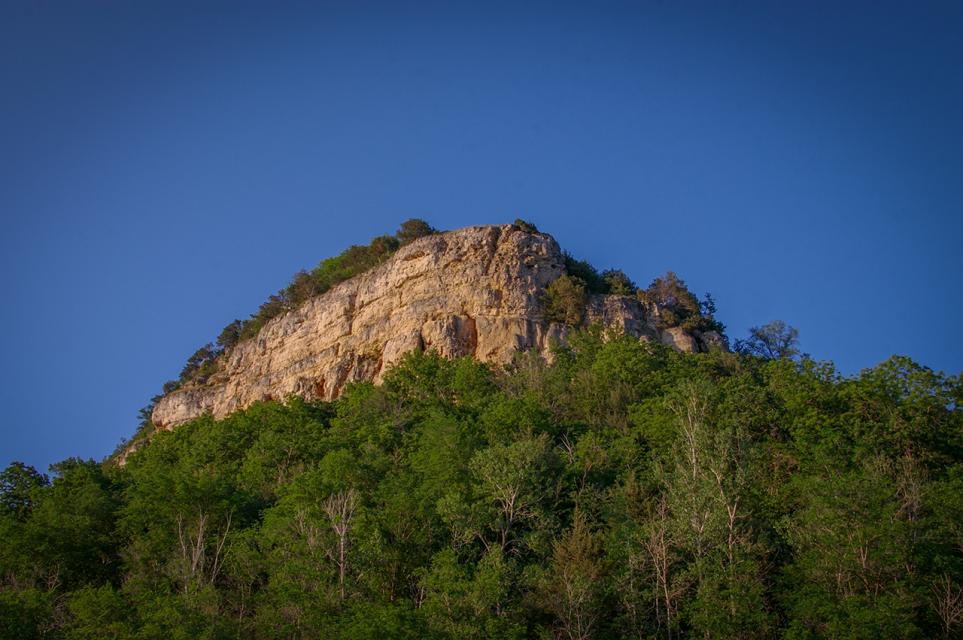
Maiden Rock

But this is just a nibble at what there has been to discover since the route became known as the Great River Road way back in the 1930s.

THE BEGINNINGS OF THE SCENIC BY-WAY

The Great River Road is actually a series of roads and byways that that follow the course of the Mississippi through ten states total. An act of Congress in 1924 established the Upper Mississippi River National Wildlife Refuge. Then a Lock and Dam system built in the 1930s resulted in the beautiful pools and channels we see today. As automobile travel increased throughout the twenties and into the thirties, Wisconsin saw a need to improve the road from the deep, muddy ruts that existed along the Mississippi into something that would attract the new crop of driving tourist. Then, when the Great River Road received it's national title in 1938, each state gave the road its own commission. When I look at old pictures from that time (sorry, I can't share them due to copyright!) they remind me of scenes from the television show The Waltons, as they drove along those scenic dirt roads. Then I see pictures of ruts so deep with wet mud, I have to wonder how how they ever turned them into roadways.

Nevertheless, one of the reasons I want to set a story along this route is because most of those towns remain tucked into the coulees and bluffs almost unnoticed, like little mountain hamlets. Here are two videos that are fun to watch. One is just a brief overview of the beauty of the route. They should have filmed it a little later to get the true fall colors.

Beautiful Vistas!

A "SightseeingSally" video @SightseeingSally on Youtube which gives a tour of Alma, Wisconsin, a town with unique history.

The little town of Alma in the above video is definitely in the running for the setting of my next book. A couple of reasons being that while it's a town of under 800 people, most of it's buildings are on the National Historic Register. It also has a number of interesting "streets" that are actually stairways. And the views! Such vistas! Watch the video, and try to imagine what it might've been like in 1920, before paved roads, traffic, and a lot of power lines.


Have you driven sections of the Great River Road in any of the ten states it covers? Have you taken this scenic Wisconsin tour?

I wish you a blessed holiday season.
Please take this opportunity to enter to win a sweet historical, mini-library!
The drawing is for paperbacks of seven books by seven authors. However, if you're not in the continental U.S., the authors will send ebooks to the winner.


Friday, October 5, 2018

Authors from Lincoln, Illinois


by Guest Blogger Tisha Martin

It's always fun to dig into the history of the town you're writing about.

Many famous people grew up in small towns, which is really surprising. Ronald Reagan grew up in Dixon, Illinois, and Abraham Lincoln in New Salem, Illinois (and Kentucky). However, several authors who wrote famously about this small, Midwestern town grew up in the town and moved away after graduation, only to write about their towns later in life.

Reinhold Niebuhr


Renowned theologian and author
Dr. Reinhold Niebuhr
 grew up in Lincoln, Illinois.

Doing a bit of research behind the author of the famous poem, "The Serenity Prayer," I discovered that Dr. Reinhold Niebuhr grew up in Lincoln, Illinois. His father was the administrator of the state-of-the-art Deaconess Hospital in Lincoln. One of his brothers, Walter, was managing editor of the
Lincoln Daily News-Herald newspaper, until he passed away in 1946.

 
Siblings, Left to Right: H. Richard, Reinhold,
Hulda, and Walter Niebuhr
A theologian, Reinhold was Dean and Professor of Applied Christianity at the Union Theological Seminary in New York City. His photo was featured on the cover of Time magazine in 1948. He received the Presidential Medal of Freedom in 1964, and was in the top 100 most influential people in the twentieth century (Life magazine, 1990).

While he did not write much about his hometown as other authors who grew up there did, Niebuhr wrote about thought-provoking and often controversial subjects. He wrote about the spirituality of man and direction of its society shortly after WWII. Several of his titles are Moral Man and Immoral Society, The Nature and Destiny of Man, The Irony of American History, Leaves from the Notebook of a Tamed Cynic, among other titles that explored society, the human soul, and politics.

William Maxwell

William Keepers Maxwell, Jr.
William Maxwell was one of two locals who wrote extensively about their hometown. His stories and novels are often deep, exploring the social and psychological aspects of people living in a small town. According to online research, Maxwell was born in Lincoln, Illinois on August 16, 1908. His parents were William Keepers Maxwell and Eva Blossom (née Blinn) Maxwell. He attended Senn High School. He received his bachelor's degree from the University of Illinois in 1930 where he was class salutatorian, poetry editor of The Daily Illini, and a member of Sigma Pi fraternity. Maxwell earned a master's degree at Harvard University. Maxwell taught English briefly at the University of Illinois before moving to New York. 

Maxwell wrote of tough but necessary topics, such as social and psychological strains of the small town and how various events affected him. Only three of his short stories held happier moments and included people from his childhood. For example, Miss Vera Brown was a popular fifth-grade teacher, whose death devastates her male students ("Love" in All the Days and Nights 245-248). Another example is Mr. Danforth, the venerable horse veterinarian whose advice is quietly sought by many townspeople (Time Will Darken It). A third example is Lincoln College biology Professor Chris Oglevee, who ably mentors the Cub Scout troop of the First Presbyterian Church ("With Reference to an Incident at a Bridge" [For Eudora Welty] in All the Days and Nights 265-269). (D. L. Henson, Finding Lincoln Illinois.)

But one incident happened in his life that he wrote searchingly but fondly of. During the Spanish Flu of 1918, young Maxwell and his mother became ill. Maxwell recovered but his mother did not. Her death devastated the family, and his father sent the boy to live with relatives in Bloomington, a town nearly an hour away, which would have been quite a trip in 1918. He later rejoined his father in Chicago. Maxwell's story They Came Like Swallows depicts this event so vividly and shows how such a wide-spread epidemic (that spread all the way to Philadelphia) affected an eight-year-old boy from a small Midwestern town.


So, the next time you're writing historical fiction or reading historical fiction, appreciate the amount of research the author took to create even a small scene to "get the facts just right." It really adds meaning to the depth of the novel.

What interesting town research have you read about or uncovered?


Tisha Martin edits and proofreads for publishers and private clients by day and writes historical fiction set in the Midwest by night.
Her award-winning WWII short story "Puddle of Remorse" is free to readers who sign up for her quarterly newsletter.
Visit www.tishamartin.com to sign up and learn more about all things vintage, history, and books.


Friday, October 30, 2015

Shipping or Rail: How Small Towns Got Their Goods

Shipping has been one of the most important means of transportation throughout history. Even as far back as ancient times, shipping was used to transport both goods and people, and entire cities developed because of natural harbors and trade routes. Things were much the same when Europeans first settled the United States. Boston and New York both became great cities because they had natural harbors where ships could dock and shelter.

While this might not surprise you about big cities, did you know the same is true of small towns? Whether located on rivers or natural harbors, many towns in the United States and across the globe came into existence do to geography.

This is particularly true of towns along the Great Lakes. A lot of effort and attention was put into laying a railroad that would span from the East Coast to the West Coast after the Civil War. But no such effort was put into connecting the Gulf of Mexico to the Canadian border. 

Eagle Harbor, Michigan, the town I'm featuring in my new Eagle Harbor Series, was accessible mainly by water. It had a pier where large ships could dock and received all of its imports and exports exclusively through shipping. The railroad didn't come to Eagle Harbor until 1907, and numerous towns similar to Eagle Harbor exist in other places along the Great Lakes. 


Rail was essential for towns that weren't on a river, Great Lake, or ocean. If a town didn't have a port and didn't have a train depot, then sending and receiving goods could be done only through horses and wagons, which severely limited the amount of imports and exports from an area.


Oftentimes short, local railroad lines were laid from coastal towns to villages farther inland. In that respect, many towns relied on a combination of both shipping and rail to get their supplies. Such is true of the old Delaware Mine and Central Mine in Michigan's Copper Country. A local train track ran the five miles from Eagle Harbor's port to the crowded mining town of Central, where over 1,000 people depended on the supplies being shipped to them.

In my newest Eagle Harbor novel, Love's Sure Dawn, I deal with the important role shipping played for towns that would otherwise be completely isolated. My hero is the son of a shipping company owner, and my heroine spends time working as a cook on one of the ships that runs from Eagle Harbor to Chicago. Oftentimes in novels, characters walk into a general store and find fabric, boots, saddles, and the like. It was fun to include a little bit about how all those boots and bolts of fabric got to be in the general store in the first place.

~.~.~.~.~

No matter how hard she tries to help, Rebekah Cummings always ends up causing more problems than she solves. This time, though, things will be different. She'll find a way to pay her family's debts, even if doing so requires leaving Eagle Harbor. Maybe then they'll start treating her as a capable woman who makes her own choices.

Gilbert Sinclair is going to marry an heiress. With his latest business venture sunk at the bottom of Lake Superior, he needs money to replace the steamship he lost, so he heads to Chicago where his father's business connections should land him a suitable wife. Like most things in his meticulously planned life, everything goes as expected—until he discovers Rebekah Cummings working as the new cook on his ship.

Rebekah well remembers the pain she endured the last time she tried trusting Gilbert, and Gilbert can't afford to pursue the love of a working class woman. But they can't stop the forgotten feelings swirling between them--or ignore the sacrifices they'd both have to make for a future together.

Learn more about Naomi and her books at www.naomirawlings.com.

Thursday, April 30, 2015

Lighthouses and Small Towns--Eagle Harbor, Michigan

Last month I blogged about the real historical town of Eagle Harbor, Michigan, which is tucked into the woods on a little slat of land that juts up into Lake Superior. I lso mentioned I had a novel out about the very real Eagle Harbor Lighthouse, and a fictional lightkeeper. Of course writing about a fictional lightkeeper led to some rather interesting research about lighthouses.

 Did you know that lighthouse location was very important to lightkeepers? Even though Eagle Harbor, Michigan was small and isolated in the late 1800s (which hasn't changed much between then and today), being appointed to the Eagle Harbor Lighthouse was still considered a very desirable position for a lightkeeper to have.


The Eagle Harbor Lighthouse is located at the edge of an actual town. A lot of historic lighthouses are in far less pleasant locations. Simply put, wherever there was danger of a ship running aground, a lighthouse was constructed. Sometimes this meant lighthouses sat on little slats of rock in the middle of one of the Great Lakes. Below is a picture of the Gull Rock lighthouse, which is no longer operational today. There's no town surrounding the Gull Rock lighthouse. In fact, even going to to the mainland to get help could be risky and impossible at times. There's one story about the lightkeeper's wife giving birth to a child inside the boat her husband was rowing to the mainland.


To a lightkeeper's way of thinking, the very best lightkeeping positions were located in towns with church and schools and stores. They offered a lightkeeper the chance to raise his family in a community rather than in complete isolation. Eagle Harbor, Michigan was one of those towns, as were several other locations along the Great Lakes. The lighthouses at Copper Harbor, Michigan and Ontonagon, Michigan were also considered good posts to have for this same reason.

Historical lighthouses, along with the ones still active today, served one of two purposes. They either worked as a beacon to guide ships to a harbor entrance, or they worked as a warning signal to keep ships away from dangerous stretches of water. The Gull Rock Lighthouse served as a warning to keep ships away from the rock ridge several miles off the shoreline. The coastline surrounding Eagle Harbor is rocky and rather treacherous, which made the light at Eagle Harbor doubly important. The lighthouse served the duel functions of not only marking where the harbor entrance was but also marking the rocks that rim the harbor. If a ship's pilot missed the safe entrance, then the ship would wreck. And yes, there are accounts of ships wrecking off the coast of Eagle Harbor in calm waters.

Do you enjoy lighthouses? Have you ever toured one before? Have you ever read a novel set at a lighthouse? What about the nature of lighthouses appeals to you?


~.~.~.~.~

On Sale for $2.99
Tressa Danell is finished with men—from the wastrel who left her a widow, to the smelly trapper who keeps proposing, to the banker who wants to repossess her bakery. Every hour is spent working to payoff her late husband’s debt and keep a roof over her son’s head, though it’s doubtful she can do both for very long. But one thing’s certain—she’ll never be beholden to a man again. 

Tired of living in a small town that blames him for actions his father committed ten years ago, Mac Oakton is scheduled to leave Eagle Harbor. So why does the pretty widow at the bakery keep tugging at his heart? He can’t get involved in her predicament when he’ll only be around for two more weeks. 

But when Tressa’s burdens overwhelm her, they both face a decision. Can Mac set his own plans aside to help? And can Tressa accept his support if that means giving up her independence ... and being obligated to a man again?

View Love's Unfading Light on Amazon--on sale for $2.99. For more information about Naomi Rawlings and her Eagle Harbor Series, visit www.naomirawlings.com.

Monday, March 30, 2015

Historical Towns: Welcome to Eagle Harbor, Michigan

by Naomi Rawlings

Do you enjoy visiting small towns? What about towns tucked away and hidden in an obscure place most people wouldn't notice? Some of my favorite towns to visit are the small, out-of-the-way, historical ones. I always find myself asking questions like, "Why was this town established?" "What caused people to settle here?" And if it's something of a ghost town, I then wonder, "Why did people move away?"

Most of the time these questions pop into my mind as I'm driving through somewhere, and I don't really think about them again. But a writer's brain can be a bit of a scary place, and sometimes I find my imagination running away from me. That's how I ended up with the Eagle Harbor Series.

Eagle Harbor, Michigan is located on the northernmost tip of Michigan's Keweenaw Peninsula. It sticks up into the wild, cold, and often-dangerous waters of Lake Superior, which in turn makes it prone to violent storms. Driving through the town today will only take you a handful of minutes. You'll pass several blocks of houses, a restaurant, hotel, and active lighthouse before proceeding up the Lake Superior coast to the next small town.

Russel Harrison Photography

While it's a beautiful place to live, there's absolutely nothing around it. So when I visited the town for the first time (probably about 5 years ago now), I found myself asking what prompted people to live there? Why would a town form way up north in the middle of nowhere on a forgotten stretch of shoreline?

The answer is the shipping industry. With all the trucks, railroads, and cargo planes we're surrounded with today, it's easy to forget that transporting freight used to be done solely by ships, and then by a combination of ships and rail. For a town like Eagle Harbor, which gets over 200 inches of snow per winter, running a rail line all the way up to the norther tip of the continental U.S. wasn't very practical, nor was keeping the rail clear of snow in the winter.

However, the richest copper deposit in the United States runs just a few miles inland from Eagle Harbor. With it's natural bay that offers protection from Lake Superior, Eagle Harbor developed into a busy but small shipping town in the 1840s. The town saw a lot of people move through it's port, but most of them didn't stay. They were headed inland to work the mines. As the copper mines along the Keweenaw Fault continued to produce and the mining towns grew bigger, there was more and more copper to ship out if this isolated area, as well as a growing demand for food and supplies to be shipped in to the mining towns. Several natural harbors along the Keweenaw Peninsula soon grew into small but busy shipping towns, one of which was Eagle Harbor.


When I started writing the Eagle Harbor Series, I was captivated by how isolated the town was, especially since the shipping season only ran for six months. During the winter, ice and other weather conditions made shipping on Lake Superior impossible. (Actually, Lake Superior is still closed to shipping today for two to three months every winter because of how dangerous the lake is.)

So I endeavored to write about a town where everyone knows everyone else, where the mistakes you made 10 or 20 years ago are never quite forgotten, but neither are the good deeds you do. And of course, with the importance of shipping, I simply had to make the first book in the series about the very real, very historic Eagle Harbor Lighthouse and a lightkeeper. It's been a fun series for me because of the little parts of history I've gotten to bring to life. I hope some of you will enjoy reading about it.


What about you? Do you enjoy visiting historical small towns? Do you enjoy novels based on real places that you can visit today? Or do you prefer a completely fictional setting?

~.~.~.~.~

Tressa Danell is finished with men—from the wastrel who left her a widow, to the smelly trapper who keeps proposing, to the banker who wants to repossess her bakery. Every hour is spent working to payoff her late husband’s debt and keep a roof over her son’s head, though it’s doubtful she can do both for very long. But one thing’s certain—she’ll never be beholden to a man again. 

Tired of living in a small town that blames him for actions his father committed ten years ago, Mac Oakton is scheduled to leave Eagle Harbor. So why does the pretty widow at the bakery keep tugging at his heart? He can’t get involved in her predicament when he’ll only be around for two more weeks. 

But when Tressa’s burdens overwhelm her, they both face a decision. Can Mac set his own plans aside to help? And can Tressa accept his support if that means giving up her independence ... and being obligated to a man again?

View Love's Unfading Light on Amazon. For more information about Naomi Rawlings and her Eagle Harbor Series, visit www.naomirawlings.com.