Showing posts with label biblical novels. Show all posts

Tuesday, December 2, 2025

Caesarea Maritima — Of Harbors and Hippodromes

 Guest post by Linda Dindzans


As a reader, I have never met a period of history that didn’t fascinate me. As an author, the stories that find me seem always to rise from the perilous, vibrant world of the Bible.

In 2019, my husband and I traveled to Israel, where we visited Caesarea Maritima along the Mediterranean shore. This ancient city—famed for its deep-water harbor and sweeping hippodrome—remains the largest Roman ruin in Israel today.

Herod’s Grand Vision: A Harbor in the Sea

Herod the Great took a modest Phoenician anchorage known as Strato’s Tower and transformed it into one of the marvels of the ancient world. Using volcanic ash called pozzolana, which hardens underwater into Roman cement, his engineers constructed a massive artificial harbor between 22 and 10 BCE. He named this harbor Sebastos—the Greek equivalent of “Augustus”—and it quickly became a major Roman port.

At the time, Sebastos was the largest man-made harbor ever built in open sea. Surrounding it, Herod constructed a magnificent city complete with a palace, theater, aqueducts, and a gleaming temple to Augustus.

The Hippodrome: Sport, Spectacle, and Survival


Caesarea’s hippodrome—stretching along the shoreline—held a prominent place in the city’s history. Here, crowds gathered for chariot races, athletic games, gladiatorial contests, and public executions.

As in Rome’s Circus Maximus, chariot racing in Caesarea was a war on wheels. Highly trained slave-drivers—aurigas—raced two-horse chariots (bigae) or four-horse chariots (quadrigae). They were assisted by an outrider on horseback and a man on foot who helped the charioteer manage treacherous tight turns and maneuver so rival teams would falter or crash. The dangers were many, often fatal. The rewards, if a driver survived long enough, included wealth, adoration, and—rarely—freedom.

As a biblical fiction author, I could not resist this setting of the hippodrome at Caesarea. Book Two of A Certain Future Series, A Certain Mercy, Scrivenings Press features several scenes in Caesarea including a life and death chariot race.


Rome Takes Control

By A.D. 6, Rome had annexed the region, placing it under the rule of governors or prefects. During the ministry of Jesus, the prefect was Pontius Pilate (26–36 CE), who resided in Caesarea—the Roman administrative and military headquarters. This relatively new capital bustled with Greeks, Jews, Romans, and travelers from across the Mediterranean.

In contrast, Jerusalem was ancient, holy, and volatile. Pilate traveled there only when politically necessary—during feast days or times of unrest.

The Pilate Stone: A Name Set in Stone


Before 1961, there was no physical evidence outside ancient texts that Pontius Pilate ever existed. That changed when archaeologists unearthed the now-famous “Pilate Stone.” Carved into this reused building block was a fragment of a dedication to Emperor Tiberius by Pontius Pilate, Prefect of Judea.


Found embedded in a staircase near the Herodian theater, the inscription remains the only contemporary physical artifact bearing Pilate’s name. Until its discovery, he was known solely from literary sources: the New Testament, apocryphal writings, Josephus, Philo, and Tacitus.

Caesarea in the Book of Acts

Linda's book features this beautiful setting.
Click on the cover to check it out.

The city appears repeatedly in the early Christian writings:

• Cornelius and the Gospel to the Gentiles (Acts 10): Here Peter preached to the Roman centurion Cornelius and witnessed the Holy Spirit fall on Gentiles for the first time.

• The Death of Agrippa I (Acts 12:19–23): Herod the Great’s grandson died in Caesarea after accepting worship during games held—likely—in the hippodrome.

• Paul’s Travels: Paul sailed to and from Caesarea many times (Acts 9, 18, 27).

• Paul’s Imprisonment: Paul spent two years under house arrest in Caesarea, facing Felix, Festus, and Agrippa II before appealing to Caesar (Acts 23–27). Luke, traveling with Paul, would have had freedom to gather eyewitness accounts that shaped his Gospel and the early chapters of Acts.

• The First Jewish Revolt: The revolt ignited in Caesarea in 66 A.D. After Jerusalem fell in 70 A.D., Titus forced 2,500 Jewish prisoners to fight to the death in Caesarea’s stadium as part of his victory celebrations. The spoils of this war likely funded construction of the Colosseum in Rome.

A Launching Point for the Gospel

Caesarea’s strategic position as a major port city—and the place where Peter first preached to Gentiles—made it one of the most effective launching points for spreading the gospel to the wider Roman world.

About Linda


Linda Dindzans, M.D. is a writer with the heart of a healer who offers readers stories of redemption and restoration. Though her compelling characters inhabit the treacherous times of the Bible, Linda believes the struggles of her characters still speak to hearts today. Her debut novel A Certain Man was released in August 2024. Her  next novel A Certain Mercy (December 2025) features several scenes  set in Caesarea.


References:

  1. Israel's Most Impressive Roman Ruin- Street Gems
    https://www.youtube.com/watch?v=7PUBzVup4nc&t=53s
  2. https://www.independent.co.uk/news/people/historical-notes-pontius-pilate-a-name-set-in-stone-1084786.html
  3. https://cbnisrael.org/2020/12/01/caesarea/ Biblical Israel: Caesarea by Marc Turnage 
  4. https://cbnisrael.org/2025/07/01/caesarea-where-the-gospel-penetrated-the-gentile-world5.
  5. https://commons.wikimedia.org/wiki/File:Israel_9-08_134_(2909864855).jpg photo of Pilate stone
  6. https://jewishencyclopedia.com/articles/3887-caesarea#0
  7. https://en.wikipedia.org/wiki/Caesarea_Maritima: Bibliography see below
  8. https://en.wikipedia.org/wiki/Caesarea_Maritima#cite_note-Menachery87-25
  • 24.Votruba, G. 2007. "Imported Building Materials of Sebastos Harbour, Israel." International Journal of Nautical Archaeology 36:325-335.
  • 23.George Menachery, 1987 in Kodungallur, City of St. Thomas, Azhikode, 1987, Chapter II note 19 quotes the National Geographic article: Robert L. Hohlfelder, "Caesarea Maritima, Herod the Great's City on the Sea". The National Geographic, 171/2, February 1987, pp. 260-79.
  • 21. Hohlfelder, R. 2007. "Constructing the Harbour of Caesarea Palaestina, Israel: New Evidence from ROMACONS Field Campaign of October 2005". International Journal of Nautical Archaeology 36:409-415.


Wednesday, May 1, 2024

Unexpected Legacy Series: John Mark, The Runaway

By Matthew J. Elliott

As I have often claimed, researching biblical concepts is one of my favorite hobbies. It comes from my college days at OkWU. Many of the classes I took while earning my degree in Biblical Studies were directed studies. This means that I worked one-on-one with my professors on research projects that focused on Bible events and the characters we read about in Scripture. Some of the most memorable encounters and revelations in my faith came from those stories and that is a legacy left to me by my professors. At first, I only took the directed study courses so I could get out of sitting in the classroom and avoid taking exams. All of my final projects required me to investigate topics that were confusing to see others. Why am I sharing about me when the title of this post is about John Mark's unexpected legacy? 

Antique Scroll similar to what John Mark wrote on

It all ties into why I do what I do as a writer today. It was the legacy I received that opened my eyes to people like Brother Lawrence, Madame Guyon, Barnabas, and even Gene Edwards whom I intend on writing about next month. More importantly, though, I share this seemingly random information about my past, because John Mark's past is very similar to mine. He was a well-educated young man, even before being mentored by men like Barnabas, Paul, and Peter. The knowledge we both received, in the beginning, was about the research, the topical information, and the historical details. It was not until we both experienced real aspects of our lives that we began to learn about our true Legacies.

While my legacy is still unpredictable in many ways, the legacy left behind by John Mark is a phenomenal example of internal growth and acceptance. It was only through the experiences he had in places like Cyprus, Rome, Ephesus, Jerusalem, and Alexandria that he began to see his true calling.  As an educated young man, John Mark knew who Jesus was. He knew that there was something significant about his three-year ministry, and to an extent, what would happen in the end. His mother, Mary, hosted many of the believers in the upper room of her home in Jerusalem. (Acts 12:12) Many even believe it was in her home that Jesus appeared to his followers and told them to wait for the spirits coming. While there are no claims in Scripture that John Mark ever met Jesus, he did have many encounters with those who did.

Wikimedia Image of John Mark

As a much older young man, John Mark found himself assisting Saul and Barnabas on the first missionary journey, probably believing that he was unstoppable, only to learn through some misguided experiences in Cyprus that he was not ready to accept the calling he imagined. Abandoning Saul and Barnabas in Pisidia (Acts 13:13), for reasons we have little documentation on, was one of the worst, and yet, best decisions he would ever make. While some believe it was out of fear of the unknown, or even that he received word his mother was ill, we will never know. The reality here is that making that one choice changed his life, forever branding him as the runaway. There is so much more to his story than being branded in this way and his legacy, in this writer's opinion, is worth discovering.

After making his way back to Jerusalem, John Mark spent a great deal of time learning about his faith under the watchful eye of Peter and others who remained in Jerusalem during the persecution that was taking place. At some point during this time some believe that Peter began sharing the stories we find in Mark's Gospel. As an educated man, it fell to John to write those stories down. Other parts of his story claim that John Mark may have been commissioned to leave Jerusalem and travel to Alexandria, where he among others, planted a church. In the wake of the controversy about Circumcision, a meeting of the believers was called in Jerusalem, and John Mark and others were called back to Jerusalem from their prospective missionary journeys. (Acts 15)

AI Generation of The Jerusalem Council 50AD

In taking part in this Jerusalem Council, John Mark was reunited with Barnabas and even Paul. At this point, we lose sight of what happens with John Mark and don't hear about him in Scripture until Paul is in Rome. Somehow between the Jerusalem Council, believed to have happened in 50AD, and arriving in Rome, which happened around 60AD (Col. 4:10), John Mark has found himself and is considered a valuable asset in Paul's ministry. Something had to change because when Barnabas recommended bringing John Mark on the second missionary journey, Paul was so much against it that he broke his partnership with the man he'd spent years ministering alongside. (Acts 15:36-42) What could that change in John Mark have been though? Was it just that he matured with Age? I am not sure it was!

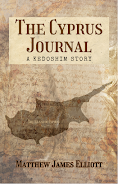
In my upcoming book, The Cyprus Journal, John Mark has some experiences that could explain how this change took place, but that is not where I'm heading with this post. I honestly believe that when Barnabas took him to Cyprus, he gave John Mark the time he needed to learn the true meaning of leaving a Legacy behind for future generations. I also believe that hearing the gospel story through the hearts of those who knew Jesus personally opened his eyes to the possibilities. Sometimes we need to open our eyes and look at the world around us. Sometimes the lessons we learn teach us the value of acceptance and that is where John Mark truly finds his calling. The legacy he left behind proves that no matter how far we stray off the path, we can find our way back. No matter how many times the fears of life take hold of us, we can overcome them and embrace who we are meant to be.


~ Biography ~

Matthew James Elliott (M.J. Elliott) is a passionate writer who loves to encourage and inspire others. He has served in various ministry roles for over 15 years, which has given him a unique perspective on people and Biblical History. Matthew holds a degree in Biblical Studies from Oklahoma Wesleyan University, with a focus on Pastoral Care, Christian Education, and Worship.

Matthew is happily married to Traci, and they have three children named Leyla, Caleb, and Hannah, who bring them immense joy and inspiration. As a writer, Matthew's goal is to share love, equip others, and edify them for the greater good. He loves connecting any amount of scripture to his stories and uses his knowledge of Biblical History to do so often.

You can find Matthew's works on Amazon, Goodreads, Facebook, and His Website. He has written Devotionals, An Episodic Series, Novellas, and even Commentaries for The Gospel Daily.


~ Highlighted Release ~

The Cyprus Journal is Coming Soon! May 5th, 2024!

One Young Man. His Significant Story. A Witness of the Early Church.

Many knew him as the young cousin to Barnabas the Encourager, the son of Mary who offered her home to honor the Savior and those who followed Him, or even the man who abandoned Paul on his First Missionary Journey, but there is more to his story. His story is one of new beginnings, a promise fulfilled, and a man who overcame fear of the unknown.

----

Sources:

Scripture is from the Holy Bible, New Living Translation, copyright ©1996, 2004, 2015 by Tyndale House Foundation. Used by permission of Tyndale House Publishers, Carol Stream, Illinois 60188. All rights reserved.


Friday, January 27, 2023

Religious Life in Ancient Israel's Divided Kingdom

When I first began researching the prophet Elijah for my novels Rain and Whirlwind, I was continually confused about the Divided Kingdoms of Israel and Judah, north and south, not to mention the many kings from each with similar names. Today I'll broadly touch on the reasons for and results of the split. We'll leave the kings' names for another time.

POLITICS AND RELIGION

After King Solomon's death in 931 B.C.E, ten northern tribes rebelled against heavy taxes imposed by Solomon's son, Rehoboam, and formed a separate kingdom, which retained the name Israel. The remaining tribes called themself Judah, after King David's family line.

The rebellion almost led to war. Rehoboam (southern king) mustered his far superior army to crush the rebellion. But the prophet Shemaiah received word from the Lord and stopped them. 

“Say to Rehoboam son of Solomon king of Judah, to all Judah and Benjamin, and to the rest of the people, ‘This is what the Lord says: Do not go up to fight against your brothers, the Israelites. Go home, every one of you, for this is my doing.’” So they obeyed the word of the Lord and went home again, as the Lord had ordered.  ~ 1 Kings 12:24

Despite the political advantage of lower taxes than their southern brothers, Jeroboam, the new king of Israel (north) worried the religious pull of the temple in Jerusalem would entice religious pilgrims from his territory. He even feared his people might kill him and reconcile under Judah's King Rehoboam. To keep Israelites from straying, Jeroboam instituted a form of calf worship at Dan and Bethel, the southern and northern borders of his kingdom. The politically correct explanation of these "high places" was that "the Lord rode on the backs of the calves" but in fact, calf worship was a bridge to Canaanite cults and led the way to Ba'al worship.

North and South continued to eye each other suspiciously. Israel felt they'd not been treated equally with their southern kinsmen, that they'd borne more than their fair share of taxes and forced labor for an extravagant king. Learning that Israel worshipped golden calves, Judeans eyed them as apostates.

JEZEBEL'S INFLUENCE

Jezebel - John Liston Byam Shaw
courtesy WikiCommons
When a later king of Israel, Ahab, married Princess Jezebel of Tyre, trade routes were strengthened with her Canaanite countrymen. Ahab, enamoured with the beautiful princess, built a temple to Ba'al Melqart in Samaria. Jezebel took her position not only as queen, but as leader of the Ba'al cult in Israel, contributing to even greater departure from the worship of Yahweh. 

This is supported by archeologists finding evidence of cultic worship centers in places throughout Israel such as Megiddo and Western Galilee. Votive images of children seem to indicate child sacrifice.

Not only did Jezebel support the Ba'al cult, she persecuted and killed the prophets of Yahweh. This all led up to a confrontation to between the two forces at Mount Carmel. The prophet Elijah challenged the followers of Ba'al to a contest. The winner's deity would answer by sending fire from heaven. Apparently, Ba'al was away or napping that afternoon, because only Yahweh sent fire to consume His offering.

Despite Yahweh's victory, and the execution of the Priests of Ba'al (although evidently not those of Astarte), the Ba'al cult was decimated. But though it was not as flagrant in the following years, it continued to spread. The key to the religious theme of the times is in 1 Kings 18:21, where Elijah asks, "How long will you falter between two opinions?" (Literally, limp along on two twigs.)

Israel had not totally rejected Yahweh, but attempted an adulterated worship of both Yahweh and Ba'al. If their parents had taught them anything of Moses' writings, they had to know this could only lead to their downfall.
"Fear the Lord your God, serve him only." Deuteronomy 6:13a


A SAD END

The Death of Jezebel
courtesy WikiCommons
Jehu, a later king in Israel, dealt a blow to Ba'al worship in a "sting operation." He summoned all the priests and other cult leaders into the Ba'al temple for a time of feasting and celebration. Instead he had them killed and the temple destroyed.

Still, the people did not return to God. Even Jehu did not totally turn from cult worship. Although he had destroyed Ba'al worship, thrown Jezebel to the dogs, and killed Ahab's remaining family, he continued to worship the golden calves at Bethel and Dan. Some people will never learn!

So the Lord allowed foreign nations to erode Israel's territory. Jehu lost all land east of the Jordan to Syria. Finally, the northern kingdom of Israel was taken into captivity by Assyria.


For further reading:

A History of Israel
John J. Davis, John C. Whitcomb

https://www.biblicalarchaeology.org/daily/ancient-cultures/ancient-israel/high-places-altars-and-the-bamah/

Nelson's New Illustrated Bible Manners & Customs, 
The Divided Kingdom: Life in Israel

Please visit the blog to comment on this post.

~~~~~~

WHIRLWIND ~ Whispers on the Wind, Book 2 

Purchase at ChristianBook     Purchase at Barnes&Noble      Purchase at Amazon

A king's downfall and a love that transcends war


SPURNED BY POTENTIAL SUITORS, Miriam travels to Jezreel to care for her cousin’s son. There, the precocious seven-year-old works his way into her heart. When Arameans swarm the land like locusts, Miriam focuses on the safety of her young ward but promises adventures beyond the city walls when the war ends.

Gershon, a quiet and kind vintner, is happily building a life for his wife, son, and aging parents. But when his wife dies during childbirth and war looms on the horizon, he must make a decision—will he take a new wife before his heart can mend?

Meanwhile, Dov, a young officer crosses paths with the “bird girl” he remembers from the past, now grown to womanhood. That she is a beautiful woman matters not, as he is a career soldier. Unexpectedly charged with leading Ahab’s army against the Arameans, Dov anticipates death and defeat in Samaria, but when a prophet pledges victory, Dov vows to fight to the end.

When an unlikely victory brings freedom, a bright future seems imminent. Then one afternoon Miriam witnesses a tragedy and must flee with the boy to keep them both safe. With henchmen on their trail, will they find refuge—and her heart the home she’s longed for? 

~

DANA MCNEELY writes biblical novels from an Arizona oasis, where she lives with her hubby the constant gardener, two good dogs, an antisocial cat, and myriad migrating butterflies. When not researching, writing, or struggling with the mysteries of social media, Dana can be found wandering in her personal Eden dreaming up new stories.

You may follow Dana at https://DanaMcNeely.com and receive a free eBook! The Eyes of the Lord is a prequel to the Whispers on the Wind series. Rain and Whirlwind follow. 


Wednesday, July 27, 2022

Researching in the Ruins + Giveaway

Dana McNeely


While the internet is a wonderful research tool, books are often more dependable. This was driven home to me recently because my computer has been in the repair shop for more than a week, and I'm typing this on a loaner laptop. I was grateful to an "old ruin" of a book, paper and ink rather than the "cloud," for providing me research material for this blog post.

One of my favorite old reference books is PALESTINE AND THE BIBLE by Samuel Schor, born in Jerusalem around 1860. My falling-apart copy is faded and worn, the nineteenth edition published in 1931, so the book itself is a piece of history. Having the appearance of a homemade book, it is a true soft cover, made of tan paper only slightly thicker than its pages, folded back to reinforce the edges. Perhaps it resembles the first pamphlets from which it originated.


In its introduction, Schor wrote "God's Word is an Eastern Book. It was written in the East, by Easterns, and for Easterns." He went on to say his little book was intended to help Western readers understand Eastern expressions as they studied the Bible. He often included Bible verses to illustrate his descriptions of life and customs in Jerusalem. In 1891, he started what he called the "Palestine Exhibitions." His book developed over the time he lectured and wrote pamphlets for the Exhibitions.

I consider PALESTINE AND THE BIBLE an early precursor to "Everyday Life in Bible Times" books. The book is out of print and I believe copies are rare, so in this post I'd like to share with you a few tidbits of Schor's unique insights.

EASTERN PLOUGHS AND YOKES

  • Primitive ploughs were made of wood, had a handle, and were light enough to be carried by a man. And Jesus said unto him, No man, having put his hand to the plough, and looking back, is fit for the kingdom of God. (Luke 9:62)
  • The plough is fastened to the neck of oxen with a yoke and the oxen pass under it.  But the nations that bring their neck under the yoke of the king of Babylon, and serve him, those will I let remain still in their own land, saith the Lord. (Jeremiah 27:11a)
  • The weight of the yoke makes the poor animals stoop, hence the force of the allusion that when God brought Israel out of Egypt and broke their yoke of bondage, He said "I made you go upright." I AM the Lord your God, which brought you forth out of the land of Egypt, that ye should not be their bondmen; and I have broken the bands of your yoke, and made you go upright. (Leviticus 26:13)
  • Partly for protection and partly because of the size of their fields, farmers would often plow together, each with his own team of oxen, creating long, straight plow lines across the field. Thus Elisha was engaged when he was called by Elijah. So he departed thence, and found Elisha the son of Shaphat, who was plowing with twelve yoke of oxen before him, and he with the twelfth: and Elijah passed by him, and cast his mantle upon him. (1 Kings 19:19)
Schor's descriptions of Old Jerusalem painted a backdrop for much of my book RAIN, particularly a scene where Aban, a young former acolyte of Ba'al, observes the prophet Elijah call his successor, Elisha. Part of that scene from RAIN follows:

Antique plow with iron tip as used by prosperous farmers during Israel's Iron Age

Wednesday, April 27, 2022

IT ALL COMES OUT IN THE WASH


History teaches us when we walk through the looking glass of time, we see faces much like our own.

It is the details of everyday life that differ. The type of house the family lived in – three bedrooms, two bath or one-room mudbrick with a courtyard housing a goat. The kind of music – streaming service or lyre. The kind of food – chips and dip or lentil stew and flatbread.

Bathing is an everyday occurrence to moderns, not so much, the ancients. Over time, innovations such as canals, pumps, and piped water to homes have changed how humans are able to wash themselves and their clothes.


One interesting point. In Old Testament times, it was a man’s job to wash the dishes. Or at least to dry them.  

2 Kings 21:13 ~ And I will stretch over Jerusalem the line of Samaria, and the plummet of the house of Ahab: and I will wipe Jerusalem as a man wipeth a dish, wiping it, and turning it upside down.


WASHING AND BATHING


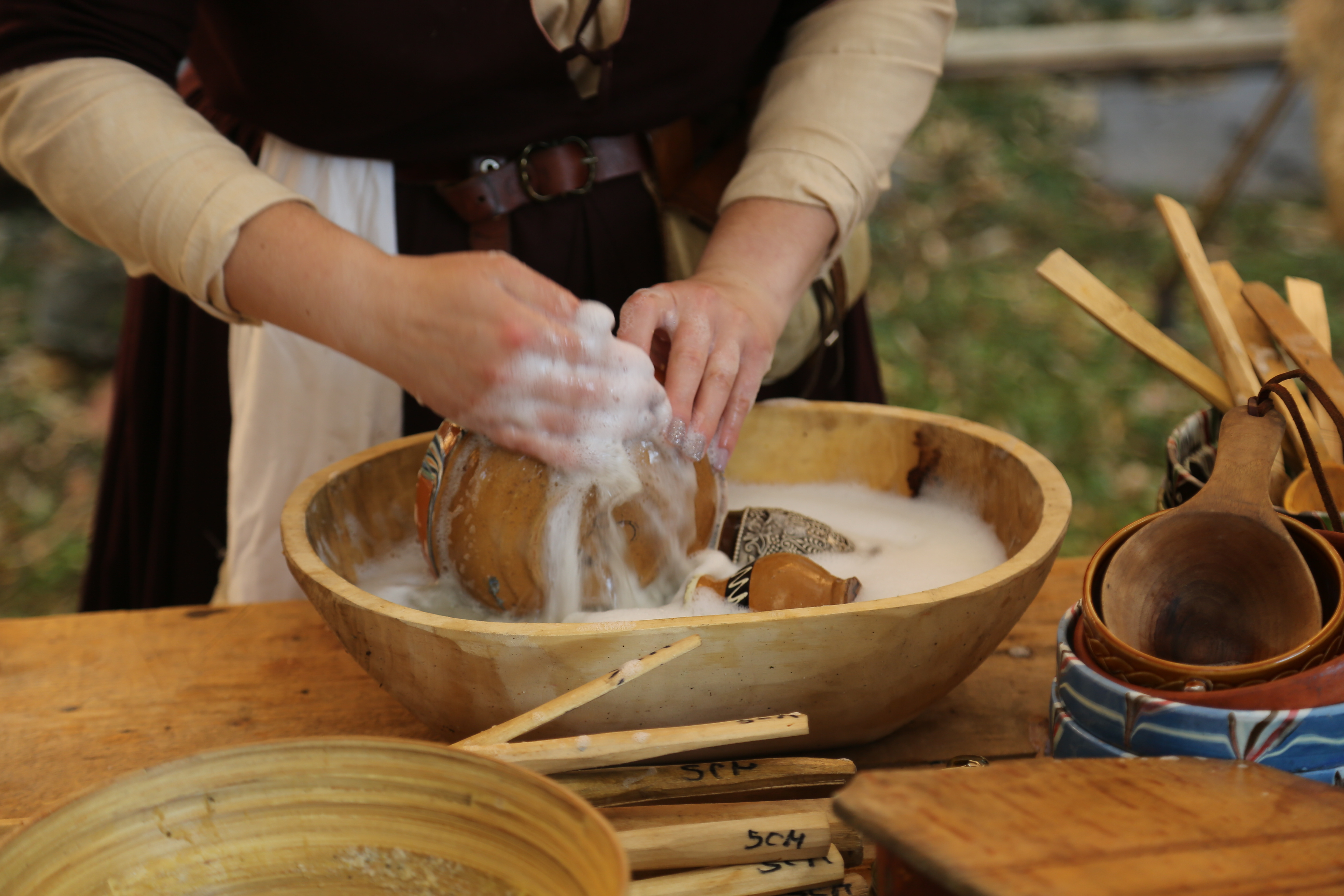
Ahem. Back to washing in ancient times. Because I write biblical novels, I’m interested in many aspects of everyday life in biblical times. People washed themselves and their clothes for hygienic and ritual cleansing, using rivers and springs when they were available, lavers, jugs, and basins when they were not.

For example, Pharaoh’s daughter was bathing by the river when she discovered Moses (Exodus 2:5). King Ahab’s blood was washed from his chariot “near the pool where the prostitutes bathed" (1 Kings 22:38). Elisha told the leper Naaman to wash in the Jordan River seven times to be healed (2 Kings 5:10).

SOAP AND PERFUME


Sometimes soap is mentioned. “No amount of soap or lye can make you clean. I still see the stain of your guilt.”  (Jeremiah 2:22). According to Easton’s Bible Dictionary, the Hebrew word borith, often translated soap, refers to a cleansing agent made from ashes of wood or plants, particularly salsola kali (salt wort), abundant on the shores of the Dead Sea and the Mediterranean.

Hyssop, Hebrew ezov, is also mentioned in regard to cleansing, “Purge me with ezov and I shall be clean; wash me and I shall be whiter than snow" (Psalm 51:7). Identified with Syrian Hyssop, the plant is popular as a spice or tea, with a pleasing fragrance.

Naomi encouraged Ruth to bathe and perfume herself before presenting herself to Boaz at the threshing floor. (Ruth 3:3).


FOOT WASHING


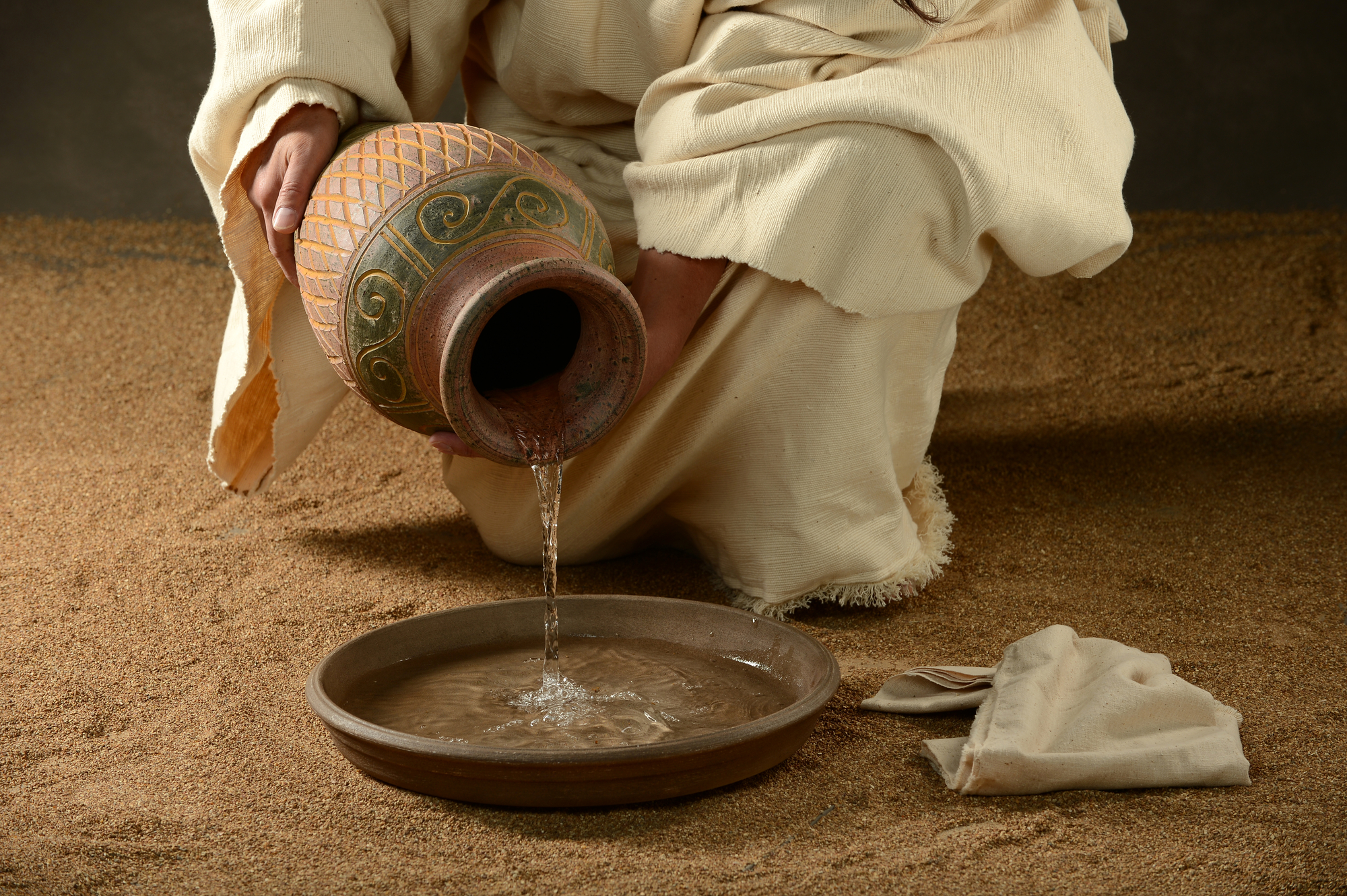
When full-body bathing was not possible, washing the hands, face, and feet could be accomplished with water, jug, and basin. Most people wore only sandals and their feet became dirty on the unpaved roads. It was customary for a person to wash his feet before entering his home. In a wealthy person’s home, a servant met guests at the door to perform this service.

Many are familiar with the story of Jesus acting as the servant and washing the feet of his disciples. This occurred during the Passover, when spring rains would have been falling and the streets of Jerusalem especially muddy. In this instance, Jesus humbly portrayed both physical and spiritual cleansing.


Geologists have uncovered many interesting artifacts related to washing in ancient times.
  • A tenth-century BC tub in the sacred precinct at Tel Dan.
  • Terra-cotta bathtubs from Philistine sites at Ashdod and Ekron.
  • An 8th-century BC figurine of a woman bathing in a shallow tub from Achzib.
  • Pottery basins for foot-washing at Samaria, Megiddo, and Lachish.

For further reading: 
Insights Into Bible Times and Customs, G. Christian Weiss
Daily Life in Biblical Times, Oded Borowski
Dictionary of Daily Life in Biblical & Post-Biblical Antiquity, Yamauchi & Wilson
Plants of the Bible, Michael Zohary


RAIN ~ Whispers in the Wind Book 1

Aban yearns to join the priesthood of Ba'al, unlock the power of the rain god, and hear the deity's voice. But first, he must survive a perilous initiation ceremony. 

When the mysterious prophet Elijah interrupts the rites, overturns the idol, and curses the land with drought, Aban must choose a side in Yahweh's war against the Ba'als - and it may cost him his life.

Book 2, working title WHIRLWIND, coming February 2023.


Dana McNeely dreamed of living in a world teeming with adventure, danger, and romance, but she had a problem—she also needed a lot of peace and quiet. She learned to visit that dream world by stepping into a book.

Inspired by the Bible stories of Elijah, Dana wondered about the widow of Zarephath and her son. Who were they? What was their life, before? How did the boy change after he died, saw the other world—and came back?

Those questions led to Dana writing RAIN, in which she built her dream world of adventure, danger, and romance. Peace and quiet, however, have remained elusive.

No stranger to drought, Dana lives in an Arizona oasis with her hubby the constant gardener, two good dogs, an antisocial cat, and migrating butterflies.

Learn more about Dana and her books at her website: DanaMcNeely.com