Showing posts with label silver mining. Show all posts

Friday, December 27, 2019

Silver Mining in Colorado – The History Behind the Story By Donna Schlachter --with Giveaway


Modern-day Silverton, Colorado
Denver and Rio Grande work train on the westside of Marshall Pass. Colorado Historical Society

When most people think about opening up the Wild West, they picture cowboys, wagon trains, and, of course, the gold rush. And all of those would be true and very important to the reasons why folks left the relative comforts of the East—that being everything east of the Mississippi—to head into the Great Unknown.


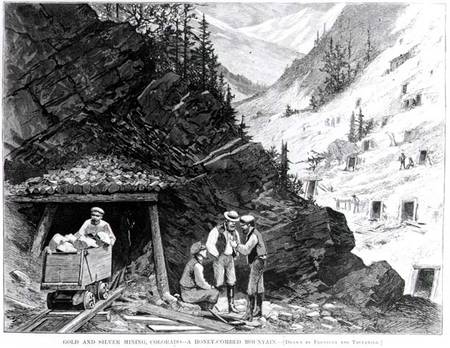
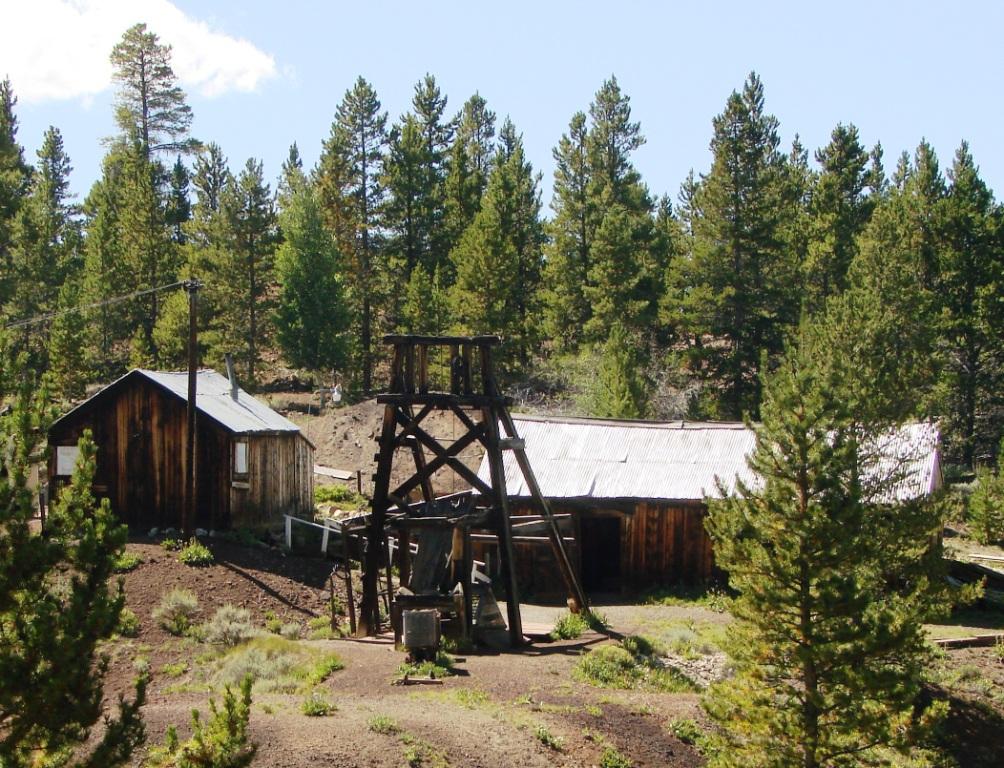
Typical mining town in the mountains
Sure, there were many other reasons for the Westward Migration, including the promise of cheap land—or land at all, since so many lived in sharecropper or tenement situations in the east. There were also those scoundrels on the run from the law, and in the years just prior to the setting of my story, 1880, the country went through a civil war. So folks headed west in hope of maintaining slaves, in hopes of escaping slavery, and simply in hopes of escaping the whole war thing.


A rail bicycle invented to travel the miles of underground tunnels
Some were adventurers, like Becky’s father, who simply couldn’t let a horizon stay in front of him but wanted to see beyond every mountain and every body of water separating him from “over there.”


The Colorado Gold Rush started in 1858 and lasted until around 1861, and brought thousands of miners, ancillary workers such as drovers, liverymen, blacksmiths, prostitutes, saloon keepers, and swindlers. However, apart from a few areas such as Cripple Creek, which saw its biggest mining deep into the 1890s, most of the gold petered out as quick as it was found.


An interesting tidbit is that silver was discovered because so many were looking for gold. Exactly twenty years after gold was first discovered, silver was found in the area of Leadville and covering a three-hundred-mile swath from the San Juan Mountains to the Foothills west of Denver.


Robert Campbell, in the book, learns of this find, and heads for southwest Colorado, intent on getting in on the ground floor of silver mining in the area. Little did he know that the wealth he counted on would evaporate less than fifteen years later when the government stopped minting silver dollars, a decision that increased gold prices and sent silver prices into the basement.

Leave a comment and be entered into a random drawing for an ebook copy of Double Jeopardy.

Double Jeopardy is available at https://shoplpc.com/double-jeopardy/ Amazon.com, and fine booksellers in your area.


Don’t forget to join us on Launch Day, January 7th, at our Facebook event to win more prizes: FB event


About Donna:

Donna lives in Denver with husband Patrick. As a hybrid author, she writes historical suspense under her own name, and contemporary suspense under her alter ego of Leeann Betts, and has been published more than 30 times in novellas and full-length novels. She is a member of American Christian Fiction Writers, Writers on the Rock, Sisters In Crime, and Christian Authors Network; facilitates a critique group; and teaches writing classes online and in person. Donna also ghostwrites, edits, and judges in writing contests. She loves history and research, and travels extensively for both. Donna is represented by Terrie Wolf of AKA Literary Management.

www.HiStoryThruTheAges.wordpress.com

www.HiStoryThruTheAges.com Receive a free ebook simply for signing up for our free newsletter!

Facebook: www.Facebook.com/DonnaschlachterAuthor

Twitter: www.Twitter.com/DonnaSchlachter

Books: Amazon: http://amzn.to/2ci5Xqq and Smashwords: http://bit.ly/2gZATjm

What Can Be Online University: https://what-can-be-online-institute.teachable.com/

Friday, August 9, 2019

Boo! Haunting Towns

By Tiffany Amber Stockton


Last month, I continued a summer series on ghost towns with the spotlight on Montana and Wyoming. If you missed that post, you can read it here: https://www.hhhistory.com/2019/07/dont-blinkyou-might-miss-it-ghost-towns.html.

Today is the final post on this series. Remember to share ghost towns in YOUR home state if there are any. This month, we'll travel a little further west into Idaho and Utah.

* * * * *

Boo! The Haunting Towns in the Rocky Mountains

Like Wyoming, Montana, and Colorado, mining for both gold and silver in the mountains saw thousands of prospectors, vigilantes, pioneers, and all sorts of explorers headed west during a short period in our nation's history. Population booms were the norm, and often, towns disappeared as quickly as they grew. The result? A ghost town.

As with the other states, the ones I feature are only a handful compared to the dozens of other towns scattered throughout the area. If you are on a road trip and interested in exploring more, check out some of the ghost town web sites first to plot out a route for exploration and discovery.

UTAH

Sego Canyon

A few fun buildings are fun to explore, but on the way out to this town, you will also find some amazing petroglyphs, so it's like getting two historic treats in one visit. The sandstone cliffs are an outdoor art gallery and a holy place. Native Americans painted and chipped their religious visions, clan symbols, and records of events onto the cliffs. It's an impressive site that is listed on the National Register of Historic Places.

Ophir

WF Willis
This site isn’t a true ghost town as there are still residents living here. However, the historic site was created around the ghost town buildings, so what you find is a restored historical town with remnants of the original site. The historic buildings are only open to the public on Saturdays from May to September, but they are worth a visit if you are interested in ghost towns and the history of Utah.

Grafton

If you have any plans at all to visit Zion National Park, you should make it part of our visit to take a short jaunt over to Grafton. This ghost town has been refurbished and features a schoolhouse as well as a handful of homes. The scenery is beautiful, and the interpretive signs tell the story about this unique cotton town, something you primarily found in the southeastern United States. Grafton flourished until it was flooded by the Virgin River.


Osiris

Not too far from Bryce Canyon National Park, there's a scenic route that will take you to the town of Osiris. This location has a few homes and a large mill that once supported the community. It sites right next to the river, so it's a nice little stop and way to break up a long time in the car on a road trip. With so many towns that were full of miners and vagabonds, it's always a nice change of pace to find one with a form of industry based off the products of the mining.

Old Iron Town

Old Iron Town is located west of Cedar City. This town still has current residents living nearby, and the remaining buildings from Old Iron Town are from an old mining site. The highlight feature of this site, though, is the amazing beehive oven, the only one of two remaining from the original site. These unique kilns were used to burn wood, which then smoldered for several days and was used as charcoal for the iron making process. There is also a good variety of mining relics to explore and see.

IDAHO

An amazing fact about the state known for its potatoes is there are over 100 documented ghost towns spread out across the state. Sure, towns like Silver City have been fully preserved and welcome visitors all year long, but what about the other towns which made a name for this state during the mining boom? You might want to brush up on your Idaho history and take note of these.

Rocky Bar

J Day Photography
It's nearly impossible to imagine this was once one of Idaho's major metropolitan areas back in the 1860s. Spanish prospectors were the first to settle here, and the growth of the town was so explosive, it rivaled Idaho City as a contender for the title of Idaho's capital. When visiting Rocky Bar, just a few miles north of Featherville, add an extra dose of history to the journey by taking a side trip up to Atlanta on the outskirts of the Sawtooths.

Ulysses

Patty's Photos
This town was once home to Idaho's largest active gold mine. The original town had an ideal setting near Indian Creek, from which the mill processed low-grade ore for a major profit, but the community was set back in 1904 by a major fire that completely destroyed the plant and Ulysses' hope of riches. Today, a few dilapidated cabins and mining remnants are all that remain.

Yellow Jacket

Patty's Photos
No, it's not a town with an overwhelming presence of wasps and hives. This one was a 19th century gold rush camp that features a 5-story boardinghouse, an impressive mining relic with a charm that is fully "Idaho." The population only peaked around 200, and the town began to dwindle right after the turn of the 20th century, holding on until 1942, when both mine and mill operations fully shut down.

Ragtown

Bureau of Land Management
This town sprung up as a unique temporary community. Rather than hundreds of log structures, the landscape was dominated by the makeshift shelters that gave the town its original name: Tent Town. When cabins cropped up as necessary to protect workers from Idaho's frigid winters, local folklore and legend in stories says rags were stuffed into the cracks between logs to keep out the chill, giving rise to community's new name.

* * * * *

NOW IT'S YOUR TURN:

* Are there any ghost towns in the state where YOU live? If so, share the state and the name of the town(s).

* Which one of the ghost towns above tickles your fancy the most and makes you want to visit?

* What was your favorite part about today's post?


BIO

Tiffany Amber Stockton has been crafting and embellishing stories since childhood, when she was accused of having a very active imagination and cited with talking entirely too much. Today, she has honed those childhood skills to become an award-winning and best-selling author and speaker who is also an advocate for literacy as an educational consultant with Usborne Books. Through personal development, she strives to help others become their best from the inside out.

She lives with her husband and fellow author, Stuart Vaughn Stockton, along with their two children and three dogs in Colorado. She has sold twenty (21) books so far and is represented by Tamela Hancock Murray of the Steve Laube Agency. You can find her on Facebook and GoodReads.

Sunday, October 25, 2015

Adolph Sutro--King of the Comstock


Forty-Niner panning
for gold
Most of us know about the discovery of gold in California in 1849, which led to the California Gold Rush. But not as many know that gold and silver discoveries happened in other places as well. One such discovery of both gold and silver was in Virginia City, Nevada (or as it was know in those days, Utah Territory) in 1859.

Within a handful of years after the California Gold Rush started, it peaked and waned. Many who had staked everything to find their fortunes in California’s gold fields lost everything instead. In order to get back on better footing, they wandered farther afield, hoping to find a new vein of ore. A few of the lucky ones did—in Virginia City, Nevada.

At first, the prospectors were focused on gold. However, as they dug deeper into the ground, they found a layer of rich black sand, black manganese mixed with a blue-gray quartz. Upon testing the strange sand, they found it was three parts silver to one part gold. One of the original people to lay claim to this strange sand was Henry T.P. Comstock. And so began silver mining in America. The discovery became known as the Comstock Lode.

This picture shows the
Square Set Timbering method
The silver was buried in the ground or in the mountainsides, so it had to be dug out. Thankfully, the consistency was such that it could be easily dug out with a shovel at first. But as these miners had to dig deeper and deeper, several problems arose. Cave-ins were one such problem. The soil was too soft, and many lost their lives as the surrounding ground gave way. To combat that problem, a German mining engineer created a special timber support system called Square Set Timbering to strengthen the mine shafts.

Another problem was that the mine would fill with water, making it difficult and costly to continue the mining process. At first, large pumps were employed to pump the water up to the shaft openings and out of the mine. But this was very cost prohibitive and time consuming.

Adolph Sutro
A Prussian-born engineer by the name of Adolph Sutro proposed an answer to this issue. Build a horizontal tunnel through which the water could flow out of the mine on its own. Said tunnel would also provide other benefits, in that it would help to vent the poisonous gasses that often built up in underground mines, and it would provide a lower-cost method to remove the ore and transport miners in and out of the mine. Construction of the tunnel began on October 19, 1869.

While the tunnel presented many positive reasons to proceed, some of the mine bigwigs feared that Sutro would use the tunnel to his own benefit in order to take control of the entire Comstock Lode. Sutro struggled to find the monetary backing to proceed with the project until he was finally able to secure a loan from a London bank.

During the construction phase, Sutro was known to work right alongside those he hired as tunnel diggers. He faced the same avalanches, mudslides, and poisonous gasses that his diggers faced, and he often was the first one in and last one out of the tunnel they were constructing. The tunnel was completed in 1878, nearly nine years after it began, and it cost a whopping $5 million to complete. (To put that in some context, that would be $119,047,619.05 in today’s dollars).

The Sutro Tunnel emptied nearly 4 million gallons of water a day from the mine. Sutro rented use of
Entrance to the Sutro Tunnel
the tunnel to the mine owners to the tune of about $10,000 a day. But by 1879, he realized that the richer parts of the mine were petering out, and they had to dig even deeper than his newly-completed tunnel. His profitability began to decline, so rather than hang on to the tunnel, he sold it at a great profit and moved to San Francisco as a very rich man. There, he became one of the city’s largest landowners, and he also served a few years as the city’s mayor.


Because of his work on the tunnel, as well as his great profit from it, Sutro became known as the King of the Comstock.


Jennifer Uhlarik discovered the western genre as a pre-teen, when she swiped the only “horse” book she found on her older brother’s bookshelf. A new love was born. Across the next ten years, she devoured Louis L’Amour westerns and fell in love with the genre. In college at the University of Tampa, she began penning her own story of the Old West. Armed with a B.A. in writing, she has won five writing competitions and finaled in two other competitions. In addition to writing, she has held jobs as a private business owner, a schoolteacher, a marketing director, and her favorite—a full-time homemaker. Jennifer is active in American Christian Fiction Writers and lifetime member of the Florida Writers Association. She lives near Tampa, Florida, with her husband, teenaged son, and four fur children.

NOW AVAILABLE: 


Join nine brides of convenience on their adventures in a variety of times and settings gone by—from a ranch in California…to the rugged mountains of Colorado…to a steamship on the Mississippi…to the dangerous excitement of the Oregon Trail…into high society of New York City. No matter the time or place, the convenient brides proceed with what must be done, taking nuptials out of necessity. . .and never dreaming that God might take their feeble attempts to secure their futures and turn them into true love stories for His glory.

Wednesday, April 8, 2015

Silver Coins Traced to Specific Mines in Colorado

By Tiffany Amber Stockton


Last month, I shared about the Pioneer Museum in Colorado Springs and the wealth of resources available for research. This month, it's a discovery of what mining was like during the mid-1800s.


Living in Colorado, I'm surrounded by so much history from the "old west," and it's difficult to know where to focus my research efforts for my books. Sometimes, I feel like a goldfish with a 5-second memory or a little baby with a 2-minute attention span. :) So many amazing things, so little time, and far too many books to write.

One series I have, though, focuses on a family of siblings whose parents have died and left them a ranch in southwestern Colorado. They owned a silver mine though before the ranch, and although they no longer run it, they are still taking profits from it. The first book features a newspaper reporter who travels from Chicago to investigate some unique coins that originated from their mine.

When I researched the background, I realized that individual mines would often press distinct markings into the silver mined from their claims. This fascinated me, as I always thought the metal was mined then sold to the mints to be turned into money. But it seems this wasn't the case when silver was first discovered.

Silver mining in Colorado has taken place since the 1860s. In the past, Colorado called itself the Silver state. Nevada also calls itself the Silver state; in reality, the US state which has produced the most silver is Idaho. Of course, since Colorado became a state in 1876, it became the Centennial State. :) That's around the setting for my books too, so although silver plays a part, it isn't the driving force.

In fact, the ranch is the primary focus. What keeps things entertaining is the 3-some cast of characters who worked for the Wilde family at the mine and now work at the ranch. Boomer, Shorty and Molly. They provide comedic relief for the tensions throughout the book, but are also full of useful information when this reporter comes investigating.

At first, I thought having the family sell the mine, but then it wouldn't have worked with the plot, as they'd have no claim to the contents in the mine and no rights to investigate or give permission to the reporter to take a closer look into things. So, I had to shift my focus a little and do more research into the silver mines in the area.

Who knows? Perhaps another series will focus on the mining industry instead of it being a sidestory. There is certainly more than enough information out there and enough fascinating characters from history I could use as inspiration.

By far, the largest largest silver-producing district in Colorado is Leadville, and it wasn't discovered until 1874. Cumulative production through 1963 was 240 million troy ounces of silver, 3 million troy ounces of gold, 987 million tons of lead, 712 million tons of zinc, and 48 million tons of copper. I caution you if you want to go looking there, though, as it's located at over 9,000 feet above sea level, so the air is quite thin. That didn't seem to hurt the production numbers though.

Today, the largest current source of silver in Colorado is as a byproduct of gold mining at the Cripple Creek & Victor mine, a large open-pit heap leach operation owned by AngloGold Ashanti at Victor, Colorado. In 2006, the mine produced 4.0 tons (130,000 ounces) of silver. That's a LOT of silver! Just imagine how much work it would have taken for some of the original mines to produce that amount. Amazing to think how far we've come from the original strikes.

It's been a lot of fun doing the research. Now, I just need to sell the series, so I can see it in print and get paid for doing the research. :) Work is always far better when you can make money doing it!


* photo copyrights: http://www.myartprints.com, http://www.160knots.com, http://www.littletoncoin.com/


BIO

Tiffany Amber Stockton has been crafting and embellishing stories since childhood, when she was accused of having a very active imagination and cited with talking entirely too much. Today, she has honed those childhood skills to become an award-winning author and speaker who has partnered with Nerium International in the anti-aging skin care industry, helping others look younger and live better.

She lives with her husband and fellow author, Stuart Vaughn Stockton, in Colorado. They have one girl and one boy, a Retriever mix named Roxie and and Australian cattle dog named Timber. She has sold seventeen (17) books so far and is represented by agent Sandra Bishop of the TransAtlantic Agency. You can also find her on Facebook, Twitter, and Pinterest.

Tuesday, August 12, 2014

Ghosts Towns--From Gone to Still Thriving--AND a Book Giveaway!!

By Miralee Ferrell

I've found I'm drawn to ghost towns when I'm researching for a new book. In fact, three of my books have been set in (what is now) a ghost town or a town that's been preserved the way it was in its heyday, and doing so kept it from becoming a ghost town.

Current Main St of Tombstone, AZ

Case in point, Tombstone, AZ. After the silver mines played out, Tombstone appeared to be doomed and ready to be buried (pardon the semi-pun). But the residents of the now tiny town didn't want it to die, so they put their heads together and decided a way to save the city. They started Helldorado Days, and preserved the three-block long stretch of East Allen, the main street, which is still dirt and closed to motor traffic, as well as another section nearby.
This is in Tombstone, but these ladies could be straight out
of my book Blowing on Dandelions


Shaded boardwalks line the business district composed of gift shops, saloons, and eateries, along with a city part which is the location for the OK Corral which offers a reenactment of the historic shooting. My husband and I had so much fun visiting the museums, seeing the jail and gallows area where notorious outlaws were housed and punished, along with seeing the worlds oldest rose bush, planted in 1885, that now covers an incredible 8,000 sq feet! There was so much history here, that it was hard to even take it all in...a treasure trove for an author.
This used to be the main street through Last Chance.
My husband Allen and I


The original main street of Last Chance, CA


On the other side of the scale was Last Chance, California, a true ghost town, minus the town. You can still see the remnants of foundations, pieces of 100 year old broken bottles and glass are poking their way through the soil, and we even found century-old cedar fence posts still holding square-headed nails.

The cemetery containing tombstones dating back to shortly after the town's birth in the 1860's was up on a hill, a short trek from what used to be the main street and is now nothing more than a dirt road lined with trees.

We traveled over an hour and a half by car from the nearest town, up and down deep gullies with a drop of 5,000' elevation, exclaiming over the terrain that mules teams had to trek to make it into the town. It's amazing how resilient and hardy our pioneer forefathers were, and what an incredible legacy they left us!


Please leave a comment telling me if you've ever visited a ghost town, and what you liked about it, if you'd like to win a copy of Wishing on Buttercups, book two in my Love Blossoms in Oregon series. Book three, Dreaming on Daisies, releases Oct. 1, and while you don't need to read the entire series, it would help to read book 2 before you move on to book 3. Be SURE you give me a way to contact you if you win. Drawing closes midnight on Aug. 20.


Dreaming on Daisies

When her father's debts, brought on by heavy drinking, threaten Leah Carlson's family ranch, she fights to save it. When handsome banker Steven Harding must decline her loan request, he determines to do what he can to help. Just as he arrives to serve as a much-needed ranch hand, Leah's family secrets—and the pain of her past—come to a head. They could destroy everything she's fought for. And they could keep her from ever opening her heart again.

This is western historical romance that offers hope and healing to the deepest wounds in a woman's past.


Miralee Ferrell and her husband, Allen, live on 11 acres in the Columbia River Gorge in Washington State. They have two grown children and recently their son and his wife presented them with a beautiful new granddaughter. Miralee loves interacting with people, ministering at her church, (she is a certified Lay Counselor with the American Association of Christian Counselors, riding her horse with her daughter, and playing with her dogs. She speaks at various women’s functions and has taught at writers’ conferences. Miralee, an award-winning author of Western fiction, has been writing since 2005, and her first book was published in 2007. Since then, she’s had 9 books release, both in women’s contemporary fiction and historical fiction, with another 5 under contract. Her newest release, Forget Me Not, is the third in a four book series set in Baker City, Oregon, 1880s. Miralee recently started a newsletter, and you can sign up for it on her blog.

You can find her at:
Web site and blog:  www.miraleeferrell.com
Facebook Author page:  www.facebook.com/miraleeferrell


Friday, May 17, 2013

The Anishinaabe -- On the Shores of Gitche Gumee

Compliments of Free Archive of Native American Pictures
I find it fascinating when researching for potential stories, the real tales hidden in the lore of families and cultures. When I began to study the Objibwa people of Wisconsin, the Upper Peninsula of Michigan and into Canada, I uncovered a wealth of history.

While culture speaks for itself, an intriguing belief of the Anishinaabe People came to light as I studied silver mining just off the shores of Lake Superior. A land known primarily for its copper mines, silver was a boom that came and went quickly--a short-lived era approximately one decade long.

Strangely enough, years before the white man discovered the silver threads running through the rock of the Porcupine Mountain range, the Objibwa had seen it, targeted it as a treasure and guarded its secret. And here's where the story gets good ...

The treasure of silver was protected by the People in honor of the Great Manitou. Their god had bestowed a blessing of wealth on them, one to be held in sacred silence. How the People knew the craziness that would befall should man attempt to harvest it, I could never uncover in my research. Only that their fear and respect of the Manitou was enough to seal their silence. It was said that the Great Manitou would strike vengeance on the one who revealed the treasure to outsiders.

Oddly enough, though the silver was discovered by a white man in the early 1850's it would be years before it was harvested. And once the harvest began, it took less than one-eighth of a lifetime to see it become the downfall of investors throughout the East and Midwest, a city, a harbor, miners and their families. In its wake it left a ghost town of broken china plates, shadowed mine shafts, and the whispers of the spirit of a People who valued what had been given until they were forced to give it away and move to a place designated to them by the white man.

It's a small story. Just a blip on the face of mankind's history. In fact, one could discount it entirely because of its Godless heritage. But as I studied it closer, deeper, I noted the wisdom behind the Anishinaabe and the spirit, the "Creator", the one they called the Great Manitou. Greed would become the ruination of hundreds of people as the land was scarred and ripped and the silver so prevalent disappeared like a vaporous dream--as if it never was.

The People knew that for it to be a treasure, it had to be rare, and to be rare  meant that it was beauty--it was precious. 
Greed would only poison.

___________________________________________________________________


Jaime Wright -

Writer of Historical Romance stained with suspense. Youth leader. Professional Coffee Drinker. Works in HR and specializes in sarcasm :)

Find me on Twitter
Find me on Facebook
Find me on Pinterest