Showing posts with label 1950s. Show all posts

Tuesday, July 28, 2026

Famous Horses in History…Trigger – by Donna Schlachter with Giveaway


Roy and Trigger courtesy MorganHorse.com


Trigger the horse was one half of a famous team that included Roy Rogers. So let’s spend a little time looking at the famous man whose untiring devotion to the horse, and whose acute business sense saw the benefit in marketing this animal to his audience (many of whom were children), made Trigger’s fame possible.

Roy was born in 1911 in Cincinnati, Ohio, the third of four children. Leonard Franklin Slye lived with his family on a hand-built houseboat, which they moved to dry land during the Great Flood of 1913 and continued living in it.

In 1922, when Leonard/Roy was 11 years old, he was given a horse and learned to ride. The family was musical, so Leonard/Roy learned to sing, yodel, and play several instruments. During the Depression, the family moved to California, and although Leonard/Roy worked as a fruit picker and other itinerant jobs, he longed to pursue singing. He eventually co-founded the Sons of the Pioneers, making their first records in 1934 when he was 23. The actor Gene Autry gave them their first break with singing parts in his movies. Sometimes, who you know matters.

Just a few years later, Leonard/Roy got a lengthy contract with Republic Pictures, who wanted to cash in on the popularity and recent passing of Will Rogers, so Leonard/Roy changed his name to Roy Rogers. His first movie, Under Western Stars, released in 1938, required the use of a horse. Several were brought to him, and he chose the third mount, Golden Cloud, not even looking at the rest.
Roy and Trigger (MorganHorse.com)


From the beginning, Roy observed that Golden Cloud was no ordinary horse. Smiley Burnett, a co-worker, said, “he is quick off the trigger”, and Roy thought that a good name.

Trigger’s ancestry has always been up for debate, but Roy did some research, and he learned that the sire was at least part Morgan, part Thoroughbred, and his dam was also part Morgan. Despite that, Trigger’s bloodlines included the work ethic of the Morgan and the intelligence and agility of the Thoroughbred.
Trigger doing tricks with Roy (MorganHorse.com)
 
Hollywood Horse Trainer Glenn Randall trained Trigger on more than 150 tricks, including his famous two-legged rear, sitting in a chair, covering himself with a blanket and taking a nap, and because of a hectic travel schedule, was even housebroken.

Although Roy carefully guarded the secret that there was more than one Trigger, the horses were not identical. Trigger had one white stocking, while Trigger Jr. and Little Trigger had four. Their sizes were slightly different, and had Roy stood them side by side, even the little children would have realized their beloved Trigger had look-alikes. Interestingly, because Trigger was never bred, neither of his stand-ins were direct descendants. When asked why he didn’t allow Trigger to breed, Roy said he didn’t want to risk losing the docile spirit of the horse, as that made him trainable and also able to stand quietly while inexperienced riders sat on him.

Here are some interesting facts about Trigger and Roy:

-- Trigger, as Golden Cloud, had first been used in a movie featuring Olivia de Havilland as Maid Marion in The Adventures of Robin Hood

-- Trigger and Roy appeared in 88 movies from 1938 through the mid-1950s

-- Trigger had his own fan club, with members worldwide.

-- Trigger and Roy have their prints in front of Grauman’s Chinese Theatre 
Handprints and hoof prints at Grauman's Chinese Theater (MorganHorse.com)

-- Little Trigger was the horse that folks called “the smartest horse in the movies”, but Trigger got the fame

-- The Denver Broncos NFL team received permission to use the mold that created the form for Trigger after he died, and Bucky the Bronco was used to create the blue stallion with the blazing orange eyes that is synonymous with the Bronco team. The mold was destroyed after that.

-- In 1999, actor Val Kilmer led a horse named Triggerson on stage at the 71st Academy Awards as a tribute to Roy Rogers and his cowboy peers. Triggerson was reportedly grandsired by Trigger Jr.


Trigger died of natural causes one day shy of his 30th birthday at Roy’s ranch in Apple Valley, California. Unwilling to let his long-time friend and companion go, Roy arranged for a professional taxidermist to preserve the hide on a foam likeness of Trigger. The likeness was put on display in the original Roy Rogers-Dale Evans Museum in Apple Valley in 1967, then moved to the new museum location in Victorville, California, in 1976, and then resided in Branson, Missouri, since 2003.
Classic two-legged stance (Courtesy of wikipedia)
 
When the museum closed in 2010, its contents were sold at public auction. Trigger’s likeness was initially purchased by a television station, which planned to include it in a western museum, but those plans never materialized. But that hasn’t stopped Trigger. Instead, he’s spent the years since greeting visitors at the station’s corporate headquarters, along with Buttermilk, Dale Evans’ horse, and Bullet, Roy’s companion dog. The trio are occasionally lent to venues like John Wayne: An American Experience, and The Texas Cowboy Hall of Fame, where they continue to delight audiences of all ages. 
 
As Roy would say, "Happy trails to you!"


Leave a comment about any fond memories you have of Trigger and Roy Rogers, and I will randomly draw from all comments for a free ebook of Hollenberg Hearts to be sent to one lucky recipient.


About Hollenberg Hearts: A mail order bride. A crippled stationmaster. No way out for either of them—except with each other. Can they surrender their hearts and find true love?


About Donna:

A hybrid author, Donna writes squeaky clean historical and contemporary suspense. She has been published more than 60 times in books; is a member of several writers' groups; facilitates a critique group; teaches writing classes; and judges in writing contests. She loves history and research, traveling extensively for both, and is an avid oil painter. She is taking all the information she’s learned along the way about the writing and publishing process, and is coaching committed writers eager to tell their story. Learn more at https://www.donnaschlachter.com/the-purpose-full-writer-coaching-programs Check out her coaching group on FB: https://www.facebook.com/groups/604220861766651

Website: www.DonnaSchlachter.com

Newsletter: https://www.thepurposefullwriter.com/newslettersignup Stay connected so you learn about new releases, preorders, and presales, as well as check out featured authors, book reviews, and a little corner of peace. Plus: Receive 2 free ebooks simply for signing up for our free newsletter!

Facebook: www.Facebook.com/DonnaschlachterAuthor

Amazon Author Page: https://www.amazon.com/stores/Donna-Schlachter/author/B01180A2EE

Bookbub: https://www.bookbub.com/authors/donna-schlachter

Goodreads: https://www.goodreads.com/author/show/14116621.Donna_Schlachter


Resources:

Rearing image of trigger: (picture credit): https://ohiomemory.org/digital/collection/p267401coll32/id/15871/)

https://saddleupcolorado.net/blog/-roy-rogers-horse-trigger-breed-facts-where-he-is-no/?srsltid=AfmBOorpRamQCZ0b9o7ULLbs7GjmUBPAbA46x6t732KOmF74aA9J4MS9

https://en.wikipedia.org/wiki/Trigger_(horse)

https://www.morganhorse.com/upload/photos/page_1144_4-tmh_oct2020_historical_morgans_in_western_films_iv_roy_rogers_trigger.pdf

Thursday, July 25, 2024

GUEST POST--Department Stores: Palaces of Service and Style

 by Guest Blogger Donna Mumma


Imagine walking into a multi-floored palace with marble floors beneath your feet and crystal chandeliers hanging overhead. The smell of freshly baked bread, cookies, and pastries mixes with the fragrance of sweet perfume. Pleasant, relaxing music plays as you journey down a wide marble walkway flanked by fluted columns fit for an ancient Grecian temple. Every person you meet smiles, welcomes you in and immediately offers their help. And everywhere you see the latest fashions in clothes, hats, gloves and cosmetics, with more of whatever your heart desires waiting for you on other floors.

This was the experience shoppers enjoyed in the old department stores that once ruled the heart of a city’s downtown. These stores shaped the culture of their areas while also bringing glamor to the upper-, middle-, and working-class folks who lived there. Going to these stores was a dress-up affair, for family’s and singles alike, and all of them provided a shopping experience for their customers so different from that of today.

Beyond being an emporium of one-stop-shopping, the department stores became a vibrant, active member of the community. Most had an upscale restaurant or tearoom that became “the” place to meet, or a cafeteria where employees and customers could enjoy a reasonably priced meal in a less formal atmosphere. There were also lunch counters, some gaining notoriety during the Civil Rights movements in the 1960s when African Americans staged sit-ins to protest the unfair, exclusionary practices at the department stores. 

Throughout the year, the department stores hosted fashion shows, bridal weeks, and Christmas parades. The annual unveiling of the Christmas window displays became a yearly must-see that kicked off the holiday shopping season. More practical events were also scheduled throughout the year. These included cooking demonstrations and classes, cosmetics seminars, and even charm schools for children during the summer when school was out. And on the sweeter side, many housed bakeries that became famous for their own signature treats such as cookies, cinnamon pastries, or cakes. 

The exceptional services didn’t stop there. Many of the old stores housed doctor’s and dentist’s offices, making it easier and more efficient for customers to take care of their health. In Florida, new residents to the state could visit their store to buy and ship oranges or grapefruit to their northern relatives. These stores worked hard to provide all the goods that their customers might need, including hard to find items like prosthetic limbs. 

Bridal salons became a popular part of the department store experience. These shops were run by elegant, well-informed consultants who stood ready and able to guide a bride through every decision she must make leading up to her marriage. This service went far beyond just finding her wedding gown and bridesmaids’ dresses. The consultants also offered their brides tips on how to furnish and care for their new house, how to cut the cake at the reception plus suggestions on where to go for the honeymoon. Some bridal salons kept collections of white runners for the church aisle, candelabras, crystal punch bowls and cups that brides could borrow for the wedding or reception 

The old stores recognized that women made up the largest percentage of their customer base, giving women power and status that they hadn’t enjoyed in the past. Stores garnered their highest profits in Cosmetics and Ladies Sportswear and prominently displayed these on the first floor. They catered to all the stages of a woman’s life, from her birth, her first Easter dress, prom dress, bridal gown, maternity wear and baby layettes, and finally the Mature Women’s section. Women did most of the buying, and they received the most attention in marketing campaigns.


Women found another level of status in the department stores through employment. Many started as clerks, a prestigious job at the time, and worked their way up to become well-respected clothing buyers who influenced the styles their customers wore. Others held jobs as bookkeepers, and secretaries. The stores provided a natural means of mobility, and women were able to gain success and independence not enjoyed by earlier generations.

The stores focused on a new market that emerged after the Second World War; the American teenager. Young people had money to spend on clothes, records, books, even fun items for the beach or their favorite sports. Department stores gave these new buyers a voice, setting up Teen Advisory Boards who met with the buyers and offered suggestions on modern tastes. Many housed a Young Miss section for high-school aged girls, and Collegiate departments for co-eds on upper floors, giving both groups a feeling of having their own place to shop separate from their parents.

Men were not forgotten by the old stores. Before World War 2, some stores had floors devoted exclusively to men. There, men’s suits, shoes, and other clothing necessities were found as well as other products they might need such as hunting supplies, sporting goods, and work clothes. Some stores even had a cigar room set aside for their gentlemen shoppers to take a break and relax with peers in manly surroundings void of any feminine influences.

The old department stores enjoyed a long-lived heyday, but as America moved to the suburbs the glamor of shopping downtown faded. Many of the old stores were bought by large conglomerates and renamed, while others closed their doors forever. The palatial buildings housing them were repurposed into office buildings. Many were leveled to make way for more modern shopping centers with a variety of big-box stores. In later years consumers saw the rise of indoor shopping malls. 

Time moves on, and the old ways must change. But anyone who follows history knows the old can become new. Maybe future generations will decide they need a little glamor in their shopping and the model of the luxurious downtown department store, dedicated to service with style, could rise to prominence once again.


Donna Mumma perfected storytelling in her first grade classroom, spinning tales exciting enough to settle a roomful of antsy six-year-olds. She is an award winning author of both fiction and nonfiction who loves to blend history, mystery, and a touch of faith in her stories. A native Floridian, she now lives on the Sunshine State’s west coast, sharing life with her family, and her energetic collie, Duke. Her newest book, The Women of Wynton’s, tells the story of four women who work at Wynton’s Departmet Store, and must put their dislike of one another aside to solve the murders of fellow employees. Especially when it seems their beloved boss, Mr. Wynton, seems to be next on the murderer’s list. 


Thursday, April 2, 2020

German Chocolate Cake's Sweet History


Germany is known for numerous tasty desserts: lebkuchen, Schwarzwälder Kirschtorte (Black Forest cake), Bienenstich (bee sting cake), Rote Grütze (Red Berry Pudding), streusels, linzers, and dozens more.

But ironically, one dessert that did not originate in Germany is German Chocolate Cake.

Image result for german chocolate cake
https://images.app.goo.gl/52Yu6Uki6cdvuotJ9
German Chocolate Cake is a layered chocolate cake, topped and filled with a pecan-coconut frosting. Sometimes, chocolate frosting is used on the sides, and maraschino cherries occasionally appear as a garnish.

It is named not for its country of origin, however, but to honor the man who developed the type of chocolate used.

Samuel "Sammy" German was an Englishman who came to Dorchester, Massachusetts in the mid 19th-century, and found a job at America's first chocolate factory, Baker's Chocolate Company. Baker's was started in 1764 (then known as Hannon's Best Chocolates, although John Hannon and Dr. James Baker were partners.)

For over eighty years, the company produced cakes of chocolate for use as drinking chocolate, and by the California Gold Rush in 1849, Baker's Chocolate (now under the direction of Walter Baker) was found across America.


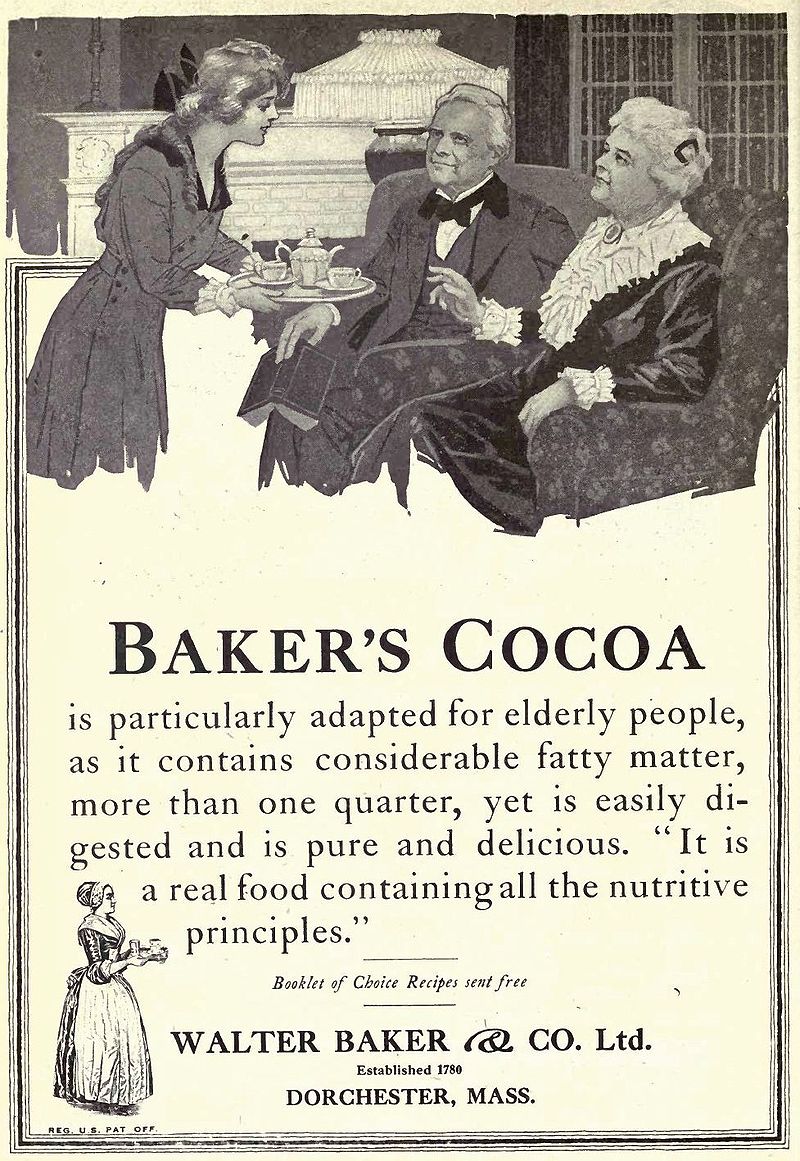
Baker's Cocoa Advertisement, January 1919 Issue of Overland Monthly. Public Domain.
In 1852, however, Sammy German had an idea. He developed a new type of chocolate, one that contained more sugar. This sweeter chocolate could be used for baking, and it's said Walter Baker bought the recipe for a whopping $1000. From that point on, the chocolate was sold as "Baker's German's Sweet Chocolate."

Over a hundred years later, on June 3, 1957, The Dallas Morning News printed a recipe of the day: "German's Chocolate Cake" submitted by Mrs. George Clay. The cake, with the pecan-coconut frosting, became an instant hit. Some sources claim that the recipe was in wider circulation at the time, but Mrs. Clay's recipe has been credited as the one that drew Baker's attention.


General Foods owned Baker's by this time, and they shared Mrs. Clay's recipe with other American newspapers.  Sales of Baker's Chocolate increased by 73%, and the cake became an American favorite.

Still available, even on Amazon!
Along the way, the apostrophe in "German's" was lost, and the cake is now known as German Chocolate Cake. Baker's is now owned by Kraft Heinz, and the recipe is still going strong. In fact, the recipe is usually printed right on the box.

And if you're not a cake person? Don't despair. German Chocolate is available as a flavoring in beverage syrups and coffees, too. 

June 11 is National German Chocolate Cake Day in America. Are you tempted to celebrate it with a slice this year?

***

Susanne Dietze began writing love stories in high school, casting her friends in the starring roles. Today, she's an award-winning, RWA RITA®-nominated author who's seen her work on the ECPA, Amazon, and Publisher's Weekly Bestseller Lists for Inspirational Fiction. To learn more, visit her website, www.susannedietze.com, and sign up for her newsletter: http://eepurl.com/bRldfv

Her latest is novel is The Blizzard Bride.


Friday, March 27, 2020

A Hero for all Time – Hercule Poirot (with Giveaway) By Donna Schlachter


Hercule Poirot (David Suchet)
If somebody asked you to name your favorite television hero, who would that be? Depending on your age, you might choose Roy Rogers, John Wayne, Tarzan, Batman, Superman, or Wonder Woman. Perhaps one of the Ninja Teenage Mutant Turtles would come to mind, or an Incredible.

For me, my all-time hero would be none other than Hercule Poirot. A persnickety retired Belgian detective who appeared in 35 books by the late Dame Agatha Christie, M. Poirot solved his cases using his brain and not his brawn.

Perhaps one of the most interesting facts about M. Poirot, who loomed large on the screen as well as the page, is that he was but 5 foot, 4 inches tall. Perhaps his balding, egg-shaped head gave him the appearance of more stature. Or maybe it was his huge ego. He never accepted that a mystery would go unsolved, a criminal never brought to justice, on his watch.

His sense of justice was such that he wouldn’t give up. Not even to his dying breath, where, once again, he set the world right, ensuring the murderer paid for his crimes, even if nobody else knew.


As with all heroes, his sidekick, Hastings, was a true and loyal friend. In fact, were it not for Captain Hastings, we may never have been introduced to Poirot. For indeed, as with Doctor Watson and Sherlock Holmes, it was Hastings’ writing of Poirot’s cases that put the little man first page in the news and in the hearts of London of the 1920’s through 1975.

Over the years, several actors played the part of Poirot in television and movies. Austin Trevor was the first to bring the detective to theaters in 1931, with David Suchet playing him both on public television and in movies. In fact, Suchet was such a talented actor, he portrayed the great sleuth in 70 stories, double the number of books Dame Christie wrote. 


Humility was never one of Poirot’s characteristics, and he often claimed to be the greatest detective in the world. Prior to arriving on the shores of England as a refugee after World War 1. In some places, he is referred to as having retired from police work, but in others, only that he fled Belgium and landed in England, alone and knowing nobody.

In Dame Agatha’s autobiography, she described the creation of Poirot as happening during a time when, in 1914, she worked at a Red Cross Hospital in Torquay. Beginning as a nurse, she later moved to the dispensary, where began her interest in poisons. Her sister Madge had challenged her to write her own detective stories, and so Agatha thought about that while surrounded with drugs and compounds that could kill. She said, “Since I was surrounded by poison, perhaps it was natural that death by poisoning should be the method I selected.”

Dame Agatha’s writing process began with the crime, then extended to the procedure, leaving room for a twist that readers could detect and perhaps solve. In August 1914, a colony of Belgian refugees lived near her, and she thought, “Why not make my detective a Belgian? There were all types of refugees. How about a refugee police officer? A retired police officer.”


She wanted her detective to be as unlike her as possible, which meant he was a tidy little man, since Christie was the opposite. His moustache came next, along with his immaculate and almost compulsive grooming habits and dress code. In fact, Hastings commented, “I believe a speck of dust would have caused him more pain that a bullet wound.” Since she considered herself to be less than intelligent, he would be brilliant. A big man needed a big name, so Hercules was the first. Then came Poirot. However, not liking the sound of that, she dropped the S and Hercule Poirot was born in The Mysterious Affair at Styles.

For the initial book, Dame Agatha had the beginning and the end, and worked hard at filling in the middle. However, realizing she had an over-complicated set of plot lines going, she wisely rewrote the entire middle.

She sent the book to a publisher, who promptly returned it. But she wouldn’t let
that stop her, so she sent it to another company, and Poirot was finally introduced to the world in 1921, four years after it was written. 


Her final book about the great detective, Curtain, was written in the 1940s, but didn't appear in print until 1975.


Leave a comment, and I will randomly draw for a print copy (US only) of another favorite author of mine, Patricia Moyes, in her novel from the 1960s Down Among the Dead Men.


About Donna:

Donna writes historical suspense under her own name, and contemporary suspense under her alter ego of Leeann Betts, and has been published more than 30 times in novellas and full-length novels. She is a member of ACFW, Writers on the Rock, SinC, Pikes Peak Writers, and CAN; facilitates a critique group; teaches writing classes; ghostwrites; edits; and judges in writing contests.

www.HiStoryThruTheAges.wordpress.com

www.HiStoryThruTheAges.com Receive a free ebook simply for signing up for our free newsletter!

Facebook: www.Facebook.com/DonnaschlachterAuthor

Twitter: www.Twitter.com/DonnaSchlachter

Books: Amazon: http://amzn.to/2ci5Xqq and Smashwords: http://bit.ly/2gZATjm

What Can Be Online University: online courses on the craft of writing: https://what-can-be-online-institute.teachable.com/

Etsy online shop of original artwork, book folding art, and gift items : https://www.etsy.com/shop/Dare2DreamUS?ref=search_shop_redirect


Resources:

https://poirotchronology.blogspot.com/p/hercule-poirot-timeline.html

https://www.agathachristie.com/characters/hercule-poirot


Friday, January 3, 2020

What Happened to Flight 2150


What Happened to Flight 2150?

by Pamela S. Meyers

When I was researching for my novel Shelter Bay, I did a lot of reading about shipwrecks that occurred back in the 1890s on Lake Michigan. I recently became aware of an area in the lower half of the lake called The Lake Michigan Triangle. Bermuda has its triangle and those of us who live near Lake Michigan have ours. A lot of mysterious disappearances have happened in that area over the years, but one, in particular, caught my attention.

Source: Northwest Airlines Flight 2501 Facebook Page


On June 23, 1950, Northwest Orient Flight 2150 left LaGuardia Airport in New York City for Seattle, Washington with a stop in Minneapolis, where a new flight crew would take over the flight. The crew had been advised of a storm front heading east and they took that under advisement. As they approached air space over Michigan they were advised to drop their altitude to 3500 feet. By the time they were over Battle Creek, Michigan they radioed their position and asked to lower altitude to 2500 feet because of the storm, but were denied because of air traffic in the same area. The captain acknowledged, and that was the last anyone heard from Flight 2150.

Just before midnight Central Time, Northwest’s radio operators in Milwaukee reported not hearing from Flight 2150 and it was well past their expected time of reporting. At first light, a search was started that included the U.S. Navy, the U.S. Coast Guard, and state police agencies from Illinois, Wisconsin, Michigan and Indiana. They first presumed the plane went down closer to the Wisconsin shoreline and began searching there but found no evidence of the missing airliner. They then focused on the area to the south of what had been the original flight plan, assuming that the storm’s strong winds had forced the craft that direction but nothing was found.

As reported at Michigan Shipwreck Research Association’s website , “…the US Coast Guard cutter Woodbine found an oil slick, aircraft debris, and an airline logbook floating in Lake Michigan many miles from shore. At 5:30 AM on Sunday, June 25, sonar work by the US Naval vessel Daniel Joy near the oil slick revealed several strong sonar targets. The Coast Guard vessels Woodbine, Mackinaw, Hollyhock and Frederick Lee focused on the recovery of floating debris, which included a fuel tank float, seat cushions, clothing, blankets, luggage, cabin lining and, tragically, body parts.”

It wasn’t long before numerous similar debris and human remains began coming ashore along a popular stretch of beach near South Haven, leading to the authorities to close the beach at the height of tourist season for nine days.

It was clear that the airplane went down in the storm, but the plane fuselage and four large engines were never found even though numerous divers have spent time and innovative efforts trying to find them. The same as how many ships that have gone down within the triangle have never been found nor has any definitive explanation explaining their disappearances presented itself.

Years after the disappearance of Flight 2501, a large mass grave was found in Lakeview Cemetary in South Haven and a group of concerned people took it upon themselves to locate the manifest of the flight to obtain the names of all the passengers and to include them into the record of who might be buried there. They then tracked down relatives of the people listed on the manifest and invited them to attend a memorial service for the victims. That service was held exactly 65 years to the day that the crash occurred.

A donated gravestone now marks the spot.
Source: Facebook

At this Facebook page about Flight 2501 you can see many entries and photos about the memorial service. 

I’ve become intrigued by the other stories related to the Lake Michigan Triangle and hope to do more research in the future and report about them here.

If your interest has been aroused more about this flight, there are several great resources available on YouTube which you can find by searching Google for Flight 2150 and going to the video hits.

V. O. van Heest has authored a very factual book called Fatal Crossing on flight 2501’s disappearance. She gave a presentation on her research findings at the Kalamazoo Michigan Public Library. It’s about an hour in length, but very informative. That is also on Youtube at https://youtu.be/hByaRmVi1y0.

Have you or someone you know ever experienced a difficult flight? I have not, except for bad turbulence and landing in strong crosswinds.


Pamela S. Meyers loves to write stories set in and around her hometown of Lake Geneva, Wisconsin. She is currently working on her four-book series that highlights the history of the area and the lake. Tranquility Point, Book Three in the series, releases in April 2020. 

She lives in northern Illinois with her two rescue cats and is close enough to get back to her beloved Wisconsin within about an hour.