Showing posts with label Massachusetts. Show all posts

Sunday, July 9, 2023

Name Origins of the United States Part III

  By Tiffany Amber Stockton


In June, I shared the second set of state name origins. I'm splitting them up into 5 groups in the name of brevity, to avoid bogging down a long post. Besides, it's summer, and most of you likely are looking for a quick, entertaining read. :) You can read last month's post if you missed it.

Today, it's time for the next 10 state name history stories. So, let's go!

STATE NAMES and their ORIGINS

One thing I found interesting with this list is it's almost a 50/50 split of the state names starting with a letter of the alphabet from either the first half or second half of the 26 letters. Montana is the 26th state out of 50 and the last one with an "M." The remaining 24 states come from the latter half of the alphabet. It would have been fun to see 25 of the states start with letters in the first half of the alphabet and the other 25 from the second half, but we're close!


Massachusetts comes directly from the Algonquian word Massachusett that references the people living in the area, and means "at the large hill."

Michigan is also based on an Algonquin word, meshi-gami, meaning "big lake."

Minnesota, like many other Midwest states, comes from a Native American language. In this case, the Dakota word mnisota means "cloudy, milky water."

Mississippi literally means "big river" in Algonquin Ojibwa, although it’s based on the French variation of the word.

Missouri relates to the Algonquin word wimihsoorita, which translates to "people of the big canoes."


Montana has some Spanish flair that links back to the Latin mons, for "mountains."

Nebraska stems from the Sioux name for the Platte River, omaha ni braska, meaning "flat water."

Nevada comes from the Spanish name of nieve or nevara for the surrounding Sierra Nevada mountain range, which essentially means "snowy mountains," or "snowcapped."

New Hampshire is the first of many states and cities named as new outposts of other parts of the world. In this case, Hampshire was a county in Southampton, England.

New Jersey was coined by Sir George Carteret of the Channel Island of Jersey.

And that's all for today. If you're like me and LOVE puzzles, download this PDF for some puzzle challenge fun. You might be able to solve it on your own without reading the rest of the blogs in this set, or you can save it and add to it in future months. :)

NOW IT'S YOUR TURN:

* Which one of these states was the most fascinating to you?

* Do you live in any of the 10 featured states this month? If so, do you have any other unique tidbits about your state?

* What do you think might be the origin of any of the other 20 states? (You'll learn about them throughout the rest of the year.)


** This note is for our email readers. Please do not reply via email with any comments. View the blog online and scroll down to the comments section.

Leave answers to these questions or any comments you might have on this post in the comment box below. For those of you who have stuck around this far, I'm sending a FREE autographed book to one person every month from the comments left on each of my blog posts. You never know when your comment will be a winner! Subscribe to comments so you'll know if you've won and need to get me your mailing information.

Come back on the 9th of August for my next foray into historical tidbits to share.

For those interested in my "fictional" life as an author and industry news about other authors, subscribe to my quarterly newsletter. Receive a FREE omitted chapter from my book, A Grand Design, just for subscribing!


BIO
Tiffany Amber Stockton has been crafting and embellishing stories since childhood, when she was accused of having a very active imagination and cited with talking entirely too much. Today, she has honed those skills to become an award-winning, best-selling author and speaker who is also a professional copywriter/copyeditor. She loves to share life-changing products and ideas with others to help improve their lives in a variety of ways.

She lives with her husband and fellow author, Stuart Vaughn Stockton, along with their two children and four cats in southeastern Kentucky. In the 20 years she's been a professional writer, she has sold twenty-six (26) books so far and is represented by Tamela Murray of the Steve Laube Agency. You can find her on Facebook and GoodReads.

Friday, March 11, 2022

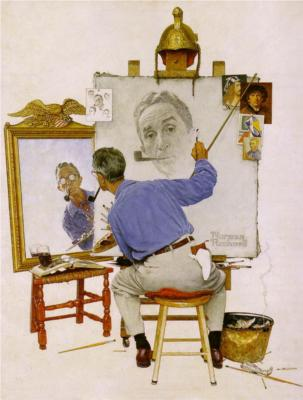
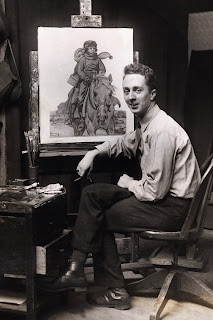
Norman Rockwell

 His Art Lives On . . .by Martha Rogers      


As a child growing up in the 1940's, I remember my grandfather and his Saturday Evening Post magazines. He loved Norman Rockwell, and I grew to love them as well. I'd always rush in to see Grandpa and ask him right off where the new issue was, and it was always by his chair.

Over the years that love grew, and now I have a collection of items based on his paintings. When the opportunity came for us to go to New England in 1999, one place went on my must see list, and that was Stockbridge, Massachusetts. 

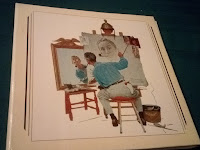
Here is the scrapbook from which I took the picture up above. 


This remarkable artist was born in New York on February 3, 1894 to Jarvis and Anne Rockwell. From the type of art he produced, many may believe he grew up in the country, but he grew up in the city of his birth where he experienced the violence of neighborhood gangs. His family liked to spend holidays in the country, and from that the artist developed his idyllic vision of rural life. 

He exhibited his talent at the early age 14, he enrolled in art classes at what is now The New York School of Art. Two years later, in 1910, he enrolled at the National Academy of Design, but then he soon transferred to The Art Students League. There he studied with Thomas Fogarty and George Bridgman. He received instruction in illustration from Fogarty, and that led Rockwell to his first commercial commissions. He also learned technical techniques, on which he would rely for his career, from Bridgman. His goal in school was not to become a painter but a professional illustrator.

Success came early when at age 16 he started professionally illustrating greeting card themes. He also illustrated a book, Tell-Me-Why: Stories about Mother Nature by C.H. Claudy. From there he collaborated with young magazines such as Boy's Life. His first cover was Scout at Ship's Wheel in 1913, and by 1914, Rockwell became an artistic director for the magazine at age 19.

At the age of 22 in 1916, Rockwell painted his first Saturday Evening Post cover. Rockwell is quoted as saying the magazine was "the greatest show window in America."

In 1916, he married Irene O'Connor, but they divorced in 1930.  He married again after Irene. He and Mary Barstow Rockwell had three sons, Jaris, Thomas, and Peter. He moved his family to Arlington, Vermont in 1939 where he began his works that reflected small-town American life. Below is a picture of Norman and Mary Barstow. They were not regular church goers but were members of St. John's Wilmont Church near his home, and where his sons were baptized.
In 1953, they moved to Stockbridge, Massachusetts, so his wife could be treated at a psychiatric hospital, the Austin Riggs Center. He also received treatment and once said that he painted happiness, but he did not live it. Then in 1959, Mary died suddenly of a heart attack. He did remarry once again to Mary "Mollie" Punderson in 1961. 

When WWll started, Rockwell was commissioned to paint a series of covers featuring a recruit named Willie Gillis. The paintings, from 1941 to 1946, described the life of an American boy starting with his first day in uniform and on until his happy return home. No combat images were used. Instead Rockwell chose the soldier's ideal rather than war. 

President Franklin Roosevelt's speech in Congress on the four fundamental freedoms inspired Rockwell to paint his now familiar The Four Freedoms.              First published in 1943, they were reproduced into thousands of posters and exhibited in cities across America. Too old to serve in the army, Rockwell saw this as his way of helping America win the war. This is my favorite one. Freedom from Want


By Norman Rockwell - U.S. National Archives and Records Administration, Public Domain, https://commons.wikimedia.org/w/index.php?curid=16925987

He ended his collaboration with the Post in 1964 and began a new work experience with Look and illustrated for them for over ten years. His main interests in those years represented his deep interest in civil rights, poverty, the Viet Nam war and the conquest of space. In 1977 he received the Presidential Medal of Freedom which his son Jaris received for him.

He spent many years in Stockbridge, Massachusetts, where he had a studio. Below is Rockwell at the door to his red studio. I have a model of it along with the Main street collection.


One of his paintings is Main Street and depicts the shops of that street in Stockbridge. That's the town where he died in 1978 due to complications of emphysema. First lady Rosalyn Carter attended that funeral. Below is a section of re-creation of Main Street in a collection of the buildings in the painting. I have the painting so that I can get the buildings in the right order. A few others have been added including a church, his studio, and home. All are numbered and labeled from the Hawthorne Authorized Collection.

I will always remember the great trip to Stockbridge where we visited the stores and toured his studio. 

If you ever have a chance to visit Stockbridge, do so. It is a marvelous experience to see all of Rockwell's paintings in the museum and walk the streets he so beautifully depicted. 

Are familiar with Norman Rockwell and his paintings? If so, do you have any you particularly like?

The first book in my new series, Treasure Quest, is now available. 

In Treasure for the Heart, Addie Wingate discovers a letter from her great-grandfather while searching for books in their attic. The reference to a great treasure and a cryptic poem leads her on a search for the treasure, but what she finds on the way may turn out to be more valuable than any treasure she could uncover on the ranch where she lives.  


Martha Rogers is a multi-published author and writes a weekly devotional for ACFW. Martha and her husband Rex live in Houston, Texas where they are active members of First Baptist Church. They are the
parents of three sons and grandparents to eleven grandchildren and great-grandparents to six. Martha is a retired teacher with twenty-eight years teaching Home Economics and English at the secondary level and eight years teaching Freshman English at the college level. She is a member of ACFW, ACFW WOTS chapter in Houston, and serves as President of the writers’ group, Inspirational Writers Alive. 


Thursday, November 25, 2021

Where Was The First Thanksgiving in The New World?


By Jennifer Uhlarik

Welcome--and Happy Thanksgiving to each of you!


Most everyone has heard the story of what is touted as the First Thanksgiving on American soil. In case you haven’t, the very abbreviated story goes that the Pilgrims sailed “across the pond” from England and settled in Plymouth, Massachusetts in 1620. After a very hard winter, the Pilgrims planted corn with the help of the Wampanoag Indians in 1621. At the successful harvest that fall, the Pilgrims and the local Indians held a great feast, which included turkey, fresh vegetables, and fruits, and they all gave thanks to God for safely seeing them to the New World, helping them through that first winter, and allowing them to learn to live in their new surroundings.


But was this truly the first Thanksgiving on American soil? Some historians say no, that it happened fifty-six years earlier and some twelve hundred miles further south in St. Augustine, Florida.


St. Augustine—really?


That’s what some say.


Pedro Menendez de Aviles


Last month, I told you about the building of the Castillo de San Marcos—the oldest masonry fort in America, which stands guard along the bank of the Matanzas River in St. Augustine. If you read that post, you’ll recall the name Don Pedro Menendez de Aviles. He was the Spanish admiral who brought eight hundred colonists to this new area in order to give Spain a colony in the New World where its treasure fleet could defend itself and Spain’s North American territories against other European powers.


As the story goes, on September 8, 1565, Don Pedro Menendez de Aviles waded ashore in what would become St. Augustine—to the fanfare of cannon fire and trumpets. On dry land, the admiral kissed a cross Father Francisco Lopez held out toward him, then gave a brief speech in which he proclaimed the land for God and country. The good Father then led the newcomers in an impromptu Catholic Thanksgiving mass. The whole while, members of the Timucua tribe stood by and watched the events. When, not long afterward, Don Pedro Menendez de Aviles proposed a feast, the Spanish colonists gathered what stores they still had aboard their ships, and the Timucuan Indians filled in with alligator, bear, wild boar, turkey, oysters, shrimp, and the various vegetables they grew, like beans, squash, and pumpkins.


So was this the first real Thanksgiving in America?


Well…maybe not!


If you go back even one year earlier and just a few miles north of St. Augustine,

Rene Goulaine de Laudonniere


there was an earlier Thanksgiving feast. In what we now know as Jacksonville, Florida, a group of French Huguenots led by explorer Rene Goulaine de Laudonniere wished to celebrate the founding of Fort Caroline. It was June 30, 1564. The fort would stand on a bluff overlooking the banks of what we now call the St. Johns River. Once again, the Timucuan Indians stepped in and provided food to supplement the meager supplies of the French Huguenots, much the same as with the St. Augustine feast. They sang psalms, offered prayers of thanksgiving, and asked God to continue His goodness toward them. 


So was the 1564 feast the first American Thanksgiving?


It’s so hard to say. Explorers had been coming to this land even before this point, and it’s entirely possible that someone may have beat the French Huguenots to the punch, even as they beat the Spanish to the punch…just as the Spanish beat the Pilgrims. But one thing we can be sure of, this land has seen many people groups come across her shores, and many of them have paused to thank God for His many blessings.


It’s Your Turn: What are you thankful for this year?


Award-winning, best-selling novelist Jennifer Uhlarik has loved the western genre since she read her first Louis L’Amour novel. She penned her first western while earning a writing degree from University of Tampa. Jennifer lives near Tampa with her husband, son, and furbabies. www.jenniferuhlarik.com


COMING MARCH 1, 2022


Love’s Fortress by Jennifer Uhlarik


A Friendship From the Past Brings Closure to Dani’s Fractured Family


When Dani Sango’s art forger father passes away, Dani inherits his home. There, she finds a book of Native American drawings, which leads her to seek museum curator Brad Osgood’s help to decipher the ledger art. Why would her father have this book? Is it another forgery?


Brad Osgood longs to provide his four-year-old niece, Brynn, the safe home she desperately deserves. The last thing he needs is more drama, especially from a forger’s daughter. But when the two meet “accidentally” at St. Augustine’s 350-year-old Spanish fort, he can’t refuse the intriguing woman.


Broken Bow is among seventy-three Plains Indians transported to Florida in 1875 for incarceration at ancient Fort Marion. Sally Jo Harris and Luke Worthing dream of serving on a foreign mission field, but when the Indians reach St. Augustine, God changes their plans. However, when Sally Jo’s friendship with Broken Bow leads to false accusations, it could cost them their lives.


Can Dani discover how Broken Bow and Sally Jo’s story ends and how it impacted her father’s life?


(NOTE: This blurb does not yet match bookseller’s descriptions, but it IS the same book).


Wednesday, November 3, 2021

The Journey of the Mayflower

By Elaine Marie Cooper I

t’s been called the most important journey in history. Indeed, the three thousand miles across the Atlantic Ocean, undertaken by 102 passengers on board the ship called Mayflower, changed the future of America, England and the politics of the world. Sixty-six days on water, that changed the course of history, starting in 1620. The journey began in Leiden, Holland. Many of the “Separatists” as these Puritans were called, had escaped there to be allowed to practice Christianity without being forced into the Church of England. Staying in England put these believers at risk of being fined, imprisoned, or even sentenced to death. 

But the very freedom in Holland that allowed the Pilgrims to worship as they wished, also allowed other beliefs and behaviors that the English Christians found offensive. Their children were becoming too “Dutch.” Purchasing a small vessel called the Speedwell, these pilgrims were intent upon sailing to the New World, rather than risk the adversities in both England and Holland. On July 22, 1620. The Speedwell took off from the Port of Delfshaven to join the other Separatists in Southhampton, England. There, they met up with the Mayflower.


On August 15, the two ships with their passengers joined together and sailed for the New World. The Speedwell, however, “Leaked like a sieve.” Both ships turned back for England. Those Pilgrims intent upon completing the journey, boarded the Mayflower, and left Plymouth on September 6, 1620. By now, the travelers were at great risk of running into dangerous weather conditions. Ideally, they should have left in April or May at the latest. To leave in the Fall was considered by some to be “foolhardy.” Those fears of the experienced naysayers were played out in the treacherous journey that ensued:


When October arrived, so did the high winds and waves. Separatist passenger William Bradford, later to become Governor of Plymouth Colony, wrote in Chapter 9 Of Plymouth Plantation, “In many of these storms the winds were so fierce, and the seas so high, as they could not bear a knot of sail, but were forced to heave to [face into the wind to stop the ship], for many days together.” 
“Today in Our History – Adventures on the Atlantic in 1620” 


 During an especially fierce storm that autumn, a main beam cracked, causing fear even among the experienced sailors. A great iron screw brought onboard by the Separatists, secured the beam in what many believed was a providential rescue from a watery grave. Many of the passengers suffered greatly from seasickness. The stench of vomit in the close quarters below deck as well as the chamber pots that had to sit for long periods of time before they could be thrown out into the ocean, added to the nauseating voyage. 


With three of the women onboard the Mayflower pregnant, it’s difficult to imagine their distress onboard. The baby boy of passengers Elizabeth and Stephen Hopkins was born on the ship and named “Oceanus.” All of the storms endured on the voyage darkened the sky with clouds, preventing the ship’s crew from navigating the stars. This lack of direction led the ship to head further north than planned. While they were headed toward Virginia, they ended up landing in what became New England. After docking in Cape Cod Harbor, another baby boy was birthed. Susanna and William White called him “Peregrine” which means, “traveler.”
After landing at Cape Cod, the Pilgrims were face-to-face with many natives who had long inhabited the “New” World. A member of the Patuxet tribe named Squanto began to speak in English to the astonished Pilgrims. Years prior, Squanto had been kidnaped by an English explorer who brought the native to Spain. There he was sold into slavery. Squanto escaped and finally made it home to the Patuxet region in 1619—just in time to be an interpreter for the passengers. 

 That first winter was harsh and deadly. Fully half their number of 102 Pilgrims died of illness in that first year. The following November the survivors were able to celebrate a meal of thanks for God’s many provisions and for their survival.  

When I think of all the trials endured by John Alden and Priscilla Mullins, I am truly astonished. Priscilla was the sole survivor in her family, losing her father, mother, and younger brother that winter. John Alden was the ship’s cooper, or barrel maker. He had come onboard as part of the crew and was the only member of the workers to remain behind when the vessel returned to England. 

Before the Atlantic crossing, the future couple had never met. When they fell in love is the subject of fictional romantic speculation. Henry Wadsworth Longfellow shone the spotlight on the young couple in his poem, “The Courtship of Myles Standish.” Henry is also a descendant of John and Priscilla. 

 John rose to become a prominent member of Plymouth Colony. He was a signer of the Mayflower Compact and for many years, served as an assistant to the Governor. About 1623, Priscilla and John married and had 10 children. Those ten, produced 70 grandchildren! It’s no wonder their descendants are numbered near a million or more. 

 I am descended from Ruth Alden, the couple’s 6th child. I am the 6th child in my own family. ;) When I first learned from my mother’s cousin that I was a descendant, I was delighted. I had spent many years living in Massachusetts and I’d always felt such a connection to that state. Knowing the Aldens’ were my ancestors sealed the deal for me. My roots truly belonged in New England.

Award-winning author, Elaine Marie Cooper, never thought she’d see her name listed on published books. Now researching her eighth novel and ninth book, she is too caught up in her passion to write to stop any time soon. She says the Lord called her to create books and she’ll obey that calling until He says to stop. Her most recent releases are “Scarred Vessels,” winner of the 2021 Selah Award, and “Love’s Kindling,” finalist in the 2020 Selah Award, and Book 1 in the Dawn of America series. Her only non-fiction release is the memoir of her daughter, Bethany who passed away from a brain tumor in 2003. It was also a Selah Winner in 2015. Cooper is a mom of 2 grown sons and GiGi to 5 of “the most beautiful grandchildren ever. https://www.mayflower400uk.org/education/my-mayflower/the-mayflower-400th-anniversary-special-history-hit-live/the-mayflower-400th-anniversary-special-history-hit-live/

Wednesday, November 11, 2020

Plymouth Colony and the Rock

Where Did They Land? 

by Martha Rogers   


Much lore, legend and tradition surrounds the first colonies of the new land on the Atlantic coast. The Mayflower was one of two ships that set sail for the new America to escape the hard times for the Pilgrims in England. The ship Mayflower arrived in Plymouth Harbor in 1620, after first stopping near today's Provincetown. According to oral tradition, Plymouth Rock was the site where William Bradford and other Pilgrims landed. 

However, there was no complete evidence that they actually first stepped foot on the rock. That claim didn't come until 121 years later in 1741 when Thomas Faunce, whose father was a passenger on the ship, said his father and several other passengers had assured him that was the spot they landed.  

The ship made its first stop at what is now Provincetown on November 11, 1620. Since they did not have a patent to settle there, they realized they needed some form of a governing document. This resulted in the Mayflower Compact. The
intent of the compact was to establish a means of governing the colony, and it resembled the same ones of towns they'd left in England. It was modeled on the church covenants of the Congregationalists and made clear the colony would be governed by just and equal laws.


Forty-one men signed that contract aboard the ship. After several weeks of trying to find a place to settle, a skirmish with Indians led them to set sail for another port. The Mayflower dropped anchor at Plymouth Harbor on December 16 and
spent several days looking for a settlement site. They decided on the recently abandoned site of the Patuxet tribe largely because of its defensive position centered between two hills. Also, the fact that the previously cleared land made agriculture relatively easy helped their decision. This landing is what perpetuated the story of Plymouth Rock being the landing spot.


Until housing could be built and the town established, the settlers lived on the ship. More than half of the settlers became ill and died during that first winter. Finally, in March, they began to move ashore to their permanent dwellings. There they met Squanto who acted as an interpreter and mediator between the native Americans on the land and the Pilgrims.


Although John Carver served as the first governor 
of the settlement in 1620, William Bradford is the best known and became governor in 1621. The governor was the most powerful executive who served the settlement along with seven
 assistants elected to serve with him as a form of cabinet. The colony leadership worked with the native Americans to learn more about crops and how to survive on the land.


Because of this friendship, the colonists were able to enjoy a bountiful harvest in the fall of 1621. That feast, which took place sometime between mid-September and November over a three day period, has been commemorated as the first Thanksgiving, and is the one most often presented in Thanksgiving pageants and plays.


Most of the Pilgrims in attendance were men because over seventy-five percent of the women had perished during the previous winter. Only fifty colonists were left to celebrate their survival and the harvest.
 
Plymouth Colony never grew to be the robust village
 of which they dreamed although it did become 
self-sufficient after five years. Then because so many other colonies sprang up and became prosperous, Plymouth was finally absorbed by the Massachusetts Colony in 1691. The drawing to the left is how it is believed that first colony was laid out as a colony.

Today, the original colony of Plymouth is a living museum where visitors can sample colonial food and see a restored Mayflower ll. The first Thanksgiving is also reenacted here each  November. 

My husband and I had the privilege of seeing some of those sights when we toured

New England a few years ago. The picture is at the dock where the Mayflower is moored near Plymouth Rock.


Martha Rogers is a free-lance writer and best-selling author from Realms Fiction of Charisma Media and Winged Publications. She was named Writer of the Year at the Texas Christian Writers Conference in 2009. She is a member of ACFW and writes the weekly Verse of the Week for the ACFW Loop. ACFW awarded her the Volunteer of the Year in 2014. Her first electronic series from Winged Publications, Love in the Bayou City of Texas, debuted in the spring of 2015.  Martha is a frequent speaker for writing workshops and the Texas Christian Writers Conference. She is a retired teacher and lives in Houston with her husband, Rex. They now have twelve grandchildren and six great-grandchildren. 


Thursday, May 28, 2020

Colonial Meetinghouse


Elaine Marie Cooper


Colonial Americans had the perfect name for a place to meet for church: The Meetinghouse. It was a simple name that belied its community importance, for colonials placed high regard for their centrally located places of worship.

At a time in our current day amidst a pandemic, when church-goers long to return to a place to congregate in unison and worship God, it seems an appropriate topic to reflect upon. While quarantines were certainly declared during severe illnesses in early America, a high priority was placed on meeting as a congregation. After all, there were no online services to bring comfort and hear God’s Word, nor communication by phones that so readily keep us connected with eachother. Letters were helpful communication, but less than perfect. The most meaningful fellowship was always together and in person. 

Every community meetinghouse became the site for a community’s social and spiritual lives, drawing crowds from the surrounding village each Sabbath to listen to sermons preached virtually all day long. The buildings also doubled as a place for governmental and political discussions. 

Double church doors with sturdy lock

Before 1820, most of the meetinghouses were unheated, due to concerns about fire erupting. Worshippers often brought portable, metal foot stoves filled with heated coals to help them withstand the below zero temperatures. It was so cold in New England winters that the communion bread was known to freeze occasionally! 

The bell at the meetinghouse became the “town crier” of sorts, ringing for births and deaths, wars and fires. According to Eric Sloane in American Yesterday, “After a death, the bell greeted the morning with ‘three times three for a man, and three times two for a woman.’ Then after a short silence, the bell pealed out the number of years the dead person had lived.” It was a practical solution to communicate prior to telephones and the availability of daily newspapers.

While the style and structure of meetinghouses varied around the colonies, they were found throughout the states, both northern and southern. 

Salisbury Union Meetinghouse

One of the beautifully maintained meetinghouses from the early 1800’s is the Salisbury Union Meetinghouse now located at Storrowton Village museum in West Springfield, Massachusetts. It was moved to its present location in 1929 from its original site in Salisbury, New Hampshire. The designation of “Union” simply refers to the fact that it was a building paid for by multiple Protestant congregations, which combined their resources to share the same building on a rotating basis. 

Prior to 1818, meetinghouses in most of New England (save Rhode Island) were state supported through taxes. This ended in 1818 in Connecticut and 1834 in Massachusetts. Around this time more denominations began to increase in New England, following many years of predominantly Congregationalist groups—thus the birth of the “union” meetinghouses.

Pew door


When I visited the Salisbury Meetinghouse at Storrowton several years ago, it thrilled my historical sensibilities from the moment I entered the locked double doors. The pine-framed structure built in 1834 can hold 175 worshippers in richly-stained cedar pews. The pews were sold to families for around $20 for their lifetime use. The limited seating in each row would require multiple purchases for larger families.

Entering the large hall, I noticed the latched doors on the end of each pew. I asked historian Dennis Picard if the doors were used to confine wandering children. Not just children, he explained, but the mischievous dogs as well that accompanied their families. 

It’s difficult to picture the chaos bringing canines to church must have caused, but there are accounts of parsons chasing pooches out of meetinghouses. 


My favorite gem in the old meetinghouse was the sounding board, a hexagonal wooden structure placed over the pulpit to help resonate the preacher’s words throughout the spacious room. It took some extra help to get the sermon clear to the back of the balcony. The sounding board was one more practical solution, in a day without microphones or electricity.

Old meetinghouses are a reflection of our history’s heritage, rich in Christian beliefs—silent reminders of the foundations of our country.


Elaine Marie Cooper has two historical fiction books that released in 2019: War’s Respite(Prequel novella) and Love’s KindlingLove’s Kindling is available in both e-book and paperback and is a Finalist for the Selah Awards. They are the first two books in the Dawn of America Series set in Revolutionary War Connecticut. Cooper is the award-winning author of Fields of the Fatherless and Bethany’s Calendar. Her 2016 release (Saratoga Letters) was finalist in Historical Romance in both the Selah Awards and Next Generation Indie Book Awards. She has been published in Chicken Soup for the Soul and HomeLife magazine. She also penned the three-book historical series, Deer Run Saga. Her upcoming release, Scarred Vessels,” is about the black soldiers in the American Revolution. Look for it in October 2020. You can visit her website/ blog at www.elainemariecooper.com


Shipbuilding in the 1880s in America By Donna Schlachter


Shipbuilding and design hasn’t changed much throughout history. From the time of the first large water craft until now, a ship must be stable in the water, able to carry cargo, and cost-efficient to build and operate.

Earliest designs of flat-bottomed boats, suitable for calm waters and short trips on inland lakes,
Essex Ship yard
soon proved unstable on the ocean. Thus began the search for the best wood—surprisingly, the sturdy oak is too heavy and can’t bear sufficient cargo weight or endure rough oceans.

Perhaps not surprisingly, at least to those who study and follow Biblical teaching, is that cypress or gopher wood is much stronger and more flexible for open waters and heavy loads.

Next, realizing the need for stability on the ocean, keels were developed and redesigned according to the purpose of the ship. For those transporting passengers and perishable cargo, speed was of the essence, so sleek deep-v hulls for a faster and more smooth ride and large coal-fired engines were included in the new designs. With the advent of increased international trade, larger cargo ships had broader hulls, while racing schooners continued to employ sail power, medium-v hulls for more stability in open waters, augmented by backup gasoline motors.

USS Suzanne
Massachusetts was a well-known shipbuilding area for several reasons, including its protected harbors and bays, as well as the trees required to build the ships. Not only were shipbuilders and designers employed, but also those other trades such as sail makers, rope makers, and suppliers known as chandlers.

Although not strictly a ship, the quintessential dory was first designed and built in Massachusetts. The renowned Gloucester fishing fleet also supplied and empowered the merchant and naval fleets that made the United States a world power.

By the late 1880s, an experienced shipbuilder would make use of his time and effort by employing his ship during the summer fishing season, then he would sell his boat in the fall. This served two purposes: he earned income then sold a seasoned ship with “the bugs worked out” to another fisherman, who would use the downtime of the winter season to get the boat into tip-top shape for the coming year.


Often, a captain in need of a ship would travel to the town of Essex and contract for a new
Captain's Chair
vessel, because the Essex shipbuilders were famous for unsurpassed skill and craftsmanship. Most shipbuilders learned how to build a boat through on-the-job training, including fishing and transport. However, by the late 1880s, universities were training in naval architecture, including theory, which enabled new ideas to flourish. However, many shipbuilders came from a long line of builders, and learned through apprenticeship.

While racing, passenger, and transport schooners were the mainstay of the economy, other types of everyday boats were also required, including tugboats and lightships.

The Navy was also a marketplace for ships, and by the 1880s, were placing orders not only for iron-enforced hulls, but also for steel hulled ships. In 1883, the US Congress approved $1.3 million to build three cruisers and a dispatch ship steel-hulled ships. This group of ships was called the ABCD ships—cruisers Atlanta, Boston, and Chicago, and the dispatch ship Dolphin—and were the beginnings of a steel Navy. The building of these ships proved that steel was easier to work with than iron, making it the material of choice for future Naval orders.

While my most recent release, Kate, doesn’t take place on the ocean, she does travel westward in a Prairie Schooner—a covered wagon so called because of its rounded sides which reminded folks of a ship.

About Kate:
A prostitute’s daughter, an outlaw’s brother, and a stagecoach robbery—can anything good come out of Deadwood?
Kate Benton, daughter of a saloon floozy, runs away, straight into the arms of Tom McBride, fleeing from his outlaw brother’s past. Can these two, damaged by life experiences, tear down the walls that separate them with God’s help? Or are they destined to remain alone forever?


About Donna:
Donna lives in Denver with husband Patrick. As a hybrid author, she writes historical suspense under Donna is represented by Terrie Wolf of AKA Literary Management.
her own name, and contemporary suspense under her alter ego of Leeann Betts, and has been published more than 30 times in novellas and full-length novels. She is a member of American Christian Fiction Writers, Writers on the Rock, Sisters In Crime, Pikes Peak Writers, and Christian Authors Network; facilitates a critique group; and teaches writing classes online and in person. Donna also ghostwrites, edits, and judges in writing contests. She loves history and research, and travels extensively for both.
 www.HiStoryThruTheAges.com Stay connected so you learn about new releases, preorders, and presales, as well as check out featured authors, book reviews, and a little corner of peace. Plus: Receive a free ebook simply for signing up for our free newsletter!
Bonanza Books-in-a-Flash: order autographed print copies of books that are shipped directly from the author. Perfect for times when other online order services are slow.
Books: Amazon: http://amzn.to/2ci5Xqq and Smashwords: http://bit.ly/2gZATjm
Etsy online shop of original artwork, book folding art, and gift items : https://www.etsy.com/shop/Dare2DreamUS?ref=search_shop_redirect