Showing posts with label St. Augustine. Show all posts

Saturday, June 25, 2022

The Castillo de San Marcos--Part 7


by Jennifer Uhlarik


Hello, readers! Are you ready for more interesting history about the oldest masonry fort on U.S. soil? If you’ve been following along, you’ve learned all about the fort’s founding and how it was passed between Spain, BritainSpain again, the United States, and even fell to the Confederate Army during the American Civil War. Last month, I told you how, for a period of three years during the 1870s, the fort became home to seventy-three Plains Indians. And this month, I’ll share another interesting chapter of the Castillo’s history—the internment of the Apache Indians.


Just as we learned in last month’s post about the Plains Indians, the Native Americans of all tribes were struggling to acclimate to the idea of so many white men flooding into what had been their traditional territories. The Apaches were no different, and conflicts sparked between these groups all across Arizona for decades. Fierce warriors that they were, the Apaches fought hard against the incoming settlers, making homesteading in the Southwest a difficult endeavor. The Frontier Army came in and attempted to subdue the Apaches, placing them on reservation lands, but as so often happened, those promised lands ended up being found to have hidden value in the form of gold, silver, or other resources. Or the government didn’t deliver the promised supplies—cattle and other food supplies, blankets and clothing, etc. So new treaties were negotiated, and new boundaries drawn up, shrinking the sizes of reservations or moving them to new locations all together, all so that white men could capitalize on the resources they’d found on reservation lands—or with more promises of better supplies in the new locales. As anyone would, the Apaches grew tired of this shuffling and broken promises. Bands began breaking out of the reservations to go again on raids and make war on the Army and settlements for these unfair practices, as well as to provide for their families. Ultimately, this war went on for years, but slowly ended as Apache leader after Apache leader finally surrendered when they couldn’t keep going.


Apache Men sitting among cannons housed
at Fort Marion, circa 1886
Similar to the Plains Indians, various Apache men were chosen to be sent to Florida for incarceration at Fort Marion. What was different from the Plains Indians incarceration was that women and children were also sent to the fort. They arrived by train on April 16, 1886. Of course, all of St. Augustine came out to gawk at the new arrivals. The oldest men came first, wrapped in their blankets. Following them came the younger warriors. And lastly, the women and children. While large, the fort could comfortably sleep 150 or so, not the 502 who ended up being sent to Florida for imprisonment. Some of the Apaches were made to sleep in the casemate rooms surrounding the inner courtyard, and many others were sent to the gundeck above to sleep in Sibley tents.


As you might imagine, life was difficult in a strange new place, particularly in such tight quarters. The Apaches were given a pound of beef per adult per day, with children receiving half that; fresh bread each day; vegetables and grains like rice, turnips, hominy and beans, as well as a small weekly portion of potatoes and onions. The women were expected to cook the food themselves, except for the bread, which was made down the street at St. Francis Barracks and carted over each morning. They drank coffee with sugar, or they had water from the well within the fort’s walls. 


Geronimo, one of the most famous Apache
warriors. While he was not held at Fort Marion,
his wife was, and gave birth to his daughter, Marion
(later renamed Lenna), while there.


There were twelve Apache children born during the year they were incarcerated at Fort Marion, the first of which was Geronimo’s daughter (aptly names “Marion”, although she later changed her name to Lenna). Unfortunately, there were also several deaths in that year. When you stop to consider the sheer number of people in such confined spaces, it isn’t surprising that illness ran rampant among them. Colonel Langdon, who was in charge of overseeing the Apache prisoners, brought in Army physician, Dr. DeWitt Webb, to treat the men, women, and children. Despite his best efforts, Dr. Webb reported that he lost numerous patients to various diseases, such as dysentery, acute bronchitis, marasmus (or wasting disease), old age, epilepsy, tuberculosis, and neonatal tetanus. All told, twenty-four Apaches died during that year in St. Augustine. 


In order to make more room during the daylight hours, the Apaches were allowed to spread out outside the fort walls on the grounds and go into town, but even so, there wasn’t much for them to do. Children played games while the adults saw to the needs of their families, cooking, mending clothing, and repairing their few belongings. There wasn’t enough space for much else. The women would weave baskets to sell to locals and tourists, and men and boys would make and sell bows and arrows, as well as offer lessons in how to use the weaponry. However, with the overcrowded conditions, it was harder for the Apaches to make and sell their wares than it had been for the seventy-three Plains Indians a decade before.


The prisoners began turning to gambling and card games to pass the time until Colonel Langdon came to the same conclusion that his predecessor, Lt. Richard Henry Pratt, had. They needed stimulation, and it would come through education and assimilation. Colonel Langdon contacted Richard Henry Pratt in Carlisle, PA, to ask him to return to Fort Marion and interview the children to see if any would be a good fit at the Carlisle Indian Residential School, of which Pratt was the founder and headmaster. Upon Pratt’s visit, he selected 103 of the children to return with him to the school, and they young ones were immediately sent on their way under Pratt’s care. At the Carlisle Indians School, they children were given military-style uniforms to wear, their hair was cut short, and they were given Christian names.


Apache children in traditional garb on their arrival at Carlisle Indian School (left).
Many of the same children after receiving haircuts and military-style uniforms (right).


Of the roughly four hundred remaining Apaches, Colonel Langdon again called upon St. Augustine’s women to begin educating the Natives. Just as with the Plains Indians, Miss Sarah Mather and other local women set up classes so the Apache adults could learn to read, write, and speak English, as well as some simple arithmetic, science, and other subjects. Those children who were not taken to Carlisle, PA, were taken each weekday to a local nunnery where the Sisters of St. Joseph educated them in similar subject matter. Unlike Lt. Pratt before him, Colonel Langdon did not implement a physical training program or having skilled craftsman teaching the Apaches their crafts—more than likely because there were too many prisoners and not enough space for such education.


After roughly one year, those Apaches left in St. Augustine were moved again, this time to a reservation in Alabama, and later to Ft. Sill, Oklahoma, where they remained.


Award-winning, best-selling novelist Jennifer Uhlarik has loved the western genre since she read her first Louis L’Amour novel. She penned her first western while earning a writing degree from University of Tampa. Jennifer lives near Tampa with her husband, son, and furbabies. www.jenniferuhlarik.com


AVAILABLE NOW!


Love's Fortress by Jennifer Uhlarik


A Friendship From the Past Brings Closure to Dani’s Fractured Family


When Dani Sango’s art forger father passes away, Dani inherits his home. There, she finds a book of Native American drawings, which leads her to seek museum curator Brad Osgood’s help to decipher the ledger art. Why would her father have this book? Is it another forgery?


Brad Osgood longs to provide his four-year-old niece, Brynn, the safe home she desperately deserves. The last thing he needs is more drama, especially from a forger’s daughter. But when the two meet “accidentally” at St. Augustine’s 350-year-old Spanish fort, he can’t refuse the intriguing woman.


Broken Bow is among seventy-three Plains Indians transported to Florida in 1875 for incarceration at ancient Fort Marion. Sally Jo Harris and Luke Worthing dream of serving on a foreign mission field, but when the Indians reach St. Augustine, God changes their plans. However, when Sally Jo’s friendship with Broken Bow leads to false accusations, it could cost them their lives.


Can Dani discover how Broken Bow and Sally Jo’s story ends and how it impacted her father’s life?


Wednesday, May 25, 2022

The Castillo de San Marcos--Pt 6 (and a giveaway!)


By Jennifer Uhlarik


Hello, readers! Time for your next installment of the history of the Castillo de San Marcos. If you’ve been following along over the last handful of months, you’ve read about the Spanish building this large masonry fort in St. Augustine, Florida, how the fort came into British possession, was returned to Spanish control for a brief time, became an American acquisition, and then traded hands between the Federal and Confederate armies during the Civil War. So what happened after the war’s end? Life in the St. Augustine fort was quiet for only a decade before it next came into use.


The north wall of Fort Marion,
including the wooden barracks the
Native American prisoners built
on the upper gun deck.

As many of you may know, the western territories were fraught with conflict. Not just between lawmen and outlaws, but also with conflicts between the Native American tribes and the western settlers. Many battles cropped up between settlers and Indians, with much bloodshed on both sides, until the Frontier Army and the Native American tribes such as the Lakota Sioux, Cheyenne, Arapaho, Comanche, and others, were in an all-out war. There were many instances where whites attacked and massacred sleeping camps of Indians, and others where Indians wiped out whole wagon trains or military units. It was a long, drawn-out period where many lives were lost—a tragic piece of America’s history.


That war finally came to an end on the western plains in the mid-1870s. In 1874 and 1875, the various Indian tribes surrendered to the Army. Investigations were done into some of the most horrendous of attacks perpetuated by members of these tribes, and those who led them were singled out to be made examples of. The rest were sent to the reservations in Indian Territory (modern-day Oklahoma). While some Indians were tired of the decades of conflict and were willing to live peacefully, others chafed at the American government being able to tell them where and how they should live. Those in the latter group often attempted to stir up trouble within the reservation lands, leading their other tribesmen to rebel. So these men also were singled out for further punishment. In total, there were seventy-three men from five tribes—the Cheyenne, Arapaho, Comanche, Kiowa, and Caddo—who were to be punished. Their punishment was to be sent to distant Florida, far from their tribal lands, and completely cut off from their people, to be incarcerated in Fort Marion (aka the Castillo de San Marcos). 


Some of the seventy-three Plains
Indians, posing with Lt. Pratt,
soon after their arrival at
Fort Marion.

The trip from the west took roughly a month, and during that time, these seventy-three men traveled by wagon to reach the railroad, then by train all the way to the panhandle of Florida. There, they disembarked the train and boarded a steamboat for a brief ride south. Then another short train ride, and finally, they arrived at the fort they would call home for some unspecified time. Their travels east were not without difficulties. While the men were used to galloping for miles on horseback, the unfamiliar movements and sounds of the train made many of them sick at their stomachs. There was at least one escape attempt during a brief stop-over, leading to one of the seventy-three men being shot and left behind under military guard until he was well enough to travel. By the time these prisoners of war reached St. Augustine’s fort, they were shells of the fierce warriors they’d once been. Instead, they were thin and bedraggled, wrapped in blankets with shackles on their hands and feet. They shuffled through crowds of St. Augustine residents to reach the stone fort and face their punishment.


Uniformed Indians performing
morning drills.
The man who was placed in charge of the Indians’ care was one Lieutenant Richard
Henry Pratt. He quickly realized that his charges were wasting away with little to do, so he struck upon the idea to give them men structure. First, he instituted military drills and physical exercise, just like the Army soldiers were made to do. Then, Pratt began noticing that the casemate rooms in which the men slept each night were moldy. He put the Indians to work scrubbing the walls and ceilings. With each new task, the men’s outlook seemed to improve. They liked to work. It wasn’t long before Pratt approached his military superiors to ask about teaching the Indians reading, writing, simple arithmetic, and even trades with which to make money in the white man’s world. After some discussion, he was granted approval for the progressive plan, and Pratt teamed up with various women in the St. Augustine community to begin classes. Two of the most prominent women were Sarah Ann Mather and Rebecca Perit, who did much to further the lives of freed slaves and the Native Americans in St. Augustine. With their help, Lt. Pratt even began weekly church services within the fort, led by local ministers from the St. Augustine area.


Just like on the reservations, there were some who took to the new ways, and those who didn’t accept it as easily. But by and large, the Indians cooperated enough to make the plan work. For several hours each weekday morning, they would sit in class and learn to speak and read English, work simple math problems, and other academic subjects. In the afternoons, they would learn trades like shoe cobbling, blacksmithing, farming, and other skills that they would be able to carry into life after incarceration.


Example of Ledger Art drawn by one of the 
Plains Indians, depicting their travels
to Fort Marion.

As they embraced their new, structured day and showed themselves to be trustworthy, Pratt begin giving them more freedoms. When a local jeweler approached Lt. Pratt with the request to have the Indians gather and polish “sea beans” for him to sell in his store, they went to work. They were given time to go across Matanzas Bay to Anastasia Island and gather then beans, then spent hours polishing the beans to a high shine. They turned over thousands of the trinkets and were paid handsomely for their efforts. This led to other money-making ventures. Drawing “ledger art” and selling it outside the fort. Making bows and arrows to sell to tourists. Teaching those same tourists how to use the authentic weapons. In addition, they also began putting on cultural displays—powwows, Native dances, “buffalo” hunts (using cattle from local ranches and the worst of the nags the local livery stables had to offer). 


For three years, these industrious men were incarcerated in St. Augustine’s ancient fort. While many of those seventy-three fell ill to consumption (tuberculosis) and other illnesses, most survived and either returned to the reservations and their families—or, in some cases, followed Pratt on his next venture, which was to found the Carlisle Indian School in Carlisle, Pennsylvania. 


It’s Your Turn: Lt. Richard Henry Pratt fought hard for the seventy-three Native American men he was put in charge of at Fort Marion in 1875. He employed progressive ideas to educate these men in hopes they might be able to one day integrate into society at large. In your opinion, was Pratt a hero for his ideas to help the Indian men learn skills that would help them integrate, or was he a villain for forcing them to embrace a culture not their own? Leave your honest opinion with an email address to be entered into a drawing for an autographed paperback copy of Love’s Fortress (US entries only). (I know this topic can bring some heated feelings, so please be kind in your responses)!


Award-winning, best-selling novelist Jennifer Uhlarik has loved the western genre since she read her first Louis L’Amour novel. She penned her first western while earning a writing degree from University of Tampa. Jennifer lives near Tampa with her husband, son, and furbabies. www.jenniferuhlarik.com


AVAILABLE NOW!


Love's Fortress by Jennifer Uhlarik


A Friendship From the Past Brings Closure to Dani’s Fractured Family


When Dani Sango’s art forger father passes away, Dani inherits his home. There, she finds a book of Native American drawings, which leads her to seek museum curator Brad Osgood’s help to decipher the ledger art. Why would her father have this book? Is it another forgery?


Brad Osgood longs to provide his four-year-old niece, Brynn, the safe home she desperately deserves. The last thing he needs is more drama, especially from a forger’s daughter. But when the two meet “accidentally” at St. Augustine’s 350-year-old Spanish fort, he can’t refuse the intriguing woman.


Broken Bow is among seventy-three Plains Indians transported to Florida in 1875 for incarceration at ancient Fort Marion. Sally Jo Harris and Luke Worthing dream of serving on a foreign mission field, but when the Indians reach St. Augustine, God changes their plans. However, when Sally Jo’s friendship with Broken Bow leads to false accusations, it could cost them their lives.


Can Dani discover how Broken Bow and Sally Jo’s story ends and how it impacted her father’s life?


Friday, February 25, 2022

The Castillo de San Marcos, Part 3


By Jennifer Uhlarik


Hello, readers! We are just days away from my fourteenth published story being released. Love’s Fortress is coming March 1, 2022, and leading up to that, I’ve been telling you some of the interesting history of the Castillo de San Marcos, St. Augustine’s old Spanish fort which is the historical landmark where about half the story takes place. If you want to see past postings on the fort, you can find them at the following links:

The Castillo de San Marcos--Part 1

The Castillo de San Marcos--Part 2


So last month, we left off with the fort being returned by the British to Spain during the Treaty of Paris that ended the American Revolution. Britain traded control of Florida to Spain in exchange for the Bahamas. So in 1783, the treaty was signed and by mid-1874, Spanish troops re-entered La Florida


However, the second Spanish period was not all that Spain might have hoped it to be. When the Spanish regained control, those Spanish residents who had once lived here during the first Spanish period were largely gone—long ago returned to Spain or elsewhere. In their place lived many British subjects who saw no need to vacate the new Spanish holding. It would become a costly prospect to bring more Spanish subjects to Florida to set up residence and make a noticeable presence, in addition to the cost of soldiers to keep them safe from various threats.


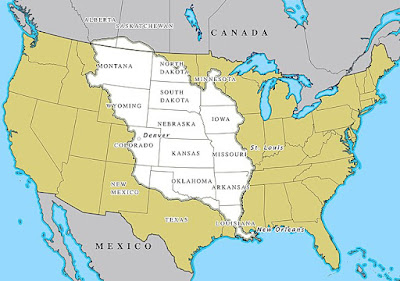
Map of the Louisiana Purchase (in white) overlaid on the
Present Day United States. Note that the Panhandle of 
Florida was not included.


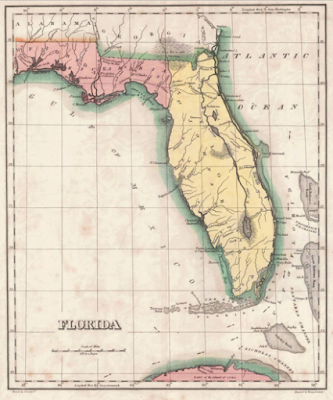
What were those threats? For one, the border of Spanish Florida and the United States was at the southern border of Georgia. With Spanish Florida surrounded by water on three sides, and American land immediately to its north, Florida was cut off from quick help across the land.  Add to that the American neighbors feeling crowded in the southern portions of the fledgling nation, and so wanting to cross the border and set up residence in Florida as well. When the Louisiana Purchase came about in 1803, Napoleonic France sold 828,000 square miles to the United States, and Americans flooded west. Uncaring of the details, some Americans claimed that the panhandle of Florida was part of the Louisiana Purchase. In honesty, it wasn’t, but Americans flooded into that portion of Spain’s holdings during the 1810-1813 time frame. During that same time, the War of 1812 broke out, leading General James Wilkinson to take Mobile, lending strength to the Americans’ position in annexing western Florida. Spain didn’t put up a fight for the area.


Florida once the Americans annexed 
Western Florida between 1810-1813


In addition to the Americans to their north, there were the Seminole Indians living throughout Florida. The Seminoles would often cross the border into American territory and raid American citizens. It was expected that Spain would stop them, since these Native populations lived in Spanish Florida, but with minimal amounts of troops, they struggled to subdue them.


Similarly, slaves from the American plantations crossed the border between American and Spanish territory and sought refuge in Florida, throwing themselves on the mercy of Spain to keep them safe from slave hunters and plantation owners who sought to recapture them. The lack of soldiers again left this growing population vulnerable in Spanish Florida.


The simple answer would’ve been to send more troops to Castillo de San Marcos and other Florida military outposts, but aside from the prohibitive cost, there were other worldwide issues at play. Political tensions were heating up around the world. From 1807 to 1814, Spain waged a seven-year war against Napoleon in Europe, which took manpower and attention away from Florida’s Spanish settlements. Starting in 1810 in Central and South America, people were fighting for independence from Spain as well, further dividing military forces.


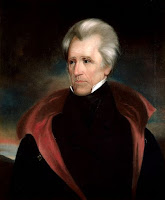
Andrew Jackson
So by 1818 or so, all of these factors converged. Spain’s troop count were very low in Florida due to all the other international issues, and the Seminoles, runaway slaves, and outlaws banded together to wreak havoc in the southern portions of the United States. So the American general, Andrew Jackson, pursued the Seminoles (et al.) into Spanish Florida in what became known as the First Seminole War. Jackson’s incursion angered both Great Britain and Spain, so Spain’s leadership sought help from the British in negotiating the international incident. When Britain declined to do more than express their outrage, Spain once again realized it was on its own to negotiate the turbid waters of Spanish-American relations in Florida. It was time to get out.


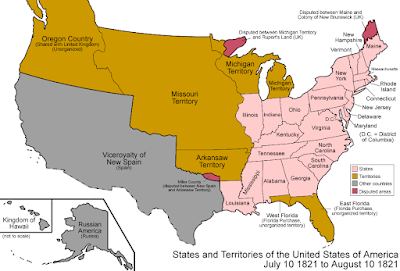
Spain finally approached the United States with the offer of a treaty. Spain would give up Florida if the United States would, in turn, better define the borders of New Spain—an area that comprised much of Mexico, what we know today as the American Southwest, and California. The United States, long desiring to have Florida for its own, quickly agreed, and U.S. Secretary of State John Quincy Adams and Spanish Minister Luis de Onis hammered out the Adams-Onis Treaty of 1819. Florida—and the languishing Castillo de San Marcos—were now the property of the United States of America.


Map showing Adams-Onis Treaty lands. Florida became 
a United States possession while the gray area was
firmly established as "New Spain".


Tune in next month for the interesting history of the fort since becoming an American possession.


Award-winning, best-selling novelist Jennifer Uhlarik has loved the western genre since she read her first Louis L’Amour novel. She penned her first western while earning a writing degree from University of Tampa. Jennifer lives near Tampa with her husband, son, and furbabies. www.jenniferuhlarik.com


COMING MARCH 1, 2022


Love’s Fortress by Jennifer Uhlarik


A Friendship From the Past Brings Closure to Dani’s Fractured Family


When Dani Sango’s art forger father passes away, Dani inherits his home. There, she finds a book of Native American drawings, which leads her to seek museum curator Brad Osgood’s help to decipher the ledger art. Why would her father have this book? Is it another forgery?


Brad Osgood longs to provide his four-year-old niece, Brynn, the safe home she desperately deserves. The last thing he needs is more drama, especially from a forger’s daughter. But when the two meet “accidentally” at St. Augustine’s 350-year-old Spanish fort, he can’t refuse the intriguing woman.


Broken Bow is among seventy-three Plains Indians transported to Florida in 1875 for incarceration at ancient Fort Marion. Sally Jo Harris and Luke Worthing dream of serving on a foreign mission field, but when the Indians reach St. Augustine, God changes their plans. However, when Sally Jo’s friendship with Broken Bow leads to false accusations, it could cost them their lives.


Can Dani discover how Broken Bow and Sally Jo’s story ends and how it impacted her father’s life?

Tuesday, January 25, 2022

The Castillo de San Marcos, Part 2—And a Giveaway


By Jennifer Uhlarik


On October 25, 2021, I began telling you about the history of the Castillo de San Marcos, or the large masonry fort in St. Augustine, Florida. During its existence, the Castillo has existed under six different flags, the first being the Spanish flag. I told you of the building of this impressive structure by the Spanish in my earlier post if you would like to read or refresh your memory.


We’ll pick up where we left off—the end of the French and Indian War in 1763. In the Treaty of Paris that ended this conflict, several Caribbean Islands went to the French, Spain got Havana and Manilla, and England had Canada and the newly acquired Florida. With that outcome, all North American land east of the Mississippi River belonged to the Brits. When this happened, the Spanish settlers in Florida made a mass exodus to Cuba. But the tropical paradise wouldn’t stay empty for long. 


The British government noticed that conflicts were brewing between the British colonists in America and the Native populations. To curb this problem, the government created the English Crown Proclamation of 1763. In it, all settlers were forbidden from moving any farther west than the Appalachian Mountains. So with their western expansion cut off, they drove southward instead—to Florida. England’s government, in return, offered 20,000 acres to any group that chose to settle in Florida, and for individual pioneers willing to settle in the new land, they gave 100 acres, plus 50 more per family member. In the first ten years of British rule, St. Augustine’s population rebounded and doubled from what it had been during the Spanish period.


British colonists flooded the new area, taking over the one-story Spanish-style homes their predecessors had left and, in many cases, building second or third stories onto them. They also built new homes and business buildings in St. Augustine and surrounding areas. With water on three sides of the state, Florida made for an excellent shipping locale, and its rich, fertile soil made for excellent farmland and grazing land for cattle. The British colonists prospered here.


However, not all was so rosy in the British colonies. Other colonists in more northern locales were beginning to rebel against the Crown, so Florida—and Fort St. Mark, as the Castillo de San Marcos was now called—became the staging area for British soldiers brought in to put down the rebellion in the Southern colonies. The fort was used as a supply base, and more interestingly, as a prisoner of war camp. During this time of British control, three signers of the Declaration of Independence were captured and held at Fort St. Mark: Thomas Heyward Jr., Arthur Middleton, and Edward Rutledge. Also held at the fort was the lieutenant governor of South Carolina, Christopher Gadsden—held for 42 weeks in solitary confinement.

Arthur Middleton | The Society of the Descendants of the ...
Arthur Middleton

EDWARD RUTLEDGE Declaration of Independence 1829 engraving ...
Edward Rutledge


Thomas Heyward, Jr. - Christian Heritage Fellowship, Inc.
Thomas Heyward, Jr.


As the Revolutionary War actually broke out, Florida didn’t see any great action. It all took place in the more northern colonies we are familiar with. But Spain took plenty of shots at Britain while their attention was focused on the war with their unruly colonies. The Spanish came in to take Baton Rouge, Mobile, Natchez, and even Pensacola. When it became obvious to Britain that they were not going to be able to hold onto their American colonies, they granted America its freedom in the Treaty of Paris in September 1783. And with little use for the British outpost of Florida, they also made a separate treaty with Spain, giving control of Florida and Fort St. Mark, back to its original owner. So the British control of St. Augustine and Fort St. Marks lasted only twenty years, and resulted in Spain’s return. What did that second Spanish period look like? We’ll explore it in next month’s post, so stay tuned!


It’s Your Turn: Were you aware that St. Augustine and the Castillo de San Marcos wasn’t always under one country’s rule? What, if anything, did you find most interesting about the British period of the Castillo’s history? Leave your thoughts with your email address to be entered in a giveaway for a print copy of Love’s Fortress.


Award-winning, best-selling novelist Jennifer Uhlarik has loved the western genre since she read her first Louis L’Amour novel. She penned her first western while earning a writing degree from University of Tampa. Jennifer lives near Tampa with her husband, son, and furbabies. www.jenniferuhlarik.com


COMING MARCH 1, 2022


Love’s Fortress by Jennifer Uhlarik


A Friendship From the Past Brings Closure to Dani’s Fractured Family


When Dani Sango’s art forger father passes away, Dani inherits his home. There, she finds a book of Native American drawings, which leads her to seek museum curator Brad Osgood’s help to decipher the ledger art. Why would her father have this book? Is it another forgery?


Brad Osgood longs to provide his four-year-old niece, Brynn, the safe home she desperately deserves. The last thing he needs is more drama, especially from a forger’s daughter. But when the two meet “accidentally” at St. Augustine’s 350-year-old Spanish fort, he can’t refuse the intriguing woman.


Broken Bow is among seventy-three Plains Indians transported to Florida in 1875 for incarceration at ancient Fort Marion. Sally Jo Harris and Luke Worthing dream of serving on a foreign mission field, but when the Indians reach St. Augustine, God changes their plans. However, when Sally Jo’s friendship with Broken Bow leads to false accusations, it could cost them their lives.


Can Dani discover how Broken Bow and Sally Jo’s story ends and how it impacted her father’s life?

Thursday, November 25, 2021

Where Was The First Thanksgiving in The New World?


By Jennifer Uhlarik

Welcome--and Happy Thanksgiving to each of you!


Most everyone has heard the story of what is touted as the First Thanksgiving on American soil. In case you haven’t, the very abbreviated story goes that the Pilgrims sailed “across the pond” from England and settled in Plymouth, Massachusetts in 1620. After a very hard winter, the Pilgrims planted corn with the help of the Wampanoag Indians in 1621. At the successful harvest that fall, the Pilgrims and the local Indians held a great feast, which included turkey, fresh vegetables, and fruits, and they all gave thanks to God for safely seeing them to the New World, helping them through that first winter, and allowing them to learn to live in their new surroundings.


But was this truly the first Thanksgiving on American soil? Some historians say no, that it happened fifty-six years earlier and some twelve hundred miles further south in St. Augustine, Florida.


St. Augustine—really?


That’s what some say.


Pedro Menendez de Aviles


Last month, I told you about the building of the Castillo de San Marcos—the oldest masonry fort in America, which stands guard along the bank of the Matanzas River in St. Augustine. If you read that post, you’ll recall the name Don Pedro Menendez de Aviles. He was the Spanish admiral who brought eight hundred colonists to this new area in order to give Spain a colony in the New World where its treasure fleet could defend itself and Spain’s North American territories against other European powers.


As the story goes, on September 8, 1565, Don Pedro Menendez de Aviles waded ashore in what would become St. Augustine—to the fanfare of cannon fire and trumpets. On dry land, the admiral kissed a cross Father Francisco Lopez held out toward him, then gave a brief speech in which he proclaimed the land for God and country. The good Father then led the newcomers in an impromptu Catholic Thanksgiving mass. The whole while, members of the Timucua tribe stood by and watched the events. When, not long afterward, Don Pedro Menendez de Aviles proposed a feast, the Spanish colonists gathered what stores they still had aboard their ships, and the Timucuan Indians filled in with alligator, bear, wild boar, turkey, oysters, shrimp, and the various vegetables they grew, like beans, squash, and pumpkins.


So was this the first real Thanksgiving in America?


Well…maybe not!


If you go back even one year earlier and just a few miles north of St. Augustine,

Rene Goulaine de Laudonniere


there was an earlier Thanksgiving feast. In what we now know as Jacksonville, Florida, a group of French Huguenots led by explorer Rene Goulaine de Laudonniere wished to celebrate the founding of Fort Caroline. It was June 30, 1564. The fort would stand on a bluff overlooking the banks of what we now call the St. Johns River. Once again, the Timucuan Indians stepped in and provided food to supplement the meager supplies of the French Huguenots, much the same as with the St. Augustine feast. They sang psalms, offered prayers of thanksgiving, and asked God to continue His goodness toward them. 


So was the 1564 feast the first American Thanksgiving?


It’s so hard to say. Explorers had been coming to this land even before this point, and it’s entirely possible that someone may have beat the French Huguenots to the punch, even as they beat the Spanish to the punch…just as the Spanish beat the Pilgrims. But one thing we can be sure of, this land has seen many people groups come across her shores, and many of them have paused to thank God for His many blessings.


It’s Your Turn: What are you thankful for this year?


Award-winning, best-selling novelist Jennifer Uhlarik has loved the western genre since she read her first Louis L’Amour novel. She penned her first western while earning a writing degree from University of Tampa. Jennifer lives near Tampa with her husband, son, and furbabies. www.jenniferuhlarik.com


COMING MARCH 1, 2022


Love’s Fortress by Jennifer Uhlarik


A Friendship From the Past Brings Closure to Dani’s Fractured Family


When Dani Sango’s art forger father passes away, Dani inherits his home. There, she finds a book of Native American drawings, which leads her to seek museum curator Brad Osgood’s help to decipher the ledger art. Why would her father have this book? Is it another forgery?


Brad Osgood longs to provide his four-year-old niece, Brynn, the safe home she desperately deserves. The last thing he needs is more drama, especially from a forger’s daughter. But when the two meet “accidentally” at St. Augustine’s 350-year-old Spanish fort, he can’t refuse the intriguing woman.


Broken Bow is among seventy-three Plains Indians transported to Florida in 1875 for incarceration at ancient Fort Marion. Sally Jo Harris and Luke Worthing dream of serving on a foreign mission field, but when the Indians reach St. Augustine, God changes their plans. However, when Sally Jo’s friendship with Broken Bow leads to false accusations, it could cost them their lives.


Can Dani discover how Broken Bow and Sally Jo’s story ends and how it impacted her father’s life?


(NOTE: This blurb does not yet match bookseller’s descriptions, but it IS the same book).


Monday, October 25, 2021

The Castillo de San Marcos, Part 1--and a giveaway


By Jennifer Uhlarik


If you’ve been to St. Augustine, Florida, I’m sure you’ve seen the huge stone fort that sits at the mouth of Matanzas Bay. If you’ve not been, let me tell you about it. The town and it’s magnificent masonry fort is a show-stopper with a long and varied history.


St. Augustine is the oldest continuously occupied European settlement in the continental United States. The town was founded in 1565 by the Spanish admiral, Pedro Menendez de Aviles, in order to give Spain a colony in the New World where its treasure fleet could defend itself and Spain’s North American territories against other European powers. But for the first one hundred years after its founding, the only defenses St. Augustine’s settlers had against these powers—and pirates or any other force coming against them—were a series of wooden forts that all met quick ends. Some forts were burned to the ground. Others fell victim to the ravages of termites. Hurricanes damaged and demolished still others. 


When British pirates led by John Davis attacked St. Augustine, leaving every building looted and damaged, sixty residents dead, and seventy more taken captive, the Spanish Crown decided a more permanent fortification was needed—especially since the British were forming colonies in along the eastern seaboard within easy sailing distance of the Spanish settlement. After this attack, money, troops, and supplies were sent from Mexico and Cuba to fortify St. Augustine.


In 1671, engineer Ignacio Daza was tasked with drawing up plans for the huge fort that would become known as Castillo de San Marcos—a square masonry fort with bastions at each corner, a moat, two drawbridges, and a ravelin protecting its only entrance. Groundbreaking for the fort occurred in October of 1672. Five months later, both the governor of La Florida who was spearheading the fort’s construction, as well as the engineer, Ignacio Daza, died of illness. Before they passed, these men saw the eastern wall and the adjoining bastions constructed to half their final height

(the fort stands twenty-five feet tall today with lookout towers at the corners of each bastion), but it took an additional twenty-three years to finish the construction of the Castillo, due in some part to money shortages, pirate attacks, epidemics, storms, and lack of commitment from the Spanish crown. But in 1695, the Castillo de San Marcos was completed. The total cost of the fort’s construction totaled nearly $3 million dollars (adjusted for today’s dollar value). 


The fort was constructed of “coquina,” mortar, and a covering of plaster. Coquina is a naturally formed substance made when layers upon layers of tiny seashells become cemented together over long periods of time. Just off the coast of Anastasia Island, a quarry of this substance was found, so soldiers and convicts were sent to the quarry to cut “bricks” of coquina, which were transported across Mantanzas Bay to the location of the Castillo de San Marcos. At this location, Native Americans from three Florida and Georgia tribes were conscripted into working on the fort, digging foundation trenches and laying the bricks. Once the coquina was laid in place, a mortar was made of lime, sand, and water, which was used to secure the bricks in place. The entire structure was then given a plaster coating over the coquina to further fortify it.


Since no one was certain how the coquina would do under cannon fire, the fort’s outer walls were constructed especially thick—anywhere between twelve and nineteen feet, depending on the location. (The walls closest to Matanzas Bay are thicker than the inland sides). The bastions at each corner were constructed in order to deflect cannonballs launched at the fort. There is one entrance into the fort, in the center of the south wall. To reach it, one must cross two drawbridges which could be raised to keep out intruders, and a triangular ravelin was positioned between the entrance and the water to prevent cannon fire from reaching the entry.


In 1702, the British attacked and took the town of St. Augustine—but not the fort. The attackers positioned cannons within the city streets and turned fire upon the fort, pounding the seashell walls with fire. To everyone’s surprise, the cannonballs either bounced off or sunk in only slightly with no real damage to the structure. Across the years, other attacks would come from various countries and sources, and in each case, the coquina fort stood strong, repelling everything the invading armies or navies could throw at it. However, as the French and Indian War ended, power structures in North America, the Caribbean, and Cuba shifted with the stroke of a pen, and Spanish-controlled Florida became the possession of the British in 1763. Castillo de San Marcos now belonged to England, and its name changed to Fort Mark.


It’s Your Turn: I’ll continue the interesting history of Castillo de San Marcos next month, but for now, tell me what you find most interesting about the origins of this castle-like fort, which is the oldest masonry fort in the United States. Leave your name and email address to be entered in a drawing for an audiobook copy of The Cowboys collection—including four novellas by Cindy Ervin Huff, Sandra Merville Hart, Linda Yezak, and me.


Award-winning, best-selling novelist Jennifer Uhlarik has loved the western genre since she read her first Louis L’Amour novel. She penned her first western while earning a writing degree from University of Tampa. Jennifer lives near Tampa with her husband, son, and furbabies. www.jenniferuhlarik.com


COMING MARCH 1, 2022


Love’s Fortress by Jennifer Uhlarik


A Friendship From the Past Brings Closure to Dani’s Fractured Family


When Dani Sango’s art forger father passes away, Dani inherits his home. There, she finds a book of Native American drawings, which leads her to seek museum curator Brad Osgood’s help to decipher the ledger art. Why would her father have this book? Is it another forgery?


Brad Osgood longs to provide his four-year-old niece, Brynn, the safe home she desperately deserves. The last thing he needs is more drama, especially from a forger’s daughter. But when the two meet “accidentally” at St. Augustine’s 350-year-old Spanish fort, he can’t refuse the intriguing woman.


Broken Bow is among seventy-three Plains Indians transported to Florida in 1875 for incarceration at ancient Fort Marion. Sally Jo Harris and Luke Worthing dream of serving on a foreign mission field, but when the Indians reach St. Augustine, God changes their plans. However, when Sally Jo’s friendship with Broken Bow leads to false accusations, it could cost them their lives.


Can Dani discover how Broken Bow and Sally Jo’s story ends and how it impacted her father’s life?


(NOTE: This blurb does not yet match bookseller’s descriptions, but it IS the same book).