Showing posts with label Castillo de San Marcos. Show all posts

Monday, July 25, 2022

The Castillo de San Marcos—Part 8


by Jennifer Uhlarik


Hello, readers! Is anyone up for one more post about the Castillo de San Marcos? If so, here it is. By now, you’ve followed my posts about the fort being built by Spain in the 1600s, ceded to Britain in the 1700s, returning to Spain’s control again for a few years, eventually becoming an acquisition of the United States, and its fall into the Confederate Army’s hands during the American Civil War. We’ve also looked into the three years during the 1870s when the fort became home to seventy-three Plains Indians, as well as the internment of the Apache Indians a decade after that . So what happened next at the United States’ largest masonry fort? 


Life grew relatively quiet at Fort Marion after the Apaches departed. This once busy and crowded structure returned to the mundane service as a storage facility in the days after its last use as a military prison. However, that was only on the inside of the fort. While the ownership of the property belonged to the United States War Department, Fort Marion underwent the “Gilded Age” treatment. Due to its prominent location in the heart of St. Augustine’s historic district—and with it being easily viewed from the waters of Matanzas Bay, as well as standards of that era being on beauty and recreation, the War Department spent much money landscaping the grounds with trees, grass, and benches to turn this 20-acre facility into a park rather than a sterile military facility. Many flocked to the beautiful setting to walk on the extensive web if sidewalks and paths or even tour the ancient building. Fort Marion also became home to Florida’s first golf course. And various special events were held on the grounds—including the likes of early baseball games played by professional African-American players. 


Golfing on the grounds of Fort Marion, circa 1902. This golf course was the
first in Florida!


However, eventually, talks turned to whether the War Department should retain control of the facility or hand it off to another department who might make better use of it. On October 15, 1924, Fort Marion and another nearby installation, Fort Matanzas, were both decommissioned as military sites and were transferred into the control of the National Park Service. While the War Department’s main goal was to keep the fort in good repair for use as a jail or storage of military armaments, the NPS’s goal was to preserve the history of the site for ages to come. One significant change they made came in the early 1940s, when the old fort retook the name “Castillo de San Marcos” as it was originally called by Spain.


Another thing that occurred during the early 1940s was the bombing of Pearl Harbor, which, as we all know, drew the United States into World War II. With that development, Florida became a busy place for military training and military bases—and once again, St. Augustine and the  Castillo de San Marcos had a role to play. The United States Coast Guard came to town in 1942, taking over several hotels in historic St. Augustine. They placed their recruits in those hotels, then worked a deal with the Castillo de San Marcos to do PT exercises on the fort’s grounds. In addition, several of the casemates inside the fort were turned into classroom space again—just as they’d been used during the incarceration of the Plains and Apache Indians in times past. And the beautiful courtyard became the site of many graduation ceremonies for those who’d completed their training.


Graduation ceremony for the Coast Guard during the 1940s,
held in the courtyard of Castillo de San Marcos.


It was a good thing the U.S. Coast Guard had come to St. Augustine during this time. The Germans had long-range plans to do more than just wreak havoc in Europe. They’d also set their sights on the United States, and Florida was one area they were targeting. With an offensive code-named Operation Drumbeat, German submarines infiltrated the waters around Florida. In a matter of months, they sank roughly 400 ships and took thousands of sailors’ lives. This state, usually known for tranquil waters and pristine white-sand beaches became a nightmare where, many mornings, people would awaken to find bodies and carnage littering the shorelines. Even more frightening was the night in June 1942, when four German spies made it ashore from one of these German subs, carrying American money and explosives. Thankfully, those men were captured before they could carry out their nefarious plans. Once this was discovered, special patrols of Coast Guard members patrolled the beaches on horseback, in Jeeps, or even on foot with specially trained dogs.


Coast Guard and trained dogs patrolling
Florida beaches during WWII


As I’m sure everyone knows, World War II lasted until 1945. As troops returned to American soil, many who had come to Florida for training or service at one of the 172 military installations in the state decided to return here once they’d made it home. What had been a relatively quiet, agriculture-based state with only small pockets of tourist areas prior to the war suddenly flooded with newcomers. Across the nation, the population boomed following the soldiers’ return—at an average rate of about fifteen percent. In Florida, the boom was three times that amount, or 46%! The state officially became one of the tourist capitals of the country, and St. Augustine and the Castillo de San Marcos remain one of the most captivating vacation spots to this day!


It's Your Turn: If you have been following along on these posts about St. Augustine’s Castillo de San Marcos, what time period did you find to be the most interesting? If you have not read the entire series of posts, what piece of today’s post was most intriguing?


Award-winning, best-selling novelist Jennifer Uhlarik has loved the western genre since she read her first Louis L’Amour novel. She penned her first western while earning a writing degree from University of Tampa. Jennifer lives near Tampa with her husband, son, and furbabies. 
www.jenniferuhlarik.com


AVAILABLE NOW!


Love's Fortress by Jennifer Uhlarik


A Friendship From the Past Brings Closure to Dani’s Fractured Family


When Dani Sango’s art forger father passes away, Dani inherits his home. There, she finds a book of Native American drawings, which leads her to seek museum curator Brad Osgood’s help to decipher the ledger art. Why would her father have this book? Is it another forgery?


Brad Osgood longs to provide his four-year-old niece, Brynn, the safe home she desperately deserves. The last thing he needs is more drama, especially from a forger’s daughter. But when the two meet “accidentally” at St. Augustine’s 350-year-old Spanish fort, he can’t refuse the intriguing woman.


Broken Bow is among seventy-three Plains Indians transported to Florida in 1875 for incarceration at ancient Fort Marion. Sally Jo Harris and Luke Worthing dream of serving on a foreign mission field, but when the Indians reach St. Augustine, God changes their plans. However, when Sally Jo’s friendship with Broken Bow leads to false accusations, it could cost them their lives.


Can Dani discover how Broken Bow and Sally Jo’s story ends and how it impacted her father’s life?



Saturday, June 25, 2022

The Castillo de San Marcos--Part 7


by Jennifer Uhlarik


Hello, readers! Are you ready for more interesting history about the oldest masonry fort on U.S. soil? If you’ve been following along, you’ve learned all about the fort’s founding and how it was passed between Spain, Britain, Spain again, the United States, and even fell to the Confederate Army during the American Civil War. Last month, I told you how, for a period of three years during the 1870s, the fort became home to seventy-three Plains Indians. And this month, I’ll share another interesting chapter of the Castillo’s history—the internment of the Apache Indians.


Just as we learned in last month’s post about the Plains Indians, the Native Americans of all tribes were struggling to acclimate to the idea of so many white men flooding into what had been their traditional territories. The Apaches were no different, and conflicts sparked between these groups all across Arizona for decades. Fierce warriors that they were, the Apaches fought hard against the incoming settlers, making homesteading in the Southwest a difficult endeavor. The Frontier Army came in and attempted to subdue the Apaches, placing them on reservation lands, but as so often happened, those promised lands ended up being found to have hidden value in the form of gold, silver, or other resources. Or the government didn’t deliver the promised supplies—cattle and other food supplies, blankets and clothing, etc. So new treaties were negotiated, and new boundaries drawn up, shrinking the sizes of reservations or moving them to new locations all together, all so that white men could capitalize on the resources they’d found on reservation lands—or with more promises of better supplies in the new locales. As anyone would, the Apaches grew tired of this shuffling and broken promises. Bands began breaking out of the reservations to go again on raids and make war on the Army and settlements for these unfair practices, as well as to provide for their families. Ultimately, this war went on for years, but slowly ended as Apache leader after Apache leader finally surrendered when they couldn’t keep going.


Apache Men sitting among cannons housed
at Fort Marion, circa 1886
Similar to the Plains Indians, various Apache men were chosen to be sent to Florida for incarceration at Fort Marion. What was different from the Plains Indians incarceration was that women and children were also sent to the fort. They arrived by train on April 16, 1886. Of course, all of St. Augustine came out to gawk at the new arrivals. The oldest men came first, wrapped in their blankets. Following them came the younger warriors. And lastly, the women and children. While large, the fort could comfortably sleep 150 or so, not the 502 who ended up being sent to Florida for imprisonment. Some of the Apaches were made to sleep in the casemate rooms surrounding the inner courtyard, and many others were sent to the gundeck above to sleep in Sibley tents.


As you might imagine, life was difficult in a strange new place, particularly in such tight quarters. The Apaches were given a pound of beef per adult per day, with children receiving half that; fresh bread each day; vegetables and grains like rice, turnips, hominy and beans, as well as a small weekly portion of potatoes and onions. The women were expected to cook the food themselves, except for the bread, which was made down the street at St. Francis Barracks and carted over each morning. They drank coffee with sugar, or they had water from the well within the fort’s walls. 


Geronimo, one of the most famous Apache
warriors. While he was not held at Fort Marion,
his wife was, and gave birth to his daughter, Marion
(later renamed Lenna), while there.


There were twelve Apache children born during the year they were incarcerated at Fort Marion, the first of which was Geronimo’s daughter (aptly names “Marion”, although she later changed her name to Lenna). Unfortunately, there were also several deaths in that year. When you stop to consider the sheer number of people in such confined spaces, it isn’t surprising that illness ran rampant among them. Colonel Langdon, who was in charge of overseeing the Apache prisoners, brought in Army physician, Dr. DeWitt Webb, to treat the men, women, and children. Despite his best efforts, Dr. Webb reported that he lost numerous patients to various diseases, such as dysentery, acute bronchitis, marasmus (or wasting disease), old age, epilepsy, tuberculosis, and neonatal tetanus. All told, twenty-four Apaches died during that year in St. Augustine. 


In order to make more room during the daylight hours, the Apaches were allowed to spread out outside the fort walls on the grounds and go into town, but even so, there wasn’t much for them to do. Children played games while the adults saw to the needs of their families, cooking, mending clothing, and repairing their few belongings. There wasn’t enough space for much else. The women would weave baskets to sell to locals and tourists, and men and boys would make and sell bows and arrows, as well as offer lessons in how to use the weaponry. However, with the overcrowded conditions, it was harder for the Apaches to make and sell their wares than it had been for the seventy-three Plains Indians a decade before.


The prisoners began turning to gambling and card games to pass the time until Colonel Langdon came to the same conclusion that his predecessor, Lt. Richard Henry Pratt, had. They needed stimulation, and it would come through education and assimilation. Colonel Langdon contacted Richard Henry Pratt in Carlisle, PA, to ask him to return to Fort Marion and interview the children to see if any would be a good fit at the Carlisle Indian Residential School, of which Pratt was the founder and headmaster. Upon Pratt’s visit, he selected 103 of the children to return with him to the school, and they young ones were immediately sent on their way under Pratt’s care. At the Carlisle Indians School, they children were given military-style uniforms to wear, their hair was cut short, and they were given Christian names.


Apache children in traditional garb on their arrival at Carlisle Indian School (left).
Many of the same children after receiving haircuts and military-style uniforms (right).


Of the roughly four hundred remaining Apaches, Colonel Langdon again called upon St. Augustine’s women to begin educating the Natives. Just as with the Plains Indians, Miss Sarah Mather and other local women set up classes so the Apache adults could learn to read, write, and speak English, as well as some simple arithmetic, science, and other subjects. Those children who were not taken to Carlisle, PA, were taken each weekday to a local nunnery where the Sisters of St. Joseph educated them in similar subject matter. Unlike Lt. Pratt before him, Colonel Langdon did not implement a physical training program or having skilled craftsman teaching the Apaches their crafts—more than likely because there were too many prisoners and not enough space for such education.


After roughly one year, those Apaches left in St. Augustine were moved again, this time to a reservation in Alabama, and later to Ft. Sill, Oklahoma, where they remained.


Award-winning, best-selling novelist Jennifer Uhlarik has loved the western genre since she read her first Louis L’Amour novel. She penned her first western while earning a writing degree from University of Tampa. Jennifer lives near Tampa with her husband, son, and furbabies. www.jenniferuhlarik.com


AVAILABLE NOW!


Love's Fortress by Jennifer Uhlarik


A Friendship From the Past Brings Closure to Dani’s Fractured Family


When Dani Sango’s art forger father passes away, Dani inherits his home. There, she finds a book of Native American drawings, which leads her to seek museum curator Brad Osgood’s help to decipher the ledger art. Why would her father have this book? Is it another forgery?


Brad Osgood longs to provide his four-year-old niece, Brynn, the safe home she desperately deserves. The last thing he needs is more drama, especially from a forger’s daughter. But when the two meet “accidentally” at St. Augustine’s 350-year-old Spanish fort, he can’t refuse the intriguing woman.


Broken Bow is among seventy-three Plains Indians transported to Florida in 1875 for incarceration at ancient Fort Marion. Sally Jo Harris and Luke Worthing dream of serving on a foreign mission field, but when the Indians reach St. Augustine, God changes their plans. However, when Sally Jo’s friendship with Broken Bow leads to false accusations, it could cost them their lives.


Can Dani discover how Broken Bow and Sally Jo’s story ends and how it impacted her father’s life?


Wednesday, May 25, 2022

The Castillo de San Marcos--Pt 6 (and a giveaway!)


By Jennifer Uhlarik


Hello, readers! Time for your next installment of the history of the Castillo de San Marcos. If you’ve been following along over the last handful of months, you’ve read about the Spanish building this large masonry fort in St. Augustine, Florida, how the fort came into British possession, was returned to Spanish control for a brief time, became an American acquisition, and then traded hands between the Federal and Confederate armies during the Civil War. So what happened after the war’s end? Life in the St. Augustine fort was quiet for only a decade before it next came into use.


The north wall of Fort Marion,
including the wooden barracks the
Native American prisoners built
on the upper gun deck.

As many of you may know, the western territories were fraught with conflict. Not just between lawmen and outlaws, but also with conflicts between the Native American tribes and the western settlers. Many battles cropped up between settlers and Indians, with much bloodshed on both sides, until the Frontier Army and the Native American tribes such as the Lakota Sioux, Cheyenne, Arapaho, Comanche, and others, were in an all-out war. There were many instances where whites attacked and massacred sleeping camps of Indians, and others where Indians wiped out whole wagon trains or military units. It was a long, drawn-out period where many lives were lost—a tragic piece of America’s history.


That war finally came to an end on the western plains in the mid-1870s. In 1874 and 1875, the various Indian tribes surrendered to the Army. Investigations were done into some of the most horrendous of attacks perpetuated by members of these tribes, and those who led them were singled out to be made examples of. The rest were sent to the reservations in Indian Territory (modern-day Oklahoma). While some Indians were tired of the decades of conflict and were willing to live peacefully, others chafed at the American government being able to tell them where and how they should live. Those in the latter group often attempted to stir up trouble within the reservation lands, leading their other tribesmen to rebel. So these men also were singled out for further punishment. In total, there were seventy-three men from five tribes—the Cheyenne, Arapaho, Comanche, Kiowa, and Caddo—who were to be punished. Their punishment was to be sent to distant Florida, far from their tribal lands, and completely cut off from their people, to be incarcerated in Fort Marion (aka the Castillo de San Marcos). 


Some of the seventy-three Plains
Indians, posing with Lt. Pratt,
soon after their arrival at
Fort Marion.

The trip from the west took roughly a month, and during that time, these seventy-three men traveled by wagon to reach the railroad, then by train all the way to the panhandle of Florida. There, they disembarked the train and boarded a steamboat for a brief ride south. Then another short train ride, and finally, they arrived at the fort they would call home for some unspecified time. Their travels east were not without difficulties. While the men were used to galloping for miles on horseback, the unfamiliar movements and sounds of the train made many of them sick at their stomachs. There was at least one escape attempt during a brief stop-over, leading to one of the seventy-three men being shot and left behind under military guard until he was well enough to travel. By the time these prisoners of war reached St. Augustine’s fort, they were shells of the fierce warriors they’d once been. Instead, they were thin and bedraggled, wrapped in blankets with shackles on their hands and feet. They shuffled through crowds of St. Augustine residents to reach the stone fort and face their punishment.


Uniformed Indians performing
morning drills.
The man who was placed in charge of the Indians’ care was one Lieutenant Richard
Henry Pratt. He quickly realized that his charges were wasting away with little to do, so he struck upon the idea to give them men structure. First, he instituted military drills and physical exercise, just like the Army soldiers were made to do. Then, Pratt began noticing that the casemate rooms in which the men slept each night were moldy. He put the Indians to work scrubbing the walls and ceilings. With each new task, the men’s outlook seemed to improve. They liked to work. It wasn’t long before Pratt approached his military superiors to ask about teaching the Indians reading, writing, simple arithmetic, and even trades with which to make money in the white man’s world. After some discussion, he was granted approval for the progressive plan, and Pratt teamed up with various women in the St. Augustine community to begin classes. Two of the most prominent women were Sarah Ann Mather and Rebecca Perit, who did much to further the lives of freed slaves and the Native Americans in St. Augustine. With their help, Lt. Pratt even began weekly church services within the fort, led by local ministers from the St. Augustine area.


Just like on the reservations, there were some who took to the new ways, and those who didn’t accept it as easily. But by and large, the Indians cooperated enough to make the plan work. For several hours each weekday morning, they would sit in class and learn to speak and read English, work simple math problems, and other academic subjects. In the afternoons, they would learn trades like shoe cobbling, blacksmithing, farming, and other skills that they would be able to carry into life after incarceration.


Example of Ledger Art drawn by one of the 
Plains Indians, depicting their travels
to Fort Marion.

As they embraced their new, structured day and showed themselves to be trustworthy, Pratt begin giving them more freedoms. When a local jeweler approached Lt. Pratt with the request to have the Indians gather and polish “sea beans” for him to sell in his store, they went to work. They were given time to go across Matanzas Bay to Anastasia Island and gather then beans, then spent hours polishing the beans to a high shine. They turned over thousands of the trinkets and were paid handsomely for their efforts. This led to other money-making ventures. Drawing “ledger art” and selling it outside the fort. Making bows and arrows to sell to tourists. Teaching those same tourists how to use the authentic weapons. In addition, they also began putting on cultural displays—powwows, Native dances, “buffalo” hunts (using cattle from local ranches and the worst of the nags the local livery stables had to offer). 


For three years, these industrious men were incarcerated in St. Augustine’s ancient fort. While many of those seventy-three fell ill to consumption (tuberculosis) and other illnesses, most survived and either returned to the reservations and their families—or, in some cases, followed Pratt on his next venture, which was to found the Carlisle Indian School in Carlisle, Pennsylvania. 


It’s Your Turn: Lt. Richard Henry Pratt fought hard for the seventy-three Native American men he was put in charge of at Fort Marion in 1875. He employed progressive ideas to educate these men in hopes they might be able to one day integrate into society at large. In your opinion, was Pratt a hero for his ideas to help the Indian men learn skills that would help them integrate, or was he a villain for forcing them to embrace a culture not their own? Leave your honest opinion with an email address to be entered into a drawing for an autographed paperback copy of Love’s Fortress (US entries only). (I know this topic can bring some heated feelings, so please be kind in your responses)!


Award-winning, best-selling novelist Jennifer Uhlarik has loved the western genre since she read her first Louis L’Amour novel. She penned her first western while earning a writing degree from University of Tampa. Jennifer lives near Tampa with her husband, son, and furbabies. www.jenniferuhlarik.com


AVAILABLE NOW!


Love's Fortress by Jennifer Uhlarik


A Friendship From the Past Brings Closure to Dani’s Fractured Family


When Dani Sango’s art forger father passes away, Dani inherits his home. There, she finds a book of Native American drawings, which leads her to seek museum curator Brad Osgood’s help to decipher the ledger art. Why would her father have this book? Is it another forgery?


Brad Osgood longs to provide his four-year-old niece, Brynn, the safe home she desperately deserves. The last thing he needs is more drama, especially from a forger’s daughter. But when the two meet “accidentally” at St. Augustine’s 350-year-old Spanish fort, he can’t refuse the intriguing woman.


Broken Bow is among seventy-three Plains Indians transported to Florida in 1875 for incarceration at ancient Fort Marion. Sally Jo Harris and Luke Worthing dream of serving on a foreign mission field, but when the Indians reach St. Augustine, God changes their plans. However, when Sally Jo’s friendship with Broken Bow leads to false accusations, it could cost them their lives.


Can Dani discover how Broken Bow and Sally Jo’s story ends and how it impacted her father’s life?


Monday, April 25, 2022

The Castillo de San Marcos--Part 5


by Jennifer Uhlarik


By now, regular readers of this blog will have read about the building of the Castillo de San Marcos by Spain in the 1600s, how the fort came into British possession in the 1700s, was ceded back to Spain for a few brief years, and eventually became a holding of the United States in the early 1800s. What a history so far, don’t you think? So what happened to the Castillo de San Marcos (or Fort Marion, as it was known at the time) next, you might ask. Well, let me tell you.


In 1860, America voted for Abraham Lincoln to become their next president. The country, already divided on various matters not the least of which was slavery, suffered a catastrophic split with Lincoln’s election. By December of the same year, the southern states were threatening—and following through on their threat—to secede from the Union. First came South Carolina. Second, Mississippi. And third in the line of states leaving the Union was…Florida. The state legislature voted to make this move on January 10, 1861.


Up to this point, Fort Marion was in the hands of Federal soldiers. However, just three days prior to the secession vote, militia members descended on the fort to take it over, since at the time, it contained many old cannons and other arms—most very outdated. Since the fort wasn’t being used as an active military installation at that time, there was just one man overseeing the entire fort, Ordinance Sergeant Henry Douglas. Sgt. Douglas, a soldier originally from Philadelphia, wasn’t keen on the idea of attempting to defend the fort alone, so when the soldiers of Florida’s militia came barging through the one and only entrance, Douglas demanded they sign a receipt for the fort, including all contents. Amused and impressed by his spunk, the militia members complied, then took up a collection for the sergeant in order to pay his way back to Philadelphia.


Fort Marion had just become a possession of the Confederate States of America.


U.S.S. Wabash, one of the
Naval ships patrolling America's
coastline during the Civil War.
But while the Floridians, who largely sided with the Confederacy, may have thought
they’d won a great victory by taking Fort Marion, their joy was short lived. St. Augustine was a perfect base of operations to bring in much-needed supplies from Britain, the Confederacy’s main supplier. But the United States Navy caught on in record time and soon had their ships patrolling the coasts of southern states, blockading ships from getting through. With so many fighting-aged men leaving to join the war, decisions had to be made. Robert E. Lee chose to protect the interior portions of Florida, where the all-important food supply for the South—beef cattle—were grazed and moved. Also, there were railroads running up and down the length of the state through that interior land. So more focus was turned to protecting the central portions rather than Florida’s coasts.


On February 28, 1862, Federal naval forces left Hilton Head, South Carolina, to overtake several coastal locales in Florida—including St. Augustine. By March 9, news of the Navy’s approach had reached the old city, and Confederate troops headed south. Just three days later, the U.S. Navy arrived and negotiated a peaceful transfer of the city back into Federal hands. The townspeople and its leadership were told that if they would be comply with the new leadership, business could continue in the city as usual. So St. Augustine citizens hoisted the American Flag over Fort Marion once again, and while they weren’t thrilled with the idea, they did live at peace with Union soldiers who occupied the city. 


Courtyard of Fort Marion, with
tents and huts on display on the
second story gundeck.
As fighting heated up in other places, St. Augustine became the quiet and quaint
city to which Union soldiers were sent in order to have some much-needed R&R. These fighting men were allowed to convalesce in a newly built hospital, or they slept either in St. Francis Barracks or in temporary huts and tents erected on the gun deck at Fort Marion by night, and performed light duties by day—guard duty around the town, military drill outside the fort, various work parties, and foraging for food to supplement their rations. By end of the war, nearly 6000 Union troops came through St. Augustine for a brief respite.


The Civil War came to an end in April 1865, and Reconstruction began. After Abraham Lincoln’s assassination, Andrew Johnson became president and oversaw the Reconstruction efforts. Florida fared better than many southern states, since its agricultural areas were largely untouched during the war. They provided lumber and other supplies to other states, and money was pumped into expanding the railroads throughout Florida in order to help with that effort. It didn’t hurt that Florida was warm and beautiful, so Northerners were quick to come south for a visit on those new railroad systems. So within a matter of years, Florida was well on its way to rebounding after the War.


But it wouldn’t be long before Fort Marion was put to use again. Tune in for my May post on what happened next in the life of this interesting St. Augustine icon.


Award-winning, best-selling novelist Jennifer Uhlarik has loved the western genre since she read her first Louis L’Amour novel. She penned her first western while earning a writing degree from University of Tampa. Jennifer lives near Tampa with her husband, son, and furbabies. www.jenniferuhlarik.com


AVAILABLE NOW


Love’s Fortress by Jennifer Uhlarik


A Friendship From the Past Brings Closure to Dani’s Fractured Family


When Dani Sango’s art forger father passes away, Dani inherits his home. There, she finds a book of Native American drawings, which leads her to seek museum curator Brad Osgood’s help to decipher the ledger art. Why would her father have this book? Is it another forgery?


Brad Osgood longs to provide his four-year-old niece, Brynn, the safe home she desperately deserves. The last thing he needs is more drama, especially from a forger’s daughter. But when the two meet “accidentally” at St. Augustine’s 350-year-old Spanish fort, he can’t refuse the intriguing woman.


Broken Bow is among seventy-three Plains Indians transported to Florida in 1875 for incarceration at ancient Fort Marion. Sally Jo Harris and Luke Worthing dream of serving on a foreign mission field, but when the Indians reach St. Augustine, God changes their plans. However, when Sally Jo’s friendship with Broken Bow leads to false accusations, it could cost them their lives.


Can Dani discover how Broken Bow and Sally Jo’s story ends and how it impacted her father’s life?

Friday, March 25, 2022

The Castillo de San Marcos--Part 4


By Jennifer Uhlarik


Hello, Readers! If you’ve been following along in my series on the Castillo de San Marcos, the oldest masonry fort in the United States, you’ve already learned about the building of the fort by the Spanish, how the fort changed hands into British control, and how it was ceded back to the Spanish for a second brief time. I’d like to tell you today about the fort since it became a possession of the United States. Find the past posts in the series with these links:


The Castillo de San Marcos--Part 1

The Castillo de San Marcos--Part 2

The Castillo de San Marcos--Part 3


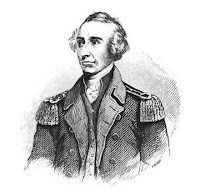
General Francis Marion

One of the first things that the United States did upon receiving the old fort in trade from Mexico in 1821 was to change the name. No longer was it known by its Spanish name of Castillo de San Marcos, or even its British name of Fort St. Mark. Instead, the Americans named it Fort Marion, in honor of Revolutionary War hero General Francis Marion. General Marion (aka “The Swamp Fox”) wasn’t known for having led large numbers of men or won decisive battles. Instead, he was known for his unusual fighting methods, which became the basis for modern-day guerilla warfare.


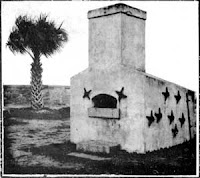
Hotshot Furnace
While the Americans didn’t make many structural changes to the fort, they did add
a hotshot furnace outside the eastern wall of the fort, which was used to heat up cannonballs before they were shot at wooden enemy ships. They also added iron bars and heavy doors on many of the interior storage rooms, turning them into prison cells. Those cells would become important in the 1830s.


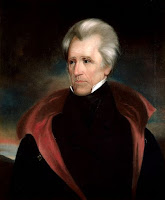
In 1830, President Andrew Jackson signed the Indian Removal Act, which stated that the government had the authority to negotiate with various southern Indian tribes for their removal to lands west of the Mississippi River, thus opening the Native Americans’ ancestral lands for American citizens to settle in. As you might expect, this was popular among much of the American sector while hated by the Native people. This piece of legislation is what led to the Cherokee Trail of Tears, as well as other Indian conflicts, including the Second Seminole War in Florida.


Reservation area of the
Seminole Tribe

Also known as the Florida War, the Second Seminole War lasted from 1835 until 1842. Leading up to this conflict, the Seminoles had been moved to a reservation in Central Florida, but were experiencing shortages of food, leading to them ranging off reservation lands to find what they needed to support their people. Also, escaped slaves were fleeing to the Seminoles and adapting into their culture, leading to slave catchers infiltrating their land in attempts to capture the escapees. These conflicts, among other things, led to more and more tensions between Seminoles and Whites. So when the Indian Removal Act came about, many of the Seminoles were slated for removal to Indian Territory out west. Can you imagine what happened? The longest and costliest Indian conflict broke out, lasting just a few months shy of seven years.


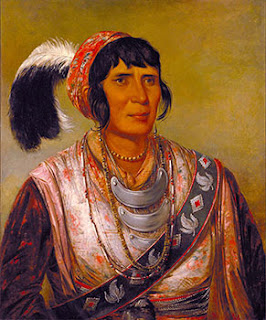
Osceola--hero of the Seminoles
Late in 1837, several Seminoles, including the influential leaders, Osceola and
Coacoochee (or Wild Cat), were captured and held at Fort Marion. This group was captured under false pretenses. They’d been invited to a peace negotiation, and they went in good faith, under a white flag of truce, only to be surrounded by the Army and captured. Osceola was quite ill at the time, possibly suffering from malaria, and ended up dying soon after being transported to Fort Moultrie in Charleston, SC. Wild Cat, on the other hand, remained imprisoned at Fort Marion for roughly two months, and after that time, led an escape of nineteen prisoners from the impenetrable fortress that still leaves people scratching their heads. Aside from the main door of the room where they were being held—which led to the inner courtyard, by the way—the only way out was through a very high, eight-inch-wide window on the outer wall. Apparently, Wild Cat and the other nineteen prisoners scaled the wall, managed to wiggle through the incredibly narrow opening, and ran back to the Tomoka River about forty miles away to meet the rest of their band. Wild Cat continued to fight until the end of the war in 1842.


About twenty years later, another war broke out. This time, brother took up arms against brother in the Civil War. How did that affect Fort Marion? Tune in next month to find out.


Award-winning, best-selling novelist Jennifer Uhlarik has loved the western genre since she read her first Louis L’Amour novel. She penned her first western while earning a writing degree from University of Tampa. Jennifer lives near Tampa with her husband, son, and furbabies. www.jenniferuhlarik.com


AVAILABLE NOW


Love’s Fortress by Jennifer Uhlarik


A Friendship From the Past Brings Closure to Dani’s Fractured Family


When Dani Sango’s art forger father passes away, Dani inherits his home. There, she finds a book of Native American drawings, which leads her to seek museum curator Brad Osgood’s help to decipher the ledger art. Why would her father have this book? Is it another forgery?


Brad Osgood longs to provide his four-year-old niece, Brynn, the safe home she desperately deserves. The last thing he needs is more drama, especially from a forger’s daughter. But when the two meet “accidentally” at St. Augustine’s 350-year-old Spanish fort, he can’t refuse the intriguing woman.


Broken Bow is among seventy-three Plains Indians transported to Florida in 1875 for incarceration at ancient Fort Marion. Sally Jo Harris and Luke Worthing dream of serving on a foreign mission field, but when the Indians reach St. Augustine, God changes their plans. However, when Sally Jo’s friendship with Broken Bow leads to false accusations, it could cost them their lives.


Can Dani discover how Broken Bow and Sally Jo’s story ends and how it impacted her father’s life?


Friday, February 25, 2022

The Castillo de San Marcos, Part 3


By Jennifer Uhlarik


Hello, readers! We are just days away from my fourteenth published story being released. Love’s Fortress is coming March 1, 2022, and leading up to that, I’ve been telling you some of the interesting history of the Castillo de San Marcos, St. Augustine’s old Spanish fort which is the historical landmark where about half the story takes place. If you want to see past postings on the fort, you can find them at the following links:

The Castillo de San Marcos--Part 1

The Castillo de San Marcos--Part 2


So last month, we left off with the fort being returned by the British to Spain during the Treaty of Paris that ended the American Revolution. Britain traded control of Florida to Spain in exchange for the Bahamas. So in 1783, the treaty was signed and by mid-1874, Spanish troops re-entered La Florida. 


However, the second Spanish period was not all that Spain might have hoped it to be. When the Spanish regained control, those Spanish residents who had once lived here during the first Spanish period were largely gone—long ago returned to Spain or elsewhere. In their place lived many British subjects who saw no need to vacate the new Spanish holding. It would become a costly prospect to bring more Spanish subjects to Florida to set up residence and make a noticeable presence, in addition to the cost of soldiers to keep them safe from various threats.


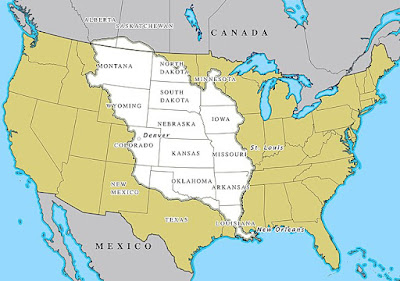
Map of the Louisiana Purchase (in white) overlaid on the
Present Day United States. Note that the Panhandle of 
Florida was not included.


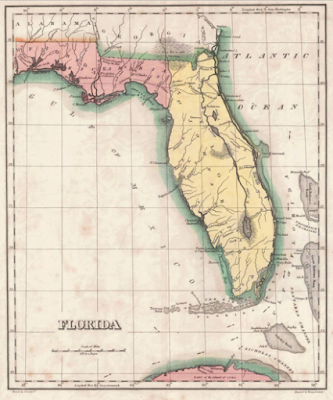
What were those threats? For one, the border of Spanish Florida and the United States was at the southern border of Georgia. With Spanish Florida surrounded by water on three sides, and American land immediately to its north, Florida was cut off from quick help across the land.  Add to that the American neighbors feeling crowded in the southern portions of the fledgling nation, and so wanting to cross the border and set up residence in Florida as well. When the Louisiana Purchase came about in 1803, Napoleonic France sold 828,000 square miles to the United States, and Americans flooded west. Uncaring of the details, some Americans claimed that the panhandle of Florida was part of the Louisiana Purchase. In honesty, it wasn’t, but Americans flooded into that portion of Spain’s holdings during the 1810-1813 time frame. During that same time, the War of 1812 broke out, leading General James Wilkinson to take Mobile, lending strength to the Americans’ position in annexing western Florida. Spain didn’t put up a fight for the area.


Florida once the Americans annexed 
Western Florida between 1810-1813


In addition to the Americans to their north, there were the Seminole Indians living throughout Florida. The Seminoles would often cross the border into American territory and raid American citizens. It was expected that Spain would stop them, since these Native populations lived in Spanish Florida, but with minimal amounts of troops, they struggled to subdue them.


Similarly, slaves from the American plantations crossed the border between American and Spanish territory and sought refuge in Florida, throwing themselves on the mercy of Spain to keep them safe from slave hunters and plantation owners who sought to recapture them. The lack of soldiers again left this growing population vulnerable in Spanish Florida.


The simple answer would’ve been to send more troops to Castillo de San Marcos and other Florida military outposts, but aside from the prohibitive cost, there were other worldwide issues at play. Political tensions were heating up around the world. From 1807 to 1814, Spain waged a seven-year war against Napoleon in Europe, which took manpower and attention away from Florida’s Spanish settlements. Starting in 1810 in Central and South America, people were fighting for independence from Spain as well, further dividing military forces.


Andrew Jackson
So by 1818 or so, all of these factors converged. Spain’s troop count were very low in Florida due to all the other international issues, and the Seminoles, runaway slaves, and outlaws banded together to wreak havoc in the southern portions of the United States. So the American general, Andrew Jackson, pursued the Seminoles (et al.) into Spanish Florida in what became known as the First Seminole War. Jackson’s incursion angered both Great Britain and Spain, so Spain’s leadership sought help from the British in negotiating the international incident. When Britain declined to do more than express their outrage, Spain once again realized it was on its own to negotiate the turbid waters of Spanish-American relations in Florida. It was time to get out.


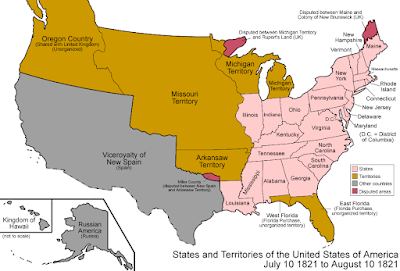
Spain finally approached the United States with the offer of a treaty. Spain would give up Florida if the United States would, in turn, better define the borders of New Spain—an area that comprised much of Mexico, what we know today as the American Southwest, and California. The United States, long desiring to have Florida for its own, quickly agreed, and U.S. Secretary of State John Quincy Adams and Spanish Minister Luis de Onis hammered out the Adams-Onis Treaty of 1819. Florida—and the languishing Castillo de San Marcos—were now the property of the United States of America.


Map showing Adams-Onis Treaty lands. Florida became 
a United States possession while the gray area was
firmly established as "New Spain".


Tune in next month for the interesting history of the fort since becoming an American possession.


Award-winning, best-selling novelist Jennifer Uhlarik has loved the western genre since she read her first Louis L’Amour novel. She penned her first western while earning a writing degree from University of Tampa. Jennifer lives near Tampa with her husband, son, and furbabies. www.jenniferuhlarik.com


COMING MARCH 1, 2022


Love’s Fortress by Jennifer Uhlarik


A Friendship From the Past Brings Closure to Dani’s Fractured Family


When Dani Sango’s art forger father passes away, Dani inherits his home. There, she finds a book of Native American drawings, which leads her to seek museum curator Brad Osgood’s help to decipher the ledger art. Why would her father have this book? Is it another forgery?


Brad Osgood longs to provide his four-year-old niece, Brynn, the safe home she desperately deserves. The last thing he needs is more drama, especially from a forger’s daughter. But when the two meet “accidentally” at St. Augustine’s 350-year-old Spanish fort, he can’t refuse the intriguing woman.


Broken Bow is among seventy-three Plains Indians transported to Florida in 1875 for incarceration at ancient Fort Marion. Sally Jo Harris and Luke Worthing dream of serving on a foreign mission field, but when the Indians reach St. Augustine, God changes their plans. However, when Sally Jo’s friendship with Broken Bow leads to false accusations, it could cost them their lives.


Can Dani discover how Broken Bow and Sally Jo’s story ends and how it impacted her father’s life?