Showing posts with label Seminole Indians. Show all posts

Friday, March 25, 2022

The Castillo de San Marcos--Part 4


By Jennifer Uhlarik


Hello, Readers! If you’ve been following along in my series on the Castillo de San Marcos, the oldest masonry fort in the United States, you’ve already learned about the building of the fort by the Spanish, how the fort changed hands into British control, and how it was ceded back to the Spanish for a second brief time. I’d like to tell you today about the fort since it became a possession of the United States. Find the past posts in the series with these links:


The Castillo de San Marcos--Part 1

The Castillo de San Marcos--Part 2

The Castillo de San Marcos--Part 3


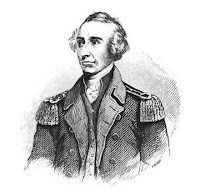
General Francis Marion

One of the first things that the United States did upon receiving the old fort in trade from Mexico in 1821 was to change the name. No longer was it known by its Spanish name of Castillo de San Marcos, or even its British name of Fort St. Mark. Instead, the Americans named it Fort Marion, in honor of Revolutionary War hero General Francis Marion. General Marion (aka “The Swamp Fox”) wasn’t known for having led large numbers of men or won decisive battles. Instead, he was known for his unusual fighting methods, which became the basis for modern-day guerilla warfare.
 

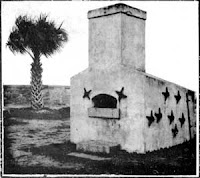
Hotshot Furnace
While the Americans didn’t make many structural changes to the fort, they did add
a hotshot furnace outside the eastern wall of the fort, which was used to heat up cannonballs before they were shot at wooden enemy ships. They also added iron bars and heavy doors on many of the interior storage rooms, turning them into prison cells. Those cells would become important in the 1830s.
 

In 1830, President Andrew Jackson signed the Indian Removal Act, which stated that the government had the authority to negotiate with various southern Indian tribes for their removal to lands west of the Mississippi River, thus opening the Native Americans’ ancestral lands for American citizens to settle in. As you might expect, this was popular among much of the American sector while hated by the Native people. This piece of legislation is what led to the Cherokee Trail of Tears, as well as other Indian conflicts, including the Second Seminole War in Florida.


Reservation area of the
Seminole Tribe

Also known as the Florida War, the Second Seminole War lasted from 1835 until 1842. Leading up to this conflict, the Seminoles had been moved to a reservation in Central Florida, but were experiencing shortages of food, leading to them ranging off reservation lands to find what they needed to support their people. Also, escaped slaves were fleeing to the Seminoles and adapting into their culture, leading to slave catchers infiltrating their land in attempts to capture the escapees. These conflicts, among other things, led to more and more tensions between Seminoles and Whites. So when the Indian Removal Act came about, many of the Seminoles were slated for removal to Indian Territory out west. Can you imagine what happened? The longest and costliest Indian conflict broke out, lasting just a few months shy of seven years.
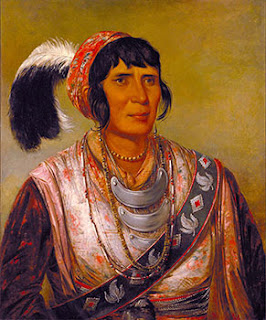
 

Osceola--hero of the Seminoles
Late in 1837, several Seminoles, including the influential leaders, Osceola and
Coacoochee (or Wild Cat), were captured and held at Fort Marion. This group was captured under false pretenses. They’d been invited to a peace negotiation, and they went in good faith, under a white flag of truce, only to be surrounded by the Army and captured. Osceola was quite ill at the time, possibly suffering from malaria, and ended up dying soon after being transported to Fort Moultrie in Charleston, SC. Wild Cat, on the other hand, remained imprisoned at Fort Marion for roughly two months, and after that time, led an escape of nineteen prisoners from the impenetrable fortress that still leaves people scratching their heads. Aside from the main door of the room where they were being held—which led to the inner courtyard, by the way—the only way out was through a very high, eight-inch-wide window on the outer wall. Apparently, Wild Cat and the other nineteen prisoners scaled the wall, managed to wiggle through the incredibly narrow opening, and ran back to the Tomoka River about forty miles away to meet the rest of their band. Wild Cat continued to fight until the end of the war in 1842.


About twenty years later, another war broke out. This time, brother took up arms against brother in the Civil War. How did that affect Fort Marion? Tune in next month to find out.



Award-winning, best-selling novelist Jennifer Uhlarik has loved the western genre since she read her first Louis L’Amour novel. She penned her first western while earning a writing degree from University of Tampa. Jennifer lives near Tampa with her husband, son, and furbabies. www.jenniferuhlarik.com


AVAILABLE NOW

 

Love’s Fortress by Jennifer Uhlarik


A Friendship From the Past Brings Closure to Dani’s Fractured Family


When Dani Sango’s art forger father passes away, Dani inherits his home. There, she finds a book of Native American drawings, which leads her to seek museum curator Brad Osgood’s help to decipher the ledger art. Why would her father have this book? Is it another forgery?


Brad Osgood longs to provide his four-year-old niece, Brynn, the safe home she desperately deserves. The last thing he needs is more drama, especially from a forger’s daughter. But when the two meet “accidentally” at St. Augustine’s 350-year-old Spanish fort, he can’t refuse the intriguing woman.


Broken Bow is among seventy-three Plains Indians transported to Florida in 1875 for incarceration at ancient Fort Marion. Sally Jo Harris and Luke Worthing dream of serving on a foreign mission field, but when the Indians reach St. Augustine, God changes their plans. However, when Sally Jo’s friendship with Broken Bow leads to false accusations, it could cost them their lives.


Can Dani discover how Broken Bow and Sally Jo’s story ends and how it impacted her father’s life?


Friday, February 25, 2022

The Castillo de San Marcos, Part 3


By Jennifer Uhlarik


Hello, readers! We are just days away from my fourteenth published story being released. Love’s Fortress is coming March 1, 2022, and leading up to that, I’ve been telling you some of the interesting history of the Castillo de San Marcos, St. Augustine’s old Spanish fort which is the historical landmark where about half the story takes place. If you want to see past postings on the fort, you can find them at the following links:

The Castillo de San Marcos--Part 1

The Castillo de San Marcos--Part 2


So last month, we left off with the fort being returned by the British to Spain during the Treaty of Paris that ended the American Revolution. Britain traded control of Florida to Spain in exchange for the Bahamas. So in 1783, the treaty was signed and by mid-1874, Spanish troops re-entered La Florida


However, the second Spanish period was not all that Spain might have hoped it to be. When the Spanish regained control, those Spanish residents who had once lived here during the first Spanish period were largely gone—long ago returned to Spain or elsewhere. In their place lived many British subjects who saw no need to vacate the new Spanish holding. It would become a costly prospect to bring more Spanish subjects to Florida to set up residence and make a noticeable presence, in addition to the cost of soldiers to keep them safe from various threats.


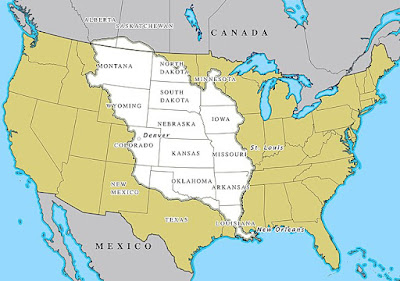
Map of the Louisiana Purchase (in white) overlaid on the
Present Day United States. Note that the Panhandle of 
Florida was not included.


What were those threats? For one, the border of Spanish Florida and the United States was at the southern border of Georgia. With Spanish Florida surrounded by water on three sides, and American land immediately to its north, Florida was cut off from quick help across the land.  Add to that the American neighbors feeling crowded in the southern portions of the fledgling nation, and so wanting to cross the border and set up residence in Florida as well. When the Louisiana Purchase came about in 1803, Napoleonic France sold 828,000 square miles to the United States, and Americans flooded west. Uncaring of the details, some Americans claimed that the panhandle of Florida was part of the Louisiana Purchase. In honesty, it wasn’t, but Americans flooded into that portion of Spain’s holdings during the 1810-1813 time frame. During that same time, the War of 1812 broke out, leading General James Wilkinson to take Mobile, lending strength to the Americans’ position in annexing western Florida. Spain didn’t put up a fight for the area.


Florida once the Americans annexed 
Western Florida between 1810-1813


In addition to the Americans to their north, there were the Seminole Indians living throughout Florida. The Seminoles would often cross the border into American territory and raid American citizens. It was expected that Spain would stop them, since these Native populations lived in Spanish Florida, but with minimal amounts of troops, they struggled to subdue them.


Similarly, slaves from the American plantations crossed the border between American and Spanish territory and sought refuge in Florida, throwing themselves on the mercy of Spain to keep them safe from slave hunters and plantation owners who sought to recapture them. The lack of soldiers again left this growing population vulnerable in Spanish Florida.


The simple answer would’ve been to send more troops to Castillo de San Marcos and other Florida military outposts, but aside from the prohibitive cost, there were other worldwide issues at play. Political tensions were heating up around the world. From 1807 to 1814, Spain waged a seven-year war against Napoleon in Europe, which took manpower and attention away from Florida’s Spanish settlements. Starting in 1810 in Central and South America, people were fighting for independence from Spain as well, further dividing military forces.


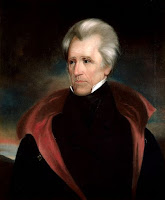
Andrew Jackson
So by 1818 or so, all of these factors converged. Spain’s troop count were very low in Florida due to all the other international issues, and the Seminoles, runaway slaves, and outlaws banded together to wreak havoc in the southern portions of the United States. So the American general, Andrew Jackson, pursued the Seminoles (et al.) into Spanish Florida in what became known as the First Seminole War. Jackson’s incursion angered both Great Britain and Spain, so Spain’s leadership sought help from the British in negotiating the international incident. When Britain declined to do more than express their outrage, Spain once again realized it was on its own to negotiate the turbid waters of Spanish-American relations in Florida. It was time to get out.


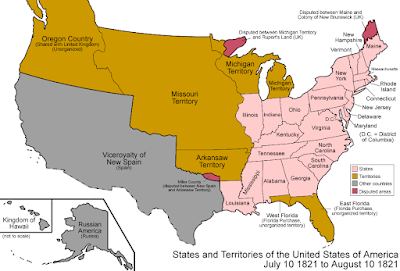
Spain finally approached the United States with the offer of a treaty. Spain would give up Florida if the United States would, in turn, better define the borders of New Spain—an area that comprised much of Mexico, what we know today as the American Southwest, and California. The United States, long desiring to have Florida for its own, quickly agreed, and U.S. Secretary of State John Quincy Adams and Spanish Minister Luis de Onis hammered out the Adams-Onis Treaty of 1819. Florida—and the languishing Castillo de San Marcos—were now the property of the United States of America.


Map showing Adams-Onis Treaty lands. Florida became 
a United States possession while the gray area was
firmly established as "New Spain".


Tune in next month for the interesting history of the fort since becoming an American possession.


Award-winning, best-selling novelist Jennifer Uhlarik has loved the western genre since she read her first Louis L’Amour novel. She penned her first western while earning a writing degree from University of Tampa. Jennifer lives near Tampa with her husband, son, and furbabies. www.jenniferuhlarik.com


COMING MARCH 1, 2022


Love’s Fortress by Jennifer Uhlarik


A Friendship From the Past Brings Closure to Dani’s Fractured Family


When Dani Sango’s art forger father passes away, Dani inherits his home. There, she finds a book of Native American drawings, which leads her to seek museum curator Brad Osgood’s help to decipher the ledger art. Why would her father have this book? Is it another forgery?


Brad Osgood longs to provide his four-year-old niece, Brynn, the safe home she desperately deserves. The last thing he needs is more drama, especially from a forger’s daughter. But when the two meet “accidentally” at St. Augustine’s 350-year-old Spanish fort, he can’t refuse the intriguing woman.


Broken Bow is among seventy-three Plains Indians transported to Florida in 1875 for incarceration at ancient Fort Marion. Sally Jo Harris and Luke Worthing dream of serving on a foreign mission field, but when the Indians reach St. Augustine, God changes their plans. However, when Sally Jo’s friendship with Broken Bow leads to false accusations, it could cost them their lives.


Can Dani discover how Broken Bow and Sally Jo’s story ends and how it impacted her father’s life?
Friday, March 28, 2014

Tidbits from New Smyrna Beach, FL

A few days ago, my husband Paul and I spent the day at New Smyrna to celebrate our 40th wedding anniversary. However, I just can't go to a place without learning a little something about it. So today's post consists of tidbits from New Smyrna Beach. There's a great little museum there that was the original building for the first school house. It was built in 1872 at a cost of $42.00.

The Seminole Indians of Florida were long time residents of New Smyrna Beach long before Dr. Andrew Turnbull came in 1767. He started draining the swampy area so the land could be cultivated then he brought in folks from Greece who worked the land. He planted Indigo and it was very profitable for a time. But because of poor management it failed. As one of the curator's at the museum put it, "New Smyrna had a bunch of businesses for a season. Some of these industries included the Indigo, Turpintine, harvesting the live oak for ship building and a sugar mill.

Here is an example of the bins used to make indigo dye which at times was worth more than gold.

In 1830 Henry Cruger built a Sugar mill on 600 acres. Years later it was burned by Seminoles. Here's a link to Sugar Mill Ruins with a bit of history about the place. Well worth a return trip to discover more.

New Smyrna was also host to tourism, even as early as the 19th century with the advent of the railroad down from St. Augustine, FL and ship travel. During the Civil War, 1863, the Oleander bombs and burns Sheldon Hotel that was built on the old Fort Mound. Here's a link to a video made by someone who visited the ruins. Sheldon Hotel Ruins In the museum there is a description talking about the bombing, as the bomb went through the building and into the piano. Well worth stopping in to the Museum with its rich info in such a small space. Weekdays you can go upstairs to work on genealogy and go through some of the other historic photographs they have.
Here are a couple pictures I took of the ruins.
From the top looking down on the structure

     The Front wall that faces the water
And up close view of the coquina walls.

There's a great photograph from Mosquito Lagoon dated 1870. In this photograph you have several women on a boat, fishing, I suppose, but one gal is standing there with her shotgun ensuring safe passage. For a bit more on Mosquito Lagoon click here.

Other little tidbits:
Canal street used to be a canal.
City dock dredged and filled across the footbridge from canal street. Pier was built for commercial vessels.
Torpedo bottle, 1809, horizontal position kept the cork wet.
And there's another great photo of a sandy well heads, stabilized with bottles. The latest bottle 1905-6 which dates the well.

There's so much more to explore in this little gem but I'll leave you with this tidbit from Handbook of Florida ©1892
New Smyrna is a favorite resort for sportsmen. The proprietor of the hotel, Captain Sams, is familiar with the whole region and is always ready either to accompany his guests himself on hunting expeditions or to furnish competent guides, boats, and equipments. Large and small game of all kinds is to be found in the woods and savannahs of the mainland, and water-fowl frequent the marshy islands that border the lagoons. The best of salt-water fish are caught from the wharves or in the channel, especially in the vicinity of Mosquito Inlet, four miles distant.

Thanks for taking the time to read this post.

Lynn A. Coleman is an award winning & best-selling author who makes her home in Keystone Heights, Florida, with her husband of 40 years. Check out her 19th Century Historical Tidbits Blog if you like exploring different tidbits of history. Lynn's latest novel is Courting Holly Her next novel, "Winning the Captain's Heart" is scheduled for release in July.

Tuesday, May 28, 2013

Tidbits About Micanopy

Tidbits from Micanopy, Fl.

I discovered Micanopy quite by accident. Not having grown up in Florida, I know precious little about the state history. However, as time goes on and my interest in historical places and settings grow, I find little hidden tidbits. Yes, James Taylor mentions Micanopy in a song; and Michael J. Fox filmed Doc Hollywood in Micanopy, but I hadn’t paid much attention to those tidbits. A few years back we were visiting Paynes Prairie State Park and stumbled upon a sign pointing to Historic Micanopy, so I followed the road and was surprised to find this cute little place.

Did you know that Micanopy was the first established town in the state of Florida after it became a part of the United States? It was settled in 1821 by Moses Elias Levy, and he named it after a Seminole Chief, Micanopy. The town is just barely over one square mile. So if the road didn’t end you could blink and miss it.

There’s a used bookstore in town and I’m afraid hubby and I spent a lot of time in there. I found original newspapers from Springfield, Mass put in a library binder. If I had extra I would have purchased one, but the extra wasn’t there right then. However, I do know where they are and if the extra becomes available…well, let’s just say they might find a home.

In Micanopy you drive less than 20 mph. There are quite cafes, antique stores, a museum, town hall, fire department, etc. Here are a few pictures to give you a feel for the place.


Historically, it was the home of a Methodist Seminary for both men and women from around the world. After the Civil War it became a Baptist Seminary. Below is a rather old photo of the Seminary.


There was also a large lake, and water travel permitted easy access to Micanopy that is no longer the case. It was also the location for the first of the Seminole Indian wars. A military post was established there in the 1830’s. Fort Defiance was erected in 1840. It was an intense fighting situation which—if you are familiar with the Seminole Wars in Florida—you are aware of how hard it was on both sides.

In 1854 a petition to the state was requested to form a “Plank Road” from Palatka to Micanopy. Palatka is on the St. John’s River and was a major stop for the steamboat industry. In fact, Palatka was… I’ll save that for next month’s post.

After the wars Micanopy settled into a quiet location with rich hammock filled lands and large plantations and orange groves (outside of the town). Today it is a quiet and great historical place to visit. If you’re traveling in Central Florida you might want to stop by. You’ll be glad you did.


If you like historical tidbits you might like to visit my blog 19th Century Historical Tidbits. You can also follow me on twitter @LynnColeman or you can friend me on Facebook. My next novel "Courting Holly" is scheduled to be released in Oct. 2013.

In His grip,
Lynn


Saturday, May 25, 2013

The Florida Wars


Anyone who has taken American history in school or watched a western movie probably knows that the United States spent a lot of time, money, and manpower on “subduing the savages” during Westward Expansion. But long before some of the most infamous western battles like Custer’s Last Stand, the longest, costliest, and most deadly of Indian wars occurred in Florida.

Let me set the stage. It was the early 1800’s, and Spain still owned Florida, although their grip was weakening. Americans had settled on both sides of the Florida/Georgia border. Seminoles Indians inhabited the territory only a little further south. Some lawless Americans took forays into Seminole areas to steal cattle and horses from the Indians. In retaliation, the Seminoles crossed the border into Georgia to commit raids on settlers there. In addition, a good number of slaves, escaped from southern plantations, lived among the Seminoles, and slave catchers often ventured into Florida's wilds to pursue them. Pirates and British opportunists would also traverse the Florida peninsula, causing whatever trouble they could between Americans and Seminoles.

This was the exact recipe that created the tensions leading to the Seminole Wars, also known as the Florida Wars. The Seminole Wars consisted of three periods of fighting, the second one being the longest, costliest, and most deadly Indian war I alluded to above. But let’s look at them in order.
Andrew Jackson
State Archives of Florida, Florida Memory
http://floridamemory.com/items/show/128711

The First Seminole War erupted when American General Edmund Gaines took the Miccosukee chief Neamathla captive in 1817 in order to stop the Indians from offering safe haven to escaped slaves. To avenge his capture, the Miccosukee, Seminole, and Creek tribes banded together to attack a military transport traveling along the Apalachicola River. Thirty-five soldiers and six women died in the attack. President James Monroe tapped war hero Gen. Andrew Jackson to go in and subdue the Indian forces, and in eleven weeks in the Spring of 1818, Jackson and his 3500 men did just that. They destroyed many Indian settlements west of the Suwanee River and captured the only two Spanish settlements in West Florida—St. Marks and Pensacola. After all of this, the fighting began to calm. Spain saw the truth that they were no longer able to hold onto Florida and ceded the land to the United States through a treaty in 1821. The Indians were shuffled off to a reservation in Central Florida where conditions were less than ideal.

Andrew Jackson became President in 1829, and the next year, he signed the Indian Removal Act, which said that all Indians living east of the Mississippi must move to the new Indian Territory (current day Oklahoma). The Seminoles were later forced to sign the Treaty of Payne’s Landing in 1832, giving up their claim to their Florida homes, and taking up residence in Indian Territory. They were given three years to comply. When the American military returned to enforce the treaty in 1835, the Seminoles were ready to defend their homes.

Sorrow of the Seminoles--Banished from Florida
 State Archives of Florida, Florida Memory

In December of 1835, Seminole and black warriors burned sugar plantations along the St. Johns River. On December 28th, Seminole leader Osceola killed a government Indian agent and his associate outside of Ft. King (Ocala) at the same time a band of warriors massacred a column of 108 soldiers traveling between Ft. Brooke (Tampa) and Ft. King. The Second Seminole War had begun.

This war lasted from 1835 until 1842, and it pitted some 3000 Seminole and black warriors against four U.S. Generals and 30,000 troops. The Seminoles were masters of guerilla fighting and used the thick scrub and Florida swamps to their advantage. In addition, the heat, insects, and disease prevalent during Florida summers prolonged the fighting for years because the U.S. troops would pull out of the fight until weather conditions became more tolerable in the fall. But this pull-out each year gave the Seminoles time to recuperate and regroup, so when the forces returned, they were ready for more fighting. The war finally ground to an end when American forces began to employ captured black and Seminole warriors as guides to hidden Seminole encampments where they killed or captured many of the Indian forces. No treaty was ever signed, but peace was called in August 1842 when over 4000 Seminoles were forcibly removed to the Indian Territory. More than 1500 soldiers lost their lives, most to disease. Some 30,000 citizen soldiers also perished in the fighting. The final price tag for the war was $30 million. (To put that in perspective, the proposed budget for the federal government in 1836 was $25 million).

This hugely costly war wasn’t the last of the Seminole uprisings. Chief Billy Bowlegs led one more war starting in 1855. It was a two-and-a-half year conflict that pitted the remaining 350 Seminoles against the American settlers and military. But in the end, Billy Bowlegs realized he couldn’t stop the tide of settlers and accepted $8000 to move to Indian Territory with 165 of his people. At the last war’s end, less than 200 Seminoles remained in Florida.


Seminole Chickee
State Archives of Florida, Florida Memory
http://floridamemory.com/items/show/159015
Today, Florida is home to the descendants of those brave few who stayed behind, unwilling to give up their homeland. The Seminoles live as a sovereign nation on six reservations throughout the state. Depending on the reservations you visit, you might find upscale hotels and nightlife in the Seminole Hard Rock Tampa, or you might find more traditional Seminole attractions such as rodeos, powwows, and even the Billie Swamp Safari, where you can sleep in a traditional chickee, watch Alligator feedings, poisonous snake shows, and take airboat and eco-tour rides.

Let’s hear from you. Have you ever visited an Indian reservation? Which reservation? What was your experience like?


Jennifer Uhlarik discovered the western genre as a pre-teen, when she swiped the only “horse” book she found on her older brother’s bookshelf. A new love was born. Across the next ten years, she devoured Louis L’Amour westerns and fell in love with the genre. In college at the University of Tampa, she began penning her own story of the Old West. Armed with a B.A. in writing, she has won the 2012 CWOW Phoenix Rattler, 2012 ACFW First Impressions, and 2013 FCWC contests, all in the historical category. She is also the winner of the 2013 Central Florida ACFW chapter's "Prompt Response" contest. In addition to writing, she has been a schoolteacher of English, literature, and history, as well as a marketing director. Jennifer is active in American Christian Fiction Writers and lifetime member of the Florida Writers Association. She lives near Tampa, Florida, with her husband, teenaged son, and four fur children.