Showing posts with label shipwrecks. Show all posts

Thursday, July 2, 2026

Weird Inventions That Saved Lives: The Breeches Buoy

Blogger: Amber Lemus


Breeches Buoy in use 1919
Public Domain Photo
Today we are continuing our series on Weird Inventions That Saved Lives. If you look at this month's featured contraption, it looks downright silly. At first glance, you might think someone hung a giant pair of toddler pants beneath a life ring just for a laugh. But this odd-looking mechanism actually saved thousands of lives from watery graves during the nineteenth and twentieth centuries. This is a breeches buoy.

Imagine standing on a wooden sailing ship during a violent storm, trapped as the waves thrash your vessel against the shallow sandbars of the coastline. The sea is far too wild for a rescue surfboat to reach you, and swimming to shore would mean certain death.

To solve this heartbreaking dilemma, an English inventor named George William Manby brainstormed a solution in the early 1800s. He invented a mortar that could fire a rope directly over a shipwreck from the shore. Originally, shipwreck victims had to physically hold onto and slide down the rope, which was nearly impossible for those who were injured, terrified, or weak from hypothermia.

Eventually, the breeches buoy was designed to fix this problem. The apparatus consisted of a circular cork lifebuoy with a pair of sturdy canvas "breeches" (shorts) securely sewn into the middle. Thus, the name, breeches buoy. 

However, the system was not a simple one. Each man on the rescue crew had to know exactly what to do and how to do it properly. Timing was everything. So, the rescue teams, such as the U.S. Life-Saving Service had to drill with the apparatus every week. 


Once a line was fired to the ship using a line-throwing gun—frequently a 200-pound Lyle gun in America—the shipwrecked crew would haul the heavy rope out and secure it tightly to the ship's mast. Rescuers on the beach anchored the other end in the sand. The breeches buoy was then hooked onto the rope like a modern zip line.

One by one, a survivor would step into the canvas pants, sit back securely, and be pulled across the crashing waves to the safety of the shore. If the rope happened to dip or snap, the cork lifebuoy ensured the occupant would float rather than sink.

While it looks like a peculiar piece of laundry suspended in midair, the breeches buoy was an absolute miracle for coastal rescue groups like the U.S. Life-Saving Service. It safely brought thousands of souls to shore who otherwise would have been lost to the sea, remaining a primary rescue method until helicopters took over the job in the 1950s.

The Chicamacomico Life-Saving station and historical site still does this drill once a week during the summer. Click here to see a video of this drill.
https://youtu.be/RENMwYoI_Zw?si=N0oPzmgVSSugHAfq

Have you ever heard of a breeches buoy? How would you feel about stepping into a pair of canvas pants to zip-line over a raging ocean storm?

*****


Two-time winner of the Christian Indie Award for historical fiction, Amber (Schamel) Lemus inspires hearts through enthralling tales. She has a passion for travel, history, books, and her Savior. Visit her online at http://www.amberlemus.com/ to connect!

Looking for a July 4th read to celebrate America's 250th birthday? Check out Dawn of Liberty, an award-winning look into Sam Adam's participation in the signing of the Declaration of Independence. 

https://www.amazon.com/Dawn-Liberty-Short-Story-Collection/dp/0692698485

Tuesday, June 9, 2026

Phantom Ships of the Chesapeake

By Tiffany Amber Stockton


There's something about open water and a dark sky that invites stories. Just think about all the sea shanties that have been written or the rich maritime folklore full of tales. And on a coastline with as many shipwrecks, storms, and hard histories as this one, there's no shortage of gaps to fill.

The Coast That Swallowed Ships

The waters off Assateague Island and along the Virginia Eastern Shore were among the most treacherous on the entire Atlantic coastline. Shallow shoals, sudden storms, and tricky inlets meant that ships met grief here regularly. There are dozens upon dozens of documented wrecks in this stretch of coast alone.

One of the most famous involves a Spanish warship called the La Galga. In September of 1750, she was driven ashore in shallow water at Assateague by a hurricane that rerouted her voyage from Havana back to Spain. The crew made it to shore, but the ship didn't. And according to local legend, not everyone who went down with her stayed quietly beneath the waves. It is said the spirits of those who died in the wreck still comb the beach near the Assateague Lighthouse to this day.

Now, I'm not here to argue for or against ghost stories. But when you walk that beach at dusk and the light shifts the way it does over open water, the stories don't exactly feel unreasonable.

Fire on the Water

Ghost ship legends tend to follow a pattern along the Atlantic coast. The image that shows up again and again is a ship on fire, visible from shore, impossible to approach, there one moment and gone the next.

The most famous version of this legend along the northeastern coast belongs to a ship called the Palatine, said to appear as a burning phantom off Block Island in Rhode Island. Benjamin Congdon, born around 1788, gave what he called a typical explanation for the apparition. He said the burning ship was sent by an Almighty Power to punish wicked men who had wronged her passengers. The people didn't just tell ghost stories for entertainment. They used them to make moral sense of tragedy.

That same impulse shows up all along the coast. When something terrible happened at sea and no good explanation came with it, the story that filled the space often came with answers. Greed was punished, cruelty was answered, and the innocent were remembered. The ghost ship wasn't used just to scare people. It was a form of justice that the law couldn't always provide.

What the Stories Were Really Doing

The part that interests me most as a fiction author is what the stories meant to the people who told them.

The Chesapeake region had the ideal conditions for this kind of folklore. Isolated coves, historic battle sites, and centuries of storms and shipwrecks all set the stage. These weren't just idle campfire tales. They were community memories, shaped into compelling narratives. A phantom ship burning on the water could be a warning to stay away from a dangerous stretch of shoals, a reminder of a tragedy the community hadn't finished grieving, or a way of saying that some things don't go unanswered even when no one is watching.

And there's a thread of faith underneath all of it. The watermen and island communities were deeply rooted in their churches. They didn't read ghost ship sightings as random. They read them as meaning something. In their understanding, things had consequences. Those who observed the burning Palatine shortly after the original wreck believed it to be a warning from an Almighty Power. That's not so far from a worldview shaped by Scripture.

I think about Pop-Pop's stories again here. He never told ghost stories exactly. His tales were always adventure, always rescue, always triumph. But he understood the dangers of the water. History happened out there. People died out there. And he didn't dismiss any of that reality. He simply chose to reframe the stories in a way that meant something to my brother and me.

The Light You Can Explain and the Light You Can't

Before the Assateague Lighthouse was operational, ships navigated this coastline by whatever lights they could find, and sometimes they found none at all. The lighthouse was built precisely because too many ships were lost in darkness. A real light saved lives. A false light, in some of those darker legends, lured ships to destruction.

That tension of true light versus false light runs all the way through Scripture. "Your word is a lamp to my feet and a light to my path." Psalm 119:105. The people who lived along these shores and watched for burning ships in the dark knew firsthand exactly what it meant to need a reliable light.

The phantom ships still show up in Eastern Shore stories. Some of them probably have explanations like bioluminescence, fog, or distant burning debris. Some of them are just stories that got better with each retelling. Either way, they tell you what the people who lived here feared, and what they believed. 


Monday, March 9, 2026

Storm Warnings and Sailor Signs: Maritime Superstitions of the Eastern Shore

By Tiffany Amber Stockton


Before the Coast Guard, and before life insurance, there was the Church.

Folklore and Belief Mixed Together


If you grow up around open water, you learn early that it has a personality. It doesn’t answer to schedules, and it certainly doesn’t care about your plans. Long before weather radar and storm tracking maps, the watermen who worked around Chincoteague Island and the broader Eastern Shore of Virginia relied on something far less scientific. They lived their lives by observation, experience, and a collection of sailor signs passed down through generations.

Some of those signs were practical. Others bordered on superstition. Most were a little of both.

One of the most repeated bits of coastal wisdom is an old rhyme. You've probably heard it. “Red sky at night, sailor’s delight. Red sky in morning, sailor take warning.” That wasn’t folklore pulled from thin air. It reflected real weather patterns moving west to east. But to watermen heading out before sunrise, it was enough of a warning for them to decide whether to stay tied to the dock or head out to sea.

Superstitions and Stories


Then there were the taboos.
  • Whistling on a boat was said to “whistle up the wind.”
  • Renaming a vessel without ceremony invited disaster.
  • Women on a boat brought bad luck.
  • Bananas aboard ship were considered bad luck (they got them at the docks).
  • Certain days were thought unlucky for setting out.
And these beliefs didn't just exist on tall ships or in far-off oceans. They lived right along the Virginia coast. The waters off Assateague and Chincoteague were notorious for shoals and sudden storms. Before the Coast Guard established modern rescue systems, a mistake or misreading of the sky could mean a wreck.

There are dozens upon dozens of documented shipwrecks dotting the history of this region. Newspaper reports from the late nineteenth and early twentieth centuries frequently described vessels "driven aground during nor’easters," their crews rescued by local surfmen or sometimes lost entirely. The U.S. Life-Saving Service, which later became part of the Coast Guard, maintained stations along Assateague precisely because the waters were so treacherous.

When people aren't certain about survival, they look for patterns. For some semblance of control.

The Source of Their Strength


At the same time, Eastern Shore communities were deeply rooted in church life. Psalm 107 is a powerful song of thanksgiving celebrating God’s enduring mercy and deliverance. Verses 23-30 address "those who go down to the sea in ships…” This passage was often read in maritime congregations. Bells tolled after wrecks. Prayer meetings gathered when storms threatened. Faith and folklore existed side by side as equal attempts to make sense of the unknown.

I remember childhood visits to the island and the stories spun in Pop-Pop’s barbershop. He had a way of blending fact and imagination so seamlessly that my brother and I never questioned which was which. In those tales, storms always rolled in dramatically. There was definitely a fanciful aspect to his storytelling. The sea always tested us. And somehow, through grit and cleverness, the hero (almost always Pop-Pop himself) brought us home.

But despite hearing stories, I could tell there was an element of truth underneath all the embellishment. Coastal life has always required respect for the forces bigger than life itself. Whether a man crossed himself before casting off lines or quietly studied the sky for signs of change, he understood that once the dock disappeared behind him, certainty did too.

Generational Traditions


Superstitions may sound quaint when you hear them now. They might even seem humorous. But in them, you learn something important about the people who held them. They were observant. Cautious. Aware that they couldn't afford to make mistakes, that their lives depended on them being alert at all times.

Today, modern forecasts tell us what satellites see hundreds of miles away. Boats are equipped with GPS and radios that early watermen couldn’t have even imagined. And yet, if you spend enough time around working docks, you’re bound to still hear some of those old sayings repeated.

Tradition carries weight. The sea hasn’t changed its temperament. It still demands humility. Maybe that’s why those sailor signs endure. They're reminders passed from one generation to the next to pay attention, respect the water, and never assume you’re in charge.

Wednesday, July 9, 2025

100 Years of Saltwater Cowboys and Penning Ponies

  By Tiffany Amber Stockton

This is it! It's finally July. And that means a special trip with my daughter to the 100th anniversary of the first official Pony Penning Day on Chincoteague Island. I haven't been back to the island where my grandfather was born for nearly ten years, and I just discovered a potential B&B owned by distant family members. If you missed last month's post about some of my family legacy on Chincoteague, you can view it here.

The History of Pony Penning Day on Chincoteague & Assateague Islands

Wild ponies have inhabited Assateague Island for hundreds of years. A lot of evidence says they are the descendants of the survivors of a Spanish galleon which wrecked off the coast of Assateague. This story, which has been passed from generation to generation on Chincoteague Island, is stronger than fiction. :) I heard it myself from my grandfather, and it's common lore among island residents.


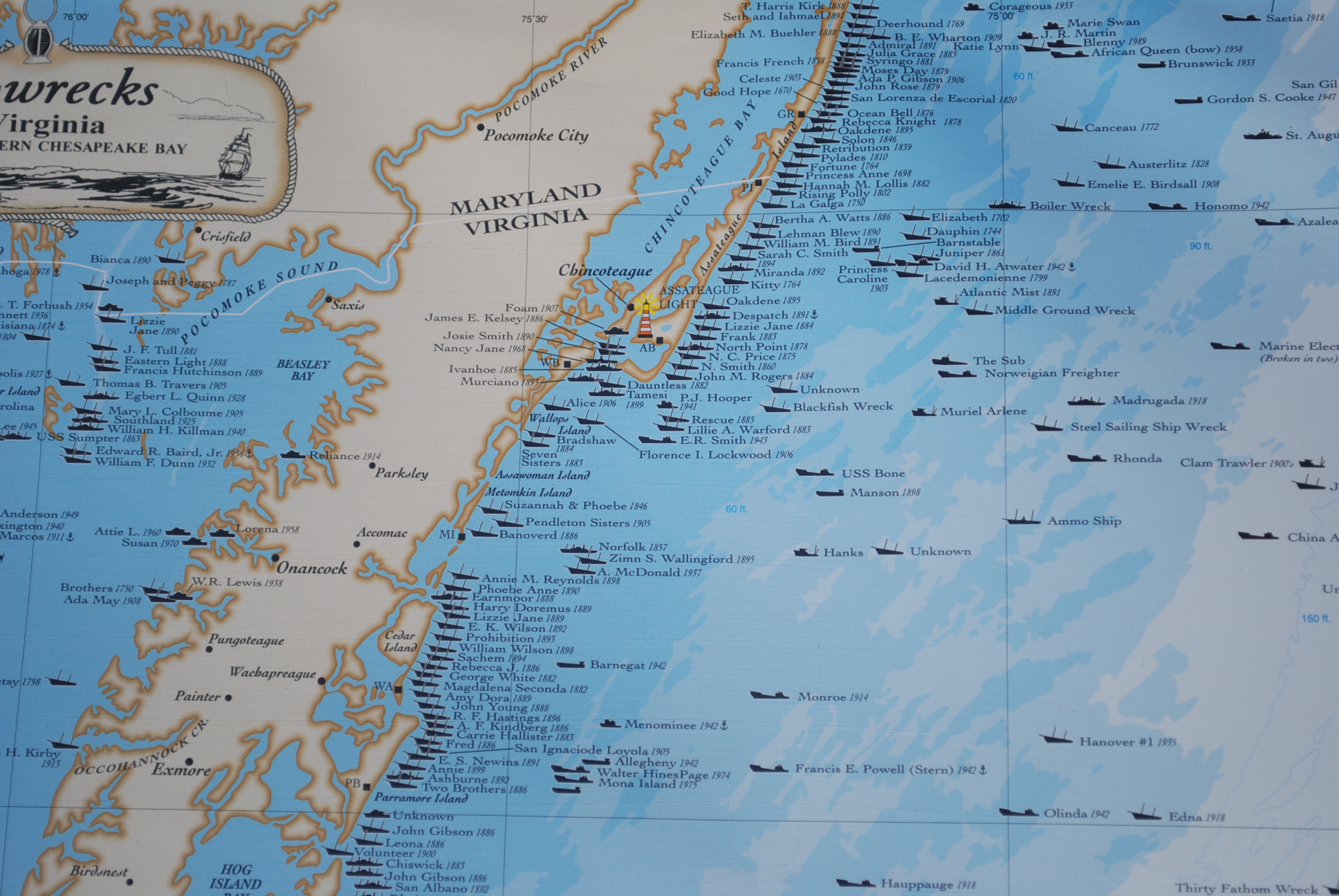
If you ever view a shipwreck map of the mid Atlantic coastline, you'll see a remarkable number of shipwrecks. Before modern navigation, ships used lighthouses and the stars to navigate at night. It worked well until a bad storm came up or heavy fog set in, which impaired visibility. This caused ships to get off course and hit sandbars along the coast, which resulted in a lot of wrecks all up and down the eastern coastlines.

These wrecks would usually occur during a storm, and the large waves would beat the wooden ship apart. The large number of shipwrecks, together with it being common for ships to be transporting ponies to the Colonies or South America, makes it very likely that ponies originally got to Assateague from a shipwreck.

A book written in 2007 by Mr. John Amrhein, The Hidden Galleon, suggests the local story about the Spanish galleon is true. In the book, he describes the wreck of the La Galga in 1750, its location, the circumstances surrounding the voyage, the great storm of 1749 which decimated all the livestock on Assateague Island prior to the La Galga wreck, and the appearance of "Beach" Ponies shortly after the demise of the La Galga, along with other evidence. This might not be 100% provable, but the circumstantial evidence he presents is very powerful. You can easily see why this story has been favored for passing down the line. For more information, go to www.thehiddengalleon.com.

History of Pony Penning


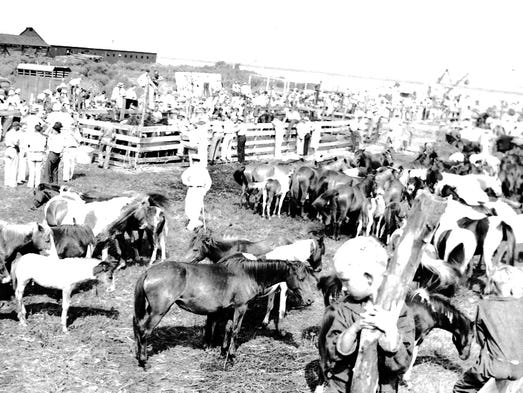
Penning began as a way for livestock owners to claim, brand, break and harness their loose herds. By the 1700's it had become an annual event, complete with drinking, eating, and plenty of revelry by the entire community. The earliest known description of Pony Penning was published in 1835. The practice was then already an "ancient" custom held in June on Assateague Island. Penning on Chincoteague Island is not mentioned in print until the mid-1800's, and it's believed to have been begun by two islanders who owned large herds that grazed on Chincoteague.

The penning continued on both islands for years. By 1885, they were held on Assateague one day and Chincoteague the next. Assateague also had a Sheep Penning, which is believed to be a custom even older than the others. Word of the events began to spread, and hotels and boarding houses were booked for the festivities. In 1909, the last Wednesday and Thursday of July were set as the official dates for the yearly events. As Pony Penning increased in popularity, Assateague's Sheep Penning wound down and was discontinued by 1914.
Modern Day Pony Penning

After a string of disastrous fires in the Town of Chincoteague, the villagers realized their fire fighting equipment was seriously inadequate. In 1925, the town authorized the Chincoteague Volunteer Fire Company to hold a carnival during Pony Penning to raise funds. That year, over 15 colts were sold to benefit the fire company, and the carnival was a huge success. Bolstered by the interest in the pony swim, visitors began arriving from across the country for the annual penning.


The crowd in 1937 was estimated at 25,000. The increased revenue from the carnivals and auctions enabled the fire company to modernize its equipment and facilities, and in 1947 it began to build its own herd by purchasing ponies from local owners. They moved the herd to Assateague where the government allowed publicly owned herds to graze on the newly established Chincoteague National Wildlife Refuge.

That same year, 1947, Marguerite Henry published Misty of Chincoteague, the story that made Pony Penning internationally famous. A movie followed, as did several sequel books. The tale of the wild pony Phantom, her foal Misty, and the children who buy and raise her was awarded the Newbery Medal of Honor and has become a classic, still loved and enjoyed by each new generation.


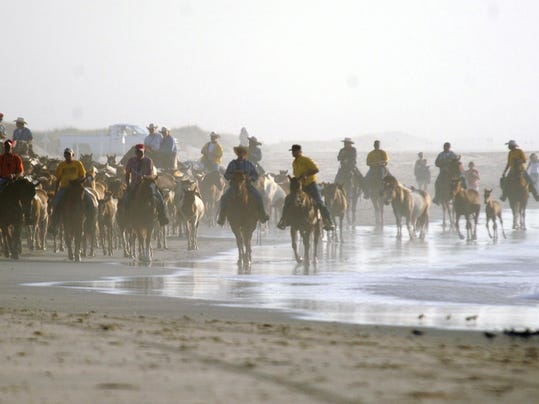
Pony Penning is still held in July during the Chincoteague Volunteer Firemen's Carnival. "Saltwater Cowboys" herd the horses across the narrowest part of Assateague Channel at slack tide (between low and high tides), after which they are again examined by veterinarians. After a resting period, they are herded through town to a corral at the Carnival Grounds where they stay until the next day's auction.

The Pony Auction not only provides a source of revenue for the fire company, but it also serves to trim the herd's numbers. To retain the permit to graze on the refuge, the herd must not exceed 150 horses, so they hold this annual event to keep the herd within limits.

Each year thousands of people flock to Chincoteague Island to watch the Pony Penning and enjoy the Firemen's Carnival. For many of them, the trek to the shores of Assateague Channel on the last Wednesday and Thursday of July has become an annual event, an opportunity to participate in a tradition older than the country itself.

This year, they're projecting nearly 50,000 people in attendance. What have I gotten myself into?

NOW IT'S YOUR TURN:

* Have you ever attended Pony Penning Day on Chincoteague, or is it on your bucket list? What would you most look forward to seeing?

* What do you think makes traditions like Pony Penning so enduring and beloved, even 100 years later?

* The story of the shipwrecked Spanish ponies has been passed down for generations. Do you believe it’s fact, folklore, or a powerful mix of both? Why?

Leave answers to these questions or any comments on the post below.

** This note is for our email readers. Please do not reply via email with any comments. View the blog online and scroll down to the comments section.

Come back on the 9th of each month for my next foray into historical tidbits to share.

BIO

Tiffany Amber Stockton has embellished stories since childhood, thanks to a very active imagination and notations of talking entirely too much. Honing those skills led her to careers as an award-winning and best-selling author and speaker, while also working as a professional copywriter/copyeditor. She loves to share life-changing products and ideas with others to help them just get rooted and live a life of purpose.

Currently, she lives with her husband and fellow author, Stuart Vaughn Stockton, along with their two children, two dogs, and three cats in southeastern Kentucky. In her 20+ years as a professional writer, she has sold twenty-six (26) books so far and has agent representation with Tamela Murray of the Steve Laube Agency. You can find her on Facebook and GoodReads.

Thursday, September 9, 2021

Pony Penning Day History

 By Tiffany Amber Stockton


Last month, I shared the story of my great-grandfather's cousin marrying President Woodrow Wilson while he was president.

front face of $10 gold coin
rear face of $10 gold coin
I mentioned I would try to find this coin as a present for my 45th birthday. Unfortunately, all I found in my price range were replicas. The actual $10 gold pieces are much more valuable.

Maybe some day I can add that to my heirloom items from my grandparents and great-grandparents. Not this year though.

If you missed last month's post, you can view it here: https://www.hhhistory.com/2021/08/presidential-bride-marrying-president.html.

This month, I'm returning to the little island made famous by Assateague ponies and an annual pony penning event which is almost reaching its 100th year celebration.

History of the Chincoteague Ponies

Wild ponies have inhabited Assateague Island for hundreds of years. A lot of evidence says they are the descendants of the survivors of a Spanish galleon which wrecked off the coast of Assateague. This story, which has been passed from generation to generation on Chincoteague Island, is stronger than fiction. :) I heard it myself from my grandfather, and it's common lore among island residents.

If you’ve ever seen a shipwreck map of the mid Atlantic coastline, then you know there were a remarkable number of shipwrecks. Before modern navigation, ships used lighthouses and the stars to navigate at night. This worked well until a bad storm came up or heavy fog set in, which impaired visibility. This caused ships to get off course and hit sandbars along the coast, which resulted in a lot of wrecks all up and down the eastern coastlines.

These wrecks would usually occur during a storm, and the large waves would beat the wooden ship apart. The large number of shipwrecks, together with the fact that it was very common for ships to be transporting ponies to the Colonies or South America, makes it very likely that ponies originally got to Assateague from a shipwreck.


old chincoteague pony postcard
A recent book written by Mr. John Amrhein, "The Hidden Galleon", suggests the local story about the Spanish galleon is true. In the book, he describes the wreck of the La Galga in 1750, its location, the circumstances surrounding the voyage, the great storm of 1749 which decimated all the livestock on Assateague Island prior to the La Galga wreck, and the appearance of "Beach" Ponies shortly after the demise of the La Galga, along with other evidence. This might not be 100% provable, but the circumstantial evidence he presents is very powerful. You can easily see why this story has been favored for passing down the line. For more information, go to www.thehiddengalleon.com.

History of Pony Penning

Penning began as a way for livestock owners to claim, brand, break and harness their loose herds. By the 1700's it had become an annual event, complete with drinking, eating, and plenty of revelry by the entire community. The earliest known description of Pony Penning was published in 1835. The practice was then already an "ancient" custom held in June on Assateague Island. Penning on Chincoteague Island is not mentioned in print until the mid-1800's, and it's believed to have been begun by two islanders who owned large herds that grazed on Chincoteague.

The penning continued on both islands for years. By 1885, they were held on Assateague one day and Chincoteague the next. Assateague also had a Sheep Penning, which is believed to be a custom even older than the others. Word of the events began to spread, and hotels and boarding houses were booked for the festivities. In 1909, the last Wednesday and Thursday of July were set as the official dates for the yearly events. As Pony Penning increased in popularity, Assateague's Sheep Penning wound down and was discontinued by 1914.

Modern Day Pony Penning

After a string of disastrous fires in the Town of Chincoteague, the villagers realized their fire fighting equipment was seriously inadequate. In 1925, the town authorized the Chincoteague Volunteer Fire Company to hold a carnival during Pony Penning to raise funds. That year, over 15 colts were sold to benefit the fire company, and the carnival was a huge success. Bolstered by the interest in the pony swim, visitors began arriving from across the country for the annual penning. The crowd in 1937 was estimated at 25,000. The increased revenue from the carnivals and auctions enabled the fire company to modernize its equipment and facilities, and in 1947 it began to build its own herd by purchasing ponies from local owners. They moved the herd to Assateague where the government allowed publicly owned, not private, herds to graze on the newly established Chincoteague National Wildlife Refuge.

That same year, 1947, Marguerite Henry published Misty of Chincoteague, the story that made Pony Penning internationally famous. A movie followed, as did several sequel books. The tale of the wild pony Phantom, her foal Misty, and the children who buy and raise her has become a classic, still loved and enjoyed by each new generation.

Pony Penning is still held in July during the Chincoteague Volunteer Firemen's Carnival. "Salt Water Cowboys" herd the horses across the narrowest part of Assateague Channel at low tide, after which they are examined by veterinarians. After a resting period, they are herded through town to a corral at the Carnival Grounds where they stay until the next day's auction. The Pony Auction not only provides a source of revenue for the fire company, but it also serves to trim the herd's numbers. To retain the permit to graze on the refuge, the herd must not exceed 150 horses.

Each year thousands of people flock to Chincoteague Island to watch the Pony Penning and enjoy the Firemen's Carnival. For many of them, the trek to the shores of Assateague Channel on the last Wednesday and Thursday of July has become an annual event, an opportunity to participate in a tradition older than the country itself.

NOW IT'S YOUR TURN:

* Have you ever attended Pony Penning on Chincoteague? When? Have you ever attended an event that's similar in nature featuring wild animals? What is it?

* Did you know anything about Chincoteague or Assateague Islands before my series of blog posts this year, or is this series your first introduction?

* Select one unique fact from the post above that stood out to you and share why it appealed to you.

Leave answers to these questions or any comments on the post below. Next month, I'll share about Chincoteague Island during the Great Depression and some of things the islanders did to survive. Come back on the 9th of October to find out more.


BIO

Tiffany Amber Stockton has been crafting and embellishing stories since childhood, when she was accused of having a very active imagination and cited with talking entirely too much. Today, she has honed those skills to become an award-winning, best-selling author and speaker who is also an advocate for literacy as an educational consultant with Usborne Books. She loves to share life-changing products and ideas with others to help better their lives.

She lives with her husband and fellow author, Stuart Vaughn Stockton, along with their two children, two dogs, and two cats in Colorado. She has sold twenty-four (24) books so far and is represented by Tamela Murray of the Steve Laube Agency. You can find her on Facebook and GoodReads.

Thursday, March 12, 2020

The Wreck of the Whydah Galley

by Denise Weimer

My February post explored the tale of star-crossed lovers, Samuel Bellamy, an English navy recruit-turned-pirate, and Maria (“Goody”) Hallett, the Cape Cod beauty he leaves pregnant as he sails away to seek sunken Spanish treasure in Florida. By the time Bellamy heads back toward Massachusetts, he’s leading a fleet of ships he’s captured as the “Prince of Pirates, Black Sam Bellamy.” Her baby dead and her reputation in tatters, Maria lives in a hut on the very beach where her lover’s flagship, the Whydah, founders in a Nor’easter, April 26, 1717. Stuck on a sandbank, the former slaver is dismasted by thirty- to forty-foot waves. Cannons fall from their mounts, smashing through overturned decks. The back of the ship breaks, and the Whydah splits in two, sinking within a quarter hour.

The Mary Anne, another ship in Bellamy’s fleet, also runs ashore. The terrified prize crew reads from The Common Book of Prayer in the hold. Come morning, they discover one side of the ship is beached, and they can walk to a small island. They’re rescued by locals but soon captured at an Eastham tavern and taken to the Barnstable Gaol in Wellfleet. 


Meanwhile, a hundred and twenty bodies wash up on shore. Maria examines them all but never finds Sam. Only two from the Whydah survive. The prisoners are transported to stand trial in Boston, where Reverend Cotton Mather of Salem witch trial fame comes to minister to them. An attempted rescue by Blackbeard, under whom Bellamy once served, is foiled by a harbor blockade.

On September 5, 1717, King George I issues a proclamation for the suppression of piracy that includes a pardon, but the trials proceeded. Later, debate arises as to whether the Boston authorities were aware of the proclamation and rushed the trial. All of the men interrogated state that they were pressed into duty when Bellamy captured their ships, but only two are acquitted. After making repentance to Mather, the others hang at the Charleston Ferry on November 15.

Over four tons of silver, gold, gold dust, and jewelry, including Akan gold from West Africa, divided into 180 fifty-pound bags and stored in chests on the Whydah, now lay at the bottom of the ocean. In 1984, Barry Clifford finds the wreck under just fourteen feet of water and five feet of sand. Since then, over four hundred million in coins, precious metals, and artifacts have been recovered and can be viewed at the Whydah Pirate Museum in West Yarmouth.


And Maria? Many legends grew up around her, but by all accounts, she lived a broken, bitter life on Marconi Beach, suspected by some of witchcraft. People also talked of a strange figure who walked up and down the Cape every fall and spring, a man who had a cabin in a nearby town from which cries of anguish could be heard at night.

Represented by Hartline Literary Agency, Denise Weimer holds a journalism degree with a minor in history from Asbury University. She’s a managing editor for the historical imprints of Lighthouse Publishing of the Carolinas and the author of eleven published novels and a number of novellas. A wife and mother of two daughters, she always pauses for coffee, chocolate, and old houses. https://deniseweimerbooks.webs.com

To learn more/sources: Expedition Whydah by Barry Clifford; “The Wreck of the Whydah Gally,” The History Guy, https://www.youtube.com/watch?v=2GZgf1j1n78

Barnstable Gaol, Kenneth C. Zirkel: https://en.wikipedia.org/wiki/File:Old_Jail_Barnstable_MA_2014.jpg

Whydah Silver, Grolltech: https://en.wikipedia.org/wiki/Whydah_Gally#/media/File:Whydah-gold.jpg

Monday, April 22, 2019

TITANIC: Inescapable Catastrophe or Needless Tragedy


On April 14, 1912 at 11:40 p.m., RMS Titanic struck an iceberg on her maiden voyage.

On April 15, 1912 at 2:20 a.m., the unsinkable Titanic disappeared beneath the icy waters of the Atlantic Ocean.

That was 107 years ago. Of all the shipwrecks and ocean disasters, there is something about the Titanic that tugs at people’s hearts. There is a mystery and—strangely—a romantic aura surrounding it.


In 2012, when I did research about the Titanic, I learned that there were several factors that contributed to this tragedy. If any one of them were changed, the unthinkable might not have happen or at least hundreds of more lives could have been saved. Here are those factors as I remember them.

1) It was a calm, moonless night. One would think calm seas would make travel safer. Titanic needed to cross a section the Atlantic known to have icebergs. A moonless night means that a black sky is reflecting on black water. Calm seas meant that no or very few waves lapped up against the base of the ice, which would have made them a little more detectible. They were virtually invisible. These kind of icebergs were known as black-bergs. They blended in perfectly with the night sky and dark waters.

2) If the lookout could have seen the iceberg even a few seconds earlier, it could have made a huge difference in warning the captain and engine room. The Titanic just might have been able to miss the iceberg or have hit it less severely.


3) Titanic reversed engines to slow and turned to try to avoid or lessen the collision. From what I understand, slowing lessened Titanic’s maneuverability. Some speculate if Titanic had held its speed or even sped up, it might have been able to turn sharper, reducing the impact. But we’ll never know, because no one can go back and have a do-over.

4) The lower bulkheads between compartments weren’t water tight. That’s 
to say, they didn’t seal at the top. So when water poured in and filled up the damaged compartment, the water spilled over into the next and the next and the next until Titanic was too heavy to stay afloat. If the compartments had been water tight, Titanic could have limped to safety.


5) The lifeboats have a two-fold tragedy. First, there weren’t enough for all the passengers and crew. They cluttered up the decks and made the ship less visually appealing. And second, when the first lifeboats were being loaded, a lot of people didn’t believe there was any real danger. Why would anyone want to get off a warm comfortable unsinkable luxury liner and be lowered in a cold, tiny lifeboat into the vast Atlantic Ocean? So the first few lifeboats launched with many seats vacant. A lifeboat that could carry over sixty people left with less than half its potential capacity. People just didn’t believe Titanic would sink. After all, it was advertised as “unsinkable.”


6) The radio operator on the SS Californian (a ship close enough to have rendered aid) had shut down the radio for the night, just ten minutes before Titanic struck the iceberg. So Titanic’s distress call didn’t reach them. Having the radio unmanned during the night was standard practice. It’s not anymore. Because of the Titanic tragedy, radios are now manned twenty-four hours. If the SS Californian had received the SOS, hundreds of more lives would have been saved.

If any one of these things had been different, fewer—if any—people would have perished.


From my backlist
TITANIC: VOYAGE OF INTENT
Will trying to save her brother's life cost Brenna her own?

Brenna Kelly's brother has been accused of a murder he didn't commit and sentenced to die. Brenna follows the real murderer aboard the luxury liner Titanic to find the proof to save her brother from the gallows. Little does she know that her fate is as tenuous as her brother’s.
Cliffton Statham is charmed by Brenna and sets out to help her and win her affections. But his flimsy relationship with his uncle puts his future in jeopardy, and he must decide between Brenna and saving himself. Can Brenna find the proof she needs in time? Will love be a help or a hindrance?
Will the icy waters of the Atlantic be the end of them all?


HEARTBEATS IN TIME


MARY DAVIS s a bestselling, award-winning novelist of over thirty titles in both historical and contemporary themes. Her 2018 titles include; "Holly and Ivy" in
A Bouquet of Brides Collection (January), Courting Her Amish Heart (March), The Widow’s Plight (July), Courting Her Secret Heart (September), “Zola’s Cross-Country Adventure” in The MISSAdventure Brides Collection (December), and Courting Her Prodigal Heart (January 2019). Coming in 2019, The Daughter's Predicament (May) and "Bygones" in Thimbles and Threads (July). She is a member of ACFW and active in critique groups. Mary lives in the Pacific Northwest with her husband of over thirty-four years and two cats. She has three adult children and two incredibly adorable grandchildren. Find her online at: Newsletter Blog FB FB Readers Group Amazon GoodReads BookBub