Showing posts with label 1900s. Show all posts

Sunday, April 7, 2024

Cheerwine: A Soft Drink from Appalachia

By Michelle Shocklee

I have a confession. 

I love soft drinks. It's true. I have one just about every day. I didn't grow up drinking them often though. My parents didn't keep soft drinks in the house. The only choices to wet your whistle were water, milk, or Kool-Aid made from an envelope of flavored powder and a full cup of sugar. BUT on special occasions, like birthdays, Mom would buy a six-pack of Coke and let each of us kids have one to ourselves! Thankfully, with five kids and two adults, we enjoyed this rare treat seven times a year. Ha! Today, since I don't need the sugar or artificial stuff most soft drinks include, my favorite soda is Zevia Cherry Cola, sweetened with stevia and minus additives for coloring, etc. I only enjoy one a day typically, so I think Mom would approve.

While doing research for my novel Appalachian Song, I discovered a soft drink I'd never heard of! Let me tell you a yummy story from Appalachia.


LD Peeler; Cheerwine.com

In 1866, a man named Lewis D. Peeler was born in North Carolina. He studied at a local Lutheran college and in Virginia, and eventually tried his hand at a number of different enterprises, including farming and wholesaling. When he was 47 years old, he bought into a Kentucky-based bottling company named Mint-Cola Bottling. He and another investor opened a local franchise of the company in the basement of Peeler's general store near the railroad line in Salisbury, North Carolina. In 1917, he formed the Carolina Beverage Corporation.


But times were tough and there was a sugar ration in place due to World War I. Peeler wanted to produce a beverage that used less sugar but still tasted great. His drive to develop his own soft drink led him to a salesman from St. Louis who sold him a wild cherry flavor derived from oil of almonds that blended well with other flavors already being produced. Convinced he'd found the "secret sauce" for his new drink, Peeler named the beverage “cheer” for pleasure and “wine” for its deep red color. 

Cheerwine.com
The taste sensation known as Cheerwine was born. The company's first slogan: For Health & Pleasure.

The delicious sparkling soda quickly satisfied thirsts in Appalachia. The company was renamed Piedmont Cheerwine Bottling Company in 1924 to increase brand recognition throughout North Carolina, and Peeler first registered the Cheerwine trademark in 1926. In 1927, he started another bottling company in Charlotte. That business was later sold to Sun-Drop Bottling in 1976.

LD Peeler; Cheerwine.com
Lewis passed away in 1931. His son, Clifford, took over the business. He not only kept the company afloat during the depression, but managed to keep it profitable. The public continued to purchase the drink and felt it was good to have a product with the word “Cheer” in the name during such difficult times.

Today, Lewis D. Peeler's great-grandson, Charles Clifford "Cliff" Ritchie, runs the company that the family says is "the oldest continuously operated soft drink company still run by the same family." Cheerwine can be found in markets in all 50 states, Europe, and China. 


To me, that's a sure testament to a great product. I couldn't wait to try it!!! YUMMM! 

Your turn: Have you tried Cheerwine? What'd'ya think? What is your favorite drink to wet your whistle?


Springhouse at the Walker Sisters Cabin, the setting for
Appalachian Song


Michelle Shocklee 
is the author of several historical novels, including Count the Nights by Stars, winner of the Christianity Today Book Award, and Under the Tulip Tree, a Christy Awards and Selah Awards finalist. Her work has been included in numerous Chicken Soup for the Soul books, magazines, and blogs. Married to her college sweetheart and the mother of two grown sons, she makes her home in Tennessee, not far from the historical sites she writes about. Visit her online  at www.MichelleShocklee.com


APPALACHIAN SONG

Forever within the memories of my heart.
Always remember, you are perfectly loved.

Bertie Jenkins has spent forty years serving as a midwife for her community in the Great Smoky Mountains of East Tennessee. Out of all the mothers she’s tended, none affects her more than the young teenager who shows up on her doorstep, injured, afraid, and expecting, one warm June day in 1943. As Bertie and her four sisters tenderly nurture Songbird back to health, the bond between the childless midwife and the motherless teen grows strong. But soon Songbird is forced to make a heartbreaking decision that will tear this little family apart.

Thirty years later, the day after his father’s funeral, Walker Wylie is stunned to learn he was adopted as an infant. The famous country singer enlists the help of adoption advocate Reese Chandler in the hopes of learning why he was abandoned by his birth parents. With the only clue he has in hand, Walker and Reese head deep into the Appalachian Mountains to track down Bertie Jenkins, the midwife who holds the secrets to Walker’s past.

https://www.tyndale.com/p/appalachian-song/9781496472441


Monday, February 7, 2022

Author Dawn Kinzer Shares about Seattle's First World's Fair

The Alaska-Yukon-Pacific Exposition—Seattle’s First World’s Fair
By Dawn Kinzer

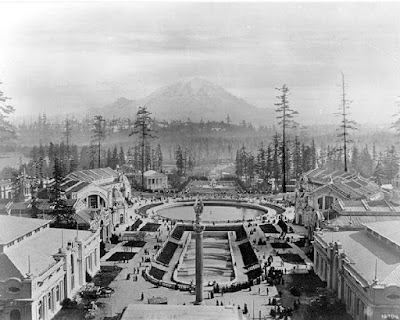
Many are aware that the Space Needle in Seattle, Washington, was built for Century 21 Exposition held in 1962. But did you know that the city also held the Alaska-Yukon-Pacific Exposition in 1909?

Alaska-Yukon-Pacific Exposition - Rainier Vista
Publica Domain, Wikipedia Commons
Seattle’s first world’s fair ran from June 1 to October 16 on the University of Washington campus, and the school later inherited some of the buildings established for the expo. The event involved participants from all over the world and drew over three million visitors.

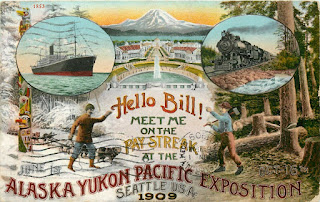
The Pay Streak

In keeping with the fair’s Klondike theme, the midway was called The Pay Streak. Fairgoers enjoyed a variety of games and thrills, including a Ferris wheel, an “amusement” dubbed the Temple of Mirth, and a ride called the Haunted Swing.

Postcard used to promote the exposition.
Public Domain. Postcard for sale on eBay.


While visiting the Pay Streak, some were shocked by the recreated Igorrote Village, populated by natives from the Philippine island of Luzon. Reputed to be headhunters and dog-eaters, the Igorrotes engaged in dances, spear-throwing contests, and cloth weaving. When the loincloths worn by men and boys became a moral issue, a reverend and a respected judge were assigned to investigate. They determined the loincloths were native dress and not intended to titillate.

There were opportunities to purchase a variety of souvenirs and refreshments. But alcohol was not an option because a state law forbade the sale of liquor on any university campus. If anyone wanted a drink, they had to take a streetcar into downtown Seattle. That law possibly contributed to the low numbers of crime and disturbances reported on the fair grounds.

Some Interesting Sights at the Expo

The California Building was designed in the style of a Spanish mission. It contained a life-size elephant created out of walnuts, an almond cow, and a bear made from raisins. Hawaii showcased a thirty-foot-high pyramid of coconuts and pineapples. The forestry building was built out of wood and actual tree trunks. Alaska’s exhibit awed visitors with a heavily guarded display of gold dust, nuggets, and bricks said to be worth a million dollars. The case descended into an underground vault at night.

Attendees could watch risqué exhibitions at the Streets of Cairo and the Klondike Dance Hall. These two venues were known to be frequently shut down by the morality enforcers at the expo.

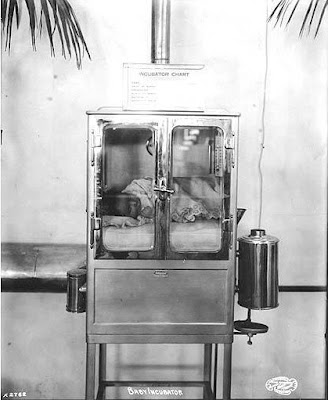
Baby in an incubator, Alaska-Yukon-Pacific expo, Seattle, WA 1909;
Public Domain, Wikipedia Commons

The baby incubator exhibit drew a lot of attention from both fairgoers and the press. News reporters focused on the wide-ranging ethnicities of the infants displayed. By July 18, 1909, The Seattle Daily Times reported American, English, Indian, Italian, Swedish, Syrian, and Russian children had been placed in the expo’s incubators.

But not everyone was convinced that all were premature or orphans as claimed. Although babies were reported to have been adopted during the fair, some of the infants appeared too large to be premature, and a childcare facility was placed next to the exhibit where parents could drop off their children to be cared for by nurses while the adults enjoyed touring the fair.

A Fascinating Event

I first became aware of the Alaska-Yukon-Pacific Expo while watching a PBS special, and I was immediately intrigued. My historical romance, With a Trusting Heart, is the result of traveling back to 1909 through research and imagination. More about this fascinating event is revealed in my story, but I won’t share any spoilers here!

Have you ever attended a world’s fair? If so, what did you find most interesting? If not, what would entice you to go—new technology, amusements and food, the exhibits from around the world, or the entertainment?

Dawn Kinzer writes fiction because she believes in the power of story to comfort, challenge, and inspire. Her work has been published in various devotionals and magazines. Dawn’s historical romance series, The Daughters of Riverton, takes place in the early 1900s. The setting and some of the characters were inspired by her rural Wisconsin hometown. Her two contemporary romances, By All Appearances and A Night Divine, are set in the Seattle area where she currently resides. A mother and grandmother, Dawn lives with her husband in the beautiful Pacific Northwest. Please visit her website at https://www.dawnkinzer.com/ to learn more.


With a Trusting Heart

The 1909 Alaska-Yukon-Pacific Exposition is taking place in Seattle when Lizzie Clark accepts a position at an orphanage in the city. After suffering heartbreak and loss, she's determined to make a life for herself independently. A newborn is left at the orphanage with a note asking Lizzie to take care of him. Why did the woman abandon her child? And why is Jack Butler, a handsome local farmer, so interested in helping Lizzie search for the infant’s mother? When shocking revelations disrupt their plans, Lizzie and Jack are faced with life-changing decisions. Will they open their hearts to trusting again?

This story is inspired by events that took place at the 1909 Alaska-Yukon-Pacific Expo—Seattle’s first world’s fair. The book will be available on February 16 in both ebook and paperback. To pre-order the ebook now, go to:https://www.amazon.com/Trusting-Heart-Dawn-Kinzer-ebook/dp/B09PJTH1HV/


Sunday, November 7, 2021

History of the Great Smoky Mountains National Park

By Michelle Shocklee

Growing up in Santa Fe, New Mexico, the Sangre de Cristo mountain range was practically in our backyard. I spent many glorious days hiking and exploring the Rocky Mountains with family and friends. When I married a Texan in 1987, trips to the mountains became infrequent but my love for them has never waned. Now that we live in the Nashville area, the beautiful Blue Ridge Mountains are just a few hours away. Yay!

Me near the Walker Sisters Cabin

Like me, most people probably don't think about the history of a national park when they visit one. We're too busy enjoying the fruits of someone else's labor and ideas. Such was the case when hubby and I visited the Great Smoky Mountains National Park for the first time back in the fall of 2018. I had no idea how many people were involved in its creation, as well as how much money and how many years it took for the plans to be approved. There was also quite a bit of controversy and many opponents to overcome before the park could become what we know it as today. 


The history of the land:

The Great Smoky Mountains are the former homelands of the Cherokee. Over time, white settlers arrived and the native people were forced to relocate, sadly taking part in what would become known as the Trail of Tears, a series of forced displacements of approximately 60,000 Native Americans from five tribes across the country between the years 1830 and 1850. 

Clearcutting in Tennessee, 1936
U.S. National Archives & Records Admin.
It didn't take long for logging to become a large industry in the area. By the early 20th century, however, people began to realize that clearcutting--the logging practice in which most or all trees in an area are uniformly cut down--was destroying the forest's natural beauty. 

The People:

Ann Davis is credited for suggesting a National Park in the Smokies when she and her husband Willis returned from a trip visiting several Western national parks in 1923. This started discussion of the idea with leaders in the area, especially around Knoxville. 

One key leader, Colonel David Chapman, played a leading role in the tough battle to bring the park idea to fruition, especially on the Tennessee side of the park. Chapman, president of a Knoxville drug company, became totally committed to the park movement and dealt successfully with multiple obstacles such as opposition from park opponents, lack of funding for land purchase, and controversial condemnation actions. As chairman of the Great Smoky Mountains Conservation Association, he was the Tennessee leader for the park campaign and developed close relationships with parties in both Tennessee and North Carolina working toward creation of the national park. 

Paul Fink, Horace Kephart, George Masa, and others were also instrumental in their work as advocates for the park. The group began raising private funds to help the cash-strapped National Park Service acquire land. John D. Rockefeller contributed $5 million, with the US government adding $2 million. Congress finally authorized the project in 1926. 

I took this picture of the Walker Sisters cabin after hiking
a couple miles to it, deep in the mountains.
 
Saying Goodbye:

Buying the land proved difficult, even with the money in hand. Some 6,000 small farms, large tracts, and other miscellaneous parcels had to be surveyed, appraised, dickered over and sometimes condemned in court. The timber and paper companies had valuable equipment and standing inventory, which required compensation. Some mountain homesteaders, like the Walker Sisters, were given lifetime leases to remain on their property, although they couldn't hunt, log, or farm on it. Everyone else was evicted. 


The park today:
 I couldn't get over the vibrant colors, even on a cloudy day!

Today, the park occupies 522,419 acres of gorgeous, well-preserved land in two states--Tennessee and North Carolina. It boasts two visitors' centers, miles and miles of hiking trails, historical buildings, waterfalls, lakes, and recreation areas. The well-maintained roads take you through some of the most beautiful scenery I've ever seen, especially during the fall. 

So next time you visit a national park, whisper a little thank you to all the folks who played a role in creating it. 


Your turn: What is your favorite National Park you've ever visited? Tell me about it!


Michelle Shocklee
is the author of several historical novels and is a Christy Awards and Selah Awards finalist. Her work has been included in numerous Chicken Soup for the Soul books, magazines, and blogs. Married to her college sweetheart and the mother of two grown sons, she makes her home in Tennessee, not far from the historical sites she writes about. Visit her online at www.MichelleShocklee.com


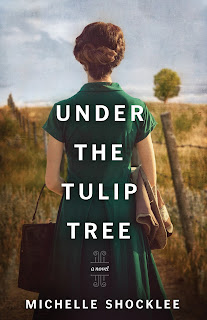
UNDER THE TULIP TREE
*2021 Christy Awards Finalist*

Sixteen-year-old Lorena Leland’s dreams of a rich and fulfilling life as a writer are dashed when the stock market crashes in 1929. Seven years into the Great Depression, Rena accepts a position interviewing former slaves for the Federal Writers’ Project. There, she meets Frankie Washington, a 101-year-old woman whose honest yet tragic past captivates Rena. Frankie’s story challenges Rena’s preconceptions about slavery, but it also connects the two women whose lives are otherwise separated by age, race, and circumstances. Will this bond of respect, admiration, and friendship be broken by a revelation neither woman sees coming?

For purchase options, visit www.MichelleShocklee.com


Saturday, June 5, 2021

EP Ranch Royal Visit 1923

by Anita Mae Draper

Prince of Wales riding Midnight at EP Ranch, Pekisko, Alberta. Sep 1923. Glenbow Archives

The 1923 photo above shows Edward, Prince of Wales, riding Midnight at the Edward Prince (EP) Ranch in southwestern Alberta, Canada. Edward bought the ranch in 1919 as a place to relax away from the limelight. Note that Edward is using a western saddle with a high horn that cowboys and ranchers use, rather than his usual smaller, lighter english saddle.

As heir to Britain's royal throne, there were certain expectations of Edward's time, and gallivanting off to play cowboy was not one of them. However, he managed to get back for a visit in 1923 to attend a public sale of his improved ranch stock, which turned out to be a huge publicity event from the moment he arrived.

Crowd at EP Ranch, Pekisko, Alberta, to greet Prince of Wales. Sep 1923. Glenbow Archives


Being friends with George Lane, founder of the Calgary Stampede, and other ranching dignitaries, helped Edward meet many of the rodeo celebrities including Pete Vandermeer, Canadian champion bronc buster, shown here receiving an award from Edward who appears to be enjoying the occasion. 

Prince of Wales presenting an award to Pete Vandermeer at EP Ranch, Pekisko, Alberta.

Another Stampede champion, the great Guy Weadick, is shown teaching trick roping to Edward while at the EP Ranch. 

Guy Weadick teaching Prince of Wales to do trick roping, EP ranch, Pekisko, Alberta. Sep 1923


Although Edward could probably drive a buggy without assistance, his ranch training involved driving a team of horses and a hay wagon without a seat, padded or otherwise.

Prince of Wales driving team of horses at EP ranch, Pekisko, Alberta. 1923. Glenbow Archives


With haying in full swing, Edward climbed aboard the stacker for a turn. Newspapers reported that the Prince of Wales wanted to experience everything about the running of a ranch starting with the most menial jobs.


Haying at EP Ranch, Prince of Wales on Stacker. Sep 1923. Glenbow Archives

As the owner, Edward could have stood back and let his manager and ranch hands do the manual labour, but it would have robbed him of the satisfaction he received working with land that he'd personally chosen and paid for without it being part of an inheritance or gift. 

Edward, Prince of Wales helping build a corral, EP Ranch. ca. 1923. Glenbow Archives

Love those knickers!

Stay tuned for my next post on the EP Ranch as we see what happens when Edward shows up for his 1924 visit. 
 
If you missed it, the first post in this series starts with Alberta's Edward Prince Ranch.


~~~~~~~~~~~~~~~~~~~~~~~~~~~~~

Anita Mae Draper lives on the Canadian prairies where she uses her experience and love of history to enhance her stories of yesteryear's romance with realism and faith. Readers can enrich their story experience with visual references by checking Anita's Pinterest boards. All links available on her website at www.anitamaedraper.com


Wednesday, April 7, 2021

Rose Livingston: The Angel of Chinatown

By Michelle Shocklee

My last two posts here on the blog have been about strong, courageous women who spent most of their lives helping to free girls and women caught in the dark underworld of prostitution. Josephine Butler lived in England in the late 1800s, and Katharine Bushnell was her American counterpart. The topic of forced prostitution isn't pleasant, yet sadly it remains relevant in 2021. Human trafficking continues to be a world-wide problem that involves millions of victims. 

Rose Livingston, circa 1913
In the early 1900s, young girls and women were being abducted and forced into prostitution in terrifying numbers. The courageous woman I'll share about today wasn't on onlooker who wanted to help. Rose Livingston was actually one of the victims. 

It's believed Rose was only ten years of age when she was taken from her home and transported to New York City's notorious Chinatown, an area known for prostitution and opium dens. There, she would become forcibly hooked on opium. The man who held her captive sexually abused her, and by the time Rose was sixteen, she'd given birth to two children. 

But unlike thousands of young women, then and now, Rose was rescued from the horrors she'd endured. A missionary, a person very much like Josephine and Katharine, learned of Rose's situation and helped her escape. With the help of her rescuer, her addiction to drugs came to an end. She was also introduced to the Christian faith. 

Rose Livingston dressed as a man

Rose could have walked away and tried to forget the nightmare she'd been forced to live, but she didn't. She knew she had to help others, in the same way she'd received help from the missionary. Rose became one of the most well-known and vocal opponents of prostitution and sexual slavery in New York City as well as other cities like Boston and Chicago. She often dressed as a man in order to gain entry into brothels, dance halls, and opium dens late into the night, seeking pre-teen girls who needed rescuing. She would befriend them, gain their trust, then help them escape.


Like Josephine Butler, Rose gained many enemies, including men involved in "white slavery" in Chinatown. While Josephine was never physically attacked, Rose endured many beatings as she worked to rescue young women. One beating left her jaw and face permanently injured. At one time, she was even shot.

Rose took the fight to the lawmakers and helped the Mann Act pass, an act named after Congressman James Robert Mann of Illinois. The act made it a felony to engage in interstate or foreign commerce transport of "any woman or girl for the purpose of prostitution or debauchery, or for any other immoral purpose". 

Rose became known as the "Angel of Chinatown." Upon rescuing a young girl, she would then work to help the victim recover the life they'd lost, or build a new one. She was also involved in the Women's Suffrage movement, believing that if women had the vote, more changes would come to improve women's lives. 

Although she was quoted as saying that she was still involved helping girls in 1950, she retired after 1937 and received a pension of $100 per month. She was cared for by neighbors who helped her obtain a supplemental Social Security pension and did chores for her. She particularly needed help once she started to lose her sight. She died on December 26, 1975 at 99 years of age. A rabbi conducted a Jewish service for her, and her friend, an Irish-Catholic, arranged for a mass in her memory.

The fight continues today, in 2021. I hope that by reading Rose's story, each of us looks deep within to find out how we can help bring freedom to victims all around the world. 

Will you join me in praying for them?


Michelle Shocklee is the author of several historical novels. Her work has been included in numerous Chicken Soup for the Soul books, magazines, and blogs. Married to her college sweetheart and the mother of two grown sons, she makes her home in Tennessee, not far from the historical sites she writes about. Visit her online at michelleshocklee.com.


UNDER THE TULIP TREE
*2021 Selah Awards Finalist*


Sixteen-year-old Lorena Leland’s dreams of a rich and fulfilling life as a writer are dashed when the stock market crashes in 1929. Seven years into the Great Depression, Rena’s banker father has retreated into the bottle, her sister is married to a lazy charlatan and gambler, and Rena is an unemployed newspaper reporter. Eager for any writing job, Rena accepts a position interviewing former slaves for the Federal Writers’ Project. There, she meets Frankie Washington, a 101-year-old woman whose honest yet tragic past captivates Rena.

As Frankie recounts her life as a slave, Rena is horrified to learn of all the older woman has endured—especially because Rena’s ancestors owned slaves. While Frankie’s story challenges Rena’s preconceptions about slavery, it also connects the two women whose lives are otherwise separated by age, race, and circumstances. But will this bond of respect, admiration, and friendship be broken by a revelation neither woman sees coming?

https://www.amazon.com/Michelle-Shocklee/e/B01MYD4TRE/ref=sr_ntt_srch_lnk_1?qid=1486004955&sr=8-1


Sunday, March 28, 2021

Crafts of Olden Days – with Giveaway By Donna Schlachter


Neolithic Gold Bead by Mark Cartwright


Crafting is a creative process that has occupied humans for many years. Depending on the social and financial situation of the crafter, they might produce an item solely for use, such as knitted socks, a clay jar to carry water, or a wooden tool or implement such as a wheelbarrow or a chisel. When societies had solved most of their day-to-day problems such as gathering or producing enough food and water, or providing sufficient clothing and shelter, they might turn their attention to producing items used more for decoration or demonstration of status, such as embroidery, decorative wood carving, and jewelry.

The earliest stage of crafting began with early man as every object needed had to be made by hand. Without automation, this could often be tedious and labor-intensive. Consider that to knit socks, they first had to raise sheep or have access to the wool. Then somebody had to spin it, perhaps dye the wool, before the knitter actually sat with needles and a pattern in hand.

Oh, wait. No patterns. At least, nothing officially published, at least not until the early 19th century. Before that, patterns were passed along and passed down by word of mouth or perhaps on scraps of papyrus or eventually paper. 
AdobeStock_337225572

 
Decorative and household items have been found as early as 6500 BC, and each culture had its own unique style and process, using raw materials readily available, such as types of clay, gemstones, wood types, and metals. By far, gold is the most widely used metal, and as metallurgy advanced, bronze (the mixing of copper and tin) became widespread.

As sea travel advanced, sailors often returned home with samples from other people groups, spreading the styles and processes all over the world. Around 1000 BC, the Phonecians brought crafts from the English isles back to the Mediterranean, while sharing their own processes with the Brits and Celts.

During the Renaissance period, crafting moved from necessity to decoration. Folks specialized in particular crafts, including metal work, jewelry-making, clay work, needlework, and the like. The wealthy often employed craftsmen and craftswomen whose sole job was to do what they were best at. Unions and groups formed that regulated what the craftspeople could do, often testing them to determine their level of skill. It is here we see apprenticeships and journeymen and master designations important in controlling the craftspeople and setting appropriate prices.
 AdobeStock_304644039

In the Industrial Revolution, machines were designed to replicate the manual skills in areas such as weaving, carving, woodworking, beadwork, in response to the increased population’s demand for products.

As mentioned before, in the early 1800s, patterns were published for common products such as knitted items, dresses, and needlework. Near the 1900s, manuals and instruction books became popular as most families no longer employed craftspeople, and producing craft items became indicative of leisure and free time.

Regardless of the reason—to produce something useful or beautiful or both—creativity is a trait we share with our ancestors, which shouldn’t surprise us, since we are made in the image of a creative God.

Giveaway: leave a comment, and I will randomly draw one winner of a tin-punch kit. Include your email in this format: email AT server DOT extension. For example, donna AT historythrutheages DOT com

About Donna:

Donna writes historical suspense under her own name, and contemporary suspense under her alter ego of Leeann Betts, and has been published more than 30 times in novellas, full-length novels, and non-fiction books. She is a member of ACFW, Writers on the Rock, SinC, Pikes Peak Writers, Capitol Christian Writers Fellowship, Christian Women Writers, and Christian Authors Network; facilitates a critique group; teaches writing classes; ghostwrites; edits; blogs regularly for Heroes, Heroines, and History; and judges in writing contests. www.HiStoryThruTheAges.com


Resources:

https://www.ancient.eu/crafts/

https://www.marthastewart.com/7839594/historical-origin-of-craft-techniques

https://www.pinterest.com/dmtamari/pioneer-crafts/


Wednesday, January 20, 2021

Wild West Sayings Still Used Today, Part 20


Wild West Sayings Still Used Today 

In the Wild West, there were lots of colorful ways to describe an angry person. I’ve selected three that are familiar to us today. All liken anger to animal behavior. Can you guess which is most popular? 


This post is brought to you by Janalyn Voigt.

Mad as a March Hare 


Every once in a while, a wild hare wanders into my yard and hops about, nibbling at foliage. If something startles the hare, it scurries into hiding. It’s hard to think of such a timid creature in a rage. And yet, someone who is ‘mad as a march hare’ is furious.

Ah, but in March begins the hares’ mating season. A female hare weary of being pursued is likely to fend off a persistent suitor in a ferocious boxing match.

Historical References: In 1529, The supplycacyon of soulys by English scholar Thomas More contained the following passage: “If that man were not for malyce as mad not as marche hare but as a madde dogge that rūneth forth and snatcheth he seeth not at whome: the felowe could neuer elles wyth suche open foly so sodenly ouer se hym selfe.” The concept of a hare in March as being ‘mad’ or ‘merry’ existed earlier in this century, but this quote contains the phrase as we use it today. If it’s hard to puzzle out, here’s a translation: If that man weren’t mad, not as a march hare but as a mad dog that runs and snatches at someone not visible, he could never be so foolish as to make such blunders.

The most famous March Hare appeared in Alice's Adventures in Wonderland by Lewis Carroll: "The March Hare ... as this is May, it won't be raving mad - at least not so mad as it was in March."

Example: It made me mad as a March hare when the wind knocked over the scarecrows that it took hours to put up.

Mad as a Hornet


If you’ve ever been stung or pursued by hornets, as I have, you need no interpretation of this idiom. Unlike bees, hornets don’t die after stinging a person and can attack multiple times. Perhaps this is why we speak of bees as busy and hornets seem mad to us. In reality, hornets only sting when they feel threatened.

Historical Reference: The word ‘mad’ began to mean ‘angry’ in the 1300s. ‘Mad as a hornet’ emerged as an idiom in America in the early half of the 1800s.

Example: The trick he played on Sadie made her mad as a hornet.

Madder than a Wet Hen


It isn’t hard to picture a wet hen in a something of a flap (pun intended). 

Historical Reference: This phrase, also an American original from the early 1800s, may refer to a trick used by farmers to rouse hens from broodiness. Apparently, that involved dunking the poor creatures into a barrel of water. As you might imagine, much indignation ensued.

Example: Grandma was madder than a wet hen when the cow got into her corn.

Did you guess? Mad as a hornet is the most popular Wild West saying still in use from the above list. What are some other colorful and slightly humorous ways to describe an angry person?

About Janalyn Voigt


Janalyn Voigt fell in love with literature at an early age when her father read chapters from classics as bedtime stories. When Janalyn grew older, she put herself to sleep with tales "written" in her head. Today Janalyn is a storyteller who writes in several genres. Romance, mystery, adventure, history, and whimsy appear in all her novels in proportions dictated by their genre. Janalyn Voigt is represented by Wordserve Literary.

Learn more about Janalyn, read the first chapters of her books, subscribe to her e-letter, and join her reader clubs at http://janalynvoigt.com.

Montana Gold Series

Based on actual historical events during a time of unrest in America, the Montana gold series explores faith, love, and courage in the wild west. Note: Hills of Nevermore is now available as an audiobook with the rest of the series to follow.

Saturday, December 5, 2020

Christmas Board Games

by Anita Mae Draper


Game of the Visit of Santa Claus, 1898. Courtesy, American Antiquarian Society.

Board games of the Christmas season seems the best way to complete my series on this fun way to pass leisure time. As noted in previous posts (listed below) the creation of the chromolithograph process ushered in a wonderful plethora of brightly colored printed material for board games and puzzles as well as books.

In 1898, the McLoughlin Brothers continued their winning streak of colorful board games with Game of the Visit of Santa Claus. 

Game of the Visit of Santa Claus, 1898. Courtesy, American Antiquarian Society.

Parker Brothers, another publisher of board games, had come out with their own version of a Christmas board game the year before, however they chose to feature food of the holiday celebration instead of the Santa Claus aspect.


In 1900, McLoughlin Brothers released another Christmas board game, this time featuring the outdoor sport of tobogganing which was all the rage at the time. This game is a version of the popular Snakes and Ladders game, but instead of reptiles, you're sliding down a toboggan run. 


A few years later, circa 1904, McLoughlin Bros. published another Santa game, this time with the jolly old man behind the wheel of an early model automobile. Although this game would have been great using the infinity track in the Visit with Santa Claus game at the top of this post, the actual game features a checkerboard-type game board.


Finally, in 1923, Parker Brothers published the Christmas board game I most want to play, The Journey to Bethlehem. According to my research, the playing pieces in this game feature 3D renditions of 3 Magi and 3 Shepherds. As well, it mentions over 150 Biblical references as the players traverse to Bethlehem. 


Of course, many other games of the Christmas season have been published in the past 100 years, with varying degrees of fun and skill. 

Do you have a favorite Christmas board game?

Other posts in my puzzles and game boards series can be found here:
Nov 5, 2020 - Teetotum or Spinner
Aug 5, 2020 - Carom and Crokinole
June 5, 2020 - Virtue Board Games


~~~~~~~~~~~~~~~~~~~~~~~~~~~


Anita Mae Draper served a 20-year term working on air bases in the communication trade of the Canadian Armed Forces before retiring to the open skies of the prairies. She uses her experience and love of history to pepper her stories of yesteryear's romance with realism and faith. Anita Mae Draper's published stories appear in Barbour Publishing, WhiteFire Publishing, and Guideposts Books. Readers can enrich their story experience with visual references by checking out Anita's Pinterest boards. All links available on her website at www.anitamaedraper.com 


Saturday, September 19, 2020

The End of the World in 1910—Halley’s Comet

The End of the World in 1910—Halley’s Comet 
by Susan G Mathis

In February 1910, astronomers announced that the Earth would pass through the cyanogen-laced tail of Halley’s Comet. Poisonous gas, Cyanide, would snuff out all life and end the world as they knew it on May 19, 1910!

The New York Times ran the story of the French astronomer Camille Flammarion’s theory which reported that poisonous gas, Cyanide, would snuff out all life and destroy the earth! Most astronomers in the scientific community rejected this theory but thanks to this article, the frenzy had begun.

Fearmongering. Sound like today? 

The yellow press took advantage of the people’s concerns and fed on their fears—and papers flew off the shelves creating more and more fear, even suggesting the comet might crash into the earth and obliterate it. People feared for their lives and went into hiding. 

People bought “comet pills” and gas masks. Telescope sales rocketed; at least if they were going to die, they might as well see something wonderful. Newspapers, drug dealers, and gas mask makers got rich, but the terror that was instilled in many cast a pall on the world for several terrible months. 

On May 19, 1910, Halley’s Comet spent six terrifying hours passing through our atmosphere. One Oklahoma group actually planned to sacrifice a virgin to appease the gods, but thankfully they were stopped. A man in California nailed a hand and his feet to a cross. Churches around the globe held prayer vigils.

But the comet came and went and nothing happened. No one got sick. No one died—except England’s King Edward VII. This led to superstitious Britons connecting the two events for generations. Later, few of these crooks were held to account for their fraud, and it was discovered that the anti-comet pills were merely quinine and sugar. 

In my latest novel, Devyn’s Dilemma, Devyn and the Bourne family live through these events, buying a telescope and viewing Halley’s Comet for themselves. Check it out here: https://www.amazon.com/Devyns-Dilemma-Thousand-Islands-Gilded/dp/1645262731
What more would you like to know about Halley’s Comet? 
Leave your answer or comments on the post below and join me on the 19th for my next post. 


About Susan: 

Susan G Mathis is an award-winning, multi-published author of stories set in the beautiful Thousand Islands, her childhood stomping ground in upstate NY. Her first two books of The Thousand Islands Gilded Age series, Devyn’s Dilemma and Katelyn’s Choice are available now, and she’s working on book three. The Fabric of Hope: An Irish Family Legacy, Christmas Charity, and Sara’s Surprise are also available. Visit www.SusanGMathis.com for more.


Lighthouse Publishing: https://shoplpc.com/devyns-dilemma

Amazon: https://www.amazon.com/Devyns-Dilemma-Thousand-Islands-Gilded/dp/1645262731 

Website: www.SusanGMathis.com

Facebook: https://www.facebook.com/SusanGMathis

Twitter: https://twitter.com/@SusanGMathis

Instagram: https://www.instagram.com/susangmathis

Pinterest: https://www.pinterest.com/susangmathisaut