Showing posts with label Wisconsin history. Show all posts

Tuesday, November 29, 2022

Wisconsin's Great River Road, an Historical "Wander"land for Setting a Story (and a Mini-Library Giveaway!)


Some weeks ago I asked friends to help me choose a town in which to set a new novel. The parameters were that it had to be a town along Wisconsin's 412 mile Highway 35 State Trunk Tour. More that half that distance is known as Wisconsin's Great River Road, a 250-mile stretch of highway 35 that runs adjacent to the Mississippi River. Along that section alone there are 33 communities from which I could choose. 

Friends offered some really good suggestions for town choices, along with reasons why I should select each one. I'm starting to narrow it down, but I've yet to decide because my jury--the little people that live in my head--are still out to lunch on a couple of questions. In the meantime, I'll share a little bit about Highway 35 and that amazing River Road voted "Prettiest Drive in the U.S".

Looking north along the Great River Road, limestone bluffs rise prominently to the right, and vistas of Minnesota stretch out on the opposite side of the Mississippi.

The famous drive begins in the southwest corner of Wisconsin, in the unincorporated town of Keiler, just a short bicycle ride from the Iowa border near Dubuque. The section known as the Great River Road ends up north at tiny Prescott, Wisconsin, one of the oldest of Wisconsin's river towns, settled all the way back in 1839 (although communities existed all the way back to the 1600s). If you continue your state trunk tour northward to follow 35 along the St. Croix River, you come upon more small towns tucked away in the vast woods. So many lovely locations! How will I ever choose?

There are endless places to stop and take in the beauty of the Mississippi shoreline.

HISTORY IS ALIVE ALONG THE ROUTE!

The River Road is the path of the explorers, fur traders, immigrant settlers, lumber barons, soldiers, river boatmen, and adventurers of every ilk. Ancient cultures who lived along the river have left behind huge effigy mounds in the shapes of animals and birds. Here on this route, battles between native factions turned the rivers red, while not long after, fortune-makers built mansions in the bluffs, farms were carved out of the woodland, and area towns expanded. 

Laura Ingalls was born along what would become the Great River Road, and those who love the Little House stories can visit a recreation of the little cabin in the big woods where she was born just outside of Pepin.

Birthplace of Laura Ingalls Wilder, Pepin, Wisconsin

Prairie du Chien, at the junction of the Mississippi and Wisconsin Rivers is home to a big part of Wisconsin's early fur trade and was also the important post where both Britain and France sought to control that trade. Jefferson Davis commanded the fort there before he became the leader of the confederacy during the Civil War, and the Sauk war chief Black Hawk surrendered there after the Black Hawk War of 1832. 


The fort surgeon, William Beaumont, is credited to conducting groundbreaking medical experiments at Fort Crawford, and a museum there has three buildings dedicated to medical history. Also, every year, a great voyageur rendezvous is re-enacted at Prairie du Chien.

There are stories along this route of an Indian maiden who leapt to her death when forced to marry a man she didn't love (Maiden Rock), and of rum-runners and bootleggers. There are also stories of the homes built by Wisconsin's first millionaire and our first governor. 
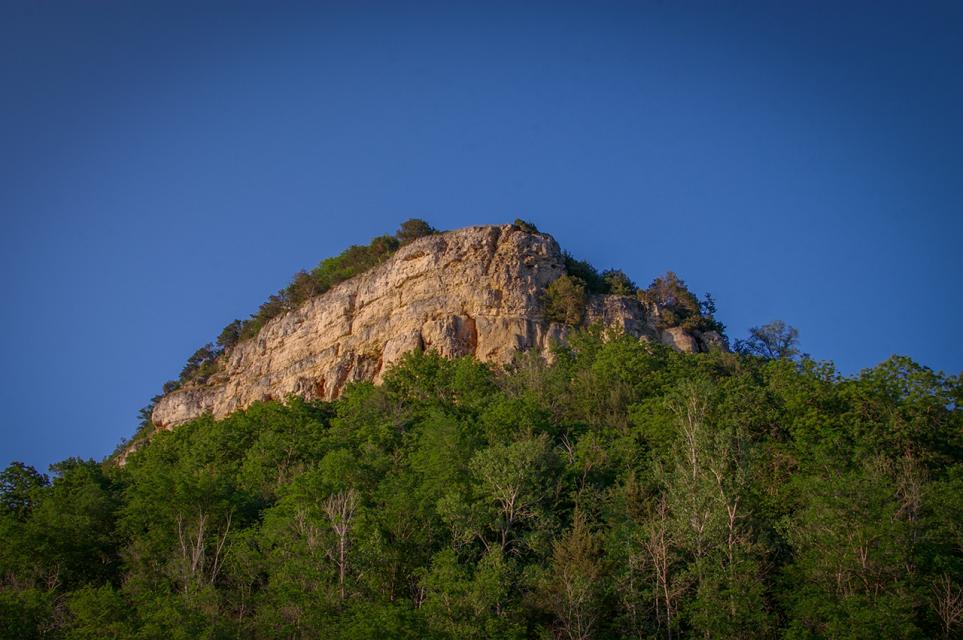
Maiden Rock

But this is just a nibble at what there has been to discover since the route became known as the Great River Road way back in the 1930s.

THE BEGINNINGS OF THE SCENIC BY-WAY

The Great River Road is actually a series of roads and byways that that follow the course of the Mississippi through ten states total. An act of Congress in 1924 established the Upper Mississippi River National Wildlife Refuge. Then a Lock and Dam system built in the 1930s resulted in the beautiful pools and channels we see today. As automobile travel increased throughout the twenties and into the thirties, Wisconsin saw a need to improve the road from the deep, muddy ruts that existed along the Mississippi into something that would attract the new crop of driving tourist. Then, when the Great River Road received it's national title in 1938, each state gave the road its own commission. When I look at old pictures from that time (sorry, I can't share them due to copyright!) they remind me of scenes from the television show The Waltons, as they drove along those scenic dirt roads. Then I see pictures of ruts so deep with wet mud, I have to wonder how how they ever turned them into roadways.

Nevertheless, one of the reasons I want to set a story along this route is because most of those towns remain tucked into the coulees and bluffs almost unnoticed, like little mountain hamlets. Here are two videos that are fun to watch. One is just a brief overview of the beauty of the route. They should have filmed it a little later to get the true fall colors.

Beautiful Vistas!

A "SightseeingSally" video @SightseeingSally on Youtube which gives a tour of Alma, Wisconsin, a town with unique history.

The little town of Alma in the above video is definitely in the running for the setting of my next book. A couple of reasons being that while it's a town of under 800 people, most of it's buildings are on the National Historic Register. It also has a number of interesting "streets" that are actually stairways. And the views! Such vistas! Watch the video, and try to imagine what it might've been like in 1920, before paved roads, traffic, and a lot of power lines.


Have you driven sections of the Great River Road in any of the ten states it covers? Have you taken this scenic Wisconsin tour?

I wish you a blessed holiday season.
Please take this opportunity to enter to win a sweet historical, mini-library!
The drawing is for paperbacks of seven books by seven authors. However, if you're not in the continental U.S., the authors will send ebooks to the winner.


Wednesday, September 29, 2021

The 150th Anniversary of America's Deadliest Fire - Peshtigo

I often write stories that involve lumberjacks. It comes with the territory of being a writer growing up among Wisconsin's woods and loving to explore my state's history. The long, tough job of lumberjacking coupled with the living conditions and the growth of the industry through state history, make for great story lines and, of course, interesting heroes.

Lumberjacking is still alive and well, although of course it now involves specialized big machinery and technology, not to mention, nowadays lumberjacks--or loggers, as we simply refer to them these days--go home to their own beds every night. They no longer spend their winter nights stacked like cordwood in bunkhouses surrounded by a crew of snoring men, their bedding crawling with lice, and the malodorous scent of crusty wool socks steaming around the wood stove. Eek!

While I love the historical details about life in the by-gone lumberjacking eras, there was also a very sweeping and tragic event that occurred at that time in Wisconsin history. That was the firestorm of October 8, 1871. The day of the Great Peshtigo Fire.

Have you heard of it? Very possibly not. Yet:


The fire was named for a tiny lumbering community in the northeast corner of Wisconsin. Peshtigo, a village of 2000 permanent residents, surrounded by forests and smaller communities of Native peoples and immigrants, was built on the forest products industry. Home of one of the nation's largest sawmills, the reverberating whine of the great buzz saw rarely quieted. The huge woodenware factory turned out mountains of goods from buckets to broom handles and every other imaginable wooden item useful for the home. Because of the plentiful supply of trees (the story goes that a squirrel could run all the way to Michigan without leaving the branches to touch the ground) everything was built of wood, from houses with their wooden shingles, to the corduroy roads and wooden sidewalks underfoot. Sawdust was piled everywhere and used for everything from packing down the mud in the street to stuffing mattresses. And the forest pushed right up against the town. To the west lay miles of thick hardwoods called The Sugarbush. 

A river ran through town--the Peshtigo River. Like hundreds of other rivers up north, it was used to carry logs to market. The previous year had been a dry one, and the drought extended into 1871. The Peshtigo was low, as were all the other rivers. Some wells had gone dry. Meanwhile, logs were piled high along the banks, waiting for the time when rain would fall and they could finally be sent downstream. But that day didn't arrive.

Lumberjacks had been used to clearing forest and burning the brush left behind. Railroad construction crews did the same thing. Likewise, the farmers burned stumps and brush when clearing the land to put new fields to the plow. It wasn't uncommon for some of those brush fires to be left unattended to burn themselves out. But during the early fall of 1871, a recipe for disaster awaited.

A low-pressure front from the west rushed in. The season, along with being very dry, was also very warm--unusually warm for northern Wisconsin. But as the low pressure system met the hot air and rose to cool, it created hurricane-force winds which caught those flagrant sparks and fanned them, conflagrating into a firestorm described as nature's own nuke. Raging at 110 mph, temperatures inside the whirlwind reached as much as 2000 degrees. Goodness! I can't even imagine it!

The fire swept through forest and farmland and finally Peshtigo, decimating everything in its path. Trees and buildings went up like roman candles. Fireballs sailed through the air. The air was so hot, and the monster so intense, people fleeing in its path had difficulty opening their eyes. Their clothing caught fire, their hair, their wagons. Some ran toward the river, while others ran away from it. Many couldn't escape. The noise was like a thousand trains, while actual trains were tossed into the air and their steel wheels melted. It was chaos. Most horrific were the stories of human spontaneous combustion.


By the time the fire was over, 1.2 million acres had burned, an area 50% larger than Rhode Island. The fire ate through sixteen other towns, but Peshtigo and the nearby area suffered the worst. The city was gone in about an hour, and nearly half the population of the city lost their lives. In all, estimates are that between 1500 and 2500 people died in the Great Fire, though exact numbers are uncertain, as all records in the city were lost to the flames. Nothing remained.


Today, you can visit the Peshtigo Fire Museum, housed in a former church that stands next to a cemetery where some of the victims were buried. Nearby, a mass grave holds the remains of many others. 

But what may come as another surprise is that:


While the world focused on "the Great Chicago Fire" resources were rushed to aid, including everything from food to blankets sent by Wisconsin's governor to Chicago. Meanwhile, up north the world burned, but no one knew until about it until after the fact. Although six or seven times as many lives were lost up north, little attention was given to the huge fire because of its rural location. 

Yet the stories remain, and generations later, the souls lost there are remembered.

Next week, October 4-10, you can get my novel The Red Fury about that event on sale for .99c. Don't miss this story called "An absolute must-read!" (Review)


The Red Fury, Empire in Pine, Book Two


Peshtigo, Wisconsin ~ 1870
Spurned twice since the death of her true love, Lainey Kade has become the object of talk. To escape the gossip, she embarks on a journey that crosses her path with brothers Zane and Kelly Beaumont, Civil War veterans whose nightmares have never let them return home. She first pretends to be a married woman, but as the ties of their adventurous friendship tighten, Lainey denies love's rekindling spark. Now their attraction to Lainey may tear brothers apart, and as history’s deadliest fires rages toward them, Lainey may be burned by her own heart’s fury.


Thursday, July 29, 2021

When Pineries were the Most-Desired Real Estate and Lumber was King


In the 1800s, settlers flocked to the Midwestern prairies, some with more in mind than finding the richest soil capable of producing abundant crops. Men went in search of gold and silver, copper and ore, but it was the humble pine further north that became king of the most-desired resources. Everyone needed lumber, and pine was perfect for building homes, businesses, and furniture. It was straight-grained, easily worked, massive in quantity, and transportable by water due to its ability to float. This was important, because the pine lands—or pineries, as they were called—stretched from New England to Canada’s upper west along those long mighty waterways such as the Great Lakes chain, the Mississippi, and a thousand other important rivers and their tributaries. White pine soon became the treasure of the upper Midwest and later the upper Pacific regions of the far west.


Many major cities and towns in my state of Wisconsin were developed due to the discovery of vast pineries along tributaries that fed rivers such as the Wisconsin, the Black, the St. Croix, the Peshtigo, the Fox. They were cut and floated from the northern forests to the sawmills built enroute. Their lumber was sent on to places like Minneapolis, Chicago, and St. Louis.

Wisconsin’s first settlers came to the southern parts of the state to mine lead, and they had their lumber sent to them from the east at great cost. Soon, however, land speculators and timber cruisers discovered the best pineries up north. It must have been a very competitive process at times, as cruisers raced and even fought to lay claim to various tracts ahead of others. Then the lumberjacks arrived to begin the process of clearing out the mighty trees.


Of course, much of the land already belonged to the native tribes who dwelt among them, which led to further conflict.

Pineries lay thick throughout the forests of Michigan, Wisconsin, and northern Minnesota. By 1865, Michigan led the way in timber production among all the states. By the 1890s, Minneapolis ruled world lumber markets. Men who started out with little more than a dream and a land claim became lumber barons. Many a Northwoods community is dotted with old mansions built by these empire builders.

Fairlawn Mansion and Museum, Superior, WI - Built in 1891 by lumber and mining baron Martin Pattison, for his wife and six children.

Eventually the pine played out. A seemingly endless resource was indeed finite. Iron and copper mines took control of parts of the region, and farmers moved in to try and farm in those cutover areas. Yet even today the pine is harvested, though with much better management so that a future industry remains intact.

In my novel series Empire in Pine, I track the growth and climax of the Wisconsin’s lumber industry through the lives and adventures of three generations of women and the men who love them. Coming in February 2022, I along with three other authors celebrate another set of stories that feature lumberjack lore and romance. Lumberjacks & Ladies: 4 Stories of Romance Among the Pines is available for pre-order. In that collection, my novella called Not for Love is set—you guessed it—near the pineries!

In future months, I’ll talk more about the pineries, the lumberjacks, and the lumber barons here on Heroes, Heroines, and History. Please join me!

Lumberjacks and Ladies Work Together to Build America
Struggling to remain independent in the 1800s, four women reluctantly open up to help from lumberjacks—and love.


Don’t miss out on more details of new releases and life in the northwoods:

https://naomimusch.com/

Newsletter signup

Sunday, July 4, 2021

Meet Mr. Dairyland Himself--The Man Who Made Wisconsin "America's Dairyland" -- Also a giveaway!


By Pamela S. Meyers

Growing up in Wisconsin, for a long as I can remember, the license plate always included the slogan, “America’s Dairyland.” And it still does, unless a vehicle owner requests a specialty plate. I hadn’t given this much thought until I opened a recent newsletter from the Wisconsin Historical Society and saw an article regarding how the state of Wisconsin came to be known as the dairy state. 


William Dempster Hoard began life in New York State and had difficulty at first deciding on what to do with his life. He eventually settled on journalism and accepted a position as editor of the Jefferson County Union in Fort Atkinson, Wisconsin. At the time, the state was known as a wheat-producing state, but the yields were not very high. Back in his home state of New York, farmers had been able to reverse the downturn on their farms by raising dairy cows. Hoard purchased a small acreage he named “Hoard’s Dairyman Farm.” He then obtained a small herd of Guernsey dairy cows, whose milk was preferred because of its yellowish tint. Around 1900, he began selling milk from his herd, and by 1908, he was bottling all the milk the farm produced for customers in town. 

Backing up a bit, in 1872, he helped begin the Wisconsin Dairymen’s Association and advocated the idea of a one-purpose cow. A cow would either be raised to be a dairy cow or a cow raised for beef. One of the feeds he suggested for the health of the cows was alfalfa. In 1885, he began publishing an agricultural journal called Hoard’s Dairyman, which
is still published today in Ft. Atkinson.

In 1887, he acquired his county’s first purebred Guernsey named Bonnibel who became the farm’s figurehead, appearing on the farm’s logo. As Hoard’s popularity grew, he became a polished and entertaining speaker, and such popularity led to his being elected Governor of the state in 1888. He was definitely a man of many talents.


The photo is of one of the original bottles Hoard designed for bottling his milk. Note the picture of Bonnibel. 


By the early 1930s, his dairy farm had grown to about 270 acres and his herd of Guernsey cows had enlarged to about 90 head. But as better equipment to bottle milk was invented, he chose not to invest in the expensive machinery, and instead, sold the milk to farm cooperatives to allow them to bottle the milk under their own label. 


Today, the farm still operates under its original name and is listed on the National Register of Historic Places. Check out the farm here. It’s part of a larger website, that contains a lot of interesting things to learn about dairy farming. 

On a personal note, the mention of alfalfa sparked a memory of my own. Back in the 1970s when my pediatrician uncle in Ohio bought a small farm, he began raising cattle. Cattle for beef, not dairy. On the morning of my first visit to the farm, still in my pjs and robe, I sat at the kitchen table drinking coffee. Suddenly, he burst through the door, tearing off his tie and jacket, and yelled, “Get dressed, the cows are in the alfalfa! 

A few minutes later, I joined him and my aunt as we scurried down the lane to the alfalfa and shooed the cows toward the lane. I never dreamed cows were so big. And they were feasting on the alfalfa like crazy, not at all interested in the frantic woman waving her arms in the air. Finally, one or two of the beasts began heading for the lane and the others followed. I was told the alfalfa was meant to be harvested and stored away for the winter months when grazing would be lean. That was my one and only “up close and personal” encounter with a cow and I still remember it as though it was yesterday. Although I did need to learn how to describe the act of milking a cow when researching for my book, Tranquility Point. 

Have you ever lived on a farm that raised cows for either beef or dairy products? Please tell me in the comments.

NOTE MY GIVEAWAY!!! INFO BELOW

To celebrate the release of Rose Harbor, Book 4 of my historical series, I am offering a giveaway of Rose Harbor in either print or Kindle format. Be sure to comment and answer my question so your name can be thrown into the hat for my drawing. 

Reference Sources:
Source:  Wisconsin Historical Society Article: Hoard's Dairy Farm Milk Bottle, https://tinyurl.com/8dnjnt6z

Source info for photos used:
Hoard portrait: Source: Wisconsin Historical Museum object #1942.103 
Picture of milk bottle: Source: Wisconsin Historical Museum Object 1977.354.84
Front page of Hoard’s Dairyman from June 2, 1899: Source: Wisconsin Historical    Library, SF221 H62 


Pam Meyers grew up in Lake Geneva, Wisconsin, the setting for her historical romances. She began writing at age eight when she received a diary for Christmas. But, didn't take it seriously until she began taking writing courses while enrolled in a college bachelor's program for older adults. 

She lives in northeastern Illinois with her two rescue cats and is active in her church. She can often be found in and around Lake Geneva, looking for new story ideas, which is only about an hour's drive away. 


Friday, June 4, 2021

The Red Cross Home Service -- A Vital Support to Families Back Home During WWII

By Pamela S. Meyers

While reading through a digital copy of my hometown’s weekly newspaper published during Homefront-WWII days, I came across several articles that recounted services rendered to local families of military personal by the American Red Cross Home Service Corp. I’d not been aware if this vital service provided by the American Red Cross, but as I searched through copies of the paper I found Home Service mentioned often. 


 The American Red Cross (ARC)has a number of areas called volunteer corps that serve Americans at home when the U.S. is at war. Every chapter of the ARC that existed during WWII had a Home Service department that assisted the families of military members who were stationed overseas during the war. The website “World War II and the American Red Cross”, lists some of the functions of the Home Service Department as: 
 • Consultation and guidance in personal and family problems. 
 • Communication between service personnel and family members.
 • Information and help with government regulations, pensions, and other benefits. 
 • Financial assistance, in the form of loans and grants based on need. 
 • Furnishing the armed forces with reports to 
   aid military authorities in making discharge 
   and furlough decisions. 

 The site also states: During the war years, the Home Service handled almost 18 million cases, participated in 42 million communications between troops and families, and provided over $38 million in financial assistance. 

 At the local level in Lake Geneva, the Home Service Department provided a broad spectrum of services from notifying a military member of the death of a loved one to even sending flowers to a military member’s sweetheart on Valentine’s Day. During the death or a very serious illness of a soldier’s loved one who was responsible for the family farm, a temporary furlough to enable him to return home to assist on the farm was granted. 

Another incident occurred involving a young man who had been estranged from his mother for 19 years. His mother asked the Home Service Department at the local ARC for assistance and her son was located where he was serving overseas and a joyful reunion via letters occurred. 

 One very important task assigned to Home Service during wartime was establishing a connection between U.S. military personnel who had been captured and taken prisoner and were currently POWs. The International Red Cross will sometimes get involved in this, as well as the assistance of humanitarian aid workers. It was often tricky because the POW camps were located in enemy territory and not all of those POW camps abided by the Geneva Convention that outlines humanitarian care that must be provided to POWs under their authority.

Of course, the information I located on Home Service made its way into my Homefront WWII novel. I love writing historical novels because I learn so many unique things through my research. 

Have you ever volunteered for an organization such as the Red Cross? 


Pam Meyers has been writing since she was a child and kept a diary at age eight. She's published a number of historical novels set in her hometown of Lake Geneva, Wisconsin, along with several contemporary novels. She can be found on Facebook and her website at www.pamelasmeyers.com .

She makes her home in northern Illinois with her two rescue cats. She's only about an hour away from Lake Geneva and you'll often find her there nosing around for new story ideas.


Resources:  
Lake Geneva Regional News; March 25, 1943, edition


Monday, February 3, 2020

Bowling Pin Boy - A Teen Job That No Longer Exists


By Pamela S. Meyers

Are you a bowler? I haven't bowled for years, and back when I did give it a shot, I wasn't very good. I recall being dubbed the "gutter ball queen" or something similar. That's how bad I was.


Resource: Lake Geneva Regional News;
September 1943
The book I'm currently working on is set in 1943 in my hometown of Lake Geneva, Wisconsin, and during the story, my heroine joins a women's bowling team. The town's bowling alley at that time was in the basement level of the Hotel Clair which was at the main intersection of town. It's the same bowling alley where I made my famous gutter-ball attempts of the sport. 

By the time I was bowling, the bowling alley used automatic pinsetters, but back in the early to mid-forties pin boys still did the job. The ad at the right is from Lake Geneva's local weekly paper in 1943. Note how it encourages people to have a little fun during the stress of war days. Those alleys are long gone and people bowl at a much newer bowling alley east of downtown, but many memories remain.

The sport of bowling dates back to ancient Egypt in 5000 BC. Over the centuries, variations of the game evolved into what it is today. I'm not sure what they did for pinsetters in 5000 BC, but I do know that back in the early 1900s and likely before that, pinsetters were necessary. Pin boys were usually recruited from the streets, giving disadvantaged boys a chance to earn a bit of money. 


The boys would sit on a ledge behind the pins and after the bowler had bowled their first of two allowed turns, they'd jump down and reset all the pins if the bowler knocked them all down (called a strike), or if there were a few pins remaining (called a spare), they'd leave those standing and collect the others and drop the ball into a return track, giving it a strong shove to send it back to the bowler for their second and last turn. 


Photo Credit: Hine, Lewis Wickes, photographer. 1:00 A.M. Pin boys working in Subway Bowling Alleys, 65 South St., B'klyn, N.Y. every night. 3 smaller boys were kept out of the photo by Boss. Location: New York--Brooklyn, New York State. April. Photograph. Retrieved from the Library of Congress, <www.loc.gov/item/2018674610/>.

That was how it was done up until the late forties when the first semi-automatic pin-setting machines invented by Gottfried (Fred) Schmidt, became available. The fully automatic machines wouldn't come on the scene until the 1950s and have been upgraded on a regular basis ever since. The semi-automatic machine still required a person to gather the knocked down pins and drop them into a "table" of slots in the familiar triangular arrangement. The operator manually lowered the table to the floor then pulled a lever to cause the pins to turn upright. The table was then lifted and pins were ready for the next bowler. At the same time, the operator dropped the ball into a return slot that sent it back to the bowlers. A bowling alley on Chicago's south side is the only alley around that still uses this system. Here's a link to a YouTube video taken at the bowling alley. You can skip the introductory part and go to about 1.37 to observe the process. https://youtu.be/EKBYDqKpNpU .

Being a pin-boy wasn't easy. An article by former pinsetter states he sometimes came away with broken ribs and lots of bad bruises. Getting smacked by an erratic ball or flying pins happened at times but for a young boy, the pay made it worth the aches and pains. 

By the 1960s bowling alleys began acquiring the automatic pinsetter machines and human intervention became a thing of the past until one of the machines broke down and maintenance was required. And that's how it is today. League nights are incredibly busy with all lanes running and breakdowns sometimes occur, causing the bowlers to take a timeout.

Are you a bowler? Did you ever bowl on a league? 


Pamela S. Meyers loves to set stories set in historical-rich Lake Geneva, Wisconsin, her hometown. Safe Refuge and Shelter Bay, books 1 & 2, of her historical series are available now and Tranquility Point, Book 3 is due to release in April. She is currently working on Rose Harbor, the fourth and final book of the series. She lives in Northern Illinois with her two rescue cats, a short distance from Lake Geneva where she can often be found nosing around for new story ideas.


Thursday, January 3, 2019

Camp Randall Stadium - A Storied History on the University of Wisconsin Campus


Camp Randall today - Courtesy of Wikimedia
Years ago, when I lived in Madison, Wisconsin I attended a lot of University of Wisconsin football games at Camp Randall Stadium. In my very early twenties, I had no clue why the stadium was called Camp Randall and didn’t even think to ask about it. I now know that Camp Randall was named for Wisconsin Governor Alexander Randall who served from 1858 to 1861.

Recently, I stumbled across an article about Camp Randall and was quite surprised at its history. Before the land became home to a Big Ten football stadium, it was used first by the Wisconsin State Agricultural Society and community and state events were held there. When the Civil War began the land was donated to the state as a training facility for 70,000 Yankee recruits about to head off to fight in the Civil War. Along with being a major training facility, an army hospital and prisoner of war camp was also located on the grounds.
Sketch of the Civil War Training Camp
Courtesy of Wikipedia

A 1936 article about Camp Randall in the Wisconsin State Journal described what one would have seen when they entered the military camp:  “rows and rows of white-washed barracks, the notorious bullpen, officers’ quarters, hospital buildings, dining halls, and kitchens,” Note that the bullpen was where “fence jumpers” who tried to go AWOL were sent.

After the Civil War ended, nothing was done about the land until the state decided to sell it. War vets objected, and in 1893,  the state legislature purchased the property and immediately turned it over to the University of Wisconsin, The site was immediately put to use for athletic events, and in 1910, a temporary stadium was built. In 1915 a permanent football stadium was constructed and is still in use today after several additions and tweaks.

The Civil War wasn’t the only time the property was connected with a war effort.
Courtesy of Wikipedia
During the 1940s dorms for students and military personnel were built adjacent to the stadium that housed 150 men. During WWII they were occupied by naval trainees, then following the war, students used the rooms.

But the land’s previous history was not forgotten as a portion of the land was designated as a park to memorialize the Civil War camp. In 1913 a memorial arch was constructed and cannons were mounted at the same time.
Memorial Plaque
Courtesy of Wikimedia

POW Stockade
Courtesy of Wikipedia
Memorial Canon
Courtesy of Wikipedia


Today Camp Randall is still home to the Wisconsin Badgers football team and is also used for other athletic events and concerts. You can read more about the stadium and its history at https://www.camprandall100.com/ where some of my information was gleaned.

Have you ever been to Camp Randall or toured a similar property?


Resource:

Article from Wisconsin State Journal; Wisconsin Historial Society; https://www.wisconsinhistory.org/Records/Newspaper/BA8154


Pamela has written most of her life, beginning with her first diary at age eight. Her novels include Thyme For Love, Surprised by Love in Lake Geneva, Wisconsin and Second Chance Love. Future novels include Shelter Bay, Book 2 in her Newport of the West series set in her hometown of Lake Geneva, Wisconsin. She lives in northeastern Illinois with her two rescue cats.


Saturday, March 3, 2018

Diaries of Old--Snapshots of Lives Past

By Pamela S. Meyers


I can't believe we're already in March. This is quite a busy month as I am seeing my newest historical romance novel, Safe Refuge, releasing on the 27th.

I recalled this morning how much researching the diaries written by a lady who lived in my home town of Lake Geneva, Wisconsin, where the novel takes place, at the very time my story takes place, helped me in developing my story. I published an article here at this site back on January 4, 2014, as I was writing the novel, and I thought it might be of interest now, over four years later.

-----------------------------------------------------------------------------------------
January 4, 2014

Last month I shared here about researching family history, and many readers responded, saying they were encouraged to begin their own family history research. I hope some of you have gotten started or plan to in the new year!

Another way of learning about your ancestor’s lives--or maybe your ancestral hometown's history--is to locate personal diaries and journals written in the past.

One artifact that came to me through my dad and his family was a small notebook. It wasn’t intended to be a diary. In fact, the name "Wigwam Tobacco" is imprinted on its cover. Even back then they were making promotional items to advertise a product! 
Edith's Diary

It may not have been a real diary, but my paternal grandmother, Edith, decided to make it one. And for a bit more than an entire year, she recorded her life in that little notebook. There wasn’t a lot of room for her to write, but through those pages I was able to read about a year in her life as a young woman on the verge of falling in love. This was very special to me because I never had a chance to know her since she died before I was born.

She began the diary in August of 1899 and the last entry was made in September 1900. Through the pages I read about a young man named Jack turning her head, her celebration of the turning of the century on 1/1/1900, and her mother dying that May. What really caught my attention though, was the sweet flirtatious attraction between Edith and Jack, who would become my grandfather. It seems that although Jack was interested in Edith, a pretty girl or two would still capture his attention. Or, at least it seemed that way to Edith :-). They often attended dances, coming alone, but then at the end of the evening Jack would walk her home. 

One summer night she walked into the dance and the Tumbolt sisters were there. Jack having a good time. The following day she says she went uptown in the evening. Saw Tombolt girls AND saw Jack. She put the emphasis on the word "and." I could almost feel her stomach growing hot as she watched my grandfather probably cajoling with the Tombolts. At least it made good fodder for a story.

And a story I wrote for a fiction writing class I was taking.  A lot of the story came from my imagination, and the Tombolts were there to be sure.

Eliza's Lake Geneva Diaries
Fast forward to this past fall. While researching for my current work in progress, a 19th Century story set in Lake Geneva, WI,  my hometown (which is not the same town my grandmother lived in), I attended an event at the town's museum. The speaker mentioned a set of diaries written by a lady, Eliza Baker, who lived in Lake Geneva during the 19th century. Her seventeen diaries, dating from the Civil War up to the early 1880s, are housed in the archive library located at the University of Wisconsin-Whitewater. When I heard this, I couldn’t wait to get to that library and look at the ones written in 1871 and 1872, the time when my story takes place.What better way to read about life in my story setting than that?

How I picture the scene
I did not know about the lady or any of her descendants, but I knew the house (long since torn down) that she lived in. The flavor of the town seemed to leap off the pages. For example, in winter she took a horse-drawn sleigh to church, and one time she and her husband took a horse-drawn sleigh across the frozen lake where he "found an Irishman"  there and hired him to chop firewood. Later in my reading, her husband suddenly took ill and died a few hours later. I gasped and said, “Oh no.” By that time I felt I really knew Eliza and blinked at tears as she described her grief.

I wished I'd had the time that day to read through all 17 diaries. But I'll have to save that for another time. My research makes me wonder what else is housed in those archives. You can be sure I’ll be heading back up there as soon as I can to find out.

Your family may not have passed down a diary, but something else. Perhaps you have some letters or postcards. Or possibly some newspaper clippings or a cookbook with notes written in the margins.

What artifacts from the past do you have that tell you about your family several generations ago?


Pamela has written most of her life, beginning with her first diary at age eight. Her novels include Thyme For Love, Surprised by Love in Lake Geneva, Wisconsin (a reissue of Love Finds You in Lake Geneva, Wisconsin), a 1933 historical romance, and Second Chance Love, a contemporary romance set at a rodeo in rural Illinois. Her novella, If These Walls Could Talk, was published in May 2017, in a collection called Coming Home: A Tiny House Collection. Safe Refuge, a historical romance set in Chicago and Lake Geneva, Wisconsin releases in March 2018 and Whatever is True, a sequel to Second Chance Love will publish at a date to be announced.


Available in  Kindle at Amazon now for preorder.