Showing posts with label Appalachians. Show all posts

Saturday, October 7, 2023

Midwives in Appalachia


By Michelle Shocklee

Midwives take center stage in my new historical novel Appalachian Song. Because I didn't know a lot about midwives in Appalachia, I thoroughly enjoyed my research into the topic. I thought I'd share some of it with you!

First, a little background information.

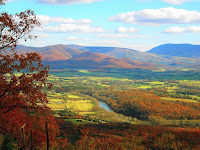
Great Smoky Mountains; photo from Wikipedia;
Appalachian Centrist

The Appalachian mountain range begins in Canada and runs all the way down to Alabama, connecting countries and states alike. There are various regions within Appalachia, with different customs, foods, and even their own way to pronounce the name of their beloved mountains. Because I set Appalachian Song in the mountains of East Tennessee, the correct pronunciation for that area is: Apple-at-chin and Apple-at-cha.

Mary Carson Breckenridge;
public domain
During my research, I discovered that many women in Appalachia, then and now, don't seek medical help when it comes time to deliver their babies. Distance to medical facilities is a big problem, as are finances, but tradition, superstition, and distrust also play a role. Instead, expectant mothers relied on local midwives to attend the birth. 

In my novel, Bertie is a midwife for her community. Like most mountain midwives, she was trained in midwifery by her mother, who was trained by her mother, thus earning the name "granny woman." Herbs, tinctures, teas, and time-honored practices were relied upon to help bring a healthy baby into the world. However, infant and mother mortality rates were--and still are--incredibly high in Appalachia.

This disturbing fact needed to be addressed, and in the 1920s, a woman by the name of Mary Carson Breckenridge made it her mission. Although Ms. Breckenridge was born into a wealthy family in Memphis, Tennessee in 1881, she studied nursing in the United States as well as Europe, with a strong desire to serve the women of rural Kentucky. Mary spent the summer of 1923 riding horseback over 650 miles through the hills of Kentucky to conduct a survey of midwives in the region, who averaged 60 years of age. Though she discovered some competence, she also found filth and a medieval level of care. In 1925, she opened the Frontier Nursing Service near Hyden, Kentucky that provided general health care, vaccinations, pre/post-natal care, and birth services. 

Mary is quoted as saying, "Maternity is the young woman's battlefield. It is more dangerous, more painful, more mutilating than war, and as inexorable as all the laws of God." 

Mary's contribution to rural Kentucky's mothers and children were significant. She is credited with building the first modern comprehensive health care system in the United States that focused on all aspects of a patient's wellbeing and provided programs for nursing care and midwifery. She continued to lead the Frontier Nursing Service until her death in May 1965. By that time, Frontier Nursing Service had treated nearly 58,000 patients and delivered over 14,500 babies, with only 11 maternal deaths. In 1998, a US stamp was printed in her honor. 

By the 1970s, midwives in the United States were required to obtain formal training and certifications before they could legally practice. While many mountain people ignored such regulations, the use of "granny women" began to decline. 

The Mary Breckenridge stamp
One of the interesting rabbit trails I took during my research led me to discover the use of midwives in the hippie communities of the 60s and 70s. After learning that there were in fact such communities in Appalachia, I decided that Reese, a 70s midwife in my novel, needed to visit a few hippie moms-to-be. I had great fun writing those scenes. 

As the mother of two sons, I'm grateful for the hospital staff that surrounded me each time I gave birth. But midwifery is on the rise these days, with many young mothers choosing to deliver their babies at home with the help of a midwife. As Bertie says in the book, the ultimate goal is a healthy baby and mama, no matter if you're in a hospital or tucked into your own bed at home.


Your turn: have you ever known anyone who had a midwife attend the birth of their baby?


Michelle Shocklee is the author of several historical novels, including Count the Nights by Stars, winner of the 2023 Christianity Today Book Award, and Under the Tulip Tree, a Christy Awards and Selah Awards finalist. Her work has been included in numerous Chicken Soup for the Soul books, magazines, and blogs. Married to her college sweetheart and the mother of two grown sons, she makes her home in Tennessee, not far from the historical sites she writes about. Michelle's next novel, Appalachian Song, releases October 3, 2023, and is available for preorder. Visit her online at www.MichelleShocklee.com


APPALACHIAN SONG

Forever within the memories of my heart.
Always remember, you are perfectly loved.


Bertie Jenkins has spent forty years serving as a midwife for her community in the Great Smoky Mountains of East Tennessee. Out of all the mothers she’s tended, none affects her more than the young teenager who shows up on her doorstep, injured, afraid, and expecting, one warm June day in 1943. As Bertie and her four sisters tenderly nurture Songbird back to health, the bond between the childless midwife and the motherless teen grows strong. But soon Songbird is forced to make a heartbreaking decision that will tear this little family apart.

Thirty years later, the day after his father’s funeral, Walker Wylie is stunned to learn he was adopted as an infant. The famous country singer enlists the help of adoption advocate Reese Chandler in the hopes of learning why he was abandoned by his birth parents. With the only clue he has in hand, Walker and Reese head deep into the Appalachian Mountains to track down Bertie Jenkins, the midwife who holds the secrets to Walker’s past.

https://www.tyndale.com/p/appalachian-song/9781496472441


Saturday, July 9, 2022

Down in the Holler with Bluegrass Music + Giveaway

    By Tiffany Amber Stockton


The Kentucky Derby winner didn't race in the Preakness and finished the Belmont Stakes in 6th, but he's still a champion and record-setter with the biggest odds gap on his win. He won't be put out to pasture anytime soon, but when he does, he'll enjoy some of that Kentucky bluegrass. If you missed the post about why bluegrass is called that, you can read it here.

Today, we're shifting from blue grass to bluegrass music, a style which began in the Appalachian region of Kentucky.

BLUEGRASS MUSIC

If I were to ask you, are a fiddle and a violin the same instrument or are they different, what would you say? Take a moment or two to ponder that. It's an age-old verbal debate with an adrenaline-charged intensity reminiscent of the duel in Devil Went Down to Georgia by the Charlie Daniels Band. If you said they are different, you're right. Of course, if you said they're the same, you are also correct. :) Now, don't go scratching your head too long. It basically all comes down to changeable aspects of the same instrument, and those are the type of strings, how they're played, and how low or high the bridge is set. Beyond that, the core shape and construction of the instrument remains unchanged.


The typically lower-bridge fiddle, which decreases the spacing between the strings, is one of the main two instruments in Bluegrass music. The banjo, mandolin, guitar, and upright bass round out the rest of the group. Just like Big Band music got its inspiration from the Classical masterpieces, Bluegrass also has its roots in centuries-old music stylings. Settlers from Britain, Ireland, and Scotland moved into the Appalachian region, and their ballad-style of music from their homeland came with them. That's why a lot of the music has a sense of jigs and reels. The fiddle was crafted by Italians in the sixteenth century and was popular due to its small size and versatility. The banjo came to America by way of the African slave trade and received notice through minstrel shows. The guitar came from Spain and is used primarily for rhythm.

The sounds of this style of music permeated the rolling hills of the Appalachian region all through the eighteenth and nineteenth centuries, and the dips and valleys came to be known as "hollers" with a characteristic high, lonesome sound echoing throughout the hills. Although the sound is centuries older, it wasn't until the 1940's that Bluegrass music received its official genre name. Bill Monroe and the Bluegrass Boys are given the distinction of creating the traditional acoustic instrumentation commonly heard in this genre, as they brought this style to the radio and live performances. They named their band because of their home state of Kentucky, and thus the term "Bluegrass" was assigned.

What began as ballads, narratives, and folk-style music, with minor references to "hillbilly" stylings, developed into deeply moving and purposeful music felt with the soul. These mountain residents are also touted as being the last remaining preservers of the original English dialect, older than the speech of Shakespeare, and closer to the speech of Chaucer. This unique dialect can be heard in the words of many Bluegrass songs and especially in the speech of these rural inhabitants of the holler. All language changes and evolves with time, but given the nationality of the original settlers of this region (mixed with various African cultures), if you find it hard to understand their speech or the words in original Bluegrass music, look at some of the Old English vernacular to find a lot of the meanings.


NOW IT'S YOUR TURN:

* Bluegrass music. Yay or nay for you?

* If you enjoy Bluegrass at all, do you have a favorite artist or band? Who?

* For the non-fans, what is your favorite style or genre of music? Favorite artists/groups?

Leave answers to these questions or any comments you might have on this post in the comment box below. For those of you who have stuck around this far, I'm going to start a new pattern of sending a FREE autographed book to one person each and every month from the comments left on this blog. You never know when your comment will be a winner!

Come back on the 9th of August to learn about George Rogers Clark, Kentucky Pioneer.

For those interested in my "fictional" life as an author and industry news about other authors, subscribe to my quarterly newsletter. Receive a FREE omitted chapter from my book, A Grand Design, just for subscribing!


BIO
Tiffany Amber Stockton has been crafting and embellishing stories since childhood, when she was accused of having a very active imagination and cited with talking entirely too much. Today, she has honed those skills to become an award-winning, best-selling author and speaker who is also an advocate for literacy as an educational consultant with Usborne Books. She loves to share life-changing products and ideas with others to help improve their lives in a variety of ways.

She lives with her husband and fellow author, Stuart Vaughn Stockton, along with their two children, two dogs, and two cats in Kentucky. In the 20 years she's been a professional writer, she has sold twenty-six (26) books so far and is represented by Tamela Murray of the Steve Laube Agency. You can find her on Facebook and GoodReads.

Thursday, June 9, 2022

Is Bluegrass Really Blue? - With Giveaway!

   By Tiffany Amber Stockton


Well, we won't have a new Triple Crown winner this year, but what a race it was at the Kentucky Derby last month!! Rich Strike, at 80-1 odds, took home the win and gave the race one of the event's all-time greatest finishes. His owner opted him out of the Preakness, but in just 2 days, he'll run in the Belmont Stakes. If you missed the post about the prestigious 13 winners of the Triple Crown so far, you can read it here.

Yesterday, Martha shared a unique tidbit about Kentucky and a tiny piece of land at the far southwest corner that is actually completely cut off and disconnected from the rest of the state. Be sure to check out that fun post if you haven't already. Today, I'm going to continue with another Kentucky fun fact.

THE BLUEGRASS STATE

As many of you here know, I only recently became a Kentuckian, although I have family roots that run deep in the Virginia and Kentucky soil. Prior to moving here, I spent fifteen years in Colorado. The region there is semi-arid and similar to a desert with the potential for a forty(40)-degree difference in temperature between day and night. Aside from the lakes, wildflowers, and snow-capped mountains, the majority of the land is brown and red with rocks and pine, unless you spend the time and money on sod, seed, and custom landscaping.

That's a drastic difference from the temperate rainforest area in the southeastern part of Kentucky where I now live. Day and night temperatures only change by maybe ten or fifteen degrees, and we get an abundance of rain. Kentucky is brilliantly green throughout the spring into summer with an explosion of color in the flowering trees, wildflowers, and the vibrant changing leaves in fall. Although I do admit to missing the awe-inspiring vistas of the front range of the Rocky Mountains, it's refreshingly peaceful to step outside to the front porch of my log cabin home in the forest and hear the wide variety of birds chirping or see the wildlife skittering across the yard.

Ironically, back in Colorado, when we went to sod our back yard, we discovered Kentucky bluegrass was the best seed to use in that zone. It's hearty, beautiful, and delightful on bare feet! Who knew at that time that I'd soon be living in the state known for its "blue" grass. :)


Hundreds of years ago, when the first pioneers crossed the Appalachians and ventured west along the Ohio River, the pastureland they discovered was vibrant and rich with nutrients. In the early morning sunlight and sometimes at dusk, the blades of grass take on a bluish tint that differs from the rich emerald it appears throughout most of the day. In addition, if the grass isn't in areas that are frequently mowed or eaten, there are some blue flowers that grow amongst the blades as they grow taller. Nothing at all like the stunning bluebells of Texas, they still hold their own unique charm and appeal.

The Shawnee and Cherokee natives who lived here in Kentucky used this pastureland and the rich soil for farming and horse grazing. A lot of the reason Kentucky is known for its horses is due to the extensive pastureland and rolling green hills. Breeders and trainers have long flocked to this area of the country to establish their horse farms and stables. It's only part of why the Kentucky Derby takes place in Louisville, and it's why the world-famous Kentucky Horse Park is situated just to the north of Lexington. For over one-hundred (100) years, champions have retired here to become stud horses and live out their lives in fame and glory.

Finally, although the Bluegrass style of music didn't get its name directly from the type of grass which heartily grows in Kentucky, there is a tiny connection to the start of that genre in the Appalachian region where the bluegrass also grows.


NOW IT'S YOUR TURN:

* What is YOUR state's nickname, and how did it get that name?

* Is grass abundant where you live, or does it require cultivating and a lot of work?

* What is the climate and landscape like in your region?

Leave answers to these questions or any comments you might have on this post in the comment box below. For those of you who have stuck around this far, I'm going to start a new pattern of sending a FREE autographed book to one person each and every month from the comments left on this blog. You never know when your comment will be a winner!

Come back on the 9th of July to learn about the origins of Bluegrass Music in Kentucky.

For those interested in my "fictional" life as an author and industry news about other authors, subscribe to my quarterly newsletter. Receive a FREE omitted chapter from my book, A Grand Design, just for subscribing!


BIO
Tiffany Amber Stockton has been crafting and embellishing stories since childhood, when she was accused of having a very active imagination and cited with talking entirely too much. Today, she has honed those skills to become an award-winning, best-selling author and speaker who is also an advocate for literacy as an educational consultant with Usborne Books. She loves to share life-changing products and ideas with others to help improve their lives in a variety of ways.

She lives with her husband and fellow author, Stuart Vaughn Stockton, along with their two children, two dogs, and two cats in Kentucky. In the 20 years she's been a professional writer, she has sold twenty-six (26) books so far and is represented by Tamela Murray of the Steve Laube Agency. You can find her on Facebook and GoodReads.

Wednesday, February 9, 2022

Kentucky - First State West of the Appalachians

   By Tiffany Amber Stockton


Last month, I began a new series on Kentucky history and the pioneers who established the state. If you missed that post, you can read it here. This month, we're delving a bit more into Daniel Boone and his forays into the Kentucky frontier.

DANIEL BOONE - KENTUCKY PIONEER


Kentucky was granted statehood in 1792, becoming the first U.S. state west of the Appalachian Mountains. I spent 25 years of my life in Delaware, the First State of U.S., so it's ironic I now live in another "first state." While the original thirteen colonies were engaging in small battles with England over governorship, taxes, political representation, and various freedoms, many residents of those colonies decided to strike out on their own and start exploring the frontier to the west.


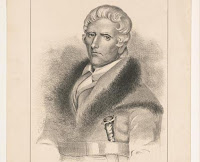
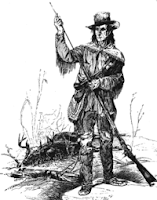
Frontiersman Daniel Boone was one of Kentucky’s most prominent explorers, and many immigrants followed the trail he blazed through the Cumberland Gap, known as the Wilderness Road. His story doesn't begin there, though. He was born in 1734 in a small township northwest of Philadelphia, and at age 15 left Pennsylvania with his family. They headed to the Shenandoah Valley of Virginia, but Daniel left not long after and settled along the Yadkin River near the western edge of North Carolina.


Instead of farming, Boone became a marker or long hunter and made his living selling deerskins from long hunting expeditions out in the wilderness. He was gone for months or years at a time with that trade. In 1755, while serving as a wagoner for General Braddock back in Pennsylvania, he met a trader who regaled him with stories of the abundant wildlife and financial opportunities west of the Appalachian Mountains. But that exploration was put on hold when Daniel married and started a family. He continued to hunt throughout the Carolinas and even down to what became Florida.

In early 1769, that trader (John Findley) found Daniel again and relit the spark in Boone's wanderlust nature. He spent the next four years exploring that wilderness area, and in 1773 began escorting settlers with the intention of permanently settling Kentucky. In 1775, a judge enlisted Boone's help to negotiate with Cherokee tribes and purchase their claims, then he cut a path through southwestern Virginia and northeastern Tennessee that would become the Cumberland Gap Road.

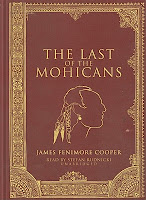
Despite ownership of the land, the settlement of Kentucky was fraught with a great deal of conflict, as England secured the support of the natives to attack settlers during and even after the Revolutionary War. Many were captured and forced to live among the Cherokee or Shawnee. Boone was one of them, although he only lived among the Shawnee for a few months before escaping. His daughter had been captured the year before, but immediately rescued by Boone and his men. That story was eventually immortalized by James Fennimore Cooper in The Last of the Mohicans.

For the next seven or eight years, raids continued and casualties increased. So many battles, and so many deaths among the British, the American settlers, and the natives, all over who would ultimately own the land. By 1787, the British were completely run out and in 1792, statehood was granted. Nearly thirty years of exploration, settlement, and defense had ultimately produced a new state for the U.S., and Daniel Boone became immortalized in American history.


NOW IT'S YOUR TURN:

* Have you ever left your family to move or settle in a completely different region?

* What famous settlers or pioneers are known where you live?

Leave answers to these questions or any comments you might have on this post in the box below. Come back on the 9th of March to learn some fun facts pertaining to Kentucky.


For those interested in my "fictional" life as an author and industry news about other authors, subscribe to my newsletter. Receive a FREE omitted chapter from my book, A Grand Design, just for subscribing!


BIO
Tiffany Amber Stockton has been crafting and embellishing stories since childhood, when she was accused of having a very active imagination and cited with talking entirely too much. Today, she has honed those skills to become an award-winning, best-selling author and speaker who is also an advocate for literacy as an educational consultant with Usborne Books. She loves to share life-changing products and ideas with others to help improve their lives in a variety of ways.

She lives with her husband and fellow author, Stuart Vaughn Stockton, along with their two children and two cats in Kentucky. She has sold twenty-four (24) books so far and is represented by Tamela Murray of the Steve Laube Agency. You can find her on Facebook and GoodReads.

Sunday, November 7, 2021

History of the Great Smoky Mountains National Park

By Michelle Shocklee

Growing up in Santa Fe, New Mexico, the Sangre de Cristo mountain range was practically in our backyard. I spent many glorious days hiking and exploring the Rocky Mountains with family and friends. When I married a Texan in 1987, trips to the mountains became infrequent but my love for them has never waned. Now that we live in the Nashville area, the beautiful Blue Ridge Mountains are just a few hours away. Yay!

Me near the Walker Sisters Cabin

Like me, most people probably don't think about the history of a national park when they visit one. We're too busy enjoying the fruits of someone else's labor and ideas. Such was the case when hubby and I visited the Great Smoky Mountains National Park for the first time back in the fall of 2018. I had no idea how many people were involved in its creation, as well as how much money and how many years it took for the plans to be approved. There was also quite a bit of controversy and many opponents to overcome before the park could become what we know it as today. 


The history of the land:

The Great Smoky Mountains are the former homelands of the Cherokee. Over time, white settlers arrived and the native people were forced to relocate, sadly taking part in what would become known as the Trail of Tears, a series of forced displacements of approximately 60,000 Native Americans from five tribes across the country between the years 1830 and 1850. 

Clearcutting in Tennessee, 1936
U.S. National Archives & Records Admin.
It didn't take long for logging to become a large industry in the area. By the early 20th century, however, people began to realize that clearcutting--the logging practice in which most or all trees in an area are uniformly cut down--was destroying the forest's natural beauty. 

The People:

Ann Davis is credited for suggesting a National Park in the Smokies when she and her husband Willis returned from a trip visiting several Western national parks in 1923. This started discussion of the idea with leaders in the area, especially around Knoxville. 

One key leader, Colonel David Chapman, played a leading role in the tough battle to bring the park idea to fruition, especially on the Tennessee side of the park. Chapman, president of a Knoxville drug company, became totally committed to the park movement and dealt successfully with multiple obstacles such as opposition from park opponents, lack of funding for land purchase, and controversial condemnation actions. As chairman of the Great Smoky Mountains Conservation Association, he was the Tennessee leader for the park campaign and developed close relationships with parties in both Tennessee and North Carolina working toward creation of the national park. 

Paul Fink, Horace Kephart, George Masa, and others were also instrumental in their work as advocates for the park. The group began raising private funds to help the cash-strapped National Park Service acquire land. John D. Rockefeller contributed $5 million, with the US government adding $2 million. Congress finally authorized the project in 1926. 

I took this picture of the Walker Sisters cabin after hiking
a couple miles to it, deep in the mountains.
 
Saying Goodbye:

Buying the land proved difficult, even with the money in hand. Some 6,000 small farms, large tracts, and other miscellaneous parcels had to be surveyed, appraised, dickered over and sometimes condemned in court. The timber and paper companies had valuable equipment and standing inventory, which required compensation. Some mountain homesteaders, like the Walker Sisters, were given lifetime leases to remain on their property, although they couldn't hunt, log, or farm on it. Everyone else was evicted. 


The park today:
 I couldn't get over the vibrant colors, even on a cloudy day!

Today, the park occupies 522,419 acres of gorgeous, well-preserved land in two states--Tennessee and North Carolina. It boasts two visitors' centers, miles and miles of hiking trails, historical buildings, waterfalls, lakes, and recreation areas. The well-maintained roads take you through some of the most beautiful scenery I've ever seen, especially during the fall. 

So next time you visit a national park, whisper a little thank you to all the folks who played a role in creating it. 


Your turn: What is your favorite National Park you've ever visited? Tell me about it!


Michelle Shocklee
is the author of several historical novels and is a Christy Awards and Selah Awards finalist. Her work has been included in numerous Chicken Soup for the Soul books, magazines, and blogs. Married to her college sweetheart and the mother of two grown sons, she makes her home in Tennessee, not far from the historical sites she writes about. Visit her online at www.MichelleShocklee.com


UNDER THE TULIP TREE
*2021 Christy Awards Finalist*

Sixteen-year-old Lorena Leland’s dreams of a rich and fulfilling life as a writer are dashed when the stock market crashes in 1929. Seven years into the Great Depression, Rena accepts a position interviewing former slaves for the Federal Writers’ Project. There, she meets Frankie Washington, a 101-year-old woman whose honest yet tragic past captivates Rena. Frankie’s story challenges Rena’s preconceptions about slavery, but it also connects the two women whose lives are otherwise separated by age, race, and circumstances. Will this bond of respect, admiration, and friendship be broken by a revelation neither woman sees coming?

For purchase options, visit www.MichelleShocklee.com