Showing posts with label American frontier. Show all posts

Tuesday, March 25, 2025

Dime Novels of the Old West—and a Giveaway


By Jennifer Uhlarik


Howdy, readers! I’m back to share another interesting tidbit of my research from my upcoming release, Love and Order: A Three-Part Old West Romantic Mystery. This month, I thought I’d share about the research I did for the character of Lucinda Peters. This spunky heroine is a dime novelist and aspiring newspaper reporter. Have you heard of dime novels? If not, let me share what these were.


Around the time of the American Civil War, the literacy rate in this country began to grow. In response to the uptick of readers in America, people began looking for easily accessible material to read. Publishers Erastrus and Irwin Beadle met that need when, in 1860, they began releasing a new series of fiction novels, printed in inexpensive paperback formats, and sold for ten cents each. The topics of these novels most often centered around America’s western frontier—stories about the Gold Rush and/or mining camps; building of the railroad; lawmen, outlaws, and other notable characters of the frontier; and many other such topics.


The first Dime Novel,
published in 1860.
Note the lack of cover artwork.


The first of these “dime novels” was a reprint of a serialized story written by Ann S. Stephens (who went on to author many of Beadle’s dime novels), titled Malaeska, the Indian Wife of the White Hunter. This serialized story first appeared some twentyish years earlier in the Ladies’ Companion magazine, so the material was old enough that most people wouldn’t immediately recognize it as a reprinted story. It came wrapped in a salmon-colored paper, with no artwork on the cover—only the title. However, in its new format as a dime novel, this story of roughly 100 pages sold around 65,000 copies in its first several months. It was a hit!


Another early example of a
dime novel, this time with 
cover artwork.


Because of this early success, Beadle, along with Ann Stephens, went on to reprint more of her older, serialized stories. And as this new series grew in popularity, the publisher had Stephens write new, original material for their novels as well. With the quick success of the Beadle’s Dime Novel series, particularly with the younger readers, other publishers followed in their footsteps. By the end of the Civil War, there were all manner of publishers putting out their own versions of the dime novels. Each publisher had their own style—the dimensions of their books might be a little different, and one company’s covers might have black-and-white artwork while another company’s cover sported only the title. At first, each was sold with a colored outer wrapping—a different color for each publisher, but as time went on and printing technology became better, the covers changed to color printing on white paper. Also, the topics covered began to grow. Not only were they stories of the American frontier—but also historical romances, science fiction, mysteries, war stories, adventure stories, and more. Interestingly, dime novels were often authored by women.

Dime novel with a color cover.


Dime novels quickly developed a reputation as not being of the greatest literary quality. In fact, many in polite society frowned on this form of cheap entertainment. The stories were churned out quickly, and the writing wasn’t always of the highest quality. Within the stories themselves, the exploits of the characters were often exaggerated, making the lawmen sound more righteous or the outlaws more villainous than they truly were. Often, the storylines covered only the most superficial aspects without getting to the true depths of the real story. So many of the highbrow folks in society took the view that these cheap novels contributed to the degradation of their society.   


Despite the poor view many held of this literary form, dime novels endured in popularity for decades. The original dime novel series from Beadle was published from 1860 until sometime in the 1920s. The company published 321 issues in its sixtyish-year run. The many other publishers also continued into the first few decades of the 1900s, but the fad finally died out around 1925.


A later version of the
dime novel.


A resurgence of interest in these early novels came in the 1940s and lasted into the 1950s. People began buying up old copies to add to collections they—or their parents and grandparents—had saved. Because of the very cheap paper these stories were printed on, they were often in fragile condition. Today, in 2025, there are still thousands in existence—but most are held in the Library of Congress, in collections at various universities around the country, or sometimes in the collections of museums or historical centers. Because of the fading quality of the papers, some collections have been digitized and are available online. To see one such collection, check out Nickels & Dimes.


It's Your Turn: Had you heard of dime novels? If you had lived in the time when they were popular, do you suppose you would have read them—or would you have seen them as bad for society? Leave your answer with your email address to be entered in a giveaway of a paperback copy of Love and Order: A Three-Part Old West Romantic Mystery. (U.S. Residents only, please).


Jennifer Uhlarik
 discovered western novels at twelve when she swiped the only “horse” book from her brother’s bookshelf. Across the next decade, she devoured westerns and fell in love with the genre. While attaining a B.A. in writing from the University of Tampa, she began penning her own story of the Old West. She has finaled in and won numerous writing competitions and appeared on various best-seller lists. Besides writing, she’s been a business owner, a schoolteacher, a marketing director, a historical researcher, a publisher, and a full-time homemaker. She lives near Tampa, Florida, with her husband and fur children.
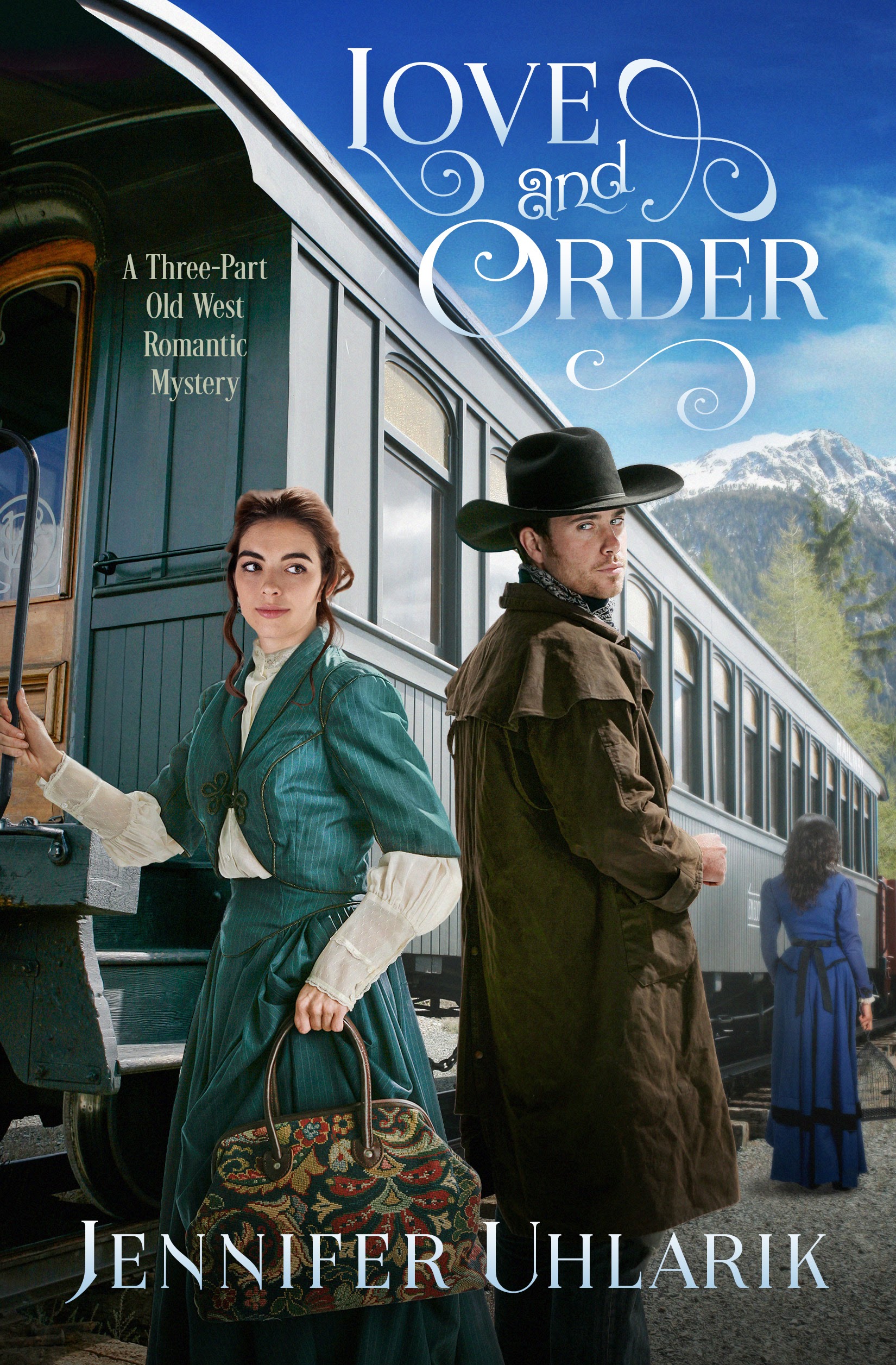


Love and Order: A Three-Part Old West Romantic Mystery (coming April 1, 2025)


Wanted: Family, Love, and Justice


One Old West Mystery Solved Throughout Three Short Romantic Stories


Separated as children when they were adopted out to different families from an orphan train, the Braddock siblings have each grown up and taken on various jobs within law enforcement and criminal justice.


Youngest child, Callie, has pushed past her insecurities to pursue a career as a Pinkerton agent. Middle child, Andi, has spent years studying law under her adoptive father’s tutelage. And the eldest and only son, Rion, is a rough-and-tumble bounty hunter. 


When the hunt for a serial killer with a long history of murders reunites the brother and sisters in Cambria Springs, Colorado, they find themselves not only in a fight for justice, but also a fight to keep their newly reunited family intact. How will they navigate these challenges when further complicated by unexpected romances?


Monday, January 20, 2025

Heroines of the Wild West: Preacher's Daughters


Ever wonder what it was like to be a preacher’s daughter in the Wild West? Picture wide-open spaces, dusty towns, and a whole lot of folks trying to strike it rich—not to mention survive. Against this backdrop, the community relied on the local preacher and his family for stability.

In many booming frontier towns, the preacher wasn’t just a guy in a black suit reading from a dusty old book. He was often the moral compass for everyone around, a duty in which his family was expected to oblige him. Preacher's daughters must embody all good Christian values: compassion, kindness, and integrity.


No pressure there, right? Keep reading.

Everday Life


From organizing Sunday school to planning potluck dinners, a preacher’s daughter kept busy. At church activities, she helped her hurried parents ensure that everyone felt welcomed and included.

She attended community events, like picnics, dances, and charity drives. These gatherings gave her a chance to mingle, forge friendships, and maybe even catch the eye of a potential suitor. Her active social life came with the expectation that she would maintain a spotless reputation.


A preacher's daughter was well-educated, thanks to her families’ emphasis on learning. Besides reading the Bible, she consumed literature to expand her knowledge. This practice might lead her to become an informal teacher in her community, helping others learn to read and write. Some preacher’s daughters opened schools in Wild West towns.

Author's Note: While researching Hills of Nevermore, the first book in the Montana Gold western historical romance series, I learned of Clara L. Streeter, daughter of a Methodist minister who in 1863 taught school in Bannack, Montana. Clara’s diary provides valuable insights that informed my understanding of Bannack, where much of the action in the story takes place. Clara deserves a lot of respect. She braved the rigors of a wild and wooly boom town to teach the children of miners and settlers in a small, makeshift schoolhouse.

Living Under Observation

A preacher's daughter existed under the careful watch of her community. Imagine living with the constant pressure to be perfect with every little thing she did under scrutiny. If she slipped up—say, by dancing a little too close at a barn dance—it could reflect poorly on her entire family.


If a preacher’s daughter developed dreams and desires that clashed with the expectations of her position, pursuing them would be next to impossible. I highlighted this reality in the story of preacher's daughter Liberty Hayes, heroine of The Promise Tree (Montana Gold, book 5). Liberty has a long-standing friendship and a secret promise with her neighbor, Jake, who often finds himself misunderstood. Liberty has to decide whether to honor her preacher father or follow her heart's desire.

The very nature of a preacher's daughter's role led to feelings of isolation. Although surrounded by people, she didn’t know many who understood the weight of her responsibilities.

Leading through Influence

Despite these challenges, a preacher’s daughter wielded a unique kind of influence within the community. Others might bring her their troubles, seeking her advice on problems beyond her experience. She would do her best to connect them with her father’s teachings from the Bible. 

Because of her compassion, gentle manners, and prominent position, it wasn’t uncommon for the townsfolk to romanticize the preacher’s daughter into a cultural icon.

Leaving A Legacy

Although privileged, preacher’s daughters in the Wild West did not have it easy. Finding their own life paths while under the lens of other’s expectations demanded strength and perseverance. Becoming community leaders, teachers, and advocates, these young women contributed to the culture of the Wild West in ways that remain the stuff of legends. Their stories speak of the courage to live authentically, even when society had a lot to say about how they should act. Next time you dive into a Wild West story, keep an eye out for the preacher’s daughter. She’s not just the good girl; she’s a powerhouse in her own right, navigating the complexities of frontier life with grace and grit.

Do you think that preacher's daughters today encounter the same challenges as those in the Wild West? 

About Janalyn Voigt


Janalyn Voigt fell in love with literature at an early age when her father read chapters from classics as bedtime stories. When Janalyn grew older, she put herself to sleep with tales "written" in her head. Today Janalyn is a storyteller who writes in several genres. Romance, mystery, adventure, history, and whimsy appear in all her novels in proportions dictated by their genre. 

Learn more.


Fall in Love with Montana Gold


Discover faith, courage, and romance in the six Wild West adventures. Go here. 


Friday, December 20, 2024

A Wild West Christmas: Celebrating the Season on the Frontier


The Wild West is often romanticized in tales of cowboys, outlaws, and dusty towns, but during the Christmas season, it became a time of warmth, community, and celebration. Picture a small frontier town in the late 1800s, where the air is crisp and filled with the scent of pine and smoke from wood-burning stoves. Let’s take a closer look at how Christmas was celebrated in the Wild West, blending tradition with the rugged realities of frontier life.


Setting the Scene

As December rolled in, the townspeople would begin to feel the holiday spirit. Although many were far from the comforts of their Eastern counterparts, they made do with what they had, drawing on the strength of their communities. Towns like Dodge City, Tombstone, and Deadwood transformed into festive hubs, adorned with makeshift decorations crafted from whatever was available.

Decorating the Town

With no stores like we have today, the people of the Wild West had to get creative. Families would often head into the nearby woods to find a small tree or some evergreen branches. These would be trimmed and decorated with homemade ornaments. Corn husks, strings of popcorn, and bits of colored cloth became popular choices. In more prosperous homes, you might even find hand-painted wooden toys hanging on branches.

The community would come together to decorate the local church or meeting hall, where holiday festivities were often centered. Brightly colored paper chains made from old newspapers and ribbons would hang from the rafters, creating a festive atmosphere that lifted spirits during the long winter months.

Preparing for the Feast

Food was an essential part of any holiday celebration, and Christmas was no exception. While the menu varied depending on the resources available, many families aimed to prepare a hearty meal. Women spent days before the holiday baking pies, bread, and cookies. Gingerbread was a favorite, often shaped into stars or decorated with colorful icing.

Meats, when available, were often smoked or cured, and the community would come together to share whatever they had. A typical feast might include roasted turkey or ham, mashed potatoes, and seasonal vegetables. There was always a big pot of stew simmering, made from whatever game could be hunted or livestock raised.

The Importance of Community

In the spirit of togetherness, neighbors would often gather to help each other prepare. It was a time for camaraderie and connection. The holiday season offered a break from the hardships of frontier life, allowing families to come together to share meals, stories, and laughter.

Children, especially, looked forward to this time of year. They would help with preparations, their excitement palpable as they imagined the presents that might await them. Gifts were often handmade: a new pair of mittens, a carved wooden toy, or a jar of homemade preserves. These gifts, though simple, were treasured because they were made with love.

Christmas Eve Traditions

On Christmas Eve, townspeople would gather for church services, filling the pews with laughter and song. Caroling was common, and hymns would echo through the wooden structures, bringing a sense of peace and hope. The stories of the Nativity were shared, reminding everyone of the true meaning of the holiday.

After the service, families would return home to enjoy a modest supper and share stories by the fire. Children would hang stockings, often repurposed from old fabric, hoping to find small treats like candy or nuts in the morning.

In some families, particularly those with strong ties to Eastern traditions, there might be a ritual of reading "A Christmas Carol" or another classic holiday tale aloud, fostering a sense of nostalgia and warmth.

Christmas Day Celebrations

As the sun rose on Christmas Day, the excitement was palpable. Children would rush to their stockings, their eyes lighting up at the sight of small gifts and treats. It was a magical moment, filled with wonder and joy.

After the morning festivities, families would gather for their Christmas feast. The tables were set with whatever they had, adorned with simple but heartfelt decorations. They would take turns expressing gratitude, reflecting on the blessings of the past year, and sharing hopes for the future.

In many towns, a communal celebration would follow. Neighbors would come together for games, dances, and storytelling. The town hall or community center would be transformed into a festive space, with music filling the air as folks danced and celebrated together.

The Spirit of Giving

In the Wild West, the spirit of giving was alive and well. Many townsfolk would organize charitable efforts to help those less fortunate. Baskets filled with food, blankets, and other essentials were often delivered to families in need. It was a time for generosity, embodying the community’s resilience and unity.

Local churches played a crucial role in these efforts, reminding everyone of the importance of kindness and compassion. Many families would make it a point to help their neighbors, recognizing that a strong community could weather any storm.

Reflecting on the Wild West Christmas


The Christmas season in the Wild West was more than just a holiday; it was a celebration of community, faith, and resilience. Amidst the challenges of frontier life, people found ways to connect and uplift one another. The memories created during these festive times were cherished, passing from one generation to the next.

While the Wild West was known for its rugged individualism, it was also a time when the power of community shone brightly. The traditions and stories from these celebrations remind us of the warmth and joy that can be found even in the most challenging circumstances.

As we reflect on our own holiday traditions, it’s essential to remember the spirit of the Wild West: a celebration of love, hope, and unity, where every little gesture mattered. This Christmas, let’s embrace that spirit in our own lives, creating a tapestry of memories that honors both our past and our future.

So, as the snow falls gently outside, gather your loved ones, share stories, and celebrate the simple joys of the season. After all, it’s not about what we have, but about who we share it with that truly matters.

About Janalyn Voigt

Janalyn Voigt's unique blend of adventure, romance, suspense, and whimsy creates worlds of beauty and danger for readers in several genres. 

Western Historical Romance

The stunning epic western historical romance novel, Hills of Nevermore, kicks off Janalyn Voigt's Montana Gold series, which follows the lives and loves of a family of Irish immigrants surviving the Wild West through six novels.

Medieval Epic Fantasy

Beginning with DawnSinger, Janalyn Voigt's medieval epic fantasy series, Tales of Faeraven. carries readers into a land only imagined in dreams. 

Sunday, September 29, 2024

Heroine's of the Frontier, Part 5 - Women Who Were Parted Forever / Frances Slocum, Wyoming's Missing Child


I remember when my teacher read Little House in the Big Woods to my third grade class. Of course, we were gripped by Laura Ingalls Wilder's enthralling story of life in Wisconsin's big woods. It was one of the first stories in which I was caused to consider what it meant for pioneers to leave their homes and families and likely never see them again. Letters might be sent once or twice a year, if possible, but in all actuality, ties might be forever cut when a man decided to move his family to a new property or across the ocean of prairie, whether in search of land, freedom, or an elusive wealth.

I even wonder about the people who first settled the farm where I live. They were immigrants from Czechoslovakia. Their newspapers from home were stuffed in the walls of our porch for insulation. Did they see some of their relatives again before they passed on, or were newspapers and letters their only connection to their old country? And where did their children go, those who were raised here on this ground? We only know of one, the youngest, who eventually moved to Maine.

Then there were those pioneers who had to survive against starvation, fires, raids, illness--entirely alone. They had to do the best they could, whether covering themselves with dirt in a tilled field to escape a prairie fire, hiding in a well to escape raiders, walking for miles to find their way out of the wilderness, or treating their own illnesses with whatever they had on hand. I can't even imagine the trials.

And there were those whose foray into the wilderness brought them to their journey's end in ways they never could have anticipated. Here is one such story.

Wyoming's Missing Child - Frances Slocum 

The Capture of Frances Slocum (Internet Archives Book Image)

The Slocum family were Quakers who emigrated from Rhod
e Island to the Wyoming Valley in eastern Pennsylvania in 1777. They settled on the edge of the wilderness near Wilkes-Barre with their four children ages 13, 9, 5, and a, trusting that the Quakers' peaceable relations with the natives would keep them safe. However, on November 2nd in 1778, while Mr. Jonathan Slocum was away, three Delaware Indians attacked the family farm and carried off Frances Slocum, age five, her younger brother Ebenezer, and Wareham Kingsley, a young boy whose family was living with the Slocums at the time. Ebenezer was released, but both Frances and Wareham were carried away, while Frances's mother begged for her release. The last Mrs. Slocum saw of her child was likely a tearful glance as she cried out, arms outstretched. After that, Mrs. Slocum never saw Frances again, although she never gave up hoping for her return.

Over the following years, her family continued the search for their missing sister. Her brothers traversed the forests from the Susquehanna to the Great Lakes and even into the wilds of Canada hoping for some shred of evidence that their sister was still alive, but to no avail. Even when, by treaty, the Indians were made to return their captives, Frances was never numbered among them. Eventually, they began to believe that she had not survived her captors or their harsh lifestyle in the wilderness.

It turned out they were wrong. The Delaware had given young Frances to a childless Delaware chief and his wife, who raised her as their own child and named her Weletasash. Frances grew and assimilated into her adoptive family. She was married for a brief period to a Delaware man, but when she suffered domestic violence at his hand, she returned to her Delaware parents. 

At some point she encountered a wounded Miami man while traveling through the forest. With her parents' assistance, she brought him to their village, where he remained with them and regained his health. His name was She-pan-can-ah, known as Deaf Man to the white men because of his deafness. Frances eventually married him, and the couple had two boys, who died young, and two girls. They also moved to the Mississinewa Valley of north-central Indiana.

Nearly six decades passed, when one day Colonel George Ewing, an Indian trader fluent in Miami, stopped for the night at the double cabin of an elderly Miami woman and her extended family in Deaf Man's Village. During Ewing's stay, the woman revealed that she born a white woman who was abducted as a child. She no longer spoke English but remembered a few things. One was that she'd come from a Quaker family somewhere near the Susquehanna River, and she recalled that their last name was Slocum. 

There were theories about why she chose to reveal her identity to Ewing. Ewing believed it was because she was old, and that she wished the truth to be known before she should die.

Ewing went away purposing to find the woman's white relation. After some time, with a letter the postmaster in Lancaster which was misplaced for a spell, a notice was published that finally found its way to a minister in the Wyoming Valley and eventually to Frances's brother Joseph. 

After making a number of arrangements, the siblings of Frances traveled to Indiana near present-day Peru to meet their long-lost sister. They were shocked at the sight of her, so changed. One brother cried out, "Oh! Is that my sister?"

Certain bits of information were exchanged through an interpreter, as Francine answered questions stoically, her two grown daughters beside her:

"What was your name when a child?"
"I do not recollect."
"What do you remember?"
"My father, my mother, the long river, the staircase under which I hid when they came."
"How cam you to lose your thumb-nail?"
"My brother hammered it off a long time ago, when I was a very little girl at my father's house."
"Do you know how many brothers and sisters you had?"
She then mentioned them, and in the order of their ages.
"Would you know your name if you should hear it repeated?"
"It is a long time since, and perhaps I should not."
"Was it Frances?"
At once a smile played upon her features, and for the moment there seemed to pass over the face what might be called the shadow of an emotion, as she answered, "Yes."
William Worthington Fowler. Woman on the American Frontier / A Valuable and Authentic History of the Heroism, Adventures, Privations, Captivities, Trials, and Noble Lives and Deaths of the "Pioneer Mothers of the Republic" (Kindle Locations 3050-3058). Kindle Edition.

Despite her siblings urging her, however, Frances rejected their with to return with them, leaving her Miami family behind. She no longer had any desire to go back to that long-forgotten life, but preferred to remain with her adopted people. 

Joseph Slocum and his two daughters returned a second time to try and convince her to come with them, but even so, Frances would not be moved. "I would feel like a fish out of water," she told the interpreter.

Frances did agree to allow her Slocum family's request to have her portrait painted however. 


Although Frances Slocum never returned to the home or family to whom she was born, she did leave a legacy. A short time after their reunion, the Miami tribes began to be forcibly removed to Kansas. 
Frances appealed for help from her white brothers, Joseph and Isaac Slocum, who with the aid of a lawyer in Peru, found sympathetic ears in Congress for an exemption for an old woman who had suffered much hardship and hoped to remain near both her families, native and white. So, three years after Frances's identity was revealed, Congress signed a treaty providing some of the Miami with land grants allowing them to remain in Indiana. While Frances herself was not allowed a land grant, the two daughters with whom she was living were, so she and her family were able to remain in Indiana. The members of her Miami village formed the nucleus of today's Miami Nation of Indiana.

Frances Slocum was parted from her family for nearly the whole of her life, but she was not forgotten. She died of pneumonia in 1847 in Deaf Man's village at 74 years of age and was buried beside She-pan-can-ah and their two sons. In 1965, during construction of a dam that would soon be used to flood the area, their graves were moved to Wabash, Indiana, and a monument was raised there in her honor.

___________________


One more month to pre-order Courting the Country Preacher, Four Stories of Faith, Hope. . .and Falling in Love! (Releases November 1, 2024)


About the Collection

Being a preacher in the countryside is not for the faint of heart nor faith. Four inexperienced preachers face a myriad of challenges including those who figure a man of the cloth needs a wife. Can they meet the expectations of "helpful" congregants and be true to their hearts?

Convincing the Circuit Preacher by Carolyn Miller, Australia, 1863

Mail Order Minister by Kari Trumbo, South Dakota, 1889

The Mountie's Rival by Angela K. Couch, Canada, 1907

The Angel and the Sky Pilot by Naomi Musch, Minnesota, 1910

Wednesday, February 9, 2022

Kentucky - First State West of the Appalachians

   By Tiffany Amber Stockton


Last month, I began a new series on Kentucky history and the pioneers who established the state. If you missed that post, you can read it here. This month, we're delving a bit more into Daniel Boone and his forays into the Kentucky frontier.

DANIEL BOONE - KENTUCKY PIONEER


Kentucky was granted statehood in 1792, becoming the first U.S. state west of the Appalachian Mountains. I spent 25 years of my life in Delaware, the First State of U.S., so it's ironic I now live in another "first state." While the original thirteen colonies were engaging in small battles with England over governorship, taxes, political representation, and various freedoms, many residents of those colonies decided to strike out on their own and start exploring the frontier to the west.


Frontiersman Daniel Boone was one of Kentucky’s most prominent explorers, and many immigrants followed the trail he blazed through the Cumberland Gap, known as the Wilderness Road. His story doesn't begin there, though. He was born in 1734 in a small township northwest of Philadelphia, and at age 15 left Pennsylvania with his family. They headed to the Shenandoah Valley of Virginia, but Daniel left not long after and settled along the Yadkin River near the western edge of North Carolina.


Instead of farming, Boone became a marker or long hunter and made his living selling deerskins from long hunting expeditions out in the wilderness. He was gone for months or years at a time with that trade. In 1755, while serving as a wagoner for General Braddock back in Pennsylvania, he met a trader who regaled him with stories of the abundant wildlife and financial opportunities west of the Appalachian Mountains. But that exploration was put on hold when Daniel married and started a family. He continued to hunt throughout the Carolinas and even down to what became Florida.

In early 1769, that trader (John Findley) found Daniel again and relit the spark in Boone's wanderlust nature. He spent the next four years exploring that wilderness area, and in 1773 began escorting settlers with the intention of permanently settling Kentucky. In 1775, a judge enlisted Boone's help to negotiate with Cherokee tribes and purchase their claims, then he cut a path through southwestern Virginia and northeastern Tennessee that would become the Cumberland Gap Road.

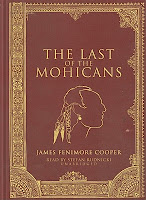
Despite ownership of the land, the settlement of Kentucky was fraught with a great deal of conflict, as England secured the support of the natives to attack settlers during and even after the Revolutionary War. Many were captured and forced to live among the Cherokee or Shawnee. Boone was one of them, although he only lived among the Shawnee for a few months before escaping. His daughter had been captured the year before, but immediately rescued by Boone and his men. That story was eventually immortalized by James Fennimore Cooper in The Last of the Mohicans.

For the next seven or eight years, raids continued and casualties increased. So many battles, and so many deaths among the British, the American settlers, and the natives, all over who would ultimately own the land. By 1787, the British were completely run out and in 1792, statehood was granted. Nearly thirty years of exploration, settlement, and defense had ultimately produced a new state for the U.S., and Daniel Boone became immortalized in American history.


NOW IT'S YOUR TURN:

* Have you ever left your family to move or settle in a completely different region?

* What famous settlers or pioneers are known where you live?

Leave answers to these questions or any comments you might have on this post in the box below. Come back on the 9th of March to learn some fun facts pertaining to Kentucky.


For those interested in my "fictional" life as an author and industry news about other authors, subscribe to my newsletter. Receive a FREE omitted chapter from my book, A Grand Design, just for subscribing!


BIO
Tiffany Amber Stockton has been crafting and embellishing stories since childhood, when she was accused of having a very active imagination and cited with talking entirely too much. Today, she has honed those skills to become an award-winning, best-selling author and speaker who is also an advocate for literacy as an educational consultant with Usborne Books. She loves to share life-changing products and ideas with others to help improve their lives in a variety of ways.

She lives with her husband and fellow author, Stuart Vaughn Stockton, along with their two children and two cats in Kentucky. She has sold twenty-four (24) books so far and is represented by Tamela Murray of the Steve Laube Agency. You can find her on Facebook and GoodReads.

Friday, November 1, 2019

Happy Birthday Daniel Boone


Blogger: Amber Schamel
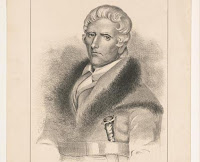
Daniel Boone Age 84
Today marks what would have been the birthday of one of America's greatest heroes, Daniel Boone. A dedicated frontiersman and explorer, Daniel Boone became one of the most celebrated men in American literature and inspired boys and girls around the nation long after his death. 

Daniel Boone was born on November 2, 1734 to Sarah Morgan and Squire Boone in a log cabin in Pennsylvania. He was the sixth born of eleven children. He had a love of the outdoors and even as a young adult, he supplemented his family's income by hunting and trapping. 

Daniel's father, Squire Boone, had emigrated to Pennsylvania because he was persecuted in England for his Quaker faith. However, this faith benefited Daniel and his pursuit of hunting and exploration. The area where Daniel was raised was, at the time, the edge of the frontier. The Lenape Indian tribes resided nearby, and because the Quakers were pacifists, they enjoyed good relations with the tribe. The Lenape contributed to Daniel's knowledge of the wilderness. At the age of twelve, Daniel received his first rifle. 


Since Daniel's education was informal, at best, many expressed concern over his illiteracy. Boone's spelling was....unconventional. However his father defended him by saying, "Let the girls do the spelling. Dan will do the shooting." However, Daniel did possess enough education to accomplish his calling in life. While the majority of his time was spent as an outdoors man and frontiersman, he also went on to become a politician. Daniel Boone was an avid reader. He often took reading material with him on hunts and excursions, and he would often entertain his companions by reading to them. His favorites were the Holy Bible and Gulliver's Travels. 

Since Boone grew up as a Quaker, it is interesting that he volunteered for the French and Indian war, and also served during the Revolutionary War. However, his family was expelled from the Quaker fellowship when he was a young man, and he identified as a Christian, but not as a Quaker. It could be that the experience of excommunication caused him to renounce his family's Quaker beliefs. 

Despite the obstacles that Daniel Boone faced throughout his life, he is an inspiring example of courage and what one person can accomplish in a lifetime. These qualities make him an outstanding man and icon in American history and literature. It is men like him that make us proud to be Americans.

Happy Birthday, Mr. Daniel Boone! 


*****
Two-time winner of the Christian Indie Award for historical fiction, Amber Schamel writes riveting stories that bring HIStory to life. She has a passion for travel, history, books and her Savior. This combination results in what her readers call "historical fiction at its finest". She lives in Colorado and spends half her time volunteering in the Ozarks. Amber is a proud member of the American Christian Fiction Writers Association. Visit her online at www.AmberSchamel.com/ and download a FREE story by subscribing to her Newsletter!

Saturday, September 16, 2017

The Mad Hatter and Camel Urine


Did you know the crazy Mad Hatter in Alice and Wonderland is based on a historic fact?

When tall, black beaver-felt hats were the raving fashion, the hatters would bring in beaver pelts from all over, including multiple thousands from across the ocean in what would become The United States.


Once they received the furs from near and far, they had to find a way to treat the pelts to release the top layer of hair that was coarse and ugly (not good for the hats) and gathered the shorter, softer, under fur. The fine layer was then mixed with glue, shaped, and molded to fit a hat form. And like the 80s hair band—the taller, the bigger, the better.


But here’s the kicker, to release that long hair and access the fine fur the beaver skin had to be coated with mercury.

Yup mercury.

You know where I’m heading don’t you.

The hatmaker would heat the glue-fur combo over a lantern or candle to get a better shape out of the material. Unwittingly, they would breathe in mercury fumes which are a neurotoxin which led to several crazy hatmakers suffering from Mad Hatter Syndrome.


I was so intrigued when I learned this random little fact. Even more so, when I found that the Mad Hatter in the original Alice in Wonderland was supposedly based on the author's crazy-hatter friend.

But as I shared my tidbit with my friends, I found that many knew this crazy fact already.

BUT!!!

They didn’t know this extra special detail.

I laugh.

How on earth did the hatmaker’s figure out that mercury released the fur?

And here it is.

Some entrepreneuring individual figured out that camel fur, plus, camel urine equals released fur that could be used as felt. And the craft of felting was born.

As the demand for hats grew, so did the demand for camel urine. Eventually there wasn’t enough camel urine to go around. So, some other get-it-done fellow figured he would try human urine and see if it worked too. 


It did.

I know. Ugh.


As the easier to obtain and cheaper resource of human urine became the norm, they noticed the poor hatmaker with syphilis being treated with mercury produced a finer end product than their healthy counterpart. Eventually they got around to selling hats with urine-free mercury treatments. Improving sales and making hatmakers sick with the mercury exposure.

I think I’m just fine with seeing the elegant top hats behind museum glass or staged on vintage mannequin.

Camel pee… yuck.

I found a new respect for the crazy, mad hatters. Dealing with furs, camel urine, mercury poison, and fancy lords of the highest rank, on top of learning how to felt to perfection was no small task. They had to have some tenacity to be good at their jobs.

My hats off to you, hatters.


Do you know of any interesting facts behind the trades? How or why certain tricks-of-the-trade came about or trades that have become obsolete? I’d love to hear them.


CaraGrandle is a Historical Romance Novelist who prefers to write about the early settlers of the Pacific Northwest. She is represented by the Steve Laube Agency. Cara leads the author4TheAuthor writers group on Facebook, home to 185 writers. Together they're pressing back on busy and making a space for their dreams. Cara hosts a Writers Encouragement show weekly on Periscope. The show is on Tuesday mornings at 9:00am PST. Cara's Periscope show includes live, interactive author-interviews with leading Christian fiction novelists, editors, publicist and agents under the handle @CaraGrandle. 

Cara is currently out on submission. Follower her journey on her Facebook author page. 
 

Sunday, March 15, 2015

The Great American Desert - Move Along Folks...

by Pam Hillman

I’ve always found it interesting that so many of the early pioneers completely passed up The Great Plains in favor of California and Oregon. From my modern day viewpoint, I just never could understand why.

But Eureka, I have found the answer!

I discovered that the early expeditions of Lewis and Clark, Zebulon Pike, and Stephen Long followed the rivers—the Missouri, the Arkansas, the Platte, and the Canadian—mapping out trails across the plains to Oregon, California, and Santa Fe, areas that had been settled by seagoing vessels. However, on their track westward, these explorers documented the vegetation, animal life, and information about the Indians living in the American heartland.

The Great Plains includes parts of Colorado, Kansas, Montana, Nebraska, New Mexico, North Dakota, Oklahoma, South Dakota, Wyoming, and Texas, as well as parts of Canada. For the sake of today’s post, the bulk of the pioneers travelled the Oregon Trail, so might have passed through what we know as Nebraska, possibly Kansas, SE Colorado, Wyoming. Those areas are desirable places to live now, so what kept the pioneers from settling on the plains from the very beginning? Why the mad rush to Oregon or California while bypassing the plains?

Because they didn’t think of the area as The Plains. They’d been conditioned to view the area as (cue the ominous music) THE GREAT AMERICAN DESERT!!!

In his expedition of 1819-1820, Major Stephen H. Long prepared a map where he broadly designated The Great Plains as the Great American Desert, and that’s where the problem started—well, maybe not literally with Major Long, but the moniker stuck. And from that point forward, numerous maps drawn up between the 1820-1850s describe the area as a desert and completely uninhabitable.

Colonel Richard Irving Dodge says in his book, The Hunting Grounds of the Great West, “When I was a schoolboy my map of the United States showed between the Missouri River and the Rocky Mountains a long and broad white blotch, upon with was printed in small capitals “THE GREAT AMERICAN DESERT – UNEXPLORED.”

Zebulon Pike went so far as to say, “These vast plains of the western hemisphere may become in time as celebrated as the sandy deserts of Africa.”

Greeley stated that timber could not be grown because (he believed) the wind blew so hard. He also felt the “desert” was steadily enlarging its borders.

Is it any wonder the American public saw the plains as a vast, dry, horrible, terrible no good place to put down roots and invest their futures?

From one map to another and over a period of 30 to 40 years, the seeds were firmly planted in people’s minds that the area was a vast wasteland, and not good for much other than a road to the fertile lands of Oregon or California. It would take years to erase that image. In the early years, pioneers marched westward nearly 2000 miles with blinders on, ignoring the beauty, the rich black dirt, and the opportunity to homestead the very land they trampled in their haste to get to the “promised land” on the distant shore.

Again, from our enlightened state in 2015, it’s hard for us to imagine why they’d do this, but keep in mind that these travellers had their sights on the well watered, wooded, rolling hills that were similar in terrain and natural resources to the land they were familiar with back East. I suppose if you think about it, it makes sense.

The very fact that the pioneers were wary of The Plains is the reason the Oregon Trail even exists. If the region had been heavily forested and crisscrossed with streams and rivers and populated with all manner of animals and vegetation ripe for the picking, the pioneers would have slowly continued their migration westward instead of making the huge jump over The Plains from the East to the West.

As more pioneers spilled westward, more of them realized the vast opportunities they were leaving untouched. In the 1850s, a concentrated effort was made by the US government and enlightened visionaries to turn the image of the Great American Desert around, and The Great Plains and The Homestead Acts was born. Settlers poured into the region and a whole new era began.


Just think what would have happened if Major Long had wrote on his map THE GREAT AMERICAN PLAINS.


Pam Hillman was born and raised on a dairy farm in Mississippi and spent her teenage years perched on the seat of a tractor raking hay. In those days, her daddy couldn’t afford two cab tractors with air conditioning and a radio, so Pam drove the Allis Chalmers 110. Even when her daddy asked her if she wanted to bale hay, she told him she didn’t mind raking. Raking hay doesn’t take much thought so Pam spent her time working on her tan and making up stories in her head. www.pamhillman.com


Both Available NOW and Shipping from Amazon! :)