Showing posts with label Cherokee syllabary. Show all posts

Monday, May 2, 2022

The Cherokee Phoenix


by Rebecca May Davie

As the first Native American newspaper, it was also one of the few bilingual papers. From what I was able to discover, the only other paper in existence at the time was The Baton-Rouge Gazette. This edition existed in French and English from 1819-1856. It is possible that the German paper, Die Bloomfield Germania was in print at that time, though I was unable to locate an initial year or whether it featured both languages.

Consider the significance of this achievement. Sequoyah created a syllabary, enabling the possibility of the Cherokee language in print. (You can read more about Sequoyah here.) Their system of communication is in effect shortly after they adopted the syllabary. This printed resource then provided information for Cherokee and English speakers alike. It enabled connection between the Cherokee in what is now Georgia and other locations in America. They became united as the plight to stay on their land unfolded. 

On July 4, 1776, Congress declared, “We hold these truths to be self-evident, that all men are created equal…” It is heartbreaking to recall that still in the 1830s of America, not all were treated as such. Newcomers forced out those who lived there first. Without getting in too deep, suffice it to say there were individuals claiming the Cherokee were not capable of “civilization.” Ponder that for a minute. Their successes to that date portrayed a different story: syllabary, bilingual printed news, governing body, and much more.

This book, Records of the Moravians offers first-hand accounts of missionaries in The Cherokee Phoenix. Featured on the cover is an image of the original publication. 


Timeline for The Cherokee Phoenix

1825 – The Cherokee adopted Sequoyah’s Syllabary. Without it, the newspaper would not exist.

1827 – In October, Elias Boudinot submitted a proposal for the newspaper.

1828 – On February 21, they printed the first edition of The Cherokee Phoenix in New Echota, Cherokee Nation (present day Georgia).

1829 – The name evolved to The Cherokee Phoenix and Indian Advocate.

1834 – Cherokee government no longer had funding to print the paper. The Georgia Guard destroyed the office and press.

1844 – Cherokee citizen William Potter Ross published the paper as The Cherokee Advocate.

1975 – The Cherokee People approved a new constitution. The Cherokee Advocate officially returned.

2000 – The name changed again to The Cherokee Phoenix and Indian Advocate.

2007 – The publication reclaimed the original name – The Cherokee Phoenix.

Present day – The Cherokee Phoenix is present in print, online, on radio shows, and on social media. What would Sequoyah and Elias think of those avenues?

The timeline above proves resiliency. Look at the current Cherokee Phoenix. If you would like to see the original paper, the Library of Congress has scanned copies available. How neat is that? Read the March 6, 1828, edition. Or if you care to learn more about the history, peruse this post from The New Georgia Encyclopedia.

Rebecca May Davie is the YouVersion Content Creator for NBS2GO/ Neighbor Bible Studies 2GO - a Cru Ministry. She has uploaded over 71 plans on the Bible.com app. Rebecca is living in the mountains with her husband, the youngest of their two sons, and a rescued dog named Ranger. If it were up to her, she would be traveling right now. She is working on her first fiction novel. This story unfolds from the 1830s in Northern Georgia. Connect with Rebecca:

Website 
Twitter
“Let your fiction grow out of the land beneath your feet.” – Willa Cather


Saturday, April 2, 2022

Tolkien - More than an Inkling for Language


“If you could speak to a person, alive or dead, who would you choose?” Today, I would name J.R.R Tolkien, author of The Hobbit and The Lord of the Rings trilogy.

Consider his life from 1892 – 1973. John Ronald Reuel Tolkien observed countless inventions in his 81 years. From modes of transportation to modes of communication, he witnessed leaps and bounds in modernization and convenience. I would be interested to hear his impressions and perspectives on how these innovations impacted his life, especially with his documented disdain for the “machine.” Another motivation is that I would like to understand how he designed such well-developed stories, worlds, and characters. We can immerse ourselves amongst his Ents (beings that resemble talking trees), Hobbits, High Elves, and in Rivendell, or Middle-earth. They are vivid as if we are living in and with them as we read. The depth and layers in his concepts are formidable. However, the main reason I would like to engage him in conversation is language. What I am referring to is his penchant for the creation of language itself.

When I was settling on a topic for the March post Sequoyah - Creator of the Cherokee Syllabary one of the first things I recalled was the 2019 movie, “Tolkien.” If you watched the film, you might remember the scenes where J.R.R. Tolkien was in the process of establishing his own language. I later discovered that he labored on the Elvish language for forty years before publishing The Fellowship of the Ring in 1954. He knew thirty-five tongues, ancient and modern. Can you imagine? Supreme Polyglot! This individual constructed fifteen languages and dialects in the Elvish language family alone. Not only did he craft the written and spoken languages, but he also deemed it necessary to have a new system of sign language for the dwarves. Since they worked in the mines, they needed an effective means of communicating in the din down below. Tolkien gave his languages history, tied them to mythology, and allowed them to evolve over the years. This process follows natural progressions of language. I read that people can consider his languages incomplete as they lack idiomatic expressions. With the complexity of his Art, I imagine this could have been a deliberate decision on his part. We may never know.

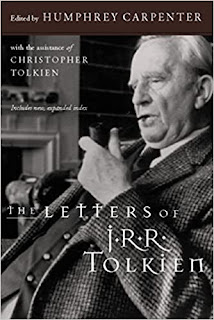
Since there is no opportunity to speak with Tolkien, I found a book that gives insights into his thoughts and processes via his letters. Perhaps you would like to add “The Letters of J.R.R. Tolkien” to your TBR pile?

If you would like to read a bit more about Tolkien, try the article on Biography.com, J.R.R. Tolkien. Or if you would rather, watch a documentary: JRR TOLKIEN '1892-1973' - A Study of The Maker of Middle-earth.


Rebecca May Davie is the YouVersion Content Creator for NBS2GO/ Neighbor Bible Studies 2GO - a Cru Ministry. She has uploaded over 66 plans on the Bible.com app. Rebecca is living in the mountains with her husband, the youngest of their two sons, and a rescued dog named Ranger. If it were up to her, she would be traveling right now. Not quite a polyglot, Rebecca speaks English and French as her L2. College courses last year gave a rudimentary grasp of Italian. She hopes to learn Spanish next. Meanwhile, Rebecca is working on her first fiction novel. This story unfolds from the 1830s in Northern Georgia.

Connect with Rebecca:

Wednesday, March 2, 2022

Sequoyah - Creator of the Cherokee Syllabary

Language. One simple word that is anything but.
 
I am infatuated with languages. I remember pretending to speak my own version and mimicking accents with friends when I was a young child. All these years later, I am still hoping to earn the Polyglot moniker. Why is language so alluring? What captivates my interest? Is it the accents, dialects, idioms, structures, history, etymology, or entwined cultures? Each of those aspects and so many more feed my fascination. Merriam-Webster.com defines language as “the words, their pronunciation, and the methods of combining them used and understood by a community.” So, to the above list, I will add… the people.
 
Without the gift of language, especially in written form, we would have limits. The ability to write and record language opens doors to connect, read, learn from afar, work, collaborate, send a note – email – text, and even formulate TikTok videos.
 
If you would like to see variations of language, try Google translate. Type in a short sentence and find the result in a few of their 109+ offerings. Most even have a speaker option so you can hear the answer. Experiment with an unfamiliar tongue to see and hear the diversity. Many languages have beautiful fonts and bonny tones. Two weeks ago, I was working with Burmese for our ministry. Are you familiar with their characters? They are lovely. The following sentence means I love to read.
ဖတ်ရတာ သဘောကျတယ်။

Have you ever considered how languages develop over time? This is a lengthy process tied to history, the influences of other cultures, and other factors. Language is not commonly the project of a single person. Yet there is a monolingual individual without a formal education, who had no knowledge of writing or reading, who assembled a complementary syllabary to his spoken language. How could he generate a system that would be of immediate use and go on to influence the formation of other languages? Sequoyah, a Cherokee, also known as Sogwali, accomplished this feat.


Sequoyah observed the Caucasian settlers where he lived. They had the ability to communicate across distances. He discussed this among his people who were not in favor of recording their thoughts. In their opinion, this was witchcraft. Despite this challenge, he continued to contemplate the scenario when he served in the US Army during the War of 1812. Fighting in the battle at Horseshoe Bend, he watched soldiers employing this method to connect with fellow soldiers and family.

When he returned to civilian life, he toiled as a blacksmith. Out of necessity, he needed a system to record orders and payments. As he was artistic, he would sketch the customers’ likenesses and would use a rudimentary system to retain amounts and objects. This became labor-intensive over time. It is speculated that due to this need and what he observed in exchanges between soldiers, he began the arduous task of creating a solution. 


Sequoyah invested 12 years to compose a system of 86 characters that placed on paper what was an oral language up until that point. Due to his usage of syllabary (characters representing sounds), rather than individual letters, the compilation was easy to master. His daughter was the first to use the written characters. She participated in demonstrations for the Cherokee to prove the efficacy and remove doubts or superstitions. Sequoyah and his daughter went to separate locations. They each wrote messages to the other, then exchanged the missives. They employed this process to prove that the syllables did indeed represent sounds for communication.

The Cherokee Nation adopted Sequoyah’s syllabary in 1825, which spread quickly. This invention allowed them to write a constitution and print the Cherokee Phoenix, a newspaper. These were crucial elements during a harrowed time. It is recorded by the Cherokee Nation of Sequoyah, “He accomplished a feat, which no other person in history has done single-handedly…he brought our people literacy and a gift of communicating through long distances and ages. This one person brought to his people this great gift without hired educators, no books and no cost.” -Georgia Historical Society.

If we consider Sequoyah’s contribution to the Cherokee alone, he provided a means for his nation to communicate across distances. He enabled them to design and record a constitution. The first bilingual and tribal newspaper in the US, the Cherokee Phoenix was born. All these accomplishments were key as they began the fight to remain on their land. In addition, due to the success of his syllabary, other people groups developed their own systems. Sequoyah influenced over 20 scripts for more than 65 languages.

If you would like to learn more about Sequoyah and his life, this video gives a short history.

Do you speak languages other than your native tongue? How would your days be impacted if you only had means of oral communication?

Rebecca May Davie is the YouVersion Content Creator for NBS2GO/ Neighbor Bible Studies 2GO - a Cru Ministry. She has uploaded over 66 plans on the Bible.com app. Rebecca is living in the mountains with her husband, the youngest of their two sons, and a rescued dog named Ranger. If it were up to her, she would be traveling right now. Not quite a polyglot, Rebecca speaks English and French as her L2. College courses last year gave her a rudimentary grasp of Italian. She hopes to learn Spanish next. Meanwhile, Rebecca is working on her first fiction novel. This story unfolds from the 1830s in Northern Georgia.

Connect with Rebecca:  Website