Showing posts with label HHHistory blog. Show all posts

Sunday, October 2, 2022

William the Conqueror's Birthplace

 by Rebecca May Davie


Welcome to the birthplace of William the Conqueror. This is the Calvados department of Normandy, France. The area is now known as the city of Caen.

Who was William the Conqueror? He became the first Norman
King of England. He was born in 1027 to Duke Robert the Magnificent and a Falaise tanner’s daughter, Arlette. Duke Robert died when William was a mere eight years old. William then began adding on to Le Chateau de Falaise (his family’s castle) and in addition, ordered the construction of two churches. His early years were turbulent with the deaths of many of his teachers and aids. King Henry I of France helped him navigate and knighted William in his teens.
The King of England, Edward the Confessor, did not have children and promised William succession. He died and William expected to secede. Yet, Harold Godwin was placed on the throne even though he
himself swore fealty to William just two years before. After, they met at the Battle of Hastings on October 14, 1066. Harold was fatally wounded with an arrow. William was “The Conqueror.” Just ten weeks later, on Christmas day, William was crowned the King of England at Westminster Abbey.

Immediately following his coronation, he began to invade England. He built castles with fortifications, installed allies, and squelched revolts with bloody battles. Life for the English changed without delay. He overhauled their language, religion, and other facets of daily life. King William built over 700 motte and bailey castles including the notable Tower of London and Windsor Castle. The structures began in wood that was replaced with stone. He required a census of people and property that was compiled into the Domesday Book. He died at the age of 60.


There are many methods to learn about life of William the Conqueror. A visit to Bayeux and The Bayeux Tapestry on display at the museum give a glimpse into his timeline. This embroidered fabric is 70 meters long and shows William’s conquest. Susan Page Davis wrote a post  on Heroes, Heroines, and History, The Bayeux Tapestry
While in Caen, visitors can experience where William lived. Tour Le Chateau de Falaise. Tablets available at check in, point to emblems throughout the building. These enable scenes to appear as the rooms were in William’s time. Imagine walking into a large Bed Chamber (half the square footage of a basketball gym) with a similarly high ceiling. Surrounded by stone walls, a fireplace camps along the side. A solitary bed adorns one wall. Two chairs flank the bed. This is all that is visible to the naked eye. Yet with the tablet, there are tapestries, rugs, curtains, and chairs. This volume of fabric assisted in keeping the immense, stone rooms warm. Heat also radiated from fireplaces and small braziers set in the middle of the spaces.


Wander up and down tight, steep stone staircases to see other open rooms. The Great Hall, Chapel, and apartments all offer virtual tours via touch tablet. In most rooms there is a film featuring a member of the Anglo-Norman court describing their daily life. These snippets give visitors an opportunity to learn about trades, clothing, food, and other features of the 11th century. In some halls there are protected etchings and carvings from the knights of the time – medieval graffiti, so to speak. Outside the Keep walls, viewing machines enable visitors to envision village life.
 

See the church of William’s youth at the base of the castle. L'église de la Trinité à Falaise, visible in the photo at right, was constructed in 840. It suffered damage and was rebuilt in 1204 in the gothic style.
  
Whatever the source, it is possible to learn a small measure about living in the 11th century. After visiting, the life of William the Conqueror may seem rife with strife. Opinions do continue to vary on his rule. Until a visit is possible, YouTube offers videos about his years and peeks inside the castle. Take a look…


As a child, Rebecca loved to write. She nurtured this skill as an educator and later as an editor for an online magazine. Rebecca then joined the Cru Ministry - NBS2GO/Neighbor Bible Studies 2GO, at its inception. She serves as the YouVersion Content Creator, with over 75 Plans on the Bible.com app.

Rebecca lives in the mountains with her husband, the youngest of their two sons, and a rescued dog
named Ranger. If it were up to her, she would be traveling - right now. As a member of ACFW, FHLCW, Jerry’s Guild, and Hope*Writers, Rebecca learns the craft of fiction while networking with a host of generous writers. She is working on her first fiction novel. This story unfolds from the 1830s in Northern Georgia.


Connect with Rebecca:

Monday, May 2, 2022

The Cherokee Phoenix


by Rebecca May Davie

As the first Native American newspaper, it was also one of the few bilingual papers. From what I was able to discover, the only other paper in existence at the time was The Baton-Rouge Gazette. This edition existed in French and English from 1819-1856. It is possible that the German paper, Die Bloomfield Germania was in print at that time, though I was unable to locate an initial year or whether it featured both languages.

Consider the significance of this achievement. Sequoyah created a syllabary, enabling the possibility of the Cherokee language in print. (You can read more about Sequoyah here.) Their system of communication is in effect shortly after they adopted the syllabary. This printed resource then provided information for Cherokee and English speakers alike. It enabled connection between the Cherokee in what is now Georgia and other locations in America. They became united as the plight to stay on their land unfolded. 

On July 4, 1776, Congress declared, “We hold these truths to be self-evident, that all men are created equal…” It is heartbreaking to recall that still in the 1830s of America, not all were treated as such. Newcomers forced out those who lived there first. Without getting in too deep, suffice it to say there were individuals claiming the Cherokee were not capable of “civilization.” Ponder that for a minute. Their successes to that date portrayed a different story: syllabary, bilingual printed news, governing body, and much more.

This book, Records of the Moravians offers first-hand accounts of missionaries in The Cherokee Phoenix. Featured on the cover is an image of the original publication. 


Timeline for The Cherokee Phoenix

1825 – The Cherokee adopted Sequoyah’s Syllabary. Without it, the newspaper would not exist.

1827 – In October, Elias Boudinot submitted a proposal for the newspaper.

1828 – On February 21, they printed the first edition of The Cherokee Phoenix in New Echota, Cherokee Nation (present day Georgia).

1829 – The name evolved to The Cherokee Phoenix and Indian Advocate.

1834 – Cherokee government no longer had funding to print the paper. The Georgia Guard destroyed the office and press.

1844 – Cherokee citizen William Potter Ross published the paper as The Cherokee Advocate.

1975 – The Cherokee People approved a new constitution. The Cherokee Advocate officially returned.

2000 – The name changed again to The Cherokee Phoenix and Indian Advocate.

2007 – The publication reclaimed the original name – The Cherokee Phoenix.

Present day – The Cherokee Phoenix is present in print, online, on radio shows, and on social media. What would Sequoyah and Elias think of those avenues?

The timeline above proves resiliency. Look at the current Cherokee Phoenix. If you would like to see the original paper, the Library of Congress has scanned copies available. How neat is that? Read the March 6, 1828, edition. Or if you care to learn more about the history, peruse this post from The New Georgia Encyclopedia.

Rebecca May Davie is the YouVersion Content Creator for NBS2GO/ Neighbor Bible Studies 2GO - a Cru Ministry. She has uploaded over 71 plans on the Bible.com app. Rebecca is living in the mountains with her husband, the youngest of their two sons, and a rescued dog named Ranger. If it were up to her, she would be traveling right now. She is working on her first fiction novel. This story unfolds from the 1830s in Northern Georgia. Connect with Rebecca:

Website 
Twitter
“Let your fiction grow out of the land beneath your feet.” – Willa Cather


Saturday, April 2, 2022

Tolkien - More than an Inkling for Language


“If you could speak to a person, alive or dead, who would you choose?” Today, I would name J.R.R Tolkien, author of The Hobbit and The Lord of the Rings trilogy.

Consider his life from 1892 – 1973. John Ronald Reuel Tolkien observed countless inventions in his 81 years. From modes of transportation to modes of communication, he witnessed leaps and bounds in modernization and convenience. I would be interested to hear his impressions and perspectives on how these innovations impacted his life, especially with his documented disdain for the “machine.” Another motivation is that I would like to understand how he designed such well-developed stories, worlds, and characters. We can immerse ourselves amongst his Ents (beings that resemble talking trees), Hobbits, High Elves, and in Rivendell, or Middle-earth. They are vivid as if we are living in and with them as we read. The depth and layers in his concepts are formidable. However, the main reason I would like to engage him in conversation is language. What I am referring to is his penchant for the creation of language itself.

When I was settling on a topic for the March post Sequoyah - Creator of the Cherokee Syllabary one of the first things I recalled was the 2019 movie, “Tolkien.” If you watched the film, you might remember the scenes where J.R.R. Tolkien was in the process of establishing his own language. I later discovered that he labored on the Elvish language for forty years before publishing The Fellowship of the Ring in 1954. He knew thirty-five tongues, ancient and modern. Can you imagine? Supreme Polyglot! This individual constructed fifteen languages and dialects in the Elvish language family alone. Not only did he craft the written and spoken languages, but he also deemed it necessary to have a new system of sign language for the dwarves. Since they worked in the mines, they needed an effective means of communicating in the din down below. Tolkien gave his languages history, tied them to mythology, and allowed them to evolve over the years. This process follows natural progressions of language. I read that people can consider his languages incomplete as they lack idiomatic expressions. With the complexity of his Art, I imagine this could have been a deliberate decision on his part. We may never know.

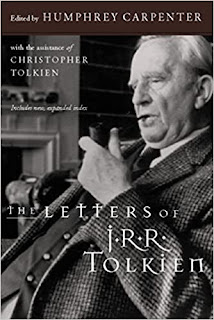
Since there is no opportunity to speak with Tolkien, I found a book that gives insights into his thoughts and processes via his letters. Perhaps you would like to add “The Letters of J.R.R. Tolkien” to your TBR pile?

If you would like to read a bit more about Tolkien, try the article on Biography.com, J.R.R. Tolkien. Or if you would rather, watch a documentary: JRR TOLKIEN '1892-1973' - A Study of The Maker of Middle-earth.


Rebecca May Davie is the YouVersion Content Creator for NBS2GO/ Neighbor Bible Studies 2GO - a Cru Ministry. She has uploaded over 66 plans on the Bible.com app. Rebecca is living in the mountains with her husband, the youngest of their two sons, and a rescued dog named Ranger. If it were up to her, she would be traveling right now. Not quite a polyglot, Rebecca speaks English and French as her L2. College courses last year gave a rudimentary grasp of Italian. She hopes to learn Spanish next. Meanwhile, Rebecca is working on her first fiction novel. This story unfolds from the 1830s in Northern Georgia.

Connect with Rebecca:

Thursday, December 26, 2019

Merry Christmas to all . . .


Merry Christmas and Happy 2020 to each and every Heroes, Heroines and History reader.

I love this time of the year. People just seem happier—nicer. I’m not sure what it is that makes them that way.

I wish I knew.

I wish we could all get along as if it were Christmas every day of the year. But human nature keeps us at odds for an abundance of reason.

I pray one day that will change.

Throughout history there are examples of people coming together at Christmas and making amends—at least for a moment in time.

One of those Christmas miracles happened in 1914. During the first Christmas of WWI an unofficial truce took place in the middle of battle torn Europe.

One of the first known official, written accounts of a truce developing, was when an officer of the Royal Irish Rifles reported to headquarters that the Germans had “illuminated” their trenches, were singing Christmas songs, and wishing the opposing soldiers a happy Christmas. The British officers were guarded, but the soldiers were curious. And I’m sure desperate for a little Christmas spirit while they were away from family and friends.

Unrelated to this and a bit further down the battle lines, soldiers from both sides serenaded one another with Christmas carols. The German men sang Silent Night and the British, The First Noel. Soon, scouts were sent out to meet—very cautiously—in the shell-pocked, no-man’s land between the opposing sides’ trenches. These few brave men exchanged whisky, cigars, and a message saying, in short, if we don’t fire at them, neither would they fire at us. Then the real miracle happened. More men came out of the dank, dark, battle trenches and exchanged names, handshakes, hugs; traded gifts of cigarettes, candy and food; they played games together and sang. These men who were enemies just hours before—were having a Christmas party.     

                   
Spontaneously, in other areas, the same types of trues were taking place. No one organized these events. No one spread the word that troops could come together and observe the holiday. And in fact, many officers discouraged the truce. So, what made these men—who, might I remind you, only hours before where shooting at each other—come together to celebrate Christmas, as friends, chums, mates or comrades?

Was it nostalgia or a want for tradition that brought them together or, perhaps a longing for family or home . . . We may never be able to explain it.

It was truly miraculous.

So, my friends, during this week between Christmas and New Year’s Day, wouldn’t it be wonderful if we could come together like these men in 1914 and forget our differences? Forget that we were recently “shooting” at one another. Forget the political mess our nation and world are in. Embrace the season and embrace unexplainable, unpredictable kindness.

Change begins with one person. I’m going to put forth an effort this year to be a person who makes change happen, who makes a difference.

Will you?

Make the impossible happen. Then make it Christmas all year long.

Blessings to each and every one of our amazing HHH readers, and may you all have a happy, healthy, and prosperous new year. 


Multi award-winning author, Michele K. Morris’s love for historical fiction began when she first read Laura Ingalls Wilder’s Little House book series. She grew up riding horses and spending her free time in the woods of mid-Michigan. Michele loves to hear from readers on Facebook, Twitter, and here through the group blog, Heroes, Heroines, and History at HHHistory.com.

Michele is represented by Tamela Hancock Murray of the Steve Laube Agency.


Sunday, July 1, 2018

The Two Wives of Samuel Adams

Blogger: Amber Schamel

Happy Independence Day!
Samuel Adams

Most of us have heard at least a little bit about Samuel Adams, one of the Founding Fathers and a signer of the Declaration of Independence. But lesser known are his wives. I feel like they deserve a lot of credit, because being the wife of Samuel Adams was not an easy position.


Did you know? Samuel Adams actually had two wives. They were both named Elizabeth.

 
Elizabeth Checkley

The Checkleys had been family friends for many years, so Sam and Elizabeth would have grown up knowing each other. Her father was a clergyman and close friends with the elder Mr. Adams, so both families were pleased when a courtship bloomed between the two. Shortly after Samuel’s father had died and left him with an inheritance which including a malt manufacturing company, he married his sweetheart, Elizabeth Checkley on October 17, 1749. The occasion was a happy one, but hardship was soon to follow.


Elizabeth became pregnant with their first son whom they intended to name Samuel, however, when the child was born, he lived only 18 days. While this must have been a great blow to the new couple, God looked upon them and blessed them with another son on October 16, 1751. They named this child Samuel as well, and he lived to adulthood. Two years later, another son they named Joseph died the day after birth. Exactly a year later, their first daughter, Mary, came into the world, but she didn’t occupy it long either. At three months and nine days old, the infant died. Just eighteen months later, another daughter was born, but she was healthy. Elizabeth’s last child was stillborn July 25, 1757. The effects of so many pregnancies and so much grief took its toll, and this time also claimed the life of the mother. After giving birth to six children, Elizabeth passed away at the age of 32.


It’s little wonder that during this time Samuel was greatly distracted. By 1760, everything that Samuel had inherited had dwindled away to nothing. Many blame him for poor management and spending habits, but between his wife’s pregnancies, the deaths of 4 children, and then the death of his wife, it is easy to see how his financial affairs—which were already a weak point for him—suffered all the more.


While their marriage lasted less than ten years, Samuel held his wife in high esteem. After her death, his grief is evident in the note he left in their family Bible.


To her husband she was as sincere a friend as she was a faithful wife. Her exact economy in all her relative capacities, her kindred on his side as well as her own admire. She ran her Christian race with remarkable steadiness and finished in triumph! She left two small children. God grant they may inherit her graces! 

 
Elizabeth Wells
Check out Amber'sBook about Samuel Adams

For seven years, Samuel remained a widower. But with two small children to raise, and a political calling to fulfill, Samuel needed a wife. The fifth daughter of his close friend, Francis Wells caught his eye, and on December 6, 1764, he married Elizabeth Wells. This is the wife who is most well-known since she was Samuel’s helpmate throughout the founding of the nation. She was the daughter of a merchant in Boston, and was hard working, thrifty, and good at managing all the affairs Sam seemed to overlook. She raised two children who were not her own and found ways to supplement Sam’s meager income as he spent his time writing articles, attending congress, inciting patriots to action, and creating an atmosphere of liberty. Without his ‘Betsy’ as he called her, Sam wouldn’t have had the ability to take on everything he did. She was even-tempered and patient, always cheerful and supportive of her husband. She kept a garden to grow food for the family, and also started sewing to earn some extra income.

Elizabeth’s life during the Revolution was frightening. With Samuel signing the declaration of independence, that put his entire family on the British hit list. Elizabeth and Hannah were forced to flee Boston and stay with her father in Cambridge.


After the war, Elizabeth’s life settled down. While Sam was still very active in politics, they lived comfortably in a home on Winter Street. After outliving her husband by about five years, Elizabeth passed away in 1808. 


Giveaway! Leave a comment for your chance to win an ebook copy of Dawn of Liberty the award-winning collection of short stories about Sam Adams and the Declaration of Independence!
*****

Two-time winner of the Christian Indie Award for historical fiction, Amber Schamel writes riveting stories that bring HIStory to life. She has a passion for travel, history, books and her Savior. This combination results in what her readers call "historical fiction at its finest".  She lives in Colorado and spends half her time volunteering in the Ozarks. Amber is a proud member of the American Christian Fiction Writers Association. Visit her online at www.AmberSchamel.com/ and download a FREE story by subscribing to her Newsletter!

Wednesday, November 1, 2017

The Bird No One Wanted to Claim: A History of Turkeys

Blogger: Amber Schamel Christian Historical Fiction author


Today marks exactly three weeks until Thanksgiving. As we gather around the table to give thanks to God and remember our many blessings,  the most prominent item on your table is probably a large bird, roasted to moist, golden perfection. But have you ever paused to think about the history behind the bird, how it made it to our Thanksgiving table, and what else might have been there instead?

Let’s begin our exploration with Christopher Columbus. When the first adventurers and merchants began “discovering” the New World, they noticed a strange, wild fowl that was native to this continent. No one knows for sure how the creatures came to be known as the Turkey, but it is suspected that the word was referring to the actual country of Turkey. But how does a bird in North America get stuck with the name of a country on the other side of the world?

Some historians believe that it came from the early Turks who would sell exotic wild fowl, such as Guineas from West Africa, to Europe. Apparently, they became known for their strange birds, so when the English spotted the wild bird in the New World, it was easy for them to refer to it as the Turkey Cock. Which was then shortened to Turkey.

The Turks however, don’t claim the bird either. They have no such birds native to their country. Their name for it is…get this…Hindi. They figured the bird must be Indian. The French also picked that up and called it Poulet d’Inde or chicken from India. Other languages have called it the Peru or the Dutch chicken. In truth, the poor turkey doesn’t have its own name, even scientifically. Its binomial nomenclature, Meleagris gallopavo is basically a mixture of the Latin words for rooster and peacock, with a nod at a mythical story of a goddess turning mourners into guineas. Apparently, nobody knew what it was or what to call it, so they just pegged a name on the poor bird.


At any rate, the turkey ended up becoming a permanent part of survival in the New World. Most of us know why it is associated with Thanksgiving. It was one of the animals they could hunt and eat in this new land, and one that was at least somewhat like the domestic chickens they were accustomed to. I wonder how long it took them to get used to the gamey taste of wild fowl and deer.


Photo by Andrea Reiman on Unsplash
Another interesting tidbit that usually comes up during this time of year is that Benjamin Franklin preferred the Turkey to the Bald Eagle as our National Bird. While the idea of having an eagle on our dinner table while the Turkey adorns the President’s lectern is a humorous picture, this tale isn’t exactly true.

In a letter from Benjamin Franklin to his daughter, he does express his disappointment that the bald eagle was chosen to represent the country. He considered the bird to be of bad moral character, too lazy to catch his own food, bullying others out of theirs instead. He criticized the eagle design saying it looked more like a turkey, and in his rant, went on to say that he believed the turkey would have been a worthier choice given that it is a native of the country, brave, and respectable. He did admit, however that it is a little ‘silly and vain’. Still an amusing story, but a far cry from proposing it as the seal of the United States.

There you are. Some turkey trivia for your holiday gathering. 


Now, I’d love to hear your turkey stories! From thanksgiving fiascos, to fond memories, to hunting them out of the woods yourself…share your turkey and we’ll have an early Thanksgiving dinner. 😉

*****


Amber Schamel writes riveting stories that bring HIStory to life. She has a passion for travel, history, books and her Savior. This combination results in what her readers call "historical fiction at its finest".  Her title, Dawn of Liberty, was awarded the 2017 CSPA Book of the Year award in Historical Fiction. She lives in Colorado and spends half her time volunteering in the Ozarks. Amber is a proud member of the American Christian Fiction Writers Association. Visit her online at www.AmberSchamel.com/ and download a FREE story by subscribing to her Newsletter!